Categories
Learn

A guide to terroir and its role in wine investment

  • Terroir is a concept that includes climate, soil, geography, biome and human intervention to give an individual wine its unique identity.
  • The distinction between commodity wine and investment-grade fine wine is in part about geographic specificity and the protection of place through strict regulatory frameworks.
  • The most prestigious estates prioritise the expression of their natural environment over stylistic manipulation.

Terroir: The umbrella term for wine identity

Terroir is frequently cited as the primary factor in the exceptional quality and distinctive character of Old World wines. Derived from the French word “terre,” meaning land, it’s much broader than that: collectors understand it as an umbrella term that combines diverse concepts under a single banner.

Understanding this concept means recognising that a wine’s qualities are inherently linked to a specific location which imparts a unique “DNA” to every fine wine. This makes it consistent characteristics across different vintages. Terroir provides a sense of place that cannot be replicated.

Key components of the terroir umbrella include:

  • Climate and weather
  • Geology and soil
  • Topography
  • Biology
  • Human tradition & intervention (or lack of)

The role of climate

Climate is arguably the most significant influence on the natural environment of a vineyard: it dictates the length of the growing season, the rate at which grapes ripen and how well they ripen. For the wine investor, understanding climate is essential, as many great terroirs are linked to long seasons with slow ripening and a long hang time. Weather, as opposed to climate, is what is behind vintage variation and is also critical to wine investors.

For terroir, climate is a factor at three geographical scales:

  • The broad climate of an entire region, such as the continental weather of Burgundy or the maritime influence of Bordeaux.
  • The atmospheric conditions of a specific sub-region or village, such as the sheltered slopes of a Barolo commune.
  • The unique conditions within a single vineyard or even a specific row of vines.

These layers interact to create the conditions that dictate the potential of a wine.

Soil types and water regulation

Old World producers frequently point to geology and soil as the literal bedrock of their success. The underlying materials determine the nature of the topsoil and influence the local topography. For instance, the chalky soils of Champagne and Chablis allow vines to penetrate deep into the subsoil.

Scientists can debate whether vines literally absorb elements that directly influence flavour, however, it is widely accepted that soil significantly regulates the water supply to the vines. Renowned vineyards often feature soils that provide only a moderate water supply, which limits vegetative growth and prevents waterlogging.  Viticulture often happens on land that would be unsuitable for other types of farming, and it is commonly held that the best wines come from vines that have to work hard.

Notable soil and terroir pairings include:

  • Pomerol: Heavy, well-structured clay-based soils.
  • Medoc: Deep, stony-gravelly sands that provide excellent drainage.
  • Burgundy: A complex combination of limestone and clay in marly soils.
  • Mosel: Steep slopes with characteristic slate-based soils.

Geography, geomorphology, and price

The topography of a vineyard – its aspect, position on a slope, and elevation – all contribute to stylistic differences. In Burgundy, a Grand Cru vineyard may be distinguished from a neighbouring plot simply by its mid-slope position.

Geomorphology refers to the physical features of the land and how they were formed. Steeper slopes, such as those in the Northern Rhône, allow for better sunlight exposure and drainage. This physical advantage translates directly into the quality of the harvest and is why certain vineyards are prized as blue-chip assets that trade for many millions of pounds while the valley floor is reserved for commodity production.

Biome and microbiome: The living vineyard

As our understanding of agriculture deepens, modern viticulture is placing increasing emphasis on the biome of the vineyard. This refers to the entire broad ecosystem, including cover crops, hedgerows, trees and the local wildlife and encourages winemakers to think about much more than just the grapes they are growing. 

For instance moving away from heavy machinery and reintroducing horses to the fields isn’t just a marketing ploy; it reduces soil compaction and preserves the natural structure of the earth. A holistic approach encourages a healthy microbiome, where natural yeasts and beneficial bacteria flourish alongside worms, insect life, wildflowers, bees, birds and small mammals.

Estates that focus on biodiversity often showa more authentic expression of place and it can improve quality too: reducing chemical inputs and allowing natural vegetation to grow helps to regulate the soil’s temperature and moisture levels. For the investor, these sustainable practices are increasingly seen as a marker of long-term value and grow an estates’ reputation.

What grape varieties are suited to what terroir

Not every grape variety is suited to every terroir. The choice of variety is a major factor in how a site expresses its character. A grape must be able to achieve full ripeness under local climatic conditions to exhibit its best flavours and structural balance.

For example:

  • Syrah: Reaches its pinnacle in the Northern Rhone.
  • Nebbiolo: Thrives in the specific hillsides of Piedmont.
  • Pinot Noir: Is famously temperamental, requiring the cool climate of Burgundy.
  • Cabernet Sauvignon: Requires the warmth and drainage provided by the gravel plateaus of Pauillac.

When a grape is perfectly matched to its location, the resulting wine possesses a quality that is impossible to replicate. This suitability is often protected by regional laws that mandate certain grape types to prevent the erosion of quality and promote collective branding.

Protecting place: DOC Rules and the Napa Declaration

Over the last 100 years it has become increasingly common for the concept of terroir to be codified through legal systems like the French Appellation d’Origine Controlee rules. These regulations protect specific terroirs by mandating which grapes can be grown and how the wine must be made. This ensures that a bottle carries a guarantee of origin and typicity.

These regulations are not limited to France or Europe, many nations have since adopted similar rules and their protection is often a key goal of international trade negotiations. The Napa Declaration on Place is a significant international agreement where producers committed to protecting the integrity of wine place names recognising that “place” is the most fundamental aspect of a wine’s identity. This prevents the misleading use of geographic terms for wines that were not grown in those specific soils.

Terroir: Fine wine vs commodity wine

So important is terroir that in many ways the distinction between fine wine and commodity wine is geographic specificity. Commodity wines are often produced from grapes sourced across entire countries or continents. They prioritise volume and consistency over the unique characteristics of a single site.

Fine wine, by contrast, is almost always tied to a specific patch of earth; the land is fixed and cannot be expanded. This geographic restriction ensures that supply is capped, creating the conditions for long-term price appreciation in the secondary market.

Winemaking: Expressing vs overriding terroir

The role of the winemaker remains a subject of discussion but winemaking practices undeniably contribute to the final style.

In the late 20th century, as wine critic Robert Parker’s influence expanded his evolving preferences and the impact a high Parker score could have on values began to influence winemaking. A trend of “Parkerization” favoured rich, bold, and heavily oaked wines. Consultants like Michel Rolland were often associated with this opulent style and sometimes accused of overriding terroir in favour of a homogenous international style. 

In reality this was not a plot against terroir by winemakers, consumers or critics, but a reflection of commercial reality.

Recent years have seen a strong reaction against this trend with many producers intentionally adopting a “less is more” philosophy. They may use neutral vessels, such as large Slavonian oak botti rather than imported French oak barrels or wild yeasts from the vineyard rather than cultured products. 

The goal is to act as a steward of the land and reflect that in the wine rather than be the creator of a brand that makes an unchanging product.

Climate change and the shifting map

Climate change is having a profound impact on the global wine map. Rising temperatures are shifting the boundaries of where fine wine can be produced, in some regions where a southern aspect was preferred in the 1980s those vineyards are now becoming less productive and limited by the heat that used to be an advantage.
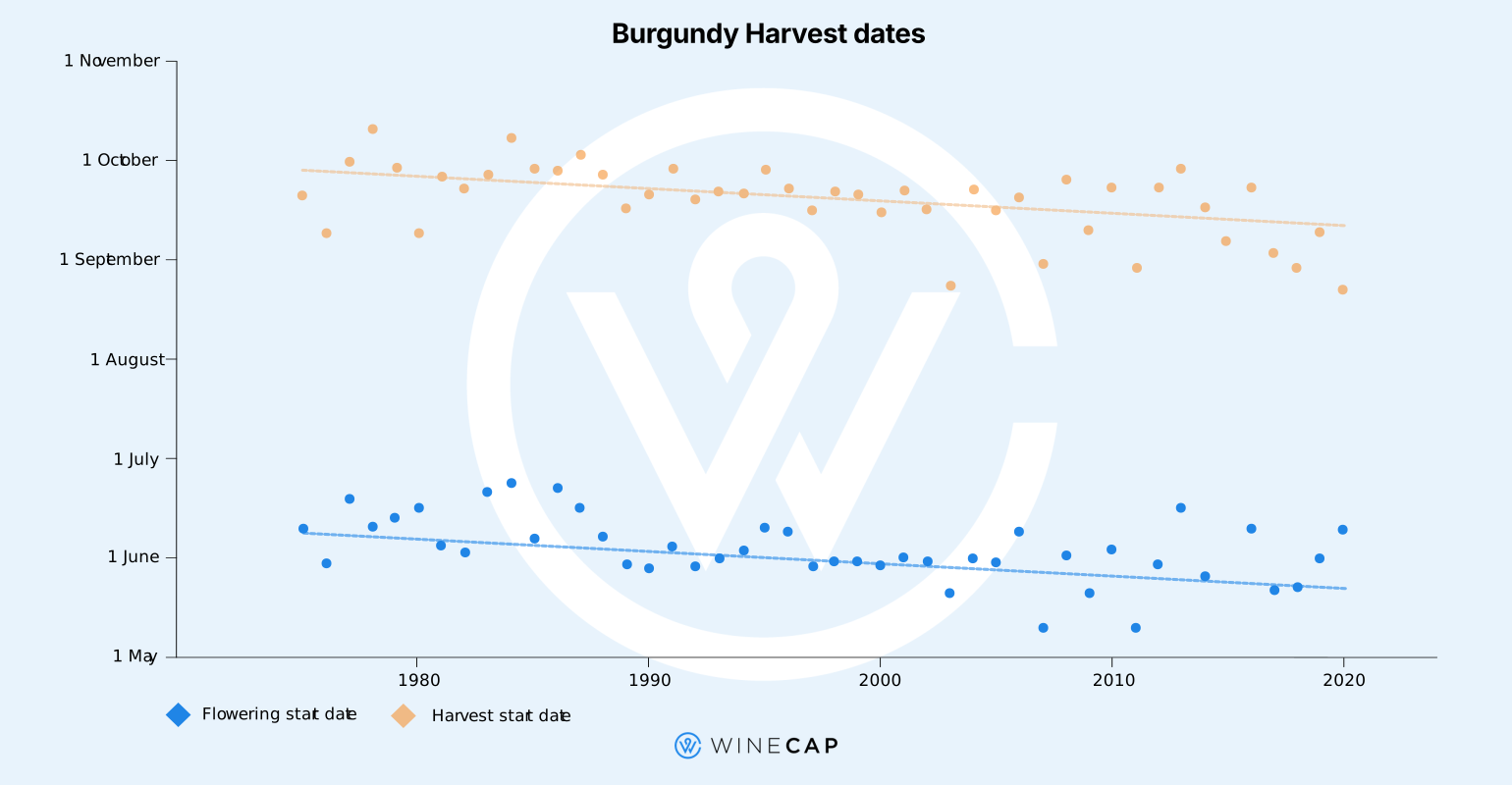
Burgundy Flowering and harvestData Source: jancisrobinson.com

Some historical regions are finding it increasingly difficult to maintain their traditional styles as sugar levels rise and acidity drops.

However, this shift is also opening up new frontiers:

  • English sparkling wine: Counties like Kent and Sussex now share a climate similar to the Champagne of several decades ago.
  • Patagonia and Central Otago: High-latitude regions are becoming top destinations for cool-climate varieties.
  • Emerging northern regions: Areas in Germany and even Scandinavia are beginning to produce high quality Pinot Noir.

For the investor, these changes create both risk and opportunity. While established terroirs are still preferred, new regions may become a more important part of the conversation in coming years.

Terroir beyond the wine glass

The concept of terroir is not exclusive to viticulture. It exists in many other artisanal products where sense of place is paramount. The “Slow Food” movement was built on this foundation, celebrating traditional agricultural products that reflect their local environment.

Other examples of terroir include:

    • Cheese: Such as Comte or Roquefort, where the local grasses and caves define the flavour.
    • Olive oil: Where regional soil and climate produce distinct profiles.
    • Coffee and tea: Where high-altitude “micro-lots” are traded at a premium.
    • Meat: Beef and lamb from the Orkney islands were among the first British products to gain legal recognition of their terroir.

In all these cases, terroir represents an element that imparts a sense of place. It is the ultimate rejection of mass-production and the celebration of the unique.

FAQ: A guide to terroir 

Is terroir just a marketing tool? 

While it is used in branding, terroir is based on documented physical factors like geology, climate, and topography that result in discernible variations in wine character.

Can a winemaker completely change a wine’s terroir? 

A winemaker can hide terroir through excessive oak or extraction, but they cannot create the structural intensity or complexity that only a superior site can provide.

Why does terroir matter for investment? 

Geographic specificity creates a natural cap on supply. Because the most famous vineyards cannot be expanded, the resulting rarity drives value in the secondary market.

Does the New World have terroir? 

Yes. Many New World producers now use soil mapping and single-vineyard designations to highlight the unique character of their specific plots.

WineCap’s independent market analysis showcases the value of portfolio diversification and the stability offered by investing in wine. Speak to one of our wine investment experts and start building your portfolio. Schedule your free consultation today.
Categories
Learn

Which wines have the best ageing potential?

  • The ageing potential of a wine is one half of the mechanism that drives its long-term growth.
  • Fortified and sweet wines represent the apex of longevity due to higher levels of alcohol, sugar, and acidity, which act as natural preservatives.
  • While traditional regions like Bordeaux and Piedmont remain the benchmarks for cellaring, modern viticulture in the New World is expanding the horizons.

The importance of ageing in wine investment

Wine is an improving asset in diminishing supply, and time is the most critical ingredient in any fine wine portfolio. 

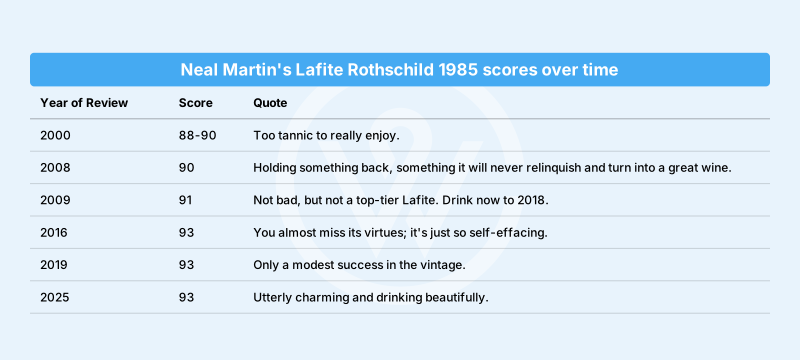
Unlike most consumer goods that depreciate in value the moment they are purchased, investment-grade wine is a living asset that evolves and improves over time. This is a unique feature to wine and the improvement can be dramatic, as seen in the table below which illustrates Vinous’ Neal Martin Lafite Rothschild 1985 score evolution over time.

Neal Martin's Lafite Rothschild 1985 scores over time

Not only do fine wines improve over time, they also become scarcer. Every bottle drunk reduces the global supply. For a vintage to gain value, it must be able to survive several decades in a cellar. Without this longevity, a wine is a simple consumption purchase rather than a potential investment.

The relationship between age and value is often non-linear. A wine may trade at its release price for several years before hitting a “drinking window.” Once critics confirm a vintage is reaching its peak, demand and pricing often surges and consumption increases. This phase of the lifecycle is where the most significant returns are frequently realised.

What happens when wine ages?

Fine wine is essentially a slow-motion chemistry set. Even when fermentation has ended, the wine matures through constant slow changes that dictate its long-term investment value.

Key transformations include:

  • Micro-oxygenation: Trace amounts of air enter through the cork over decades. This controlled oxidation transforms simple primary fruit into complex tertiary aromas such as leather, tobacco, or forest floor.
  • Polymerisation: Harsh tannin molecules link together to form long chains. These feel silkier on the tongue and eventually precipitate as sediment, naturally refining the wine’s texture and mouthfeel.
  • Esterification: Acids and alcohols react to create esters. This chemical evolution develops the “bouquet,” adding tertiary layers of spice, truffle, and earth that are absent in younger vintages.
  • Anthocyanin shift: The chemicals giving wine its colours change their structure. Red wines fade from vibrant purple to garnet or brick, while white wines darken toward deep gold or amber.

A consistent, cool cellar ensures these reactions happen gradually. Rushing the process with heat prevents complexity from developing. These molecular shifts are what transform a standard wine into a rare, high-value asset.

Wine vs whisky: The biological divide

A common point of confusion for new collectors is the difference between wine and spirits like whisky. Whisky is a distilled spirit with a high alcohol content that effectively halts biological change. Once a whisky is bottled, its flavour profile remains static.

Wine is a living product. It continues to interact with trace amounts of oxygen through the cork and undergoes complex chemical reactions between its acids, tannins, and alcohols. These reactions are what create the sought-after aromas of leather, earth, and dried spices. A bottle of Lafite Rothschild from the 1980s tastes vastly different today than it did in 1990; an examination of scores over time shows this very clearly.

This dynamic nature is why storage conditions are so critical for wine. While a bottle of Macallan can sit on a shelf for years, a First Growth Bordeaux requires a temperature-controlled environment. The risk of spoilage is the price an investor pays for the potential of improvement.

Fortified wines: The indestructible assets

Fortified wines occupy a unique space in the wine world. Unlike “normal” fine wines, which typically range from 12% to 14.5% alcohol, fortified wines are bolstered with grape spirit. This process raises the alcohol level to between 17% and 22%..

This addition of spirit serves two purposes: it stops fermentation early, leaving residual sugar, and acts as a powerful preservative. This is why fortified wines can survive for centuries. While a dry red wine might reach its peak at 40 years, a top-tier Vintage Port or Madeira can still be improving at 100 years.

The winemaking process is also distinct. In many cases, these wines are intentionally exposed to heat or oxygen during production to stabilise them. This pre-ageing makes them incredibly resilient once they are in the bottle.

Long-lived Port

Port is perhaps the most famous fortified wine. Vintage Port is only produced in years of exceptional quality, known as a “declaration.” These wines are designed to be cellared for at least 20 to 50 years before they show their true potential.

The structure of Port comes from its intense tannins and high sugar content. Over time, the aggressive spirit integrates with the fruit, creating a velvet-like texture. Examples of legendary long-lived Ports include:

  • Taylor’s Vintage Port (notably the 1945 and 1992 vintages).
  • Graham’s The Stone Terraces.
  • Quinta do Noval Nacional.

These wines are often considered the ultimate inheritance assets. They are frequently purchased to mark the birth of a child, with the intention of being opened many decades later. Their survival rate is higher than almost any other wine style because they are more robust: so long as the cork remains intact, they are likely to retain their quality.

Sherry with extraordinary ageing potential

While much of the Sherry market is focused on fresh styles, wines like Oloroso, Palo Cortado, and Amontillado have extraordinary ageing potential. The best examples come from the “VOS” (Very Old Sherry) and “VORS” (Very Old Rare Sherry) categories.

These wines have already spent an average of 20 or 30 years ageing in a solera system before bottling. Because they have been intentionally exposed to oxygen for decades, they are virtually immune to further oxidation in the bottle. They offer some of the most complex aromatic profiles in the world, featuring roasted nuts, saline notes, and dried citrus.

Collectible examples include:

  • Gonzalez Byass “Matusalem” Oloroso
  • Valdespino “Coliseo” Palo Cortado
  • Tradición VORS Amontillado

Bordeaux: The global benchmark

Bordeaux is the foundational region for wine investment. Its primary grape, Cabernet Sauvignon, is naturally high in tannins and acidity which are the building blocks of its longevity. As anyone who has attended En Primeur tastings can attest, the structure of a young Bordeaux can be quite harsh, but time softens these elements into a harmonious whole.

The First Growths, such as Latour and Mouton Rothschild, are famous for their ability to withstand long ageing. Even in “off” vintages, the technical precision of these estates ensures a long life.

Notable examples of long-lived Bordeaux:

  • Chateau Latour 1961 
  • Chateau Haut-Brion 1989
  • Chateau Montrose 1990 

The elegance of aged Burgundy

Burgundy offers a different ageing profile compared to Bordeaux because Pinot Noir is a thinner-skinned grape with lower tannin levels. Longevity in Burgundy comes from the perfect balance of acidity and the incredible concentration of fruit found in Grand Cru sites.

While a Bordeaux might be powerful, an aged Burgundy is ethereal. The transition from fresh raspberry to truffle and forest floor flavors is one of the most celebrated experiences in fine wine. However, Burgundy can be more temperamental in the cellar, making provenance and storage even more critical.

Examples of iconic ageing Burgundy:

  • Domaine de la Romanee-Conti (DRC) La Tache
  • Domaine Armand Rousseau Chambertin
  • Domaine Leflaive Montrachet 

Piedmont: Italy’s answer to Burgundy

Like Burgundy, Piedmont focuses on single-vineyard sites and a single grape: Nebbiolo. Nebbiolo is an unusual variety that looks light in the glass but possesses massive tannins and high acidity. Historically young Barolo and Barbaresco were almost impenetrable. It was only in recent years that Piedmont winemakers would declare that their wines could be enjoyed in less than 30 years.

Still, these wines require time to reveal their beauty. A classic Barolo often needs ten to 15 years to become approachable. The best vintages from top producers like Giacomo Conterno or Bruno Giacosa can easily last for half a century.

Examples of long-lived Piedmont:

  • Giacomo Conterno Barolo Riserva Monfortino
  • Bruno Giacosa Barbaresco Santo Stefano
  • Gaja Barbaresco

Tuscany: The rise of the Super Tuscans

Tuscany has two main pillars, both of which can craft long-lived wines: Brunello di Montalcino and the Super Tuscans. Brunello is made from 100% Sangiovese and is legally required to undergo extensive ageing before release. The structure of top Brunello allows it to evolve gracefully for 30 years or more.

Super Tuscans are almost defined by their incorporation of the international varieties brought to fame by Bordeaux: Cabernet Sauvignon and Merlot. These wines were designed to compete on the global stage and have proven their ability to cellar. Sassicaia and Tignanello are the primary examples that investors look for but there are many others that will reward cellaring.

Key Tuscan ageing stars:

  • Biondi-Santi Brunello di Montalcino Riserva
  • Tenuta San Guido Sassicaia
  • Masseto 

The New World: USA and South America

The United States, particularly Napa Valley, has established itself as a producer of long-lived Cabernet Sauvignon. Estates like Ridge Vineyards, Stags Leap Wine Cellars and Heitz have bottles from the 1960s and 1970s that are still drinking beautifully today as evidenced by ongoing re-tastings of wines from the 1976 Judgment of Paris. While the cult wines of Napa are frequently approachable in their youth they are also built for long-term cellaring.

In South America, the focus is on high-altitude sites that preserve acidity. Argentina’s Malbec and Chile’s Cabernet blends have shown surprising resilience. Producers are now making wines with more restrained oak and higher acidity to ensure they age as well as their European counterparts.

Examples of New World longevity:

  • Ridge Monte Bello (California)
  • Screaming Eagle Cabernet Sauvignon (California)
  • Catena Zapata Adrianna Vineyard (Argentina)
  • Seña (Chile)

South Africa and Australia

South Africa has a long history of sweet wine production, but its red blends from Stellenbosch are now proving their mettle. The Cabernet-based wines from Kanonkop are known for their ability to age for several decades and will often outlast their peers from much more expensive regions.

Australia is home to some of the oldest vines in the world. For instance, the grandfather vines at Henschke were planted in the 1860s and vintages from the 1950s have performed well at recent tastings. Penfolds Grange is also well known for its longevity: a multi-regional Shiraz blend that is designed to be tucked away for 30 to 50 years. The power and concentration of Australian Shiraz provide a sturdy foundation for ageing.

Notable examples:

  • Henschke Hill of Grace (Eden Valley)
  • Penfolds Grange (South Australia)
  • Kanonkop Paul Sauer (Stellenbosch)

Dry white wines: Longevity and evolution

Top-tier still whites also possess a capacity to be aged, even if equivalent quality red wines are generally better able to accommodate multiple decades in the cellar. Longevity in this category is primarily driven by high natural acidity and the fruit concentration found in prestigious vineyard sites. Over time, as colour darkens these wines move away from fresh citrus notes, gaining complex tertiary aromas such as honey, toasted nuts, dried flowers and even cheese as they reach extremely old age.

Notable examples of ageable still whites can hail from many regions, but old world dry whites from Burgundy, Bordeaux, Alsace, the German regions in the Rhine and Mosel valleys are arguably best known for their capacity to age with grace. Examples include:

  • Domaine Joseph Drouhin Montrachet Marquis de Laguiche Grand Cru (Burgundy)
  • Domaine de Chevalier Blanc (Bordeaux)
  • Keller G-Max Riesling Trocken (Rheinhessen)
  • Trimbach Riesling Clos Sainte Hune (Alsace)

Can sparkling wine age?

While non-vintage Champagne is ready to drink as soon as it’s available, Vintage Champagne has an undeniable ageing potential. The high acidity and the presence of carbon dioxide act as preservatives that allow ageing to occur over many decades.

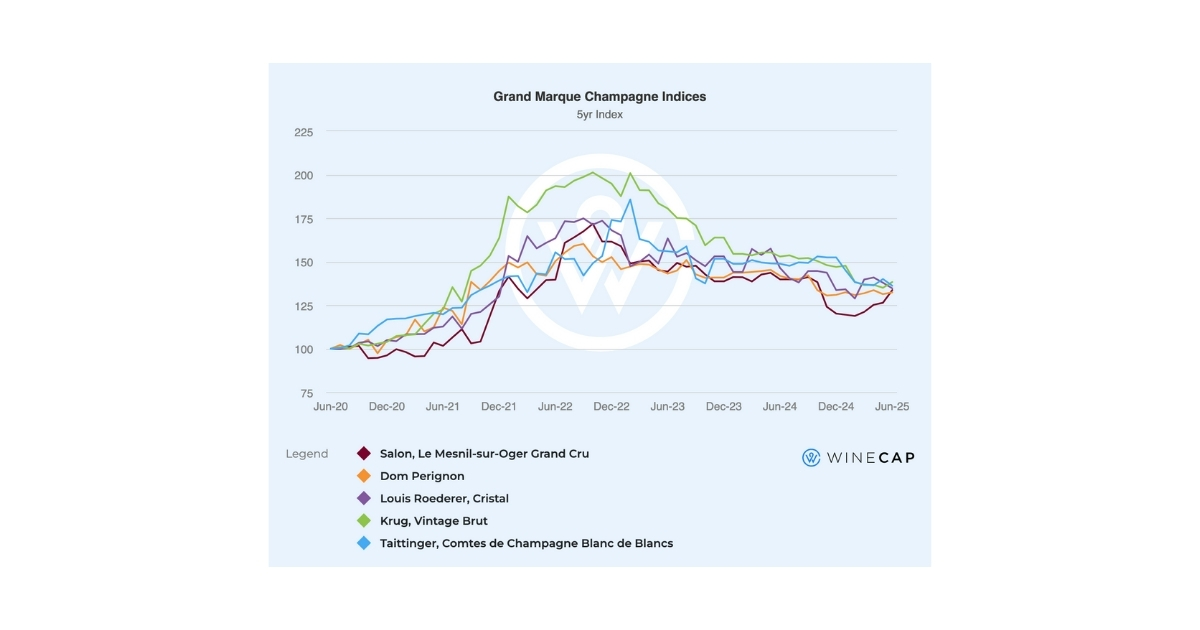
As Champagne ages, the bubbles become finer and begin to fade, while the flavour profile shifts from fresh citrus to brioche, honey, and roasted nuts. Some collectors specifically seek late-disgorged bottles that have spent extra time on their lees for even more complexity. Producers are happy to meet that demand: Dom Perignon recently added P3 to their line, allowing a third release window for the best vintages offering vintages from the 1960s and 1970s and 1980s to the market almost 50 years after their initial offering.

Examples of long-lived Champagne:

  • Dom Perignon
  • Krug Vintage
  • Salon Le Mesnil

Underwater ageing: A new frontier

One of the most intriguing developments in recent years is the practice of ageing wine underwater. This trend was sparked by the discovery of 170-year-old Champagne in a shipwreck in the Baltic Sea. The bottles were found to be in remarkable condition, the theory being that constant temperature, darkness, pressure and the lack of vibration fundamentally slow down the ageing process.

Producers are now intentionally submerging cages of wine in the ocean. Notable projects include:

  • Veuve Clicquot’s “Cellar in the Sea”
  • Leclerc’s Abyss
  • Drappier’s Immersion
  • Mira Winery (Napa Valley)
  • Crusoe Treasure (Spain)

The golden finish: Long-lived sweet wines

Sweet wines are the true champions of the cellar. The combination of high sugar and high acidity creates a nearly immortal product of which Sauternes is the most famous example. Here botrytis, a fungal infestation also known as “noble rot”, concentrates the sugars and acids to an extreme degree.

A top-tier Sauternes like Chateau d’Yquem can easily age for a century. Over time, the wine turns from bright gold to a deep amber colour and the flavours evolve from tropical fruit to complex notes of creme brulee, dried fruits, marzipan and nutmeg.

Other sweet wine icons:

  • Suduiraut (Sauternes)
  • Egon Müller Scharzhofberger Riesling TBA (Germany)
  • Royal Tokaji 6 Puttonyos (Hungary)
  • Klein Constantia Vin de Constance (South Africa)

Wine types and ageing profiles

FAQ

How do I know if a wine has ageing potential? 

Look for a balance of high acidity, strong tannin structure (for reds), and high fruit concentration. Reviews from reputable critics often include a suggested “drinking window” to help guide your decision.

What is the best temperature for ageing wine? 

A constant temperature of around 12 to 14 degrees Celsius is ideal for long-term development. Significant fluctuations in temperature can cause the wine to expand and contract, potentially damaging the cork seal.

Does expensive wine always age better than affordable bottles? 

Not necessarily. While most investment-grade wines are expensive because of their longevity, some high-priced wines are made for early consumption. Always check the specific style and vintage before deciding to cellar a bottle.

Can I age white wine as long as red wine? 

Most white wines are intended for early drinking, but high-acid whites like Riesling and Chardonnay from top sites can age for decades. Sweet white wines like Sauternes have the longest potential of all unfortified wine styles.

WineCap’s independent market analysis showcases the value of portfolio diversification and the stability offered by investing in wine. Speak to one of our wine investment experts and start building your portfolio. Schedule your free consultation today.
Categories
Learn

Is wine investing regulated?

  • Wine investment remains outside the direct jurisdiction of the Financial Conduct Authority in the United Kingdom, as physical wine is classified as a tangible asset rather than a financial security.
  • The Alcohol Wholesaler Registration Scheme and HMRC bonded warehouse regulations provide a rigorous framework for provenance and tax efficiency, ensuring the legitimacy of the secondary market.
  • Profits from the sale of fine wine are frequently exempt from Capital Gains Tax due to its classification as a wasting asset, making it a highly attractive component of a diversified portfolio.

The basics of wine investment

Investing in fine wine involves the acquisition of high-quality bottles with the intent of selling them at a higher price as they mature and become scarce. Unlike high street wine intended for immediate consumption, investment-grade wine possesses the ability to improve over decades. 

This category is dominated by a small percentage of global production, primarily hailing from storied regions such as:

  • Bordeaux 
  • Burgundy
  • Champagne
  • Tuscany

The primary drivers of value in this market are critical acclaim, brand heritage, and the quality of the vintage. When a renowned critic awards a wine a high score, global demand can surge. As bottles from that specific vintage are opened and consumed, the remaining supply dwindles, creating a natural upward pressure on price. 

This is the fundamental mechanic of the wine market: it is an asset that is consumed and  disappears over time.

Investors typically choose between purchasing individual cases or building a managed portfolio. The focus is on the blue-chip estates: 

  • In Bordeaux, this includes the First Growths like Château Lafite Rothschild and Château Mouton Rothschild. 
  • In Burgundy, the focus shifts to small production levels from producers such as Domaine de la Romanée-Conti and Domaine Leroy. 
  • In Italy, the market has expanded to include high-performing Italians like Barolo and the Super Tuscans.
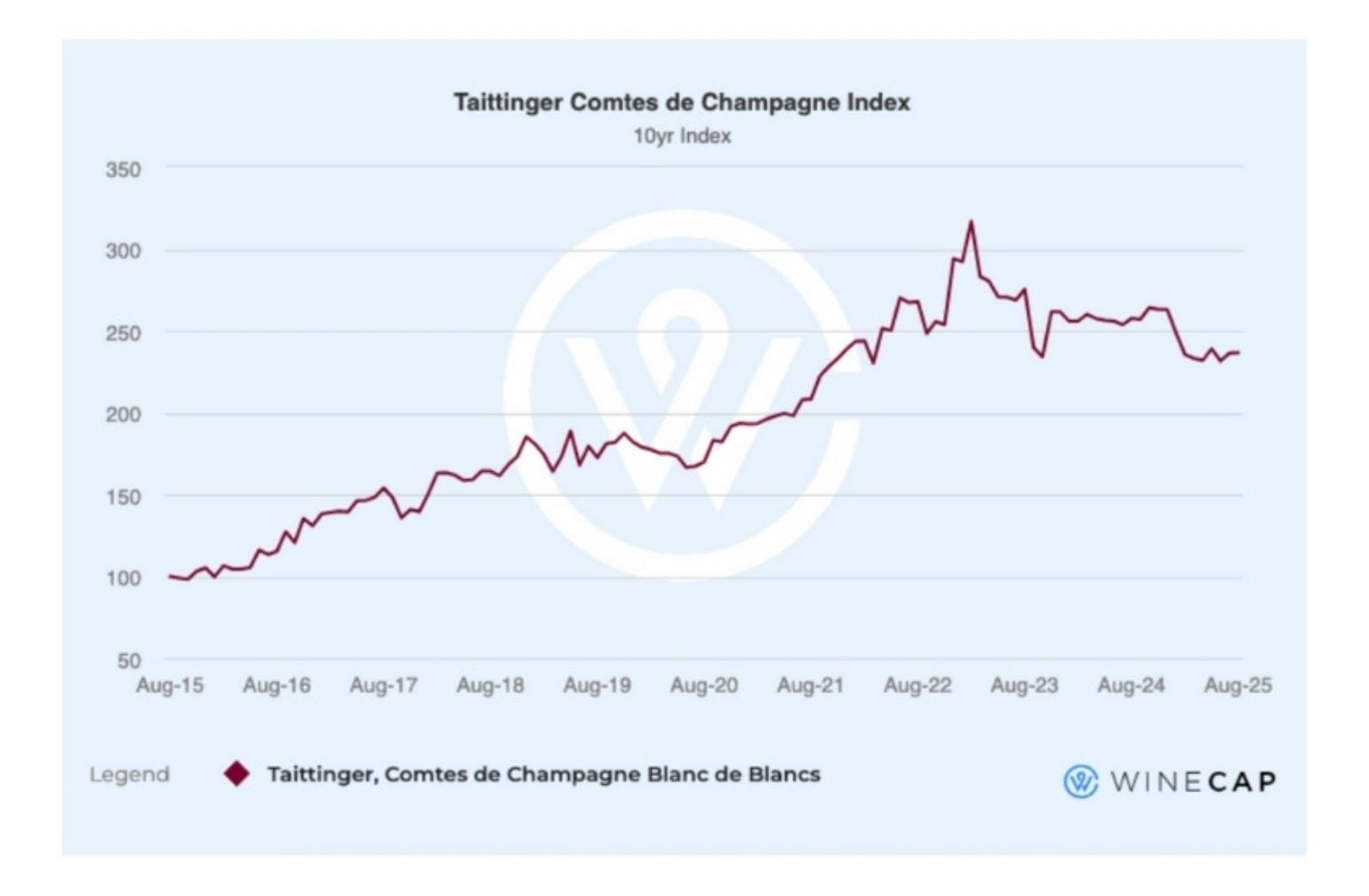
  • In Champagne, we see the most recognisable brands in wine with prestige cuvees such as Dom Perignon, Louis Roederer Cristal and Taittinger Comtes de Champagne dominating.  

These wines are not merely luxury Veblen goods; they are liquid assets with a historical track record of outperforming traditional equities especially during periods of market volatility.

Current regulations surrounding wine investment

The regulatory environment for wine investment in the United Kingdom is distinct from that of stocks, bonds, or insurance products. The most significant distinction is that the Financial Conduct Authority does not regulate the sale or management of physical wine portfolios. 

Because wine is a tangible, moveable property, it is treated as a commodity. This lack of FCA oversight means that investors do not have recourse to the Financial Services Compensation Scheme or the Financial Ombudsman Service if a wine investment does not perform as expected.

However, the trade itself is far from a free-for-all. 

To operate legally within the UK, wine merchants and investment firms must adhere to strict HMRC requirements. One of the most vital is the Alcohol Wholesaler Registration Scheme. This scheme requires any business trading in wholesale alcohol to be vetted and approved by HMRC. 

Investors should always verify that their chosen partner holds a valid AWRS number. This tells you that the business has passed a fit and proper test, providing a layer of security regarding the legitimacy of the merchant.

Distance selling regulations also play a role. When wine is purchased online or over the phone, the Consumer Rights Act 2015 applies. These rules govern the right to clear information, states that products must be fit for purpose, and as described.

Collective Investment Schemes represent a different regulatory tier. If an investment firm pools the capital of multiple investors to buy a shared interest in a large cellar, this may be classified as a CIS. 

In such instances, the manager of the scheme must be authorised and regulated by the FCA. Investors must distinguish between owning specific, identifiable cases of wine in their own name and owning “units” in a fund. The former is a direct commodity investment, while the latter is a regulated financial activity with its own advantages and disadvantages

Comparing wine investment regulations across different regions

The UK is widely considered the global hub for wine investment, largely due to its sophisticated bonded warehouse system. In the UK, wine can be stored “In Bond,” meaning VAT and excise duty are suspended as long as the wine remains in an HMRC-approved facility. This system is highly regulated and provides an impeccable paper trail for provenance.

This is why most wine investment companies store their wine in the UK regardless of the country they operate in.

In the European Union, regulation is often tied to the production side through the Protected Designation of Origin system. These laws dictate exactly how a wine can be made, which grapes can be used, and the maximum yields allowed. 

While this is a form of agricultural regulation, it serves investors by strictly limiting supply. For example, the DOCG rules in Barolo ensure that the “King of Wines” cannot be mass-produced, thereby protecting its investment value. 

The United States presents a more fragmented regulatory picture due to the three-tier system established after Prohibition. This system requires a strict separation between producers, wholesalers, and retailers. 

Regulation is handled both at the federal level by the Alcohol and Tobacco Tax and Trade Bureau and at the state level. 

For an investor, the US market can be complex because laws regarding the shipping of alcohol across state lines vary wildly. Some states allow direct-to-consumer shipping from out-of-state retailers, while others strictly forbid it. This can impact the liquidity of an investment, as the pool of potential buyers may be restricted by geography and explains why US based wine investment companies still tend to store their wines in the UK.

The risks and benefits of investing in wine

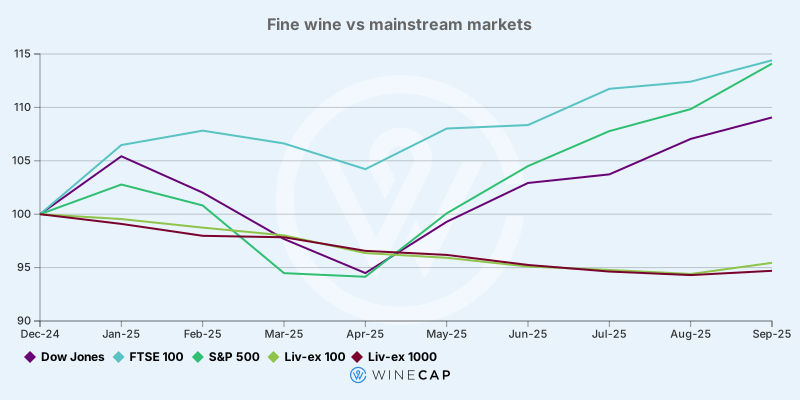
The most lauded benefit of wine investment is its role as a diversifier. Fine wine historically shows a low correlation with the FTSE 100 or the S&P 500. When the stock market suffers a downturn, wine prices tend to remain stable or even increase, as collectors seek hard assets to preserve wealth.

Tax efficiency is another major advantage for UK residents. HMRC typically classifies wine as a “wasting asset.” which means it has a predictable useful life of less than fifty years. 

Because wine is a living product that eventually spoils, it often falls into this category. Consequently, profits made from the sale of wine are usually exempt from Capital Gains Tax. 

Furthermore, if wine is held in bond, the investor avoids paying the 20 per cent VAT and the alcohol duty that would be due if they took physical delivery.

The risks include:

  • Liquidity: you cannot sell a case of Petrus as quickly as you can sell a share in Apple. The process of finding a buyer and executing a trade can take weeks. 
  • Physical damage: Wine is sensitive to temperature, light, and vibration. Without professional storage, the value of the investment can vanish. 
  • Market trends can be fickle: A region that is fashionable today may not hold its value as a long-term investment compared to the established stalwarts.

The importance of authenticity and provenance

In a market where a single bottle can command thousands of pounds, the threat of counterfeiting is a reality although less significant than in the past. For the modern investor, protecting against this risk is a matter of rigorous due diligence regarding provenance.

Provenance is the documented history of a bottle’s ownership and storage conditions. The gold standard for provenance is bonded status. When wine stays within the bonded system, it is never handled by the public, and its journey from the vineyard to the warehouse is tracked and verified. This bonded status is what future buyers pay a premium for.

Authenticity is also being bolstered by technology. Many top estates now use Prooftag seals, which provide a unique digital thumbprint for every bottle. Others are embedding microchips in labels or using laser-etched serial numbers on the glass. When buying through a reputable merchant, the investor relies on the expert inspection of the house specialists who check for correct cork markings, glass weight, and label typography. 

The clear history that in bond status grants is what makes a wine valuable as an investment.

Future trends in wine regulation 

The future of wine investment regulation and trading is likely to be defined by increased transparency and digital integration. As global authorities tighten anti-money laundering regulations, the wine trade will see more stringent “Know Your Customer” requirements. This will likely move the trade further away from the opaque reputation of the past and into a more standardised financial environment.

Blockchain technology is another emerging trend. By creating a digital twin of a physical bottle on a blockchain, merchants can provide an immutable record of ownership and provenance. This could allow for the “tokenisation” of wine, where investors buy shares in a specific high-value barrel or cellar. While this is an interesting frontier, it replicates existing assurances implicit in bonded status and in practical terms may actually limit liquidity.

Sustainability is also moving from a niche interest to a value driver. Investors as well as drinkers are increasingly looking for assets that not only appreciate in value but also adhere to ethical production standards, suggesting that the “Green Revolution” will soon have a permanent seat at the table of the fine wine trade.

FAQ

Is my wine investment protected by the FCA?

No, physical wine is not a regulated financial product in the UK. You should only trade with merchants who are registered under the Alcohol Wholesaler Registration Scheme to ensure they meet HMRC’s standards.

Do I have to pay tax on my wine profits?

In the UK, wine is generally regarded as a “wasting asset” by HMRC, which means it is usually exempt from Capital Gains Tax. Additionally, if you keep your wine in a bonded warehouse, you do not have to pay VAT or excise duty. You should consult a tax professional for advice specific to your circumstances.

Why is “In Bond” storage so important for regulation?

Storing wine in an HMRC-approved bonded warehouse ensures the wine is kept in perfect conditions and provides assurance of its provenance. It also allows for the suspension of taxes, which improves the liquidity and resale value of the asset.

What are the rules regarding collective wine investments?

If you are investing in a fund where capital is pooled and the assets are managed by a third party, this may be considered a Collective Investment Scheme. Under these circumstances, the firm managing the fund must be authorised and regulated by the FCA. Always clarify whether you own the physical bottles or a share in a scheme.

WineCap’s independent market analysis showcases the value of portfolio diversification and the stability offered by investing in wine. Speak to one of our wine investment experts and start building your portfolio. Schedule your free consultation today.
Categories
Learn

Which types of wine are considered investment-grade?

  • Investment-grade wine is characterised by exceptional quality, rarity, and a proven track record of price appreciation.
  • Most investment-grade wines come from regions like Bordeaux, Burgundy, Champagne, Tuscany, Barolo, Napa Valley and the Rhône.
  • Successful wine investing requires a long-term perspective, professional storage and a keen understanding of market trends. 

Understanding investment-grade wine

Investing in wine is not just about acquiring expensive bottles; it’s about selecting those that have the potential to appreciate in value over time. Investment-grade wines are those that are likely to increase in price due to factors such as rarity, quality, and demand. Unlike more common wines, these bottles often come from renowned vineyards and are produced in limited quantities, making them highly sought-after by a global pool of buyers.

The allure of investment-grade wine lies in its dual appeal: it is both a consumable luxury and a tangible asset. Unlike stocks or bonds, wine offers a tactile and sensory experience, which can make the investment feel more personal and engaging. However, to succeed in wine investment, one must understand the specific attributes that make a wine worthy of this status. This includes knowing the regions, varietals, and vintages that have historically performed well in the market.

In essence, the world of investment-grade wine is a blend of art and science. It requires a keen eye for quality, a solid understanding of market trends, and a bit of intuition. By mastering these elements, investors can build a portfolio that not only appreciates in value but also brings a unique joy and sophistication to their collection.

Characteristics of investment-grade wines

Investment-grade wines typically share several key characteristics that set them apart from everyday bottles. First and foremost is quality, often judged by critic scores. These wines are crafted with meticulous attention to detail from the vineyard to the bottle, using carefully selected grapes from the best plots and employing traditional winemaking techniques. The result is a wine that not only tastes exceptional but also has the potential to age gracefully over decades. With time, its value rises.

Another crucial element is rarity. Investment-grade wines are often produced in limited quantities, which adds to their exclusivity and desirability. This scarcity can be due to the vineyard’s small size, the particular vintage’s limited yield, or even deliberate production choices by the winemaker. The combination of high quality and limited supply creates a sense of urgency among collectors and investors, driving up the wine’s market value.

Provenance and reputation also play significant roles in determining a wine’s investment potential. Wines from renowned estates or those with a storied history are more likely to be considered investment-grade. The vineyard’s reputation for producing consistently high-quality wines can assure investors that they are making a sound choice. Additionally, wines that have received high ratings from respected critics and publications are more likely to appreciate in value, as these endorsements can significantly boost demand.

In summary, the following criteria make a wine investment-grade:

The “core four” investment criteria

  • Secondary market liquidity: The wine must attract a high volume of global trading at auction and the secondary market.
  • Ageing potential (longevity): Investment-grade wines are built to improve over 20 to 50 years. This is typically driven by high tannin, acidity, and alcohol structures that allow the flavor profile to evolve rather than decay.
  • Critical acclaim: A “consensus” score of 95 points or higher from influential critics (such as The Wine Advocate or Vinous) acts as a price floor and reduces the risk for the investor.
  • Pristine provenance: A documented “paper trail” proving the wine has been stored in climate-controlled conditions since its original release.

Scarcity and production factors

  • Limited production: Most investment wines are produced in quantities of fewer than 10,000 cases annually, ensuring that as bottles are consumed, the remaining supply becomes more valuable.
  • Vintage quality: “Great” years (characterised by perfect weather during the growing season) tend to see higher appreciation than “off-vintages” from the same producer if priced correctly at release.
  • Brand equity: The reputation of the estate (e.g., a First Growth in Bordeaux or a Grand Cru in Burgundy) acts as a brand guarantee, much like a “Blue Chip” stock.

Top wine regions for investment

While fine wine is produced globally, the investment market is concentrated in a few legendary regions with established secondary market histories.

France: The historical leaders

  • Bordeaux: The backbone of wine investing, known for high-volume liquid markets and prestigious First Growth estates like Château Lafite Rothschild and Château Margaux.
  • Burgundy: Driven by extreme scarcity and fragmented “Climat” terroir; Grand Cru Pinot Noir and Chardonnay from producers like DRC or Leroy command the world’s highest prices.
  • Champagne: A high-growth category where vintage-dated prestige cuvées (e.g., Dom Pérignon, Krug) offer excellent long-term appreciation due to celebratory demand.
  • The Rhône Valley: Home to robust, age-worthy Syrah and Grenache blends, particularly from the Hermitage and Châteauneuf-du-Pape appellations.

Italy & The USA: The “blue chip” alternatives

  • Tuscany (Super Tuscans): High-performing “Bordeaux-style” Italian blends such as Sassicaia, Tignanello, and Ornellaia that offer consistent global demand.
  • Piedmont: Small-production Barolo and Barbaresco (Nebbiolo) are increasingly compared to Burgundy for their terroir-driven value and ageing potential.
  • Napa Valley (California): The premier New World investment region, famous for “Cult Cabernets” like Screaming Eagle and Harlan Estate that rival the best of France.

Popular investment-grade wine varietals

Certain grape varietals are more likely to produce investment-grade wines due to their inherent qualities and the regions where they are cultivated. Cabernet Sauvignon, for example, is a cornerstone of many top investment wines, particularly those from Bordeaux and Napa Valley. Known for its bold flavors, robust tannins, and excellent aging potential, Cabernet Sauvignon has the structure and potential to support price appreciation if handled properly in the vineyard and the cellar, and coming from a reputable producer.

Pinot Noir is another varietal that often features in investment-grade wines. Having made a name in Burgundy, Pinot Noir is renowned for its complexity, elegance, and ability to reflect the terroir where it is cultivated. Wines made from Pinot Noir can develop incredible depth and nuance over time, making them highly desirable for long-term investment. The scarcity of top-tier Pinot Noir, particularly from Grand Cru vineyards, further enhances its investment appeal.

Chardonnay also holds a significant place in the investment wine market. While it is grown in many regions, the finest investment-grade Chardonnays often come from Burgundy, where the grape achieves its highest expression. These wines are celebrated for their balance, minerality, and ageing potential. Investment-grade Chardonnays from top producers and premier vineyards can command high prices and are sought after by collectors worldwide.

How to evaluate wine for investment potential

Evaluating a wine for its investment potential involves several key factors. One of the most critical is the wine’s provenance, which refers to its origin and history. Wines from renowned producers and prestigious vineyards are more likely to appreciate in value. Provenance also includes the wine’s storage history, as proper storage conditions are essential for maintaining its quality and marketability.

Another important factor is the wine’s vintage. Certain years produce better grapes due to favourable weather conditions, resulting in higher-quality wines. These vintage years are often marked by critics and can significantly influence a wine’s investment potential. Researching historical data and expert opinions on different vintages can help investors make informed decisions.

Market demand and trends also play a crucial role in evaluating investment potential. Wines that are highly sought after by collectors and enthusiasts are more likely to see price increases. Staying informed about market trends, auction results, and emerging regions or varietals can provide valuable insights into where to invest. Additionally, understanding the wine’s ageing potential and how it develops over time can help investors determine the optimal holding period for maximizing returns.

For investors, tools like Wine Track help observe a wine’s historic performance over time, as well as average entry point, critic scores, and investment returns. 

The role of wine ratings and reviews

Wine ratings and reviews are invaluable tools for investors, providing an expert assessment of a wine’s quality and potential. Renowned critics and publications, such as Robert Parker’s Wine Advocate, Vinous, Jeb Dunnuck, Jancis Robinson and Wine Spectator, to name a few, offer scores and reviews that can significantly influence a wine’s market value. High ratings from these sources can boost demand and drive up prices, making them an essential consideration for investors.

However, it’s important to understand that not all ratings and reviews are created equal. The credibility of the critic and the consistency of their evaluations play a significant role in their impact on the market. For example, a 95-point score from a highly respected critic like Robert Parker can have a more substantial effect than a similar score from a lesser-known reviewer. Investors should familiarise themselves with the most influential critics and publications to make informed decisions.

In addition to numerical scores, the detailed tasting notes provided by critics can offer valuable insights into a wine’s characteristics and ageing potential. These reviews often highlight the wine’s complexity, balance, and potential for development, helping investors gauge its long-term prospects. By combining ratings with in-depth reviews, investors can gain a comprehensive understanding of a wine’s investment potential.

Storage and preservation of investment wines

Proper storage and preservation are crucial for maintaining the quality and value of investment-grade wines. Unlike everyday bottles that are consumed shortly after purchase, investment wines often require decades of ageing to reach their full potential. This means that the conditions in which they are stored can significantly impact their quality and marketability.

The ideal storage environment for investment-grade wine is a cool, dark, and humid space with minimal temperature fluctuations. The temperature should be kept between 55-58°F (13-15°C), with a relative humidity of around 70%. These conditions help prevent the wine from spoiling and the cork from drying out, which can lead to oxidation and spoilage. Many serious collectors invest in professional wine storage facilities or custom-built wine cellars to ensure optimal conditions.

In addition to temperature and humidity control, it’s important to minimise exposure to light and vibrations. Ultraviolet light can degrade the wine’s flavors and aromas, while vibrations can disturb the sediment and affect the wine’s aging process. Storing bottles horizontally also helps keep the cork moist, preventing air from entering the bottle. By adhering to these storage principles, investors can preserve the quality and value of their investment wines.

Market trends in wine investment

The wine investment market is dynamic and influenced by various trends that can impact the value of different wines. One significant trend is the increasing interest in wines from emerging regions. While Bordeaux and Burgundy have long dominated the market, regions like California, Italy, and even China are gaining recognition for producing high-quality, investment-worthy wines. Savvy investors are diversifying their portfolios to include wines from many up-and-coming regions, capitalising on their growing popularity.

Another trend is the rise of sustainable and organic wines. As consumers become more environmentally conscious, there is a growing demand for wines produced using sustainable, organic, or biodynamic practices. These wines often command higher prices and can offer attractive investment opportunities. Investors who stay ahead of this trend can benefit from the increasing market demand for eco-friendly wines.

The role of technology and data analytics is also transforming the wine investment landscape. Advanced tools and platforms are now available to help investors track market trends, analyze historical data, and make informed decisions. Online wine marketplaces and auction sites are making it easier for investors to buy and sell wines, increasing market transparency and accessibility. By leveraging these technological advancements, investors can stay informed and navigate the market more effectively.

Risks and considerations in wine investing

While wine investing can be rewarding, it is not without its risks and considerations. One of the primary risks is market volatility. The value of investment-grade wines can fluctuate due to changes in demand, economic conditions, and other external factors. Unlike traditional financial investments, the wine market is less regulated and can be more susceptible to speculation and price manipulation.

Another consideration is the time and effort required to manage a wine investment portfolio. Unlike stocks or bonds, wine requires proper storage, insurance, and occasional monitoring to ensure its quality is maintained. The costs associated with storage and insurance can add up, potentially impacting the overall return on investment. Investors must also be prepared to hold onto their wines for an extended period, as it can take years or even decades for certain wines to reach their peak value.

Fraud and counterfeit wines are also significant concerns in the wine investment market. High-value wines are often targeted by counterfeiters, and distinguishing genuine bottles from fakes can be challenging. Investors should take precautions by buying from reputable sources, verifying provenance, and using authentication services when necessary. By being aware of these risks and taking appropriate measures, investors can protect their assets and make more informed investment decisions.

Is wine a worthwhile investment?

Investing in wine can be a worthwhile endeavour for those who appreciate its unique blend of art, science, and luxury. Investment-grade wines, characterised by their quality, rarity, and provenance, have the potential to appreciate in value over time, offering attractive returns. By understanding the key characteristics of investment-grade wines, staying informed about market trends, and taking proper storage and preservation measures, investors can build a successful wine investment portfolio.

However, it’s essential to recognise that wine investing comes with its own set of risks and challenges. Market volatility, storage and insurance costs, and the risk of fraud are all factors that investors must consider. Wine investment requires a long-term commitment, careful research, and a passion for the world of fine wine. For those willing to put in the time and effort, wine investing can be a rewarding and enjoyable pursuit that combines financial gains with the pleasure of owning and experiencing some of the world’s finest wines.

People also ask

What makes a wine “investment-grade”?

Investment-grade wines are high-quality bottles with proven aging potential, high critic scores (95+), and secondary market demand. They typically possess a combination of rarity, prestigious provenance, and a track record of price appreciation.

Which wine regions offer the best investment returns?

Bordeaux and Burgundy remain the gold standard for investors. However, “Super Tuscans” from Italy, premium Cabernet Sauvignons from Napa Valley, and top-tier Champagnes are increasingly recognised as stable, high-growth assets.

Do I need a professional cellar to invest in wine?

Yes, or a professional bonded warehouse. Investment-grade wine must be stored at constant temperatures (55-58°F) and 70% humidity. Without proof of professional storage (provenance), the resale value can drop.

Which grape varietals are most valuable for collectors?

Cabernet Sauvignon and Pinot Noir are the primary drivers of the investment market due to their longevity. High-end Chardonnay (specifically from Burgundy) and Syrah/Shiraz from the Rhône or Australia also hold significant value.

Is wine a safe alternative to stocks and bonds?

Wine is a “tangible asset” with low correlation to traditional markets, making it a great diversifier. While it offers protection during inflation, it is less liquid and involves costs like insurance, storage, and selling fees.

How do I start investing in fine wine in the UK?

To invest in the UK, you typically buy wine “In Bond.” This means the wine is stored in an HMRC-approved bonded warehouse where VAT and Alcohol Duty are deferred. You only pay these taxes if you withdraw the wine for personal consumption. If you sell the wine while it is still “under bond” to another investor or merchant, you never pay these taxes, which significantly protects your profit margins.

Categories
Learn

The best Italian wines: A complete guide

  • This guide breaks down the best Italian wines by region, grape variety, and style, making it easy to understand what matters most.
  • We also highlight the Italian wines with proven investment potential, including the producers most traded on the secondary market.
  • From Barolo and Barbaresco to Brunello and Super Tuscans, Italy produces some of the world’s most collectable wines.

Italian wine is one of the most complex, expressive, and rewarding categories in the world. With hundreds of native grape varieties, deeply-rooted regional identities, and a growing presence in the global fine wine market, Italy offers an unmatched combination of history, diversity, and long-term potential.

For many people, Italian wine starts with familiar names such as Chianti or Prosecco but these only scratch the surface. Beneath them lies a vast and nuanced landscape shaped by geography, tradition, and evolving winemaking philosophies.

Over the past decade, Italian wine has taken on a new role: not just as something to enjoy at the table, but as a serious category within fine wine collecting and investment. Once dominated by Bordeaux and Burgundy, the secondary market has increasingly embraced Italy’s top wines, particularly from Piedmont and Tuscany. Italy’s market share by value has risen from 5.7% to 15.3% since 2016, making it an important addition to investment portfolios, providing stability and potential for high returns.

This guide explores the best Italian wines, explains the regions and grape varieties behind them, and outlines why certain Italian wines have become sought after by collectors worldwide.

Why Italy is one of the most important wine countries

Italy is the world’s largest wine producer by volume and one of the oldest wine cultures in existence. Wine has been produced on the Italian peninsula for more than two millennia, and today it remains deeply intertwined with everyday life, food, and regional identity.

What sets Italy apart from other wine-producing countries is its extraordinary diversity. Officially, Italy recognises more than 500 native grape varieties, far more than France or Spain. These grapes are cultivated across dramatically varied climates – from Alpine vineyards in the north to Mediterranean coastlines in the south.

From a global perspective, Italy combines:

  • Strong domestic consumption
  • Consistent export demand
  • Increasing collector and investor interest

This balance has helped Italian wine remain resilient through changing market conditions and has supported long-term appreciation for the country’s top wines.

Understanding Italian wine classifications

Italian wines are regulated by a classification system designed to protect origin and quality. While not a guarantee of excellence, classification provides important context when navigating Italian wine.

  • DOCG (Denominazione di Origine Controllata e Garantita)
    The highest level, covering iconic wines such as Barolo, Barbaresco, and Brunello di Montalcino.
  • DOC (Denominazione di Origine Controllata)
    A broad category covering many high-quality wines with defined production rules.
  • IGT (Indicazione Geografica Tipica)
    Introduced to allow flexibility and innovation, famously used by Super Tuscan producers.

From a collecting perspective, classification matters because it signals consistency, recognisability, and historical reputation. However, some of Italy’s most valuable wines sit outside the DOCG system, proving that producer reputation often outweighs classification alone.

Italian wine regions explained

Italy’s geography plays a defining role in its wines. Stretching from the Alps in the north to the Mediterranean islands in the south, the country encompasses a wide range of climates, soils, and elevations. Understanding Italian wine regions is the foundation for understanding the best Italian wines.

Piedmont: Home of Barolo and Barbaresco

Piedmont is widely regarded as Italy’s most important fine wine region. Located in the north-west of the country, it is defined by rolling hills, foggy autumns, and a continental climate ideal for slow ripening. It is widely regarded as the most important region for investment-grade Italian red wines.

Its flagship grape, Nebbiolo, produces two of Italy’s most famous wines:

  • Barolo
  • Barbaresco

These wines are known for their structure, complexity, and ability to age for decades. Barolo, often referred to as “the King of Wines,” combines power with finesse, while Barbaresco tends to offer slightly more elegance and earlier approachability.

From an investment perspective, Piedmont wines benefit from:

  • Strict production rules
  • Limited vineyard land
  • Strong international demand

As a result, Barolo and Barbaresco consistently feature among the best Italian wines to collect.

Tuscany: Sangiovese, Brunello and Super Tuscans

Tuscany is perhaps Italy’s most recognisable wine region, producing some of the most famous Italian wines in the world. At the heart of  Tuscan wine is Sangiovese, a grape capable of producing everything from fresh, everyday wines to long-lived icons.

Key Tuscan wines include:

  • Chianti Classico
  • Brunello di Montalcino
  • Vino Nobile di Montepulciano

Brunello di Montalcino, made exclusively from Sangiovese Grosso, is among Italy’s most age-worthy wines, often developing over 20-30 years.

Tuscany is also home to the Super Tuscans – wines like Sassicaia, Tignanello, and Ornellaia. These wines broke traditional rules by incorporating international grapes such as Cabernet Sauvignon and Merlot, and today they rank among the best Italian wines for collectors and investors.

Veneto: Amarone and Valpolicella

Veneto, in north-eastern Italy, produces a broad range of styles, but its most prestigious wine is Amarone della Valpolicella.

Amarone is made using partially dried grapes, resulting in a powerful, concentrated red wine with high ageing potential. While stylistically different from Barolo or Brunello, top Amarone wines can develop beautifully over time and occupy a niche role in Italian wine collections.

Veneto also produces:

  • Valpolicella Classico
  • Valpolicella Ripasso
  • Soave (white)

While not all Veneto wines are investment-grade, Amarone remains one of the best Italian red wines for collectors seeking diversity.

Southern Italy and the islands

Southern regions such as Sicily, Puglia, and Campania have undergone a quality renaissance in recent decades.

Key grapes include:

  • Nero d’Avola (Sicily)
  • Primitivo (Puglia)
  • Aglianico (Campania)

These regions produce expressive and often excellent-value wines, but most are intended for enjoyment rather than long-term investment. That said, select producers – particularly in Sicily – are increasingly attracting collector interest.

The best Italian wines by style

Understanding Italian wine styles helps narrow down what makes certain bottles stand out.

Best Italian red wines

Italy is best known for its red wines, particularly those capable of ageing.

Standout styles include:

  • Nebbiolo-based wines (Barolo, Barbaresco)
  • Sangiovese-based wines (Brunello, Chianti Classico)
  • Amarone della Valpolicella
  • Super Tuscan blends

These wines combine structure, acidity, and tannin, all key elements for longevity.

Best Italian white wines

Italian white wines are often overshadowed by reds, but they play an important role in Italy’s wine identity.

Notable white wines include:

  • Gavi (Cortese)
  • Soave (Garganega)
  • Verdicchio
  • Vermentino

While most Italian white wines are produced for early consumption, a small number – particularly from top producers – can age gracefully. From an investment standpoint, however, Italian whites remain a niche category.

Best Italian wines for ageing

Age-worthy Italian wines typically share:

  • High acidity
  • Firm tannins
  • Structured phenolics

Examples include:

  • Barolo
  • Barbaresco
  • Brunello di Montalcino
  • Super Tuscans

These wines often improve for decades, making them attractive to collectors focused on long-term horizons.

What makes Italian wine investment-grade?

Not all Italian wines are suitable for investment. The best Italian wines for collectors tend to meet several criteria:

  1. Producer reputation
    Iconic estates with long track records perform best.
  2. Regional prestige
    Piedmont and Tuscany dominate secondary market activity.
  3. Scarcity
    Limited production drives long-term demand.
  4. Critical recognition
    Consistent acclaim helps sustain liquidity.
  5. Provenance and storage
    Condition matters as much as the wine itself.

Investment-grade Italian wines to know

While Italy produces an extraordinary range of styles, only a relatively small group of producers have built the kind of global reputation, scarcity, and long-term demand required to be considered truly investment-grade.

The wines below are among the most consistently traded and collected Italian labels, forming the backbone of many high-performing fine wine portfolios.

Top Barolo producers

Barolo remains Italy’s most internationally recognised collectible wine, and several estates have established themselves as long-term benchmarks:

  • Giacomo Conterno
    Widely regarded as one of the most important names in Barolo. Monfortino Riserva is among Italy’s most iconic and investment-relevant wines, consistently commanding premium market pricing.
  • Giuseppe Rinaldi
    A cult producer with extremely limited production. Rinaldi Barolo has long been a collector favourite, with demand far outstripping supply.
  • Bartolo Mascarello
    Famous for its traditional style and unwavering consistency. Mascarello’s Barolo is a staple of serious Italian collections, prized for both provenance and ageing ability.
  • Bruno Giacosa
    Known for producing some of Piedmont’s most elegant and refined wines. Bottlings such as Barolo Falletto and the estate’s Riserva releases remain highly sought after.
  • Vietti
    A collector-friendly producer with broad distribution, consistent critic attention, and strong brand recognition. Vietti’s single-vineyard Barolos are widely followed.
  • Luciano Sandrone
    One of Barolo’s most respected modern-era producers, with a strong track record for quality and international demand.
  • Roberto Voerzio
    Highly allocated and limited in volume, Voerzio’s wines have become increasingly important in collector circles.
  • Elio Altare
    A pioneering modernist producer whose Barolos remain highly regarded for their intensity and style.
  • Cappellano
    A cult name best known for Pie Rupestris, increasingly recognised as a serious collectible Barolo.

In general, the most investment-relevant Barolos are those with a combination of scarcity, critical reputation, and a recognisable brand identity – particularly wines tied to celebrated crus such as Cannubi, Monfortino, Brunate, Bussia, Rocche dell’Annunziata, and Cerequio.

Leading Barbaresco estates

While Barolo tends to dominate headlines, Barbaresco has become one of the strongest growth categories in Italian fine wine, often delivering exceptional quality with slightly earlier drinking windows.

Key investment-grade Barbaresco names include:

  • Gaja
    The global powerhouse of Barbaresco. Single-vineyard wines such as Costa Russi, Sori Tildin, and Sori San Lorenzo remain among the most traded Italian wines worldwide.
  • Roagna
    Roagna is a producer with rising collector demand, known for long macerations, terroir transparency, and extremely age-worthy wines.
  • Bruno Giacosa
    Giacosa’s Barbaresco releases are often considered some of the region’s most refined expressions.
  • Produttori del Barbaresco
    One of the most important cooperative estates in the world. Their single-vineyard Riservas offer strong quality-to-price value and have earned growing collector attention.
  • Ceretto
    A well-known producer with broad recognition and strong positioning in international markets.
  • Sottimano
    Sottimano is increasingly sought after by collectors for its purity and quality.

For many collectors, Barbaresco represents one of the most compelling Italian categories due to its prestige, lower relative pricing (vs Barolo), and strong long-term market momentum.

Other Piedmont wines collectors watch

While Nebbiolo dominates Piedmont’s investment landscape, the region also produces collectible wines outside the Barolo/Barbaresco framework:

  • Barbera d’Alba (top cuvées) from producers such as Giacomo Conterno and Vietti
  • Langhe Nebbiolo from elite estates, increasingly viewed as entry-level collector wines
  • Alto Piemonte Nebbiolo (Gattinara, Boca, Lessona), a category gaining interest among sophisticated collectors

Tuscan benchmarks: Brunello, Chianti Classico and Super Tuscans

If Piedmont is defined by tradition and Nebbiolo, Tuscany is defined by global brand strength and diversity. Tuscany’s finest wines are among the most recognisable Italian labels in the world, making them particularly attractive to collectors seeking liquidity.

Brunello di Montalcino

Brunello is one of Italy’s most age-worthy and internationally respected wines. The most investment-grade producers include:

  • Biondi-Santi
    A historic name often regarded as Brunello’s spiritual home. Rare Riserva bottlings are especially prized by collectors.
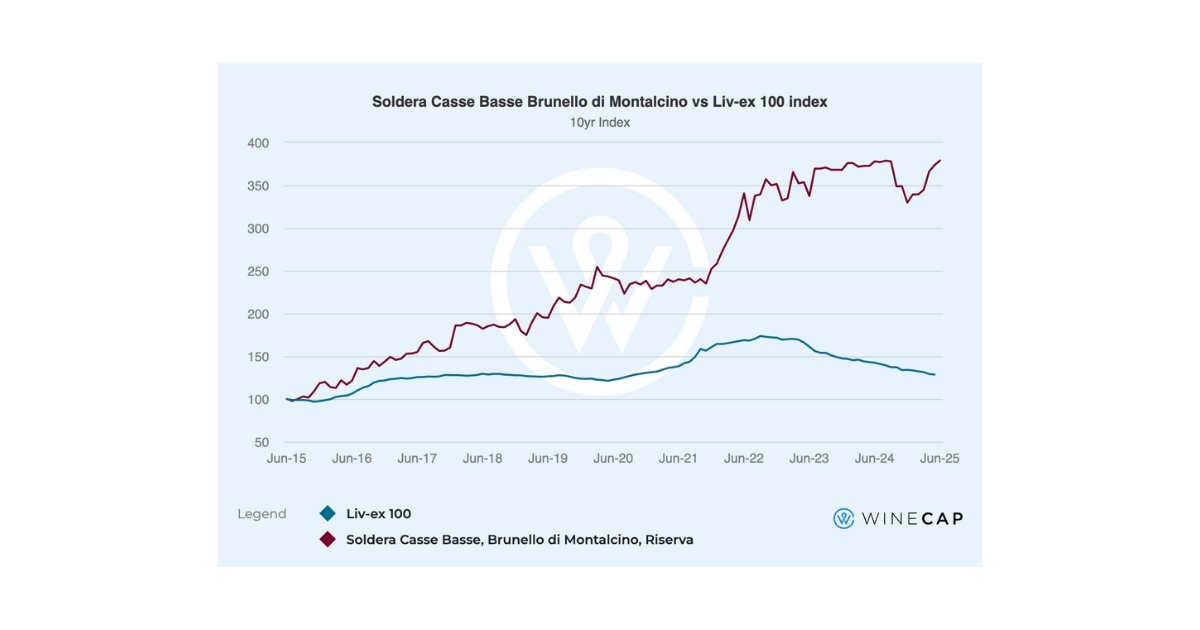
  • Gianfranco Soldera (Case Basse)
    A cult-level producer whose wines are among the most sought-after Italian bottlings globally.
  • Salvioni
    Another low-production, high-reputation estate with growing global presence.
  • Casanova di Neri
    A modern benchmark, with wines like Tenuta Nuova and Cerretalto frequently followed by collectors.
  • Valdicava
    A key Brunello name with a strong reputation for power and ageing capacity.
  • Il Poggione
    A historic estate offering strong brand recognition and a consistent track record.

The best Brunello wines combine structure, longevity, and a reputation for consistent quality across vintages, making them increasingly relevant in diversified Italian wine portfolios.

Chianti Classico: Top estates worth watching

Chianti is often seen as a “drinking category,” but at the highest level, Chianti Classico is becoming increasingly collectable – particularly as producers push quality higher and vineyard sites become more clearly defined.

Notable names include:

  • Fontodi
  • Isole e Olena
  • Castello di Ama
  • Fèlsina
  • Ricasoli
  • Antinori (Badia a Passignano/Peppoli)

While Chianti Classico generally trades less than Barolo or Super Tuscans, top bottlings are increasingly viewed as long-term value plays for collectors.

The Super Tuscans: Italy’s most investable wines

If there is one Italian category that rivals Bordeaux in global brand power, it is Super Tuscan wine. These labels dominate auction catalogues, collector wish lists, and international trading platforms.

Sassicaia (Tenuta San Guido)

Arguably Italy’s most famous wine, Sassicaia combines prestige, ageing potential, and consistent global demand. For many collectors, it is the gateway into Italian fine wine investment.

Tignanello (Marchesi Antinori)

One of the original Super Tuscan wines and still one of the most widely recognised. It remains highly liquid in the secondary market and benefits from Antinori’s immense global reach.

Ornellaia

A benchmark Bolgheri estate known for polished, powerful wines and strong vintage consistency. Ornellaia’s limited art releases further elevate its collector status.

Masseto

Often considered Italy’s most coveted modern wine. Masseto is produced in very limited quantities and enjoys significant international demand, particularly in Asia and the US. Its pricing reflects its scarcity and cult reputation.

Solaia (Marchesi Antinori)

Another flagship Antinori wine, often compared to top Left Bank Bordeaux blends. Solaia remains highly collectible and typically outperforms many Italian peers in global visibility.

Guado al Tasso (Antinori)

A Bolgheri classic that has gained momentum among collectors as a slightly more accessible alternative to Sassicaia and Ornellaia.

Bolgheri, in general, has become one of Italy’s most important fine wine sub-regions due to its international style, strong critic scores, and consistent market liquidity.

Premium Amarone della Valpolicella

Amarone is a unique Italian wine style with a global following. While not all Amarone is investment-grade, a handful of producers have established strong reputations and consistent demand.

For collectors, Amarone offers diversification: it is stylistically different from Barolo and Brunello, yet still capable of long ageing and secondary market relevance.

  • Giuseppe Quintarelli
    The most iconic Amarone producer. Quintarelli’s wines are extremely limited, highly allocated, and among the most collectable wines of Veneto.
  • Dal Forno Romano
    A powerful modern benchmark. Dal Forno’s Amarone is often compared to cult Napa Cabernet in intensity and concentration, and it remains highly sought after.

The best Italian wines combine history, craftsmanship, and longevity in a way few other categories can match. For drinkers, they offer endless discovery. For collectors, they offer scarcity, prestige, and long-term relevance.

As global demand continues to grow, Italian wines are no longer the “alternative” to Bordeaux or Burgundy – they are a cornerstone of the fine wine market in their own right.

FAQs about the best Italian wines

What are the best Italian wines for beginners?

Chianti Classico, Barbera d’Alba, and Valpolicella offer approachable introductions to Italian wine styles.

What are the most famous Italian wines?

Barolo, Brunello di Montalcino, Amarone, Chianti Classico, and Super Tuscans are among the most famous Italian wines globally.

Are Italian wines good investments?

Select Italian wines – particularly from Piedmont and Tuscany – have proven to be strong long-term performers in the fine wine market.

Which Italian wines age the longest?

Barolo, Barbaresco, Brunello di Montalcino, and top Super Tuscans are among the most age-worthy Italian wines.


Feature image: Tenuta San Guido

Categories
Quarterly-reports

A year in review: 2025’s top wine investment trends

In our final summary of the year, we look back at 2025’s top wine investment stories, from the impact of US tariffs on regional demand to market stabilisation and improvement in the second half of the year.  

Key themes:

WineCap’s round-up of 2025’s top stories presents a picture of a fine wine market that is showing signs of renewal following three years of downturn. Annual UK and US wealth reports reaffirmed fine wine’s growing position in diversified portfolios, despite tariff threats, restrained En Primeur activity, and uneven regional performance influencing sentiment. Early indicators of stabilisation in key regions and vibrant critic endorsement point to a transitioning market, laying foundations for fresh momentum.

UK and US wealth reports predict third-year rise in wine investing 

For the third year running, the year-start WineCap wealth outlook was positive. Predictions of rising demand for fine wine gradually bore out over an uncertain year. 

A combined 95% of wealth managers in the UK and the US said that fine wine would remain a top-performing collectible despite political uncertainty and shifting interest rates. Across both countries, fine wine was seen as one of the best alternative investments, outperforming other luxury assets such as art, watches, whiskey, and handbags.

In the UK, the trend was driven by investors seeking tax efficiency, stability, and diversification benefits, with wine increasingly appearing in higher-risk portfolios and retirement planning.

Factors increasing demand for fine wine investment table

Meanwhile, in the US, the trajectory was similar, with protection from currency volatility an additional attraction of fine wine investment.

Benefits of fine wine investment pie chart

Wealth managers from both sides of the Atlantic noted that the proportion of younger, data-driven investors entering the market continues to rise, and an overall shift in fine wine evolving into a broader wealth-building strategy rather than a niche passion.

Key points

  • At the start of the year, 95% of UK and US wealth managers felt positive about fine wine investment.
  • Fine wine is appearing in higher-risk portfolios.
  • Fine wine is moving from specialist investment interest to mainstream strategy.

Trump tariffs bring uncertainty to fine wine market 

With Donald Trump’s return to the White House at the beginning of 2025, the new administration posited fresh economic policies, including the threat of 200% tariffs on alcohol from the EU. The announcement sent a chill through the fine wine market: buyers paused, demand slipped, and prices softened as investors temporarily redirected capital toward equities, property, and currency.

Yet alternative assets held firmer than expected. WineCap’s UK and US Wealth Reports showed that 58% and 74% of respondents respectively continued to view assets such as fine wine as attractive stores of value.

Stability returned in July 2025, when the US and EU agreed to a far more measured 15% tariff on European exports. With clarity restored, buyers re-entered the market – particularly in regions initially hit hardest, such as Champagne and Spain, which were among the first to rebound.

Key points

  • Trump’s EU alcohol tariff threat initially dampened market activity.
  • WineCap wealth reports indicate fine wine remains attractive regardless of the political climate.
  • Tariff consolidation in July saw US buying demand return, especially in the most impacted regions like Champagne and Spain.

Subdued Bordeaux 2024 En Primeur campaign

The annual Bordeaux En Primeur 2024 campaign launched towards the end of April against the background of a cautious market, triggering 20-30% price cuts in the leading French wine region in an attempt to increase demand. With Bordeaux’s global market share losing ground and a general correction in fine wine prices, discounting was a key driver of sales, over vintage (regarded as uneven) and brand. This approach increased access to rare-value opportunities in Bordeaux wine, most notably for First Growth estates, Lafite Rothschild and Mouton Rothschild. The 2024 vintage proved a strong year for white wines, with Haut-Brion and Domaine de Chevalier among the standouts.

Chateau Mouton Rothschild wine performance bar graph

Key points

  • Critics noted that Bordeaux 2024 was the perfect vintage for a reset. 
  • En Primeur demand was soft and price cuts were necessary.
  • First Growths Lafite and Mouton Rothschild were among the campaign’s biggest successes.

Early signs of stabilisation in Champagne and Italy

After two years of consistent declines, the fine wine market hinted at an early reversal in the second half of 2025, with Champagne being the first region to indicate a small upturn, in its first month-on-month gain in a year in June. With the majority of leading vintages of Champagne brands like Dom Pérignon, Cristal, Salon, Krug, and Taittinger flatlining for at least six months, a welcome phase of consolidation was indicated. 

Champagne’s strong recognisability, cellaring capacity, and relatively accessible entry points have positioned it well for a return to growth. Indeed, the region showing resilience throughout the second half of 2025. The Rhône also saw stronger demand, while “off” vintages in Bordeaux trended in a region that, alongside wine from Burgundy, showed signs of finding its bottom.

Momentum characterised the Italian fine wine market too, with the Tuscan region gaining traction as investors looked to Brunello and Super Tuscans like Sassicaia, Ornellaia, and Masseto. Performance for key Piedmont wines, however, remained softer. This was due to owing to investor preference for regions with wider international recognition and greater liquidity in the current economic climate. In California, global demand and strong branding fuelled rising interest for labels such as Opus One and Screaming Eagle.

Key points

  • Fine wine reversal indicated after two years of decline.
  • Champagne and Tuscany were the first to turn positive. 
  • Bordeaux “off” vintages stood out, while strong branding drove demand for Champagne and California’s cult wines.

La Place: strong global reach meets soft sentiment

In September, the 2025 La Place campaign continued its steady expansion beyond French Bordeaux wines with more than 130 labels also representing emblematic estates from Tuscany, California, Chile, Argentina, and Australia, released through the prestigious distribution network. This year’s campaign unfolded against a backdrop of economic ambiguity and a softer fine wine market environment. This naturally led to strategic price cuts. Overall, La Place 2025 underperformed, but this signalled a cautious stance in the market rather than decline.

Key points

  • La Place continued to reflect global quality.
  • Strategic price cuts were a key feature of this campaign.
  • Campaign lagged, but the reason was mostly tied to general market mood and macroeconomic factors. 

Record fine wine auctions in 2025

Against a backdrop of renewed regional stability in the fine wine market in the second half of the year, several record auctions hit the headlines. While multimillion-dollar sales from the likes of William I. Koch ($28.8mln) and Jacqueline (de Rothschild) Piatigorsky ($11.16 mln) displayed appetite for provenance and iconic vintages, they did not reflect the core secondary market. However, analytical investors could detect long-term demand for blue-chip wines and micro-trends in these auction results.

More reliable signals came from the 2025 Hospices de Beaune auction, which achieved €18.75 million, the third-highest total in its 166-year history. Robust bidding for top cuvées – notably the Bâtard-Montrachet Grand Cru “Cuvée Dames de Flandres” at €400,000 per barrel and the Pommard Premier Cru Les Rugiens President’s Barrel, also at €400,000 – confirmed the market’s persistent confidence in Burgundy terroir and mature premium whites. These results paralleled broader trends seen throughout the year with a decisive pivot towards established producers and investment-grade appellations.

Nevertheless, headline auctions hint at fine wine market sentiment at the very top end like DRC and Petrus. They do not reflect the reality of the investment market as a whole. Auction headlines offer pointers to appetite for particular fine wine segments, but data-driven portfolios continue to cultivate the potential for sustainable returns.

Key points

  • Several record-setting fine wine auctions took place in 2025, including a landmark Hospices de Beaune sale.
  • Strong results confirmed appetite for established estates and iconic vintages, but did not reflect the broader market dynamics.
  • A diversified investment portfolio goes beyond the headline-grabbing names to good value alternatives with strong growth potential.

First positive gain for the fine wine market in Q3

The fine wine market started to stabilise in Q3 as global economic sentiment improved and the anticipation of steady rate cuts supported alternative assets. Regions that led this early-stage market equilibrium were Champagne, the Rhône, notably with Domaine du Vieux Télégraphe, Tuscany, famous Napa wineries in California, and First Growth Bordeaux.

In the final months of the year, these regions continued to show resilience. Scarcity, selectivity, and estate reputation drove returns. This phase is signalling a market that is bottoming out and poised for gradual recovery, offering attractive entry points for medium- to long-term investors.

Key points

  • Fine wine market stabilised in H2 2025.
  • Champagne, the Rhône, Tuscany, California, and Bordeaux showed resilience.
  • This laid the ground for positive market movement.

Bordeaux 2022 dominates critics’ top wine choices

The year neared its end with the 2025 global critic rankings highlighting the fine wine market’s increased diversity. Top choices spanned with Bordeaux, California, Italy, South Africa, Etna, Central Otago, and Beaujolais. Bordeaux 2022 was the star region and vintage as Château Giscours, Château Beau-Séjour Bécot, and Château d’Issan earned top positions from Wine Spectator, Vinous, and James Suckling. The selection bolstered Bordeaux’s market significance despite the challenges the region has been facing. Alongside Bordeaux’s success, Italy and New World regions shone (particularly Californian cult labels and South African wine brands), pointing to a rise in quality across the wine world.

Key points

  • Annual critic ratings featured fine wine regional diversity.
  • Bordeaux 2022 was a leading choice across rankings.
  • Quality in New World wines indicated by the rising number of listings.

2025’s top-performing wines

The strongest performers of 2025 were concentrated in a few key regions. The Rhône dominated with 50% of the top movers, followed by Burgundy (30%), Tuscany (10%), and Sauternes (10%). Château Rayas led the rankings, with two vintages taking the year’s top spots. Rayas prices have been particularly volatile following the passing of Emmanuel Reynaud in November. A similar market reaction occurred after the sudden death of Jacques Reynaud in 1997, whose tenure from 1978 cemented Rayas’ reputation as one of the Rhône’s modern icons.

Momentum extended across the Rhône more broadly. E. Guigal’s Cote Rotie Chateau d’Ampuis  2019 climbed 40%, while Paul Jaboulet Aîné’s Hermitage La Chapelle Rouge 2014 gained 35%.

In Burgundy, DRC La Tache 2018 emerged as the region’s standout, up nearly 37% over the year. Tuscany’s top performer was Soldera Casse Basse, which rose 36% and continues its long-term outperformance. Over the past decade, Soldera prices have risen an exceptional 224% – well ahead of the Super Tuscans.

Key points

  • The Rhône dominates the list of 2025’s top-performing wines.
  • Château Rayas prices are rising sharply following the death of Emmanuel Reynaud.
  • Soldera Case Basse is Italy’s top performer of 2025 and continues to outperform the Super Tuscans over the long term.

Q4 2025: recovery precedes diversification 

By the final quarter of 2025, the fine wine market had begun to emerge from its most prolonged downturn in over a decade. The recovery remains uneven and cannot yet be described as a full rebound. However, underlying indicators suggest that the foundations for 2026 are firmer than at any point since the correction began.

Prices have stabilised, liquidity has improved, and several leading brands have now posted consistent monthly gains. Importantly, the early recovery has been measured rather than speculative, encouraging renewed participation from both private collectors and wealth managers.

Brand-level movements in late 2025 reinforced this early momentum. Many of the world’s most recognisable estates – across Bordeaux, Champagne, and the Rhône – posted modest but steady price increases, while over half of the most traded wines globally, finished November in the positive territory. A handful of standout performers, including top Bordeaux châteaux, iconic Rhône bottlings, and prestige cuvée Champagnes, delivered some of the strongest month-on-month rises seen all year. Not every segment moved uniformly: a number of cult California and Piedmont labels continued to ease back, underlining that different regions and vintages are still finding their floors at different times. The picture is stabilising, but it remains nuanced.

This complexity will define the transition into 2026. Investors should expect a market composed of multiple micro-cycles, where pricing floors and recovery curves vary by region, style, and vintage. 

Key points

  • Q4 2025 saw stabilising prices and improved liquidity after the longest downturn in over a decade.
  • Over half of the most actively traded wines posted gains in November 2025.
  • Recovery remains uneven, with different regions and vintages finding pricing floors at different times.

Looking ahead to 2026

Looking ahead, diversity is likely to shape the next stage of recovery. As fine wine continued to evolve from into a mainstream portfolio tool, investors will broaden their focus beyond the blue-chips. This shift is supported by the industry’s accelerated modernisation. Expanded global distribution networks, higher transparency, sustainability initiatives, and improved data access are making fine wine more accessible. The sector still faces an image challenge, but meaningful innovation is helping to reshape perceptions.

While a sharp, v-shaped upturn remains unlikely, the groundwork for a slow, sustainable and more widely distributed recovery is now in place. For medium- to long-term investors, 2026 is expected to offer clearer opportunities, improved sentiment, and a more diversified set of growth pathways than the volatile years immediately preceding it.

Key points

  • Broader diversification, stronger branding, and industry modernisation will shape 2026.
  • A steady, sustainable recovery is more likely than a rapid rebound, offering attractive entry points for investors.

FAQs

What were the biggest fine wine investment trends of 2025?
The major themes of 2025 included tariff-driven market volatility, followed by stabilisation in H2. 

Did the fine wine market recover in 2025?
The market began to show early recovery in Q2 and delivered its first positive quarter since 2022 in Q3. Stabilisation strengthened in the second half of the year, although the recovery remains uneven across regions.

Why was 2025 a turning point for the fine wine market?
2025 marked a shift from a three-year downturn to early signs of renewal. Prices stabilised, liquidity improved, younger investors increased their participation, and strong critic support helped reinforce confidence in key regions.

Are US tariffs likely to continue impacting fine wine prices in 2026?
Tariffs remain a key factor to watch, but the market proved resilient in 2025. Wealth managers in both the UK and US still view fine wine as a strong inflation-resistant and diversification asset.

Which wines performed best in 2025?
The Rhône led performance, accounting for around 50% of the year’s top movers, followed by Burgundy, Tuscany and Sauternes. 

Why did Château Rayas prices surge in 2025?
Prices were highly reactive to the passing of Emmanuel Reynaud in November. This echoed the sharp price movements seen after Jacques Reynaud’s sudden death in 1997.

Which regions are expected to lead the 2026 recovery?
Champagne, Tuscany, Napa Valley, the Rhône and top-tier Bordeaux appear to be the clearest candidates for early momentum.

WineCap’s independent market analysis showcases the value of portfolio diversification and the stability offered by investing in wine. Speak to one of our wine investment experts and start building your portfolio. Schedule your free consultation today.
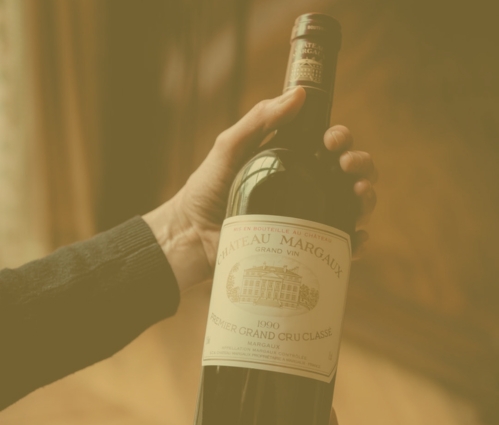
Categories
Learn

Wine auctions vs wine investing – which offers the best growth strategy?

  • Both auctions and portfolio approaches have a role to play in wine investment, but the latter is a more viable route to steady growth.
  • Auctions can provide useful signals, but investors should identify and avoid market noise and hype.
  • An expertly-managed portfolio focuses on growth, diversification, and liquidity over chasing auction trophy wines.

The wine world frequently makes headlines for astronomical prices at attention-catching auctions. Bottles can fetch sky-high sums as multimillion-dollar collections capture international interest. For investors, such record-breaking spectacles can appear to be proof of fine wine’s irresistible upwards trajectory.

However, glamorous and inspiring as they are, these auctions are not the market. They are the sharpest tip of it – distinct moments where scarcity, storytelling, and sentiment come together. A pristine bottle of Domaine de la Romanée-Conti or Château Pétrus with impeccable provenance might clear 20–50% above its estimate in a single-owner sale. While impressive, such outliers don’t speak of underlying market performance.

Understanding the difference between prices that make the news and the reality of the market is essential for any serious wine investor.

What ‘auction price’ really is

An auction price is more than meets the eye; it’s a composite shaped by multiple components. What does that sales figure really mean? 

Hammer vs all-in costs

The hammer price is the winning bid declared by the auctioneer – but that’s not the final price. The buyer then pays a buyer’s premium (10%–25%), plus taxes, shipping, and insurance. A bottle that hits the headlines at £100,000 could ultimately cost the buyer £120,000.

Single-owner vs mixed-owner sales

Provenance is all-important. Bottles from single-owner collections, especially with engaging stories and original documentation, often command premiums far above market average. In contrast, mixed-owner sales tend to be a more accurate mirror of demand.

Estimate bands and marketing psychology

Auction houses set low and high estimates to guide bidding – and to generate excitement. These figures act equally as marketing tools and predictive indicators. Only a lot that exceeds the high parameter of its estimate band hits the news; one that sells within its estimated range represents the quieter reality.

True liquidity

A record price for a single bottle does not automatically translate into similar highs for other lots. Headline-making hammer prices are outliers, influenced by rarity, media coverage, and competitive auction frenzy rather than a broader trend in the market. 

Wine auction record setters

The following are examples of headline-making auctions which illustrate the factors that drive remarkable performance: wine rarity, media frenzy, storytelling, and collector pedigree.

$34.5 mln – Henri Jayer, “The Heritage” (2018, Geneva)

  • Legendary producer’s last 855 bottles from private cellar.
  • 209 coveted magnums.
  • Rare Vosne-Romanée vintages.

$28.8 mln – William I. Koch, “The Great American Wine Collector” (2025, New York)

  • 750 large formats (Jeroboams, Methuselahs, Salmanazars).
  • Leading Bordeaux, Burgundy, Rhône, Napa, and Piedmont wines.
  • Single-owner collection.

$25.3 mln – Joseph Lau, “Iconic Wines” I–III (2022–2025, Hong Kong)

  • Rare Burgundy and Bordeaux.
  • Single-owner collection auctioned over three years created story.

$16.8 mln – Pierre Chen, “The Epicurean’s Atlas” (2023–2025, Hong Kong, Paris, Burgundy, New York)

  • Iconic Burgundy, Bordeaux, Champagne, and New World wines.
  • Legendary vintages.

$11.16 mln – Jacqueline Piatigorsky (2025, New York)

These auctions were hugely successful, but outcomes weren’t solely due to wine calibre. The unique auction environment also played a role. Such heady sums are not necessarily representative of wider market pricing.

What auctions can tell investors

While not presenting a definitive picture, auctions do generate a treasure trove of information. However, it’s important to follow results with a discerning eye because not all of the information is useful for a wine investor. You need to learn how to separate signal from media noise to understand the true meaning of auction prices.

Useful signals for investors

  • Provenance premiums: Illustrates how much collectors are willing to pay for documented bottles over generic lots. Formats, condition, and original packaging often contribute to worthwhile premiums.
  • Bidding depth: The number of bidders within the estimate band indicates genuine demand. Likewise, consistent competition across lots can point to authentic appetite that exists beyond the auction house.
  • Regional and vintage momentum: Repeated strong results across particular regions or vintages can signal emerging segments rather than one-off auction-driven prices.
  • Thin trading: The highest-profile bottles typically sell only once a decade. Such rare transactions can provide valuable insights into the wider market.

Limits and noise

  • Selection bias: “Survivorship bias” can distort average values. For a range of reasons, some wines survive the test of time while others don’t. Not every mature wine deserves high valuation.
  • Seasonality and venue effects: Marquee sales held in the spring and summer tend to attract more bidders and media coverage, inflating prices temporarily. The location of the auction can also impact results.
  • Story premium: Worth repeating is the character of the narrative surrounding an auction can elevate prices far beyond what would be achievable in normal market conditions. Celebrity collections, charity sales, and unique stories fall into this category.

Buying at auction

Auctions offer both opportunity and challenge for collectors and investors. Understanding their structure sets realistic expectations before bidding.

Pros

Cons

Building a wine investment portfolio with a trusted manager

While auctions can offer wine performance insights, a structured, portfolio-driven approach is most optimal for serious investors. This method focuses on growth, diversification, and liquidity planning in response to the genuine market, rather than chasing one-off, high-performer auction house bottles. In short, headline bottles make news; diversified cases make portfolios.

Strategy-led

Discipline drives serious wine investment. A considered portfolio allocates across regions, producers, and vintages. Tiered maturity and style diversification help smooth returns and reduce volatility.

Execution

Acquiring wine at scale requires access to multiple channels: primary releases, négociant networks, ex-château allocations, and selective secondary market opportunities. Professional execution ensures consistent quality, provenance verification, and optimal pricing.

Expert oversight

A trusted manager maximises successful outcomes by safeguarding custody, insurance, and exit strategies, targeting holding periods and rebalancing, to shield investments from market swings.

Research & data

Continuous market monitoring is critical to disciplined investment. This data-driven strategy identifies trends and fair-value bands, so investors can avoid the pitfall of overpaying for hype and market noise.

Cost clarity

Unlike auctions, wine investment portfolio costs – custody, insurance, execution – are transparent upfront, allowing granular knowledge of charges for clear return comparisons.

fine wine auction summary table

Next steps

The fine wine world will always carry glamour, but serious investors should see auction headlines as stories, not signals. The real market for fine wine investment and value growth is built on data, liquidity, and expert execution rather than the excitement of ‘show-stopping’ headlines.

Key takeaways:

  • Don’t fixate on record breakers – they rarely mirror market performance.
  • Focus on repeatability and liquidity for sustainable returns.
  • Calculate all-in costs for true value comparison.
  • Diversify and plan exits through portfolio management for resilience.

Fine wine investment is guided by expertise, patience, data, and structure, separating steady compounding from the volatile environment of speculation.

WineCap’s independent market analysis showcases the value of portfolio diversification and the stability offered by investing in wine. Speak to one of our wine investment experts and start building your portfolio. Schedule your free consultation today.
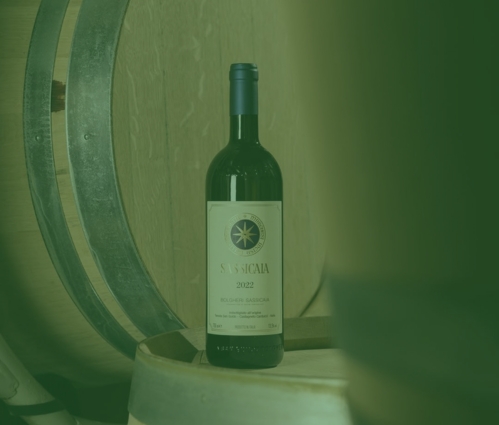
Categories
Learn

How long should you hold your wine investment?

  • Fine wine investment differs significantly from traditional markets because supply diminishes with time.
  • Holding periods determine whether an investor benefits from liquidity windows, maturity or scarcity premiums.
  • Investors should not expect uniform results across all wines or timeframes.

When it comes to fine wine investment, most discussions focus on the what: which wines, which vintages, which regions. Equally critical, but less often addressed, is the when: how long you hold your investment.

Holding periods can dramatically shape your returns, mitigate risks, and define your overall strategy. Unlike equities or bonds, fine wine is both a physical asset and a cultural commodity, with unique cycles of demand and consumption. Understanding how time interacts with these cycles is essential for building a resilient portfolio.

Why holding periods matter in wine investment

Fine wine investment differs from traditional markets in one key respect: supply diminishes over time. Bottles are uncorked and consumed, which means that scarcity increases naturally as years pass. At the same time, the wines themselves evolve in bottle, often improving in complexity and desirability. This dual dynamic of shrinking availability and increasing quality drives long-term price appreciation.

However, investors cannot expect uniform results across all wines or timeframes. Some wines appreciate rapidly within a few years, while others demand decades of patience. Holding periods determine whether an investor benefits from:

  • Liquidity windows – when supply and demand align to create strong secondary market interest.
  • Maturity premiums – when wines are at or approaching their drinking peak.
  • Scarcity premiums – when older vintages are nearly impossible to source.

Short-term wine investment holds (1–3 years): Potential high gains?

Short-term holding in fine wine is less common but not without opportunity. Investors might target wines with clear catalysts for appreciation in the near future:

  • Critical acclaim: A 100-point score from leading critics such as Robert Parker, Neal Martin, or Antonio Galloni can trigger immediate demand.
  • Market cycles and estate events: Certain vintages or regions may benefit from renewed attention during En Primeur campaigns or La Place de Bordeaux releases. Similarly, external factors such as a change of ownership, the passing of a renowned winemaker, or a significant new investment in the estate can act as a catalyst. These events often lead to brand repositioning and higher release prices for new vintages, which in turn push up the value of older vintages as buyers seek relative value.
  • Macro-drivers: Currency fluctuations, tariff shifts or geopolitical events can create short-term arbitrage opportunities.

That said, short-term holds may carry higher volatility. Transaction costs – storage, insurance, brokerage fees – also eat more heavily into returns when compounded over only a few years. As a result, short-term trading tends to suit sophisticated investors with high market awareness rather than long-term collectors.

Medium-term wine investment holds (5–10 years): The sweet spot?

The medium-term horizon is often considered the sweet spot for many wine investors. This is when:

  • Wines mature: Many Bordeaux, Burgundy, and Champagne houses see optimal secondary market demand when their wines are 5–10 years post-vintage. At this stage, they have begun to show character but remain relatively youthful, making them appealing to both collectors and drinkers.
  • Supply drops: The first wave of consumption removes weaker hands from the market, while professional storage ensures the surviving bottles command a premium.
  • Liquidity is strong: Buyers – both private and institutional – seek wines that are ready-to-drink but still have substantial cellaring potential.

This period allows investors to capture meaningful appreciation without committing to decades of illiquidity. For many, the medium-term strategy provides a balance of growth potential and portfolio flexibility.

Long-term wine investment holds (10–20+ years): Scarcity and compounding value?

For truly iconic wines, long-term holding unlocks the greatest rewards. Scarcity compounds dramatically after 15–20 years, and mature bottles often become the centrepiece of collectors’ cellars. Wines that especially benefit from this approach include:

  • First Growth Bordeaux: Château Lafite, Latour, and Margaux often reach their full secondary market potential decades after release.
  • Grand Cru Burgundy: Producers like Domaine de la Romanée-Conti or Armand Rousseau are prized for aged expressions, which are scarce even at release.
  • Prestige Champagne: Top cuvées such as Krug or Salon are often held back by maisons themselves, releasing older vintages at a premium.

The trade-off is clear: long-term holding requires patience, optimal storage, and careful insurance. Illiquidity can become an issue if capital is needed suddenly. However, for investors with a multi-decade outlook, these holds can deliver extraordinary compounding returns – often well outperforming traditional assets.

Factors that impact value over time

Not all wines follow the same trajectory. Determining how long to hold depends on a mix of factors:

  1. Region and style
    • Bordeaux and Napa Cabernet: typically longer arcs, rewarding 10–20+ years.
    • Burgundy Pinot Noir: often peaks earlier (7–15 years), though the best can go much longer.
    • Champagne: prestige cuvées benefit from extended ageing, while non-vintage wines are less suited to investment.
  2. Producer reputation
    Iconic names command steady demand across all stages, while lesser-known producers may see sharper peaks tied to critical acclaim.
  3. Vintage quality
    Strong vintages (e.g., Bordeaux 2000, Champagne 2008) often sustain demand longer, while weaker vintages may peak quickly.
  4. Critic scores and re-releases
    A re-rating or late-release program can extend or shift the ideal holding window.
  5. Market conditions
    Global economic health, currency exchange rates, and tariffs can all affect when it’s most profitable to sell.

Risks of mistimed holding

Holding periods are not without risk. Selling too early can mean missing out on peak premiums. Selling too late risks encountering diminishing returns as wines pass their drinking window. Additionally, improper storage can compromise value, no matter the holding period. There are also liquidity risks: Even top wines may face temporary illiquidity in weak markets.
This is why professional portfolio management and exit planning are critical in fine wine investment.

Practical guidance for wine investors

  1. Diversify holding periods: Mix short, medium, and long-term positions across your portfolio. This smooths out returns and provides liquidity when needed.
  2. Match horizon to goals: If you expect to need capital in five years, avoid exclusively long-term wines.
  3. Work with data: Tools like Wine Track can help identify optimal exit windows by tracking price curves and critic sentiment.
  4. Reassess regularly: Market conditions evolve. A wine planned for long-term holding may benefit from earlier exit if demand spikes unexpectedly.

In fine wine investment, holding periods are the mechanism by which wine transforms from a consumable product into an appreciating asset. Short-term traders may profit from timing and market-driven gains, medium-term investors enjoy liquidity and strong demand, and long-term holders benefit from scarcity-driven premiums.

The best approach often combines all three, balancing risk and opportunity across different time horizons. With the right strategy, time becomes your most powerful ally – quietly compounding value as the bottles rest in the cellar.

WineCap’s independent market analysis showcases the value of portfolio diversification and the stability offered by investing in wine. Speak to one of our wine investment experts and start building your portfolio. Schedule your free consultation today.
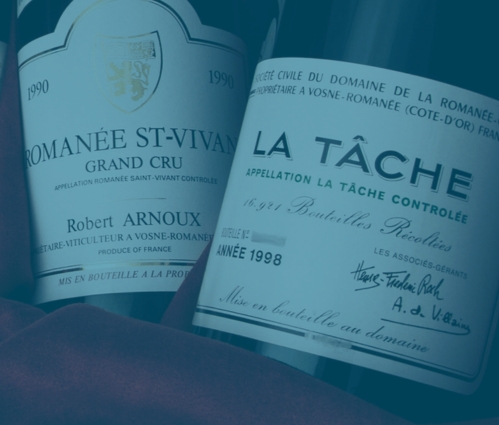
Categories
Quarterly-reports

Q3 2025 Fine Wine Report

In our Q3 summary of the fine wine market we look at how the global economic landscape is shaping investment strategies, the road to recovery in fine wine, and the best-performing regions and wines so far this year. Read on for more on Lafleur’s recent classification withdrawal, the autumn La Place de Bordeaux campaign, and other industry-defining trends.

Executive summary

  • Market backdrop strengthens: Global equities advanced in Q3 amid optimism for gradual rate cuts and corporate earnings. Improving sentiment and policy clarity provided a firmer foundation for alternative assets, including fine wine.
  • Fine wine stabilises: After two years of correction, the fine wine market showed early signs of recovery. The Liv-ex 100 posted its first quarterly gain since the downturn began.
  • Regional divergence narrows: Champagne, Rhône, and Italy led the quarter, while Bordeaux and Burgundy also showed improvements; evidence of a maturing market phase approaching equilibrium.
  • Selectivity drives returns: The best performing wines came from overlooked vintages, particularly Bordeaux 2013/2014, alongside Rhône’s consistent value names and global icons such as DRC and Screaming Eagle.
  • La Place campaign underwhelms: The autumn La Place de Bordeaux campaign failed to shift market momentum. Demand remained subdued as release prices offered limited value versus back vintages in most cases.
  • News – Lafleur withdraws from Pomerol AOC: In a significant development, Château Lafleur announced its withdrawal from the Pomerol AOC, citing the need for greater viticultural flexibility in response to climate change. We explore how this might affect its market performance.

The trends that shaped the fine wine market

Market optimism sets the stage for fine wine stability

Global markets rallied through Q3 2025, driven by renewed optimism over growth and the prospect of gradual rate cuts, even as inflation proved sticky. US equities extended record highs, powered by strong earnings and ongoing enthusiasm for AI-related sectors, while Europe delivered mixed results amid weak German data but resilience in France and the UK. Gold surged as investors sought safety from lingering geopolitical tensions and trade uncertainties linked to US tariff policy. Bond markets posted modest gains as central banks maintained a cautious stance. Overall, investor sentiment steadied following a turbulent first half, with risk appetite supported by policy optimism and improving economic data, creating a firmer backdrop for alternative assets, such as fine wine, heading into Q4.

Fine wine market starts to turn

Signs of stability continued to build across the fine wine market in Q3, reinforcing the gradual improvement noted in our Q2 Fine Wine Report. After two years of consistent decline, several regional indices turned positive over the quarter. Five of the Liv-ex regional indices rose in August and September, and for the first time in three years, the Liv-ex 50, which tracks the prices of the Bordeaux First Growths, experienced monthly growth.

Broader market measures also improved. The Liv-ex 100 rose 1.1% in September, and the bid:offer ratio – a key gauge of demand relative to supply – reached 0.70, its highest level since April 2023. This sustained rise suggests buyers are gradually re-entering the market, drawn by attractive pricing and renewed confidence following a prolonged correction. While it is too early to call a full recovery, these movements point to a maturing phase of the downturn where value-seeking activity replaces reactive selling. 

La Place autumn campaign fails to shift momentum

A key event of the third quarter every year is the La Place de Bordeaux autumn campaign, which saw the release of over 130 wines from around the globe in September. However, in 2025, the campaign did little to shift momentum. New releases that did not offer value in the context of back vintages available in the market largely fell short, and demand was tepid even for the traditionally most sought-after labels like Opus One, Masseto, Ornellaia, Solaia and Penfolds. Tariff uncertainty, oversupply and general market cautiousness were a structural drag. Unless prices and allocation discipline improve, the campaign is likely to continue to alienate buyers.

Mainstream markets lead Q3; fine wine re-emerges

Global equities posted solid gains in Q3, buoyed by growing optimism around prospective interest-rate cuts and resilient corporate earnings. While mainstream markets outpaced most alternatives, select segments of the alternative asset universe – particularly private credit and real assets – showed signs of resilience. Fine wine also staged a modest recovery.

The Liv-ex 100 Index, which tracks the performance of the most sought-after investment-grade wines, recorded its first quarterly gain since the market downturn began, rising 0.4% over the quarter. Losses in July and August were offset by a 1.1% rebound in September, signalling renewed confidence. The broader Liv-ex 1000 Index slipped 0.5% over Q3, though it, too, recovered 0.4% in September, suggesting stabilisation across a wider basket of fine wines.

Meanwhile, the First Growths Index – a barometer for Bordeaux’s top estates – rose 0.7% in September but remained 0.7% lower for the quarter overall, reflecting the uneven pace of recovery across regions and price tiers. Nonetheless, after several quarters of decline, Q3 marked a turning point where fine wine once again began to move in step with the broader risk-on sentiment seen in global markets.

Fine wine vs mainstream markets

Regional fine wine performance in Q3

Regional fine wine indices displayed a mixed picture in Q3, but the pace of decline eased, and several categories began to rise. The Liv-ex 1000 ended the quarter 0.6% lower, yet September brought a broad uptick across most regions – an encouraging sign after months of subdued activity.

Champagne held its ground best, maintaining near-flat performance over the quarter and retaining its position as one of the most resilient categories in 2025. The region benefited from increased demand from Asia and the US. The Rhone 100 also improved modestly, ending Q3 just above its Q2 level as buyers continued to favour regions offering relative value.

Italy (0.4%) and the Rest of the World 60 (0.3%) both saw small gains in Q3, hinting at early signs of renewed confidence beyond the traditional strongholds of Bordeaux and Burgundy, which fell in Q3.Regional fine wine performance 2025

The Bordeaux 500 declined 1.7%, while the Bordeaux Legends 40 dipped just 0.6%, as mature Bordeaux continued to attract active buyers. However, of the six Bordeaux sub-indices, three went up in September – those measuring the performance of the First Growths, their Second Wines, and the top 100 wines from the Right Bank. Burgundy prices softened slightly, down 0.2%, but its top wines remained among the most robust performers since the 2022 peak.

The combination of improving sentiment, selective buying, and greater market stability suggests that regional fine wine prices may be nearing their floor, setting the stage for a more balanced close to 2025.

The best performing wines so far in 2025

Even in a broadly subdued market, 2025 has shown that fine wine remains a story of selectivity and scarcity. A handful of standout wines have delivered strong double-digit returns, proving that, even during correction phases, the right names and vintages can outperform significantly.

The spread between the top-performing fine wines (+18% on average) and the Liv-ex 1000’s broad decline year-to-date (around -4.7%) highlights exactly why selection is paramount.

Best performing wines 2025 table

Three key themes stand out among the top-performing wines in 2025 year-to-date:

  • ‘Off’ vintage Bordeaux is back in vogue

Wines from cooler or once-overlooked vintages – such as Bordeaux 2013 and 2014 – have led the pack. Collectors appear increasingly willing to reward finesse, drinkability, and scarcity over hype, with Château Les Carmes Haut-Brion (+38.2%) and Château Beychevelle (+22.2%) exemplifying this trend.


  • The Rhône’s value overdelivers

Rhône wines continued to prove their value credentials. Vieux Télégraphe’s 2020 and 2021 vintages and Jaboulet’s La Chapelle 2014 all posted impressive gains, driven by limited production, consistent critical endorsement, and comparatively attractive pricing.


  • Scarcity runs the market

At the very top end, scarcity remains the strongest currency. Domaine de la Romanée-Conti, and Screaming Eagle demonstrated that rare, blue-chip wines continue to attract capital regardless of broader sentiment.


Investors focusing on authenticity, producer pedigree, and under-appreciated vintages have outperformed the broader market, suggesting that quality and insight remain the keys to long-term success.

Q3 releases: Spotlight on Taittinger Comtes de Champagne 2014

Champagne has proven one of the most resilient categories in 2025, with the Champagne 50 Index outperforming most regional peers in Q3 (up 0.3%). The region is also enjoying renewed global demand as buyers take advantage of the attractive price levels post its 2022 peak. Within this steadying landscape, Champagne house Taittinger released the 2014 vintage of its Comtes de Champagne.

Awarded 97 points by both Yohan Castaing (The Wine Advocate) and Antonio Galloni (Vinous), it ranks among the highest-rated Comtes vintages ever – and Galloni notably compared it to the legendary 2008, which trades at a nearly 40% premium.

The 2014 release also carries historical significance. As the last truly cool-climate vintage in Champagne, it represents a stylistic milestone unlikely to be replicated amid the region’s ongoing warming trend – a factor that enhances its long-term collectability.

From an investment perspective, Comtes has been a quiet outperformer. The Taittinger Comtes de Champagne index has risen steadily over the past decade, outpacing both Dom Pérignon and Louis Roederer Cristal during the bull market of 2020–2023, and showing notable price stability throughout 2025.

‘Taittinger consistently stands out as one of the best values among top-tier Champagnes, frequently outperforming many other Grand Marques tête-de-cuvée offerings.’
– Yohan Castaing, The Wine AdvocateTattinger Champagne index

Market snapshot

  • 2014 Release price: £1,190 per 12×75
  • Critic scores: 97 points (Vinous, The Wine Advocate)
  • Ranking: 62nd in the 2024 Liv-ex Power 100 (up nine places year-on-year)

With exceptional critic consensus, proven secondary market demand, and a price point that remains competitive, the 2014 Taittinger Comtes de Champagne exemplifies why the region continues to attract buyers, whether for enjoyment or investment. 

Q3 Fine wine news: Lafleur withdraws from Pomerol AOC

In August, Château Lafleur confirmed that from the 2025 vintage onward, its wines will no longer carry the Pomerol AOC designation, instead being labeled Vin de France. The decision extends across the Guinaudeau family’s portfolio, including Les Pensées, Les Perrières, and Grand Village.

The estate cited the need for greater viticultural flexibility in the face of accelerating climate change. In correspondence with trade partners, the Guinaudeau family wrote: ‘Climate is changing fast and hard… We must think, readapt, act.’ 

The withdrawal allows Lafleur to implement adaptive farming methods not currently authorised under the appellation’s 1936 regulations, such as controlled irrigation, soil covering to reduce evaporation, canopy shading, and adjusted planting density. 

Lafleur’s independence enables it to act without the procedural delays that constrain larger or corporate-owned estates. The move is consistent with its reputation for long-term thinking and precision farming, aligning vineyard practice more closely with environmental reality.

Market context

Historically, classification changes in Bordeaux have affected perception and pricing. The 2012 promotions of Pavie and Angélus within Saint-Émilion’s hierarchy, for instance, coincided with rapid market repricing, even though the wines themselves did not change. Lafleur’s withdrawal represents the opposite: the relinquishment of an appellation name rather than an elevation within it.

Pavie vs angelus wine performance

In the short term, pricing impact is likely to be neutral, as Lafleur’s identity and market position are defined by brand equity rather than by appellation. The château’s production is limited, its critical reputation exceptional, and its collector base highly stable. Over time, however, label differentiation could influence liquidity and buyer psychology, particularly between the final ‘Pomerol’ labelled vintages and the inaugural ‘Vin de France’ release, both of which may acquire added significance in secondary trading.

Performance and relative strength

Over the past decade, Lafleur’s secondary market performance has outpaced that of both the First Growths and its Right Bank peers, Pavie and Angélus. Despite the broader Bordeaux market correction since 2022, Lafleur has retained a significant premium, perhaps reflecting scarcity and confidence in the Guinaudeau family’s brand.

Lafleur fine wine performance

Should the transition to ‘Vin de France’ labelling prove commercially seamless, the move could even enhance Lafleur’s individuality, reinforcing its cult status as a technically driven, terroir-first estate. 

All in all, Lafleur’s withdrawal prompts a broader structural question for Bordeaux: how the appellation system adapts to climate change through balancing regional reputation with innovation arising from global-warming challenges. For Lafleur, the decision appears evolutionary rather than disruptive, designed to preserve vineyard resilience and wine quality in a shifting climate.

If Lafleur’s performance continues to mirror its past decade – where brand identity outweighed classification – this change may ultimately serve to strengthen, rather than dilute, its market position.

Q3 summary and a look ahead to Q4

The third quarter of 2025 marked a transition phase for the fine wine market. With mainstream assets recovering and investor sentiment stabilising, fine wine has begun to re-establish its footing after a protracted two-year downturn. Indicators such as the rising bid:offer ratio and renewed regional resilience point toward a more balanced market environment heading into Q4. Price declines have largely moderated, and value-seeking capital is returning, particularly to regions offering long-term quality at attractive entry points.

Looking ahead, the key drivers of performance will continue to be scarcity, selectivity, and producer reputation. Top estates with disciplined production, strong brand equity, and adaptability are well-positioned to outperform as the market moves toward recovery. As Q3 showed, the correction appears to have reached maturity; the next phase is likely to be characterised by gradual re-pricing, focused accumulation, and renewed confidence in fine wine as a stable, long-term asset.

WineCap’s independent market analysis showcases the value of portfolio diversification and the stability offered by investing in wine. Speak to one of our wine investment experts and start building your portfolio. Schedule your free consultation today.
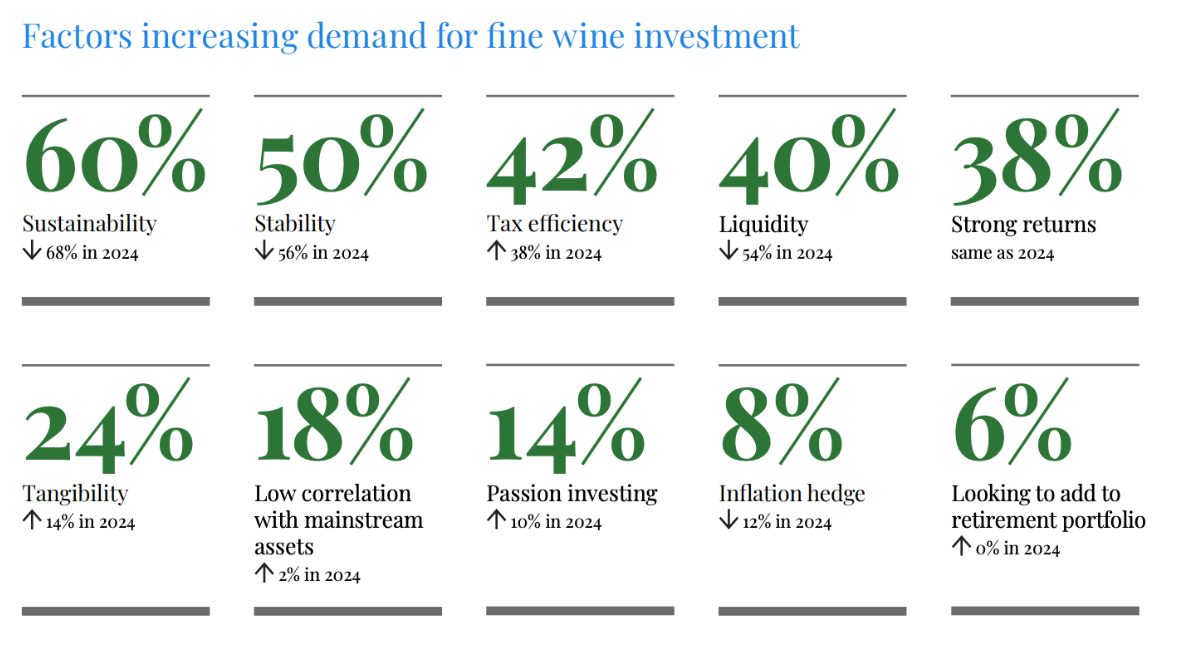
Categories
Quarterly-reports

Q2 2025 Fine Wine Report

Explore key trends in the Q2 2025 Fine Wine Market Report – from Trump’s proposed tariffs to Bordeaux En Primeur 2024, index performance, and standout wines like Chave Hermitage and Screaming Eagle. Discover where value and stability are emerging.

Executive summary

  • Trump’s proposed tariffs dominated headlines, yet the delayed implementation gave markets breathing room.
  • The Liv-ex 100 index declined 3% in Q2 but showed signs of levelling off by quarter-end.
  • Bordeaux En Primeur 2024 was met with weak demand driven by oversupply and collector preference for mature vintages.
  • Regional performance diverged, with Bordeaux and Burgundy leading declines, while Champagne showed signs of stabilisation.
  • Top-performing wines defied broader market trends, with double-digit gains from names like Chave Hermitage 2021, Château d’Yquem 2014, and Screaming Eagle 2012.
  • Fine wine remains in a correction phase, but select names, regions, and vintages continue to offer compelling investment opportunities.

The trends that shaped the fine wine market

Global markets adjust as tariff volatility eases

President Trump’s revival of protectionist trade policies set the tone for global markets in Q2. From January to April, the average U.S. tariff rate on imported goods like cars, steel, and aluminium surged from 2.5% to a century-high 27%, before easing to 15.8% in June.

While the March tariff threat initially triggered sharp volatility, the fallout was relatively short-lived. Early April brought a brief dip into bear territory for the S&P 500 on tariff fears. But with policy pauses and stronger-than-expected earnings – 78% of S&P companies beat forecasts – investor confidence returned. Equities in Europe and Asia rallied as well, with the FTSE 100 testing new highs. Corporate investment, especially in AI, remained robust despite political and fiscal uncertainty. 

This broader resilience helped buoy alternative assets like fine wine. While less liquid than stocks, fine wine saw continued interest from long-term investors. Crucially, there was no evidence of panic selling – a sign of confidence in the asset class’s underlying stability.

Telling signs of stability in the fine wine investment market

The pace of fine wine price declines slowed in the second half of the second quarter, although the market is not yet in full recovery mode. On average, fine wine prices as measured by the Liv-ex 100 index, dipped 3% in Q2 2025. The index has been in a freefall since September 2022, seeing only five minor upticks during this time. Meanwhile, the Liv-ex 50, which tracks the performance of the Bordeaux First Growth, has been in a consistent decline during the last 33 months.  

Still, the recent falls have been less pronounced, and prices for many of the index component wines have maintained their new levels without falling further. The market seems to be adjusting to the new environment, with participants showing greater acceptance of the status quo and reduced sensitivity to geopolitical noise. In Q2, demand even began to resurface, particularly from Asia, which has been notoriously quiet, and the U.S., which had initially retreated due to tariff fears.

Muted demand for Bordeaux En Primeur 2024 as market shifts for mature wines

With the market still absorbing past vintages and saturation setting in, enthusiasm for Bordeaux En Primeur 2024 was notably subdued. Despite reduced release prices, the wines often failed to offer compelling quality or value when compared to older vintages readily available on the secondary market.

Bordeaux’s structural challenges persist. Negociants remain overstocked and weighed down by rising bank interest, while many merchants lack the appetite or capital to buy for stock. Meanwhile, the once-crucial Chinese market remains largely dormant.

This muted campaign reflects a broader shift in buyer behaviour. Demand has tilted decisively toward mature wines with a track record of quality and drinkability. While the short-term appeal of buying young futures has faded for now, Bordeaux’s reputation for ageability and long-term value endures.

Fine wine vs mainstream markets in H1 2025

Fine wine vs mainstream markets

While mainstream equity markets swung between bear and bull phases in Q2, the fine wine market charted a notably more stable path. Fine wine prices declined modestly over the period, but without the sharp drops or rallies seen in the S&P 500, Dow Jones Industrial, or FTSE 100. The contrast, seen in the chart above, reinforces fine wine’s reputation as a lower-volatility asset during times of heightened macroeconomic and geopolitical uncertainty.

Importantly, this steady decline was not marked by panic selling or dramatic shifts. This reflects the market’s structural differences: lower liquidity, longer holding periods, and a collector-investor base that prioritises wealth preservation over short-term trading.

Moreover, beneath the surface, outliers and outperformers remain. Read on to discover where relative value has emerged, and which regions and producers have shown resilience – or even strength – so far this year.

Regional fine wine performance: year-to-date trends

The first half of 2025 has revealed consistent pressure across nearly all fine wine indices, with no region posting growth year-to-date. Yet the degree of decline varies.

Liv-ex fine wine regional indices

Bordeaux and Burgundy lead declines (-5.6%)

Both the Liv-ex Bordeaux 500 and Burgundy 150 have posted the steepest year-to-date losses among the major indices, each down 5.6%. For Bordeaux, this reflects tepid interest in younger vintages and a sluggish En Primeur campaign, coupled with a lack of support from Asia. Burgundy continues to correct from previous pricing spikes, as buyers recalibrate in search of better relative value.

Auction results defy the indices

While Bordeaux and Burgundy’s regional indices posted year-to-date declines of -5.6%, recent auction results tell a different story at the very top end of the market.

In June 2025, Christie’s held a landmark sale of the personal wine collection of billionaire collector Bill Koch, generating a record-breaking $28.8 million over three days. The sale drew global participation and intense bidding across 1,500 lots, each of which was sold. The standout was a 1999 Romanée-Conti Methuselah, which fetched an eye-catching $275,000.

The collection featured rare Bordeaux and Burgundy – the very categories currently under pressure in secondary market indices – yet buyer appetite was strong, and prices exceeded estimates across multiple lots.

Champagne shows relative stability

The Champagne 50 has held up better than most, down just 4.9% year-to-date, and was the only region to show positive month-on-month growth in June (+0.8%). While the broader category has cooled after a strong run, interest in top names remains, especially among collectors focused on prestige and scarcity. Indeed, many of Champagne’s top brands now represent the best entry point into the region in years. Prices have stabilised, and there are signs they will not fall any further, but might start to rise again. 

Broader weakness across other regions

  • Rest of the World 60 is down 5.0%, showing soft demand beyond the mainstay regions.
  • California 50, also down 5.6%, mirrors this trend and highlights ongoing sensitivity to U.S. economic and tariff concerns.
  • Italy 100 has dropped 3.3%, suggesting a more measured pullback, consistent with the region’s reputation for offering value and dependable quality.
  • Bordeaux Legends 40 and Rhone 100 are holding up best, with declines of only 2.6% and 2.5% respectively. This speaks to market confidence in mature Bordeaux and Rhône’s reputation for steady, value-driven performance.

best performing wine regions half 1 2025

As the fine wine market works through broader corrections, defensive regions – particularly Rhône and mature Bordeaux – are outperforming, while Burgundy and California remain under pressure. Champagne’s recent bounce may signal early signs of selective recovery. For investors, opportunities may lie in regions demonstrating resilience rather than those still working through valuation resets.

The best-performing wines so far this year

best performing wines half 1 2025

Despite broad declines across regional indices, a select group of wines delivered standout returns in H1 2025, highlighting the importance of producer reputation, scarcity, and vintage specificity in fine wine performance.

The Rhône leads driven by Chave

The top-performing wine was Domaine Jean Louis Chave’s 2021 Hermitage Rouge, which rose +36.8% in the first half of the year. This outperformance stands in stark contrast to the overall Rhône 100 index, which declined 2.5%. Over the last decade, prices for the brand are up 127% (compare its performance to other market benchmarks on Wine Track).

Domaine Jean Louis Chave Hermitage

Château d’Yquem 2014 and Château Suduiraut 2016 returned 25.7% and 23.9% respectively, bucking the downward trend in Sauternes. On a brand level, Yquem has risen 7% in the last six months and 3% in Q2; Suduiraut is up 11% in H1 2025. These results signal renewed collector appetite for premium dessert wines – particularly in top vintages where quality and longevity are indisputable – yet prices remain relatively low.

Prestige investment opportunities in Napa and Champagne 

The California 50 index fell 5.6%, but iconic Napa cult wine Screaming Eagle 2012 rose 24.4%, affirming the strength of globally recognised, ultra-luxury labels. Indeed, average prices for the brand rose 5% in H1 2025. Similarly, Pol Roger Sir Winston Churchill 2015 posted a 24.4% gain, demonstrating that top-tier Champagne continues to attract collectors even as the Champagne 50 index overall declined.

Burgundy and Tuscany standouts reinforce blue-chip strategies

Despite Burgundy’s broader correction, DRC’s La Tâche 2020 and Clos de Tart 2013 delivered 24.5% and 18.1% returns respectively. These names remain benchmarks of rarity and prestige. Meanwhile, Soldera Case Basse 2018 gained 14.3%, pointing to sustained momentum behind top Italian producers. In Q2 alone, prices for the Tuscan premium brand are up 11%; in H1, 16%. 

Soldera Montalcino fine wine performance

Investor takeaways

  • Market-wide declines don’t mean universal losses. Select wines not only held value but also delivered double-digit returns.
  • Rarity and recognisability remain key drivers. Names like Chave, Yquem, Screaming Eagle, and DRC continue to offer portfolio resilience.
  • Smart vintage selection pays. Wines from underappreciated years – like Canon 2014 – produced outsized gains relative to their pricing base.
  • Dessert wines are back on the radar. Contrarian plays in Sauternes may offer continued upside in H2 2025.

Brands to watch

Signs of a Champagne revival

After being the fine wine market’s standout performer in 2022, Champagne experienced one of the sharpest pullbacks during the broader market correction of 2023–2024. However, signals suggest the tide may now be turning again.

From peak to pause: A market in transition

Prices across the Champagne sector have fallen significantly from their highs, but the sell-off appears to have run its course. June marked a notable shift: Champagne was the first regional index to post positive month-on-month growth, rising +0.8%, a potential inflexion point after months of stagnation.

More importantly, price stability has returned. The sector’s recent performance suggests we may be entering a new phase of the Champagne investment cycle, where prices consolidate before a potential recovery.

Market data signals stabilisation

To test this trend, we analysed the 10 most recent vintages of the five most-searched “Grand Marque” Champagnes:

Of these 50 individual wines,

  • 43 have resisted their price declines,
  • 40 have remained stable for at least six months,
  • the indexes aggregating their vintages confirm this plateau.

Champagne fine wine indices

Notably, Dom Pérignon has shown the earliest and most sustained stabilisation, with its index bottoming out in November 2024. Krug Vintage and Taittinger Comtes de Champagne are the most recent to enter this stable phase, suggesting broader alignment across the category.

A new phase for Champagne?

This pattern of index symmetry and brand-level stabilisation is a clear signal that Champagne may be transitioning from correction to consolidation. Investor sentiment appears to be catching up to underlying fundamentals, with many of Champagne’s leading brands now offering compelling re-entry points. Liv-ex market share data supports this trend:year-to-date, Champagne has taken 12.4% of the market by value, up from an annual 2024 average of 11.8%, signalling that demand is returning. 

If this trend holds, Champagne could become one of the first major regions to re-enter positive growth territory, supported by brand power, vintage scarcity, and collector loyalty.

Q3 2025 market outlook: A pause before the pulse?

The third quarter – traditionally the quietest in the fine wine calendar – arrives amid a tentative calm. Following the volatility of Q2, Q3 is shaping up to be more subdued but not without potential catalysts.

Tariff watch

President Trump’s planned tariffs, originally slated for Q2, have now been delayed until August 1st. Markets have so far responded with a muted shrug, suggesting either tariff fatigue or confidence that negotiations may temper the final impact. But the uncertainty remains a live wire: should enforcement proceed, volatility could resurface late in the quarter. For now, however, investors appear cautiously indifferent.

La Place de Bordeaux’s autumn window

With the Bordeaux 2024 En Primeur campaign having underwhelmed, attention now turns to La Place de Bordeaux’s autumn campaign. This presents a rare chance for standout producers from around the world to seize attention, particularly those releasing back vintages or special bottlings. A well-priced, tightly-curated campaign could reignite interest and provide pockets of momentum in an otherwise quiet market.

Rest of the World builds buzz

As traditional strongholds like Bordeaux and Burgundy continue to correct or stagnate, Rest of the World wines are beginning to command more attention. California, Tuscany, and Rhône producers featured prominently among H1’s top performers, and collectors may increasingly look to these regions for value, scarcity, and differentiation in the second half of the year.

A stable market… but will it rise?

Fine wine’s reputation for stability held firm in H1, avoiding the sharp swings seen in equities. The question now is whether this stability will give way to price appreciation. While some wines are poised to rise, we expect the broader market to remain sluggish through the summer. Liquidity typically thins in July and August, and the broader mood is unlikely to shift meaningfully until September.

What to watch

  • Tariff developments post-August 1st
  • Autumn releases on La Place, especially non-Bordeaux
  • Top Champagne brands starting to rise in value
  • Collector appetite for emerging regional stars
  • Signs of rotation from defensive to opportunistic buying behaviour

WineCap’s independent market analysis showcases the value of portfolio diversification and the stability offered by investing in wine. Speak to one of our wine investment experts and start building your portfolio. Schedule your free consultation today.