Categories
Regional-reports

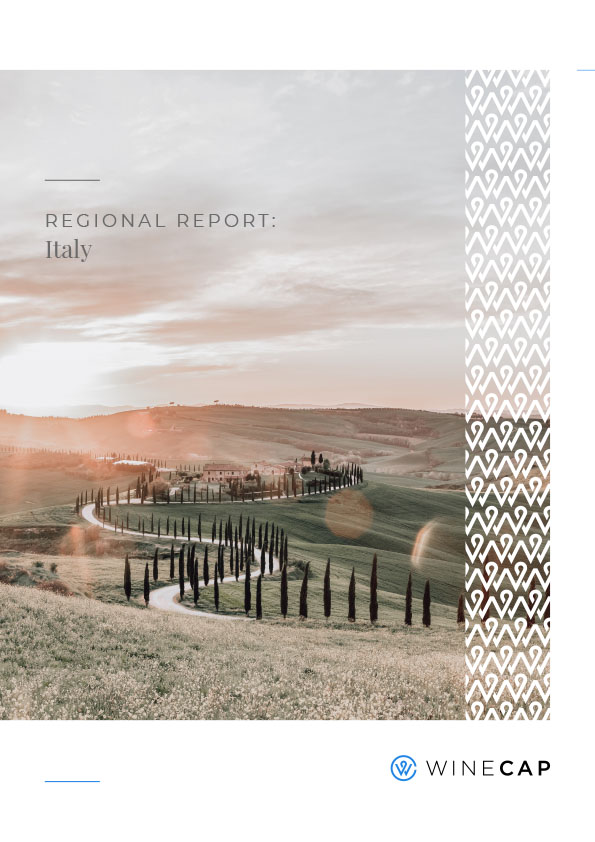
Italy Regional Report

Our Italy Regional Report examines the development of its investment market, historic performance, and key players.

Italy is the world’s largest wine producer, responsible for more than 6.5 billion bottles annually across nearly two million acres of vineyards. While its dominance in the mass wine market is undisputed, Italy’s fine wine sector has undergone a remarkable transformation over the past half century.

The modern era of Italian fine wine began in the 1970s with the emergence of the Super Tuscans – wines such as Sassicaia and Tignanello that challenged traditional classifications and redefined quality expectations. This shift elevated Italy’s global reputation and laid the foundations for a serious fine wine investment market.

Today, Italy stands as one of the most dynamic and resilient regions in the global fine wine landscape. Once overshadowed by Bordeaux and Burgundy, it now accounts for over 15% of secondary fine wine trade by value, with a growing roster of investment-grade wines. The complementary strengths of Tuscany and Piedmont, alongside emerging regions such as Veneto and Sicily, have positioned Italy as a compelling choice for portfolio diversification.

WineCap’s Italy Regional Report examines how this evolution has unfolded – and where the most attractive opportunities now lie.

Key findings from the Italy Regional Report

Italy has become a core fine wine investment region

Over the past two decades, Italy’s presence in the secondary market has grown steadily. In 2010, Italian wines represented less than 2% of global fine wine trade. Today, they account for more than 15%, reflecting rising international demand, increased critical acclaim, and greater investor confidence. This growth has been achieved without the extreme volatility seen in some other regions, reinforcing Italy’s reputation as a stable, long-term investment option.

Consistent performance with lower volatility

Italy’s investment appeal is underpinned by steady performance. The Italy 100 index has risen by over 200% in the past twenty years, outperforming both the Liv-ex 100 and Liv-ex 1000 indices over the last decade. Importantly, Italian wines have shown greater resilience during market downturns, with less pronounced corrections than Burgundy or Champagne.

This combination of growth and stability makes Italy particularly attractive to investors seeking diversification with reduced risk.

Accessibility and affordability set Italy apart

One of Italy’s defining advantages is accessibility. Top Italian wines are generally priced well below their French counterparts, offering a more approachable entry point into fine wine investment. In addition, higher production volumes for flagship wines such as Tignanello, Sassicaia, and Ornellaia enhance liquidity and ease of acquisition, particularly when compared to the extremely limited production of top Burgundy or Californian wines.

This balance of quality, availability, and price makes Italy an effective way to build meaningful exposure within a diversified portfolio.

Tuscany and Piedmont play complementary eoles

Italy’s two leading investment regions serve distinct but complementary functions. Tuscany provides scale, brand recognition, and liquidity through its iconic Super Tuscans and Brunello di Montalcino, delivering consistent returns over time. Piedmont, often compared to Burgundy, offers greater scarcity and potential upside through its Barolo and Barbaresco wines, driven by limited production and strong critical demand.

Together, these regions allow investors to balance stability and growth within a single country allocation.

Emerging regions are gaining traction

Beyond Tuscany and Piedmont, Italy’s regional diversity is increasingly reflected in the investment market. Veneto, Abruzzo, Umbria, Sicily, Campania, and Alto Adige are attracting attention for their quality, value, and growing international recognition. As exposure increases, these regions are expected to play a larger role in Italy’s fine wine trade. This depth and breadth of opportunity is unmatched by any other fine wine-producing country.

Explore the full report

WineCap’s Italy Regional Report provides a comprehensive analysis of Italy’s investment performance, accessibility, regional diversity, and best-performing wines – alongside a clear framework for understanding Tuscany, Piedmont, and the country’s most promising emerging regions.

Download the full Italy Regional Report to explore the data, insights, and opportunities shaping one of the most resilient and accessible fine wine investment markets in the world.

Italy Regional Report
 
Categories
Regional-reports

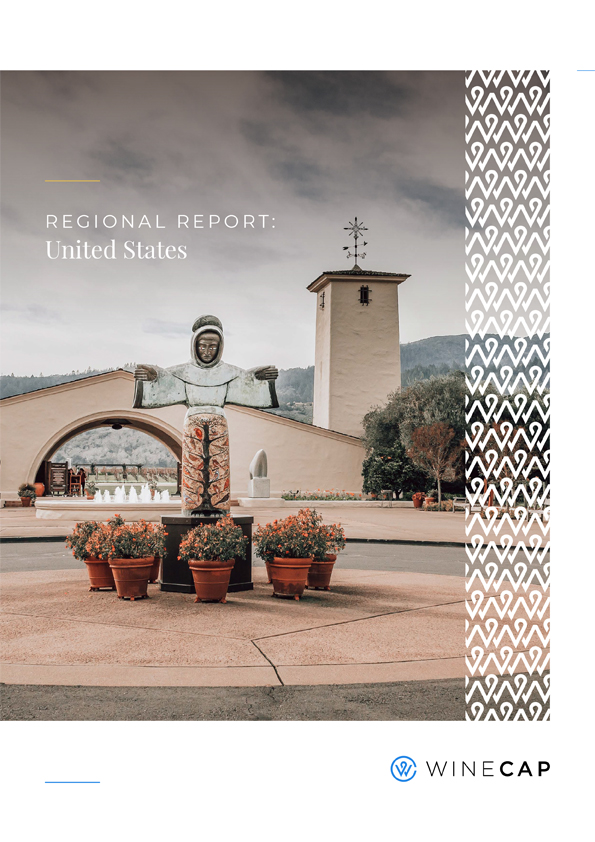
United States | Regional Report

1976 was the turning point for California and US wine in general. ‘The Judgement of Paris’ blind tasting on May 24th proved that France had a serious contender when top Californian Bordeaux blends were tasted against Bordeaux classed growths, and Californian Chardonnays against white Burgundy. To the surprise of many, California led on both fronts.

This was the first step that set the region in motion. In the 1990s, the first Californian ‘cult wines’ emerged – big brands that attracted collector followings. Producers such as Inglenook, Stag’s Leap, and Robert Mondavi were the pioneers, but it was Screaming Eagle that established the formula for success that many followed: tiny volumes, word-of-mouth hype, and soaring prices. Robert Parker’s appraisal and perfect scores further bolstered their image.

The global market for US wines, dominated by California but also featuring wines from Washington and Oregon, has exploded in recent years. Its share of secondary market trade has risen from 0.1% in 2010 to around 7% this year, and an increasing number of previously overlooked wineries are now showing investment-worthy returns.

Our USA Report delves into the development of its investment market, historic performance, recent expansion and key players.

Discover more about:

  • History of the US wine industry
  • International and domestic trade
  • California’s most significant AVAs
  • Napa Valley’s investment-worthy wines

Do not hesitate to get in touch and speak to one of our wine investment advisors for further information and to reserve your allocations.

Download your complimentary copy of the United States Regional Report and discover how fine wine can enhance your investment portfolio.

United States Regional ReportDownload


Categories
Regional-reports

Bordeaux Regional Report

Our Bordeaux Regional Report examines the evolution of its investment market, the First Growths, their second wines and En Primeur.

Bordeaux has long been the backbone of the fine wine market. Its unique combination of history, scale, and globally recognised brands has positioned it not just as a leading wine region, but as the reference point for fine wine investment worldwide.

As early as 1787, Thomas Jefferson recognised the collectible potential of Bordeaux’s finest estates. More than two centuries later, that early insight still holds true. While the fine wine market has diversified significantly in recent years, Bordeaux continues to play a defining role – often setting the tone for broader market performance.

At its peak in 2010, Bordeaux accounted for an extraordinary 96% of the fine wine market by value. Although its share has since moderated as regions such as Burgundy and Champagne have risen, Bordeaux remains the most influential and liquid region in the investment landscape.

WineCap’s Bordeaux Regional Report explores why this remains the case – and where the most compelling opportunities now lie.

Key findings from the Bordeaux Regional Report

Bordeaux remains the most important fine wine investment region

Despite increased diversification, Bordeaux still accounts for over a third of the fine wine market by value today. Its long-established distribution networks, global demand, and deep secondary market continue to underpin its dominance, particularly for investors prioritising liquidity and long-term stability.

The First Growths continue to anchor the market

The Bordeaux First Growths – Château Lafite Rothschild, Château Latour, Château Margaux, Château Haut-Brion, and Château Mouton Rothschild – remain the cornerstones of fine wine portfolios. While their share of total trade has declined from historic highs, they still represent around 30% of Bordeaux’s secondary market activity, reinforcing their role as pricing benchmarks and confidence indicators.

Second Wines and “Super Seconds” offer compelling value

One of the most notable trends highlighted in the report is the growing importance of second wines and so-called “Super Second” estates. These wines benefit from the same terroirs and technical expertise as their flagship counterparts but offer more accessible entry points. In many cases, they have delivered stronger relative performance over the past decade, driven by rising quality and growing global recognition.

Older vintages are often undervalued

The report shows that some of the most attractive opportunities in Bordeaux today lie not in the latest releases, but in older, overlooked vintages. These wines frequently trade at favourable price-to-quality ratios and can offer greater upside potential than more recent En Primeur releases, particularly in a more price-sensitive market environment.

En Primeur’s influence has weakened

While En Primeur remains a defining feature of Bordeaux, its role has evolved. Pricing misalignment in recent campaigns has reduced its appeal, shifting the focus towards disciplined, selective participation. The report highlights that En Primeur can still present opportunities, but only when release prices reflect broader market conditions and long-term value.

Bordeaux’s role in a diversified market

As the fine wine market has broadened to include Burgundy, Champagne, Italy, and California, Bordeaux has increasingly positioned itself as the region of stability. Its slower but steadier appreciation, combined with unrivalled liquidity, continues to make it a foundational allocation within diversified fine wine portfolios.

Explore the full report

WineCap’s Bordeaux Regional Report provides a detailed analysis of the region’s evolution, historic performance, key investment estates, and future outlook in an increasingly diversified fine wine market.

Download the full Bordeaux Regional Report to explore the data, insights, and opportunities shaping one of the world’s most important fine wine regions.


Bordeaux Regional Report
Download

Categories
Regional-reports

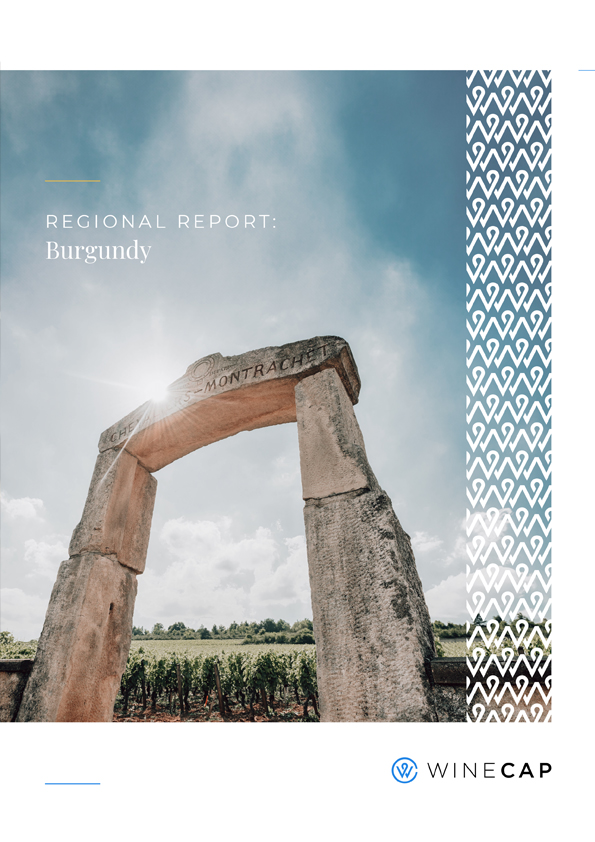
Burgundy | Regional Report

There is a maxim in the wine trade: no matter where a wine lover starts, they end up in Burgundy.

A key part of the attraction is in its contradictions: it is the most romantic wine region but also the most expensive; quality tends to be high but quantities are low; intuition is key but it is also one of the most researched regions.

With only two primary grape varieties and three classification ranks, Burgundy may appear simple, but with dozens of controlled places of origin (AOCs), hundreds of producers and thousands of wine labels, it can be incredibly complicated.

Our Burgundy Report delves into the fundamentals of this fascinating region, including the development of its investment market, historic performance, recent expansion and key players.

Discover more about:

  • Burgundy’s price performance
  • The expansion of Burgundy’s investment market
  • History of the Burgundy wine region
  • Burgundy’s structure and fragmentation
  • Key Burgundy producers
  • How we choose Burgundy for investment

Do not hesitate to get in touch and speak to one of our wine investment advisors for further information and to reserve your allocations.

Download your complimentary copy of Burgundy’s Regional Report and discover how fine wine can enhance your investment portfolio.


Burgundy Report Cover


Burgundy’s Regional Report


Categories
Regional-reports

Insights from leading Bordeaux fine wine producers

Our Insights from leading Bordeaux fine wine producers report is now available to download. This report is the result of 32 face-to-face interviews WineCap conducted in 2022 with some of Bordeaux’s leading châteaux owners, winemakers and senior representatives. 

While global stock and bond markets have had a turbulent year, the fine wine sector has continued to perform strongly. Thanks to its low correlation with mainstream asset classes and defensive characteristics, fine wine is attracting a wider investor audience.

WineCap recently undertook research among leading fine wine producers responsible for many of the highest quality vineyards in Bordeaux. We are delighted to share some key findings, which include, wine producers’ oldest vintage and favourite year, their views on new permitted grape varieties and how they are coping with challenges such as climate change.

Despite the perception that older vintages are more desirable, it’s fascinating to find that most leading Bordeaux producers prefer wines from the last decade. Find out which vintages they mention in particular in this report. 

While six new grape varieties are now permitted to be planted in Bordeaux, to help producers adapt to climate change, Cabernet Sauvignon remains the dominant grape variety, representing 32% of the total 1,668 hectares in the region. 

A key priority for the wine producers we interviewed is to maintain the same volume to all their existing customers, while attempting to supply as much as possible to new ones. While some producers have acquired adjacent land to expand production volumes to meet growing demand, volumes can vary dramatically depending on the quality of the harvest. Managing demand expectations is therefore a key challenge and calls for a flexible approach on the part of the customer.

Download our new report to discover key insights from one of the world’s top fine wine regions.

United States Regional Report


Categories
Regional-reports

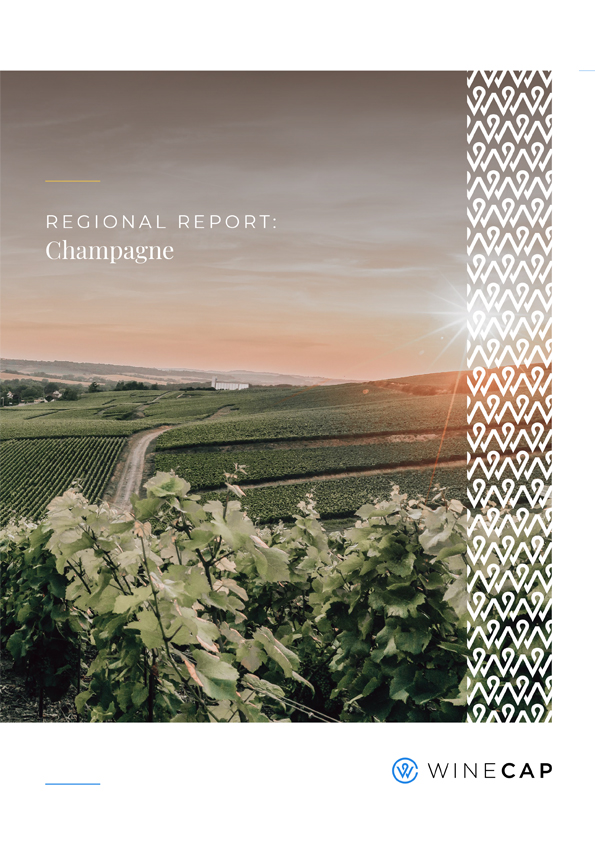
Champagne Regional Report

Our Champagne Regional Report examines the development of an investment market and the key Champagne producers in a successful portfolio.

Champagne needs little introduction, even to those not typically involved with fine wine. It is everywhere – from restaurants and clubs to airport lounges and private cellars. Fit for almost every occasion, Champagne has evolved from a celebratory indulgence into one of the most recognisable and investable luxury assets in the fine wine market.

A key driver of Champagne’s investment appeal is its unparalleled brand recognition. More approachable than other fine wines, Champagne benefits from broad global consumption, strong distribution networks, and deep secondary-market liquidity — all highly attractive characteristics for investors.

A decade ago, Champagne represented less than 3% of the fine wine investment market. Today, its share sits comfortably at 15%, making it a close contender to Burgundy as the second-most traded fine wine region after Bordeaux.

WineCap’s Champagne Regional Report explores how this transformation has taken place, how pricing dynamics have evolved, and why Champagne has become a core allocation within diversified fine wine portfolios.

Key findings from the Champagne Regional Report

Champagne is one of the best-performing fine wine regions

Once considered a modest price performer and one of the most affordable entry points into wine investment, Champagne has risen to new heights over the past two decades. The Champagne 50 index has delivered exceptional long-term growth, positioning Champagne as the second-best-performing fine wine region after Burgundy. Its performance has been driven by a combination of vintage quality, global brand power, and sustained international demand.

Champagne’s global reach

Champagne is one of the most liquid regions in the fine wine market. Its widespread consumption – across hospitality, entertainment, and private collectors – creates a unique dynamic: as Champagne is consumed, supply diminishes, while quality improves with age.

This inverse supply curve, combined with strong brand recognition, underpins consistent secondary-market activity and makes Champagne particularly attractive to investors seeking flexibility and exit opportunities.

Champagne market expansion has driven new opportunities

As Champagne’s investment market has grown, participation has expanded beyond a narrow group of prestige cuvées. While leading houses remain central, the market now encompasses a broader range of vintage, rosé, and grower Champagnes.

This expansion has increased both depth and diversity, allowing investors to access Champagne across different price points and risk profiles.

Champagne’s entry levels

Following a strong bull run between 2020 and 2022, Champagne prices have corrected by around 34% on average over the past three years. Importantly, prices stabilised throughout 2025, creating attractive entry points without undermining Champagne’s long-term investment case.

Historically, periods of consolidation in Champagne have preceded renewed growth as supply tightens and demand continues to build.

Rosé and Grower Champagne are gaining momentum

Two of the fastest-growing segments highlighted in the report are rosé Champagne and grower Champagne. Produced in smaller quantities and often commanding higher release prices, rosé Champagnes have shown strong relative performance. Meanwhile, leading grower estates have transitioned from niche favourites to serious investment candidates, driven by scarcity, critical acclaim, and growing global recognition.

While liquidity can be thinner in these segments, selective allocation can enhance diversification and long-term returns.

Leading Champagne houses still anchor the market

Despite the market’s expansion, the most powerful Champagne brands remain central to investment portfolios. Houses such as Dom Pérignon, Louis Roederer (Cristal), Krug, Bollinger, Salon, and Ruinart continue to dominate secondary-market trade, combining brand strength, consistency, and global demand.

Explore the full report

WineCap’s Champagne Regional Report provides a comprehensive analysis of Champagne’s investment performance, supply and demand dynamics, the rise of rosé and grower Champagne, and the key houses and brands shaping the market today.

Download the full Champagne Regional Report to explore the data, insights, and opportunities behind one of the world’s most liquid and resilient fine wine investment regions.


Champagne Regional Report

Download

Categories
Regional-reports

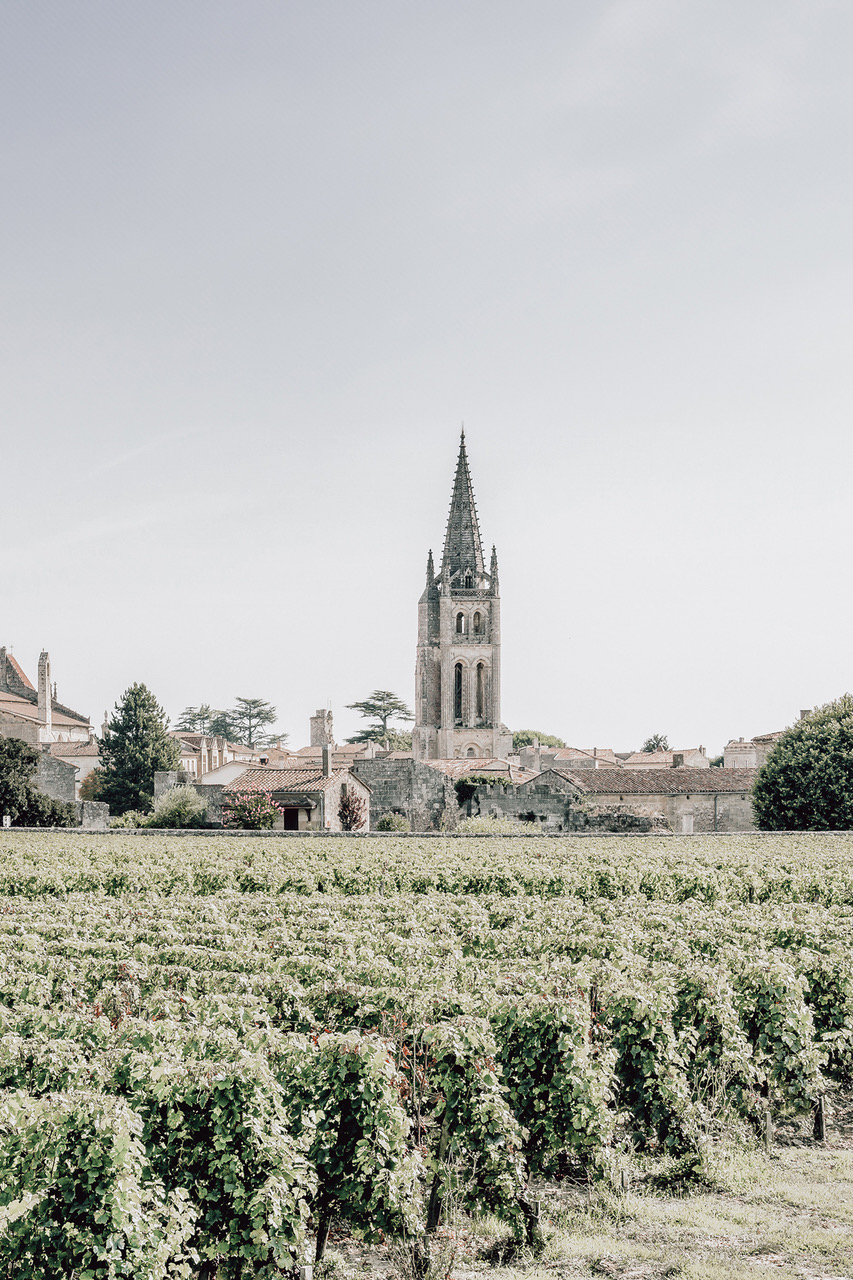
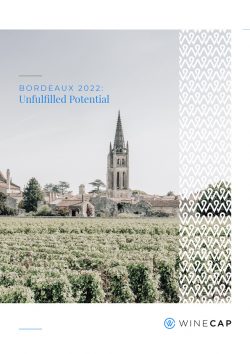
En Primeur Report – Bordeaux 2022: Unfulfilled Potential

Bordeaux 2022 is a great vintage that, despite its high quality, failed to reverse the waning sentiment for En Primeur. The excitement of the new was counteracted by the value on offer.

Although there was a significant increase in the number of visitors at the En Primeur tastings this spring, the campaign did not succeed in capitalising on this positive momentum.

Our latest report, Bordeaux 2022: Unfulfilled Potential, delves into the reasons why the campaign didn’t quite deliver on hopes and the event’s place within the industry in coming years.

Key findings:

  • Bordeaux 2022 is a high-quality vintage that has surpassed expectations, given the challenges of the growing season.
  • Neal Martin’s average 2022 in-barrel score was below 2020, 2019, and 2016, with most critics noting that it is a vintage to be selective.
  • The En Primeur tastings saw a significant increase in the number of visitors this spring, indicating continued interest in the region.
  • Some wines managed to offer value and were met with high demand upon release, including Château Cheval Blanc, Château Beychevelle, and Château Lafleur.
  • Average price increases between 15% and 25%, and as high as 55%, did not resonate well with the soft Bordeaux market.
  • Bordeaux 2022 vintage failed to reverse the declining sentiment for En Primeur due to high release prices in the context of older vintages offering better value.
  • Producers should evaluate the market dynamics to navigate the evolving fine wine market, and the role of En Primeur within it.

Download your complimentary copy of the en Primeur Report – Bordeaux 2022 and discover how fine wine can enhance your investment portfolio.


Bordeaux Regional Report


Categories
Regional-reports

Bordeaux 2021 | Vintage Report

Our Bordeaux 2021 En Primeur Report is now available to download. Read our full analysis of the new 2021 vintage which is considered to be an approachable, good quality one that differs in style to the wines from the three previous years.

2021 was the coolest and second wettest vintage in the past decade with frosts, rain and mildew. This meant yields were down significantly in some appellations. Meticulous sorting in both the vineyard and the winery enabled producers to select only the best fruit and this created the finest wines possible. 

Critic reports suggested that quality was better than expected and there is a selection of outstanding wines on offer that will bear comparison with the very best and various châteaux have produced some of their highest ever rated wines.

Prospective buyers have been expectantly waiting for the 2021 vintage’s scores and prices. Release prices were expected to be lower than those of the top rated trilogy of 2018, 2019 and 2020 as this is a different style of vintage from a challenging year. However, there were economic reasons that could justify price rises such as inflation, wine shortages and the US dollar’s appreciation against the Euro.

In general, wines have been released at the same price as 2020 – just 1% lower on average. However, some châteaux released at up to 15% discounts, while others at up to a 15% premium with lower scores than last year.

Discover our analysis and the fine wines we recommend fully in this report. While it was a mixed vintage, there are some excellent wines on offer at attractive prices.


Bordeaux Vintage Report

Categories
Regional-reports

Bordeaux 2020 | Vintage Report

Our Bordeaux En Primeur 2020 Report is available to download. Discover our wine investment experts thoughts on 2020, a vintage that has widely been heralded by prominent wine critics as excellent and the third in a row of top Bordeaux vintages. Find out which Bordeaux sub-regions and producers they feel delivered top class wines that are worth seeking out. 

As with the two vintages that preceded it, conditions in 2020 favoured producers with multiple plots of different soil types due to the abundance of both sunshine and rainfall. Right Bank clay soils were better able to retain water and thus sustain the vines. 

Although Bordeaux En Primeur 2020 is undoubtedly a fantastic vintage, investors are advised to be selective and search for relative value rather than being led solely by critics’ scores. 

Through careful study and data analysis, WineCap provides insight into the wines that we feel present both value and opportunity for capital growth. With our bespoke, industry-leading graph and analysis tools we have concluded that the wines selected in this report are attractive prospects and that any carefully built investment portfolio should consider 2020 Bordeaux.

Click the button below to download our Bordeaux En Primeur Report. Do not hesitate to get in touch and speak to one of our wine investment advisors to reserve your allocations.


Bordeaux Vintage Report

Categories
Regional-reports

Bordeaux 2019 | Vintage Report

Our Bordeaux En Primeur 2019 Report is available to download. Find out what our wine investment experts thought of 2019, a wonderful vintage that saw a surprisingly successful En Primeur campaign during the global uncertainty and financial stress of the time. Discover which Bordeaux sub-regions and producers we feel delivered top class wines worth paying attention to. 

In 2019, cool weather during flowering led to reduced quantities and conditions favoured producers with multiple plots of different soil types that could handle both the sunshine and rainfall. Right Bank clay soils were better able to retain water and thus sustain the vines.

Though 2019 is undoubtedly a fantastic vintage, investors are advised to be selective and search for relative value rather than being led solely by critics’ scores. 2019 was quite different in terms of how tastings were conducted. No longer could massive trade tastings be held for the media and critics. Therefore, the tasting notes from that year may be the most careful and well-thought out of any, as the critics were not being whisked from one mass tasting to another and could taste samples at their leisure at home. Without the pressure of being in the company of the winemaker, or under the influence of peers, these may be some of the most honest ratings ever. 

Through careful study and data analysis, WineCap provides insight into the wines that we feel present both value and opportunity for capital growth. With our bespoke, industry-leading graph and analysis tools we have concluded that the wines selected in this report are attractive prospects and that any carefully built investment portfolio should consider 2019 Bordeaux.

Click the button below to download our Bordeaux En Primeur Report. Do not hesitate to get in touch and speak to one of our wine investment advisors to discuss buying wines En Primeur.


Bordeaux Vintage Report