Categories
Learn

Which wines have the best ageing potential?

  • The ageing potential of a wine is one half of the mechanism that drives its long-term growth.
  • Fortified and sweet wines represent the apex of longevity due to higher levels of alcohol, sugar, and acidity, which act as natural preservatives.
  • While traditional regions like Bordeaux and Piedmont remain the benchmarks for cellaring, modern viticulture in the New World is expanding the horizons.

The importance of ageing in wine investment

Wine is an improving asset in diminishing supply, and time is the most critical ingredient in any fine wine portfolio. 

Unlike most consumer goods that depreciate in value the moment they are purchased, investment-grade wine is a living asset that evolves and improves over time. This is a unique feature to wine and the improvement can be dramatic, as seen in the table below which illustrates Vinous’ Neal Martin Lafite Rothschild 1985 score evolution over time.
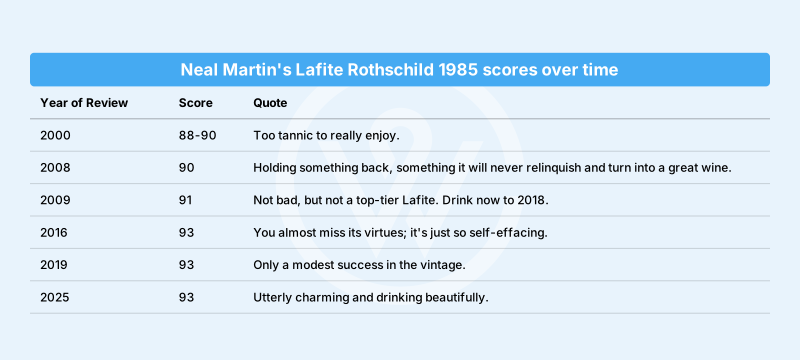
Neal Martin's Lafite Rothschild 1985 scores over time

Not only do fine wines improve over time, they also become scarcer. Every bottle drunk reduces the global supply. For a vintage to gain value, it must be able to survive several decades in a cellar. Without this longevity, a wine is a simple consumption purchase rather than a potential investment.

The relationship between age and value is often non-linear. A wine may trade at its release price for several years before hitting a “drinking window.” Once critics confirm a vintage is reaching its peak, demand and pricing often surges and consumption increases. This phase of the lifecycle is where the most significant returns are frequently realised.

What happens when wine ages?

Fine wine is essentially a slow-motion chemistry set. Even when fermentation has ended, the wine matures through constant slow changes that dictate its long-term investment value.

Key transformations include:

  • Micro-oxygenation: Trace amounts of air enter through the cork over decades. This controlled oxidation transforms simple primary fruit into complex tertiary aromas such as leather, tobacco, or forest floor.
  • Polymerisation: Harsh tannin molecules link together to form long chains. These feel silkier on the tongue and eventually precipitate as sediment, naturally refining the wine’s texture and mouthfeel.
  • Esterification: Acids and alcohols react to create esters. This chemical evolution develops the “bouquet,” adding tertiary layers of spice, truffle, and earth that are absent in younger vintages.
  • Anthocyanin shift: The chemicals giving wine its colours change their structure. Red wines fade from vibrant purple to garnet or brick, while white wines darken toward deep gold or amber.

A consistent, cool cellar ensures these reactions happen gradually. Rushing the process with heat prevents complexity from developing. These molecular shifts are what transform a standard wine into a rare, high-value asset.

Wine vs whisky: The biological divide

A common point of confusion for new collectors is the difference between wine and spirits like whisky. Whisky is a distilled spirit with a high alcohol content that effectively halts biological change. Once a whisky is bottled, its flavour profile remains static.

Wine is a living product. It continues to interact with trace amounts of oxygen through the cork and undergoes complex chemical reactions between its acids, tannins, and alcohols. These reactions are what create the sought-after aromas of leather, earth, and dried spices. A bottle of Lafite Rothschild from the 1980s tastes vastly different today than it did in 1990; an examination of scores over time shows this very clearly.

This dynamic nature is why storage conditions are so critical for wine. While a bottle of Macallan can sit on a shelf for years, a First Growth Bordeaux requires a temperature-controlled environment. The risk of spoilage is the price an investor pays for the potential of improvement.

Fortified wines: The indestructible assets

Fortified wines occupy a unique space in the wine world. Unlike “normal” fine wines, which typically range from 12% to 14.5% alcohol, fortified wines are bolstered with grape spirit. This process raises the alcohol level to between 17% and 22%..

This addition of spirit serves two purposes: it stops fermentation early, leaving residual sugar, and acts as a powerful preservative. This is why fortified wines can survive for centuries. While a dry red wine might reach its peak at 40 years, a top-tier Vintage Port or Madeira can still be improving at 100 years.

The winemaking process is also distinct. In many cases, these wines are intentionally exposed to heat or oxygen during production to stabilise them. This pre-ageing makes them incredibly resilient once they are in the bottle.

Long-lived Port

Port is perhaps the most famous fortified wine. Vintage Port is only produced in years of exceptional quality, known as a “declaration.” These wines are designed to be cellared for at least 20 to 50 years before they show their true potential.

The structure of Port comes from its intense tannins and high sugar content. Over time, the aggressive spirit integrates with the fruit, creating a velvet-like texture. Examples of legendary long-lived Ports include:

  • Taylor’s Vintage Port (notably the 1945 and 1992 vintages).
  • Graham’s The Stone Terraces.
  • Quinta do Noval Nacional.

These wines are often considered the ultimate inheritance assets. They are frequently purchased to mark the birth of a child, with the intention of being opened many decades later. Their survival rate is higher than almost any other wine style because they are more robust: so long as the cork remains intact, they are likely to retain their quality.

Sherry with extraordinary ageing potential

While much of the Sherry market is focused on fresh styles, wines like Oloroso, Palo Cortado, and Amontillado have extraordinary ageing potential. The best examples come from the “VOS” (Very Old Sherry) and “VORS” (Very Old Rare Sherry) categories.

These wines have already spent an average of 20 or 30 years ageing in a solera system before bottling. Because they have been intentionally exposed to oxygen for decades, they are virtually immune to further oxidation in the bottle. They offer some of the most complex aromatic profiles in the world, featuring roasted nuts, saline notes, and dried citrus.

Collectible examples include:

  • Gonzalez Byass “Matusalem” Oloroso
  • Valdespino “Coliseo” Palo Cortado
  • Tradición VORS Amontillado

Bordeaux: The global benchmark

Bordeaux is the foundational region for wine investment. Its primary grape, Cabernet Sauvignon, is naturally high in tannins and acidity which are the building blocks of its longevity. As anyone who has attended En Primeur tastings can attest, the structure of a young Bordeaux can be quite harsh, but time softens these elements into a harmonious whole.

The First Growths, such as Latour and Mouton Rothschild, are famous for their ability to withstand long ageing. Even in “off” vintages, the technical precision of these estates ensures a long life.

Notable examples of long-lived Bordeaux:

  • Chateau Latour 1961 
  • Chateau Haut-Brion 1989
  • Chateau Montrose 1990 

The elegance of aged Burgundy

Burgundy offers a different ageing profile compared to Bordeaux because Pinot Noir is a thinner-skinned grape with lower tannin levels. Longevity in Burgundy comes from the perfect balance of acidity and the incredible concentration of fruit found in Grand Cru sites.

While a Bordeaux might be powerful, an aged Burgundy is ethereal. The transition from fresh raspberry to truffle and forest floor flavors is one of the most celebrated experiences in fine wine. However, Burgundy can be more temperamental in the cellar, making provenance and storage even more critical.

Examples of iconic ageing Burgundy:

  • Domaine de la Romanee-Conti (DRC) La Tache
  • Domaine Armand Rousseau Chambertin
  • Domaine Leflaive Montrachet 

Piedmont: Italy’s answer to Burgundy

Like Burgundy, Piedmont focuses on single-vineyard sites and a single grape: Nebbiolo. Nebbiolo is an unusual variety that looks light in the glass but possesses massive tannins and high acidity. Historically young Barolo and Barbaresco were almost impenetrable. It was only in recent years that Piedmont winemakers would declare that their wines could be enjoyed in less than 30 years.

Still, these wines require time to reveal their beauty. A classic Barolo often needs ten to 15 years to become approachable. The best vintages from top producers like Giacomo Conterno or Bruno Giacosa can easily last for half a century.

Examples of long-lived Piedmont:

  • Giacomo Conterno Barolo Riserva Monfortino
  • Bruno Giacosa Barbaresco Santo Stefano
  • Gaja Barbaresco

Tuscany: The rise of the Super Tuscans

Tuscany has two main pillars, both of which can craft long-lived wines: Brunello di Montalcino and the Super Tuscans. Brunello is made from 100% Sangiovese and is legally required to undergo extensive ageing before release. The structure of top Brunello allows it to evolve gracefully for 30 years or more.

Super Tuscans are almost defined by their incorporation of the international varieties brought to fame by Bordeaux: Cabernet Sauvignon and Merlot. These wines were designed to compete on the global stage and have proven their ability to cellar. Sassicaia and Tignanello are the primary examples that investors look for but there are many others that will reward cellaring.

Key Tuscan ageing stars:

  • Biondi-Santi Brunello di Montalcino Riserva
  • Tenuta San Guido Sassicaia
  • Masseto 

The New World: USA and South America

The United States, particularly Napa Valley, has established itself as a producer of long-lived Cabernet Sauvignon. Estates like Ridge Vineyards, Stags Leap Wine Cellars and Heitz have bottles from the 1960s and 1970s that are still drinking beautifully today as evidenced by ongoing re-tastings of wines from the 1976 Judgment of Paris. While the cult wines of Napa are frequently approachable in their youth they are also built for long-term cellaring.

In South America, the focus is on high-altitude sites that preserve acidity. Argentina’s Malbec and Chile’s Cabernet blends have shown surprising resilience. Producers are now making wines with more restrained oak and higher acidity to ensure they age as well as their European counterparts.

Examples of New World longevity:

  • Ridge Monte Bello (California)
  • Screaming Eagle Cabernet Sauvignon (California)
  • Catena Zapata Adrianna Vineyard (Argentina)
  • Seña (Chile)

South Africa and Australia

South Africa has a long history of sweet wine production, but its red blends from Stellenbosch are now proving their mettle. The Cabernet-based wines from Kanonkop are known for their ability to age for several decades and will often outlast their peers from much more expensive regions.

Australia is home to some of the oldest vines in the world. For instance, the grandfather vines at Henschke were planted in the 1860s and vintages from the 1950s have performed well at recent tastings. Penfolds Grange is also well known for its longevity: a multi-regional Shiraz blend that is designed to be tucked away for 30 to 50 years. The power and concentration of Australian Shiraz provide a sturdy foundation for ageing.

Notable examples:

  • Henschke Hill of Grace (Eden Valley)
  • Penfolds Grange (South Australia)
  • Kanonkop Paul Sauer (Stellenbosch)

Dry white wines: Longevity and evolution

Top-tier still whites also possess a capacity to be aged, even if equivalent quality red wines are generally better able to accommodate multiple decades in the cellar. Longevity in this category is primarily driven by high natural acidity and the fruit concentration found in prestigious vineyard sites. Over time, as colour darkens these wines move away from fresh citrus notes, gaining complex tertiary aromas such as honey, toasted nuts, dried flowers and even cheese as they reach extremely old age.

Notable examples of ageable still whites can hail from many regions, but old world dry whites from Burgundy, Bordeaux, Alsace, the German regions in the Rhine and Mosel valleys are arguably best known for their capacity to age with grace. Examples include:

  • Domaine Joseph Drouhin Montrachet Marquis de Laguiche Grand Cru (Burgundy)
  • Domaine de Chevalier Blanc (Bordeaux)
  • Keller G-Max Riesling Trocken (Rheinhessen)
  • Trimbach Riesling Clos Sainte Hune (Alsace)

Can sparkling wine age?

While non-vintage Champagne is ready to drink as soon as it’s available, Vintage Champagne has an undeniable ageing potential. The high acidity and the presence of carbon dioxide act as preservatives that allow ageing to occur over many decades.

As Champagne ages, the bubbles become finer and begin to fade, while the flavour profile shifts from fresh citrus to brioche, honey, and roasted nuts. Some collectors specifically seek late-disgorged bottles that have spent extra time on their lees for even more complexity. Producers are happy to meet that demand: Dom Perignon recently added P3 to their line, allowing a third release window for the best vintages offering vintages from the 1960s and 1970s and 1980s to the market almost 50 years after their initial offering.

Examples of long-lived Champagne:

  • Dom Perignon
  • Krug Vintage
  • Salon Le Mesnil

Underwater ageing: A new frontier

One of the most intriguing developments in recent years is the practice of ageing wine underwater. This trend was sparked by the discovery of 170-year-old Champagne in a shipwreck in the Baltic Sea. The bottles were found to be in remarkable condition, the theory being that constant temperature, darkness, pressure and the lack of vibration fundamentally slow down the ageing process.

Producers are now intentionally submerging cages of wine in the ocean. Notable projects include:

  • Veuve Clicquot’s “Cellar in the Sea”
  • Leclerc’s Abyss
  • Drappier’s Immersion
  • Mira Winery (Napa Valley)
  • Crusoe Treasure (Spain)

The golden finish: Long-lived sweet wines

Sweet wines are the true champions of the cellar. The combination of high sugar and high acidity creates a nearly immortal product of which Sauternes is the most famous example. Here botrytis, a fungal infestation also known as “noble rot”, concentrates the sugars and acids to an extreme degree.

A top-tier Sauternes like Chateau d’Yquem can easily age for a century. Over time, the wine turns from bright gold to a deep amber colour and the flavours evolve from tropical fruit to complex notes of creme brulee, dried fruits, marzipan and nutmeg.

Other sweet wine icons:

  • Suduiraut (Sauternes)
  • Egon Müller Scharzhofberger Riesling TBA (Germany)
  • Royal Tokaji 6 Puttonyos (Hungary)
  • Klein Constantia Vin de Constance (South Africa)
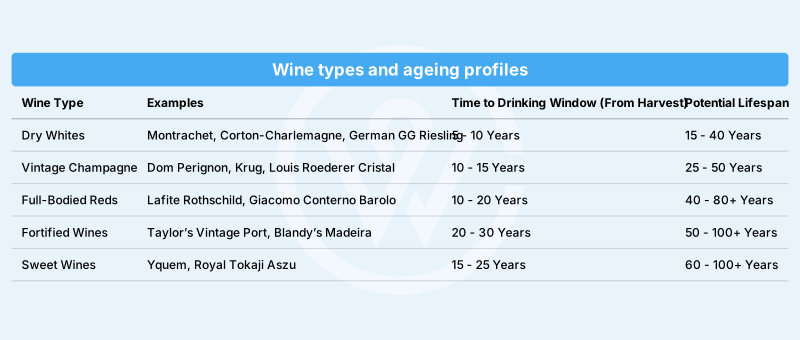
Wine types and ageing profiles

FAQ

How do I know if a wine has ageing potential? 

Look for a balance of high acidity, strong tannin structure (for reds), and high fruit concentration. Reviews from reputable critics often include a suggested “drinking window” to help guide your decision.

What is the best temperature for ageing wine? 

A constant temperature of around 12 to 14 degrees Celsius is ideal for long-term development. Significant fluctuations in temperature can cause the wine to expand and contract, potentially damaging the cork seal.

Does expensive wine always age better than affordable bottles? 

Not necessarily. While most investment-grade wines are expensive because of their longevity, some high-priced wines are made for early consumption. Always check the specific style and vintage before deciding to cellar a bottle.

Can I age white wine as long as red wine? 

Most white wines are intended for early drinking, but high-acid whites like Riesling and Chardonnay from top sites can age for decades. Sweet white wines like Sauternes have the longest potential of all unfortified wine styles.

WineCap’s independent market analysis showcases the value of portfolio diversification and the stability offered by investing in wine. Speak to one of our wine investment experts and start building your portfolio. Schedule your free consultation today.
Categories
News

La Place 2025: Key fine wine releases beyond Bordeaux

  • The La Place 2025 campaign has continued its expansion with more than 130 wines offered via the historic network.
  • As the campaign unfolds against a backdrop of economic uncertainty, some estates have paused their involvement while others see it as an even more necessary tool to secure sales.
  • We analyse the value and investment potential of some of the most important La Place releases.

The La Place 2025 campaign has continued its expansion with more than 130 wines offered via the historic network.

Firstly, what is La Place? Traditionally, La Place de Bordeaux (as it is called in full) was the centuries-old distribution system through which Bordeaux châteaux released their wines to international merchants. Over the past two decades, it has transformed into a global platform, with leading estates from Tuscany, California, Chile, and beyond joining to tap into its worldwide reach. For investors, La Place matters because it provides access to many of the world’s most sought-after wines at the moment of release – making it a barometer for both pricing trends and collector demand.

As the campaign unfolds against a backdrop of economic uncertainty, some estates have paused their involvement while others see it as an even more necessary tool to secure sales. We analyse the value and investment potential of some of the most important La Place releases.

La Place in 2025: what has changed

This year’s campaign unfolds against a backdrop of economic uncertainty, with the fine wine market still in the grip of a downturn that began in late 2022. Lower release prices have become more of an expectation, with the need to adapt to softer demand more noticeable than ever. Some estates have chosen to step back, pausing their La Place involvement for now, while others have come to view the system as key to securing global recognition and distribution. 

What remains unchanged is the underlying pull of La Place: demand among producers to gain access to this international sales platform continues to grow, ensuring a steady stream of new entrants even as others bow out.

Departures and pauses

Not every name is present this year. Montes Muse, Destiny Bay, and Bibi Graetz’s ultra-limited Balocchi are no longer part of the roster. Certain wines are absent due to production constraints rather than strategy: Penfolds Bin 169 was not made in 2023, while Cloudburst skipped its 2022 Malbec. Within Bibi Graetz’s portfolio, the white Testamatta and Colore were made in such small volumes that they will not be offered via La Place.

Shifting timelines

Another notable trend is the shift in release windows. Several well-known estates have moved from September to March releases, including Hermitage La Chapelle, Napa’s Favia, Chile’s Viñedo Chadwick, and Jackson Family Wines’ Cardinale. This rescheduling might help reduce bottlenecks during the crowded September calendar.

New arrivals

Despite some exits, the list of debutants reinforces La Place’s increasingly diverse profile. New highlights include:

  • Argentina (Mendoza): Zuccardi’s El Camino de las Flores
  • Australia (Clare Valley): Jim Barry Florita
  • Australia (Tasmania): Arras Grand Vintage
  • France (Loire): Vincent Delaporte (Sancerre), Domaine Luneau Papin (Muscadet), Laurent Lebrun (Pouilly-Fumé), Sébastien Brunet (Vouvray)
  • Spain (Ribeira Sacra): Cornamús (F. Algueira)
  • USA (California): Flowers (Pinot Noir & Chardonnay)

Most in-demand La Place releases

Some La Place releases command attention year after year. These include the Super Tuscans, California’s cult labels, and Bordeaux/New World collaborations such as Seña and Almaviva. But where do their latest vintage releases sit in the current market and the overall brand performance?

Masseto

Masseto was the first Italian wine to join La Place de Bordeaux back in 2009, offering its 2006 vintage through the international distribution system. It was also the first wine with no specific Bordeaux ties to join the platform, paving the way for other fine wines from around the world.

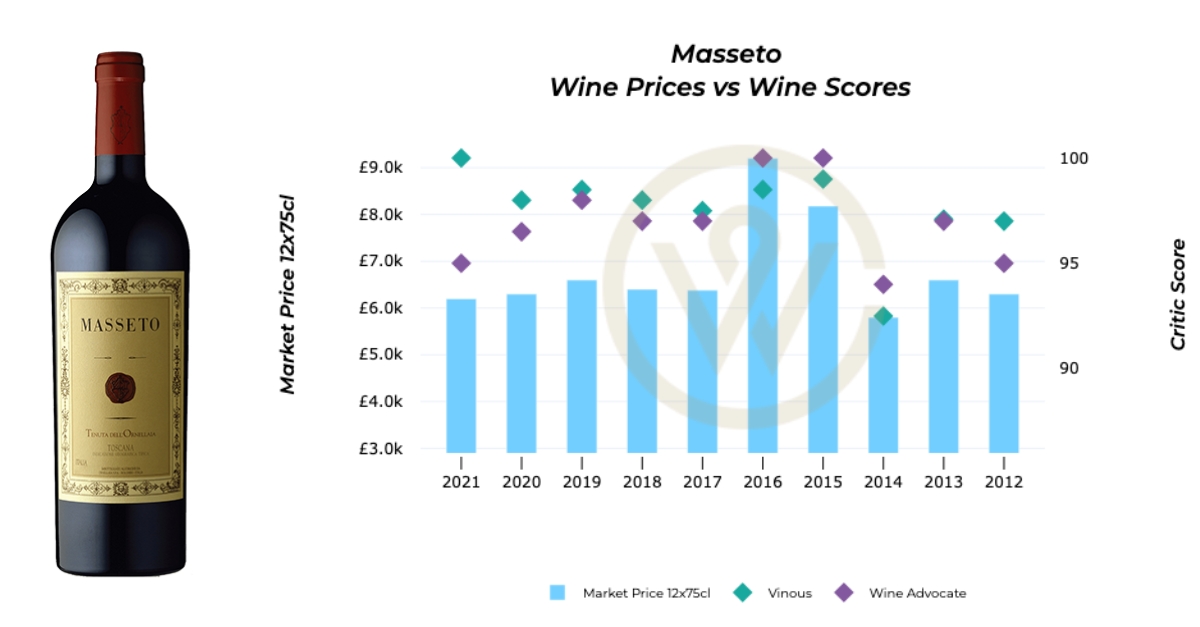
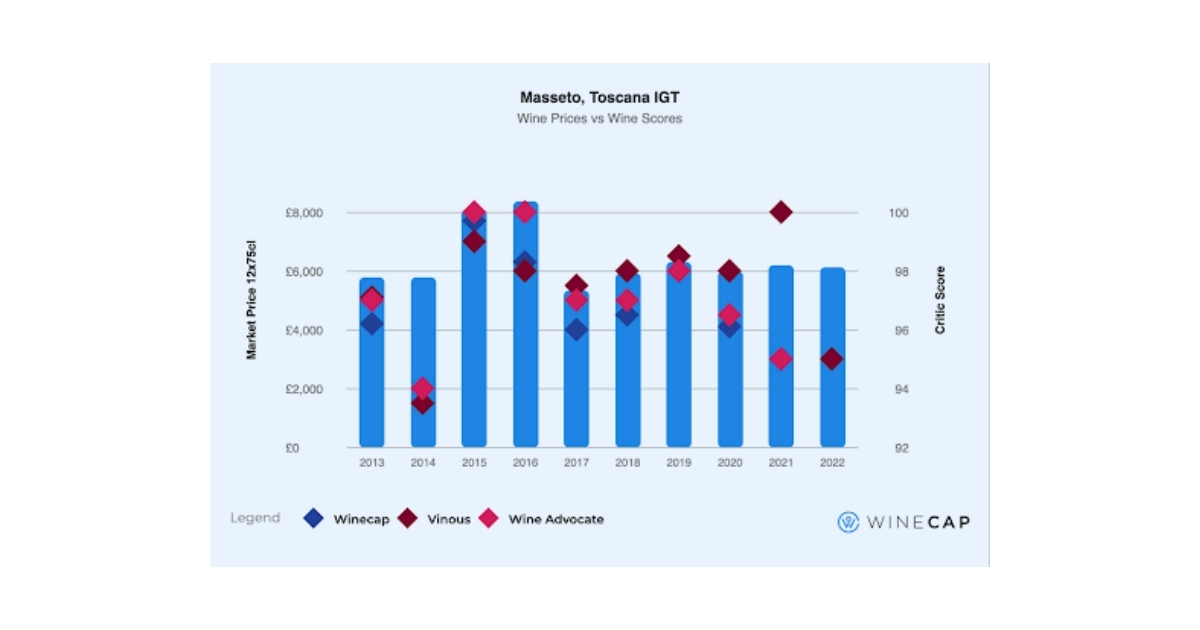
Earlier this month saw the release of its latest 2022 vintage at £6,140 per 12×75, down 1% on last year. The wine achieved 95 points from Antonio Galloni (Vinous) – his lowest score since the 2014. Still, he described it as ‘elegant and polished’ and ‘super refined’.

When it comes to value for money, the 100-point 2021 vintage makes a better buy. The lower-priced but higher-scored 2018 and 2017 vintages also offer better value. All of these vintages sit below the average brand price of £7,812 per case. Notably, our Masseto index has risen 67% over the past decade. 

Masseto fine wine prices

Solaia

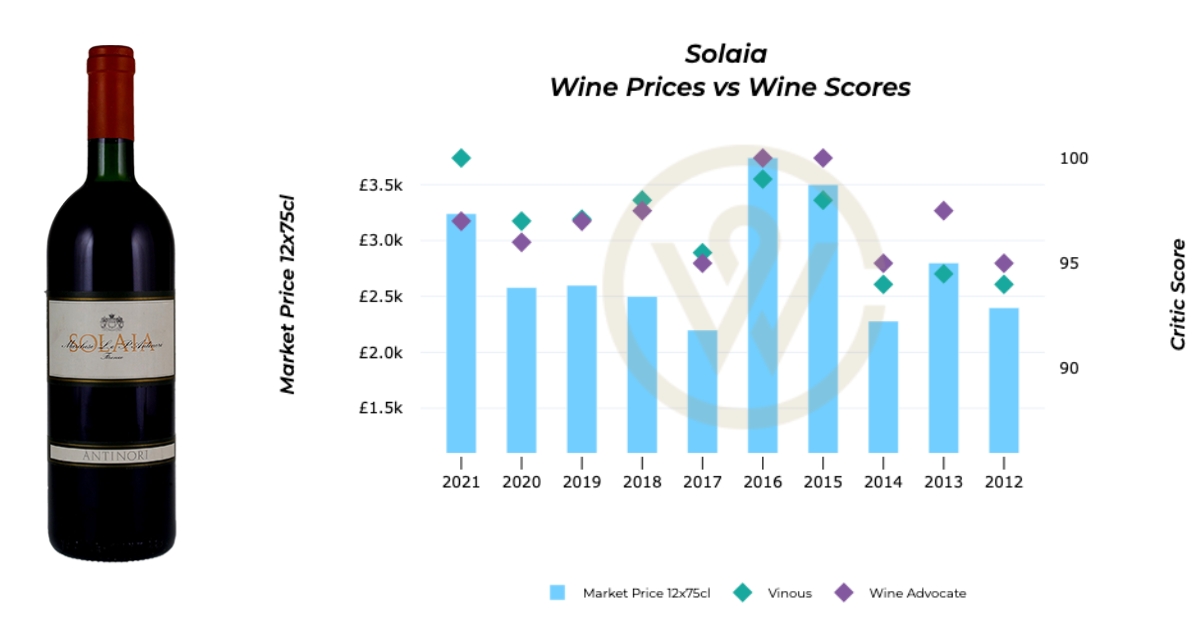
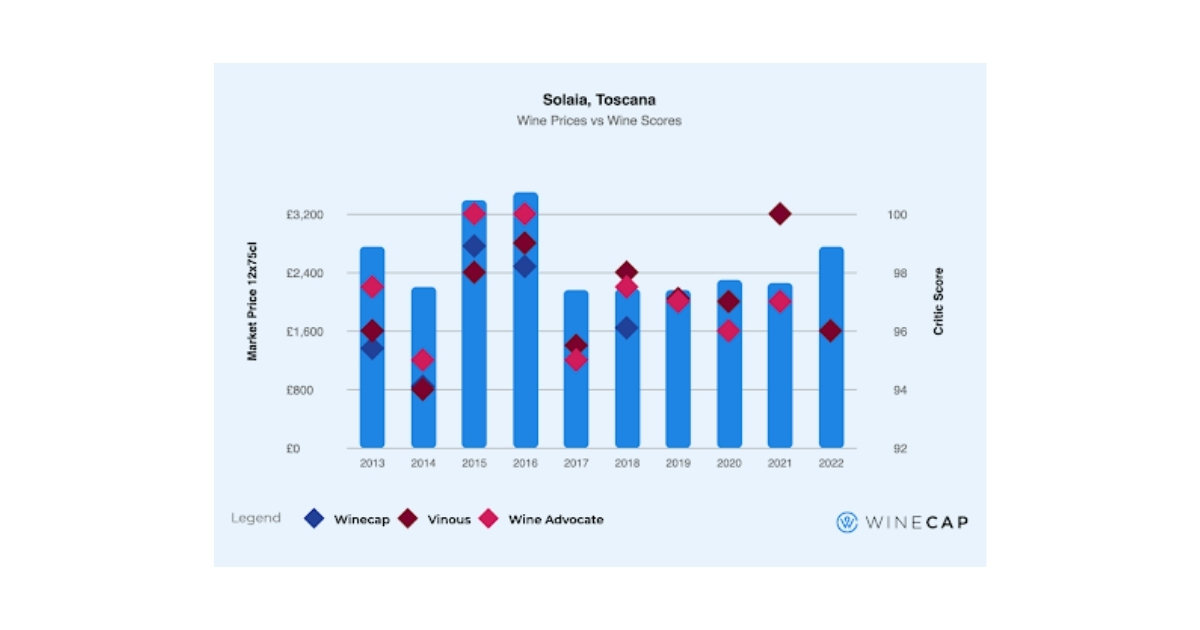
Another notable Super Tuscan follows a similar trajectory. Solaia 2022 was released at £3,300 per 12×75, flat on the 2021, which has since fallen in value. Comparing critic scores for the two weighs in favour of last year’s release, which earned 100 points from Galloni. The lower-priced 2018 Solaia also looks more attractive.

Over the past decade, our Solaia index has risen an impressive 113%. Even with the current market downturn, Solaia values have held relatively steady – up 3% in the last six months. 

Solaia fine wine prices

Opus One 

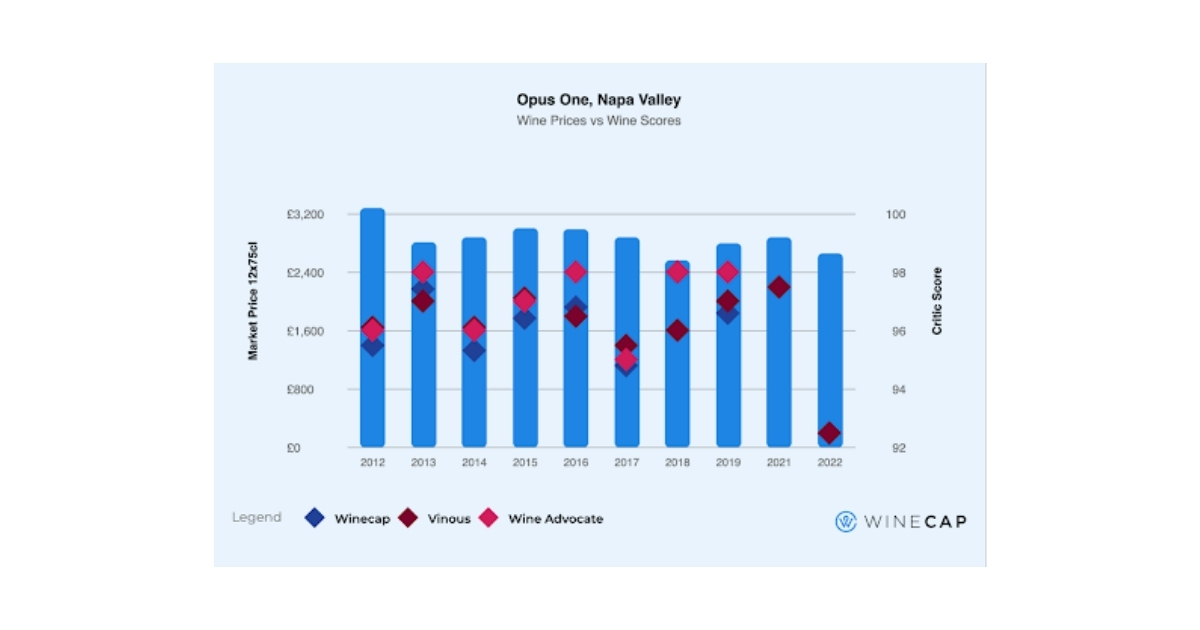
Moving past the Super Tuscans, the 2022 vintage of the USA’s most popular wine, Opus One, was released earlier this month at £2,820 per 12×75. The wine received 92+ points from Galloni, 96 points from Jane Anson and 95-97 points from Lisa Perrotti-Brown MW. Higher-rated vintages like 2018 and 2019 look better poised for investment.

The overall performance trajectory of Opus One has been positive: the brand is up 4% in the last six months, 18% in the last five years, and 95% in the last decade.

Opus One Napa Valley fine wine prices

Penfolds Grange 


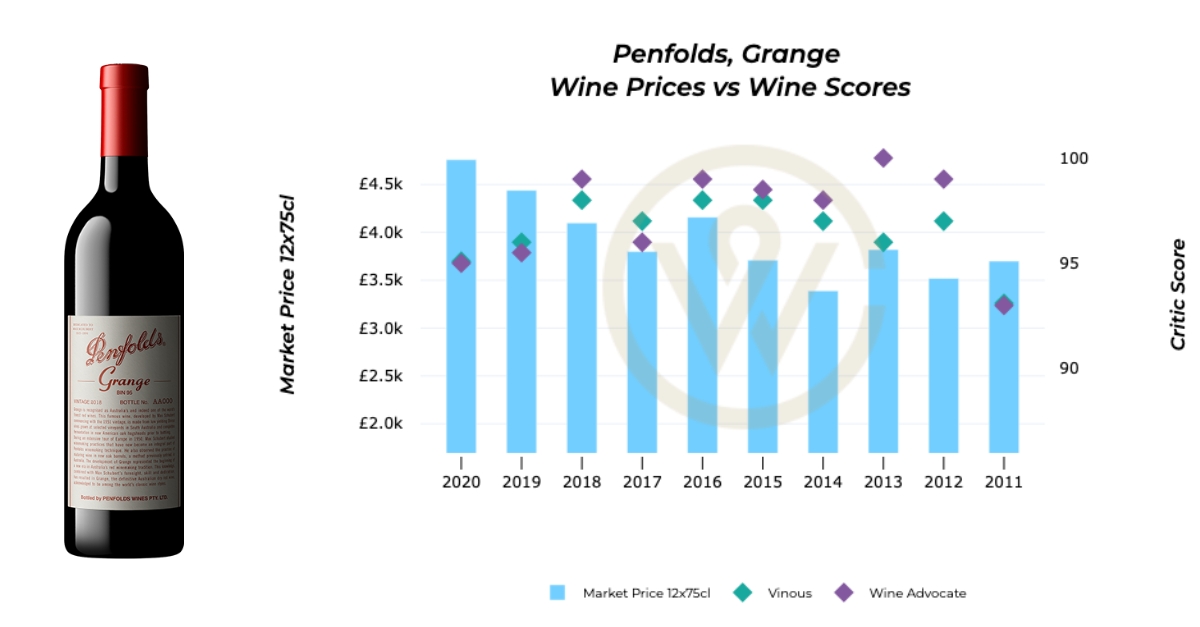
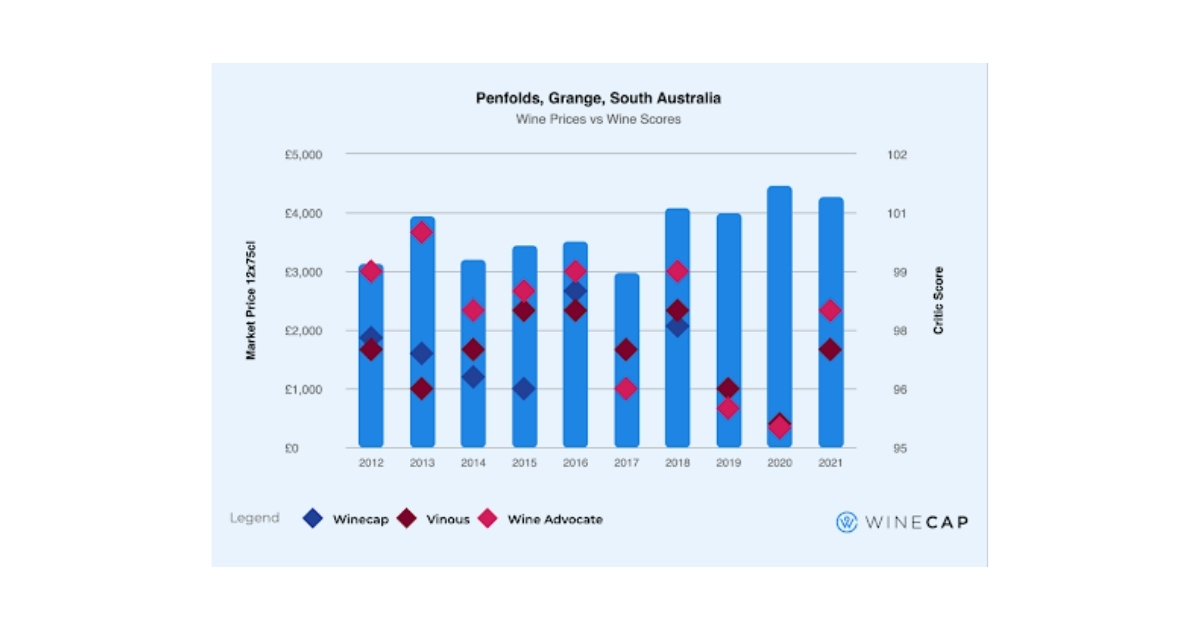
Penfolds, Australia’s leading wine brand, released its 2021 vintage slightly below 2020 but above most readily-available older vintages. The new release achieved 98 points from Jane Anson and Erin Larkin (Wine Advocate). Still, buyers will find better value in 2015 and 2016 – two of the most sought-after Penfolds Grange vintages.

Penfolds Grange Australian fine wine prices

Seña

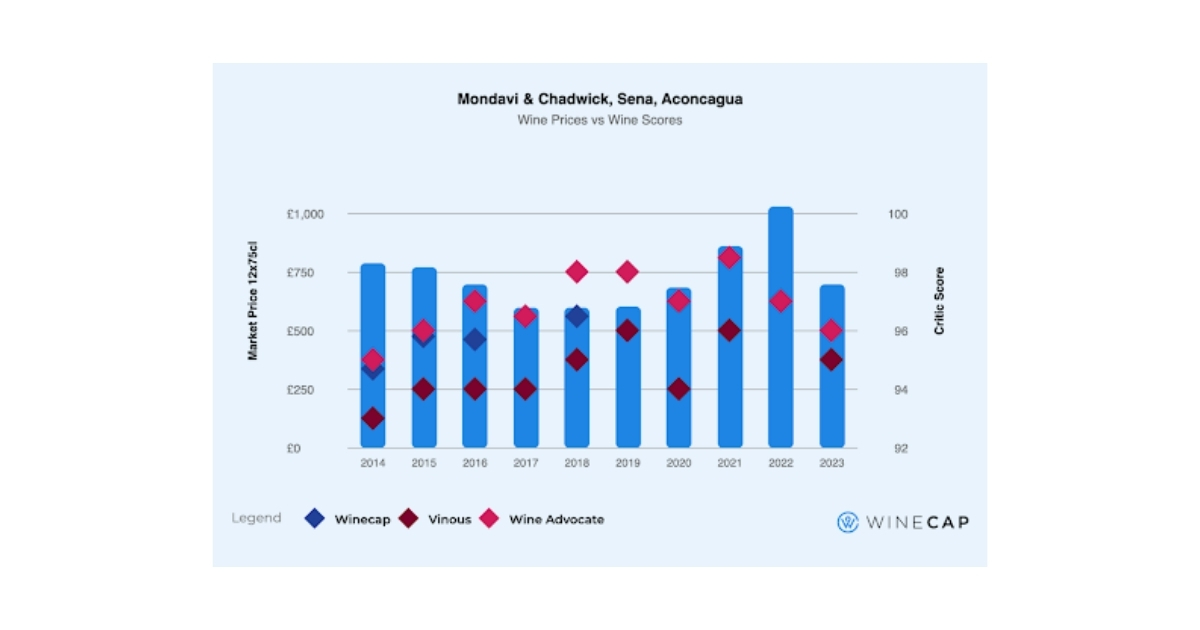
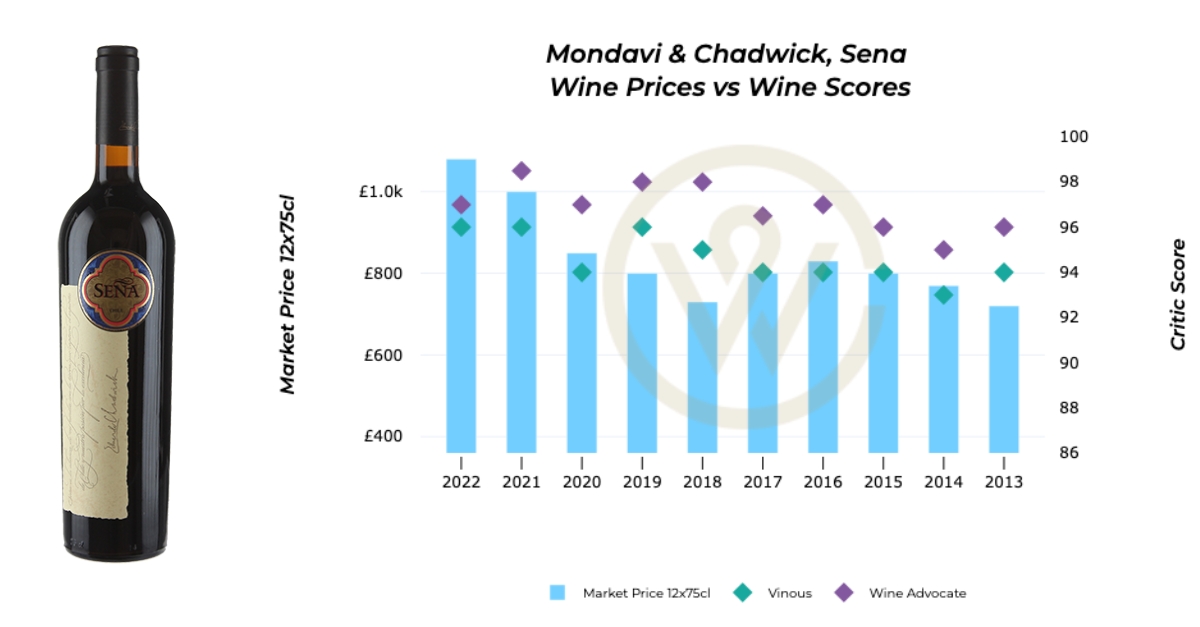
The 2023 vintage of Seña, which received 95 points from Joaquin Hidalgo (Vinous) and Jane Anson, was released at £720 per 12×75, down 36% on last year. Still, the 95-point 2018 and 96-point 2019 remain available at lower prices. 

In the last six months, our Seña index has risen 2%; over the past decade, it is up 70%.

Mondavi and Chadwick Sena fine wine prices

Almaviva

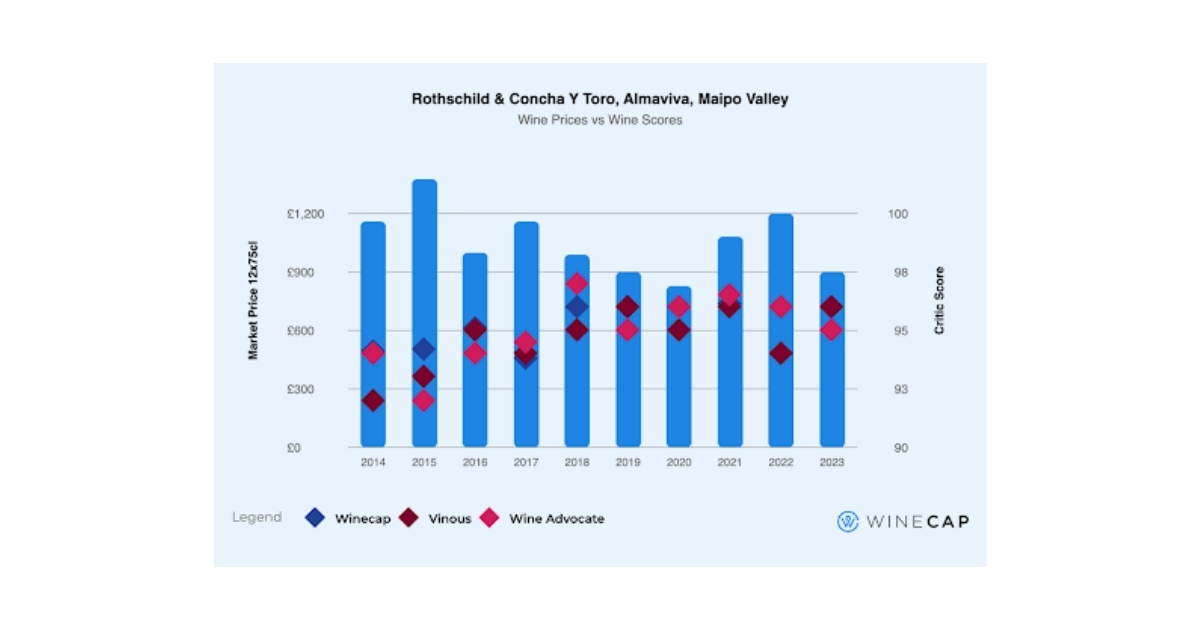
Almaviva, the most popular Chilean wine brand, also offered its 2023 vintage via La Place this September, at £924 per 12×75 case. The new vintage was awarded 96 points from Joaquin Hidalgo, placing it on par with the 2021 and 2019 vintages. The 2023 Almaviva has been one of the better value La Place releases, although from its back vintages, 2020 and 2019 look equally or even more attractive.

Almaviva fine wine prices

In terms of overall brand performance, our Almaviva index is up 141% in the last decade. The brand’s average price per case now stands at £1,565.

The 2025 La Place campaign inevitably reflects the global economic climate as well as the challenges and the resilience of today’s fine wine market. A cautious economic backdrop and softer demand have prompted some estates to step aside and others to lower prices, yet La Place continues to expand in scope and influence.

The arrival of new producers from Argentina, Australia, the Loire, and California highlights its ongoing globalisation, while established icons like Masseto, Solaia, Opus One, and Almaviva still command worldwide attention. The key for buyers remains having a selective and comparative approach. While new releases carry prestige and immediate buzz, back vintages often provide stronger value and proven performance. 

Want to learn more? See also: Is buying early always the best investment?

WineCap’s independent market analysis showcases the value of portfolio diversification and the stability offered by investing in wine. Speak to one of our wine investment experts and start building your portfolio. Schedule your free consultation today.
 

Categories
News

James Suckling’s top wines of 2024

  • American critic James Suckling has released his top 100 wines of 2024 list.
  • His wine of the year is Bertani Amarone della Valpolicella Classico 2015. 
  • Italy dominates the rankings followed by France and the US.

American critic James Suckling has released his top 100 wines of 2024 list, along with his wine of the year. The highest accolade went to Bertani Amarone della Valpolicella Classico 2015, which according to the critic, is a classical wine that embodies ‘the greatness of time and place’.

Regional distribution

Suckling and his team tasted and rated over 40,000 different wines over the past twelve months. The majority were from Italy, which accounted for over 9,100 of the reviewed wines, followed closely by France with 9,000, the US with 6,800, Spain – 3,800, Argentina – 2,300, Germany – 2,000, Australia – 1,700, and Chile nearly 1,550. They also tasted wines from other regions worldwide including Greece, Hungary, Canada and Uruguay.

Italy also dominated the list of their favourites, featuring with 26 wines in the top 100, followed by France (18), the United States (15), Germany (12), Argentina (6), Spain (6), Chile (6), Australia (5), Austria (4), South Africa (1) and China (1).

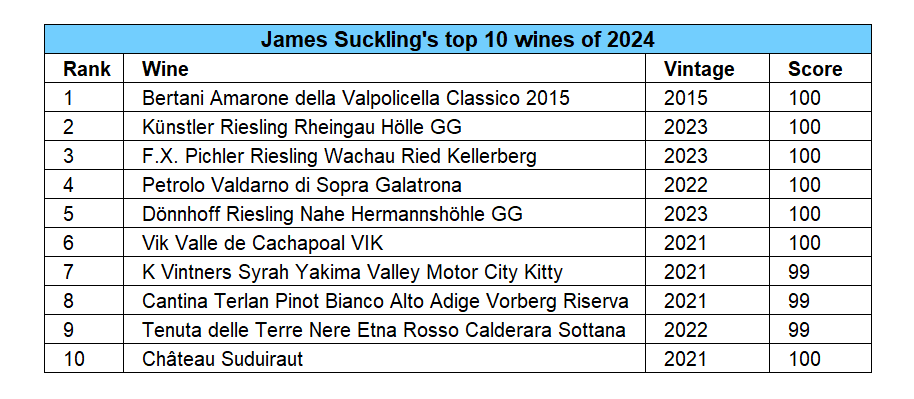
Suckling’s top 10 wines of 2024

James Suckling’s wine of the year is the 2015 Bertani Amarone della Valpolicella Classico, which he described as ‘full-bodied and elegant on the palate due to ripe, filigree tannins with long acidity and a toasty, savory aftertaste’. He called it ‘one of the great Amarones’ and gave it a 100-point score.


The top wines of the year were chosen on the basis of quality, price, and what Suckling calls the “wow factor,” an emotional impact a wine can have on the drinker. Most wines on the list scored between 97 and 100 points, with nine wines priced between $30 and $60 (£23 and £46), emphasising affordability alongside quality. Wines on the list were required to have a minimum production of 5,000 bottles, with a median price below $500 (£385).

Regional standouts

Germany had a standout year in 2023, particularly for its dry Riesling, with the Künstler Riesling Rheingau Hölle GG 2023 ranking second on the list and exemplifying the structured, balanced nature of this vintage.

Austria continued to gain critical recognition, especially for its white wines, with F.X. Pichler Riesling Wachau Ried Kellerberg 2023 taking the third spot. 

China was also present on the list with Ao Yun Shangri-La 2020, a wine from Moët Hennessy’s Yunnan winery, signaling the country’s growing role in the fine wine market.

Accessibility and value

Suckling noted that many of his favourite wines offer high quality at accessible price points. The focus on value addresses current concerns about the market’s downturn. For example, the wine that took the second spot is priced around $65 (£50), while Italian whites such as the Manincor Sauvignon Blanc Alto Adige Tannenberg 2022 are available for approximately $40 (£31).

Emerging trends

Suckling’s report further highlights an increasing interest in German and Austrian wines, especially among younger consumers, due to their quality and value. Events like Suckling’s Great Wines series, held across major cities globally, have drawn over 21,000 attendees this year. With wines from more established to emerging wine regions, Suckling’s 2024 list provides a guide to the critic’s top picks from across the globe.

WineCap’s independent market analysis showcases the value of portfolio diversification and the stability offered by investing in wine. Speak to one of our wine investment experts and start building your portfolio. Schedule your free consultation today.
Categories
News

Beyond Bordeaux releases: why back vintages offer better value

  • This autumn sees the annual beyond Bordeaux campaign via La Place. 
  • Most of the wines have been released at the same price level as last year. 
  • This is not enough to stimulate buyers given the current dip in market prices across all regions. 

This month’s La Place de Bordeaux campaign has seen a mix of notable releases beyond the traditional Bordeaux wines, featuring the latest vintages from esteemed producers like Opus One, Masseto, Solaia, Penfolds, and Viñedo Chadwick. However, as market prices dip across multiple regions, many of these releases have seen limited appeal. The enhanced availability of older vintages at more competitive prices makes back vintages a more attractive investment option.

Super Tuscan releases

The Super Tuscan Masseto 2021 kicked off this autumn’s La Place campaign at the same price as last year’s vintage. It marks one of the last vintages overseen by Alex Heinz, who transitioned to CEO of Château Lascombes in Bordeaux in 2022. 

The wine received a perfect 100-point score from Antonio Galloni (Vinous) who said it was ‘the most exquisite, refined young Masseto’ he had ever tasted. Monica Larner (Wine Advocate), while giving it 95 points, described it as a ‘very rich and elaborate expression’.

However, better value can be found in back vintages such as 2017, 2018, and 2019, where critic scores are more aligned across publications.


In contrast, Solaia 2021 from Marchesi Antinori came in at a 15.7% premium over the 2020 vintage, with a recommended price of £3,240 per 12×75. 

Despite strong reviews – 97 points from Larner and a perfect 100 from Galloni – this price positions the 2021 Solaia above several recent vintages. 

Buyers seeking better value might prefer the 2018, 2019, or even the 100-point Solaia 2015, which comes with the added advantage of age.


Chile’s iconic wines

Two of Chile’s most iconic wines were also released earlier this month, Seña 2022 and Viñedo Chadwick 2022.

Although Seña 2022 was offered at the same price as last year, it is still the most expensive vintage currently in the market due to a drop in value of the previous vintages. The 2019 and 2018 vintages, for instance, both have higher scores from Wine Advocate and cost less.


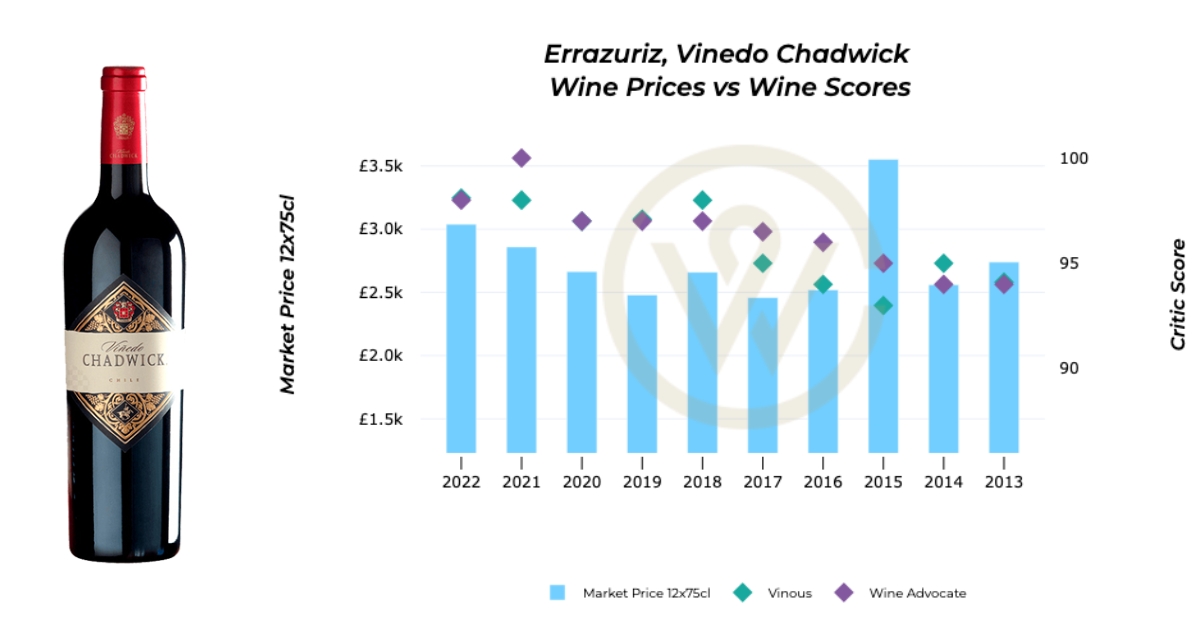
Similarly, Viñedo Chadwick 2022 was released at last year’s price but remains the second most expensive vintage, following the 2015 Joaquín Hidalgo (Vinous) awarded it 98 points, praising its ‘finessed Bordeaux-oriented style with the plush tannins of Maipo’.

From an investment perspective, the 2021 offers a more affordable, higher-scored alternative, while the 2018 and 2019 vintages are also solid options.


Other notable releases

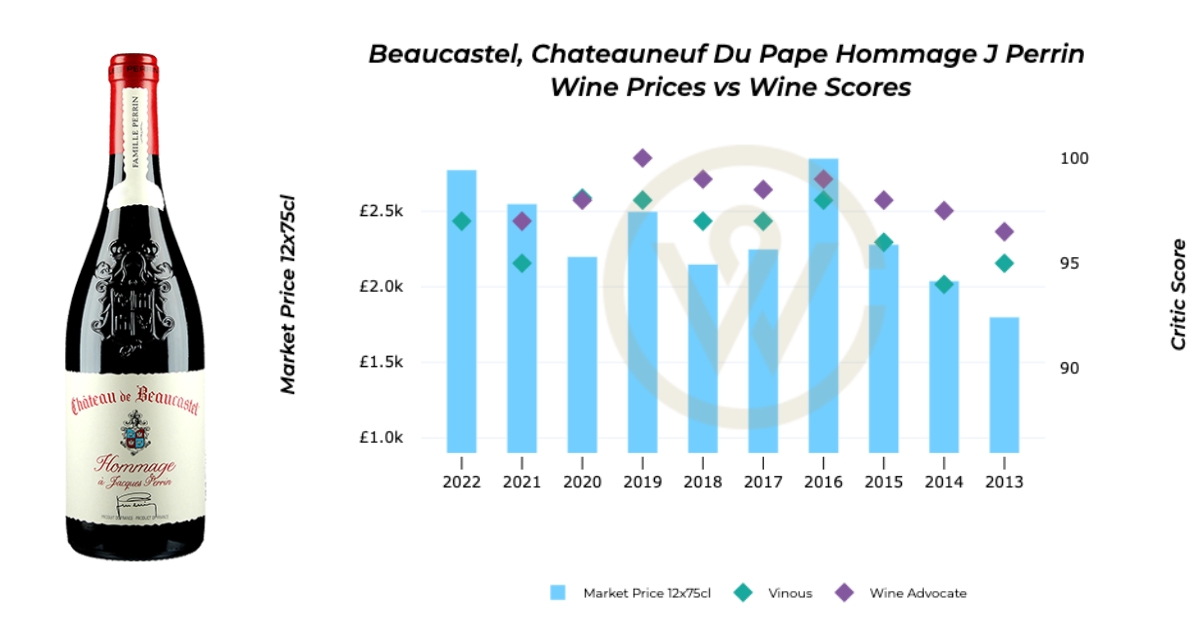
Château de Beaucastel Hommage à Jacques Perrin 2022 is another wine released at the same price as last year, which has since fallen in value. This makes it the second most expensive after the 2016. 

It received a range of 96-98 points from Nicolas Greinacher (Vinous), who said it was ‘on track to rank alongside the spectacular 2020’. Still, the 2018, 2017 and 2015 present better value alternatives. 


With a small increase of 1.3% on last year, Penfolds Grange 2020 was released at £4,740 per 12×75. 

Erin Larkin (Wine Advocate) described it as ‘lighter than the preceding 2019’ and gave it 95 points. It received the same score from Angus Hughson (Vinous) who suggested that it would benefit from a ‘couple more years in the cellar [that] will bring all the pieces together before a two-decade drinking window’.

When it comes to back vintages, the 2012, 2014 and 2015 all look more attractive. The 100-point 2013 vintage is also cheaper and has entered its early drinking window.


Back vintages remain an untapped opportunity

As the latest La Place de Bordeaux campaign reveals, many new releases are being offered at prices that do not necessarily align with current market conditions.

In contrast, back vintages – often with comparable or superior critic scores – can provide better value and greater investment potential. With the market dip creating opportunities for buyers, it is a good time to focus on older, well-regarded vintages that offer both affordability and maturity.

Get in touch to discuss your allocations or to start building your fine wine collection. Schedule a consultation.

Categories
News

Piedmont on the move: rising stars under £1,000 a case

  • Italy is the best-performing fine wine region year-to-date. 
  • Some Italian brands have recorded positive movement as high as 15% in the last six months.
  • Piedmont’s edge in the fine wine market can be attributed to historical significance, limited production, and an increase in global appreciation. 

Amid economic fluctuations and changing market trends, the wine investment landscape has seen varied performances across regions. However, Italy, and particularly the Piedmont, has stood out for its robustness and resilience, outperforming other regions in maintaining and even enhancing its investment appeal.

Italy’s performance in a bearish market

The Liv-ex Italy 100 sub-index, which tracks the price performance of the top 100 Italian wines, has shown resilience in the current bearish market. While the broader Liv-ex 1000 index, representing a wider range of global wines, has experienced a decline of 5.2% year-to-date, the Italy 100 sub-index has seen a relatively minor decrease of 1.7%. 

This indicates a sustained interest in Italian wines, despite broader market uncertainties. Some Italian brands have even recorded positive movement in the last six months as high as 15%.

The rising stars of Piedmont

A significant contribution to this trend comes from the Piedmont, specifically Barolo and Barbaresco. 

Produttori del Barbaresco, a renowned cooperative known for its high-quality production, has seen impressive gains across a range of its wines. The Rabaja Riserva has risen 15% since the start of the year. The wine has an average case price of £968 per 12×75, and a Wine Track critic score of 94 points. 

From the same producer, the more affordable Ovello Riserva is up 9%, while the Montestefano Riserva is up 8%. 

From Barolo, Cascina Fontana has shown consistent returns. It has appreciated 6% in the last six months and a remarkable 105% over the last decade. The wine’s affordability at £665 average price per case makes it a value-driven choice for investors.

Meanwhile, Elio Grasso’s Barolo Gavarini Chiniera has increased 4% in the past six months and an impressive 110% in the last decade. 

Why Italy, and why now?

The resilience of the Italian wine market, particularly in premium segments like Barolo and Barbaresco, can be attributed to several factors such as historical significance, quality, limited production, and growing global appreciation for the value on offer.

Wines from Piedmont are steeped in history and are globally recognised for their quality and complexity, attracting both connoisseurs and investors.

The limited production and exclusivity of certain labels ensure their demand remains high, even in less favourable economic conditions. While these wines are highly sought-after, the brands above continue to offer value – all being under £1,000 a case despite recent gains.

Finally, Italian wines continue to see growing appreciation in key markets such as the UK, USA and Asia, broadening the investor base.

As we navigate through fluctuating markets, Italy, especially Piedmont, holds firm, demonstrating potential for growth. For investors, Barolo and Barbaresco represent stability, quality, and a legacy that stands resilient against the tides of economic change.

WineCap’s independent market analysis showcases the value of portfolio diversification and the stability offered by investing in wine. Speak to one of our wine investment experts and start building your portfolio. Schedule your free consultation today.
Categories
News

Italian wine enjoys demand amid new releases

  • New releases from Italy have led to increased secondary market activity for the region.
  • Italian fine wine prices rose in February with some wines enjoying double-digit returns.
  • The 100-point Sassicaia 2021 has traded with a premium since its release last month.

Italian wine is currently in the spotlight amid a flurry of new releases, including the high-quality Brunello 2019 vintage and the 2021 vintage of the Super Tuscans Sassicaia and Ornellaia.

Brunello 2019 enters the market

The 2019 Brunello vintage is shaping up to be exceptional, potentially surpassing the subsequent vintages of 2020, 2021, and 2022, which were characterised by significantly higher temperatures. In terms of quality, critics have placed it on par with 2016, 2010 and 2006.

While Brunello may not dominate the fine wine market as prominently as the Super Tuscans, it has potential for attractive investment returns, especially from producers like Biondi Santi, Poggio di Sotto, and Casanova di Neri. These wines often come at more appealing price points compared to their counterparts.

For instance, Biondi Santi Brunello di Montalcino has risen 73% in value over the last five years, outperforming the likes of Sassicaia and Masseto. Poggio di Sotto’s performance has been equally impressive, rising 187% in the last decade, while Casanova di Neri Tenuta Nuova has been up 126%. At the top end, the more expensive and highly sought-after Soldera Casse Basse has returned 237% over the same period.

The historic performance of these brands strengthens the case for buying in vintages where the quality is high, and where the releases offer relative value.

Super Tuscan releases

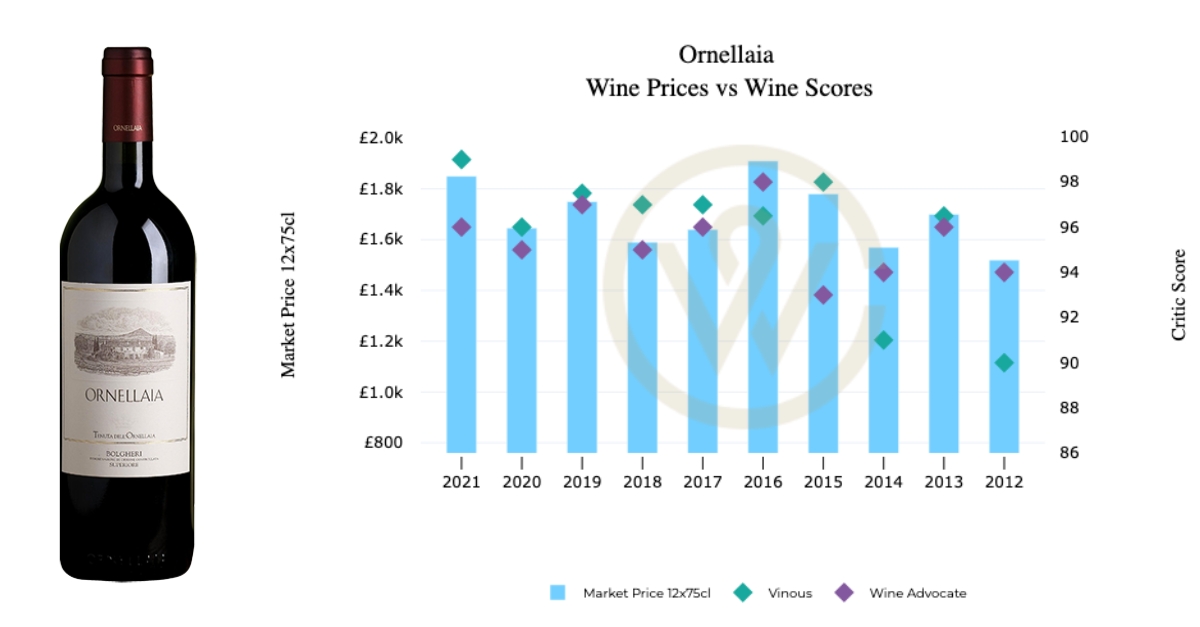
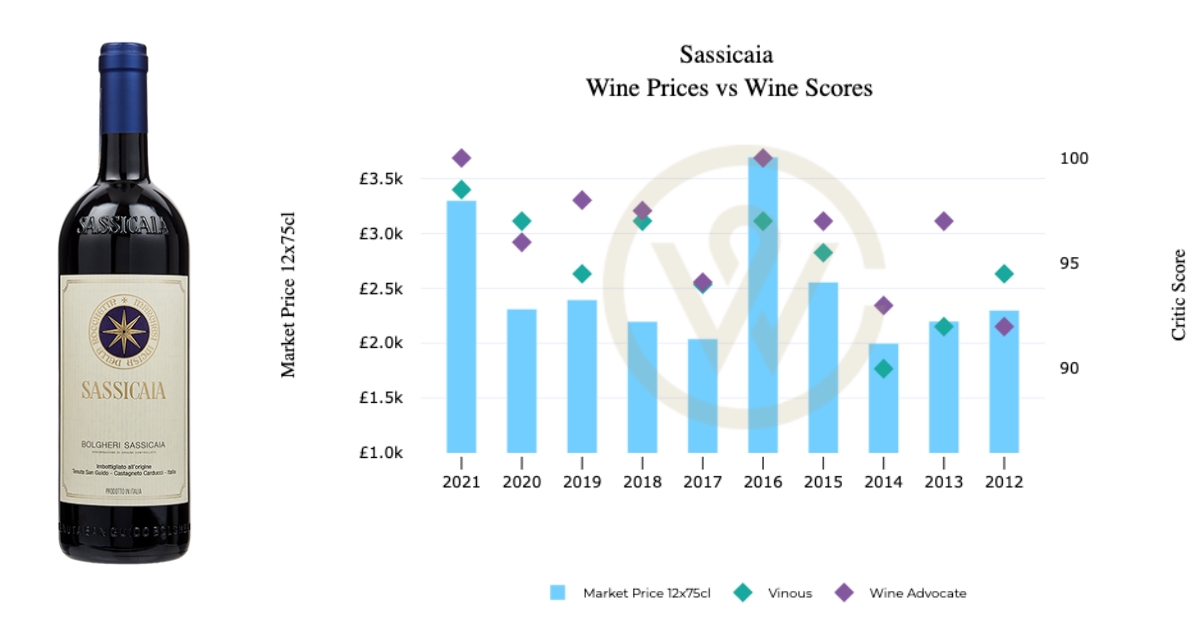
In the world of fine wine, the most talked about Italian releases have been Sassicaia and Ornellaia 2021.

Ornellaia 2021 was released at £1,850 per 12×75, the same price as the 2020 release. At this price, the wine is the most expensive recent vintage on the market since 2016. Antonio Galloni (Vinous) awarded it 99-points and said that it ‘captures all the magic of this sensational vintage on the Tuscan Coast’. Meanwhile, Monica Larner (Wine Advocate) gave it 96-points and described it as ‘a very open-knit and exuberant Tuscan red’.

Ornellaia

Sassicaia 2021 was released last month at £2,500 per case, up 4.2% on the 2020‘s release price. The wine has since traded at a premium on the secondary market. It received 100-points from Monica Larner who called it ‘a quintessential Sassicaia that represents the excellence of the vintage and also respects the unique taste profile of this distinguished Tuscan blend of Cabernets Sauvignon and Franc’. Galloni gave it 98+ points and noted that it was ‘one of the best young Sassicaias I can remember tasting’. ‘In a word: magnificent’, said the critic.

Sassicaia

Italy gathers momentum

Recent releases have stimulated the secondary market for Italian wine. The region has been the best performing fine wine market segment over the last two years, as well as in the last few months. In February, the Liv-ex Italy 100 index posted a modest rise of 0.1%, but some vintages of Fontodi Flaccianello delle Pieve Colli della Toscana Centrale, Tignanello and Giacomo Conterno Barolo Monfortino Riserva enjoyed double-digit returns.

WineCap’s independent market analysis showcases the value of portfolio diversification and the stability offered by investing in wine. Speak to one of our wine investment experts and start building your portfolio. Schedule your free consultation today.