- The best Champagne vintages marry the region’s terroir and northerly climate with technical precision.
- While quality is paramount, the best financial returns often come from correctly priced “off-vintages” or undervalued releases.
- The shift toward transparency, such as numbered non-vintage editions and grower-led terroir focus, is creating new frontiers for Champagne investment.
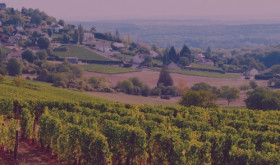
A great Champagne is the product of the delicate balance between terroir and human precision. The region’s chalky soils and cool, northerly latitude provide the perfect environment for Chardonnay, Pinot Noir, and Pinot Meunier to maintain the high acidity necessary for long-term ageing.
Unlike other regions, the “house style” has historically been the primary focus in Champagne. This is achieved through the art of blending multiple vintages to create a consistent non-vintage product. However, for the investor, greater interest lies in Vintage Champagne. These are bottles produced only in exceptional years, representing a biological time capsule of a single harvest.
The longevity of Champagne is a key driver of its investment value. The presence of carbon dioxide and high natural acidity act as preservatives, allowing prestige cuvees to evolve gracefully for decades. As the wine ages, the primary citrus and floral notes transform into complex tertiary aromas of toasted brioche, honey, and roasted nuts.
What makes a great Champagne vintage?
To understand what creates a legendary year, we look at the conditions defined by experts. For a northerly region like Champagne, these factors are even more critical and include:
- Early and rapid flowering
- Gradual onset of water stress during July to slow the vine’s growth
- Warm and dry final months before harvest to ensure the grapes reach full maturity
- A dry harvest window allowing winemakers to pick at peak ripeness
Champagne vintage variation
Being one of the most northerly wine-producing regions in France, Champagne is subject to more extreme vintage variation. In some years, the grapes struggle to ripen at all, while in others, they reach levels of opulence that define a generation. This volatility is precisely why blending became the region’s hallmark.
By keeping reserve wines from previous years, houses can ensure that even a difficult harvest can be transformed into a high-quality non-vintage blend. For the collector, however, the variation is the draw. A vintage wine almost by definition deserves to stand alone without the help of the reserves.
Why great vintages aren’t always great investments
It is a common mistake for investors to chase only the highest-scoring vintages. However, for a successful investment, the entry price is just as critical as the wine’s quality. When a “vintage of the century” is announced, producers often set release prices at a premium that bakes in all future growth.
Consider the example of Chateau Lafite Rothschild 2013 in Bordeaux. Although it was a difficult year, its low release price allowed it to see values double in the secondary market as it recovered. In Champagne, the same logic applies. An undervalued vintage can often outperform a legendary one if the starting point for the investor is more favourable.
The evolution of non-vintage Champagne: numbered editions
The traditional non-vintage model is changing. Some houses have led the way in creating “multi-vintage” blends that are numbered to allow for differentiation and investment. Krug Grande Cuvee and Jacquesson’s 700-series are the most prominent examples of this shift.
By assigning a number to each release (such as Krug most recent 173eme edition), the producer provides a clear identity to the blend. This allows investors to track the performance of specific editions and trade them as distinct assets. While other houses are beginning to follow this lead, it remains to be seen if they will achieve the same level of secondary market liquidity.
The growing influence of grower Champagne
The rise of grower Champagne has fundamentally shifted the region’s dynamic. These producers grow their own grapes and make their own wine, focusing on specific terroirs rather than a broad house style. Names like Jacques Selosse and Cedric Bouchard have become cult icons for investors.
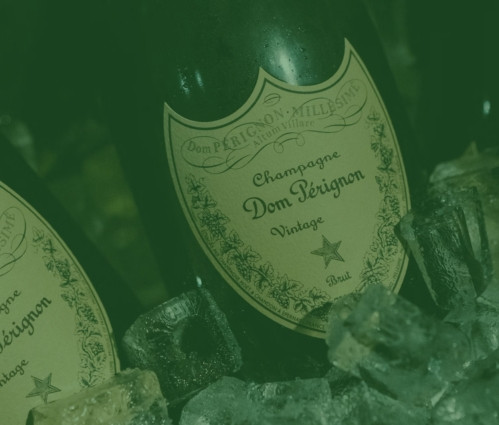
The success of these growers has influenced the Grandes Marques. For instance, Dom Perignon has begun showing “vins clairs” (base wines) at tastings and releasing every vintage regardless of quantity to reflect the terroir’s narrative. Dom Pertignon’s LVMH stablemate Ruinart is also acknowledging this trend by serving grower wines in their tasting rooms.
Champagne disgorgement and release
Understanding the release dates of different producers is essential for market timing. There is no standard for how long a Champagne must be aged before release. For example, while Dom Perignon 2017 might be on the market, the most recent release of Krug Clos d’Ambonnay is the 2006.
Furthermore, many houses now offer late-disgorged editions, such as Dom Perignon’s P2 and P3 series. These wines have spent extra time on their lees, gaining complexity and a higher price tag. These releases offer a second or even third window for investment in the same vintage.
The best Champagne vintages before 1982
Before the advent of modern temperature control and precision viticulture, legendary years were rare historical events. These vintages are now considered mythical artefacts of the region, often surviving only in the deep libraries of the great houses or in the world’s most prestigious private cellars.
For the investor, the time for these vintages has largely passed, although for avid collectors they represent the ultimate “legacy” assets, where value is driven as much by historical importance and provenance as by structural integrity. Some of the best older vintages include:
- 1921: Frequently cited as the year the modern commercial market for fine Champagne was born, this vintage followed a hot summer that produced incredibly concentrated fruit.
- Standout wine: Dom Perignon’s inaugural vintage, although this was not released until the 1930s.
- 1928: Widely considered the vintage of the century by older collectors, it offered a rare combination of extreme ripeness and record-breaking acidity.
- Standout wine: Krug Vintage set a record for the most expensive Champagne ever sold at auction.
- 1945: A year defined by a brutal spring frost that decimated yields, followed by a glorious summer that produced tiny quantities of liquid gold.
- Standout wines: Krug and Bollinger (the predecessor to Vieilles Vignes Francaises).
- 1955: A classic year known for its aromatic complexity and firm, refreshing acidity that has allowed bottles to mature gracefully for seven decades.
- Standout wine: Taittinger Comtes de Champagne.
- 1975: Celebrated for its high acidity, this vintage produced wines with the structural bones required for multi-decadal ageing.
- Standout wines: Louis Roederer Cristal and Dom Perignon.
- 1979: A balanced and elegant year that saw the debut for one of the most iconic single-vineyard bottlings in history.
- Standout wines: Krug Clos du Mesnil’s inaugural vintage after the vineyard’s purchase in 1971.
The best modern Champagne vintages
The trinity: 1988, 1989, 1990
This legendary trio of years offered three distinct styles. 1988 was the year of “linearity” and high acidity, while 1989 was plush and opulent. At the time of release, 1990 was considered the balanced masterpiece that combined the best of both worlds.
- Perrier-Jouet Belle Epoque 1988: A linear, slow-maturing legend.
- Charles Heidsieck Collection Crayeres 1989: late disgorged youthful brilliance.
- Krug Vintage 1990: One of the most sought-after blue-chips of the decade.
The acidity benchmark: 1995 & 1996
1996 is often hailed as a “once in a lifetime” vintage due to its unique combination of record-breaking acidity and high sugar ripeness. 1995, initially in its shadow, is now being recognised for its balance.
- Salon Le Mesnil 1996: A mythical Blanc de Blancs built for decades of cellaring.
- Dom Perignon 1996: One of the most successful investment years for the house.
- Taittinger Comtes de Champagne 1995: A forward, generous expression of Chardonnay.
The 21st century icons: 2002 and 2008
2002 was a near-perfect growing season that produced harmonious, high-definition wines. However, it is 2008 that has become the holy grail for modern collectors. It is a vintage of incredible tension and cool, linear energy.
- Louis Roederer Cristal 2008: The current market leader in price appreciation.
- Salon 2008: Famously released only in Magnums due to its tiny production.
- Krug 2002: A wine of incredible clarity and power.
The modern successors: 2012 and 2013
2012 has emerged as one of the most complete vintages of the modern era, often compared to the legendary 1990. 2013 is a cooler, more classical year that rewards those looking for finesse over raw power.
- Dom Perignon 2012: A charming and ambitious wine that blossomed early.
- Louis Roederer Cristal 2012: A biodynamically farmed masterpiece.
- Pol Roger Winston Churchill 2013: A pure, energetic purist’s vintage.
Vintages bubbling under
Not every great year receives the same fanfare. Some intermediate years can offer exceptional value for drinkers and savvy investors.
- 1998: A year that was initially overshadowed by 1996 but has aged with surprising grace. Highlight: Dom Perignon 1998.
- 2004: A vintage of “quiet confidence” that never needed to shout. Elegant and harmonious wines. Highlight: Bollinger VVF 2004.
- 2014: A high-quality year currently entering the market with strong results for Chardonnay. Highlight: Louis Roederer Cristal 2014.
- 2016: While a difficult year for many, some specific houses found success where others struggled. Highlight: Dom Perignon 2016.
FAQ: Great Champagne vintages
Why does Champagne have more vintage variation than other regions?
Being one of the most northerly wine regions, Champagne is on the climatic limit for ripening grapes. This leads to dramatic differences in sugar and acidity levels from year to year.
Is vintage Champagne always better than non-vintage?
No, generally speaking non-vintage is designed for consistent house style, whereas vintage Champagne is produced only from the best fruit of exceptional years. However,the best multi-vintage wines such as Krug Grand Cuvee and Jacquesson 700 series can hold their own in any company.
How does disgorgement date impact value?
A later disgorgement (like the P2 series) usually commands a higher price on release because the wine has spent more time on its lees, resulting in greater aromatic complexity.
Should I invest in grower Champagne or the big houses?
Big houses like Dom Perignon and Krug offer greater market liquidity, making them safer for most investors. Growers offer rarity but can be harder to sell.
WineCap’s independent market analysis helps investors build diversified fine wine portfolios with full ownership and transparent pricing. Speak to one of our wine investment experts and start building your portfolio. Schedule your free consultation today.
Hey, like this? Why not share it with a buddy?
« Is investing in a vineyard profitable? Costs and key considerations10 interesting facts about Dom Perignon »