Categories
Learn

A guide to terroir and its role in wine investment

  • Terroir is a concept that includes climate, soil, geography, biome and human intervention to give an individual wine its unique identity.
  • The distinction between commodity wine and investment-grade fine wine is in part about geographic specificity and the protection of place through strict regulatory frameworks.
  • The most prestigious estates prioritise the expression of their natural environment over stylistic manipulation.

Terroir: The umbrella term for wine identity

Terroir is frequently cited as the primary factor in the exceptional quality and distinctive character of Old World wines. Derived from the French word “terre,” meaning land, it’s much broader than that: collectors understand it as an umbrella term that combines diverse concepts under a single banner.

Understanding this concept means recognising that a wine’s qualities are inherently linked to a specific location which imparts a unique “DNA” to every fine wine. This makes it consistent characteristics across different vintages. Terroir provides a sense of place that cannot be replicated.

Key components of the terroir umbrella include:

  • Climate and weather
  • Geology and soil
  • Topography
  • Biology
  • Human tradition & intervention (or lack of)

The role of climate

Climate is arguably the most significant influence on the natural environment of a vineyard: it dictates the length of the growing season, the rate at which grapes ripen and how well they ripen. For the wine investor, understanding climate is essential, as many great terroirs are linked to long seasons with slow ripening and a long hang time. Weather, as opposed to climate, is what is behind vintage variation and is also critical to wine investors.

For terroir, climate is a factor at three geographical scales:

  • The broad climate of an entire region, such as the continental weather of Burgundy or the maritime influence of Bordeaux.
  • The atmospheric conditions of a specific sub-region or village, such as the sheltered slopes of a Barolo commune.
  • The unique conditions within a single vineyard or even a specific row of vines.

These layers interact to create the conditions that dictate the potential of a wine.

Soil types and water regulation

Old World producers frequently point to geology and soil as the literal bedrock of their success. The underlying materials determine the nature of the topsoil and influence the local topography. For instance, the chalky soils of Champagne and Chablis allow vines to penetrate deep into the subsoil.

Scientists can debate whether vines literally absorb elements that directly influence flavour, however, it is widely accepted that soil significantly regulates the water supply to the vines. Renowned vineyards often feature soils that provide only a moderate water supply, which limits vegetative growth and prevents waterlogging.  Viticulture often happens on land that would be unsuitable for other types of farming, and it is commonly held that the best wines come from vines that have to work hard.

Notable soil and terroir pairings include:

  • Pomerol: Heavy, well-structured clay-based soils.
  • Medoc: Deep, stony-gravelly sands that provide excellent drainage.
  • Burgundy: A complex combination of limestone and clay in marly soils.
  • Mosel: Steep slopes with characteristic slate-based soils.

Geography, geomorphology, and price

The topography of a vineyard – its aspect, position on a slope, and elevation – all contribute to stylistic differences. In Burgundy, a Grand Cru vineyard may be distinguished from a neighbouring plot simply by its mid-slope position.

Geomorphology refers to the physical features of the land and how they were formed. Steeper slopes, such as those in the Northern Rhône, allow for better sunlight exposure and drainage. This physical advantage translates directly into the quality of the harvest and is why certain vineyards are prized as blue-chip assets that trade for many millions of pounds while the valley floor is reserved for commodity production.

Biome and microbiome: The living vineyard

As our understanding of agriculture deepens, modern viticulture is placing increasing emphasis on the biome of the vineyard. This refers to the entire broad ecosystem, including cover crops, hedgerows, trees and the local wildlife and encourages winemakers to think about much more than just the grapes they are growing. 

For instance moving away from heavy machinery and reintroducing horses to the fields isn’t just a marketing ploy; it reduces soil compaction and preserves the natural structure of the earth. A holistic approach encourages a healthy microbiome, where natural yeasts and beneficial bacteria flourish alongside worms, insect life, wildflowers, bees, birds and small mammals.

Estates that focus on biodiversity often showa more authentic expression of place and it can improve quality too: reducing chemical inputs and allowing natural vegetation to grow helps to regulate the soil’s temperature and moisture levels. For the investor, these sustainable practices are increasingly seen as a marker of long-term value and grow an estates’ reputation.

What grape varieties are suited to what terroir

Not every grape variety is suited to every terroir. The choice of variety is a major factor in how a site expresses its character. A grape must be able to achieve full ripeness under local climatic conditions to exhibit its best flavours and structural balance.

For example:

  • Syrah: Reaches its pinnacle in the Northern Rhone.
  • Nebbiolo: Thrives in the specific hillsides of Piedmont.
  • Pinot Noir: Is famously temperamental, requiring the cool climate of Burgundy.
  • Cabernet Sauvignon: Requires the warmth and drainage provided by the gravel plateaus of Pauillac.

When a grape is perfectly matched to its location, the resulting wine possesses a quality that is impossible to replicate. This suitability is often protected by regional laws that mandate certain grape types to prevent the erosion of quality and promote collective branding.

Protecting place: DOC Rules and the Napa Declaration

Over the last 100 years it has become increasingly common for the concept of terroir to be codified through legal systems like the French Appellation d’Origine Controlee rules. These regulations protect specific terroirs by mandating which grapes can be grown and how the wine must be made. This ensures that a bottle carries a guarantee of origin and typicity.

These regulations are not limited to France or Europe, many nations have since adopted similar rules and their protection is often a key goal of international trade negotiations. The Napa Declaration on Place is a significant international agreement where producers committed to protecting the integrity of wine place names recognising that “place” is the most fundamental aspect of a wine’s identity. This prevents the misleading use of geographic terms for wines that were not grown in those specific soils.

Terroir: Fine wine vs commodity wine

So important is terroir that in many ways the distinction between fine wine and commodity wine is geographic specificity. Commodity wines are often produced from grapes sourced across entire countries or continents. They prioritise volume and consistency over the unique characteristics of a single site.

Fine wine, by contrast, is almost always tied to a specific patch of earth; the land is fixed and cannot be expanded. This geographic restriction ensures that supply is capped, creating the conditions for long-term price appreciation in the secondary market.

Winemaking: Expressing vs overriding terroir

The role of the winemaker remains a subject of discussion but winemaking practices undeniably contribute to the final style.

In the late 20th century, as wine critic Robert Parker’s influence expanded his evolving preferences and the impact a high Parker score could have on values began to influence winemaking. A trend of “Parkerization” favoured rich, bold, and heavily oaked wines. Consultants like Michel Rolland were often associated with this opulent style and sometimes accused of overriding terroir in favour of a homogenous international style. 

In reality this was not a plot against terroir by winemakers, consumers or critics, but a reflection of commercial reality.

Recent years have seen a strong reaction against this trend with many producers intentionally adopting a “less is more” philosophy. They may use neutral vessels, such as large Slavonian oak botti rather than imported French oak barrels or wild yeasts from the vineyard rather than cultured products. 

The goal is to act as a steward of the land and reflect that in the wine rather than be the creator of a brand that makes an unchanging product.

Climate change and the shifting map

Climate change is having a profound impact on the global wine map. Rising temperatures are shifting the boundaries of where fine wine can be produced, in some regions where a southern aspect was preferred in the 1980s those vineyards are now becoming less productive and limited by the heat that used to be an advantage.
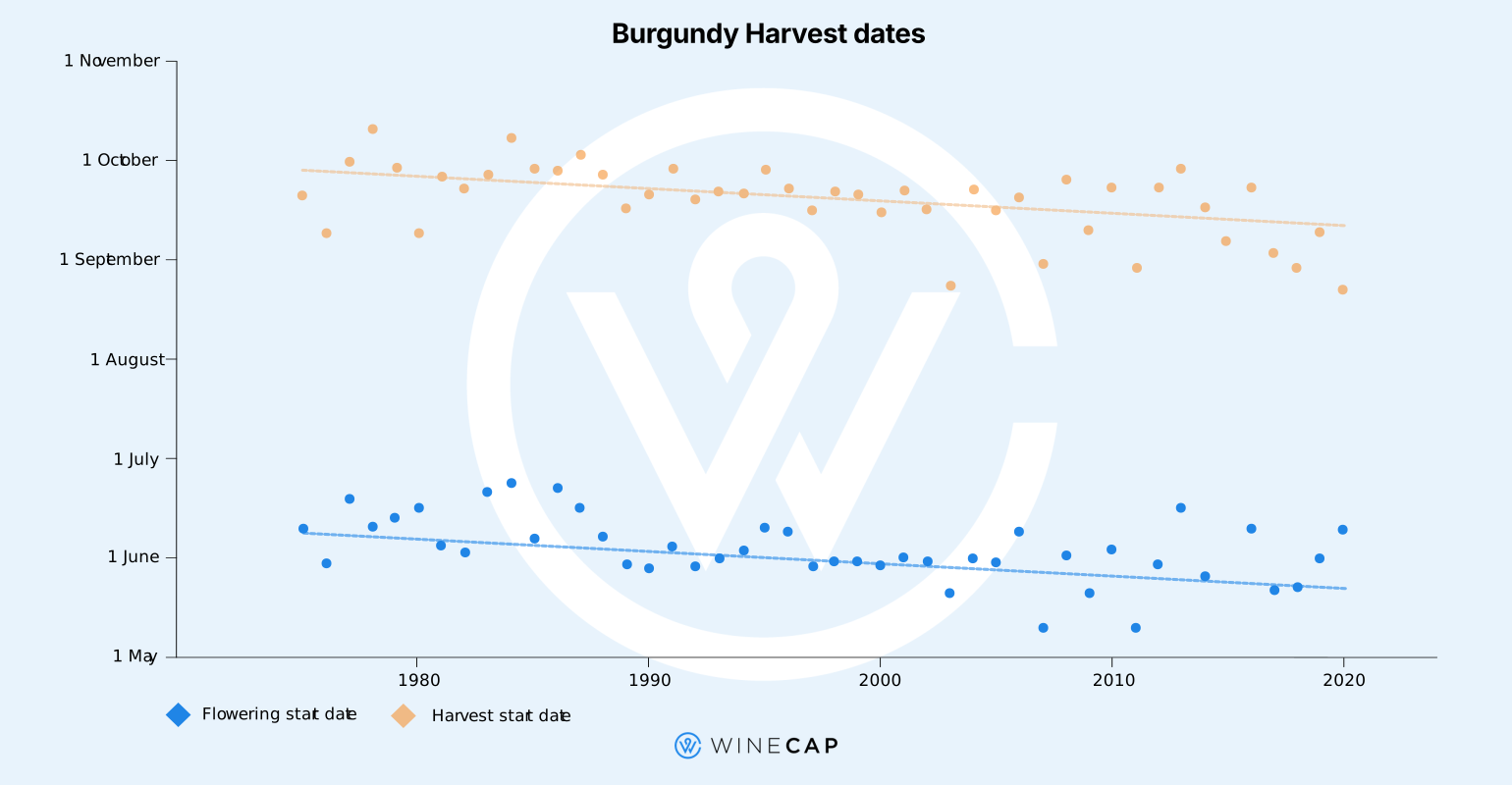
Burgundy Flowering and harvestData Source: jancisrobinson.com

Some historical regions are finding it increasingly difficult to maintain their traditional styles as sugar levels rise and acidity drops.

However, this shift is also opening up new frontiers:

  • English sparkling wine: Counties like Kent and Sussex now share a climate similar to the Champagne of several decades ago.
  • Patagonia and Central Otago: High-latitude regions are becoming top destinations for cool-climate varieties.
  • Emerging northern regions: Areas in Germany and even Scandinavia are beginning to produce high quality Pinot Noir.

For the investor, these changes create both risk and opportunity. While established terroirs are still preferred, new regions may become a more important part of the conversation in coming years.

Terroir beyond the wine glass

The concept of terroir is not exclusive to viticulture. It exists in many other artisanal products where sense of place is paramount. The “Slow Food” movement was built on this foundation, celebrating traditional agricultural products that reflect their local environment.

Other examples of terroir include:

    • Cheese: Such as Comte or Roquefort, where the local grasses and caves define the flavour.
    • Olive oil: Where regional soil and climate produce distinct profiles.
    • Coffee and tea: Where high-altitude “micro-lots” are traded at a premium.
    • Meat: Beef and lamb from the Orkney islands were among the first British products to gain legal recognition of their terroir.

In all these cases, terroir represents an element that imparts a sense of place. It is the ultimate rejection of mass-production and the celebration of the unique.

FAQ: A guide to terroir 

Is terroir just a marketing tool? 

While it is used in branding, terroir is based on documented physical factors like geology, climate, and topography that result in discernible variations in wine character.

Can a winemaker completely change a wine’s terroir? 

A winemaker can hide terroir through excessive oak or extraction, but they cannot create the structural intensity or complexity that only a superior site can provide.

Why does terroir matter for investment? 

Geographic specificity creates a natural cap on supply. Because the most famous vineyards cannot be expanded, the resulting rarity drives value in the secondary market.

Does the New World have terroir? 

Yes. Many New World producers now use soil mapping and single-vineyard designations to highlight the unique character of their specific plots.

WineCap’s independent market analysis showcases the value of portfolio diversification and the stability offered by investing in wine. Speak to one of our wine investment experts and start building your portfolio. Schedule your free consultation today.
Categories
News

Part II Bordeaux climate change: adaptive viticulture the way forward?

With vineyard temperatures on the rise in Bordeaux, WineCap spoke with leading Bordeaux estates about how they’re fighting back to protect both wine heritage and future generations.

  • Adaptive viticulture is a widespread method of coping with climate change.
  • Traditional and experimental moderating methods are both in use.
  • High temperatures can be beneficial for recent and, potentially, near-term vintage quality.

Vineyard layout, clones, rootstocks, and varietal proportion: Château Beau-Séjour Bécot, Château Margaux, Château La Conseillante, and Château Pavie

To moderate the impact of climate change, Julien Barthe, co-owner of Beau-Séjour Becot has implemented a radical vineyard layout change to prevent berry burn. ‘The vineyard was formerly planted in an east-west direction. From mid-day to 1 pm, the sun arrived on the west side, right on the berries. This is why we changed the orientation from north to south ­— to avoid the same effect.’

Philippe Bascaules, managing director of Château Margaux has taken the same approach. ‘We decided to change the orientation of our rows,’ he told WineCap.

Barthe also explained that the house is using new clonal selections of Cabernet Franc to help retain the freshness in its Merlot-dominant blends.

Cultivating resilient vines was, similarly, the approach of Marielle Cazaux, the general manager of La Conseillante. ‘Climate change is a big question. We are thinking long term about rootstocks and grape variety.’

Referring to early-ripening Merlot’s vulnerability to climate change, Cazaux stressed the importance of preserving its classic wine profile. ‘We are adapting the rootstock to be more resilient against hydraulic stress and thinking about changing the clones a little bit.’

Olivier Gailly from Château Pavie said that his team had already begun experimenting with climate-resistant proportions of grape varietals at the turn of the century. The house replanted its vineyards with an increased quantity of later-ripening Cabernet Sauvignon and similarly-behaving Cabernet Franc to blend with Merlot. This proportion has helped to maintain wine freshness as temperatures rise. 

Adaptive vineyard management: Château Cheval Blanc, Château Angelus, and Château Calon Segur

Traditional vineyard management techniques such as dense canopy cultivation, durable old vine revival, and biodiversity practices that support the mitigation of climate change have been intensified around Bordeaux since at least the millennium. While some methods have a short time frame, Pierre-Oliver Clouet, winemaker and technical manager at Château Cheval Blanc, which famously voluntarily withdrew from the Saint-Émilion classification system in 2021, spoke about the need for a long-term view.

‘We should adapt today to preserve Cheval Blanc in 20 years,’ he told WineCap. ‘Global warming is going to be a problem because, with two or three more degrees, the wine quality is still going to be good enough, but the identity will not be the same.’

Clouet said the château implements cover crop techniques to protect the soil from high temperatures, enhance soil nutrients and resilience, and to conserve rainwater more efficiently. He has also planted trees to expand cooling shade for vines and is training plants that are heat- and disease-resistant.

Saint-Émilion peer Château Angelus, which also opted out of the appellation’s classification system in 2022, uses a device that assists with hydrating and cooling vines in a region with stringent irrigation rules. President and CEO Stéphanie de Boüard-Rivoal explained: For hail, we have a device that is a balloon that auto launches. It’s blown with helium and contains salt crystals so when it’s swollen by a cloud, it spreads out the salt and allows the ice to melt. Instead of having hail, we have rain,’ she told WineCap.

Cooling heat-stressed plants was also a priority for Vincent Millet, general manager of Château Calon Ségur. He told WineCap how he and his team are refining a mechanism to conserve cooling dampness in vineyard plots: ‘We are setting up specific enclosure systems which can trap and return humidity to the plant.’

Research and experimentation: Château La Dominique

While age-old vineyard methods are adapted to counter the perils of global warming, innovation is a key part of Château La Dominique’s philosophy.

General manager, Gwendoline Lucas, detailed the producer’s efforts in this area. ‘We are very concerned about climate change, so we started working with Bordeaux Sciences Agro years ago to do some research about how we can better manage our vineyard,’ she told WineCap. ‘We are also part of VitiREV, which is the first European fund specialising in viticultural ecological transition. We are like a laboratory testing new solutions from startups. We see a lot of proposals and when we think that something is quite interesting, we try it in our vineyard.’

Beneficial natural environment: Château Pavie, Château Canon, Cos d’Estournel, and Château Margaux

While acknowledging the potential hazards of climate change, several producers told WineCap that they had, to date, avoided any serious consequences of rising temperatures across Bordeaux by dint of resilient terroir. Whether location or soil composition, nature provides a mitigating influence to the heat, ensuring balance and traditional character in yield and wines.

‘We are fortunate to have this exceptional limestone terroir which really keeps a lot of freshness in the wine,’ said Olivier Gailly, commercial director of Saint-Émilion house Château Pavie. ‘Then we have the forests around the château which are very important to keep a bit cooler.’

Soil make-up was also cited by Nicolas Audebert, winemaker and general manager at fellow Saint-Émilion house, Château Canon. Referring to climate change, he said: ‘We see it in berry ripeness every day, but we still have a long way to go before we get into trouble because we are on a fantastic, limestone terroir.’

The water-retaining freshness of limestone guarantees that vines do not suffer severe heat stress, Audebert added, also noting the benefits of micro-practices.

‘There are a lot of fantastic wine producing regions in the world where the climate is warmer than here and they manage,’ he said. ‘I spent ten years in Argentina making wine so I have some experience of how we can evolve our viticulture to protect it. There are thousands of small things we can adapt to keep that elegant, vibrant, precise, style we like.’

Vineyard coolness was also cited by Charles Thomas, commercial director at Cos d’Estournel. ‘We are lucky enough to be in the north part of the Médoc where we have the Gironde River providing freshness to the vineyard.’

Not all Bordeaux producers regard climate change unfavourably and are optimistic that, with a responsive approach, the trials of the decades ahead will be overcome.

‘I think we are just at the beginning,’ Philippe Bascaules of Château Margaux told WineCap. ‘For the last ten years, summer drought and heat have helped us to make even better wine. But, of course, we know that if the temperatures continue to increase, we will be in big trouble because it will not only change the quantity of wine but also the style of the wine we want to produce.’

To this end, the chateau continues to be attentive and flexible in the face of global warming. ‘At least for the next 50 years, I’m quite optimistic that we will find the parameters and the techniques to continue to produce the wine of Château Margaux as it exists today,’ he said. ‘I don’t know about after that because who knows what the temperature will be in Bordeaux in 50 years?’

See also our Bordeaux I Regional Report

Categories
News

French wine production falls in 2024: Investment implications

  • The 2024 French wine harvest is shaping up to be one of the smallest of the century so far.
  • Burgundy’s 2024 vintage is estimated to be 25% lower than 2023, with scarcity being a key price driver for the region’s wines.
  • Bordeaux is also facing declines, reaching its lowest volume since 2017. 

The 2024 French wine harvest is shaping up to be one of the smallest of the century so far, with regions like Burgundy and Bordeaux hit particularly hard by adverse weather conditions. According to forecasts from France’s Agreste statistics unit, overall national production may decline by up to 18%, with mildew, poor fruit set, and frost reducing output in key regions. 

What are the implications for the secondary market, especially considering the recent market downturn? This article explores how smaller volumes in 2024 could impact prices in Burgundy and Bordeaux, drawing on learnings from past vintages.

Scarcity in Burgundy

The 2024 vintage in Burgundy is being described as one of the most challenging in the past 50 years, according to Florent Latour from Maison Louis Latour. The Bureau Interprofessionnel des Vins de Bourgogne (BIVB) estimates harvest yields to be up to 25% lower than in 2023. The region has faced intense mildew pressure and adverse weather during flowering, resulting in poor fruit set.

Historically, supply constraints in Burgundy have driven price increases in the secondary market, as scarcity heightens demand among collectors. For example, the 2021 vintage, severely impacted by frost, saw a surge in auction prices for marquee producers like Domaine de la Romanée-Conti and Armand Rousseau. The same pattern could play out in 2024, as the prospect of another small vintage heightens the allure of top Burgundian wines.

However, this vintage presents complexities. While the scarcity narrative could support price gains, the current economic downturn might temper buying enthusiasm. Additionally, the challenging growing season could lead to quality variation across producers, making selectivity crucial for those looking to invest. 

Bordeaux market implications

In 2024, Bordeaux is reportedly facing a 10% decline, reaching its lowest volume since 2017. The Conseil Interprofessionnel du Vin de Bordeaux (CIVB) has described the 2024 harvest as “historically low,” with output expected to fall below the already reduced 3.8 million hectoliters of 2023. This is due to a combination of adverse weather conditions, including downy mildew and rain during harvest, as well as a reduction in vineyard areas through a government-supported grubbing-up plan.

Despite the challenges, smaller harvests can still support price stability for Bordeaux’s top-tier wines. In 2024, the scarcity of high-quality offerings might provide an opportunity for investment-grade wines, particularly from classified growths. Investors seeking value could focus on estates with a strong track record of producing excellent wines in challenging years. Yet, the broader market downturn might limit the extent of price recovery, especially for mid-tier labels that lack the same scarcity appeal as Burgundy.

Learning from past vintages

Looking back at smaller harvests like 2017 and 2021 gives an insight into what to expect from 2024. Both years saw production levels dip below 40 million hectolitres due to extreme weather events, leading to temporary price spikes in Burgundy’s secondary market. The 2017 vintage, for instance, saw price rises for top Burgundy wines, driven by fears of limited availability. In 2021, the impact of frost once again drove auction interest, with investors flocking to secure allocations. 

However, the 2024 market environment is different. With inflation and economic uncertainties weighing on consumer confidence, investors may be more selective, focusing on wines that promise both rarity and quality. Burgundy’s high starting prices could limit the scope of further price increases, while Bordeaux’s historically low output might stabilise prices for premium labels without igniting a full-fledged price surge.

The market environment

The 2024 vintage may not replicate the price exuberance of past short harvests, but it represents a moment of adjustment in the wine investment market. For Burgundy and Bordeaux, the interplay between reduced volumes, economic pressures, and strategic opportunities will shape the outlook. The true impact will become clearer once the wines are made, critics taste them, and the release prices are set, providing a more concrete sense of quality and investment potential.

WineCap’s independent market analysis showcases the value of portfolio diversification and the stability offered by investing in wine. Speak to one of our wine investment experts and start building your portfolio. Schedule your free consultation today.