Categories
Learn

A guide to terroir and its role in wine investment

  • Terroir is a concept that includes climate, soil, geography, biome and human intervention to give an individual wine its unique identity.
  • The distinction between commodity wine and investment-grade fine wine is in part about geographic specificity and the protection of place through strict regulatory frameworks.
  • The most prestigious estates prioritise the expression of their natural environment over stylistic manipulation.

Terroir: The umbrella term for wine identity

Terroir is frequently cited as the primary factor in the exceptional quality and distinctive character of Old World wines. Derived from the French word “terre,” meaning land, it’s much broader than that: collectors understand it as an umbrella term that combines diverse concepts under a single banner.

Understanding this concept means recognising that a wine’s qualities are inherently linked to a specific location which imparts a unique “DNA” to every fine wine. This makes it consistent characteristics across different vintages. Terroir provides a sense of place that cannot be replicated.

Key components of the terroir umbrella include:

  • Climate and weather
  • Geology and soil
  • Topography
  • Biology
  • Human tradition & intervention (or lack of)

The role of climate

Climate is arguably the most significant influence on the natural environment of a vineyard: it dictates the length of the growing season, the rate at which grapes ripen and how well they ripen. For the wine investor, understanding climate is essential, as many great terroirs are linked to long seasons with slow ripening and a long hang time. Weather, as opposed to climate, is what is behind vintage variation and is also critical to wine investors.

For terroir, climate is a factor at three geographical scales:

  • The broad climate of an entire region, such as the continental weather of Burgundy or the maritime influence of Bordeaux.
  • The atmospheric conditions of a specific sub-region or village, such as the sheltered slopes of a Barolo commune.
  • The unique conditions within a single vineyard or even a specific row of vines.

These layers interact to create the conditions that dictate the potential of a wine.

Soil types and water regulation

Old World producers frequently point to geology and soil as the literal bedrock of their success. The underlying materials determine the nature of the topsoil and influence the local topography. For instance, the chalky soils of Champagne and Chablis allow vines to penetrate deep into the subsoil.

Scientists can debate whether vines literally absorb elements that directly influence flavour, however, it is widely accepted that soil significantly regulates the water supply to the vines. Renowned vineyards often feature soils that provide only a moderate water supply, which limits vegetative growth and prevents waterlogging.  Viticulture often happens on land that would be unsuitable for other types of farming, and it is commonly held that the best wines come from vines that have to work hard.

Notable soil and terroir pairings include:

  • Pomerol: Heavy, well-structured clay-based soils.
  • Medoc: Deep, stony-gravelly sands that provide excellent drainage.
  • Burgundy: A complex combination of limestone and clay in marly soils.
  • Mosel: Steep slopes with characteristic slate-based soils.

Geography, geomorphology, and price

The topography of a vineyard – its aspect, position on a slope, and elevation – all contribute to stylistic differences. In Burgundy, a Grand Cru vineyard may be distinguished from a neighbouring plot simply by its mid-slope position.

Geomorphology refers to the physical features of the land and how they were formed. Steeper slopes, such as those in the Northern Rhône, allow for better sunlight exposure and drainage. This physical advantage translates directly into the quality of the harvest and is why certain vineyards are prized as blue-chip assets that trade for many millions of pounds while the valley floor is reserved for commodity production.

Biome and microbiome: The living vineyard

As our understanding of agriculture deepens, modern viticulture is placing increasing emphasis on the biome of the vineyard. This refers to the entire broad ecosystem, including cover crops, hedgerows, trees and the local wildlife and encourages winemakers to think about much more than just the grapes they are growing. 

For instance moving away from heavy machinery and reintroducing horses to the fields isn’t just a marketing ploy; it reduces soil compaction and preserves the natural structure of the earth. A holistic approach encourages a healthy microbiome, where natural yeasts and beneficial bacteria flourish alongside worms, insect life, wildflowers, bees, birds and small mammals.

Estates that focus on biodiversity often showa more authentic expression of place and it can improve quality too: reducing chemical inputs and allowing natural vegetation to grow helps to regulate the soil’s temperature and moisture levels. For the investor, these sustainable practices are increasingly seen as a marker of long-term value and grow an estates’ reputation.

What grape varieties are suited to what terroir

Not every grape variety is suited to every terroir. The choice of variety is a major factor in how a site expresses its character. A grape must be able to achieve full ripeness under local climatic conditions to exhibit its best flavours and structural balance.

For example:

  • Syrah: Reaches its pinnacle in the Northern Rhone.
  • Nebbiolo: Thrives in the specific hillsides of Piedmont.
  • Pinot Noir: Is famously temperamental, requiring the cool climate of Burgundy.
  • Cabernet Sauvignon: Requires the warmth and drainage provided by the gravel plateaus of Pauillac.

When a grape is perfectly matched to its location, the resulting wine possesses a quality that is impossible to replicate. This suitability is often protected by regional laws that mandate certain grape types to prevent the erosion of quality and promote collective branding.

Protecting place: DOC Rules and the Napa Declaration

Over the last 100 years it has become increasingly common for the concept of terroir to be codified through legal systems like the French Appellation d’Origine Controlee rules. These regulations protect specific terroirs by mandating which grapes can be grown and how the wine must be made. This ensures that a bottle carries a guarantee of origin and typicity.

These regulations are not limited to France or Europe, many nations have since adopted similar rules and their protection is often a key goal of international trade negotiations. The Napa Declaration on Place is a significant international agreement where producers committed to protecting the integrity of wine place names recognising that “place” is the most fundamental aspect of a wine’s identity. This prevents the misleading use of geographic terms for wines that were not grown in those specific soils.

Terroir: Fine wine vs commodity wine

So important is terroir that in many ways the distinction between fine wine and commodity wine is geographic specificity. Commodity wines are often produced from grapes sourced across entire countries or continents. They prioritise volume and consistency over the unique characteristics of a single site.

Fine wine, by contrast, is almost always tied to a specific patch of earth; the land is fixed and cannot be expanded. This geographic restriction ensures that supply is capped, creating the conditions for long-term price appreciation in the secondary market.

Winemaking: Expressing vs overriding terroir

The role of the winemaker remains a subject of discussion but winemaking practices undeniably contribute to the final style.

In the late 20th century, as wine critic Robert Parker’s influence expanded his evolving preferences and the impact a high Parker score could have on values began to influence winemaking. A trend of “Parkerization” favoured rich, bold, and heavily oaked wines. Consultants like Michel Rolland were often associated with this opulent style and sometimes accused of overriding terroir in favour of a homogenous international style. 

In reality this was not a plot against terroir by winemakers, consumers or critics, but a reflection of commercial reality.

Recent years have seen a strong reaction against this trend with many producers intentionally adopting a “less is more” philosophy. They may use neutral vessels, such as large Slavonian oak botti rather than imported French oak barrels or wild yeasts from the vineyard rather than cultured products. 

The goal is to act as a steward of the land and reflect that in the wine rather than be the creator of a brand that makes an unchanging product.

Climate change and the shifting map

Climate change is having a profound impact on the global wine map. Rising temperatures are shifting the boundaries of where fine wine can be produced, in some regions where a southern aspect was preferred in the 1980s those vineyards are now becoming less productive and limited by the heat that used to be an advantage.
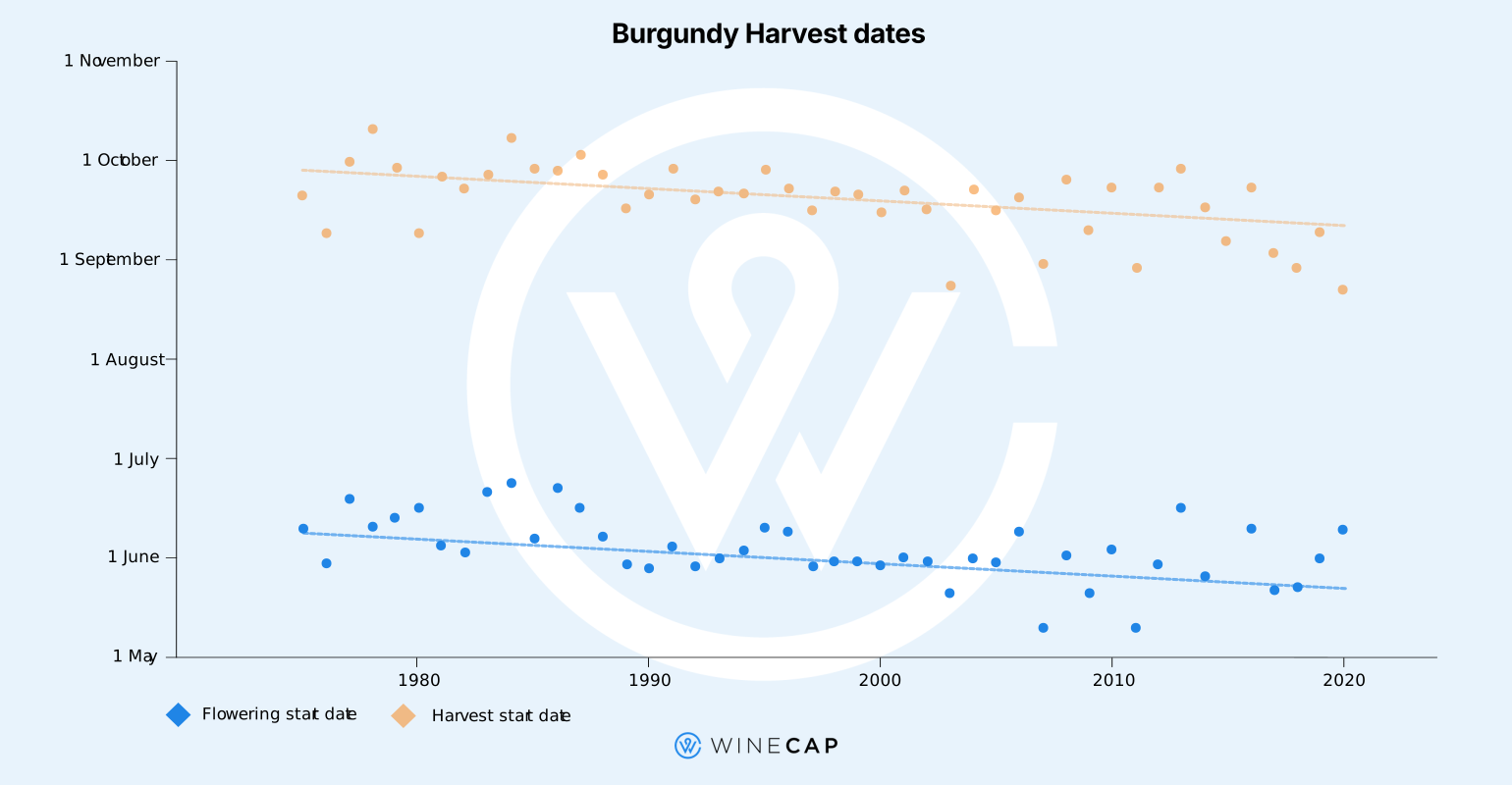
Burgundy Flowering and harvestData Source: jancisrobinson.com

Some historical regions are finding it increasingly difficult to maintain their traditional styles as sugar levels rise and acidity drops.

However, this shift is also opening up new frontiers:

  • English sparkling wine: Counties like Kent and Sussex now share a climate similar to the Champagne of several decades ago.
  • Patagonia and Central Otago: High-latitude regions are becoming top destinations for cool-climate varieties.
  • Emerging northern regions: Areas in Germany and even Scandinavia are beginning to produce high quality Pinot Noir.

For the investor, these changes create both risk and opportunity. While established terroirs are still preferred, new regions may become a more important part of the conversation in coming years.

Terroir beyond the wine glass

The concept of terroir is not exclusive to viticulture. It exists in many other artisanal products where sense of place is paramount. The “Slow Food” movement was built on this foundation, celebrating traditional agricultural products that reflect their local environment.

Other examples of terroir include:

    • Cheese: Such as Comte or Roquefort, where the local grasses and caves define the flavour.
    • Olive oil: Where regional soil and climate produce distinct profiles.
    • Coffee and tea: Where high-altitude “micro-lots” are traded at a premium.
    • Meat: Beef and lamb from the Orkney islands were among the first British products to gain legal recognition of their terroir.

In all these cases, terroir represents an element that imparts a sense of place. It is the ultimate rejection of mass-production and the celebration of the unique.

FAQ: A guide to terroir 

Is terroir just a marketing tool? 

While it is used in branding, terroir is based on documented physical factors like geology, climate, and topography that result in discernible variations in wine character.

Can a winemaker completely change a wine’s terroir? 

A winemaker can hide terroir through excessive oak or extraction, but they cannot create the structural intensity or complexity that only a superior site can provide.

Why does terroir matter for investment? 

Geographic specificity creates a natural cap on supply. Because the most famous vineyards cannot be expanded, the resulting rarity drives value in the secondary market.

Does the New World have terroir? 

Yes. Many New World producers now use soil mapping and single-vineyard designations to highlight the unique character of their specific plots.

WineCap’s independent market analysis showcases the value of portfolio diversification and the stability offered by investing in wine. Speak to one of our wine investment experts and start building your portfolio. Schedule your free consultation today.
Categories
Learn

What is the difference between wine and Fine wine?

  • The vast majority of wine is not fine wine.
  • Fine wine is defined by its quantity, quality and economics, making it a financial asset as well as a luxury beverage.
  • Most wine is produced for immediate consumption and lacks the structural components to improve with age, whereas fine wine is crafted to evolve over decades.

At its heart, all wine is designed for pleasure – made to be drunk and enjoyed – yet fine wine extends that experience beyond the glass, offering the potential for evolution, rarity and lasting value.

The vast majority of global wine production, estimated over 95%, is intended for the dinner table. This comprises most wines found in supermarkets, restaurants and even local wine shops. These consumer goods are made to be consistent vintage and after vintage, accessible, and best enjoyed shortly after purchase. The wines are often fresh, fruit-forward, and technically sound. They satisfy the palate but are not built for the cellar

Meanwhile, in the territory of fine wine, the product shifts from a perishable beverage into a durable asset. This distinction is the bedrock of the wine investment market. Fine wine sits at the very top of the quality pyramid and is the result of specific environmental conditions and craftsmanship that cannot be mass-produced. 

Fine wine has ageing capacity

A primary difference between standard wine and fine wine is the capacity to age

Standard wines often have a shelf life of just two or three years. Most wine does not become better with time; it simply gets old. There is no reward for holding a basic Pinot Grigio in your cupboard, which is best enjoyed the year after harvest. 

Fine wine operates on a different chemical timeline. It possesses high levels of acidity, tannins, and concentrated fruit flavours and aromas, which act as preservatives and structural supports. Over time these components interact, change and create complexity. Ironically what can make fine wine difficult to enjoy in its extreme youth is what makes it exceptional once it has aged.

With ageing, more red fine wines see their primary fruit flavours transform into complex tertiary notes like forest floor, tobacco, and truffle. This evolution is what drives the value of the bottle. Moreover, the wine becomes more desirable as it nears its peak drinking window and supply diminishes as it is consumed.

How fine wine changes with age

  • Phenolic polymerization: Small tannin molecules bond together to form longer chains, which significantly reduces astringency and creates a smoother mouthfeel.
  • Controlled oxidation: Small amounts of oxygen pass through the cork and slowly break down primary fruit compounds and change colour pigments.
  • Esterification and hydrolysis: Continuous reactions between alcohols and acids synthesise new scent compounds, shifting the wine’s aromas from primary fruit to more complex tertiary aromas.
  • Anthocyanin complexation: In red wines, red pigments bond with tannins causing the wine’s colour to shift from vibrant purple-red to garnet or tawny.
  • Colloidal precipitation: As molecules grow they form insoluble sediments which settle at the bottom of the bottle.

Fine wine gets scarcer

The scarcity of aged bottles also plays a critical role in the investment reality. 

As a vintage is consumed, the number of remaining bottles in the world decreases. When you combine increasing quality with decreasing supply, you create the perfect conditions for price appreciation. This is one of the reasons why a rare 80-year-old Domaine de la Romanee Conti recently sold for nearly a million dollars at auction, while a young bottle is closer to $10,000. 

Standard wine can never benefit from this change in the supply/demand dynamic because it cannot survive a journey it was never intended to make.

Fine wine has a sense of place

Fine wine is almost always tied to a specific patch of land. In regions like Burgundy, the difference between an investable Grand Cru wine and a Village wine made for short-term drinking can be a matter of a few metres. This is the concept of terroir. It encompasses the unique soil, the slope of the land, the local climate and seasonal weather, and cannot be replicated.

This regional tie creates a natural limit on supply. The land is fixed and protected by strict local laws. For instance, Domaine de la Romanee-Conti’s flagship wine Romanee-Conti can only come from one specific 4.5 acre vineyard. This restriction makes the wine a rare commodity. 

In contrast, most wines designed for early consumption are made from grapes sourced across entire countries or even continents, prioritising volume over the unique characteristics of a single site.

The blending exception

While terroir is the rule, there are notable exceptions where fine wine is defined by the skill of the blender. 

  • Champagne is the most obvious of these. While many top-tier reds rely on tiny vineyard plots, iconic houses like Dom Perignon produce significant quantities with grapes from plots across the region. This allows cellar masters to create a consistent, complex profile that ages for decades. 
  • Penfolds Grange is another famous example. Unlike the single-vineyard focus of Bordeaux and Burgundy, Grange is a multi-regional blend. The winemakers source the best Shiraz grapes from various locations across South Australia to create a consistent house style. Despite lacking a single-vineyard origin, it is a highly collectible wine.

Fine wine is not solely about where the grapes are grown. While geographic specificity is an indicator, the ultimate test is the quality of the finished product and its ability to age gracefully.

Fine wine has producer reputation 

Reputation is the currency of fine wine. A standard wine might be delicious, but without a historical track record, it cannot be considered an investment. Meanwhile, fine wine estates have often spent centuries building their brand: the 1855 Classification in Bordeaux is still a guide for investors today. It provides a hierarchy that the market trusts and gives buyers the confidence that the wine will perform as expected.

Fine wine attracts critical attention

Critic scores are a modern extension of this and provide crucial information for investors and collectors. A high score from a respected publication can cause an immediate spike in market value; a series of high scores over a number of years might elevate a wine to be considered a fine wine. 

Even so, most wines rarely receive this level of scrutiny. If they are reviewed at all, the assessment might focus on whether they are pleasant to drink right now, rather than on their structural integrity and ageing potential.

Fine wine is more complex

The flavour profile of fine wine is noticeably more complex than that of everyday bottles. Standard wine tends to be more linear: you might taste strawberry or lemon or apples, and that flavour remains consistent from the first sip to the finish. 

By contrast, fine wine is often described as multidimensional. It offers layers of smell and flavour that reveal themselves slowly as the wine sits in the glass.

Fine wine also possesses length. This is the duration that the flavours linger after you have swallowed. In a standard wine, the flavour might vanish in seconds, while in the best fine wines it can last for minutes. 

This is another hallmark of high-quality winemaking. It indicates a level of concentration and balance that is impossible to achieve in mass-market production. The sensory experience is simply deeper and more rewarding.

Price differential

It is a common myth that all fine wine is expensive. While “blue-chip” labels like Petrus or Le Pin can cost thousands of pounds, the entry point for fine wine is often more accessible than people think. Fine wines from regions like Bordeaux or Rioja often sell for well under £50. These wines offer the same ageing potential and structural complexity as their more famous peers, and while they may not be investable, they could still be categorised as “fine wine”.

Beyond cost, there is the question of value. For instance, a £10 bottle of supermarket wine has zero re-sale value the moment you leave the shop. A £60 bottle of high-quality Barolo not only has the potential to double or triple in value over a decade but will leave a lasting impression when consumed. 

Put simply, fine wine is an asset, whereas standard wine is an expense. The higher upfront cost is an investment in a product that can preserve and grow your capital, as well as deliver a different quality of drinking pleasure.

Quality vs quantity

Fine wine relies on the natural concentration of the grapes. This concentration is achieved by keeping vineyard yields low, which increases the cost of production.

Low yields mean fewer bottles of higher quality and is the fundamental trade-off of the fine wine world. A mass-market producer wants to harvest as many grapes as possible to fill as many bottles as they can, while a fine wine producer prunes the vines aggressively to ensure the remaining grapes are packed with flavour and structure. 

This focus on quality over quantity is the most significant contrast between fine wine and standard wine. 

From consumer to collector

Moving from simply drinking wine to collecting and investing in fine wine requires a clear shift in mindset. The focus moves away from what to open tonight, towards what will reach its peak in a decade or more. While the pleasure of fine wine still lies in the glass, it also comes from something deeper – the ability to follow a wine’s evolution over time. Fine wine is a living, changing asset, and that sense of development and anticipation is something few other wines, or indeed other alcoholic products, can truly offer.

FAQ

Can a cheap bottle of wine ever become “fine wine” if I leave it in a cellar? 

No. Ageing cannot create quality where it does not already exist. Fine wine must be “built” for the cellar from the moment the grapes are grown.

Is all expensive wine considered fine wine for investment? 

Not necessarily. Some wines are expensive due to branding, luxury packaging, or celebrity associations but lack a secondary market. To be investment-grade, a wine needs a history of price appreciation and a global network of buyers ready to trade it.

Why does region matter so much in fine wine? 

Specific regions have unique microclimates and soil that produce grapes with exceptional character. These areas are often legally protected, meaning supply is capped. This combination of unique quality and restricted supply is what creates long-term value for investors.

How can I tell if a wine has a different flavour profile without opening it? 

You can rely on critical reviews and tasting notes from professional tasters. They will describe the complexity, the tannins, and the “length” of the wine. Look for terms like “structured,” “tight,” or “evolving,” which indicate a wine that is built to improve over time.

Can a blend be a fine wine? 

Yes. Many of the world’s greatest wines are blends. Most Bordeaux wines are a mix of Cabernet Sauvignon and Merlot. Champagne is often a blend of different areas within the region and even from different years. Penfolds Grange is a multi-region blend. The key is the quality of the components and the skill involved in the assembly.

WineCap’s independent market analysis showcases the value of portfolio diversification and the stability offered by investing in wine. Speak to one of our wine investment experts and start building your portfolio. Schedule your free consultation today.
Categories
News

Bordeaux 2025 En Primeur: Quality meets a market at the crossroads

  • Bordeaux 2025 is a low-yield, heat-shaped vintage delivering concentration, freshness, and a clear shift toward precision viticulture.
  • Early reports point to a high-quality vintage with the potential to rival benchmark years like 2010 and 2016.
  • Set against a cooling market, the En Primeur campaign represents a critical opportunity to reset expectations around pricing and value.

From April 20th to 23rd, 2026, Bordeaux welcomed thousands of merchants, critics, and collectors for the En Primeur tastings of the 2025 vintage. Shaped by intense heat and reduced yields, the new vintage reflects a growing emphasis on precision viticulture – an approach that could come to define Bordeaux’s modern identity.

Yet the usual energy surrounding En Primeur unfolds against a more cautious economic backdrop. Bordeaux finds itself in a period of recalibration. As the first in-barrel scores emerge and the campaign gathers momentum, attention turns not only to what sets the 2025 vintage apart, but also to whether this release can offer real value.

A note on Bordeaux En Primeur

Few moments in the fine wine calendar carry the weight of En Primeur week. Orchestrated by the Union des Grands Crus de Bordeaux (UGCB), the event sees chateaux open their doors to professionals eager to sample wines just months after they were harvested.

Unlike the bottled wines, the En Primeur wines are still unfinished, first presented while ageing in oak. Tasting from barrel requires an expert palate to see through the raw tannins and vibrant acidity to glimpse the potential for greatness years down the line. It is a period of masterclasses, technical presentations, and intense market discussion that signals the pricing direction for the entire year ahead.

The 2025 represents a fascinating stylistic shift. Despite the heat, alcohol levels are reportedly low to moderate. The wines have pronounced aromatics, silky tannins and brisk acidity – hallmarks of great ageing potential. 

Bordeaux 2025: What we know so far

Bordeaux weather and crop reports indicate that 2025 was a year of climatic extremes, resulting in high quality but notably low yields. In fact, production statistics show that 2025 is the smallest crop since the frost-bitten 1991, with yields across many top appellations falling 15-30% below the five-year average.

A season of heat and superb ripening

The growing season was defined by a warm spring and a blistering summer. June 2025 was recorded as one of the hottest in French history, second only to the infamous 2003. This heat, combined with a dry August, led to:

  • Smaller berries: The lack of water and high heat restricted grape size, leading to intense concentration and thick skins.
  • Exceptional phenolic ripeness: While the yields are small, the quality of the tannins is reportedly superb.
  • The “rain of relief”: Just as drought stress became critical, rain in late August and early September refreshed the vines, preserving essential acidity and preventing alcohol levels from spiralling out of control.

Regional highlights

  • The Left Bank (Médoc, Pauillac, St-Julien): The deep-rooted old Cabernet Sauvignon vines thrived, producing structured, age-worthy wines reminiscent of 2022 but with a touch more freshness.
  • The Right Bank (St-Émilion, Pomerol): Clay and limestone soils held onto moisture better than gravel, allowing Merlot to reach lush ripeness without excessive heat stress.
  • Dry whites: Harvested early in mid-August, these show vibrant acidity and tropical aromatics.

The Bordeaux market: The recalibration phase

While the 2025 quality is expected to be high once critic scores are released, the market mood is best described as unsettled. For decades, Bordeaux held an unchallenged dominance in the fine wine market. Recent years have seen a cooling of demand, especially for young releases.

The challenges

  • Increased competition: High-quality rivals from Burgundy, Tuscany, Napa Valley, and even emerging regions have eaten into Bordeaux’s traditional market share.
  • Pricing fatigue: Consistent price hikes in recent En Primeur campaigns – often regardless of the broader economic climate – have tested the loyalty of even the most dedicated collectors.
  • Stock overhang: Many merchants are currently carrying significant inventories of recent great years (2018, 2019, 2020), which has created a bottleneck in the secondary market.

The silver lining

Despite these headwinds, the appetite for older, physical vintages remains robust. There is a clear divergence in the market: while younger vintages (2021-2023) struggle for traction, back vintages from the mid-2000s and 2010s continue to see steady price appreciation. This suggests that the brand of Bordeaux is as strong as ever. The issue lies specifically with release pricing.

Buying wine En Primeur: The question of value

For decades, the “golden rule” of Bordeaux was that En Primeur represented the lowest price point for a wine’s entire lifespan. Today, that assumption is being challenged by data.

Looking at prices at release versus now, several recent vintages can be found on the secondary market for the same price or even less. This has shifted the focus from buying everything to selective acquisition based on specific brand value. Tools like Wine Track, which show the historic performance of specific wine brands, can help investors understand long-term trajectories.

Why data matters

In the 2025 campaign, savvy buyers will be looking for relative value. If a 2025 release is priced higher than a physical, high-scoring 2019 or 2020 vintage currently sitting in a merchant’s warehouse, the incentive to buy En Primeur diminishes. However, because the 2025 yields are so low, scarcity may drive demand for the top-tier “blue chip” estates (the First Growths and their Right Bank equivalents).

The 2025 Bordeaux En Primeur verdict

As critics release their first scores over the coming weeks, all eyes will be on the “price-to-quality ratio.” The 2025 vintage has all the hallmarks of a collector’s dream: scarcity, concentration, and classical structure. For the Bordeaux trade, the 2025 En Primeur is an opportunity for a reset. With early reports pointing towards a vintage that could rival the greats of 2010 or 2016, the quality is likely there.

If the châteaux can marry this quality with a pricing strategy that respects the current market reality, 2025 could mark the beginning of a vibrant new chapter for the world’s most famous wine region.

Bordeaux comment: UGCB President, François-Xavier Maroteaux speaks to WineCap

WineCap: The 2025 vintage promises high quality, yet it arrives as the secondary market has just started to recover from a five-year low, and growing geopolitical tensions discourage speculation and might isolate certain market segments. How do you intend to position the 2025 launch so it doesn’t just survive the current market, but actually revitalises the ‘Bordeaux Brand’ globally?

François-Xavier Maroteaux: The 2025 vintage is a genuine opportunity – but only if we use it wisely. First, pricing must be honest: release prices that ignore five years of secondary market correction damage trust more than they protect margins. A well-priced great vintage is far more powerful than an overpriced one. Second, the narrative must move beyond scores – 2025 has a compelling story of terroir and style that needs to reach consumers directly, not just through trade press. Third, our négociants are brand ambassadors, not just a distribution channel: the properties that genuinely invest in informing and equipping their partners will see it reflected in every market. Finally, the retreat of speculative demand is not a threat – it’s a rebalancing. Bordeaux built its reputation on wine people actually wanted to drink. Refocusing on that is not a concession to difficult times. It’s a return to what made the region great. 

WC: Where do you see the biggest interest in buying Bordeaux at release in the coming years?

FXM: The interest in buying Bordeaux at release remains genuinely global. The best proof of this is the En Primeur week itself: every year, wine professionals from more than 80 nationalities make the journey to taste and buy. That breadth of engagement, even in difficult market conditions, is a strong signal that the foundation is there. Beyond geography, there is another compelling reason to buy at release that we shouldn’t underestimate (and we should be communicating much more actively!): formats. En Primeur remains the best – often the only – window to secure large formats. Magnums, double magnums, imperials are allocated at release and rarely available later at any price. The opportunity is to refocus En Primeur on what it does uniquely well: access, formats, and relationship. That’s a proposition that holds regardless of geopolitics.

WC: Is the En Primeur system still going strong, in your personal view? Do you believe it still offers a genuine win-win? Has it become a luxury-only club for the top 50 estates?

FXM: Yes, I do believe the En Primeur system still works – but I think we need to be honest about what it has become. It works very well for a relatively narrow group of estates where brand strength and secondary market liquidity reinforce each other. For the broader Bordeaux pyramid, it is more complicated. That said, I don’t think the answer is to abandon the system. The answer is to make the win-win genuine again. That means pricing with discipline, communicating with transparency, and making sure négociants and merchants actually make money when they support a release. When that alignment exists, En Primeur is a unique and powerful tool. When it doesn’t, it becomes – as you say – a luxury club for the top names. 

FAQ: Everything you need to know about Bordeaux En Primeur

What does “En Primeur” mean?

En Primeur is a method of purchasing wine while it is still maturing in the barrel. This allows collectors and investors to secure highly sought-after wines before bottling and general market release. This typically happens two years after harvest.

When is the Bordeaux 2025 En Primeur week?

The official tasting week for the 2025 vintage takes place from April 20 to April 23, 2026. During this time, international critics and trade professionals sample the wine from barrel to determine early scores and quality ratings.

Is the 2025 Bordeaux vintage good?

Bordeaux 2025 is a high-quality vintage with intense concentration and bold fruit profiles.Yields are lower than average, which often results in wines with significant ageing potential and structural density.

Why are yields low for the 2025 vintage?

The 2025 growing season saw record-breaking heat and extended dry periods. While this led to exceptional grape ripeness and thick skins (tannin), it resulted in smaller berries and less juice. These lower yields often drive up demand due to the limited number of cases available globally.

Is buying En Primeur a good investment?

Buying En Primeur can be a strategic investment, particularly for top-tier estates (First Growths and “Super Seconds”). However, it is essential to use data-driven insights. While release prices were historically the lowest point of entry, current market fluctuations mean buyers should compare release prices against available physical back-vintages to ensure they are getting true value, as older vintages can often present better buying opportunities than En Primeur.

When is the delivery of the 2025 Bordeaux wines?

In the spring or summer of 2028, following their mandatory ageing period in the châteaux cellars.

What are the “big three” factors to watch in the 2025 campaign?

  1. Critic scores: Initial ratings from major publications will dictate immediate global demand.
  2. Release pricing: How châteaux price their wine in relation to the secondary market.
  3. Volume: With lower yields reported, the scarcity of specific labels will likely be a driver of demand.

WineCap’s independent market analysis showcases the value of portfolio diversification and the stability offered by investing in wine. Speak to one of our wine investment experts and start building your portfolio. Schedule your free consultation today.
Categories
Learn

Which types of wine are considered investment-grade?

  • Investment-grade wine is characterised by exceptional quality, rarity, and a proven track record of price appreciation.
  • Most investment-grade wines come from regions like Bordeaux, Burgundy, Champagne, Tuscany, Barolo, Napa Valley and the Rhône.
  • Successful wine investing requires a long-term perspective, professional storage and a keen understanding of market trends. 

Understanding investment-grade wine

Investing in wine is not just about acquiring expensive bottles; it’s about selecting those that have the potential to appreciate in value over time. Investment-grade wines are those that are likely to increase in price due to factors such as rarity, quality, and demand. Unlike more common wines, these bottles often come from renowned vineyards and are produced in limited quantities, making them highly sought-after by a global pool of buyers.

The allure of investment-grade wine lies in its dual appeal: it is both a consumable luxury and a tangible asset. Unlike stocks or bonds, wine offers a tactile and sensory experience, which can make the investment feel more personal and engaging. However, to succeed in wine investment, one must understand the specific attributes that make a wine worthy of this status. This includes knowing the regions, varietals, and vintages that have historically performed well in the market.

In essence, the world of investment-grade wine is a blend of art and science. It requires a keen eye for quality, a solid understanding of market trends, and a bit of intuition. By mastering these elements, investors can build a portfolio that not only appreciates in value but also brings a unique joy and sophistication to their collection.

Characteristics of investment-grade wines

Investment-grade wines typically share several key characteristics that set them apart from everyday bottles. First and foremost is quality, often judged by critic scores. These wines are crafted with meticulous attention to detail from the vineyard to the bottle, using carefully selected grapes from the best plots and employing traditional winemaking techniques. The result is a wine that not only tastes exceptional but also has the potential to age gracefully over decades. With time, its value rises.

Another crucial element is rarity. Investment-grade wines are often produced in limited quantities, which adds to their exclusivity and desirability. This scarcity can be due to the vineyard’s small size, the particular vintage’s limited yield, or even deliberate production choices by the winemaker. The combination of high quality and limited supply creates a sense of urgency among collectors and investors, driving up the wine’s market value.

Provenance and reputation also play significant roles in determining a wine’s investment potential. Wines from renowned estates or those with a storied history are more likely to be considered investment-grade. The vineyard’s reputation for producing consistently high-quality wines can assure investors that they are making a sound choice. Additionally, wines that have received high ratings from respected critics and publications are more likely to appreciate in value, as these endorsements can significantly boost demand.

In summary, the following criteria make a wine investment-grade:

The “core four” investment criteria

  • Secondary market liquidity: The wine must attract a high volume of global trading at auction and the secondary market.
  • Ageing potential (longevity): Investment-grade wines are built to improve over 20 to 50 years. This is typically driven by high tannin, acidity, and alcohol structures that allow the flavor profile to evolve rather than decay.
  • Critical acclaim: A “consensus” score of 95 points or higher from influential critics (such as The Wine Advocate or Vinous) acts as a price floor and reduces the risk for the investor.
  • Pristine provenance: A documented “paper trail” proving the wine has been stored in climate-controlled conditions since its original release.

Scarcity and production factors

  • Limited production: Most investment wines are produced in quantities of fewer than 10,000 cases annually, ensuring that as bottles are consumed, the remaining supply becomes more valuable.
  • Vintage quality: “Great” years (characterised by perfect weather during the growing season) tend to see higher appreciation than “off-vintages” from the same producer if priced correctly at release.
  • Brand equity: The reputation of the estate (e.g., a First Growth in Bordeaux or a Grand Cru in Burgundy) acts as a brand guarantee, much like a “Blue Chip” stock.

Top wine regions for investment

While fine wine is produced globally, the investment market is concentrated in a few legendary regions with established secondary market histories.

France: The historical leaders

  • Bordeaux: The backbone of wine investing, known for high-volume liquid markets and prestigious First Growth estates like Château Lafite Rothschild and Château Margaux.
  • Burgundy: Driven by extreme scarcity and fragmented “Climat” terroir; Grand Cru Pinot Noir and Chardonnay from producers like DRC or Leroy command the world’s highest prices.
  • Champagne: A high-growth category where vintage-dated prestige cuvées (e.g., Dom Pérignon, Krug) offer excellent long-term appreciation due to celebratory demand.
  • The Rhône Valley: Home to robust, age-worthy Syrah and Grenache blends, particularly from the Hermitage and Châteauneuf-du-Pape appellations.

Italy & The USA: The “blue chip” alternatives

  • Tuscany (Super Tuscans): High-performing “Bordeaux-style” Italian blends such as Sassicaia, Tignanello, and Ornellaia that offer consistent global demand.
  • Piedmont: Small-production Barolo and Barbaresco (Nebbiolo) are increasingly compared to Burgundy for their terroir-driven value and ageing potential.
  • Napa Valley (California): The premier New World investment region, famous for “Cult Cabernets” like Screaming Eagle and Harlan Estate that rival the best of France.

Popular investment-grade wine varietals

Certain grape varietals are more likely to produce investment-grade wines due to their inherent qualities and the regions where they are cultivated. Cabernet Sauvignon, for example, is a cornerstone of many top investment wines, particularly those from Bordeaux and Napa Valley. Known for its bold flavors, robust tannins, and excellent aging potential, Cabernet Sauvignon has the structure and potential to support price appreciation if handled properly in the vineyard and the cellar, and coming from a reputable producer.

Pinot Noir is another varietal that often features in investment-grade wines. Having made a name in Burgundy, Pinot Noir is renowned for its complexity, elegance, and ability to reflect the terroir where it is cultivated. Wines made from Pinot Noir can develop incredible depth and nuance over time, making them highly desirable for long-term investment. The scarcity of top-tier Pinot Noir, particularly from Grand Cru vineyards, further enhances its investment appeal.

Chardonnay also holds a significant place in the investment wine market. While it is grown in many regions, the finest investment-grade Chardonnays often come from Burgundy, where the grape achieves its highest expression. These wines are celebrated for their balance, minerality, and ageing potential. Investment-grade Chardonnays from top producers and premier vineyards can command high prices and are sought after by collectors worldwide.

How to evaluate wine for investment potential

Evaluating a wine for its investment potential involves several key factors. One of the most critical is the wine’s provenance, which refers to its origin and history. Wines from renowned producers and prestigious vineyards are more likely to appreciate in value. Provenance also includes the wine’s storage history, as proper storage conditions are essential for maintaining its quality and marketability.

Another important factor is the wine’s vintage. Certain years produce better grapes due to favourable weather conditions, resulting in higher-quality wines. These vintage years are often marked by critics and can significantly influence a wine’s investment potential. Researching historical data and expert opinions on different vintages can help investors make informed decisions.

Market demand and trends also play a crucial role in evaluating investment potential. Wines that are highly sought after by collectors and enthusiasts are more likely to see price increases. Staying informed about market trends, auction results, and emerging regions or varietals can provide valuable insights into where to invest. Additionally, understanding the wine’s ageing potential and how it develops over time can help investors determine the optimal holding period for maximizing returns.

For investors, tools like Wine Track help observe a wine’s historic performance over time, as well as average entry point, critic scores, and investment returns. 

The role of wine ratings and reviews

Wine ratings and reviews are invaluable tools for investors, providing an expert assessment of a wine’s quality and potential. Renowned critics and publications, such as Robert Parker’s Wine Advocate, Vinous, Jeb Dunnuck, Jancis Robinson and Wine Spectator, to name a few, offer scores and reviews that can significantly influence a wine’s market value. High ratings from these sources can boost demand and drive up prices, making them an essential consideration for investors.

However, it’s important to understand that not all ratings and reviews are created equal. The credibility of the critic and the consistency of their evaluations play a significant role in their impact on the market. For example, a 95-point score from a highly respected critic like Robert Parker can have a more substantial effect than a similar score from a lesser-known reviewer. Investors should familiarise themselves with the most influential critics and publications to make informed decisions.

In addition to numerical scores, the detailed tasting notes provided by critics can offer valuable insights into a wine’s characteristics and ageing potential. These reviews often highlight the wine’s complexity, balance, and potential for development, helping investors gauge its long-term prospects. By combining ratings with in-depth reviews, investors can gain a comprehensive understanding of a wine’s investment potential.

Storage and preservation of investment wines

Proper storage and preservation are crucial for maintaining the quality and value of investment-grade wines. Unlike everyday bottles that are consumed shortly after purchase, investment wines often require decades of ageing to reach their full potential. This means that the conditions in which they are stored can significantly impact their quality and marketability.

The ideal storage environment for investment-grade wine is a cool, dark, and humid space with minimal temperature fluctuations. The temperature should be kept between 55-58°F (13-15°C), with a relative humidity of around 70%. These conditions help prevent the wine from spoiling and the cork from drying out, which can lead to oxidation and spoilage. Many serious collectors invest in professional wine storage facilities or custom-built wine cellars to ensure optimal conditions.

In addition to temperature and humidity control, it’s important to minimise exposure to light and vibrations. Ultraviolet light can degrade the wine’s flavors and aromas, while vibrations can disturb the sediment and affect the wine’s aging process. Storing bottles horizontally also helps keep the cork moist, preventing air from entering the bottle. By adhering to these storage principles, investors can preserve the quality and value of their investment wines.

Market trends in wine investment

The wine investment market is dynamic and influenced by various trends that can impact the value of different wines. One significant trend is the increasing interest in wines from emerging regions. While Bordeaux and Burgundy have long dominated the market, regions like California, Italy, and even China are gaining recognition for producing high-quality, investment-worthy wines. Savvy investors are diversifying their portfolios to include wines from many up-and-coming regions, capitalising on their growing popularity.

Another trend is the rise of sustainable and organic wines. As consumers become more environmentally conscious, there is a growing demand for wines produced using sustainable, organic, or biodynamic practices. These wines often command higher prices and can offer attractive investment opportunities. Investors who stay ahead of this trend can benefit from the increasing market demand for eco-friendly wines.

The role of technology and data analytics is also transforming the wine investment landscape. Advanced tools and platforms are now available to help investors track market trends, analyze historical data, and make informed decisions. Online wine marketplaces and auction sites are making it easier for investors to buy and sell wines, increasing market transparency and accessibility. By leveraging these technological advancements, investors can stay informed and navigate the market more effectively.

Risks and considerations in wine investing

While wine investing can be rewarding, it is not without its risks and considerations. One of the primary risks is market volatility. The value of investment-grade wines can fluctuate due to changes in demand, economic conditions, and other external factors. Unlike traditional financial investments, the wine market is less regulated and can be more susceptible to speculation and price manipulation.

Another consideration is the time and effort required to manage a wine investment portfolio. Unlike stocks or bonds, wine requires proper storage, insurance, and occasional monitoring to ensure its quality is maintained. The costs associated with storage and insurance can add up, potentially impacting the overall return on investment. Investors must also be prepared to hold onto their wines for an extended period, as it can take years or even decades for certain wines to reach their peak value.

Fraud and counterfeit wines are also significant concerns in the wine investment market. High-value wines are often targeted by counterfeiters, and distinguishing genuine bottles from fakes can be challenging. Investors should take precautions by buying from reputable sources, verifying provenance, and using authentication services when necessary. By being aware of these risks and taking appropriate measures, investors can protect their assets and make more informed investment decisions.

Is wine a worthwhile investment?

Investing in wine can be a worthwhile endeavour for those who appreciate its unique blend of art, science, and luxury. Investment-grade wines, characterised by their quality, rarity, and provenance, have the potential to appreciate in value over time, offering attractive returns. By understanding the key characteristics of investment-grade wines, staying informed about market trends, and taking proper storage and preservation measures, investors can build a successful wine investment portfolio.

However, it’s essential to recognise that wine investing comes with its own set of risks and challenges. Market volatility, storage and insurance costs, and the risk of fraud are all factors that investors must consider. Wine investment requires a long-term commitment, careful research, and a passion for the world of fine wine. For those willing to put in the time and effort, wine investing can be a rewarding and enjoyable pursuit that combines financial gains with the pleasure of owning and experiencing some of the world’s finest wines.

People also ask

What makes a wine “investment-grade”?

Investment-grade wines are high-quality bottles with proven aging potential, high critic scores (95+), and secondary market demand. They typically possess a combination of rarity, prestigious provenance, and a track record of price appreciation.

Which wine regions offer the best investment returns?

Bordeaux and Burgundy remain the gold standard for investors. However, “Super Tuscans” from Italy, premium Cabernet Sauvignons from Napa Valley, and top-tier Champagnes are increasingly recognised as stable, high-growth assets.

Do I need a professional cellar to invest in wine?

Yes, or a professional bonded warehouse. Investment-grade wine must be stored at constant temperatures (55-58°F) and 70% humidity. Without proof of professional storage (provenance), the resale value can drop.

Which grape varietals are most valuable for collectors?

Cabernet Sauvignon and Pinot Noir are the primary drivers of the investment market due to their longevity. High-end Chardonnay (specifically from Burgundy) and Syrah/Shiraz from the Rhône or Australia also hold significant value.

Is wine a safe alternative to stocks and bonds?

Wine is a “tangible asset” with low correlation to traditional markets, making it a great diversifier. While it offers protection during inflation, it is less liquid and involves costs like insurance, storage, and selling fees.

How do I start investing in fine wine in the UK?

To invest in the UK, you typically buy wine “In Bond.” This means the wine is stored in an HMRC-approved bonded warehouse where VAT and Alcohol Duty are deferred. You only pay these taxes if you withdraw the wine for personal consumption. If you sell the wine while it is still “under bond” to another investor or merchant, you never pay these taxes, which significantly protects your profit margins.

Categories
News

Fine wine market starts 2026 on firmer footing

  • The fine wine market has closed 2025 on a positive note, with prices rising for four consecutive months.
  • Despite improving momentum, fine wine prices remain close to five-year lows, creating buying opportunities. 
  • Market broadening is a defining feature of rising markets, and 2026 is likely to mark the early stages of this transition.

After three years defined by correction, caution and recalibration, the fine wine market enters 2026 in a notably stronger position. Prices have stabilised, liquidity has improved, and demand is beginning to broaden – all signs that the market has moved beyond its most challenging phase and is laying the foundations for a sustainable recovery.

While it would be premature to describe the current environment as a full rebound, the early months of 2026 mark the firmest starting point the fine wine market has seen since 2022. For investors with a medium- to long-term horizon, this combination of stabilising prices and still-attractive valuations presents one of the most compelling opportunity windows in several years.

A firmer start to the year than at any point in the past three years

In our final article of 2025, we examined the performance of Bordeaux, Burgundy and Champagne – the three most important fine wine regions for investors – and highlighted pockets of growth across each. Crucially, that momentum has not faded with the turn of the calendar year.

Fine wine prices have now risen for four consecutive months, closing 2025 on a positive note and carrying that strength into early 2026. This sustained improvement matters. Rather than a short-term technical bounce, it signals a market that is beginning to find equilibrium after a prolonged period of repricing.

Key indicators suggest the market is now operating on firmer footing:

  • Prices have stabilised after reaching five-year lows
  • Liquidity has improved across leading regions and producers
  • Buyers are returning with greater confidence and selectivity
  • Multiple regions are now participating in early recovery trends

Taken together, these developments point to a healthier, more balanced fine wine market entering the new year.

Buying opportunities remain as prices hover near five-year lows

Despite improving momentum, fine wine prices remain close to five-year lows across many regions and vintages. Historically, this late-stage downturn phase – when prices stabilise before rising meaningfully – has offered some of the most attractive entry points for long-term investors.

Importantly, recovery does not begin with uniformly rising prices. Instead, it starts with price consolidation, followed by gradual gains concentrated in the most liquid and well-recognised segments of the market. That is precisely the pattern emerging today.

For investors, this creates a rare alignment of conditions:

  • Valuations remain compelling
  • Downside risk has diminished compared to previous years
  • Demand is rising without speculative excess
  • Portfolio construction can prioritise quality and value

Rather than signalling missed opportunity, the current environment suggests that disciplined, data-driven allocation remains well-timed.

Demand is rising and signs of recovery are becoming clearer

Demand has strengthened steadily since the second half of 2025, with improving sentiment evident across both private collectors and wealth managers. While activity remains selective, confidence has clearly returned.

Several regions have already begun to turn:

  • Champagne has benefited from strong global recognition, accessible entry points and consistent liquidity
  • Bordeaux has stabilised, particularly in older vintages and First and Second Growths
  • Burgundy continues to demonstrate resilience driven by scarcity and long-term demand
  • Tuscany and the Rhône have seen renewed interest as investors look beyond the most concentrated names

This multi-regional participation is an important signal. Recoveries that are confined to a single region tend to be fragile; recoveries that broaden tend to endure.

Momentum from late 2025 has been sustained

One of the most encouraging developments is the continuity of momentum. This matters for two reasons. First, it suggests that buyers are responding to fundamentals rather than short-term catalysts. Second, it indicates that confidence is building gradually, allowing the market to recover in a measured, sustainable way.

Sustained momentum also reinforces the importance of patience. Fine wine recoveries rarely follow sharp, V-shaped trajectories. Instead, they evolve through phases of stabilisation, selective appreciation and eventual broadening.

The case for market broadening in 2026

Market broadening is a defining feature of rising markets, and 2026 is likely to mark the early stages of this transition.

During periods of falling or uncertain prices, demand tends to narrow. Investors concentrate on the most established names, mature vintages and highest-liquidity wines. This was a defining theme throughout much of 2024 and 2025 global wine investment trends.

As confidence improves, the opposite dynamic emerges:

  • Buyers begin to search for relative value
  • Secondary regions and vintages re-enter consideration
  • Portfolios become more diversified
  • Opportunity expands beyond a small group of blue-chip wines

In 2026, this process is likely to unfold gradually, with selective broadening, supported by brand strength and the search for value.

Tariffs and the macro backdrop: a potential catalyst

Another factor shaping early 2026 sentiment is the evolving global trade environment. Tariffs remain under review by the US Supreme Court after lower courts deemed them illegal. While outcomes remain uncertain, the broader implications extend well beyond fine wine.

Should tariff pressures ease, the effects could ripple across global markets:

  • Improved trade clarity
  • Increased capital availability
  • Stronger investor confidence
  • Renewed appetite for alternative assets

In periods when liquidity improves and uncertainty recedes, portfolio diversification tends to increase. As a top-performing collectible and passion investment, historically, fine wine has benefited from such shifts. 

Fine wine remains the most in-demand collectible

According to the WineCap 2025 Wealth Reports, fine wine is the most in-demand collectible asset among wealth managers and financial advisers, outperforming art, watches, whisky and luxury handbags.

Several factors continue to underpin this appeal:

  • Proven long-term performance
  • Increasing market transparency
  • Global liquidity and established secondary markets
  • Growing acceptance within diversified portfolios

Fine wine’s evolution from passion asset to mainstream alternative investment has been gradual, but it is now firmly established.

Looking ahead: The 2026 Wealth Report

As the market enters this next phase, attention will increasingly turn to how wealth managers and financial advisers are adapting their allocation strategies. WineCap’s upcoming 2026 Wealth Report will examine these shifts in detail, exploring how fine wine is being integrated into portfolios amid changing economic conditions.

Early indications suggest that fine wine’s role as a diversification tool is strengthening, supported by improved data access, transparency and liquidity.

A healthier starting point for 2026

The fine wine market enters 2026 at a point where prices have stabilised, demand is rising, and opportunity is broadening. For investors, this marks a healthier phase of the cycle. After three challenging years, the market is finally positioned to move forward on firmer footing – and for those willing to act selectively, the early stages of recovery often prove the most rewarding.

WineCap’s independent market analysis showcases the value of portfolio diversification and the stability offered by investing in wine. Speak to one of our wine investment experts and start building your portfolio. Schedule your free consultation today.
Categories
News

Bordeaux 2022 leads critics’ top wines of 2025

  • Global critic lists show unprecedented diversity across regions and styles.
  • Bordeaux 2022 was in the spotlight across major publications.
  • Collectible wines and investment-grade wines differ – only some critic favourites have long-term market potential.

Each November, major critic publications around the world release their annual Top 100 wines of the year rankings. Rather than showcasing the wines only released in the past twelve months, the lists highlight standout bottles tasted throughout the year, spanning vintages, regions, and stylistic expressions.

A clear trend emerges from looking at past and current lists: increasing diversity. Critics are no longer focusing exclusively on tried-and-true regions like Bordeaux, Napa, or Barolo. Instead, their selections – this year spanning wines from Etna to Stellenbosch, Central Otago to Morgon – reflect the global expansion of fine wine quality, elevated vineyard management, and the growing maturity of the market.

Critic choices largely align with broader shifts seen in the fine wine investment landscape. As quality rises around the world, more wines now boast age-worthiness, critical acclaim, and technical precision. However, this raises an important point: not all critic-favourite wines carry investment potential.


A collectible wine may be rare, high-scoring, or culturally important, while an investment-grade wine must also demonstrate a proven secondary-market track record, liquidity, stable long-term demand, and price performance history.


Below, we explore three of the most influential 2025 global rankings and what the top wines reveal about the state of the fine wine market going into 2026.

Wine Spectator’s Wine of the Year

Wine Spectator’s annual Top 100 list is arguably the most commercially impactful ranking in the global wine calendar. Historically, the No. 1 Wine of the Year has triggered immediate surges in demand, and often dramatic price rises, across global markets. A clear example came in 2023, when Argiano Brunello di Montalcino 2018 – previously quiet on the secondary market – experienced a rapid uptick in both demand and value within days of receiving the top spot.


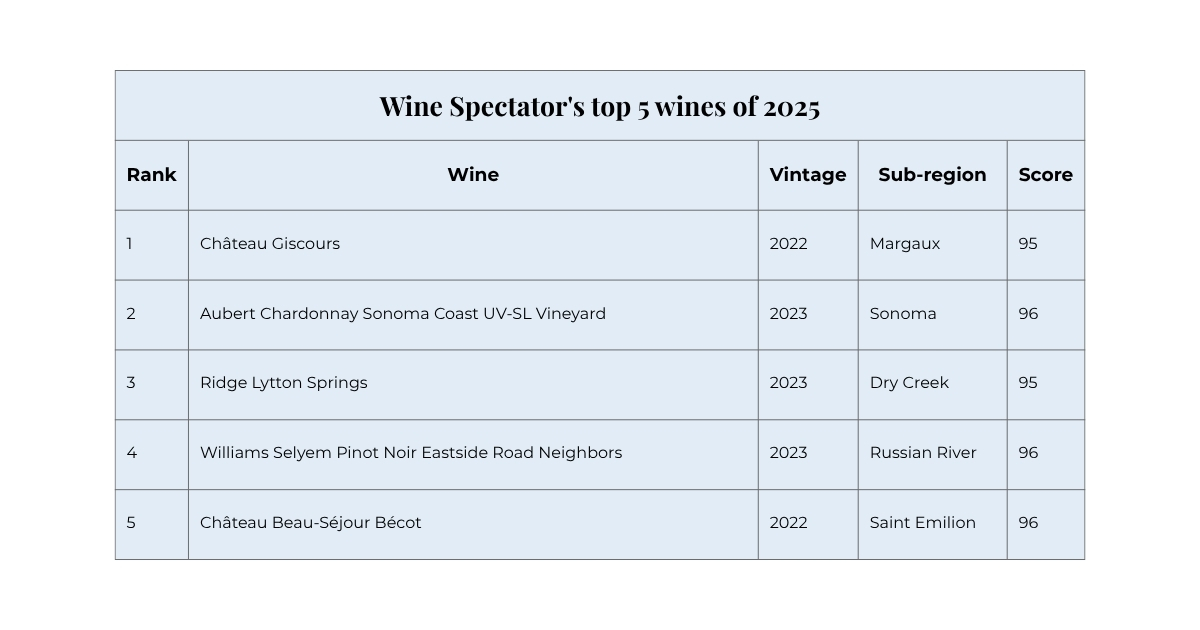
Wine Spectator's top 5 wines 2025

In 2025, the top position went to Château Giscours 2022, marking a major endorsement for Bordeaux’s strong 2022 vintage at a time when the region often finds itself facing criticism. Senior Editor James Molesworth explains: ‘Recent vintages have been mercurial in quality, while the region’s annual spring en primeur campaigns have fizzled. Tariffs haven’t helped. But if you needed a reminder that Bordeaux still makes some of the greatest wines in the world – and that its producers can evolve with changing times – the Château Giscours Margaux 2022 is your wine. This third-growth classified estate earns our top honor this year.’ 

Molesworth further highlights the wine as the culmination of decades of rebuilding work at the estate: ‘The efforts of Van Beek to surpass numerous obstacles over a generation is a clear example of how wine is a long game.’ The critic notes that recent improvements, including refined harvesting practices and guidance from consultant Thomas Duclos, have helped elevate quality, vintage after vintage. In 2022, these efforts culminated in a grand vin that Wine Spectator describes as fresh, seductive and finely detailed, with no second wine produced due to the exceptional quality of the harvest.

The rest of the top four represent a strong showing for California. Aubert’s UV-SL Chardonnay (No. 2) was praised as the union of ‘a renowned winemaker, a special vineyard and an exceptional vintage.’ Meanwhile, Ridge’s Lytton Springs 2023 and Williams Selyem’s Eastside Road Neighbors Pinot Noir 2023 reflect the continued strength and stylistic diversity of Californian wine across Dry Creek Valley and Russian River Valley.

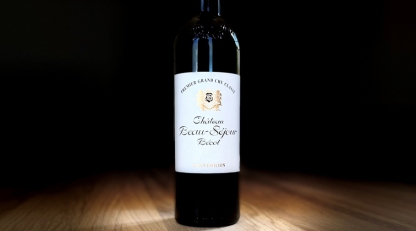
Rounding out the top five is another Bordeaux 2022 wine: Château Beau-Séjour Bécot. Wine Spectator calls it a ‘dreamy wine’, reinforcing the broader pattern seen across both critic and market attention this year. Bordeaux 2022 is clearly one of the defining narratives of the 2025 rankings, earning major positions across multiple publications.

Vinous’ top 100 wines of 2025

Vinous’ annual list, which Antonio Galloni says aims to capture the ‘diversity and dynamism of today’s wine world,’ showcases wines of exceptional quality, character, and excitement rather than simply the highest-scoring bottles.


Vinous' top five wines 2025

This year, Italy takes the top spot with Monsanto’s Il Poggio, which Galloni calls “a total stunner” and “one of the very finest Il Poggios ever made.”

One of the most notable placements comes at No. 2: Van Loggerenberg’s “Graft” Syrah 2024 from South Africa. Neal Martin awarded it 98 points, praising its mineral character, balance, and crystalline finish – another sign of South Africa’s accelerating rise in fine wine quality.

The third wine in the list represents a more classical pick, but with a symbolic shift. With ownership passing to Henri Lurton’s children, Martin sees the 2022 Château Brane-Cantenac as a defining benchmark: ‘A year when… the 2022 is a benchmark for the Margaux estate, its future North Star.’

The list continues with strong representation from both New and Old World producers, including Frog’s Leap’s classically styled 2023 Cabernet Sauvignon and Tenuta delle Terre Nere’s deeply structured Etna Rosso San Lorenzo.

James Suckling’s favourite wines of 2025

James Suckling’s team tasted over 45,000 wines in the last year, making his Top 100 one of the most globally comprehensive. His selections prioritise balance and drinkability – wines that shine immediately, whether from bottle or barrel.


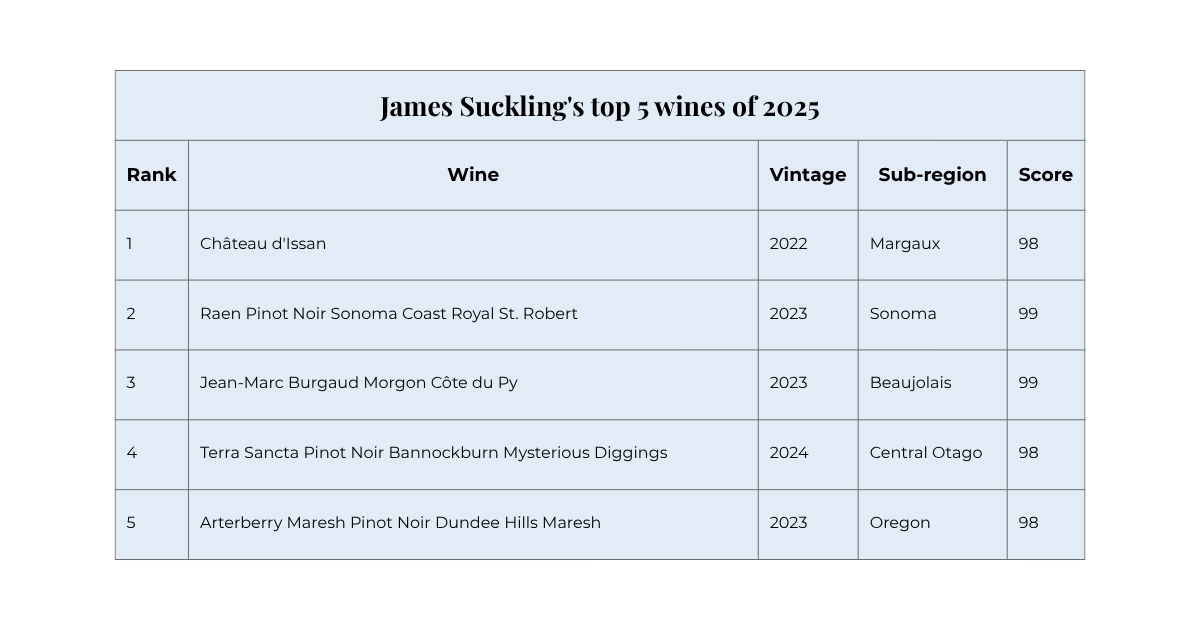
James Suckling's top five wines 2025

His top wine – Château d’Issan 2022 – reflects the broader dominance of Bordeaux’s 2022s across his list. Suckling emphasises that the vintage remains one of the biggest stories of the year, praising how the wines show focus, brightness and precision despite extreme heat and drought. He compares 2022 to other hot-vintage classics such as 1982, 1959, 1947 and 1928, all of which have stood the test of time, an important indicator for long-term growth. 

Suckling also notes how the accessibility of 2022 Bordeaux – widely released, easy to sample, and available across markets – enabled more comprehensive evaluation this year, contributing to their strong representation.

The remaining wines illustrate the global reach of modern fine wine quality. American Pinot Noir features prominently, with standout bottles from Raen and Arterberry Maresh. Meanwhile, two of the most surprising inclusions – Burgaud’s Morgon Côte du Py and Terra Sancta’s Bannockburn Pinot Noir – are also among the most affordable on the list, reinforcing Suckling’s point about the exceptional value emerging from Beaujolais and regions such as Central Otago. His report proposes that once-overlooked regions are now producing wines of extraordinary finesse and consistency.

Across all three critic rankings, a consistent narrative emerges: fine wine quality is more global, diverse and dynamic than ever before. At the same time, the spotlight on Bordeaux 2022 signals a vintage with both critical momentum and long-term relevance, firmly positioning it as one of the defining investment stories of the year.

Not every critically acclaimed wine is an investment wine, but the themes that surface – regional momentum, stylistic shifts, the performance of key vintages, and the critics’ influence on market behaviour – will all shape the fine wine landscape as we move into 2026.

WineCap’s independent market analysis showcases the value of portfolio diversification and the stability offered by investing in wine. Speak to one of our wine investment experts and start building your portfolio. Schedule your free consultation today

Categories
News

Top-performing fine wines of 2025 so far

  • Several fine wine regions made gains over the last month, including Burgundy, California, and the Rhône.
  • ‘Off’ vintage Bordeaux wines have delivered the best returns so far in 2025. 
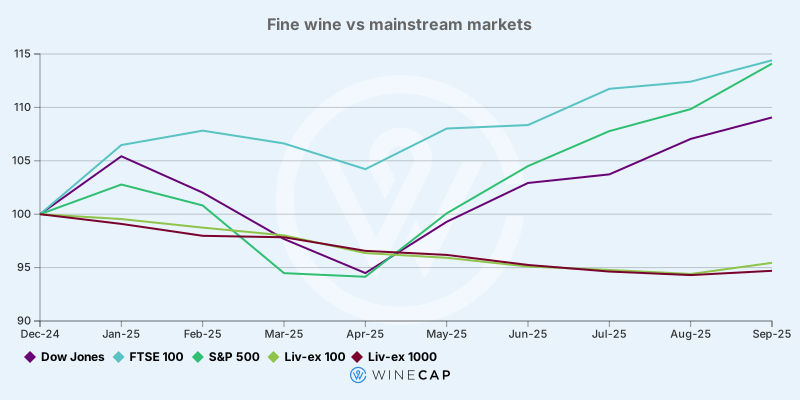
  • The spread between the top-performing fine wines (+18% on average) and the Liv-ex 1000’s broad decline (around -4.7%) highlights why selection is key.

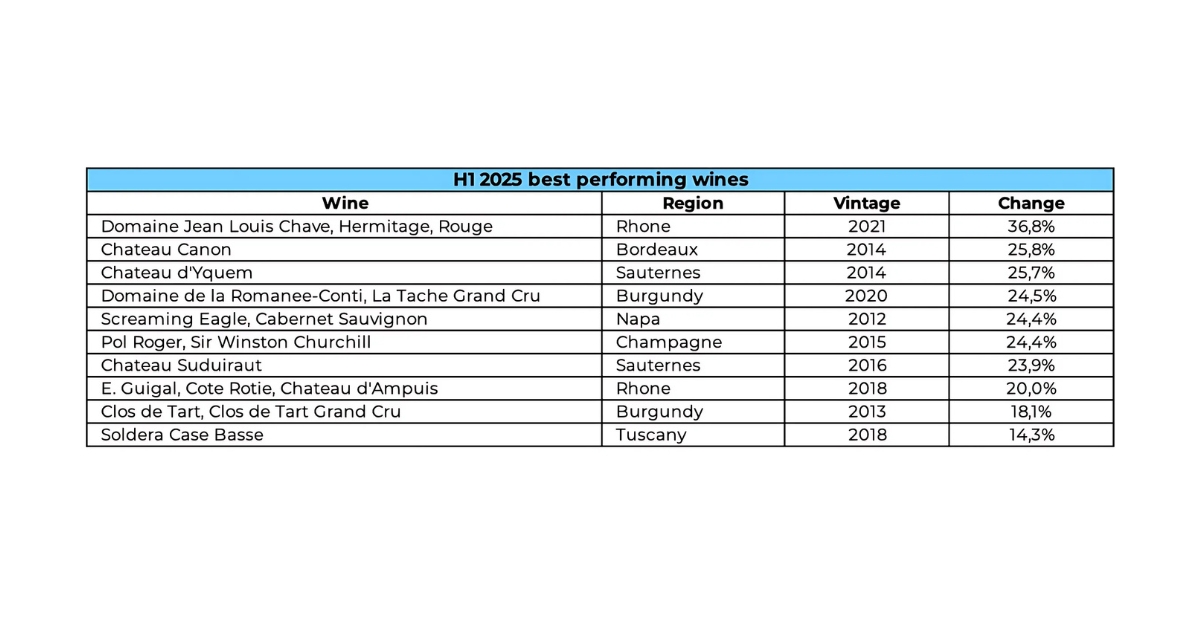
The fine wine market remains subdued in 2025, continuing the recalibration that began in late 2022. Yet even in a broadly negative environment, certain wines have surged ahead (see H1 winners), delivering double-digit gains and reaffirming that in fine wine investment, selectivity defines success.

Signs of stability emerge across key fine wine regions

After more than two years of correction, there are tentative signs of stabilisation. Several regional indices posted positive month-on-month (MoM) movements in September, hinting that momentum could be shifting beneath the surface.

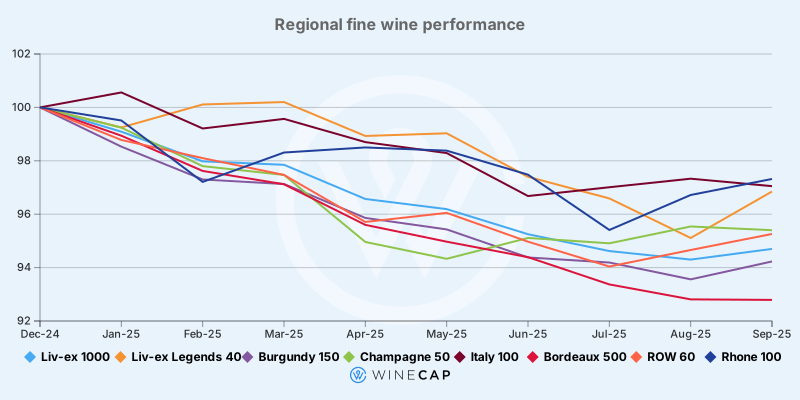
The Liv-ex Burgundy 150, California 50, Rhône 100 and Rest of the World 60 indices each rose 0.6–0.7% month-on-month. These modest upticks may not yet signal a broad recovery, but they do suggest that the worst of the selling pressure may be easing.

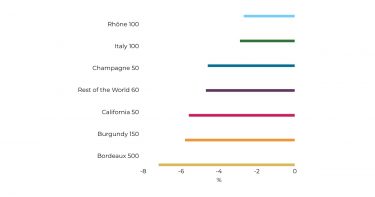
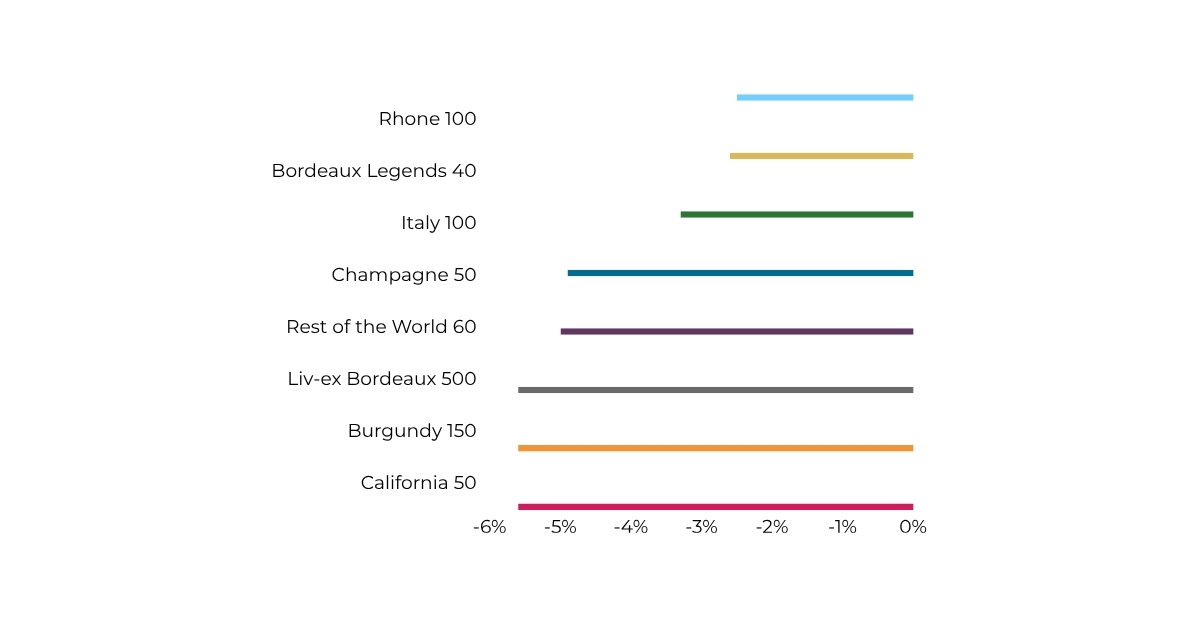
Still, the year-to-date picture remains negative across the board:

Wine region performance

Even as indices remain in the red, the range of outcomes within them has widened, revealing a growing divergence between outperformers and laggards. A select few wines have posted strong gains – a reminder that even in downturns, opportunities persist.

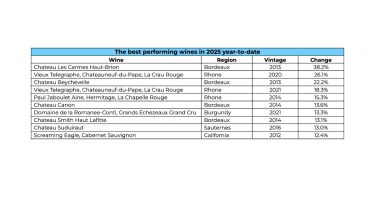
The top-performing wines so far this year

Best performing wines 2025 table

‘Off’ vintage Bordeaux leads the way

Despite the Bordeaux 500 Index falling 7.2% year-to-date, four of the ten best-performing wines come from the region, proving that careful vintage and producer selection remain key.

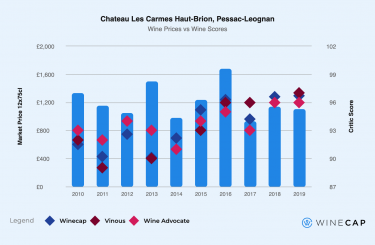
Château Les Carmes Haut-Brion 2013 stands out as the year’s star, up 38.2%. The 2013 vintage, long dismissed due to challenging weather conditions, has found new appreciation as enthusiasts and investors rediscover its finesse.

Over the past decade, prices for the brand have risen 148%. The 2014 and 2017 vintages are other attractive ‘off’ vintage alternatives. 

Carmes Haut-Brion wine performance

Château Beychevelle 2013 follows a similar line. Once overlooked, its reputation in Asian markets and steady critic support have lifted prices 22.2% year-to-date. Likewise, Château Canon 2014 and Château Smith Haut Lafitte 2014 each gained over 13%, highlighting a broader off-vintage resurgence in the region.

These gains suggest that Bordeaux’s correction phase may be creating attractive entry points for investors willing to look beyond the obvious trophy years.

The Rhône: The value region continues to deliver

The Rhône 100 remains the best-performing regional index of 2025, down just 2.7% year-to-date, with a recent 0.6% month-on-month gain adding to its reputation as a steady performer.

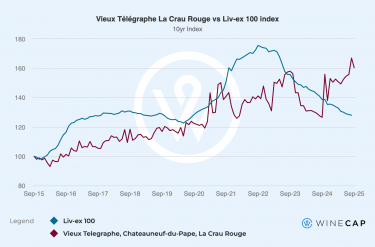
The standout is Vieux Télégraphe La Crau Rouge, appearing twice in the top five for its 2020 (26.1%) and 2021 (18.3%) vintages. The wine’s longevity, critical consistency, and relative affordability have made it a favourite among both collectors and long-term investors.

Vieux Telegraph wine performance vs Liv-Ex

Meanwhile, Paul Jaboulet Aîné’s Hermitage La Chapelle 2014 climbed 15.3%, underscoring the growing investor appetite for Rhône’s great single-vineyard wines. With smaller yields and limited back-vintage supply, demand has begun to outpace availability – a sign that the Rhône’s ‘quiet outperformance’ may continue into 2026.

Burgundy and Sauternes: Scarcity reigns supreme

Though the Burgundy 150 Index remains 5.8% down so far this year, its top producers continue to enjoy demand driven by scarcity.

Domaine de la Romanée-Conti (DRC) Grands Échezeaux Grand Cru 2021 rose 13.3%, proving once again that rarity trumps sentiment. Over the last decade, prices for the wine have risen on average 300%. 

Sauternes has also enjoyed a quiet renaissance so far this year, with Château Suduiraut 2016 making it into the top ten, with a 13% rise in value.  With prices still well below their historical highs, the sweet wines segment could offer contrarian upside heading into 2026.

California: Cult wines stay strong

Although the California 50 index is down 5.6% year-to-date, the 0.7% rise last month hints at price recovery. This year, despite softer global sentiment, high-end Napa continues to attract attention domestically and abroad (from Asia in particular). 

The region’s top label, Screaming Eagle Cabernet Sauvignon 2012, has advanced 12.4% year-to-date.  

As previously noted, Screaming Eagle remains the top traded US wine by value. With six perfect 100-point scores in just 13 vintages, it sits in a league of its own among American wines. Prices for the brand have risen more than 200% in the last 20 years, making it one of the most lucrative long-term holds in the fine wine market.

Divergence defines 2025

The spread between the top-performing wines (+18% on average) and the Liv-ex 1000’s broad decline (around -4.7%) reveals just how uneven performance has become.

Wines that combine scarcity, maturity, and reputation have emerged as the safest harbours, while those driven by hype or youth have seen steeper declines. Investors who focused on undervalued vintages (2013, 2014), critically reliable producers and globally recognised names (DRC, Screaming Eagle) have fared significantly better than the market at large.

Looking ahead: A market finding its floor

With multiple indices turning slightly positive month-on-month, the fine wine market may be approaching an inflexion point. The next phase of the cycle could favour those already positioned in high-quality, limited-production wines that have held steady during the downturn.

As 2025 enters its final stretch, it has become even clearer that scarcity, selectivity, and substance continue to outperform broader market sentiment.

For more on the fine wine market, read our Q3 2025 Fine Wine Report

WineCap’s independent market analysis showcases the value of portfolio diversification and the stability offered by investing in wine. Speak to one of our wine investment experts and start building your portfolio. Schedule your free consultation today.
Categories
Quarterly-reports

Q3 2025 Fine Wine Report

In our Q3 summary of the fine wine market we look at how the global economic landscape is shaping investment strategies, the road to recovery in fine wine, and the best-performing regions and wines so far this year. Read on for more on Lafleur’s recent classification withdrawal, the autumn La Place de Bordeaux campaign, and other industry-defining trends.

Executive summary

  • Market backdrop strengthens: Global equities advanced in Q3 amid optimism for gradual rate cuts and corporate earnings. Improving sentiment and policy clarity provided a firmer foundation for alternative assets, including fine wine.
  • Fine wine stabilises: After two years of correction, the fine wine market showed early signs of recovery. The Liv-ex 100 posted its first quarterly gain since the downturn began.
  • Regional divergence narrows: Champagne, Rhône, and Italy led the quarter, while Bordeaux and Burgundy also showed improvements; evidence of a maturing market phase approaching equilibrium.
  • Selectivity drives returns: The best performing wines came from overlooked vintages, particularly Bordeaux 2013/2014, alongside Rhône’s consistent value names and global icons such as DRC and Screaming Eagle.
  • La Place campaign underwhelms: The autumn La Place de Bordeaux campaign failed to shift market momentum. Demand remained subdued as release prices offered limited value versus back vintages in most cases.
  • News – Lafleur withdraws from Pomerol AOC: In a significant development, Château Lafleur announced its withdrawal from the Pomerol AOC, citing the need for greater viticultural flexibility in response to climate change. We explore how this might affect its market performance.

The trends that shaped the fine wine market

Market optimism sets the stage for fine wine stability

Global markets rallied through Q3 2025, driven by renewed optimism over growth and the prospect of gradual rate cuts, even as inflation proved sticky. US equities extended record highs, powered by strong earnings and ongoing enthusiasm for AI-related sectors, while Europe delivered mixed results amid weak German data but resilience in France and the UK. Gold surged as investors sought safety from lingering geopolitical tensions and trade uncertainties linked to US tariff policy. Bond markets posted modest gains as central banks maintained a cautious stance. Overall, investor sentiment steadied following a turbulent first half, with risk appetite supported by policy optimism and improving economic data, creating a firmer backdrop for alternative assets, such as fine wine, heading into Q4.

Fine wine market starts to turn

Signs of stability continued to build across the fine wine market in Q3, reinforcing the gradual improvement noted in our Q2 Fine Wine Report. After two years of consistent decline, several regional indices turned positive over the quarter. Five of the Liv-ex regional indices rose in August and September, and for the first time in three years, the Liv-ex 50, which tracks the prices of the Bordeaux First Growths, experienced monthly growth.

Broader market measures also improved. The Liv-ex 100 rose 1.1% in September, and the bid:offer ratio – a key gauge of demand relative to supply – reached 0.70, its highest level since April 2023. This sustained rise suggests buyers are gradually re-entering the market, drawn by attractive pricing and renewed confidence following a prolonged correction. While it is too early to call a full recovery, these movements point to a maturing phase of the downturn where value-seeking activity replaces reactive selling. 

La Place autumn campaign fails to shift momentum

A key event of the third quarter every year is the La Place de Bordeaux autumn campaign, which saw the release of over 130 wines from around the globe in September. However, in 2025, the campaign did little to shift momentum. New releases that did not offer value in the context of back vintages available in the market largely fell short, and demand was tepid even for the traditionally most sought-after labels like Opus One, Masseto, Ornellaia, Solaia and Penfolds. Tariff uncertainty, oversupply and general market cautiousness were a structural drag. Unless prices and allocation discipline improve, the campaign is likely to continue to alienate buyers.

Mainstream markets lead Q3; fine wine re-emerges

Global equities posted solid gains in Q3, buoyed by growing optimism around prospective interest-rate cuts and resilient corporate earnings. While mainstream markets outpaced most alternatives, select segments of the alternative asset universe – particularly private credit and real assets – showed signs of resilience. Fine wine also staged a modest recovery.

The Liv-ex 100 Index, which tracks the performance of the most sought-after investment-grade wines, recorded its first quarterly gain since the market downturn began, rising 0.4% over the quarter. Losses in July and August were offset by a 1.1% rebound in September, signalling renewed confidence. The broader Liv-ex 1000 Index slipped 0.5% over Q3, though it, too, recovered 0.4% in September, suggesting stabilisation across a wider basket of fine wines.

Meanwhile, the First Growths Index – a barometer for Bordeaux’s top estates – rose 0.7% in September but remained 0.7% lower for the quarter overall, reflecting the uneven pace of recovery across regions and price tiers. Nonetheless, after several quarters of decline, Q3 marked a turning point where fine wine once again began to move in step with the broader risk-on sentiment seen in global markets.

Fine wine vs mainstream markets

Regional fine wine performance in Q3

Regional fine wine indices displayed a mixed picture in Q3, but the pace of decline eased, and several categories began to rise. The Liv-ex 1000 ended the quarter 0.6% lower, yet September brought a broad uptick across most regions – an encouraging sign after months of subdued activity.

Champagne held its ground best, maintaining near-flat performance over the quarter and retaining its position as one of the most resilient categories in 2025. The region benefited from increased demand from Asia and the US. The Rhone 100 also improved modestly, ending Q3 just above its Q2 level as buyers continued to favour regions offering relative value.

Italy (0.4%) and the Rest of the World 60 (0.3%) both saw small gains in Q3, hinting at early signs of renewed confidence beyond the traditional strongholds of Bordeaux and Burgundy, which fell in Q3.Regional fine wine performance 2025

The Bordeaux 500 declined 1.7%, while the Bordeaux Legends 40 dipped just 0.6%, as mature Bordeaux continued to attract active buyers. However, of the six Bordeaux sub-indices, three went up in September – those measuring the performance of the First Growths, their Second Wines, and the top 100 wines from the Right Bank. Burgundy prices softened slightly, down 0.2%, but its top wines remained among the most robust performers since the 2022 peak.

The combination of improving sentiment, selective buying, and greater market stability suggests that regional fine wine prices may be nearing their floor, setting the stage for a more balanced close to 2025.

The best performing wines so far in 2025

Even in a broadly subdued market, 2025 has shown that fine wine remains a story of selectivity and scarcity. A handful of standout wines have delivered strong double-digit returns, proving that, even during correction phases, the right names and vintages can outperform significantly.

The spread between the top-performing fine wines (+18% on average) and the Liv-ex 1000’s broad decline year-to-date (around -4.7%) highlights exactly why selection is paramount.

Best performing wines 2025 table

Three key themes stand out among the top-performing wines in 2025 year-to-date:

  • ‘Off’ vintage Bordeaux is back in vogue

Wines from cooler or once-overlooked vintages – such as Bordeaux 2013 and 2014 – have led the pack. Collectors appear increasingly willing to reward finesse, drinkability, and scarcity over hype, with Château Les Carmes Haut-Brion (+38.2%) and Château Beychevelle (+22.2%) exemplifying this trend.


  • The Rhône’s value overdelivers

Rhône wines continued to prove their value credentials. Vieux Télégraphe’s 2020 and 2021 vintages and Jaboulet’s La Chapelle 2014 all posted impressive gains, driven by limited production, consistent critical endorsement, and comparatively attractive pricing.


  • Scarcity runs the market

At the very top end, scarcity remains the strongest currency. Domaine de la Romanée-Conti, and Screaming Eagle demonstrated that rare, blue-chip wines continue to attract capital regardless of broader sentiment.


Investors focusing on authenticity, producer pedigree, and under-appreciated vintages have outperformed the broader market, suggesting that quality and insight remain the keys to long-term success.

Q3 releases: Spotlight on Taittinger Comtes de Champagne 2014

Champagne has proven one of the most resilient categories in 2025, with the Champagne 50 Index outperforming most regional peers in Q3 (up 0.3%). The region is also enjoying renewed global demand as buyers take advantage of the attractive price levels post its 2022 peak. Within this steadying landscape, Champagne house Taittinger released the 2014 vintage of its Comtes de Champagne.

Awarded 97 points by both Yohan Castaing (The Wine Advocate) and Antonio Galloni (Vinous), it ranks among the highest-rated Comtes vintages ever – and Galloni notably compared it to the legendary 2008, which trades at a nearly 40% premium.

The 2014 release also carries historical significance. As the last truly cool-climate vintage in Champagne, it represents a stylistic milestone unlikely to be replicated amid the region’s ongoing warming trend – a factor that enhances its long-term collectability.

From an investment perspective, Comtes has been a quiet outperformer. The Taittinger Comtes de Champagne index has risen steadily over the past decade, outpacing both Dom Pérignon and Louis Roederer Cristal during the bull market of 2020–2023, and showing notable price stability throughout 2025.

‘Taittinger consistently stands out as one of the best values among top-tier Champagnes, frequently outperforming many other Grand Marques tête-de-cuvée offerings.’
– Yohan Castaing, The Wine AdvocateTattinger Champagne index

Market snapshot

  • 2014 Release price: £1,190 per 12×75
  • Critic scores: 97 points (Vinous, The Wine Advocate)
  • Ranking: 62nd in the 2024 Liv-ex Power 100 (up nine places year-on-year)

With exceptional critic consensus, proven secondary market demand, and a price point that remains competitive, the 2014 Taittinger Comtes de Champagne exemplifies why the region continues to attract buyers, whether for enjoyment or investment. 

Q3 Fine wine news: Lafleur withdraws from Pomerol AOC

In August, Château Lafleur confirmed that from the 2025 vintage onward, its wines will no longer carry the Pomerol AOC designation, instead being labeled Vin de France. The decision extends across the Guinaudeau family’s portfolio, including Les Pensées, Les Perrières, and Grand Village.

The estate cited the need for greater viticultural flexibility in the face of accelerating climate change. In correspondence with trade partners, the Guinaudeau family wrote: ‘Climate is changing fast and hard… We must think, readapt, act.’ 

The withdrawal allows Lafleur to implement adaptive farming methods not currently authorised under the appellation’s 1936 regulations, such as controlled irrigation, soil covering to reduce evaporation, canopy shading, and adjusted planting density. 

Lafleur’s independence enables it to act without the procedural delays that constrain larger or corporate-owned estates. The move is consistent with its reputation for long-term thinking and precision farming, aligning vineyard practice more closely with environmental reality.

Market context

Historically, classification changes in Bordeaux have affected perception and pricing. The 2012 promotions of Pavie and Angélus within Saint-Émilion’s hierarchy, for instance, coincided with rapid market repricing, even though the wines themselves did not change. Lafleur’s withdrawal represents the opposite: the relinquishment of an appellation name rather than an elevation within it.

Pavie vs angelus wine performance

In the short term, pricing impact is likely to be neutral, as Lafleur’s identity and market position are defined by brand equity rather than by appellation. The château’s production is limited, its critical reputation exceptional, and its collector base highly stable. Over time, however, label differentiation could influence liquidity and buyer psychology, particularly between the final ‘Pomerol’ labelled vintages and the inaugural ‘Vin de France’ release, both of which may acquire added significance in secondary trading.

Performance and relative strength

Over the past decade, Lafleur’s secondary market performance has outpaced that of both the First Growths and its Right Bank peers, Pavie and Angélus. Despite the broader Bordeaux market correction since 2022, Lafleur has retained a significant premium, perhaps reflecting scarcity and confidence in the Guinaudeau family’s brand.

Lafleur fine wine performance

Should the transition to ‘Vin de France’ labelling prove commercially seamless, the move could even enhance Lafleur’s individuality, reinforcing its cult status as a technically driven, terroir-first estate. 

All in all, Lafleur’s withdrawal prompts a broader structural question for Bordeaux: how the appellation system adapts to climate change through balancing regional reputation with innovation arising from global-warming challenges. For Lafleur, the decision appears evolutionary rather than disruptive, designed to preserve vineyard resilience and wine quality in a shifting climate.

If Lafleur’s performance continues to mirror its past decade – where brand identity outweighed classification – this change may ultimately serve to strengthen, rather than dilute, its market position.

Q3 summary and a look ahead to Q4

The third quarter of 2025 marked a transition phase for the fine wine market. With mainstream assets recovering and investor sentiment stabilising, fine wine has begun to re-establish its footing after a protracted two-year downturn. Indicators such as the rising bid:offer ratio and renewed regional resilience point toward a more balanced market environment heading into Q4. Price declines have largely moderated, and value-seeking capital is returning, particularly to regions offering long-term quality at attractive entry points.

Looking ahead, the key drivers of performance will continue to be scarcity, selectivity, and producer reputation. Top estates with disciplined production, strong brand equity, and adaptability are well-positioned to outperform as the market moves toward recovery. As Q3 showed, the correction appears to have reached maturity; the next phase is likely to be characterised by gradual re-pricing, focused accumulation, and renewed confidence in fine wine as a stable, long-term asset.

WineCap’s independent market analysis showcases the value of portfolio diversification and the stability offered by investing in wine. Speak to one of our wine investment experts and start building your portfolio. Schedule your free consultation today.
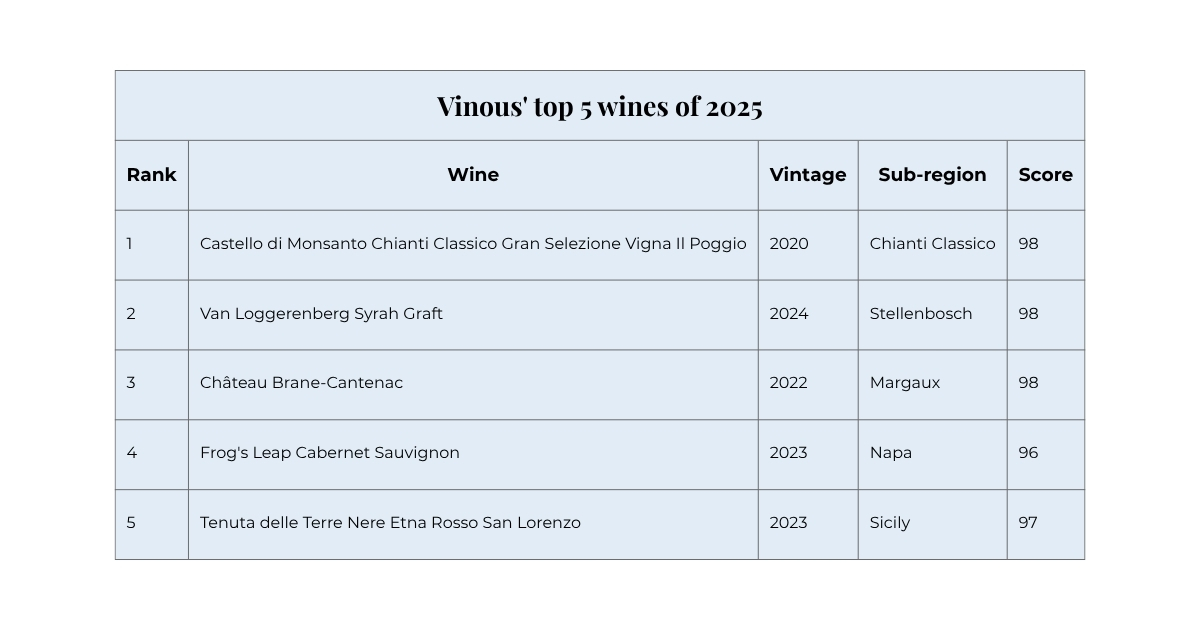
Categories
Learn

The rise of wine influencers and the power of the brand: Bordeaux Diaries Part II

Explore the rise of wine influencers and how Bordeaux estates balance authenticity, identity, and changing consumer expectations.

As wine criticism continues its transformation, a new force has emerged alongside traditional voices – the influencer. While formal critics retain a place of authority, many Bordeaux estates now acknowledge that digital personalities play a growing role in shaping perceptions, influencing purchases, and spreading the message of wine.

  • Influencers now shape opinions through social media, though their messaging often lies outside producers’ control.
  • Bordeaux estates are prioritising authenticity and estate identity.
  • Producers increasingly view the customer as the ultimate judge, trusting loyal drinkers over trends.

How wine influencers are shaping modern criticism

The majority of the chateaux interviewed by WineCap referred to the widespread use of social media as a tool in the wine critique space, recognising the parallel role of influencers to conventional commentary. Several also noted that quality and precision of influencer messaging was usually beyond a producer’s control, and not as accessible for them to engage with or oversee as traditional critique.  

Château Pavie, Premier Grand Cru Classé (B), Saint-Émilion

Robert Packer was definitely the most influential critic in the world of wine, and for Bordeaux particularly, and he’s actually done a lot of good things for Pavie, because he scored us 100 points four times in ten vintages, which is quite unique in Bordeaux,’ Olivier Gailly, commercial director at Pavie explained to WineCap. ‘Since he retired, we’ve seen more and more wine critics. Actually, almost every day we see new critics who are quite influential within his or her community or his or her country.’

Gailly described such personalities as ‘half influencer, half critic’.

‘We have to adapt. There is a lot of social media and there are influencers throughout this medium. The most important thing is to make sure they relay the right messages. They relay the truth of our terroir, of what the team is doing, and they talk through to the work we do with quality.’

Château Pape Clément, Grand Cru, Pessac-Léognan

‘The role of critics and journalists remains, but in my opinion, Parker was the best taster. I’ve never known any that were better, more precise, more honest in their decisions,’ said Bernard Magrez from Château Pape Clément. ‘Now, there are not just journalists but also influencers. There’s digital media that features a lot of short but quality programmes, with the mission to advise wine lovers.’

‘These programmes are often made by quality people, but not always,’ Magrez added. In any case, they provide the service of engaging with consumers, so they do not ‘make a mistake when choosing wine’. 

Estate identity and customer loyalty in modern wine marketing

As the wine world becomes increasingly noisy with a blend of critics, influencers, and online commentary, many producers are returning to the fundamentals: authenticity, estate identity, and customer loyalty.

Château Saint-Pierre, Fourth Growth, Saint-Julien

‘It is sometimes so difficult to handle, that we think that the main thing is to simply be proud of what we produce,’ explained owner of Château Saint-Pierre Jean Triaud to WineCap. ‘During En Primeur, there are maybe 30, 40, or even 50 people telling us they can offer influence for the wine. You get professionals, but you also get all the guys you don’t know writing online and maybe followed by, I don’t know, 100,000 people.’

Triaud said it was impossible and undesirable to produce wine that everybody liked. ‘So, we try to keep the identity of the wine and what the family wants to do.’

Château La Conseillante, Pomerol

‘Since Parker retired, the world of journalists has changed a lot. Now we do not have one journalist, we have a lot of journalists with different tastes,’ said Marielle Cazaux, general manager of Château La Conseillante. ‘So, for me, the wine has to keep its identity with all these different journalists. Before, with Parker, you had to just please one taste. Now it’s more and maybe it is a good thing’.

Château Beychevelle, Fourth Growth, Saint-Julien 

Philippe Blanc, general manager at Château Beychevelle, was adamant that the customer, and not the critic, was “king”.

‘The role of wine critics is very important but, as I am a very rude person, I said to somebody one day in London at a seminar that the most important people were the customers and not the journalists. Everybody laughed in the room, but I still believe that,’ he told WineCap. ‘Journalists are extremely important, they are knowledgeable, they are good guides but I think the best guide you can get is a customer himself. Now, if you need help, you can follow some journalists that you trust.’

With a multitude of journalists and influencers today, Blanc said he was not sure one single person took the lead. ‘I think as customers, you have to find the people you feel good with and then stick to them – but the most important thing is to open a bottle, to share it with friends and see if you like it and you give the mark you want then. It is important to feel comfortable with what you taste and not to follow somebody like you follow the shepherd’. 

Château Lynch-Bages, Fifth Growth, Pauillac

Perhaps the most direct remark about putting house identity first in today’s complex wine critique space came from Jean Charles Cazes, CEO of several properties, including Château Batailley and Château Ormes de Pez alongside Lynch-Bages.

‘We have had a consistent style and consistent practices over generations. I think it is important that you follow your style because fashions always evolve and change. If you try to follow the fashion, it will be out of date very quickly. So, we follow our own path.’

In today’s fast-moving and fragmented wine commentary landscape, the critic no longer reigns alone. Influencers bring reach and relatability, digital media expands access, and consumers themselves wield increasing influence over what succeeds. Yet amid this evolution, Bordeaux’s finest estates are charting a steady course – staying true to their identity, their terroir, and the loyal customers who bring their wines to life in glasses around the world.

See also our Bordeaux I Regional Report

WineCap’s independent market analysis showcases the value of portfolio diversification and the stability offered by investing in wine. 

Start your wine investment journey with WineCap’s expert guidance.

Categories
News

The best-performing wines of H1 2025: the bright spots in a soft market

  • Fine wine prices continued to decline in H1 2025 against a challenging global economic backdrop. 
  • A small group of wines outpaced the broader market by a wide margin, with the best-performing wine rising over 36%.
  • In a recalibrating market, scarcity, selectivity, and substance will continue to define success.

The global fine wine market continued its cautious descent through the first half of 2025, extending a downward trend that began in earnest in late 2022. From Champagne to California, regional indices recorded further losses – a sobering contrast to the post-pandemic surge that peaked in September 2022. What followed has been nearly 18 months of persistent price softening.

Yet even in this declining market environment, select wines showed resilience and in some cases, delivered double-digit growth. A small group of wines outpaced the broader market by a wide margin, with the best-performing wine rising over 36% in H1 alone. These rare outliers were not driven by hype or thematic rotation, but by a return to fundamentals: scarcity, maturity, critical acclaim, and name recognition. In a soft market, selectivity became strategy, and quality, its own form of currency.

The macroeconomic backdrop: volatility returns

H1 2025 unfolded against a challenging global economic backdrop, with fine wine caught in the crosscurrents of:

Reignited trade tensions

The surprise announcement of 200% US tariffs on EU wine imports in March rattled the industry. While the final figure was scaled back to 20% and implementation delayed by 90 days, the initial shock had an immediate effect. US demand plummeted initially, and confidence took time to recover – despite evidence of resilient buying behaviour by Q2.

Subdued Asian demand 

In Asia, sentiment remained quiet. Many buyers – particularly in Hong Kong and mainland China – adopted a wait-and-see posture, citing political and market uncertainty. The result was lower volume and thinner trading conditions for key regions like Burgundy, Bordeaux, and Champagne.

Monetary pressures impact

Persistent interest rate pressure globally has reduced the appeal of illiquid assets such as wine. With safer yields available in cash or bonds, some collectors have hesitated to commit fresh capital or have chosen to sell.

A tepid Bordeaux En Primeur campaign

The Bordeaux 2024 En Primeur campaign, already burdened by a slow market and a hesitant consumer base, failed to inspire broad demand. Pricing fatigue, underwhelming back-vintage performance, and merchant overstocking created difficult conditions even for well-scored wines.

Liv-ex indices reflected the climate:

    • Liv-ex 50 (tracking First Growth performance): -6% in H1, now back to 2016 levels.
    • Liv-ex 100 (Liv-ex benchmark index): -4.9% in H1, now back to 2020 levels.
    • Liv-ex 1000 (broadest market measure): -4.7% in H1, now back to 2020 levels.

Amid these headwinds, investment allocations required precise selection more than ever.

Regional performance – H1 2025

Though every major region ended H1 in negative territory, the magnitude of decline varied, offering insight into what categories still command investor attention and which ones may face longer-term repositioning.

best performing wine regions half 1 2025

The best-performing region: the Rhône

The Rhône 100 index emerged as the most defensive performer in H1, down just 2.5%. This may come as a surprise, given Rhône’s traditionally lower liquidity compared to Bordeaux or Burgundy. Yet in periods of risk aversion, the region’s combination of world-class producers (e.g. Jean Louis Chave, Guigal), lower pricing, critical appraisal, and hence good value for money have made it an increasingly attractive hunting ground for value-driven buyers.

Several Rhône wines appeared in the H1 top 10 performance list, including Chave’s Hermitage Rouge 2021 (+36.8%) and Guigal’s Côte Rôtie Château d’Ampuis 2018 (+20.0%) – reinforcing Rhône’s reputation as a quiet outperformer in challenging times.

The worst-performing regions: Bordeaux, Burgundy and California

Three major regions – California, Burgundy, and the broader Bordeaux 500 – each fell 5.6%, making them the weakest performers year to date.

  • Burgundy’s fall reflects an overdue correction after its dramatic run-up in 2021–2022. Though top-tier names (like DRC and Clos de Tart) remain in demand, the broader category has struggled under inflated pricing and speculative fatigue.
  • Similar to Burgundy, California, particularly its cult Cabernet segment, has suffered from reduced international demand.
  • Bordeaux’s broader weakness may be attributed to the underperformance of back vintages. However, its Legends 40 sub-index, focused on top estates with market longevity, proved more resilient (-2.6%).

H1 2025 top performers: the outliers that defied the trend

While most indices slipped, a handful of wines delivered double-digit returns.

best performing wines half 1 2025

Insights from the standouts

The Rhône leads with Chave’s Hermitage

Despite the Rhône 100 index declining 2.5%, Jean Louis Chave’s 2021 Hermitage Rouge rose 36.8% – a stark outperformance driven by limited availability and increased global recognition of its collectible status.

Sweet wines surged

Both Château d’Yquem 2014 and Château Suduiraut 2016 featured in the top ten, defying the quiet backdrop for Sauternes. This suggests renewed collector interest in undervalued dessert wines, particularly when linked to exceptional vintages.

US cult wines hold their own

Screaming Eagle 2012 proved resilient, with a 24.4% rise in value since the start of the year. Despite the California 50 index falling 5.6%, high-end Napa commands global attention in top-tier vintages.

Champagne’s prestige cuvées still sparkle

While the Champagne 50 index fell 4.9%, Pol Roger Sir Winston Churchill 2015 bucked the trend with +24.4%, showing how top releases can outperform broader categories when aged and ready to drink.

Key takeaways for investors

Market-wide corrections are not uniform. Even in downturns, well-selected wines can deliver strong returns.

Rarity and recognisability drive results. Names like DRC, Yquem, Chave, and Screaming Eagle continue to act as safe harbours.

Blue-chip vintage selection matters. Wines from ‘off’ vintages like Canon 2014 offered some of the best entry points and upside surprises.

Sweet wines are staging a quiet comeback. This suggests contrarian plays may have room to run in H2.

Selectivity as the strategy for H2 2025

The first half of 2025 has confirmed what seasoned collectors already know: not all wines move with the market. Even as regional indices declined across the board, a handful of exceptional bottles bucked the trend, delivering standout returns through a combination of rarity, critical reputation, and maturity.

In today’s climate, the challenge isn’t access to wine but making the right decisions. Broad market exposure has offered little protection. Instead, performance has come from targeted allocations, where deep knowledge of producers, vintages, and release histories gives investors the edge.

Looking ahead to H2, the outlook is cautiously constructive. While macroeconomic headwinds remain – from tariffs and interest rates to uneven global demand – opportunities still exist for those willing to look beyond the indices.

In a recalibrating market, scarcity, selectivity, and substance will continue to define success.

WineCap’s independent market analysis showcases the value of portfolio diversification and the stability offered by investing in wine. Speak to one of our wine investment experts and start building your portfolio. Schedule your free consultation today.