- This guide breaks down the best Italian wines by region, grape variety, and style, making it easy to understand what matters most.
- We also highlight the Italian wines with proven investment potential, including the producers most traded on the secondary market.
- From Barolo and Barbaresco to Brunello and Super Tuscans, Italy produces some of the world’s most collectable wines.
Italian wine is one of the most complex, expressive, and rewarding categories in the world. With hundreds of native grape varieties, deeply-rooted regional identities, and a growing presence in the global fine wine market, Italy offers an unmatched combination of history, diversity, and long-term potential.
For many people, Italian wine starts with familiar names such as Chianti or Prosecco but these only scratch the surface. Beneath them lies a vast and nuanced landscape shaped by geography, tradition, and evolving winemaking philosophies.
Over the past decade, Italian wine has taken on a new role: not just as something to enjoy at the table, but as a serious category within fine wine collecting and investment. Once dominated by Bordeaux and Burgundy, the secondary market has increasingly embraced Italy’s top wines, particularly from Piedmont and Tuscany. Italy’s market share by value has risen from 5.7% to 15.3% since 2016, making it an important addition to investment portfolios, providing stability and potential for high returns.
This guide explores the best Italian wines, explains the regions and grape varieties behind them, and outlines why certain Italian wines have become sought after by collectors worldwide.
Why Italy is one of the most important wine countries
Italy is the world’s largest wine producer by volume and one of the oldest wine cultures in existence. Wine has been produced on the Italian peninsula for more than two millennia, and today it remains deeply intertwined with everyday life, food, and regional identity.
What sets Italy apart from other wine-producing countries is its extraordinary diversity. Officially, Italy recognises more than 500 native grape varieties, far more than France or Spain. These grapes are cultivated across dramatically varied climates – from Alpine vineyards in the north to Mediterranean coastlines in the south.
From a global perspective, Italy combines:
- Strong domestic consumption
- Consistent export demand
- Increasing collector and investor interest
This balance has helped Italian wine remain resilient through changing market conditions and has supported long-term appreciation for the country’s top wines.
Understanding Italian wine classifications
Italian wines are regulated by a classification system designed to protect origin and quality. While not a guarantee of excellence, classification provides important context when navigating Italian wine.
- DOCG (Denominazione di Origine Controllata e Garantita)
The highest level, covering iconic wines such as Barolo, Barbaresco, and Brunello di Montalcino. - DOC (Denominazione di Origine Controllata)
A broad category covering many high-quality wines with defined production rules. - IGT (Indicazione Geografica Tipica)
Introduced to allow flexibility and innovation, famously used by Super Tuscan producers.
From a collecting perspective, classification matters because it signals consistency, recognisability, and historical reputation. However, some of Italy’s most valuable wines sit outside the DOCG system, proving that producer reputation often outweighs classification alone.
Italian wine regions explained
Italy’s geography plays a defining role in its wines. Stretching from the Alps in the north to the Mediterranean islands in the south, the country encompasses a wide range of climates, soils, and elevations. Understanding Italian wine regions is the foundation for understanding the best Italian wines.
Piedmont: Home of Barolo and Barbaresco
Piedmont is widely regarded as Italy’s most important fine wine region. Located in the north-west of the country, it is defined by rolling hills, foggy autumns, and a continental climate ideal for slow ripening. It is widely regarded as the most important region for investment-grade Italian red wines.
Its flagship grape, Nebbiolo, produces two of Italy’s most famous wines:
- Barolo
- Barbaresco
These wines are known for their structure, complexity, and ability to age for decades. Barolo, often referred to as “the King of Wines,” combines power with finesse, while Barbaresco tends to offer slightly more elegance and earlier approachability.
From an investment perspective, Piedmont wines benefit from:
- Strict production rules
- Limited vineyard land
- Strong international demand
As a result, Barolo and Barbaresco consistently feature among the best Italian wines to collect.
Tuscany: Sangiovese, Brunello and Super Tuscans
Tuscany is perhaps Italy’s most recognisable wine region, producing some of the most famous Italian wines in the world. At the heart of Tuscan wine is Sangiovese, a grape capable of producing everything from fresh, everyday wines to long-lived icons.
Key Tuscan wines include:
- Chianti Classico
- Brunello di Montalcino
- Vino Nobile di Montepulciano
Brunello di Montalcino, made exclusively from Sangiovese Grosso, is among Italy’s most age-worthy wines, often developing over 20-30 years.
Tuscany is also home to the Super Tuscans – wines like Sassicaia, Tignanello, and Ornellaia. These wines broke traditional rules by incorporating international grapes such as Cabernet Sauvignon and Merlot, and today they rank among the best Italian wines for collectors and investors.
Veneto: Amarone and Valpolicella
Veneto, in north-eastern Italy, produces a broad range of styles, but its most prestigious wine is Amarone della Valpolicella.
Amarone is made using partially dried grapes, resulting in a powerful, concentrated red wine with high ageing potential. While stylistically different from Barolo or Brunello, top Amarone wines can develop beautifully over time and occupy a niche role in Italian wine collections.
Veneto also produces:
- Valpolicella Classico
- Valpolicella Ripasso
- Soave (white)
While not all Veneto wines are investment-grade, Amarone remains one of the best Italian red wines for collectors seeking diversity.
Southern Italy and the islands
Southern regions such as Sicily, Puglia, and Campania have undergone a quality renaissance in recent decades.
Key grapes include:
- Nero d’Avola (Sicily)
- Primitivo (Puglia)
- Aglianico (Campania)
These regions produce expressive and often excellent-value wines, but most are intended for enjoyment rather than long-term investment. That said, select producers – particularly in Sicily – are increasingly attracting collector interest.
The best Italian wines by style
Understanding Italian wine styles helps narrow down what makes certain bottles stand out.
Best Italian red wines
Italy is best known for its red wines, particularly those capable of ageing.
Standout styles include:
- Nebbiolo-based wines (Barolo, Barbaresco)
- Sangiovese-based wines (Brunello, Chianti Classico)
- Amarone della Valpolicella
- Super Tuscan blends
These wines combine structure, acidity, and tannin, all key elements for longevity.
Best Italian white wines
Italian white wines are often overshadowed by reds, but they play an important role in Italy’s wine identity.
Notable white wines include:
- Gavi (Cortese)
- Soave (Garganega)
- Verdicchio
- Vermentino
While most Italian white wines are produced for early consumption, a small number – particularly from top producers – can age gracefully. From an investment standpoint, however, Italian whites remain a niche category.
Best Italian wines for ageing
Age-worthy Italian wines typically share:
- High acidity
- Firm tannins
- Structured phenolics
Examples include:
- Barolo
- Barbaresco
- Brunello di Montalcino
- Super Tuscans
These wines often improve for decades, making them attractive to collectors focused on long-term horizons.
What makes Italian wine investment-grade?
Not all Italian wines are suitable for investment. The best Italian wines for collectors tend to meet several criteria:
- Producer reputation
Iconic estates with long track records perform best. - Regional prestige
Piedmont and Tuscany dominate secondary market activity. - Scarcity
Limited production drives long-term demand. - Critical recognition
Consistent acclaim helps sustain liquidity. - Provenance and storage
Condition matters as much as the wine itself.
Investment-grade Italian wines to know
While Italy produces an extraordinary range of styles, only a relatively small group of producers have built the kind of global reputation, scarcity, and long-term demand required to be considered truly investment-grade.
The wines below are among the most consistently traded and collected Italian labels, forming the backbone of many high-performing fine wine portfolios.
Top Barolo producers
Barolo remains Italy’s most internationally recognised collectible wine, and several estates have established themselves as long-term benchmarks:
- Giacomo Conterno
Widely regarded as one of the most important names in Barolo. Monfortino Riserva is among Italy’s most iconic and investment-relevant wines, consistently commanding premium market pricing. - Giuseppe Rinaldi
A cult producer with extremely limited production. Rinaldi Barolo has long been a collector favourite, with demand far outstripping supply. - Bartolo Mascarello
Famous for its traditional style and unwavering consistency. Mascarello’s Barolo is a staple of serious Italian collections, prized for both provenance and ageing ability. - Bruno Giacosa
Known for producing some of Piedmont’s most elegant and refined wines. Bottlings such as Barolo Falletto and the estate’s Riserva releases remain highly sought after. - Vietti
A collector-friendly producer with broad distribution, consistent critic attention, and strong brand recognition. Vietti’s single-vineyard Barolos are widely followed. - Luciano Sandrone
One of Barolo’s most respected modern-era producers, with a strong track record for quality and international demand. - Roberto Voerzio
Highly allocated and limited in volume, Voerzio’s wines have become increasingly important in collector circles. - Elio Altare
A pioneering modernist producer whose Barolos remain highly regarded for their intensity and style. - Cappellano
A cult name best known for Pie Rupestris, increasingly recognised as a serious collectible Barolo.
In general, the most investment-relevant Barolos are those with a combination of scarcity, critical reputation, and a recognisable brand identity – particularly wines tied to celebrated crus such as Cannubi, Monfortino, Brunate, Bussia, Rocche dell’Annunziata, and Cerequio.
Leading Barbaresco estates
While Barolo tends to dominate headlines, Barbaresco has become one of the strongest growth categories in Italian fine wine, often delivering exceptional quality with slightly earlier drinking windows.
Key investment-grade Barbaresco names include:
- Gaja
The global powerhouse of Barbaresco. Single-vineyard wines such as Costa Russi, Sori Tildin, and Sori San Lorenzo remain among the most traded Italian wines worldwide. - Roagna
Roagna is a producer with rising collector demand, known for long macerations, terroir transparency, and extremely age-worthy wines. - Bruno Giacosa
Giacosa’s Barbaresco releases are often considered some of the region’s most refined expressions. - Produttori del Barbaresco
One of the most important cooperative estates in the world. Their single-vineyard Riservas offer strong quality-to-price value and have earned growing collector attention. - Ceretto
A well-known producer with broad recognition and strong positioning in international markets. - Sottimano
Sottimano is increasingly sought after by collectors for its purity and quality.
For many collectors, Barbaresco represents one of the most compelling Italian categories due to its prestige, lower relative pricing (vs Barolo), and strong long-term market momentum.
Other Piedmont wines collectors watch
While Nebbiolo dominates Piedmont’s investment landscape, the region also produces collectible wines outside the Barolo/Barbaresco framework:
- Barbera d’Alba (top cuvées) from producers such as Giacomo Conterno and Vietti
- Langhe Nebbiolo from elite estates, increasingly viewed as entry-level collector wines
- Alto Piemonte Nebbiolo (Gattinara, Boca, Lessona), a category gaining interest among sophisticated collectors
Tuscan benchmarks: Brunello, Chianti Classico and Super Tuscans
If Piedmont is defined by tradition and Nebbiolo, Tuscany is defined by global brand strength and diversity. Tuscany’s finest wines are among the most recognisable Italian labels in the world, making them particularly attractive to collectors seeking liquidity.
Brunello di Montalcino
Brunello is one of Italy’s most age-worthy and internationally respected wines. The most investment-grade producers include:
- Biondi-Santi
A historic name often regarded as Brunello’s spiritual home. Rare Riserva bottlings are especially prized by collectors. - Gianfranco Soldera (Case Basse)
A cult-level producer whose wines are among the most sought-after Italian bottlings globally. - Salvioni
Another low-production, high-reputation estate with growing global presence. - Casanova di Neri
A modern benchmark, with wines like Tenuta Nuova and Cerretalto frequently followed by collectors. - Valdicava
A key Brunello name with a strong reputation for power and ageing capacity. - Il Poggione
A historic estate offering strong brand recognition and a consistent track record.
The best Brunello wines combine structure, longevity, and a reputation for consistent quality across vintages, making them increasingly relevant in diversified Italian wine portfolios.
Chianti Classico: Top estates worth watching
Chianti is often seen as a “drinking category,” but at the highest level, Chianti Classico is becoming increasingly collectable – particularly as producers push quality higher and vineyard sites become more clearly defined.
Notable names include:
- Fontodi
- Isole e Olena
- Castello di Ama
- Fèlsina
- Ricasoli
- Antinori (Badia a Passignano/Peppoli)
While Chianti Classico generally trades less than Barolo or Super Tuscans, top bottlings are increasingly viewed as long-term value plays for collectors.
The Super Tuscans: Italy’s most investable wines
If there is one Italian category that rivals Bordeaux in global brand power, it is Super Tuscan wine. These labels dominate auction catalogues, collector wish lists, and international trading platforms.
Sassicaia (Tenuta San Guido)
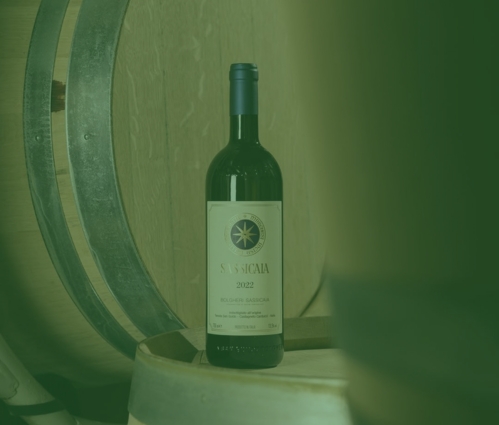
Arguably Italy’s most famous wine, Sassicaia combines prestige, ageing potential, and consistent global demand. For many collectors, it is the gateway into Italian fine wine investment.
Tignanello (Marchesi Antinori)
One of the original Super Tuscan wines and still one of the most widely recognised. It remains highly liquid in the secondary market and benefits from Antinori’s immense global reach.
Ornellaia
A benchmark Bolgheri estate known for polished, powerful wines and strong vintage consistency. Ornellaia’s limited art releases further elevate its collector status.
Masseto
Often considered Italy’s most coveted modern wine. Masseto is produced in very limited quantities and enjoys significant international demand, particularly in Asia and the US. Its pricing reflects its scarcity and cult reputation.
Solaia (Marchesi Antinori)
Another flagship Antinori wine, often compared to top Left Bank Bordeaux blends. Solaia remains highly collectible and typically outperforms many Italian peers in global visibility.
Guado al Tasso (Antinori)
A Bolgheri classic that has gained momentum among collectors as a slightly more accessible alternative to Sassicaia and Ornellaia.
Bolgheri, in general, has become one of Italy’s most important fine wine sub-regions due to its international style, strong critic scores, and consistent market liquidity.
Premium Amarone della Valpolicella
Amarone is a unique Italian wine style with a global following. While not all Amarone is investment-grade, a handful of producers have established strong reputations and consistent demand.
For collectors, Amarone offers diversification: it is stylistically different from Barolo and Brunello, yet still capable of long ageing and secondary market relevance.
- Giuseppe Quintarelli
The most iconic Amarone producer. Quintarelli’s wines are extremely limited, highly allocated, and among the most collectable wines of Veneto. - Dal Forno Romano
A powerful modern benchmark. Dal Forno’s Amarone is often compared to cult Napa Cabernet in intensity and concentration, and it remains highly sought after.
The best Italian wines combine history, craftsmanship, and longevity in a way few other categories can match. For drinkers, they offer endless discovery. For collectors, they offer scarcity, prestige, and long-term relevance.
As global demand continues to grow, Italian wines are no longer the “alternative” to Bordeaux or Burgundy – they are a cornerstone of the fine wine market in their own right.
FAQs about the best Italian wines
What are the best Italian wines for beginners?
Chianti Classico, Barbera d’Alba, and Valpolicella offer approachable introductions to Italian wine styles.
What are the most famous Italian wines?
Barolo, Brunello di Montalcino, Amarone, Chianti Classico, and Super Tuscans are among the most famous Italian wines globally.
Are Italian wines good investments?
Select Italian wines – particularly from Piedmont and Tuscany – have proven to be strong long-term performers in the fine wine market.
Which Italian wines age the longest?
Barolo, Barbaresco, Brunello di Montalcino, and top Super Tuscans are among the most age-worthy Italian wines.
Feature image: Tenuta San Guido