Categories
Learn

10 interesting facts about Dom Perignon

  • Dom Perignon is the world’s most recognised prestige cuvee, produced exclusively as a vintage wine.
  • A cornerstone of the LVMH portfolio, Dom Perignon possesses massive global brand equity.
  • The secondary market for Dom Perignon is highly liquid compared to other wines.

Dom Perignon is more than just Champagne – it is one of the most popular luxury wines in the world. From its origins in the Abbey of Hautvillers to its position today as the flagship prestige cuvee of Moet & Chandon and LVMH, the brand has become synonymous with celebration, craftsmanship, and collectability. Produced exclusively as a vintage wine, Dom Perignon captures the unique identity of each harvest while balancing rarity, longevity, and global appeal. In this guide, we explore ten fascinating facts that explain how Dom Perignon became one of the most influential and investable names in fine wine.

1. The heritage and legend of the Benedictine monk

The history of Dom Perignon is intertwined with the very foundations of the Champagne region. Pierre Perignon was a Benedictine monk who served as cellar master at the Abbey of Hautvillers in the seventeenth century. While legend often credits him with “inventing” sparkling wine (he didn’t), his true contribution was the refinement of viticultural techniques.

He pioneered the practice of blending grapes from different vineyards to achieve a balanced profile. He also introduced the use of corks and stronger glass bottles to prevent explosions in the cellar. These innovations laid the groundwork for the modern production of luxury sparkling wine.

Key historical milestones for the abbey and the brand:

  • Pierre Perignon arrived at the Abbey of Hautvillers in 1668.
  • Moet & Chandon acquired the Dom Perignon brand in the early twentieth century.
  • The first Dom Perignon vintage was 1921, officially released in 1936.
  • In the early 2000s, Dom Perignon introduced late-disgorged re-releases under the Oenotheque label, later rebranding as P2 and P3 for even older vintages.
  • Under Chef de Cave Vincent Chaperon, the house has moved toward releasing wines from almost every harvest, even in very small quantities, as seen with the limited 2017 vintage.

2. The Moet & Chandon partnership

Dom Perignon is produced by Moet & Chandon, which is the largest Champagne house in the world; however, the brand operates with a significant degree of autonomy. While Moet produces millions of bottles of non-vintage Champagne, Dom Perignon is a vintage product only.

This relationship provides the estate with access to some of the best vineyard sites in the region with the brand utilising grapes from the eight historic Grand Crus and the legendary Premier Cru of Hautvillers. This vast choice of fruit allows the winemaking team to maintain a consistent style despite the variations of individual years.

Technical advantages of the Moet connection:

  • Unrivalled access to high-quality Chardonnay and Pinot Noir grapes.
  • World-class production facilities and technical expertise.
  • Global distribution networks that ensure the wine reaches every major market.
  • A massive library of back vintages kept for the Plenitude programme.
  • The ability to maintain rigorous selection standards for every release.

3. A star in the LVMH luxury portfolio

Dom Perignon sits as one of the twin Champagne peaks of the LVMH (Louis Vuitton Moet Hennessy) wine and spirits division. Within this group, Dom Perignon acts as the global ambassador for French luxury and elegance.

Other Champagne brands within the LVMH constellation include:

  • Moet & Chandon: The largest Champagne house in the world
  • Veuve Clicquot: Famous for its “Yellow Label”
  • Krug: LVMH’s other Champagne peak
  • Ruinart: The oldest established Champagne house in the world since 1729
  • Mercier: Highly popular within France and known for its vast cellar tunnels in Epernay
  • Armand de Brignac (Ace of Spades): In 2021, LVMH acquired a 50% stake in this brand from Shawn Carter better known as Jay-Z

LVMH has been instrumental in positioning the brand as a lifestyle icon. By linking the wine to fashion, art, and high-end gastronomy, they have expanded its appeal far beyond traditional wine circles. This strategic marketing ensures that demand remains high regardless of broader economic fluctuations.

The LVMH influence on the brand:

  • High-profile marketing campaigns featuring global celebrities.
  • Presence in the world’s most exclusive hotels and restaurants.
  • Strategic partnerships with luxury retailers.
  • A focus on limited edition bottlings and bespoke packaging.
  • Synergies with other LVMH brands to create “lifestyle experiences”.

4. Dom Perignon’s commitment to vintage

The most defining characteristic of Dom Perignon is that it is always a vintage wine. Unlike most Champagne houses that rely on a consistent non-vintage blend, Dom Perignon only releases wine from a single harvest. Until very recently if the quality of a year was not sufficient to produce a reasonable quantity of wine, no wine was produced.

This commitment to vintage creates a natural scarcity and ensures that each release is a unique snapshot of a specific time and place. It reflects the weather, the harvest conditions, and the creative vision of the chef de cave and the winemaking team. This variety keeps collectors engaged as they compare different years.

Aspects of the vintage philosophy:

  • Each vintage must be able to age for at least twenty years.
  • The blend is always a balanced mix of Chardonnay and Pinot Noir.
  • The decision to declare a vintage rests solely with the cellar master.

5. The Plenitude concept: Dom Perignon P2 and P3

One of the most innovative aspects of Dom Perignon is the Plenitude programme. The house believes that wine does not age in a linear fashion but is rather a punctuated equilibrium where the wine evolves to specific “plateaus” of maturity and different characteristics come to the fore. These stages are released as P2 (Second Plenitude) and P3 (Third Plenitude).

P2 wines are typically released after fifteen years of age. They offer a surge of energy and a more intense, mineral profile. P3 wines are even rarer, often spending over twenty-five years in the cellar. These bottlings represent the ultimate expression of the wine’s longevity and complexity.

Understanding the Plenitude stages:

  • P1: The standard vintage release, typically aged for eight to nine years.
  • P2: The “energy” phase, offering greater precision and length.
  • P3: The “complexity” phase, showing deep tertiary notes and incredible depth.

These releases can be highly sought after by collectors and investors due to their rarity.

The latest major Dom Perignon Plenitude releases are currently:

  • Dom Perignon P2 2008 – Widely considered one of the most important recent Champagne releases, due to the legendary status of the 2008 vintage.
  • Dom Perignon P3 1995 – The third Plénitude of the 1995 vintage after nearly three decades on lees.
  • Dom Perignon Rosé: A bold expression

The rosé version of Dom Perignon was first created in 1959 and is considered by some the most daring wine in the portfolio. It is not merely a pink version of the standard vintage, but rather a distinct creation that focuses on Pinot Noir. The Dom Perignon rosé is typically released much later than Dom Perignon.

The house uses a significant proportion of red wine in the blend to achieve its characteristic copper hue and structural intensity. For many connoisseurs, the rosé represents the pinnacle of the house’s winemaking skill.

Hallmarks of the rosé include:

  • Intense aromas of wild strawberries, smoke, and spices.
  • A structured palate with fine tannins and vibrant acidity.
  • Strong food-pairing potential due to its weight and depth.
  • Limited production levels that drive high secondary market prices.
  • A reputation for being one of the longest-lived pink Champagnes.

1990, 1996, 2002 and 2008 are generally considered the strongest vintages. 2010 is the most recent release.

7. What does Dom Perignon taste like?

The typical tasting profile of Dom Perignon is defined by balance and tension. It is a wine that manages to be both opulent and precise at the same time. While it has the creamy texture associated with high-quality Champagne, it is always underpinned by a firm mineral backbone.

Common descriptors for young Dom Perignon include citrus, white flowers, and brioche. As the wine ages, it develops more complex notes of toasted nuts, honey, and dried fruits. The finish is famously long, often leaving a salty, mineral sensation that is characteristic of the region’s chalky soils.

Structural elements of the wine:

  • A seamless integration of fruit and acidity.
  • A silky mousse with very fine bubbles.
  • Subtle smoky or reductive notes that add complexity.
  • A mid-palate that is rich but never heavy.
  • The ability to evolve gracefully for several decades in a professional cellar.

8. Dom Perignon artistic collaborations

Dom Perignon has a long history of collaborating with world-renowned artists and musicians. These partnerships often result in limited edition labels and ornate gift boxes that help to bridge the gap between fine wine and contemporary culture.

From Andy Warhol to Jeff Koons, and more recently Lady Gaga, these projects bring a fresh perspective to the brand. They often explore the themes of creativity and transformation that are central to the winemaking process. 

For investors, these limited editions often command a premium over the standard labels; however, their limited edition nature and price premium can limit their liquidity, and only a few have shown themselves to be better investments than the standard bottles.

Notable artistic partnerships:

  • Andy Warhol: A colourful series of labels inspired by the artist’s pop art style.
  • Karl Lagerfeld: Several iconic advertising campaigns and bespoke bottle designs.
  • Iris van Herpen: A sculptural gift box that explored the concept of metamorphosis.
  • Lenny Kravitz: A collaboration that included a hammered metal label and a bespoke table.
  • Lady Gaga: A series of limited editions that celebrated the power of creative freedom.

9. Legacy vintages and record prices

Certain years have achieved legendary status among collectors. Vintages like the 1961, 1966, and 1990 are frequently cited as the benchmarks for quality. These wines have shown incredible resilience and continue to drink beautifully many decades after their harvest.

In the auction room, rare bottles of Dom Perignon frequently reach record prices. This is particularly true for older vintages in original packaging or rare formats like Magnums and Jeroboams. The 1959 Rose and the 1921 vintage are among the most expensive bottles ever sold, reflecting their historical importance.

Significant vintages for investors:

  • 1990: A classic year with incredible richness and balance.
  • 1996: Celebrated for its high acidity and long-term potential.
  • 2002: A powerful vintage now entering its prime drinking window.
  • 2008: One of the most hyped and high-scoring years in recent history.
  • 1959 (Rosé): The inaugural rosé vintage.

10. Dom Perignon investment performance 

Dom Perignon is one of the most liquid assets in the fine wine market. There is always a buyer for well-stored bottles because of the brand’s global recognisability. It acts as a reliable entry point for those beginning a wine portfolio, while remaining a staple for seasoned investors.

Dom Perignon’s dynamic changed post-Covid with a significant rise in prices. Prior to that, the brand had shown steady capital appreciation over the long term. Its performance is often used as a bellwether for the overall health of the Champagne market.

Key investment takeaways:

  • High global demand ensures quick resale on major exchanges.
  • Consistent critical scores provide confidence for long-term holding.
  • The brand serves as a strong diversifier within a multi-region portfolio.
  • Professional storage is essential to maintain the wine’s secondary market value.

FAQ: Dom Perignon

Why is Dom Perignon only made in vintage years? 

The house believes in representing the unique character of a single harvest, anchoring its brand to the concept of vintage champagne.

What is the difference between P1, P2, and P3? 

These represent different “Plenitudes” or stages of maturity, with P2 and P3 spending significantly more time ageing in bottle on the lees before release.

Is Dom Perignon a good investment for beginners? 

Yes, because of its high brand recognition and market liquidity, it is considered one of the most stable entry points for wine investment.

How long can I cellar a bottle of Dom Perignon? 

Most vintages are built to last for twenty to forty years, while the P2 and P3 releases can evolve for even longer. 

WineCap’s independent market analysis showcases the value of portfolio diversification and the stability offered by investing in wine. Speak to one of our wine investment experts and start building your portfolio. Schedule your free consultation today.
Categories
Learn

Which wines have the best ageing potential?

  • The ageing potential of a wine is one half of the mechanism that drives its long-term growth.
  • Fortified and sweet wines represent the apex of longevity due to higher levels of alcohol, sugar, and acidity, which act as natural preservatives.
  • While traditional regions like Bordeaux and Piedmont remain the benchmarks for cellaring, modern viticulture in the New World is expanding the horizons.

The importance of ageing in wine investment

Wine is an improving asset in diminishing supply, and time is the most critical ingredient in any fine wine portfolio. 

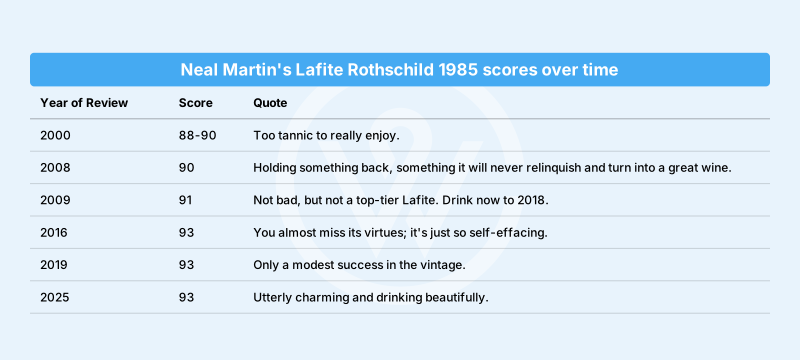
Unlike most consumer goods that depreciate in value the moment they are purchased, investment-grade wine is a living asset that evolves and improves over time. This is a unique feature to wine and the improvement can be dramatic, as seen in the table below which illustrates Vinous’ Neal Martin Lafite Rothschild 1985 score evolution over time.

Neal Martin's Lafite Rothschild 1985 scores over time

Not only do fine wines improve over time, they also become scarcer. Every bottle drunk reduces the global supply. For a vintage to gain value, it must be able to survive several decades in a cellar. Without this longevity, a wine is a simple consumption purchase rather than a potential investment.

The relationship between age and value is often non-linear. A wine may trade at its release price for several years before hitting a “drinking window.” Once critics confirm a vintage is reaching its peak, demand and pricing often surges and consumption increases. This phase of the lifecycle is where the most significant returns are frequently realised.

What happens when wine ages?

Fine wine is essentially a slow-motion chemistry set. Even when fermentation has ended, the wine matures through constant slow changes that dictate its long-term investment value.

Key transformations include:

  • Micro-oxygenation: Trace amounts of air enter through the cork over decades. This controlled oxidation transforms simple primary fruit into complex tertiary aromas such as leather, tobacco, or forest floor.
  • Polymerisation: Harsh tannin molecules link together to form long chains. These feel silkier on the tongue and eventually precipitate as sediment, naturally refining the wine’s texture and mouthfeel.
  • Esterification: Acids and alcohols react to create esters. This chemical evolution develops the “bouquet,” adding tertiary layers of spice, truffle, and earth that are absent in younger vintages.
  • Anthocyanin shift: The chemicals giving wine its colours change their structure. Red wines fade from vibrant purple to garnet or brick, while white wines darken toward deep gold or amber.

A consistent, cool cellar ensures these reactions happen gradually. Rushing the process with heat prevents complexity from developing. These molecular shifts are what transform a standard wine into a rare, high-value asset.

Wine vs whisky: The biological divide

A common point of confusion for new collectors is the difference between wine and spirits like whisky. Whisky is a distilled spirit with a high alcohol content that effectively halts biological change. Once a whisky is bottled, its flavour profile remains static.

Wine is a living product. It continues to interact with trace amounts of oxygen through the cork and undergoes complex chemical reactions between its acids, tannins, and alcohols. These reactions are what create the sought-after aromas of leather, earth, and dried spices. A bottle of Lafite Rothschild from the 1980s tastes vastly different today than it did in 1990; an examination of scores over time shows this very clearly.

This dynamic nature is why storage conditions are so critical for wine. While a bottle of Macallan can sit on a shelf for years, a First Growth Bordeaux requires a temperature-controlled environment. The risk of spoilage is the price an investor pays for the potential of improvement.

Fortified wines: The indestructible assets

Fortified wines occupy a unique space in the wine world. Unlike “normal” fine wines, which typically range from 12% to 14.5% alcohol, fortified wines are bolstered with grape spirit. This process raises the alcohol level to between 17% and 22%..

This addition of spirit serves two purposes: it stops fermentation early, leaving residual sugar, and acts as a powerful preservative. This is why fortified wines can survive for centuries. While a dry red wine might reach its peak at 40 years, a top-tier Vintage Port or Madeira can still be improving at 100 years.

The winemaking process is also distinct. In many cases, these wines are intentionally exposed to heat or oxygen during production to stabilise them. This pre-ageing makes them incredibly resilient once they are in the bottle.

Long-lived Port

Port is perhaps the most famous fortified wine. Vintage Port is only produced in years of exceptional quality, known as a “declaration.” These wines are designed to be cellared for at least 20 to 50 years before they show their true potential.

The structure of Port comes from its intense tannins and high sugar content. Over time, the aggressive spirit integrates with the fruit, creating a velvet-like texture. Examples of legendary long-lived Ports include:

  • Taylor’s Vintage Port (notably the 1945 and 1992 vintages).
  • Graham’s The Stone Terraces.
  • Quinta do Noval Nacional.

These wines are often considered the ultimate inheritance assets. They are frequently purchased to mark the birth of a child, with the intention of being opened many decades later. Their survival rate is higher than almost any other wine style because they are more robust: so long as the cork remains intact, they are likely to retain their quality.

Sherry with extraordinary ageing potential

While much of the Sherry market is focused on fresh styles, wines like Oloroso, Palo Cortado, and Amontillado have extraordinary ageing potential. The best examples come from the “VOS” (Very Old Sherry) and “VORS” (Very Old Rare Sherry) categories.

These wines have already spent an average of 20 or 30 years ageing in a solera system before bottling. Because they have been intentionally exposed to oxygen for decades, they are virtually immune to further oxidation in the bottle. They offer some of the most complex aromatic profiles in the world, featuring roasted nuts, saline notes, and dried citrus.

Collectible examples include:

  • Gonzalez Byass “Matusalem” Oloroso
  • Valdespino “Coliseo” Palo Cortado
  • Tradición VORS Amontillado

Bordeaux: The global benchmark

Bordeaux is the foundational region for wine investment. Its primary grape, Cabernet Sauvignon, is naturally high in tannins and acidity which are the building blocks of its longevity. As anyone who has attended En Primeur tastings can attest, the structure of a young Bordeaux can be quite harsh, but time softens these elements into a harmonious whole.

The First Growths, such as Latour and Mouton Rothschild, are famous for their ability to withstand long ageing. Even in “off” vintages, the technical precision of these estates ensures a long life.

Notable examples of long-lived Bordeaux:

  • Chateau Latour 1961 
  • Chateau Haut-Brion 1989
  • Chateau Montrose 1990 

The elegance of aged Burgundy

Burgundy offers a different ageing profile compared to Bordeaux because Pinot Noir is a thinner-skinned grape with lower tannin levels. Longevity in Burgundy comes from the perfect balance of acidity and the incredible concentration of fruit found in Grand Cru sites.

While a Bordeaux might be powerful, an aged Burgundy is ethereal. The transition from fresh raspberry to truffle and forest floor flavors is one of the most celebrated experiences in fine wine. However, Burgundy can be more temperamental in the cellar, making provenance and storage even more critical.

Examples of iconic ageing Burgundy:

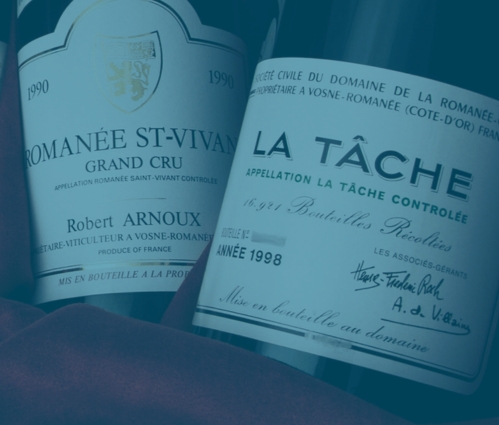
  • Domaine de la Romanee-Conti (DRC) La Tache
  • Domaine Armand Rousseau Chambertin
  • Domaine Leflaive Montrachet 

Piedmont: Italy’s answer to Burgundy

Like Burgundy, Piedmont focuses on single-vineyard sites and a single grape: Nebbiolo. Nebbiolo is an unusual variety that looks light in the glass but possesses massive tannins and high acidity. Historically young Barolo and Barbaresco were almost impenetrable. It was only in recent years that Piedmont winemakers would declare that their wines could be enjoyed in less than 30 years.

Still, these wines require time to reveal their beauty. A classic Barolo often needs ten to 15 years to become approachable. The best vintages from top producers like Giacomo Conterno or Bruno Giacosa can easily last for half a century.

Examples of long-lived Piedmont:

  • Giacomo Conterno Barolo Riserva Monfortino
  • Bruno Giacosa Barbaresco Santo Stefano
  • Gaja Barbaresco

Tuscany: The rise of the Super Tuscans

Tuscany has two main pillars, both of which can craft long-lived wines: Brunello di Montalcino and the Super Tuscans. Brunello is made from 100% Sangiovese and is legally required to undergo extensive ageing before release. The structure of top Brunello allows it to evolve gracefully for 30 years or more.

Super Tuscans are almost defined by their incorporation of the international varieties brought to fame by Bordeaux: Cabernet Sauvignon and Merlot. These wines were designed to compete on the global stage and have proven their ability to cellar. Sassicaia and Tignanello are the primary examples that investors look for but there are many others that will reward cellaring.

Key Tuscan ageing stars:

  • Biondi-Santi Brunello di Montalcino Riserva
  • Tenuta San Guido Sassicaia
  • Masseto 

The New World: USA and South America

The United States, particularly Napa Valley, has established itself as a producer of long-lived Cabernet Sauvignon. Estates like Ridge Vineyards, Stags Leap Wine Cellars and Heitz have bottles from the 1960s and 1970s that are still drinking beautifully today as evidenced by ongoing re-tastings of wines from the 1976 Judgment of Paris. While the cult wines of Napa are frequently approachable in their youth they are also built for long-term cellaring.

In South America, the focus is on high-altitude sites that preserve acidity. Argentina’s Malbec and Chile’s Cabernet blends have shown surprising resilience. Producers are now making wines with more restrained oak and higher acidity to ensure they age as well as their European counterparts.

Examples of New World longevity:

  • Ridge Monte Bello (California)
  • Screaming Eagle Cabernet Sauvignon (California)
  • Catena Zapata Adrianna Vineyard (Argentina)
  • Seña (Chile)

South Africa and Australia

South Africa has a long history of sweet wine production, but its red blends from Stellenbosch are now proving their mettle. The Cabernet-based wines from Kanonkop are known for their ability to age for several decades and will often outlast their peers from much more expensive regions.

Australia is home to some of the oldest vines in the world. For instance, the grandfather vines at Henschke were planted in the 1860s and vintages from the 1950s have performed well at recent tastings. Penfolds Grange is also well known for its longevity: a multi-regional Shiraz blend that is designed to be tucked away for 30 to 50 years. The power and concentration of Australian Shiraz provide a sturdy foundation for ageing.

Notable examples:

  • Henschke Hill of Grace (Eden Valley)
  • Penfolds Grange (South Australia)
  • Kanonkop Paul Sauer (Stellenbosch)

Dry white wines: Longevity and evolution

Top-tier still whites also possess a capacity to be aged, even if equivalent quality red wines are generally better able to accommodate multiple decades in the cellar. Longevity in this category is primarily driven by high natural acidity and the fruit concentration found in prestigious vineyard sites. Over time, as colour darkens these wines move away from fresh citrus notes, gaining complex tertiary aromas such as honey, toasted nuts, dried flowers and even cheese as they reach extremely old age.

Notable examples of ageable still whites can hail from many regions, but old world dry whites from Burgundy, Bordeaux, Alsace, the German regions in the Rhine and Mosel valleys are arguably best known for their capacity to age with grace. Examples include:

  • Domaine Joseph Drouhin Montrachet Marquis de Laguiche Grand Cru (Burgundy)
  • Domaine de Chevalier Blanc (Bordeaux)
  • Keller G-Max Riesling Trocken (Rheinhessen)
  • Trimbach Riesling Clos Sainte Hune (Alsace)

Can sparkling wine age?

While non-vintage Champagne is ready to drink as soon as it’s available, Vintage Champagne has an undeniable ageing potential. The high acidity and the presence of carbon dioxide act as preservatives that allow ageing to occur over many decades.

As Champagne ages, the bubbles become finer and begin to fade, while the flavour profile shifts from fresh citrus to brioche, honey, and roasted nuts. Some collectors specifically seek late-disgorged bottles that have spent extra time on their lees for even more complexity. Producers are happy to meet that demand: Dom Perignon recently added P3 to their line, allowing a third release window for the best vintages offering vintages from the 1960s and 1970s and 1980s to the market almost 50 years after their initial offering.

Examples of long-lived Champagne:

  • Dom Perignon
  • Krug Vintage
  • Salon Le Mesnil

Underwater ageing: A new frontier

One of the most intriguing developments in recent years is the practice of ageing wine underwater. This trend was sparked by the discovery of 170-year-old Champagne in a shipwreck in the Baltic Sea. The bottles were found to be in remarkable condition, the theory being that constant temperature, darkness, pressure and the lack of vibration fundamentally slow down the ageing process.

Producers are now intentionally submerging cages of wine in the ocean. Notable projects include:

  • Veuve Clicquot’s “Cellar in the Sea”
  • Leclerc’s Abyss
  • Drappier’s Immersion
  • Mira Winery (Napa Valley)
  • Crusoe Treasure (Spain)

The golden finish: Long-lived sweet wines

Sweet wines are the true champions of the cellar. The combination of high sugar and high acidity creates a nearly immortal product of which Sauternes is the most famous example. Here botrytis, a fungal infestation also known as “noble rot”, concentrates the sugars and acids to an extreme degree.

A top-tier Sauternes like Chateau d’Yquem can easily age for a century. Over time, the wine turns from bright gold to a deep amber colour and the flavours evolve from tropical fruit to complex notes of creme brulee, dried fruits, marzipan and nutmeg.

Other sweet wine icons:

  • Suduiraut (Sauternes)
  • Egon Müller Scharzhofberger Riesling TBA (Germany)
  • Royal Tokaji 6 Puttonyos (Hungary)
  • Klein Constantia Vin de Constance (South Africa)

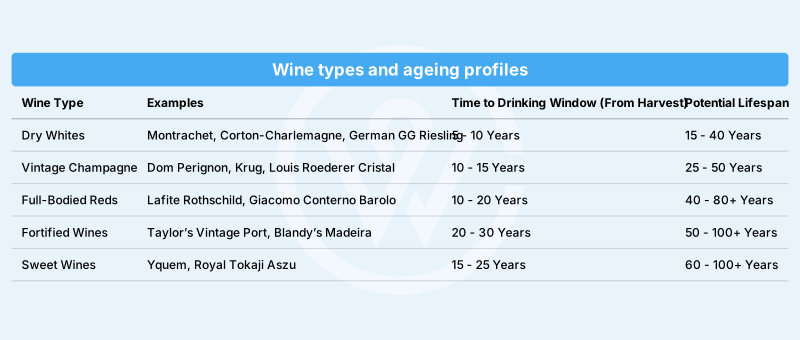
Wine types and ageing profiles

FAQ

How do I know if a wine has ageing potential? 

Look for a balance of high acidity, strong tannin structure (for reds), and high fruit concentration. Reviews from reputable critics often include a suggested “drinking window” to help guide your decision.

What is the best temperature for ageing wine? 

A constant temperature of around 12 to 14 degrees Celsius is ideal for long-term development. Significant fluctuations in temperature can cause the wine to expand and contract, potentially damaging the cork seal.

Does expensive wine always age better than affordable bottles? 

Not necessarily. While most investment-grade wines are expensive because of their longevity, some high-priced wines are made for early consumption. Always check the specific style and vintage before deciding to cellar a bottle.

Can I age white wine as long as red wine? 

Most white wines are intended for early drinking, but high-acid whites like Riesling and Chardonnay from top sites can age for decades. Sweet white wines like Sauternes have the longest potential of all unfortified wine styles.

WineCap’s independent market analysis showcases the value of portfolio diversification and the stability offered by investing in wine. Speak to one of our wine investment experts and start building your portfolio. Schedule your free consultation today.
Categories
Learn

Is wine investing regulated?

  • Wine investment remains outside the direct jurisdiction of the Financial Conduct Authority in the United Kingdom, as physical wine is classified as a tangible asset rather than a financial security.
  • The Alcohol Wholesaler Registration Scheme and HMRC bonded warehouse regulations provide a rigorous framework for provenance and tax efficiency, ensuring the legitimacy of the secondary market.
  • Profits from the sale of fine wine are frequently exempt from Capital Gains Tax due to its classification as a wasting asset, making it a highly attractive component of a diversified portfolio.

The basics of wine investment

Investing in fine wine involves the acquisition of high-quality bottles with the intent of selling them at a higher price as they mature and become scarce. Unlike high street wine intended for immediate consumption, investment-grade wine possesses the ability to improve over decades. 

This category is dominated by a small percentage of global production, primarily hailing from storied regions such as:

  • Bordeaux 
  • Burgundy
  • Champagne
  • Tuscany

The primary drivers of value in this market are critical acclaim, brand heritage, and the quality of the vintage. When a renowned critic awards a wine a high score, global demand can surge. As bottles from that specific vintage are opened and consumed, the remaining supply dwindles, creating a natural upward pressure on price. 

This is the fundamental mechanic of the wine market: it is an asset that is consumed and  disappears over time.

Investors typically choose between purchasing individual cases or building a managed portfolio. The focus is on the blue-chip estates: 

  • In Bordeaux, this includes the First Growths like Château Lafite Rothschild and Château Mouton Rothschild. 
  • In Burgundy, the focus shifts to small production levels from producers such as Domaine de la Romanée-Conti and Domaine Leroy. 
  • In Italy, the market has expanded to include high-performing Italians like Barolo and the Super Tuscans.
  • In Champagne, we see the most recognisable brands in wine with prestige cuvees such as Dom Perignon, Louis Roederer Cristal and Taittinger Comtes de Champagne dominating.  

These wines are not merely luxury Veblen goods; they are liquid assets with a historical track record of outperforming traditional equities especially during periods of market volatility.

Current regulations surrounding wine investment

The regulatory environment for wine investment in the United Kingdom is distinct from that of stocks, bonds, or insurance products. The most significant distinction is that the Financial Conduct Authority does not regulate the sale or management of physical wine portfolios. 

Because wine is a tangible, moveable property, it is treated as a commodity. This lack of FCA oversight means that investors do not have recourse to the Financial Services Compensation Scheme or the Financial Ombudsman Service if a wine investment does not perform as expected.

However, the trade itself is far from a free-for-all. 

To operate legally within the UK, wine merchants and investment firms must adhere to strict HMRC requirements. One of the most vital is the Alcohol Wholesaler Registration Scheme. This scheme requires any business trading in wholesale alcohol to be vetted and approved by HMRC. 

Investors should always verify that their chosen partner holds a valid AWRS number. This tells you that the business has passed a fit and proper test, providing a layer of security regarding the legitimacy of the merchant.

Distance selling regulations also play a role. When wine is purchased online or over the phone, the Consumer Rights Act 2015 applies. These rules govern the right to clear information, states that products must be fit for purpose, and as described.

Collective Investment Schemes represent a different regulatory tier. If an investment firm pools the capital of multiple investors to buy a shared interest in a large cellar, this may be classified as a CIS. 

In such instances, the manager of the scheme must be authorised and regulated by the FCA. Investors must distinguish between owning specific, identifiable cases of wine in their own name and owning “units” in a fund. The former is a direct commodity investment, while the latter is a regulated financial activity with its own advantages and disadvantages

Comparing wine investment regulations across different regions

The UK is widely considered the global hub for wine investment, largely due to its sophisticated bonded warehouse system. In the UK, wine can be stored “In Bond,” meaning VAT and excise duty are suspended as long as the wine remains in an HMRC-approved facility. This system is highly regulated and provides an impeccable paper trail for provenance.

This is why most wine investment companies store their wine in the UK regardless of the country they operate in.

In the European Union, regulation is often tied to the production side through the Protected Designation of Origin system. These laws dictate exactly how a wine can be made, which grapes can be used, and the maximum yields allowed. 

While this is a form of agricultural regulation, it serves investors by strictly limiting supply. For example, the DOCG rules in Barolo ensure that the “King of Wines” cannot be mass-produced, thereby protecting its investment value. 

The United States presents a more fragmented regulatory picture due to the three-tier system established after Prohibition. This system requires a strict separation between producers, wholesalers, and retailers. 

Regulation is handled both at the federal level by the Alcohol and Tobacco Tax and Trade Bureau and at the state level. 

For an investor, the US market can be complex because laws regarding the shipping of alcohol across state lines vary wildly. Some states allow direct-to-consumer shipping from out-of-state retailers, while others strictly forbid it. This can impact the liquidity of an investment, as the pool of potential buyers may be restricted by geography and explains why US based wine investment companies still tend to store their wines in the UK.

The risks and benefits of investing in wine

The most lauded benefit of wine investment is its role as a diversifier. Fine wine historically shows a low correlation with the FTSE 100 or the S&P 500. When the stock market suffers a downturn, wine prices tend to remain stable or even increase, as collectors seek hard assets to preserve wealth.

Tax efficiency is another major advantage for UK residents. HMRC typically classifies wine as a “wasting asset.” which means it has a predictable useful life of less than fifty years. 

Because wine is a living product that eventually spoils, it often falls into this category. Consequently, profits made from the sale of wine are usually exempt from Capital Gains Tax. 

Furthermore, if wine is held in bond, the investor avoids paying the 20 per cent VAT and the alcohol duty that would be due if they took physical delivery.

The risks include:

  • Liquidity: you cannot sell a case of Petrus as quickly as you can sell a share in Apple. The process of finding a buyer and executing a trade can take weeks. 
  • Physical damage: Wine is sensitive to temperature, light, and vibration. Without professional storage, the value of the investment can vanish. 
  • Market trends can be fickle: A region that is fashionable today may not hold its value as a long-term investment compared to the established stalwarts.

The importance of authenticity and provenance

In a market where a single bottle can command thousands of pounds, the threat of counterfeiting is a reality although less significant than in the past. For the modern investor, protecting against this risk is a matter of rigorous due diligence regarding provenance.

Provenance is the documented history of a bottle’s ownership and storage conditions. The gold standard for provenance is bonded status. When wine stays within the bonded system, it is never handled by the public, and its journey from the vineyard to the warehouse is tracked and verified. This bonded status is what future buyers pay a premium for.

Authenticity is also being bolstered by technology. Many top estates now use Prooftag seals, which provide a unique digital thumbprint for every bottle. Others are embedding microchips in labels or using laser-etched serial numbers on the glass. When buying through a reputable merchant, the investor relies on the expert inspection of the house specialists who check for correct cork markings, glass weight, and label typography. 

The clear history that in bond status grants is what makes a wine valuable as an investment.

Future trends in wine regulation 

The future of wine investment regulation and trading is likely to be defined by increased transparency and digital integration. As global authorities tighten anti-money laundering regulations, the wine trade will see more stringent “Know Your Customer” requirements. This will likely move the trade further away from the opaque reputation of the past and into a more standardised financial environment.

Blockchain technology is another emerging trend. By creating a digital twin of a physical bottle on a blockchain, merchants can provide an immutable record of ownership and provenance. This could allow for the “tokenisation” of wine, where investors buy shares in a specific high-value barrel or cellar. While this is an interesting frontier, it replicates existing assurances implicit in bonded status and in practical terms may actually limit liquidity.

Sustainability is also moving from a niche interest to a value driver. Investors as well as drinkers are increasingly looking for assets that not only appreciate in value but also adhere to ethical production standards, suggesting that the “Green Revolution” will soon have a permanent seat at the table of the fine wine trade.

FAQ

Is my wine investment protected by the FCA?

No, physical wine is not a regulated financial product in the UK. You should only trade with merchants who are registered under the Alcohol Wholesaler Registration Scheme to ensure they meet HMRC’s standards.

Do I have to pay tax on my wine profits?

In the UK, wine is generally regarded as a “wasting asset” by HMRC, which means it is usually exempt from Capital Gains Tax. Additionally, if you keep your wine in a bonded warehouse, you do not have to pay VAT or excise duty. You should consult a tax professional for advice specific to your circumstances.

Why is “In Bond” storage so important for regulation?

Storing wine in an HMRC-approved bonded warehouse ensures the wine is kept in perfect conditions and provides assurance of its provenance. It also allows for the suspension of taxes, which improves the liquidity and resale value of the asset.

What are the rules regarding collective wine investments?

If you are investing in a fund where capital is pooled and the assets are managed by a third party, this may be considered a Collective Investment Scheme. Under these circumstances, the firm managing the fund must be authorised and regulated by the FCA. Always clarify whether you own the physical bottles or a share in a scheme.

WineCap’s independent market analysis showcases the value of portfolio diversification and the stability offered by investing in wine. Speak to one of our wine investment experts and start building your portfolio. Schedule your free consultation today.
Categories
News

Is fine wine investment impacted by wealth exodus?

  • As wealth moves between generations and jurisdictions, investors are prioritising assets with universal value and “borderless” appeal.
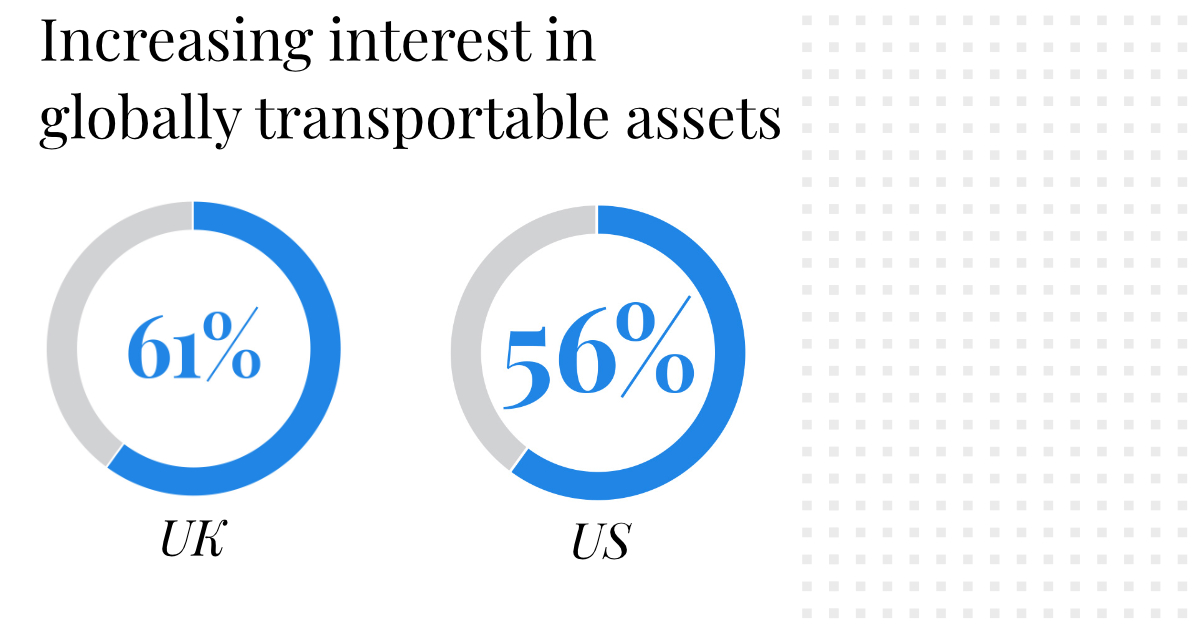
  • About 60% of global investors today show increased interest in globally transportable assets due to political and tax developments.
  • Fine wine can serve as the ultimate “borderless” asset, offering stability and low correlation to mainstream markets.

As the global population of high-net-worth individuals (HNWIs) expands, we are witnessing the cusp of the largest intergenerational wealth transfer in history – all set against a backdrop of profound instability. While private wealth continues to grow, the economic situation of some major countries is weakening, and, consequently, the world is witnessing an unrivalled migration of HNWIs.

This multifaceted shift of wealth is taking place in an unstable global climate, where governments are continually redefining the “social contract” through major reforms and the overhaul of domestic tax regimes. This quest for stability and the safeguarding of assets is prompting a mass relocation of HNWIs that is reshaping traditional “capitals of wealth.”

Findings from the 2026 WineCap Wealth Reports – conducted among hundreds of wealth managers and financial advisors in the UK and US – reveal how this exodus is fundamentally altering the modern investment portfolio. As HNWIs move across borders to escape fiscal tightening and political volatility, fine wine has emerged as a sophisticated, “borderless” financial instrument that could well fit the mobile elite.

Why is wealth moving?

The current exodus is driven by a “perfect storm” of factors that vary by region but share a common goal: capital preservation.

  • In the UK: The term “Wexit” (Wealth Exit) has gained traction following the abolition of the “non-dom” tax status and significant reforms to inheritance tax. Wealthy individuals who once viewed London as a permanent safe haven are now looking toward more tax-favourable jurisdictions.
  • In the US: Movement is driven by a desire to diversify away from domestic political volatility and a weakening reliance on the US Dollar as a singular store of value.
  • Globally: Inflation and high interest rates have made traditional “paper” assets feel increasingly fragile, prompting a flight to tangible quality holdings.

Defining the “borderless” asset

As investors become more mobile, they require assets that share that mobility. A borderless asset is a financial instrument that maintains its value and liquidity regardless of geographical location. Unlike real estate, which is physically anchored to a single jurisdiction, fine wine is recognised and tradable globally.

Fine wine has solidified its role in this exodus due to four key characteristics:

  1. Tangible value: A physical luxury asset with intrinsic worth.
  2. Low correlation to mainstream markets: It operates independently of the “noise” of equity and bond market volatility.
  3. Inherent scarcity: Consumption leads to a permanent reduction in supply. As demand remains steady or increases, prices rise.
  4. Fiscal stability: Fine wine acts as a defensive anchor during periods of high inflation.

Demand for portable asset

A defining trend of 2026 is demand for globally transportable assets. For an investor who is  relocating, an asset that can be stored in a bonded warehouse in one country and sold in another – without the friction of traditional capital flight – is invaluable.

  • UK Context (“Wexit”): With 95% of UK advisors citing fine wine’s status as a “wasting asset” (generally exempt from Capital Gains Tax), it has become a primary tool for “Wexit” planning. Sixty-one per cent of UK wealth managers report that their clients are now explicitly prioritising investments with high portability.
  • US Context: In the US, where 56% of respondents noted a similar priority for mobility, fine wine has evolved from a simple diversifier into a strategic, borderless tool for navigating global wealth transfers.

Since fine wine is not anchored to any single jurisdiction, it allows the modern investor to maintain wealth across borders while avoiding the risks associated with fixed-location assets.

Fine wine’s universal value and fiscal efficiency

The appeal of fine wine is further bolstered by its intrinsic value, which transcends currency fluctuations and regional economic stressors.

  • Currency neutrality: In the US, 98% of wealth managers noted that fine wine’s lack of a direct peg to the USD plays a significant role in its appeal as money moves globally.
  • Tax efficiency: In the UK, 95% of advisors cite its status as a “wasting asset” – which generally exempts it from Capital Gains Tax (CGT) – as a primary driver for its inclusion in sophisticated portfolios.
  • Market maturity: Trading fine wine has become easier than ever before for both buyers and sellers; half of global investors now recognise the sector’s improved liquidity within a well-established, global secondary market.

Deepening capital commitment

The convergence of portability, universal value, and defensive resilience has catalysed a transformation in how capital is committed to fine wine. No longer viewed as a peripheral “passion project” or a speculative hobby, fine wine has solidified its role as a viable alternative asset. This shift can at least partially be attributed to the wealth exodus, as borderless alternatives can offer both stability and growth.

The 2026 WineCap Wealth Reports quantify this deepening commitment, revealing a significant jump in portfolio exposure compared to just twelve months prior. Approximately half of all surveyed wealth managers in the US and nearly half in the UK now report that their clients allocate between 11-20% of their total portfolios to fine wine. This “standard” allocation demonstrates that wine is now being treated with the same strategic weight as traditional alternative mainstays like private equity or hedge funds.

Perhaps the most telling indicator of this trend is the emergence of the “heavyweight” segment – investors who view fine wine as a primary vehicle for wealth preservation during transit. Over a third of respondents in both the UK and US noted that their most committed clients now dedicate between 21-30% of their total wealth to the asset class. To put this in perspective, this represents a tectonic shift in investor behaviour: in 2025, a negligible portion of the market (less than 2% across both regions) held allocations exceeding 20%. 

This deepening commitment is underpinned by growing conviction among the professional advisor community. With a record-breaking 97% of wealth managers forecasting a further increase in demand throughout 2026, the trajectory is clear. 

Fine wine has moved beyond its status as a simple diversifier; it has become the preeminent collectible for a generation of investors who want to preserve, grow, and – most importantly – move their wealth across any jurisdiction on the global map.

WineCap’s independent market analysis showcases the value of portfolio diversification and the stability offered by investing in wine. Speak to one of our wine investment experts and start building your portfolio. Schedule your free consultation today.
Categories
News

Fine wine market starts 2026 on firmer footing

  • The fine wine market has closed 2025 on a positive note, with prices rising for four consecutive months.
  • Despite improving momentum, fine wine prices remain close to five-year lows, creating buying opportunities. 
  • Market broadening is a defining feature of rising markets, and 2026 is likely to mark the early stages of this transition.

After three years defined by correction, caution and recalibration, the fine wine market enters 2026 in a notably stronger position. Prices have stabilised, liquidity has improved, and demand is beginning to broaden – all signs that the market has moved beyond its most challenging phase and is laying the foundations for a sustainable recovery.

While it would be premature to describe the current environment as a full rebound, the early months of 2026 mark the firmest starting point the fine wine market has seen since 2022. For investors with a medium- to long-term horizon, this combination of stabilising prices and still-attractive valuations presents one of the most compelling opportunity windows in several years.

A firmer start to the year than at any point in the past three years

In our final article of 2025, we examined the performance of Bordeaux, Burgundy and Champagne – the three most important fine wine regions for investors – and highlighted pockets of growth across each. Crucially, that momentum has not faded with the turn of the calendar year.

Fine wine prices have now risen for four consecutive months, closing 2025 on a positive note and carrying that strength into early 2026. This sustained improvement matters. Rather than a short-term technical bounce, it signals a market that is beginning to find equilibrium after a prolonged period of repricing.

Key indicators suggest the market is now operating on firmer footing:

  • Prices have stabilised after reaching five-year lows
  • Liquidity has improved across leading regions and producers
  • Buyers are returning with greater confidence and selectivity
  • Multiple regions are now participating in early recovery trends

Taken together, these developments point to a healthier, more balanced fine wine market entering the new year.

Buying opportunities remain as prices hover near five-year lows

Despite improving momentum, fine wine prices remain close to five-year lows across many regions and vintages. Historically, this late-stage downturn phase – when prices stabilise before rising meaningfully – has offered some of the most attractive entry points for long-term investors.

Importantly, recovery does not begin with uniformly rising prices. Instead, it starts with price consolidation, followed by gradual gains concentrated in the most liquid and well-recognised segments of the market. That is precisely the pattern emerging today.

For investors, this creates a rare alignment of conditions:

  • Valuations remain compelling
  • Downside risk has diminished compared to previous years
  • Demand is rising without speculative excess
  • Portfolio construction can prioritise quality and value

Rather than signalling missed opportunity, the current environment suggests that disciplined, data-driven allocation remains well-timed.

Demand is rising and signs of recovery are becoming clearer

Demand has strengthened steadily since the second half of 2025, with improving sentiment evident across both private collectors and wealth managers. While activity remains selective, confidence has clearly returned.

Several regions have already begun to turn:

  • Champagne has benefited from strong global recognition, accessible entry points and consistent liquidity
  • Bordeaux has stabilised, particularly in older vintages and First and Second Growths
  • Burgundy continues to demonstrate resilience driven by scarcity and long-term demand
  • Tuscany and the Rhône have seen renewed interest as investors look beyond the most concentrated names

This multi-regional participation is an important signal. Recoveries that are confined to a single region tend to be fragile; recoveries that broaden tend to endure.

Momentum from late 2025 has been sustained

One of the most encouraging developments is the continuity of momentum. This matters for two reasons. First, it suggests that buyers are responding to fundamentals rather than short-term catalysts. Second, it indicates that confidence is building gradually, allowing the market to recover in a measured, sustainable way.

Sustained momentum also reinforces the importance of patience. Fine wine recoveries rarely follow sharp, V-shaped trajectories. Instead, they evolve through phases of stabilisation, selective appreciation and eventual broadening.

The case for market broadening in 2026

Market broadening is a defining feature of rising markets, and 2026 is likely to mark the early stages of this transition.

During periods of falling or uncertain prices, demand tends to narrow. Investors concentrate on the most established names, mature vintages and highest-liquidity wines. This was a defining theme throughout much of 2024 and 2025 global wine investment trends.

As confidence improves, the opposite dynamic emerges:

  • Buyers begin to search for relative value
  • Secondary regions and vintages re-enter consideration
  • Portfolios become more diversified
  • Opportunity expands beyond a small group of blue-chip wines

In 2026, this process is likely to unfold gradually, with selective broadening, supported by brand strength and the search for value.

Tariffs and the macro backdrop: a potential catalyst

Another factor shaping early 2026 sentiment is the evolving global trade environment. Tariffs remain under review by the US Supreme Court after lower courts deemed them illegal. While outcomes remain uncertain, the broader implications extend well beyond fine wine.

Should tariff pressures ease, the effects could ripple across global markets:

  • Improved trade clarity
  • Increased capital availability
  • Stronger investor confidence
  • Renewed appetite for alternative assets

In periods when liquidity improves and uncertainty recedes, portfolio diversification tends to increase. As a top-performing collectible and passion investment, historically, fine wine has benefited from such shifts. 

Fine wine remains the most in-demand collectible

According to the WineCap 2025 Wealth Reports, fine wine is the most in-demand collectible asset among wealth managers and financial advisers, outperforming art, watches, whisky and luxury handbags.

Several factors continue to underpin this appeal:

  • Proven long-term performance
  • Increasing market transparency
  • Global liquidity and established secondary markets
  • Growing acceptance within diversified portfolios

Fine wine’s evolution from passion asset to mainstream alternative investment has been gradual, but it is now firmly established.

Looking ahead: The 2026 Wealth Report

As the market enters this next phase, attention will increasingly turn to how wealth managers and financial advisers are adapting their allocation strategies. WineCap’s upcoming 2026 Wealth Report will examine these shifts in detail, exploring how fine wine is being integrated into portfolios amid changing economic conditions.

Early indications suggest that fine wine’s role as a diversification tool is strengthening, supported by improved data access, transparency and liquidity.

A healthier starting point for 2026

The fine wine market enters 2026 at a point where prices have stabilised, demand is rising, and opportunity is broadening. For investors, this marks a healthier phase of the cycle. After three challenging years, the market is finally positioned to move forward on firmer footing – and for those willing to act selectively, the early stages of recovery often prove the most rewarding.

WineCap’s independent market analysis showcases the value of portfolio diversification and the stability offered by investing in wine. Speak to one of our wine investment experts and start building your portfolio. Schedule your free consultation today.
Categories
Learn

Investing in Fine Wine: What do You Need to Consider?

In this article, we outline the key things that you need to consider when investing in fine wine. Fine wine investment experts like the team at WineCap can help you make informed decisions relating to the following factors.

Is investing in fine wine a good idea?

Investing in fine wine is a proven way to strengthen and diversify your portfolio. Fine wine is a stable, low-risk investment thanks to its tangibility and low volatility. As an alternative asset, fine wine has shown very little correlation to mainstream markets. When traditional investments like bonds and equities fall, fine wine tends to hold steady. Moreover, fine wine has been one of the best-performing assets over the last 30 years, delivering consistent returns even in times of uncertainty.

How much should you invest in wine?

Fine wines are a luxury commodity, which means they can sometimes command high prices. Most people tend to start off in the vicinity of £5,000-£10,000 to make their investments worthwhile. However, there are a range of options depending on the region and the producer, how much of the wine is made and the wines’ age. Setting your budget before you start will help you narrow your focus and ensure you have exposure to the wines that suit your investment goals. This figure may change as time goes on, but it’s good to have a starting point.

Which wines should you invest in?

Once you have set your budget and determined your investment goals, you need to decide which wines you want. Factors such as region, producer, grape variety and critical acclaim will affect their final value.

A wine investment expert will help you find the appropriate wines for your investment portfolio. WineCap has formed long-lasting relationships over the past decade with négociants, wholesalers and private collectors. This means that we have access to some of the world’s most prized wines. What’s more, our unique proprietary technology analyses over 400,000 wine prices a day to identify the right, undervalued wines to buy and sell across the global market at the right time and price.

How will you store your wines?

Investment-grade wine should be stored correctly to help protect its value. For long-term storage, this means holding the wine in a cool, dark place with minimal disturbance. Bonded storage (a secure location approved by the HMRC that stores items that haven’t paid VAT or duty tax) will give you the peace of mind that your wine is being kept in the right conditions. World-class care ensures that when you come to sell, your wine’s provenance will quickly secure maximum prices.

Ready to embark on your wine investment journey? Schedule your free consultation with one of WineCap’s investment experts to find out the next steps.

Categories
Learn

Why fine wine is attracting more wine investors worldwide

There is no question that global interest in fine wine has grown significantly in recent years. What was once seen primarily as a luxury collectible is now increasingly recognised as a serious alternative investment, attracting wine investors from around the world.

As traditional markets become more volatile and complex, many investors are looking beyond equities and bonds in search of assets that offer stability, diversification, and long-term value. Fine wine has emerged as a compelling solution, combining tangible ownership with historically resilient performance.

In this article, we explore why fine wine appeals to investors, how it differs from traditional investment methods, and how newcomers can begin building a wine investment portfolio with confidence.

Fine wine as an alternative investment

An alternative investment refers to any asset that sits outside traditional financial instruments such as stocks, bonds, or cash. Other examples include art, property, collectibles, and private equity.

Fine wine fits squarely into this category, offering investors a way to diversify their capital while reducing overall portfolio risk. Because alternative assets behave differently from mainstream financial markets, they can help smooth performance during periods of economic uncertainty.

Indeed, diversification is one of fine wine’s greatest strengths. Allocating capital across multiple asset classes – including wine – can protect long-term wealth while enhancing stability.

Low correlation with traditional markets

One of the most attractive qualities of fine wine investment is its low correlation with the stock market.

Unlike equities, quarterly earnings, interest rate decisions, or political headlines rarely move fine wine prices fast. Instead, the wine market predominantly operates on a simple supply-and-demand model:

  • Investment-grade producers release limited quantities each year

  • Bottles gradually disappear with consumption

  • Demand for top wines often increases as supply declines

This dynamic has historically supported steady price appreciation over the long term, making fine wine particularly appealing to investors seeking predictable growth rather than short-term speculation.

A tangible asset with real ownership

Fine wine is a tangible asset, meaning it is a physical product that investors can own outright.

This is a major psychological and practical advantage. Unlike shares or digital assets, fine wine exists independently of financial systems. You retain direct ownership and, in theory, can choose to enjoy the asset rather than sell it.

From a security perspective, tangible assets also offer peace of mind. Ownership is not tied to corporate performance, debt exposure, or counterparty risk – factors that often affect traditional investments.

Low volatility and stable price growth

Volatility measures how dramatically prices rise and fall over time. Stock markets are inherently volatile, with prices capable of shifting rapidly due to sentiment, news, or speculation.

Fine wine, by contrast, has historically demonstrated low volatility. Prices tend to move gradually, supported by scarcity, brand reputation, and long-established demand.

This stability is one of the key reasons why fine wine is a low-risk investment within the broader alternative investment space, particularly when part of a diversified portfolio.

Why fine wine appeals to long-term wine investors

Fine wine is not designed for short-term trading. Instead, it rewards patience.

Most investors adopt a long-term approach, allowing bottles to mature while market demand increases. Over time, this combination of ageing, scarcity, and reputation can lead to strong capital appreciation.

In many regions, fine wine may also offer tax advantages. For example, in the UK, wine is often considered a wasting asset, meaning it can be exempt from capital gains tax – though investors should always seek independent tax advice.

Storage, provenance, and professional management

Proper storage is essential to protecting the value of investment-grade wine.

Professional wine investors typically store their holdings in government-bonded storage facilities, which keep the wines under optimal temperature and humidity conditions. Bonded storage also preserves provenance, which is critical when it comes time to sell your wine.

Working with an established wine merchant or investment specialist ensures that wines are sourced correctly, stored securely, and insured appropriately – all essential components of successful wine investment.

How wine investors realise profits

Wine investors typically generate returns by selling their wines on the secondary market once demand has increased and supply has diminished.

Sales may take place through:

  • Private transactions

  • Specialist wine merchants

  • Trading platforms or auctions

The timing of a sale is strategic, often aligned with market cycles, critical acclaim, or increased global demand. Professional guidance can help investors decide when to hold and when to sell.

How to start as a wine investor

One of the most appealing aspects of fine wine investment is its accessibility. You do not need to be a financial expert or wine professional to start investing in wine.

For newcomers, working with an independent investment specialist can provide clarity, structure, and confidence. Expert guidance helps identify suitable regions, producers, and price points while avoiding common pitfalls.

At WineCap, we offer independent, data-driven advice tailored to long-term wine investors. Our team supports clients across sourcing, portfolio construction, bonded storage, and exit strategy, ensuring a transparent and professional investment journey.

Final thoughts: is fine wine a good investment?

Fine wine represents a rare combination of stability, diversification, and enjoyment. Its tangible nature, low volatility, and long-term growth potential make it an increasingly popular choice within the global investment landscape.

As with any asset, success depends on informed decision-making, proper storage, and a disciplined, long-term strategy. With the right approach, fine wine can play a valuable role in building and preserving wealth.

Learn more about fine wine investment and speak to one of our experts today. Schedule your free consultation with WineCap.