Categories
Quarterly-reports

Q1 2026 Fine Wine Report

In our first quarterly summary for the year, we look at how global geopolitical instability has affected demand for safe-haven assets and how fine wine is poised to benefit. We also examine the pricing strategy of recent releases through La Place de Bordeaux, and what this tells us about the state of the market and how it sets the tone for the upcoming En Primeur campaign. Beyond the news headlines, we deep dive into this quarter’s top performers – wines that have shown resilience and, in some cases, double-digit returns.  

Key findings: 

  • Geopolitical instability in the Middle East has driven a “flight to safety” among investors. As a tangible hedge against inflation and market volatility, fine wine is keenly poised.
  • New releases from Yquem, Latour, and Bollinger have combined high quality with keen pricing strategies that prioritise market liquidity.
  • Bordeaux accounted for 80% of the quarter’s top performers, led by Sauternes and Barsac.
  • A consistently increasing bid:offer ratio throughout Q1 suggests the secondary market has established a solid floor and is seeing defensive growth entering Q2.  
  • Landmark trade deals in India and Europe are redirecting global liquidity, creating a structural foundation for long-term demand growth in the East.
  • A new record-breaking auction result set by DRC 1945 at $812,500 highlighted the unprecedented value the market continues to place on rare, historic assets.

Executive summary

The first quarter of 2026 was a tale of two halves, beginning with a surge of renewed market optimism that quickly collided with a transformative geopolitical crisis. The year opened with the FTSE 100 hitting historic milestones and a “Goldilocks” cooling of inflation, but the upward trajectory of mainstream markets was abruptly severed by the outbreak of the war in Iran and the subsequent closure of the Strait of Hormuz. The conflict triggered an immediate and aggressive “flight to safety,” sending gold and the U.S. Dollar to premium levels, simultaneously forcing a dramatic repricing of global energy and supply chain risks. 

As markets continue to grapple with a destabilised Middle East and investors look to navigate heightened volatility, assets that offer both tangibility and independence from traditional market shocks like fine wine can be uniquely positioned to benefit.

According to our annual wealth management survey (full results to be released next week), 50% of US and 35% of UK respondents believe that global conflict actually helps fine wine perform during periods of market volatility in the sense that it highlights fine wine’s role as a psychological and financial refuge. Fine wine’s physical nature provides a sense of security that digital or equity-based assets cannot replicate in a climate of uncertainty. 

While fine wine operates on its own internal dynamics, the signs of a market recovery from within have been highly encouraging. The bid:offer ratio has continued to rise throughout the quarter, signalling increased demand and growing liquidity – both of which have underpinned price stability. As our report explores, while broader market indices remain steady, select high-performing labels have already registered double-digit returns this quarter.

Perhaps the most encouraging sign of optimism has been the sensible pricing of new releases. Vintages that offer clear relative value compared to back-catalogue stock are reinvigorating buyer appetite and restoring long-term trust. This disciplined approach to pricing sets a constructive tone for the upcoming Bordeaux En Primeur campaign – the defining event of Q2 – which we anticipate will be a critical barometer for the market’s direction in the months ahead.

What new wine releases tell us about the state of the market?

While the global economy faces external shocks, the fine wine market is providing its own internal “green shoots”. The narrative of the last six months has been one of adjustment and acceptance. We are seeing a concerted effort from major estates to meet the market where it is, rather than where they wish it to be.

This trend arguably began last summer with Taittinger Comtes de Champagne Rosé  2012. Offered at what many consider the low point of the recent market cycle, it was the first major release priced with enough sensitivity to reinvigorate trade. That successful launch set a precedent that we are now seeing echoed across the board in the 2026 Spring releases from giants like Bollinger, Yquem, and Latour.

The “Yquem Factor”: Quality meets stability

The recent release of Château d’Yquem serves as a primary example of how tangibility and quality are driving the current “flight to safety.” With a rare unanimity of 100-point scores from Wine Advocate, James Suckling, and Vinum, this “epochal” vintage is being compared to the legendary 2001. However, by coming to market at roughly 50% of the price of its 2001 peer, Yquem is offering a clear value proposition in a volatile world. This sensible entry point, combined with the fact that our Wine Track Yquem index has remained remarkably stable since early 2025, highlights the region’s role as a resilient financial refuge.
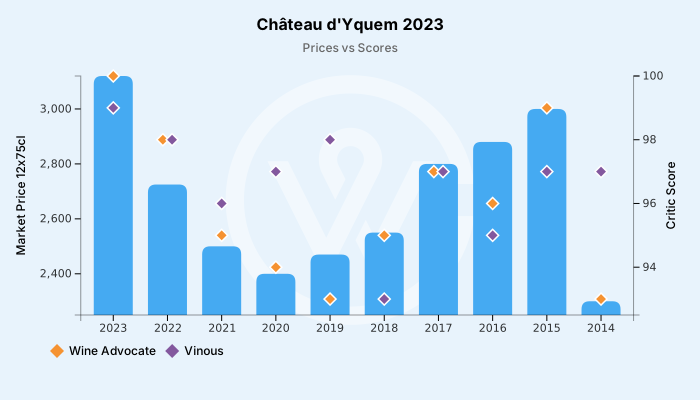
chateau yquem 2023 wine prices

Latour 2019: The benchmark for “keen” pricing

The momentum has reached a crescendo with the release of Château Latour 2019. While critics like William Kelley describe it as a “profound wine in the making,” its true significance lies in its pricing strategy. Released at a more accessible level than any comparable back vintage, it sits 15% lower than the 2016, even as prices for the 2009 and 2010 vintages have begun to climb. By pricing the 2019 to offer immediate relative value, Latour is successfully reinvigorating trade and setting a disciplined, optimistic tone for the upcoming campaign in the region.
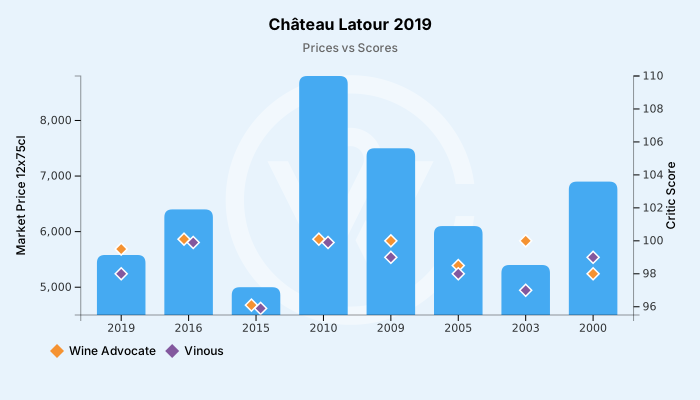
chateau latour 2019 wine prices

Bollinger La Grande Année 2018: Value in Champagne

Outside of Bordeaux, Champagne house Bollinger released its 2018 La Grande Année Brut and Rosé this March.  As the first of a trio of exceptional warm vintages – drawing comparisons to the legendary 1988–1990 run – the wine arrives with significant critical weight. Boasting a 96-point score from Antonio Galloni (Vinous), the 2018 notably outperforms the prestigious 2002 and 2012 editions. Crucially, Bollinger has matched this high quality with an aggressive pricing strategy, entering the market at an approximately 15% lower cost than the most recent 2015 release. The competitive price point of the house echoes the strategy seen with Latour and Yquem, proving that producers across the board understand the importance of liquidity and building buyer trust.
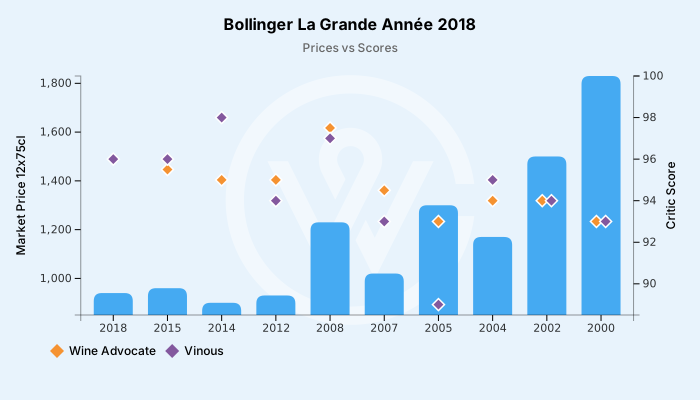
bollinger grande annee 2018 champagne

Acceptance of the “new reality”

These releases signal a significant shift in the primary market. By pricing new vintages to offer relative value against existing back-stock, estates are rebuilding trust and liquidity. This discipline is being mirrored in the secondary market, where we are seeing:

  1. Improved trade volumes: A rising bid:offer ratio across the major exchanges.
  2. Sustained stability: A “floor” has been established, allowing for the double-digit returns seen in our top-performing wines this quarter.

This environment of sensible pricing and high critic consensus sets a highly optimistic tone for the upcoming Bordeaux En Primeur campaign. It suggests that the market has not just stabilised, but is actively preparing for its next growth phase.

The best-performing wines of Q1 2026

While the broader market has focused on stability, a selection of labels has delivered exceptional year-to-date (YTD) growth. The first quarter was unequivocally dominated by Bordeaux, which accounted for eight of the top ten performers, showcasing the region’s enduring appeal as a primary destination for “flight to safety” capital.

The resurgence of Sauternes and Barsac

The most striking trend of Q1 has been the performance of Bordeaux’s sweet wines. Chateau Rieussec 2021 led the market with a remarkable 55.6% YTD increase, further supported by its 2013 vintage, which grew by 22.1%. This positive momentum can be tied to buyers finding value in back vintages in light of more expensive recent Rieussec releases. This trend extended to Barsac, where Chateau Coutet 2016 and Chateau Climens 2012 both posted gains near 20%. This suggests a significant re-rating of the sector as investors seek out high-quality wines that may have been previously undervalued.

Blue-chip resilience

Beyond the sweet wine categories, Right Bank powerhouses and elite Left Bank estates showed defensive strength:

  • Chateau Lafleur 2016 saw a significant jump of 33.6%, reinforcing its status as a collector favourite with high scarcity value.
  • Pavillon Rouge du Chateau Margaux 2013 and Chateau Haut-Bailly 2021 both delivered a robust 25% return, proving that quality second wines and top-tier Cru Classé estates remain resilient despite the wider geopolitical “re-pricing.”

Diversification beyond Bordeaux

Outside of France, top-tier international labels also found favour. Italy’s Giacomo Conterno, Barolo Monfortino Riserva 2005 rose by 21.0%, while California’s Dominus 2017 represented Napa Valley with a strong 20.1% gain.
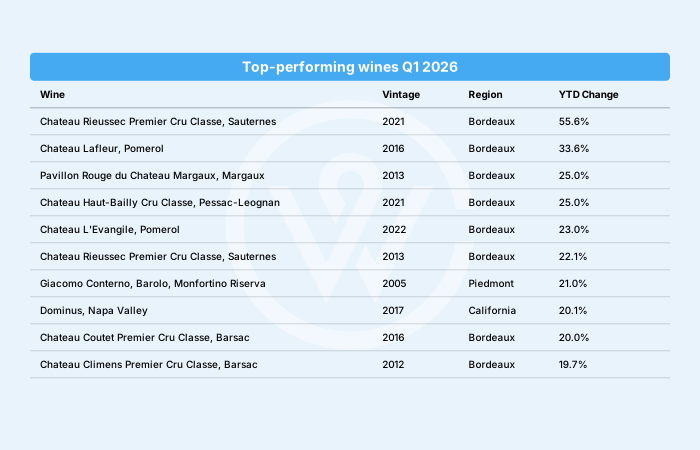
top performing wines quarter 1 2026

New wine auction record

Perhaps the most significant wine event in Q1 came from the auction room, which saw a new record broken for the most expensive wine ever sold. In a definitive display of the market’s appetite for rare, tangible history, Acker Merrall & Condit auctioned a single bottle of 1945 Domaine de la Romanée-Conti (DRC) Romanée-Conti for a record-breaking $812,500 (including buyer’s premium).

This sale shattered the previous world record for a standard 75cl bottle, set in 2018. As one of only 600 bottles ever produced from this “unicorn” vintage – harvested at the close of WWII and just before the vineyard’s vines were pulled for replanting – the 1945 DRC represents the pinnacle of provenance and scarcity. The new record is a powerful reminder that even amidst geopolitical uncertainty, the world’s most historic and tangible assets continue to command unprecedented value.

Q1 wine tariffs update

A significant theme this past quarter was the shifting landscape of global wine tariffs, ranging from US policy changes and the landmark India trade deal to the evolving terms for Australian wine imports into Europe.

The US “tariff reset”

The US market began the quarter in a state of regulatory flux. In February, the Supreme Court struck down previous “emergency” tariffs as unconstitutional, only for the executive branch to immediately pivot to Section 122 of the Trade Act. This imposed a new 10% baseline tariff (with threats to rise to 15%) on almost all imported wine.

  • The market impact: While this has created a “wait-and-see” approach among some US collectors, the secondary market has proven remarkably resilient. Unlike previous cycles, the market is no longer solely dependent on a hyper-active US base; instead, it is being bolstered by robust demand from Europe and Asia. Furthermore, US buying activity has shown improvement compared to the same period last year, suggesting that seasoned collectors are looking past the “noise” of temporary duties.
  • The opportunity: These new tariffs are temporary by design, set to expire in late July 2026 unless extended by Congress. This 150-day window has paradoxically increased the appeal of existing “pre-tariff” stock already held in US warehouses, while the broader global market continues to find its floor through diversified international trade.

India: The next great frontier

Perhaps the most significant long-term development for the fine wine market is the newly signed EU-India and UK-India trade deals. For nearly two decades, India’s 150% federal import tariff has stood as the single greatest barrier to entry for the world’s most prestigious estates.

  • The update: Under the new agreements, tariffs on premium EU and UK wines are being slashed from 150% down to 100% immediately, with a glide path to 25% over the next decade for bottles meeting specific price thresholds.
  • The impact: While this policy change is unlikely to transform the market overnight, it represents a massive structural milestone. With India’s middle class projected to comprise 60% of the population by 2047, this tariff reduction provides the necessary foundation for India to eventually rival China as a primary pillar of global fine wine demand. By lowering the cost of entry, these deals open a vital new channel for liquidity and diversification at a time when traditional Western markets are facing increased volatility.

EU removes tariffs on Australian wine imports

Following years of friction, Australia and the EU finalised a Free Trade Agreement (FTA) in late March. This deal effectively removes almost all EU import tariffs on Australian wine – a move expected to save Australian exporters roughly $37 million annually.

  • The trade-Off: In exchange for zero-tariff access, Australia has agreed to protect 1,600 EU Geographical Indications (GIs). Most notably, Australian producers will phase out the use of “Prosecco” on export labels over the next ten years.
  • The benefit: This agreement levels the playing field for Australian “fine wine” exports into Europe, allowing high-end producers from regions like Margaret River and the Barossa to compete more aggressively with European counterparts on price.

Why this matters 

As global trade becomes more fragmented, these shifts are redirecting the flow of fine wine. While US demand is temporarily throttled by domestic policy uncertainty, the “opening up” of India and the streamlined EU-Australia trade route suggest that liquidity is shifting toward the East and the Commonwealth.

Fine wine outlook for Q2 2026

The global macro environment remains defined by heightened uncertainty. With the conflict in the Middle East continuing to disrupt energy corridors, global inflation has seen a resurgence. In this high-inflation environment, the case for fine wine as a proven inflation hedge and a “tangible” store of wealth has rarely been more compelling. Unlike traditional equities, which remain sensitive to fluctuating interest rates and energy-driven volatility, fine wine’s historical low correlation to mainstream markets is expected to remain its greatest strength throughout the spring.

The Bordeaux 2025 En Primeur campaign

The defining event for the wine trade will be the Bordeaux 2025 En Primeur campaign (April–June). Following the “keen” pricing strategies established by Latour and Yquem in Q1, the industry mood is one of cautious optimism. There is a clear expectation that for the 2025 vintage to succeed, estates must continue this trend of market-aligned pricing.

  • The opportunity: If châteaux offer the 2025 vintage at a relative discount to existing physical stock, we can expect a release of sideline capital into the market.
  • The sentiment: Early reports suggest the 2025 vintage is one of exceptional quality, potentially providing the “high-score, high-value” combination required to sustain the market’s current recovery phase.

Industry events and global liquidity

Beyond Bordeaux, the upcoming London Wine Fair and various Asian trade summits in May will serve as critical barometers for global liquidity. We expect these events to highlight the burgeoning demand from the rest of the world, especially in light of recent tariff changes.

Solid market floor

Overall, our outlook for Q2 is one of defensive growth. While the world remains volatile, the “green shoots” identified in Q1 – sensible pricing, rising bid:offer ratios, and record-breaking auction results – suggest that fine wine has established a solid floor. Its relative isolation from traditional markets can also play in its favour, providing investors with a psychological and financial refuge that continues to command value even as mainstream markets fluctuate.

Q&A

Q: How has the war in Iran impacted the fine wine market compared to gold? 

A: While gold remains the traditional “first responder” to geopolitical shocks – surpassing $5,400/oz this quarter – fine wine is also a “safe haven” asset. Its value is driven by different mechanics; while gold reacts to currency fear, fine wine reacts to the search for tangible, depleting assets. This quarter, we saw fine wine indices rise, proving the asset’s role as an effective portfolio “smoother” during times of crisis.

Q: With inflation rising again due to energy costs, is now a good time to buy? 

A: Historically, yes. Fine wine has a proven track record of outpacing inflation, particularly when cost-of-living increases are driven by supply shocks. Because it is a physical asset with a finite supply that decreases as it is consumed, it naturally holds its value better than cash. With prices for many blue-chip wines currently near a five-year floor, Q1 has presented a rare “double opportunity”: low entry prices combined with high inflation protection.

Q: What should I look for in the upcoming Bordeaux En Primeur?

A: The “golden rule” for En Primeur is relative value. We are looking for châteaux that follow the lead of Latour and Yquem by offering “keen” pricing. The 2025 vintage is reported to be of exceptional quality but with lower yields due to the August heatwaves; this scarcity, combined with sensible release prices, could make it a significant investment opportunity.

WineCap’s independent market analysis showcases the value of portfolio diversification and the stability offered by investing in wine. Speak to one of our wine investment experts and start building your portfolio. Schedule your free consultation today.
Categories
Learn

Which types of wine are considered investment-grade?

  • Investment-grade wine is characterised by exceptional quality, rarity, and a proven track record of price appreciation.
  • Most investment-grade wines come from regions like Bordeaux, Burgundy, Champagne, Tuscany, Barolo, Napa Valley and the Rhône.
  • Successful wine investing requires a long-term perspective, professional storage and a keen understanding of market trends. 

Understanding investment-grade wine

Investing in wine is not just about acquiring expensive bottles; it’s about selecting those that have the potential to appreciate in value over time. Investment-grade wines are those that are likely to increase in price due to factors such as rarity, quality, and demand. Unlike more common wines, these bottles often come from renowned vineyards and are produced in limited quantities, making them highly sought-after by a global pool of buyers.

The allure of investment-grade wine lies in its dual appeal: it is both a consumable luxury and a tangible asset. Unlike stocks or bonds, wine offers a tactile and sensory experience, which can make the investment feel more personal and engaging. However, to succeed in wine investment, one must understand the specific attributes that make a wine worthy of this status. This includes knowing the regions, varietals, and vintages that have historically performed well in the market.

In essence, the world of investment-grade wine is a blend of art and science. It requires a keen eye for quality, a solid understanding of market trends, and a bit of intuition. By mastering these elements, investors can build a portfolio that not only appreciates in value but also brings a unique joy and sophistication to their collection.

Characteristics of investment-grade wines

Investment-grade wines typically share several key characteristics that set them apart from everyday bottles. First and foremost is quality, often judged by critic scores. These wines are crafted with meticulous attention to detail from the vineyard to the bottle, using carefully selected grapes from the best plots and employing traditional winemaking techniques. The result is a wine that not only tastes exceptional but also has the potential to age gracefully over decades. With time, its value rises.

Another crucial element is rarity. Investment-grade wines are often produced in limited quantities, which adds to their exclusivity and desirability. This scarcity can be due to the vineyard’s small size, the particular vintage’s limited yield, or even deliberate production choices by the winemaker. The combination of high quality and limited supply creates a sense of urgency among collectors and investors, driving up the wine’s market value.

Provenance and reputation also play significant roles in determining a wine’s investment potential. Wines from renowned estates or those with a storied history are more likely to be considered investment-grade. The vineyard’s reputation for producing consistently high-quality wines can assure investors that they are making a sound choice. Additionally, wines that have received high ratings from respected critics and publications are more likely to appreciate in value, as these endorsements can significantly boost demand.

In summary, the following criteria make a wine investment-grade:

The “core four” investment criteria

  • Secondary market liquidity: The wine must attract a high volume of global trading at auction and the secondary market.
  • Ageing potential (longevity): Investment-grade wines are built to improve over 20 to 50 years. This is typically driven by high tannin, acidity, and alcohol structures that allow the flavor profile to evolve rather than decay.
  • Critical acclaim: A “consensus” score of 95 points or higher from influential critics (such as The Wine Advocate or Vinous) acts as a price floor and reduces the risk for the investor.
  • Pristine provenance: A documented “paper trail” proving the wine has been stored in climate-controlled conditions since its original release.

Scarcity and production factors

  • Limited production: Most investment wines are produced in quantities of fewer than 10,000 cases annually, ensuring that as bottles are consumed, the remaining supply becomes more valuable.
  • Vintage quality: “Great” years (characterised by perfect weather during the growing season) tend to see higher appreciation than “off-vintages” from the same producer if priced correctly at release.
  • Brand equity: The reputation of the estate (e.g., a First Growth in Bordeaux or a Grand Cru in Burgundy) acts as a brand guarantee, much like a “Blue Chip” stock.

Top wine regions for investment

While fine wine is produced globally, the investment market is concentrated in a few legendary regions with established secondary market histories.

France: The historical leaders

  • Bordeaux: The backbone of wine investing, known for high-volume liquid markets and prestigious First Growth estates like Château Lafite Rothschild and Château Margaux.
  • Burgundy: Driven by extreme scarcity and fragmented “Climat” terroir; Grand Cru Pinot Noir and Chardonnay from producers like DRC or Leroy command the world’s highest prices.
  • Champagne: A high-growth category where vintage-dated prestige cuvées (e.g., Dom Pérignon, Krug) offer excellent long-term appreciation due to celebratory demand.
  • The Rhône Valley: Home to robust, age-worthy Syrah and Grenache blends, particularly from the Hermitage and Châteauneuf-du-Pape appellations.

Italy & The USA: The “blue chip” alternatives

  • Tuscany (Super Tuscans): High-performing “Bordeaux-style” Italian blends such as Sassicaia, Tignanello, and Ornellaia that offer consistent global demand.
  • Piedmont: Small-production Barolo and Barbaresco (Nebbiolo) are increasingly compared to Burgundy for their terroir-driven value and ageing potential.
  • Napa Valley (California): The premier New World investment region, famous for “Cult Cabernets” like Screaming Eagle and Harlan Estate that rival the best of France.

Popular investment-grade wine varietals

Certain grape varietals are more likely to produce investment-grade wines due to their inherent qualities and the regions where they are cultivated. Cabernet Sauvignon, for example, is a cornerstone of many top investment wines, particularly those from Bordeaux and Napa Valley. Known for its bold flavors, robust tannins, and excellent aging potential, Cabernet Sauvignon has the structure and potential to support price appreciation if handled properly in the vineyard and the cellar, and coming from a reputable producer.

Pinot Noir is another varietal that often features in investment-grade wines. Having made a name in Burgundy, Pinot Noir is renowned for its complexity, elegance, and ability to reflect the terroir where it is cultivated. Wines made from Pinot Noir can develop incredible depth and nuance over time, making them highly desirable for long-term investment. The scarcity of top-tier Pinot Noir, particularly from Grand Cru vineyards, further enhances its investment appeal.

Chardonnay also holds a significant place in the investment wine market. While it is grown in many regions, the finest investment-grade Chardonnays often come from Burgundy, where the grape achieves its highest expression. These wines are celebrated for their balance, minerality, and ageing potential. Investment-grade Chardonnays from top producers and premier vineyards can command high prices and are sought after by collectors worldwide.

How to evaluate wine for investment potential

Evaluating a wine for its investment potential involves several key factors. One of the most critical is the wine’s provenance, which refers to its origin and history. Wines from renowned producers and prestigious vineyards are more likely to appreciate in value. Provenance also includes the wine’s storage history, as proper storage conditions are essential for maintaining its quality and marketability.

Another important factor is the wine’s vintage. Certain years produce better grapes due to favourable weather conditions, resulting in higher-quality wines. These vintage years are often marked by critics and can significantly influence a wine’s investment potential. Researching historical data and expert opinions on different vintages can help investors make informed decisions.

Market demand and trends also play a crucial role in evaluating investment potential. Wines that are highly sought after by collectors and enthusiasts are more likely to see price increases. Staying informed about market trends, auction results, and emerging regions or varietals can provide valuable insights into where to invest. Additionally, understanding the wine’s ageing potential and how it develops over time can help investors determine the optimal holding period for maximizing returns.

For investors, tools like Wine Track help observe a wine’s historic performance over time, as well as average entry point, critic scores, and investment returns. 

The role of wine ratings and reviews

Wine ratings and reviews are invaluable tools for investors, providing an expert assessment of a wine’s quality and potential. Renowned critics and publications, such as Robert Parker’s Wine Advocate, Vinous, Jeb Dunnuck, Jancis Robinson and Wine Spectator, to name a few, offer scores and reviews that can significantly influence a wine’s market value. High ratings from these sources can boost demand and drive up prices, making them an essential consideration for investors.

However, it’s important to understand that not all ratings and reviews are created equal. The credibility of the critic and the consistency of their evaluations play a significant role in their impact on the market. For example, a 95-point score from a highly respected critic like Robert Parker can have a more substantial effect than a similar score from a lesser-known reviewer. Investors should familiarise themselves with the most influential critics and publications to make informed decisions.

In addition to numerical scores, the detailed tasting notes provided by critics can offer valuable insights into a wine’s characteristics and ageing potential. These reviews often highlight the wine’s complexity, balance, and potential for development, helping investors gauge its long-term prospects. By combining ratings with in-depth reviews, investors can gain a comprehensive understanding of a wine’s investment potential.

Storage and preservation of investment wines

Proper storage and preservation are crucial for maintaining the quality and value of investment-grade wines. Unlike everyday bottles that are consumed shortly after purchase, investment wines often require decades of ageing to reach their full potential. This means that the conditions in which they are stored can significantly impact their quality and marketability.

The ideal storage environment for investment-grade wine is a cool, dark, and humid space with minimal temperature fluctuations. The temperature should be kept between 55-58°F (13-15°C), with a relative humidity of around 70%. These conditions help prevent the wine from spoiling and the cork from drying out, which can lead to oxidation and spoilage. Many serious collectors invest in professional wine storage facilities or custom-built wine cellars to ensure optimal conditions.

In addition to temperature and humidity control, it’s important to minimise exposure to light and vibrations. Ultraviolet light can degrade the wine’s flavors and aromas, while vibrations can disturb the sediment and affect the wine’s aging process. Storing bottles horizontally also helps keep the cork moist, preventing air from entering the bottle. By adhering to these storage principles, investors can preserve the quality and value of their investment wines.

Market trends in wine investment

The wine investment market is dynamic and influenced by various trends that can impact the value of different wines. One significant trend is the increasing interest in wines from emerging regions. While Bordeaux and Burgundy have long dominated the market, regions like California, Italy, and even China are gaining recognition for producing high-quality, investment-worthy wines. Savvy investors are diversifying their portfolios to include wines from many up-and-coming regions, capitalising on their growing popularity.

Another trend is the rise of sustainable and organic wines. As consumers become more environmentally conscious, there is a growing demand for wines produced using sustainable, organic, or biodynamic practices. These wines often command higher prices and can offer attractive investment opportunities. Investors who stay ahead of this trend can benefit from the increasing market demand for eco-friendly wines.

The role of technology and data analytics is also transforming the wine investment landscape. Advanced tools and platforms are now available to help investors track market trends, analyze historical data, and make informed decisions. Online wine marketplaces and auction sites are making it easier for investors to buy and sell wines, increasing market transparency and accessibility. By leveraging these technological advancements, investors can stay informed and navigate the market more effectively.

Risks and considerations in wine investing

While wine investing can be rewarding, it is not without its risks and considerations. One of the primary risks is market volatility. The value of investment-grade wines can fluctuate due to changes in demand, economic conditions, and other external factors. Unlike traditional financial investments, the wine market is less regulated and can be more susceptible to speculation and price manipulation.

Another consideration is the time and effort required to manage a wine investment portfolio. Unlike stocks or bonds, wine requires proper storage, insurance, and occasional monitoring to ensure its quality is maintained. The costs associated with storage and insurance can add up, potentially impacting the overall return on investment. Investors must also be prepared to hold onto their wines for an extended period, as it can take years or even decades for certain wines to reach their peak value.

Fraud and counterfeit wines are also significant concerns in the wine investment market. High-value wines are often targeted by counterfeiters, and distinguishing genuine bottles from fakes can be challenging. Investors should take precautions by buying from reputable sources, verifying provenance, and using authentication services when necessary. By being aware of these risks and taking appropriate measures, investors can protect their assets and make more informed investment decisions.

Is wine a worthwhile investment?

Investing in wine can be a worthwhile endeavour for those who appreciate its unique blend of art, science, and luxury. Investment-grade wines, characterised by their quality, rarity, and provenance, have the potential to appreciate in value over time, offering attractive returns. By understanding the key characteristics of investment-grade wines, staying informed about market trends, and taking proper storage and preservation measures, investors can build a successful wine investment portfolio.

However, it’s essential to recognise that wine investing comes with its own set of risks and challenges. Market volatility, storage and insurance costs, and the risk of fraud are all factors that investors must consider. Wine investment requires a long-term commitment, careful research, and a passion for the world of fine wine. For those willing to put in the time and effort, wine investing can be a rewarding and enjoyable pursuit that combines financial gains with the pleasure of owning and experiencing some of the world’s finest wines.

People also ask

What makes a wine “investment-grade”?

Investment-grade wines are high-quality bottles with proven aging potential, high critic scores (95+), and secondary market demand. They typically possess a combination of rarity, prestigious provenance, and a track record of price appreciation.

Which wine regions offer the best investment returns?

Bordeaux and Burgundy remain the gold standard for investors. However, “Super Tuscans” from Italy, premium Cabernet Sauvignons from Napa Valley, and top-tier Champagnes are increasingly recognised as stable, high-growth assets.

Do I need a professional cellar to invest in wine?

Yes, or a professional bonded warehouse. Investment-grade wine must be stored at constant temperatures (55-58°F) and 70% humidity. Without proof of professional storage (provenance), the resale value can drop.

Which grape varietals are most valuable for collectors?

Cabernet Sauvignon and Pinot Noir are the primary drivers of the investment market due to their longevity. High-end Chardonnay (specifically from Burgundy) and Syrah/Shiraz from the Rhône or Australia also hold significant value.

Is wine a safe alternative to stocks and bonds?

Wine is a “tangible asset” with low correlation to traditional markets, making it a great diversifier. While it offers protection during inflation, it is less liquid and involves costs like insurance, storage, and selling fees.

How do I start investing in fine wine in the UK?

To invest in the UK, you typically buy wine “In Bond.” This means the wine is stored in an HMRC-approved bonded warehouse where VAT and Alcohol Duty are deferred. You only pay these taxes if you withdraw the wine for personal consumption. If you sell the wine while it is still “under bond” to another investor or merchant, you never pay these taxes, which significantly protects your profit margins.

Categories
Learn

Barolo wine: a guide to Italy’s most collectible red

  • Barolo, the benchmark for Nebbiolo, sits at the top of Italy’s fine wine hierarchy.
  • Its rarity, long ageing potential and diversity of styles make it highly collectable.
  • In the secondary market, top Barolo producers often outperform all other Italian regions.

Barolo sits at the very top of Italy’s fine wine hierarchy. It’s the benchmark for Nebbiolo, the calling card of Piedmont, and one of the most consistently traded Italian categories on the secondary market. However, it’s also a wine that can feel intimidating: communes, crus, “traditional vs modern”, long ageing, and producer styles vary dramatically even within a few kilometres.

This Barolo wine guide is designed to demystify the region – whether you’re buying your first serious bottle, building a cellar, or thinking about it as part of a diversified fine wine portfolio.

What is Barolo?

Barolo is a DOCG wine from the Langhe hills in Piedmont, made from 100% Nebbiolo. It is known for high acidity and tannin, aromatic complexity (rose, tar, dried cherry, spice), and an ability to improve for decades in bottle – traits that underpin its collector appeal.

Why Barolo is built for cellaring

One reason Barolo has such strong longevity and investment relevance is the mandatory ageing requirement: Barolo must be aged at least 38 months before release, and Barolo Riserva must be aged longer (commonly cited as 62 months), depending on the rules in force and producer practice. This extended maturation helps set expectations in the market: Barolo is supposed to age, and top examples routinely do.

Traditional Barolo

Barolo’s modern identity was forged in a late-20th-century stylistic divide that continues to shape both perception and pricing today.

For much of the 20th century, Barolo was defined by a firmly traditional approach. Long macerations – sometimes stretching to 30 days or more – extracted formidable tannin and structure from Nebbiolo’s thick skins. Ageing took place in large, neutral Slavonian oak casks (botti), which had often already been used multiple times. This practice remains in place today. These vessels allow slow, gradual oxygen exchange without imparting overt oak flavour. The result? Wines that emphasise structure, savoury complexity, and terroir transparency over fruit sweetness or texture. In youth, they can seem austere, even severe. With time, however, they develop the haunting aromatics and layered nuance that define classic Barolo.

Modern Barolo

In the 1980s and 1990s, a new generation of producers – often referred to as the “modernists” – sought a different expression. Shorter macerations reduced harsh tannin extraction, while ageing in smaller French oak barriques, frequently new or partially new, introduced a different dynamic. Smaller barrels increase the ratio of wood surface area to wine, accelerating oxygen exchange and allowing oak compounds like vanillin, toast, spice and subtle sweetness to influence the wine’s profile. The tannins often feel rounder and more polished, the fruit darker and more immediate, and the wines generally more accessible in their youth.

Oak, therefore, became more than just a maturation vessel but a stylistic signature. Large botti tend to preserve Nebbiolo’s natural austerity and aromatic precision, while small barriques can frame the grape in a richer, more textural, internationally recognisable style.  Over time, the binary has softened. Many leading estates now blend elements of both philosophies, moderating extraction, using a mix of large casks and smaller barrels, and aiming for balance rather than dogma. 

Why Barolo style matters

From an investment perspective, style matters because it shapes buyer pools. Some collectors actively seek the slow-burn, classically structured wines that demand patience and reward decades in the cellar. Others prefer a more polished, earlier-drinking profile that broadens appeal across international markets. Crucially, the most successful producers, whether modernists or traditionalists, maintain liquidity because demand rests on reputation, consistency, and ageing track record.

Barolo’s map: communes and how they taste

Barolo is one of the world’s clearest examples of place-defining style. Within the small Barolo DOCG, varied vineyard exposure, altitude, soil type, and producer philosophy can dramatically shift the personality of a wine.

That said, collectors often use the main communes as a shorthand for understanding Barolo style, ageing potential, and overall profile, especially when comparing bottles on the secondary market.

Key Barolo communes 

Below is our Barolo wine guide to the region’s most important communes.

  • La Morra
    • Often the most perfumed and approachable in youth
    • Notes of rose, red cherry, violet, sweet spice
    • Generally softer tannins and earlier-drinking charm
  • Barolo (commune)
    • Can combine perfume with more depth and structure than La Morra
    • Often shows classic tar-and-roses character with firm backbone
    • A strong balance of finesse and ageing ability
  • Monforte d’Alba
    • Typically darker, more muscular, and structured
    • Powerful tannins, earthy tones, black cherry, liquorice
    • Built for long ageing and collector demand
  • Serralunga d’Alba
    • Often the most intense and long-haul expression of Barolo
    • Firm tannic spine, mineral grip, darker fruit, iron-like depth
    • Highly prized for investment-grade longevity
  • Castiglione Falletto
    • Frequently, the “sweet spot” commune: perfume and structure
    • Aromatic lift with serious mid-palate power
    • Often considered one of the most complete all-round expressions
  • Verduno
    • Lighter-framed but highly distinctive: spice, florals, lift
    • Often shows herbal notes, pepper, red fruits, and energy
    • Increasingly sought-after by “insider” collectors

Barolo’s MGA labelling

Barolo’s “MGA” system (translating as “additional geographic mentions”) functions like a cru framework: it gives clearer origin signals and helps buyers compare vineyard-designated bottlings across producers. In practice, that clarity supports collectability because it improves recognition and repeat buying.

What makes Barolo investment-grade?

Not all Barolo is investment-worthy. The bottles that behave best in the secondary market usually share five key traits:

1. Producer reputation and long-term consistency

Investment-grade Barolo almost always begins with the producer.

  • Decades (often generations) of proven quality
  • Strong performance across multiple vintages – not just in “great” years
  • Established global distribution and recognition

Collectors and merchants prioritise names with a track record (to check the performance of your favourite Barolos, visit Wine Track). Consistency reduces risk, supports liquidity, and anchors pricing even during broader market slowdowns.

2. Recognisable vineyards or flagship labels

Single-vineyard (cru) Barolos with strong brand equity tend to trade more reliably.

  • Clearly labelled, prestigious crus
  • Estate flagship bottlings with cult followings
  • Wines that appear regularly in auction results and critic reports

In fine wine investment, recognisability matters. Buyers gravitate toward labels they understand and can benchmark easily.

3. Scarcity and allocation pressure

Supply dynamics play a major role in price behaviour.

  • Limited production volumes
  • Tight allocations to merchants
  • Strong on-trade (restaurant) and private client demand

Scarcity supports pricing power, particularly when global demand widens. Wines that are hard to source tend to maintain tension in the market.

4. Sustained critical attention

While high scores can spark short-term spikes, what truly drives investment performance is consistent quality and repeated coverage.

  • Consistent strong reviews across vintages
  • Ongoing commentary from major critics
  • Inclusion in vintage retrospectives and “top wine” lists

Repeat visibility reinforces confidence. It builds a narrative around the wine, which sustains demand. 

5. Provenance and professional storage

Even the greatest Barolo will struggle in the market without impeccable provenance supported by:

  • Professional bonded storage
  • Clear transfer history
  • Untampered original packaging

In today’s market, institutional and high-net-worth buyers prioritise condition and traceability.

Top Barolo producers for collectors

Below is our quick guide to the best Barolo producers from an investment perspectives – estates that see steady collectors’ demand.

Giacomo Conterno (especially Monfortino)

If you want a single label that globally signals serious Barolo collecting, Conterno is it. Monfortino Riserva is widely treated as a blue-chip Italian collectible, combining rarity, historic reputation, and famously long ageing curves — all traits that tend to underpin long-term demand.

Bartolo Mascarello

Mascarello is emblematic of “traditional Barolo” and has become a cultural symbol as much as a producer, helped by the estate’s uncompromising identity and loyal collector base. Their history (estate roots and a long-standing family narrative) is part of the brand power that keeps demand resilient. The market watches Mascarello releases closely because scarcity and reputation combine into a powerful collector signal.

Giuseppe Rinaldi

Long a cult favourite, Rinaldi is defined by tiny production and obsessive collector loyalty. These are the types of wines that can remain firm even during softer market cycles, simply because bottles become difficult to replace once they disappear into private cellars.

Bruno Giacosa

Bruno Giacosa remains one of Piedmont’s most respected names, often associated with finesse, precision, and classical structure. The estate’s top Barolos carry enduring prestige, particularly among collectors who prioritise elegance over sheer power.

Cappellano

A true “insider” estate, Cappellano is spoken about with reverence among Barolo specialists. Scarcity, a fiercely consistent house style, and limited international supply combine to create long-term collectability.

Luciano Sandrone

Sandrone is a modern-era benchmark and one of the most globally understood names in Barolo. The wines often strike a balance between power, polish, and early approachability, which tends to broaden the buyer pool – helpful for liquidity.

Elio Altare

Altare is closely tied to the modernist chapter of Barolo history, and that narrative itself has become part of the collectable appeal. For many buyers, Altare represents a style shift that shaped modern Barolo’s global reputation.

Roberto Voerzio

Voerzio is associated with intensity, concentration, and limited supply, a combination that can perform well when allocations tighten and demand remains international. The estate’s wines are often bought with long-term collecting in mind.

Vietti

Vietti is extremely collector-friendly: widely recognised, strong branding, and often released across multiple crus, making it easier to build a structured cellar (verticals, commune comparisons, vineyard sets). It also benefits from consistent visibility in the global fine wine conversation.

Best Barolo vintages

Vintage matters in Barolo, but its importance varies depending on your goal.

If you’re buying to drink, you can often win by targeting “less hyped” vintages from elite producers. These years can offer outstanding quality at better pricing, often with earlier accessibility.

If you’re buying for investment, vintage confidence becomes far more important. The best-performing Barolo vintages are the ones the global market broadly agrees on – because shared confidence drives demand, pricing power, and liquidity.

In Barolo, the ideal vintage delivers tannin ripeness, aromatic purity, and acidity in balance. When that happens, the wines don’t just age well – they become long-term reference points for collectors.

Top Barolo vintages 

These are the vintages most widely regarded as benchmark years, with strong consistency across producers and excellent long-term ageing potential:

  • 1988 – classic, structured, long-lived
  • 1989 – richer, generous, highly collectable
  • 1990 – iconic, powerful, long-haul Barolo
  • 1996 – firm, structured, built for decades
  • 1999 – excellent balance, depth, ageing curve
  • 2001 – one of the great modern “complete” vintages
  • 2010 – highly celebrated, textbook balance and longevity
  • 2016 – outstanding across the region; one of the most trusted recent vintages
  • 2019 – emerging as a modern classic with freshness and depth

These years tend to show the qualities collectors love most: structure without harshness, aromatic complexity, and a long runway of development.

How Barolo performs in a portfolio

Barolo demand is producer and site-led

Collectors often buy Barolo because they want a particular estate and, increasingly, a particular cru or commune. This creates a “specialist collector base” dynamic: deep knowledge, high conviction, and strong attention to provenance and bottle condition.

Structure supports long ageing curves

Nebbiolo’s tannin and acidity framework means top wines often need time before they reach peak drinking and peak market maturity. That longer runway can be a feature (rarity over time), but it also means Barolo is rarely a quick-turn category.

Liquidity concentrates at the top

The blue-chip names can be extremely tradeable, but the mid-tier is more style and market-dependent than Tuscany’s global flagships. 

Barolo vs Super Tuscans

In the market, Barolo often behaves differently from the Super Tuscans – the most liquid group of Italian wines:

  • Barolo: site/producers drive demand; tannin structure supports long ageing; strong specialist collector base.
  • Super Tuscans: brand power is more “global luxury”; often broader mainstream liquidity.

Most serious Italian-focused portfolios hold both: Barolo for terroir-driven collectability, Tuscany for brand-driven liquidity.

FAQs

Is Barolo a good investment wine?

Top Barolo can be investment-grade when it combines producer reputation, scarcity, consistent demand, and strong provenance. The category is a core pillar of Italian fine wine collecting, particularly among Piedmont specialists.

What is the best Barolo producer?

There isn’t one “best” producer. That said, blue-chip names that commonly perform well in the secondary market and see sustained demand include Giacomo Conterno, Bartolo Mascarello, Giuseppe Rinaldi, and Bruno Giacosa. Modern benchmarks like Sandrone, Altare, and Voerzio are also top performers.

How long should you age Barolo?

Many quality Barolos benefit from extended ageing; the category is defined by long-term evolution, reinforced by required minimum ageing before release. 

What is the difference between Barolo and Barbaresco?

Both are 100% Nebbiolo from Piedmont, but Barolo is often called the “King” and Barbaresco the “Queen.” Barolo soils (especially in Serralunga) tend to produce more powerful, tannic wines that require longer ageing. Barbaresco generally has slightly sandier soils and a warmer maritime influence, leading to softer tannins and earlier accessibility.

What does “MGA” stand for on a Barolo label?

MGA stands for Menzioni Geografiche Aggiuntive. It is the official classification system that defines specific vineyard boundaries (similar to the “Cru” system in Burgundy). Seeing an MGA name like Cannubi or Vigna Rionda on a label typically indicates a higher level of prestige and terroir specificity than a standard “normale” blend.

Why is Barolo so expensive compared to other Italian wines?

“The Three S’s” drive value: Scarcity (the DOCG is small), Structure (the high tannin/acid required for long-term cellaring), and Slow release (producers must hold stock for years before selling). This makes the cost of production and the “hold value” much higher than high-volume regions.

Do I need to decant Barolo?

Yes, almost always. Younger Barolos (under 15 years) need oxygen to soften their aggressive tannins and “open up” their floral aromatics. Older, sediment-heavy bottles should be decanted carefully just before serving to separate the wine from the solids, though fragile, very old bottles should be monitored closely as they can fade quickly once exposed to air.

Categories
News

Wine investment 2026: How the under-40s are reshaping the market

  • Younger investors are abandoning traditional collecting habits in favour of data-driven strategies.
  • Peer validation is more important than family tradition when it comes to fine wine buying under 40.
  • The under-40 cohort utilises a multi-channel digital ecosystem to find their way into the fine wine market.

In 2026, fine wine investment is undergoing a generational shift. Younger investors under 40 are moving away from traditional collecting, a new report from think tank Areni Global reveals. Instead, they are opting for data-driven wine strategies, digital wine-tech platforms, and alternative asset diversification to hedge against stock market volatility. With fine wine prices currently sitting near five-year lows, under-40s are increasingly viewing the asset class as a critical alternative for diversifying their portfolios. Passion alone is no longer the leading force behind buying fine wine.

Why Millennials and Gen Z view wine as an alternative asset

The traditional “inheritance model” of wine collecting is dead. For decades, the industry assumed a passion for fine wine was passed down through family cellar keys. However, 2026 market data from Areni Global confirms a radical shift: younger investors are entering the market through independent, digital, and social channels.

Peer groups and shared wine experiences

Unlike previous generations, Millennial and Gen Z wine investors prioritise “horizontal discovery.” This means interest is sparked by peer groups, social “defining moments,” and digital communities rather than family heritage. For wealth managers, this highlights a shift from legacy-based collecting to community-driven wine investing.

The 40-year window

The report identifies a “collector’s spark” that must be ignited between the ages of 26 and 35. If a professional hasn’t entered the market by 40, they likely never will.

Gamified investing

For the 30% of the population with a “collector’s pulse,” wine investing is treated like gaming. This means valuing tight mechanics (real time data and execution), clear progression (visualising the growth of a portfolio), and digital transparency.

Women in wine investment 

One of the most significant “systemic failures” in the industry is the retention of female wine investors. While women under 25 enter wine education at rates nearly equal to men, a sharp drop-off occurs in their 30s, with only 25% becoming regular buyers. To tap into this $100bn+ investment opportunity, the 2026 market must evolve. Success lies in building business models that reflect the lifestyle and purchasing patterns of high-net-worth professional women, focusing on value-aligned investing and easier access.

How the under-40s discover the market

The entry point for the modern wine investor has shifted from the oak-panelled cellar to the palm of the hand. Unlike previous generations who relied on exclusive merchant relationships, the under-40 cohort utilises a multi-channel digital ecosystem to find their way into the market.

Social media transparency

Discovery now happens via Instagram influencers, sommeliers on TikTok, and finance-focused creators on YouTube and Substack. These creators strip away the pretension of fine wine, explaining market movements and vintage quality in simple, relatable terms.

The rise of wine-tech

Technology has emerged as a transformative force in wine investment, revolutionising various aspects of the industry. From verifying provenance to streamlining valuation processes, advancements such as blockchain and artificial intelligence (AI) have played a crucial role. Ultimately, the rise of specialised wine investment apps and platforms has been the ultimate “barrier-breaker.” These platforms have lowered the financial entry barrier, making fine wine a viable alternative asset for those looking to diversify away from the volatility of stocks and crypto.

The “social proof” factor

In line with the Areni Global findings, social proof is the primary driver of engagement. Seeing friends or colleagues discuss their wine portfolios creates a “FOMO” (fear of missing out) effect that traditional advertising cannot replicate. This is often supplemented by luxury lifestyle crossover – an interest in fine dining and high-end collectibles naturally leading toward the financial potential of the bottles on the table.

Value-driven investing

Younger investors are increasingly attracted to the sustainability and heritage of fine wine. In an era of “fast fashion” and ephemeral digital goods, a 50-year-old bottle of sustainably farmed Bordeaux represents a tangible, value-aligned asset that appeals to the ethics of the modern professional.

A beginner’s guide to wine portfolio management in 2026

If you are a professional under 40 looking to capitalise on the current market reset, here is the strategic roadmap for 2026:

I. Store wine in-bond

Never take physical delivery of your investment wine. Storing wine in-bond (IB) in a government-regulated, temperature-controlled warehouse is the only way to guarantee provenance. A bottle that has left the “bonded circuit” is immediately worth less to a future buyer because its storage history is broken.

II. Focus on liquidity

New investors often make the mistake of buying obscure labels they personally enjoy. As an investor, focus on liquidity. Regions like Tuscany (Sassicaia, Tignanello) and Champagne currently offer the best balance of lower entry prices and high secondary market demand.

III. Think long-term

Fine wine is not a “get rich quick” scheme. It is a medium-to-long-term play. The natural price appreciation occurs as a vintage is consumed and the global supply shrinks. Plan for a minimum holding period of five to 10 years to see the full “S-curve” of appreciation.

IV. Use wine data

Gone are the days of spreadsheets and faxed price lists. The modern investor uses platforms like WineCap to track real-time valuations and regional performance trends. In 2026, data is as important as the wine in the bottle.

FAQ

1. Is fine wine a good investment in 2026?

With fine wine prices currently sitting at near five-year lows, many analysts view 2026 as an optimal entry point for a “buy low” strategy. Fine wine historically offers a low correlation to traditional equity markets, acting as a defensive “liquid property” asset during periods of financial volatility.

2. What does “in-bond” (IB) storage mean?

“In Bond” refers to wine stored in a government-regulated, climate-controlled warehouse where VAT and Duty do not apply. For investors, this is essential: it guarantees the wine’s provenance (its history of perfect storage), making it significantly easier and more profitable to resell on the secondary market.

4. How to invest in wine for beginners without expertise?

The 2026 market is seeing a surge of “investment newbies” who use data-driven platforms rather than decades of tasting experience. By following trusted market analysts, using price-tracking tools like Wine Track, and focusing on high-liquidity “Blue Chip” labels, beginners can make informed financial decisions without being professional sommeliers.

5. Why is the under-40 demographic important for the wine market?

The Areni Global report identifies a critical “collector’s spark” window between the ages of 26 and 35. Investors who enter the market during this time are more likely to stay engaged for decades. Capturing this demographic is essential for the market’s long-term liquidity and growth.

6. How long should I hold my wine investment?

Fine wine is a medium-to-long-term asset. While some high-demand vintages see short-term spikes, typically, appreciation requires a holding period of five to 10 years. This allows the global supply to dwindle as wine gets consumed, naturally driving up the price of the remaining bottles.

7. What are the best wine regions to invest in right now?

While Bordeaux remains the market’s bedrock, 2026 trends show strong growth in Tuscany, Napa and Champagne. These regions offer high “brand liquidity,” meaning they are easy to trade on the secondary market and often have a lower entry price than top-tier Burgundy.

Categories
Learn

The best Italian wines: A complete guide

  • This guide breaks down the best Italian wines by region, grape variety, and style, making it easy to understand what matters most.
  • We also highlight the Italian wines with proven investment potential, including the producers most traded on the secondary market.
  • From Barolo and Barbaresco to Brunello and Super Tuscans, Italy produces some of the world’s most collectable wines.

Italian wine is one of the most complex, expressive, and rewarding categories in the world. With hundreds of native grape varieties, deeply-rooted regional identities, and a growing presence in the global fine wine market, Italy offers an unmatched combination of history, diversity, and long-term potential.

For many people, Italian wine starts with familiar names such as Chianti or Prosecco but these only scratch the surface. Beneath them lies a vast and nuanced landscape shaped by geography, tradition, and evolving winemaking philosophies.

Over the past decade, Italian wine has taken on a new role: not just as something to enjoy at the table, but as a serious category within fine wine collecting and investment. Once dominated by Bordeaux and Burgundy, the secondary market has increasingly embraced Italy’s top wines, particularly from Piedmont and Tuscany. Italy’s market share by value has risen from 5.7% to 15.3% since 2016, making it an important addition to investment portfolios, providing stability and potential for high returns.

This guide explores the best Italian wines, explains the regions and grape varieties behind them, and outlines why certain Italian wines have become sought after by collectors worldwide.

Why Italy is one of the most important wine countries

Italy is the world’s largest wine producer by volume and one of the oldest wine cultures in existence. Wine has been produced on the Italian peninsula for more than two millennia, and today it remains deeply intertwined with everyday life, food, and regional identity.

What sets Italy apart from other wine-producing countries is its extraordinary diversity. Officially, Italy recognises more than 500 native grape varieties, far more than France or Spain. These grapes are cultivated across dramatically varied climates – from Alpine vineyards in the north to Mediterranean coastlines in the south.

From a global perspective, Italy combines:

  • Strong domestic consumption
  • Consistent export demand
  • Increasing collector and investor interest

This balance has helped Italian wine remain resilient through changing market conditions and has supported long-term appreciation for the country’s top wines.

Understanding Italian wine classifications

Italian wines are regulated by a classification system designed to protect origin and quality. While not a guarantee of excellence, classification provides important context when navigating Italian wine.

  • DOCG (Denominazione di Origine Controllata e Garantita)
    The highest level, covering iconic wines such as Barolo, Barbaresco, and Brunello di Montalcino.
  • DOC (Denominazione di Origine Controllata)
    A broad category covering many high-quality wines with defined production rules.
  • IGT (Indicazione Geografica Tipica)
    Introduced to allow flexibility and innovation, famously used by Super Tuscan producers.

From a collecting perspective, classification matters because it signals consistency, recognisability, and historical reputation. However, some of Italy’s most valuable wines sit outside the DOCG system, proving that producer reputation often outweighs classification alone.

Italian wine regions explained

Italy’s geography plays a defining role in its wines. Stretching from the Alps in the north to the Mediterranean islands in the south, the country encompasses a wide range of climates, soils, and elevations. Understanding Italian wine regions is the foundation for understanding the best Italian wines.

Piedmont: Home of Barolo and Barbaresco

Piedmont is widely regarded as Italy’s most important fine wine region. Located in the north-west of the country, it is defined by rolling hills, foggy autumns, and a continental climate ideal for slow ripening. It is widely regarded as the most important region for investment-grade Italian red wines.

Its flagship grape, Nebbiolo, produces two of Italy’s most famous wines:

  • Barolo
  • Barbaresco

These wines are known for their structure, complexity, and ability to age for decades. Barolo, often referred to as “the King of Wines,” combines power with finesse, while Barbaresco tends to offer slightly more elegance and earlier approachability.

From an investment perspective, Piedmont wines benefit from:

  • Strict production rules
  • Limited vineyard land
  • Strong international demand

As a result, Barolo and Barbaresco consistently feature among the best Italian wines to collect.

Tuscany: Sangiovese, Brunello and Super Tuscans

Tuscany is perhaps Italy’s most recognisable wine region, producing some of the most famous Italian wines in the world. At the heart of  Tuscan wine is Sangiovese, a grape capable of producing everything from fresh, everyday wines to long-lived icons.

Key Tuscan wines include:

  • Chianti Classico
  • Brunello di Montalcino
  • Vino Nobile di Montepulciano

Brunello di Montalcino, made exclusively from Sangiovese Grosso, is among Italy’s most age-worthy wines, often developing over 20-30 years.

Tuscany is also home to the Super Tuscans – wines like Sassicaia, Tignanello, and Ornellaia. These wines broke traditional rules by incorporating international grapes such as Cabernet Sauvignon and Merlot, and today they rank among the best Italian wines for collectors and investors.

Veneto: Amarone and Valpolicella

Veneto, in north-eastern Italy, produces a broad range of styles, but its most prestigious wine is Amarone della Valpolicella.

Amarone is made using partially dried grapes, resulting in a powerful, concentrated red wine with high ageing potential. While stylistically different from Barolo or Brunello, top Amarone wines can develop beautifully over time and occupy a niche role in Italian wine collections.

Veneto also produces:

  • Valpolicella Classico
  • Valpolicella Ripasso
  • Soave (white)

While not all Veneto wines are investment-grade, Amarone remains one of the best Italian red wines for collectors seeking diversity.

Southern Italy and the islands

Southern regions such as Sicily, Puglia, and Campania have undergone a quality renaissance in recent decades.

Key grapes include:

  • Nero d’Avola (Sicily)
  • Primitivo (Puglia)
  • Aglianico (Campania)

These regions produce expressive and often excellent-value wines, but most are intended for enjoyment rather than long-term investment. That said, select producers – particularly in Sicily – are increasingly attracting collector interest.

The best Italian wines by style

Understanding Italian wine styles helps narrow down what makes certain bottles stand out.

Best Italian red wines

Italy is best known for its red wines, particularly those capable of ageing.

Standout styles include:

  • Nebbiolo-based wines (Barolo, Barbaresco)
  • Sangiovese-based wines (Brunello, Chianti Classico)
  • Amarone della Valpolicella
  • Super Tuscan blends

These wines combine structure, acidity, and tannin, all key elements for longevity.

Best Italian white wines

Italian white wines are often overshadowed by reds, but they play an important role in Italy’s wine identity.

Notable white wines include:

  • Gavi (Cortese)
  • Soave (Garganega)
  • Verdicchio
  • Vermentino

While most Italian white wines are produced for early consumption, a small number – particularly from top producers – can age gracefully. From an investment standpoint, however, Italian whites remain a niche category.

Best Italian wines for ageing

Age-worthy Italian wines typically share:

  • High acidity
  • Firm tannins
  • Structured phenolics

Examples include:

  • Barolo
  • Barbaresco
  • Brunello di Montalcino
  • Super Tuscans

These wines often improve for decades, making them attractive to collectors focused on long-term horizons.

What makes Italian wine investment-grade?

Not all Italian wines are suitable for investment. The best Italian wines for collectors tend to meet several criteria:

  1. Producer reputation
    Iconic estates with long track records perform best.
  2. Regional prestige
    Piedmont and Tuscany dominate secondary market activity.
  3. Scarcity
    Limited production drives long-term demand.
  4. Critical recognition
    Consistent acclaim helps sustain liquidity.
  5. Provenance and storage
    Condition matters as much as the wine itself.

Investment-grade Italian wines to know

While Italy produces an extraordinary range of styles, only a relatively small group of producers have built the kind of global reputation, scarcity, and long-term demand required to be considered truly investment-grade.

The wines below are among the most consistently traded and collected Italian labels, forming the backbone of many high-performing fine wine portfolios.

Top Barolo producers

Barolo remains Italy’s most internationally recognised collectible wine, and several estates have established themselves as long-term benchmarks:

  • Giacomo Conterno
    Widely regarded as one of the most important names in Barolo. Monfortino Riserva is among Italy’s most iconic and investment-relevant wines, consistently commanding premium market pricing.
  • Giuseppe Rinaldi
    A cult producer with extremely limited production. Rinaldi Barolo has long been a collector favourite, with demand far outstripping supply.
  • Bartolo Mascarello
    Famous for its traditional style and unwavering consistency. Mascarello’s Barolo is a staple of serious Italian collections, prized for both provenance and ageing ability.
  • Bruno Giacosa
    Known for producing some of Piedmont’s most elegant and refined wines. Bottlings such as Barolo Falletto and the estate’s Riserva releases remain highly sought after.
  • Vietti
    A collector-friendly producer with broad distribution, consistent critic attention, and strong brand recognition. Vietti’s single-vineyard Barolos are widely followed.
  • Luciano Sandrone
    One of Barolo’s most respected modern-era producers, with a strong track record for quality and international demand.
  • Roberto Voerzio
    Highly allocated and limited in volume, Voerzio’s wines have become increasingly important in collector circles.
  • Elio Altare
    A pioneering modernist producer whose Barolos remain highly regarded for their intensity and style.
  • Cappellano
    A cult name best known for Pie Rupestris, increasingly recognised as a serious collectible Barolo.

In general, the most investment-relevant Barolos are those with a combination of scarcity, critical reputation, and a recognisable brand identity – particularly wines tied to celebrated crus such as Cannubi, Monfortino, Brunate, Bussia, Rocche dell’Annunziata, and Cerequio.

Leading Barbaresco estates

While Barolo tends to dominate headlines, Barbaresco has become one of the strongest growth categories in Italian fine wine, often delivering exceptional quality with slightly earlier drinking windows.

Key investment-grade Barbaresco names include:

  • Gaja
    The global powerhouse of Barbaresco. Single-vineyard wines such as Costa Russi, Sori Tildin, and Sori San Lorenzo remain among the most traded Italian wines worldwide.
  • Roagna
    Roagna is a producer with rising collector demand, known for long macerations, terroir transparency, and extremely age-worthy wines.
  • Bruno Giacosa
    Giacosa’s Barbaresco releases are often considered some of the region’s most refined expressions.
  • Produttori del Barbaresco
    One of the most important cooperative estates in the world. Their single-vineyard Riservas offer strong quality-to-price value and have earned growing collector attention.
  • Ceretto
    A well-known producer with broad recognition and strong positioning in international markets.
  • Sottimano
    Sottimano is increasingly sought after by collectors for its purity and quality.

For many collectors, Barbaresco represents one of the most compelling Italian categories due to its prestige, lower relative pricing (vs Barolo), and strong long-term market momentum.

Other Piedmont wines collectors watch

While Nebbiolo dominates Piedmont’s investment landscape, the region also produces collectible wines outside the Barolo/Barbaresco framework:

  • Barbera d’Alba (top cuvées) from producers such as Giacomo Conterno and Vietti
  • Langhe Nebbiolo from elite estates, increasingly viewed as entry-level collector wines
  • Alto Piemonte Nebbiolo (Gattinara, Boca, Lessona), a category gaining interest among sophisticated collectors

Tuscan benchmarks: Brunello, Chianti Classico and Super Tuscans

If Piedmont is defined by tradition and Nebbiolo, Tuscany is defined by global brand strength and diversity. Tuscany’s finest wines are among the most recognisable Italian labels in the world, making them particularly attractive to collectors seeking liquidity.

Brunello di Montalcino

Brunello is one of Italy’s most age-worthy and internationally respected wines. The most investment-grade producers include:

  • Biondi-Santi
    A historic name often regarded as Brunello’s spiritual home. Rare Riserva bottlings are especially prized by collectors.
  • Gianfranco Soldera (Case Basse)
    A cult-level producer whose wines are among the most sought-after Italian bottlings globally.
  • Salvioni
    Another low-production, high-reputation estate with growing global presence.
  • Casanova di Neri
    A modern benchmark, with wines like Tenuta Nuova and Cerretalto frequently followed by collectors.
  • Valdicava
    A key Brunello name with a strong reputation for power and ageing capacity.
  • Il Poggione
    A historic estate offering strong brand recognition and a consistent track record.

The best Brunello wines combine structure, longevity, and a reputation for consistent quality across vintages, making them increasingly relevant in diversified Italian wine portfolios.

Chianti Classico: Top estates worth watching

Chianti is often seen as a “drinking category,” but at the highest level, Chianti Classico is becoming increasingly collectable – particularly as producers push quality higher and vineyard sites become more clearly defined.

Notable names include:

  • Fontodi
  • Isole e Olena
  • Castello di Ama
  • Fèlsina
  • Ricasoli
  • Antinori (Badia a Passignano/Peppoli)

While Chianti Classico generally trades less than Barolo or Super Tuscans, top bottlings are increasingly viewed as long-term value plays for collectors.

The Super Tuscans: Italy’s most investable wines

If there is one Italian category that rivals Bordeaux in global brand power, it is Super Tuscan wine. These labels dominate auction catalogues, collector wish lists, and international trading platforms.

Sassicaia (Tenuta San Guido)

Arguably Italy’s most famous wine, Sassicaia combines prestige, ageing potential, and consistent global demand. For many collectors, it is the gateway into Italian fine wine investment.

Tignanello (Marchesi Antinori)

One of the original Super Tuscan wines and still one of the most widely recognised. It remains highly liquid in the secondary market and benefits from Antinori’s immense global reach.

Ornellaia

A benchmark Bolgheri estate known for polished, powerful wines and strong vintage consistency. Ornellaia’s limited art releases further elevate its collector status.

Masseto

Often considered Italy’s most coveted modern wine. Masseto is produced in very limited quantities and enjoys significant international demand, particularly in Asia and the US. Its pricing reflects its scarcity and cult reputation.

Solaia (Marchesi Antinori)

Another flagship Antinori wine, often compared to top Left Bank Bordeaux blends. Solaia remains highly collectible and typically outperforms many Italian peers in global visibility.

Guado al Tasso (Antinori)

A Bolgheri classic that has gained momentum among collectors as a slightly more accessible alternative to Sassicaia and Ornellaia.

Bolgheri, in general, has become one of Italy’s most important fine wine sub-regions due to its international style, strong critic scores, and consistent market liquidity.

Premium Amarone della Valpolicella

Amarone is a unique Italian wine style with a global following. While not all Amarone is investment-grade, a handful of producers have established strong reputations and consistent demand.

For collectors, Amarone offers diversification: it is stylistically different from Barolo and Brunello, yet still capable of long ageing and secondary market relevance.

  • Giuseppe Quintarelli
    The most iconic Amarone producer. Quintarelli’s wines are extremely limited, highly allocated, and among the most collectable wines of Veneto.
  • Dal Forno Romano
    A powerful modern benchmark. Dal Forno’s Amarone is often compared to cult Napa Cabernet in intensity and concentration, and it remains highly sought after.

The best Italian wines combine history, craftsmanship, and longevity in a way few other categories can match. For drinkers, they offer endless discovery. For collectors, they offer scarcity, prestige, and long-term relevance.

As global demand continues to grow, Italian wines are no longer the “alternative” to Bordeaux or Burgundy – they are a cornerstone of the fine wine market in their own right.

FAQs about the best Italian wines

What are the best Italian wines for beginners?

Chianti Classico, Barbera d’Alba, and Valpolicella offer approachable introductions to Italian wine styles.

What are the most famous Italian wines?

Barolo, Brunello di Montalcino, Amarone, Chianti Classico, and Super Tuscans are among the most famous Italian wines globally.

Are Italian wines good investments?

Select Italian wines – particularly from Piedmont and Tuscany – have proven to be strong long-term performers in the fine wine market.

Which Italian wines age the longest?

Barolo, Barbaresco, Brunello di Montalcino, and top Super Tuscans are among the most age-worthy Italian wines.


Feature image: Tenuta San Guido

Categories
News

Wine alcohol volume and UK duty explained

  • The wine’s alcohol by volume (ABV) directly determines the UK wine duty rate.
  • Higher wine percent alcohol now means higher duty, directly influencing retail prices.
  • Understanding alcohol content of wine is becoming essential for both consumers and the wine trade.

From 1 February 2026, the UK Government implemented a new alcohol duty increase across all drinks, including wine, beer and spirits, rising with inflationary measures designed to preserve the real-term value of tax receipts. This follows duty reforms initiated in 2023 and cements the strength-based system that taxes wine according to its alcohol by volume (ABV) – essentially the wine alcohol volume or alcohol percentage wine contained in the bottle rather than a simple flat rate per litre.

Crucially for consumers and the wine trade alike, alcohol content of wine – expressed as alcohol by volume wine – directly influences duty bills and therefore retail prices.

Duty by alcohol strength

The updated system calculates duty based on the pure alcohol in the bottle – meaning that wine percent alcohol (e.g., 12% vs 14% ABV) changes how much tax is levied. Wines between 8.5% and 22% ABV now incur a rate of £30.62 per litre of pure alcohol, with still wines between 3.5% and 8.4% ABV taxed at £26.61. Incremental duty rates continue up the strength ladder.

This structure rewards lower-strength styles slightly – a bottle at 11.5% ABV pays less duty than one at 14.5% ABV – and reflects a policy intention to align tax more closely with alcohol per volume wine.

Recent analysis suggests the 2026 rise, based on Retail Price Index inflation, increases the duty on average wines by roughly 3.5-4.3% on top of the tiered rates already in place.

Why ABV in wine matters 

Since duty links to alcohol by volume, producers must account for shifts in average wine alcohol volume when forecasting costs and pricing.

  • A 13% ABV wine now pays about £2.88 in excise tax per bottle, up compared to previous years.
  • A 14.5% ABV wine pays more, thanks to a higher pure alcohol content translating into more duty per bottle.

For everyday drinkers, this means understanding the alcohol percentage in wine isn’t just about taste or body; it also affects the share of duty baked  into your bottle price.

Wine sector reacts

Industry groups have responded with concern:

  • The Wine and Spirit Trade Association (WSTA) has warned repeated duty increases – on top of other business costs – strain margins across the retail and on-trade sectors, potentially dampening investment.
  • With the UK importing more than 1.7 billion bottles of wine annually, alcohol duty remains a significant revenue source – contributing to £8.5 billion of the £12 billion alcohol duty total – but this essential income must balance industry viability.

Wine businesses, especially independent importers and smaller producers, are adjusting pricing strategies to manage tighter margins while educating customers around alcohol content of wine and its implications for duty and price.

UK vs other markets

The UK’s approach to taxing wine based on alcohol by volume (ABV in wine) contrasts with several other major markets:

  • European Union (EU) countries set minimum excise duty standards but can apply national rates above these minima; some member states impose no excise on wine at all, depending on policy direction.
  • In the United States, federal excise duty on still wines is based on volume (per wine gallon) and is structured around alcohol by volume (ABV) bands, with additional excise taxes levied at the state level.
  • Australia taxes wine at a flat 29% Wine Equalisation Tax on wholesale value rather than strength, with rebate schemes for producers.

These differences highlight how alcohol tax policies vary globally – and how the UK’s strength-based model aligns with broader public health goals while complicating pricing strategies for wines with higher wine percent alcohol.

Consumer impact 

The consumer price impact depends on multiple factors beyond duty, including VAT, retailer margin, and distribution costs. But generally:

  • Higher ABV wines will carry higher duty contributions, pushing up shelf prices relative to lower-ABV wines.
  • Lower-strength and lighter styles may become more appealing to price-sensitive shoppers.

Retailers may increasingly highlight the alcohol content of wine alongside tasting notes and provenance to help consumers make informed choices.

Investment-grade wine, duty, and in-bond storage

An important distinction in the discussion around alcohol duty is how it applies to investment-grade wine stored in bond.

By storing wine in a bonded warehouse under HMRC supervision, investors avoid alcohol duty and VAT while the wine remains in storage. In practical terms, changes to UK alcohol duty do not affect the investor while the wine stays in bond.

This structure underpins the fine wine investment market. Investors buy, sell, and trade wine in bond without triggering duty or VAT. HMRC only levies duty if and when you remove the wine from bond for UK consumption; at that point, the authorities calculate tax based on the wine’s alcohol content at the prevailing rates.

For collectors and investors, this offers several advantages:

  • No duty or VAT while trading – allowing capital to be allocated efficiently
  • Liquidity – wines can change ownership without physical movement
  • Flexibility – duty is only paid if the wine is eventually consumed

From an investment perspective, this also means that rising alcohol duty linked to alcohol volume wine primarily affects drinkers, not investors, provided the wine remains in bond. As a result, duty increases tend to have limited impact on the pricing of investment-grade wines, which typically trade on a duty-suspended basis.

However, for those planning to drink their wines in the future, it remains important to factor in potential duty costs – particularly for higher-ABV wines – when deciding whether to withdraw bottles from bond.

WineCap FAQ – Alcohol duty and wine

Q: What is wine alcohol volume and why does it matter?
A: It’s the measure of alcohol content expressed as a percentage (ABV). In the UK’s duty system, higher alcohol by volume wine means more duty per bottle, ultimately affecting pricing.

Q: Has duty increased for all wines in February 2026?
A: Yes – duty on wine rose broadly in line with inflation and remains tied to ABV rather than a single flat rate, meaning stronger wines see proportionally more tax.

Q: Does higher ABV always mean higher duty?
A: Under the current system yes – alcohol per volume wine (i.e., ABV) is directly linked to duty charges.

Q: How do UK duty rates compare with other countries?
A: The UK is among countries that tax wine excise based on alcohol content. Others, like the US and Australia, use different structures; some EU countries apply minimal or no excise on wine.

Q: Will this tax system change again soon?
A: Duty rates are typically reviewed annually in the Budget and Spring Statements. Future reforms could further adjust how wine percent alcohol influences duty.