Categories
Learn

What is the difference between wine and Fine wine?

  • The vast majority of wine is not fine wine.
  • Fine wine is defined by its quantity, quality and economics, making it a financial asset as well as a luxury beverage.
  • Most wine is produced for immediate consumption and lacks the structural components to improve with age, whereas fine wine is crafted to evolve over decades.

At its heart, all wine is designed for pleasure – made to be drunk and enjoyed – yet fine wine extends that experience beyond the glass, offering the potential for evolution, rarity and lasting value.

The vast majority of global wine production, estimated over 95%, is intended for the dinner table. This comprises most wines found in supermarkets, restaurants and even local wine shops. These consumer goods are made to be consistent vintage and after vintage, accessible, and best enjoyed shortly after purchase. The wines are often fresh, fruit-forward, and technically sound. They satisfy the palate but are not built for the cellar

Meanwhile, in the territory of fine wine, the product shifts from a perishable beverage into a durable asset. This distinction is the bedrock of the wine investment market. Fine wine sits at the very top of the quality pyramid and is the result of specific environmental conditions and craftsmanship that cannot be mass-produced. 

Fine wine has ageing capacity

A primary difference between standard wine and fine wine is the capacity to age

Standard wines often have a shelf life of just two or three years. Most wine does not become better with time; it simply gets old. There is no reward for holding a basic Pinot Grigio in your cupboard, which is best enjoyed the year after harvest. 

Fine wine operates on a different chemical timeline. It possesses high levels of acidity, tannins, and concentrated fruit flavours and aromas, which act as preservatives and structural supports. Over time these components interact, change and create complexity. Ironically what can make fine wine difficult to enjoy in its extreme youth is what makes it exceptional once it has aged.

With ageing, more red fine wines see their primary fruit flavours transform into complex tertiary notes like forest floor, tobacco, and truffle. This evolution is what drives the value of the bottle. Moreover, the wine becomes more desirable as it nears its peak drinking window and supply diminishes as it is consumed.

How fine wine changes with age

  • Phenolic polymerization: Small tannin molecules bond together to form longer chains, which significantly reduces astringency and creates a smoother mouthfeel.
  • Controlled oxidation: Small amounts of oxygen pass through the cork and slowly break down primary fruit compounds and change colour pigments.
  • Esterification and hydrolysis: Continuous reactions between alcohols and acids synthesise new scent compounds, shifting the wine’s aromas from primary fruit to more complex tertiary aromas.
  • Anthocyanin complexation: In red wines, red pigments bond with tannins causing the wine’s colour to shift from vibrant purple-red to garnet or tawny.
  • Colloidal precipitation: As molecules grow they form insoluble sediments which settle at the bottom of the bottle.

Fine wine gets scarcer

The scarcity of aged bottles also plays a critical role in the investment reality. 

As a vintage is consumed, the number of remaining bottles in the world decreases. When you combine increasing quality with decreasing supply, you create the perfect conditions for price appreciation. This is one of the reasons why a rare 80-year-old Domaine de la Romanee Conti recently sold for nearly a million dollars at auction, while a young bottle is closer to $10,000. 

Standard wine can never benefit from this change in the supply/demand dynamic because it cannot survive a journey it was never intended to make.

Fine wine has a sense of place

Fine wine is almost always tied to a specific patch of land. In regions like Burgundy, the difference between an investable Grand Cru wine and a Village wine made for short-term drinking can be a matter of a few metres. This is the concept of terroir. It encompasses the unique soil, the slope of the land, the local climate and seasonal weather, and cannot be replicated.

This regional tie creates a natural limit on supply. The land is fixed and protected by strict local laws. For instance, Domaine de la Romanee-Conti’s flagship wine Romanee-Conti can only come from one specific 4.5 acre vineyard. This restriction makes the wine a rare commodity. 

In contrast, most wines designed for early consumption are made from grapes sourced across entire countries or even continents, prioritising volume over the unique characteristics of a single site.

The blending exception

While terroir is the rule, there are notable exceptions where fine wine is defined by the skill of the blender. 

  • Champagne is the most obvious of these. While many top-tier reds rely on tiny vineyard plots, iconic houses like Dom Perignon produce significant quantities with grapes from plots across the region. This allows cellar masters to create a consistent, complex profile that ages for decades. 
  • Penfolds Grange is another famous example. Unlike the single-vineyard focus of Bordeaux and Burgundy, Grange is a multi-regional blend. The winemakers source the best Shiraz grapes from various locations across South Australia to create a consistent house style. Despite lacking a single-vineyard origin, it is a highly collectible wine.

Fine wine is not solely about where the grapes are grown. While geographic specificity is an indicator, the ultimate test is the quality of the finished product and its ability to age gracefully.

Fine wine has producer reputation 

Reputation is the currency of fine wine. A standard wine might be delicious, but without a historical track record, it cannot be considered an investment. Meanwhile, fine wine estates have often spent centuries building their brand: the 1855 Classification in Bordeaux is still a guide for investors today. It provides a hierarchy that the market trusts and gives buyers the confidence that the wine will perform as expected.

Fine wine attracts critical attention

Critic scores are a modern extension of this and provide crucial information for investors and collectors. A high score from a respected publication can cause an immediate spike in market value; a series of high scores over a number of years might elevate a wine to be considered a fine wine. 

Even so, most wines rarely receive this level of scrutiny. If they are reviewed at all, the assessment might focus on whether they are pleasant to drink right now, rather than on their structural integrity and ageing potential.

Fine wine is more complex

The flavour profile of fine wine is noticeably more complex than that of everyday bottles. Standard wine tends to be more linear: you might taste strawberry or lemon or apples, and that flavour remains consistent from the first sip to the finish. 

By contrast, fine wine is often described as multidimensional. It offers layers of smell and flavour that reveal themselves slowly as the wine sits in the glass.

Fine wine also possesses length. This is the duration that the flavours linger after you have swallowed. In a standard wine, the flavour might vanish in seconds, while in the best fine wines it can last for minutes. 

This is another hallmark of high-quality winemaking. It indicates a level of concentration and balance that is impossible to achieve in mass-market production. The sensory experience is simply deeper and more rewarding.

Price differential

It is a common myth that all fine wine is expensive. While “blue-chip” labels like Petrus or Le Pin can cost thousands of pounds, the entry point for fine wine is often more accessible than people think. Fine wines from regions like Bordeaux or Rioja often sell for well under £50. These wines offer the same ageing potential and structural complexity as their more famous peers, and while they may not be investable, they could still be categorised as “fine wine”.

Beyond cost, there is the question of value. For instance, a £10 bottle of supermarket wine has zero re-sale value the moment you leave the shop. A £60 bottle of high-quality Barolo not only has the potential to double or triple in value over a decade but will leave a lasting impression when consumed. 

Put simply, fine wine is an asset, whereas standard wine is an expense. The higher upfront cost is an investment in a product that can preserve and grow your capital, as well as deliver a different quality of drinking pleasure.

Quality vs quantity

Fine wine relies on the natural concentration of the grapes. This concentration is achieved by keeping vineyard yields low, which increases the cost of production.

Low yields mean fewer bottles of higher quality and is the fundamental trade-off of the fine wine world. A mass-market producer wants to harvest as many grapes as possible to fill as many bottles as they can, while a fine wine producer prunes the vines aggressively to ensure the remaining grapes are packed with flavour and structure. 

This focus on quality over quantity is the most significant contrast between fine wine and standard wine. 

From consumer to collector

Moving from simply drinking wine to collecting and investing in fine wine requires a clear shift in mindset. The focus moves away from what to open tonight, towards what will reach its peak in a decade or more. While the pleasure of fine wine still lies in the glass, it also comes from something deeper – the ability to follow a wine’s evolution over time. Fine wine is a living, changing asset, and that sense of development and anticipation is something few other wines, or indeed other alcoholic products, can truly offer.

FAQ

Can a cheap bottle of wine ever become “fine wine” if I leave it in a cellar? 

No. Ageing cannot create quality where it does not already exist. Fine wine must be “built” for the cellar from the moment the grapes are grown.

Is all expensive wine considered fine wine for investment? 

Not necessarily. Some wines are expensive due to branding, luxury packaging, or celebrity associations but lack a secondary market. To be investment-grade, a wine needs a history of price appreciation and a global network of buyers ready to trade it.

Why does region matter so much in fine wine? 

Specific regions have unique microclimates and soil that produce grapes with exceptional character. These areas are often legally protected, meaning supply is capped. This combination of unique quality and restricted supply is what creates long-term value for investors.

How can I tell if a wine has a different flavour profile without opening it? 

You can rely on critical reviews and tasting notes from professional tasters. They will describe the complexity, the tannins, and the “length” of the wine. Look for terms like “structured,” “tight,” or “evolving,” which indicate a wine that is built to improve over time.

Can a blend be a fine wine? 

Yes. Many of the world’s greatest wines are blends. Most Bordeaux wines are a mix of Cabernet Sauvignon and Merlot. Champagne is often a blend of different areas within the region and even from different years. Penfolds Grange is a multi-region blend. The key is the quality of the components and the skill involved in the assembly.

WineCap’s independent market analysis showcases the value of portfolio diversification and the stability offered by investing in wine. Speak to one of our wine investment experts and start building your portfolio. Schedule your free consultation today.

Categories
News

La Place 2025: Key fine wine releases beyond Bordeaux

  • The La Place 2025 campaign has continued its expansion with more than 130 wines offered via the historic network.
  • As the campaign unfolds against a backdrop of economic uncertainty, some estates have paused their involvement while others see it as an even more necessary tool to secure sales.
  • We analyse the value and investment potential of some of the most important La Place releases.

The La Place 2025 campaign has continued its expansion with more than 130 wines offered via the historic network.

Firstly, what is La Place? Traditionally, La Place de Bordeaux (as it is called in full) was the centuries-old distribution system through which Bordeaux châteaux released their wines to international merchants. Over the past two decades, it has transformed into a global platform, with leading estates from Tuscany, California, Chile, and beyond joining to tap into its worldwide reach. For investors, La Place matters because it provides access to many of the world’s most sought-after wines at the moment of release – making it a barometer for both pricing trends and collector demand.

As the campaign unfolds against a backdrop of economic uncertainty, some estates have paused their involvement while others see it as an even more necessary tool to secure sales. We analyse the value and investment potential of some of the most important La Place releases.

La Place in 2025: what has changed

This year’s campaign unfolds against a backdrop of economic uncertainty, with the fine wine market still in the grip of a downturn that began in late 2022. Lower release prices have become more of an expectation, with the need to adapt to softer demand more noticeable than ever. Some estates have chosen to step back, pausing their La Place involvement for now, while others have come to view the system as key to securing global recognition and distribution. 

What remains unchanged is the underlying pull of La Place: demand among producers to gain access to this international sales platform continues to grow, ensuring a steady stream of new entrants even as others bow out.

Departures and pauses

Not every name is present this year. Montes Muse, Destiny Bay, and Bibi Graetz’s ultra-limited Balocchi are no longer part of the roster. Certain wines are absent due to production constraints rather than strategy: Penfolds Bin 169 was not made in 2023, while Cloudburst skipped its 2022 Malbec. Within Bibi Graetz’s portfolio, the white Testamatta and Colore were made in such small volumes that they will not be offered via La Place.

Shifting timelines

Another notable trend is the shift in release windows. Several well-known estates have moved from September to March releases, including Hermitage La Chapelle, Napa’s Favia, Chile’s Viñedo Chadwick, and Jackson Family Wines’ Cardinale. This rescheduling might help reduce bottlenecks during the crowded September calendar.

New arrivals

Despite some exits, the list of debutants reinforces La Place’s increasingly diverse profile. New highlights include:

  • Argentina (Mendoza): Zuccardi’s El Camino de las Flores
  • Australia (Clare Valley): Jim Barry Florita
  • Australia (Tasmania): Arras Grand Vintage
  • France (Loire): Vincent Delaporte (Sancerre), Domaine Luneau Papin (Muscadet), Laurent Lebrun (Pouilly-Fumé), Sébastien Brunet (Vouvray)
  • Spain (Ribeira Sacra): Cornamús (F. Algueira)
  • USA (California): Flowers (Pinot Noir & Chardonnay)

Most in-demand La Place releases

Some La Place releases command attention year after year. These include the Super Tuscans, California’s cult labels, and Bordeaux/New World collaborations such as Seña and Almaviva. But where do their latest vintage releases sit in the current market and the overall brand performance?

Masseto

Masseto was the first Italian wine to join La Place de Bordeaux back in 2009, offering its 2006 vintage through the international distribution system. It was also the first wine with no specific Bordeaux ties to join the platform, paving the way for other fine wines from around the world.

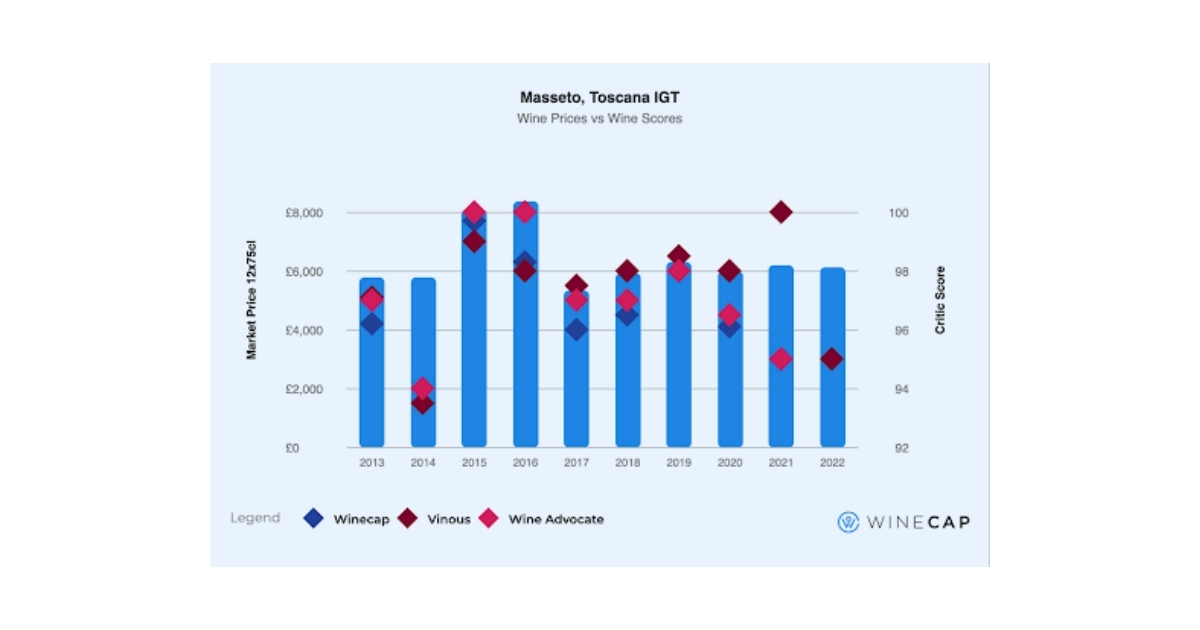
Earlier this month saw the release of its latest 2022 vintage at £6,140 per 12×75, down 1% on last year. The wine achieved 95 points from Antonio Galloni (Vinous) – his lowest score since the 2014. Still, he described it as ‘elegant and polished’ and ‘super refined’.

When it comes to value for money, the 100-point 2021 vintage makes a better buy. The lower-priced but higher-scored 2018 and 2017 vintages also offer better value. All of these vintages sit below the average brand price of £7,812 per case. Notably, our Masseto index has risen 67% over the past decade. 

Masseto fine wine prices

Solaia

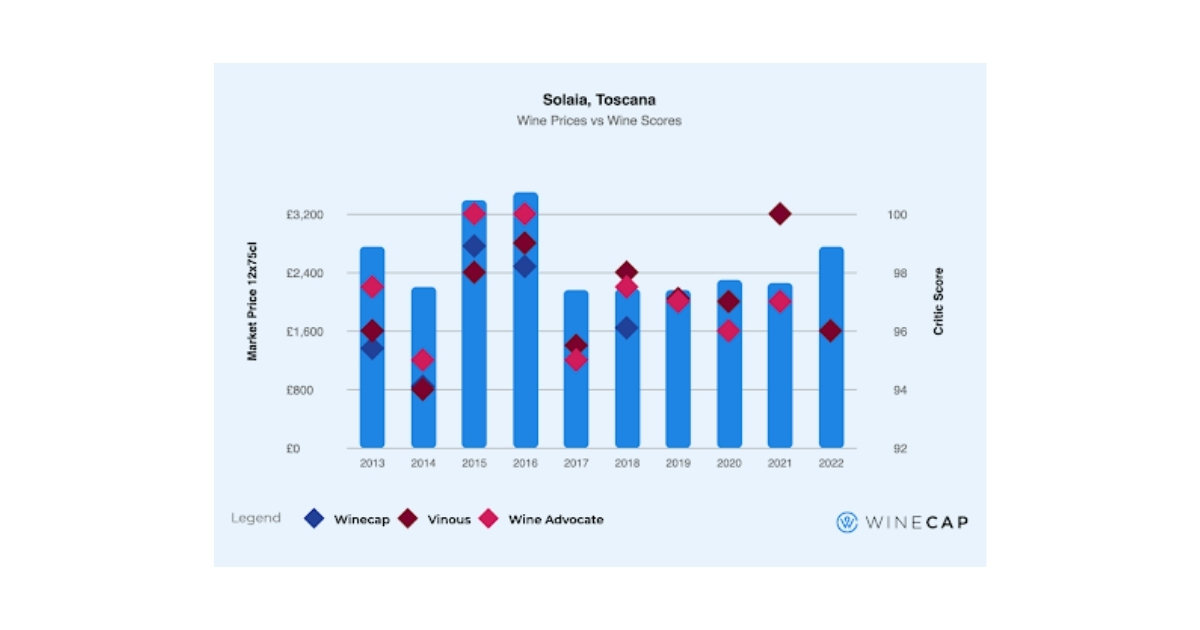
Another notable Super Tuscan follows a similar trajectory. Solaia 2022 was released at £3,300 per 12×75, flat on the 2021, which has since fallen in value. Comparing critic scores for the two weighs in favour of last year’s release, which earned 100 points from Galloni. The lower-priced 2018 Solaia also looks more attractive.

Over the past decade, our Solaia index has risen an impressive 113%. Even with the current market downturn, Solaia values have held relatively steady – up 3% in the last six months. 

Solaia fine wine prices

Opus One 

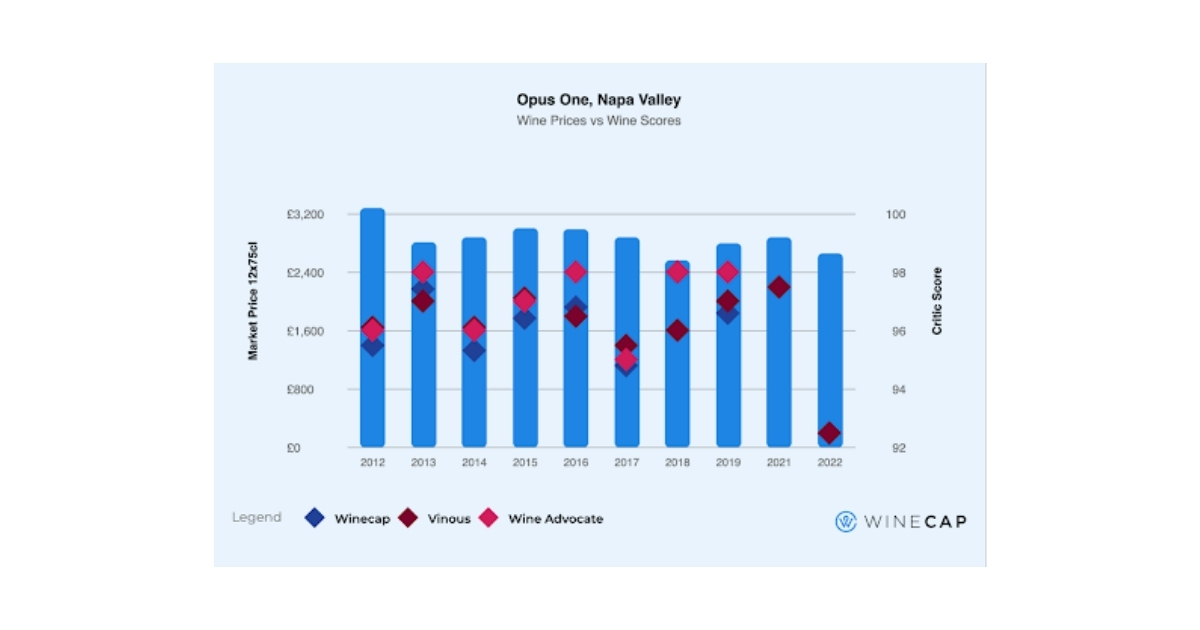
Moving past the Super Tuscans, the 2022 vintage of the USA’s most popular wine, Opus One, was released earlier this month at £2,820 per 12×75. The wine received 92+ points from Galloni, 96 points from Jane Anson and 95-97 points from Lisa Perrotti-Brown MW. Higher-rated vintages like 2018 and 2019 look better poised for investment.

The overall performance trajectory of Opus One has been positive: the brand is up 4% in the last six months, 18% in the last five years, and 95% in the last decade.

Opus One Napa Valley fine wine prices

Penfolds Grange 


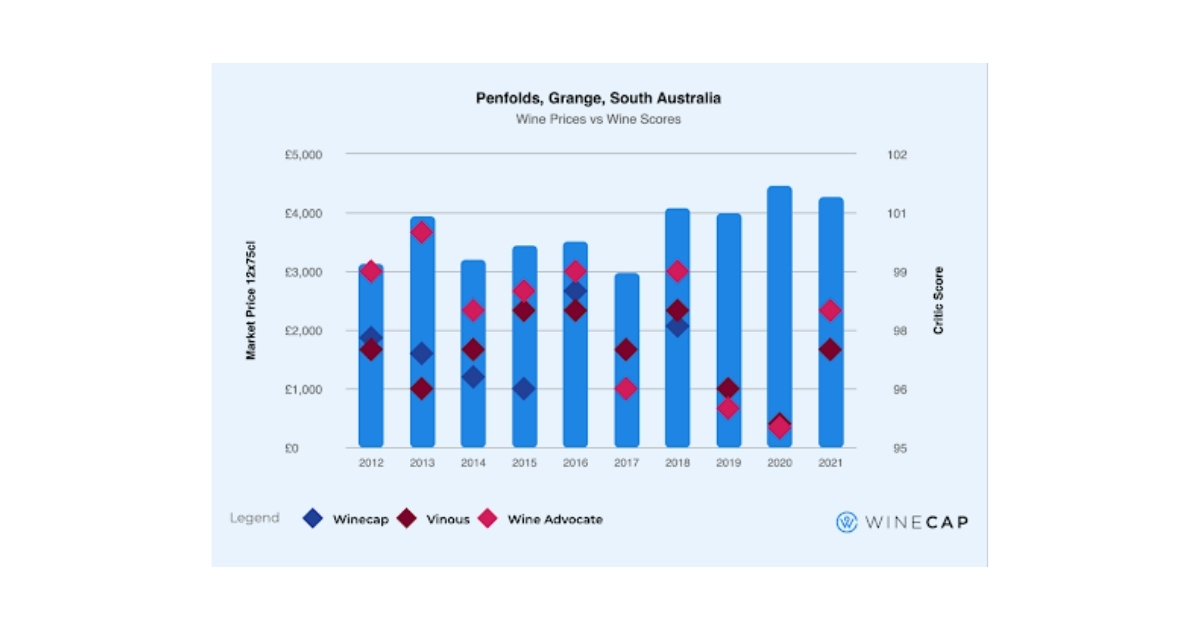
Penfolds, Australia’s leading wine brand, released its 2021 vintage slightly below 2020 but above most readily-available older vintages. The new release achieved 98 points from Jane Anson and Erin Larkin (Wine Advocate). Still, buyers will find better value in 2015 and 2016 – two of the most sought-after Penfolds Grange vintages.

Penfolds Grange Australian fine wine prices

Seña

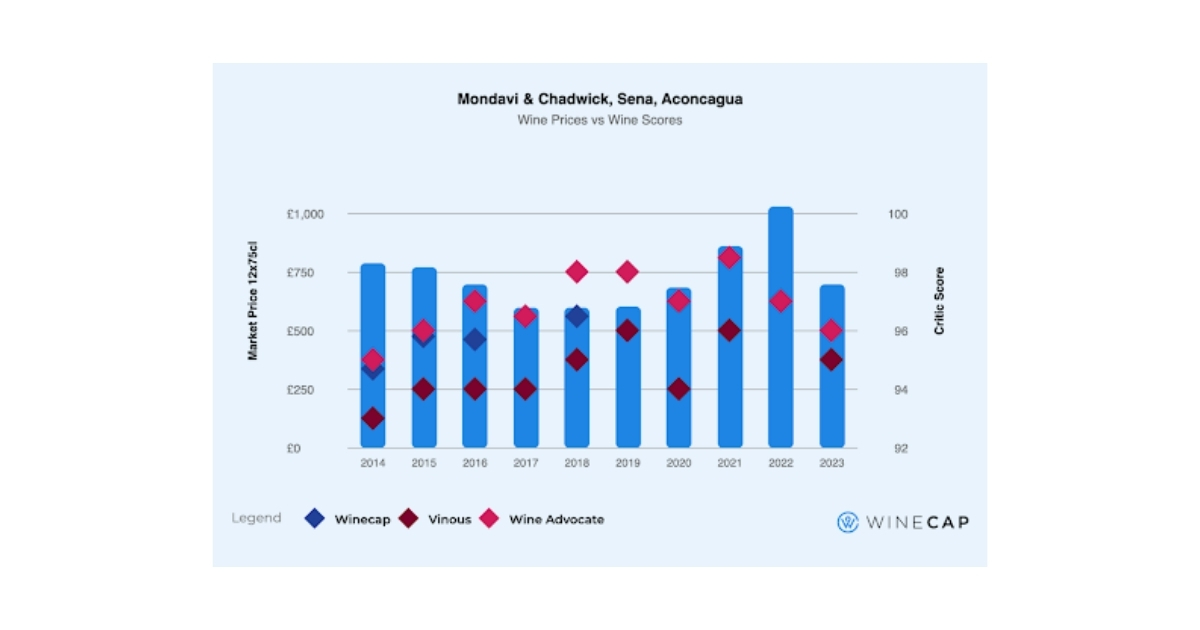
The 2023 vintage of Seña, which received 95 points from Joaquin Hidalgo (Vinous) and Jane Anson, was released at £720 per 12×75, down 36% on last year. Still, the 95-point 2018 and 96-point 2019 remain available at lower prices. 

In the last six months, our Seña index has risen 2%; over the past decade, it is up 70%.

Mondavi and Chadwick Sena fine wine prices

Almaviva

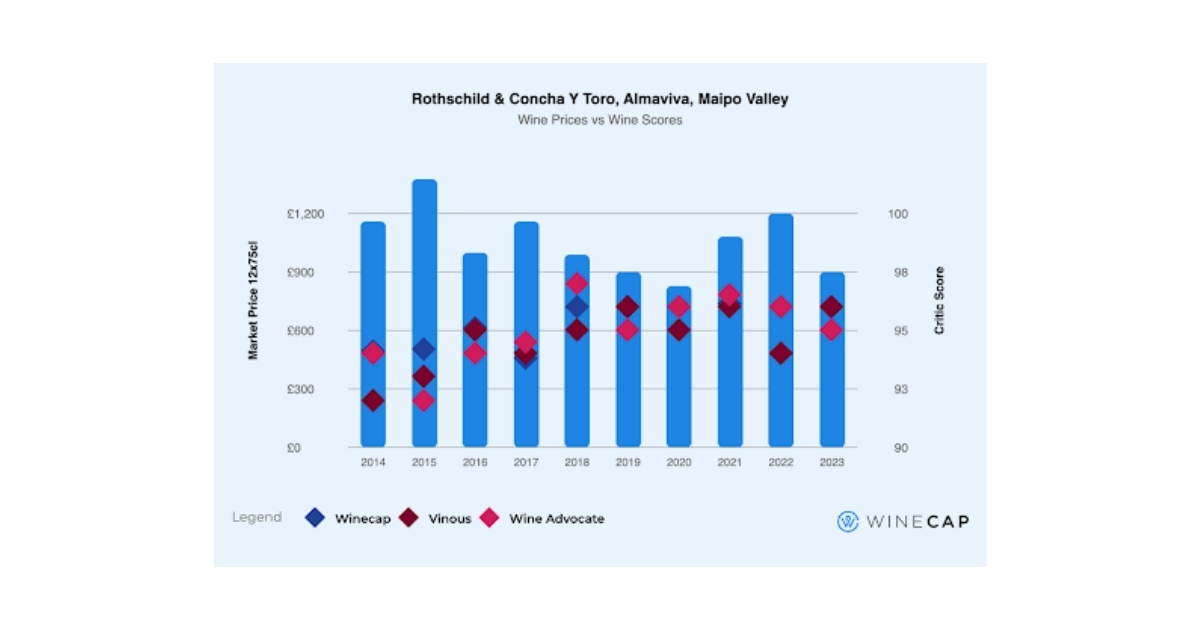
Almaviva, the most popular Chilean wine brand, also offered its 2023 vintage via La Place this September, at £924 per 12×75 case. The new vintage was awarded 96 points from Joaquin Hidalgo, placing it on par with the 2021 and 2019 vintages. The 2023 Almaviva has been one of the better value La Place releases, although from its back vintages, 2020 and 2019 look equally or even more attractive.

Almaviva fine wine prices

In terms of overall brand performance, our Almaviva index is up 141% in the last decade. The brand’s average price per case now stands at £1,565.

The 2025 La Place campaign inevitably reflects the global economic climate as well as the challenges and the resilience of today’s fine wine market. A cautious economic backdrop and softer demand have prompted some estates to step aside and others to lower prices, yet La Place continues to expand in scope and influence.

The arrival of new producers from Argentina, Australia, the Loire, and California highlights its ongoing globalisation, while established icons like Masseto, Solaia, Opus One, and Almaviva still command worldwide attention. The key for buyers remains having a selective and comparative approach. While new releases carry prestige and immediate buzz, back vintages often provide stronger value and proven performance. 

Want to learn more? See also: Is buying early always the best investment?

WineCap’s independent market analysis showcases the value of portfolio diversification and the stability offered by investing in wine. Speak to one of our wine investment experts and start building your portfolio. Schedule your free consultation today.
 

Categories
News

Cautious optimism for Australian wine amid tariff review

  • Australia and China have agreed to a suspension of their ongoing dispute over the steep tariffs imposed on Australian wine since November 2020.
  • The tariffs had a profound impact on demand and price performance of Australian wine.
  • Australia’s best price performers have risen over 40% in value in the last year.

Australian wine tariffs under review

In a significant shift that could redefine trade relations between Australia and China, the two nations have agreed to a suspension of their ongoing dispute over the steep tariffs imposed on Australian wine since November 2020. This development comes ahead of Australian Prime Minister Anthony Albanese’s forthcoming trip to Beijing, marking a potential thaw in the trade tensions that have severely impacted Australia’s wine industry.

While the Chinese government has consented to an expedited five-month review of the punitive duties, which have plummeted Australia’s wine exports from over $1 billion to a mere $12 million, there remains a cautious optimism. Despite this progress, industry experts predict that even if the tariffs are promptly revoked, the Australian wine sector, which has undergone substantial restructuring in response to the lost Chinese market, would still require approximately two years to recuperate and effectively redistribute its current surplus.

Impact on Australia’s wine investment market

The Chinese tariffs, ranging from 180% to 200% on Australian wine imports, had a profound impact on Australia’s budding secondary market. The country has historically been the second most important fine wine player from the New World after the U.S., enjoying greater demand than South Africa, Chile or Argentina.

After a record-breaking year of trade in 2020, Australia’s investment market shrank in 2021. The number of different Australian wines traded on Liv-ex declined 32.2% year-on-year, as demand decreased.

Fewer wines from Australia made it into the rankings of the most powerful brands in the world. Australia’s leading label, Penfolds Grange, dropped in the 2021 Power 100 rankings, from fifth in 2020 to 45th place in 2021. In last year’s edition of the rankings, the wine fell further – from 45th to 55th place, while Henschke exited altogether. Part of the reason is that Penfolds has historically been heavily reliant on the Chinese market. In an attempt to rebuilt tariff-hit business, earlier this year Treasury Wine Estates, owner of Penfolds, announced the introduction of its first China-sourced premium wine.

Australian wine price performance

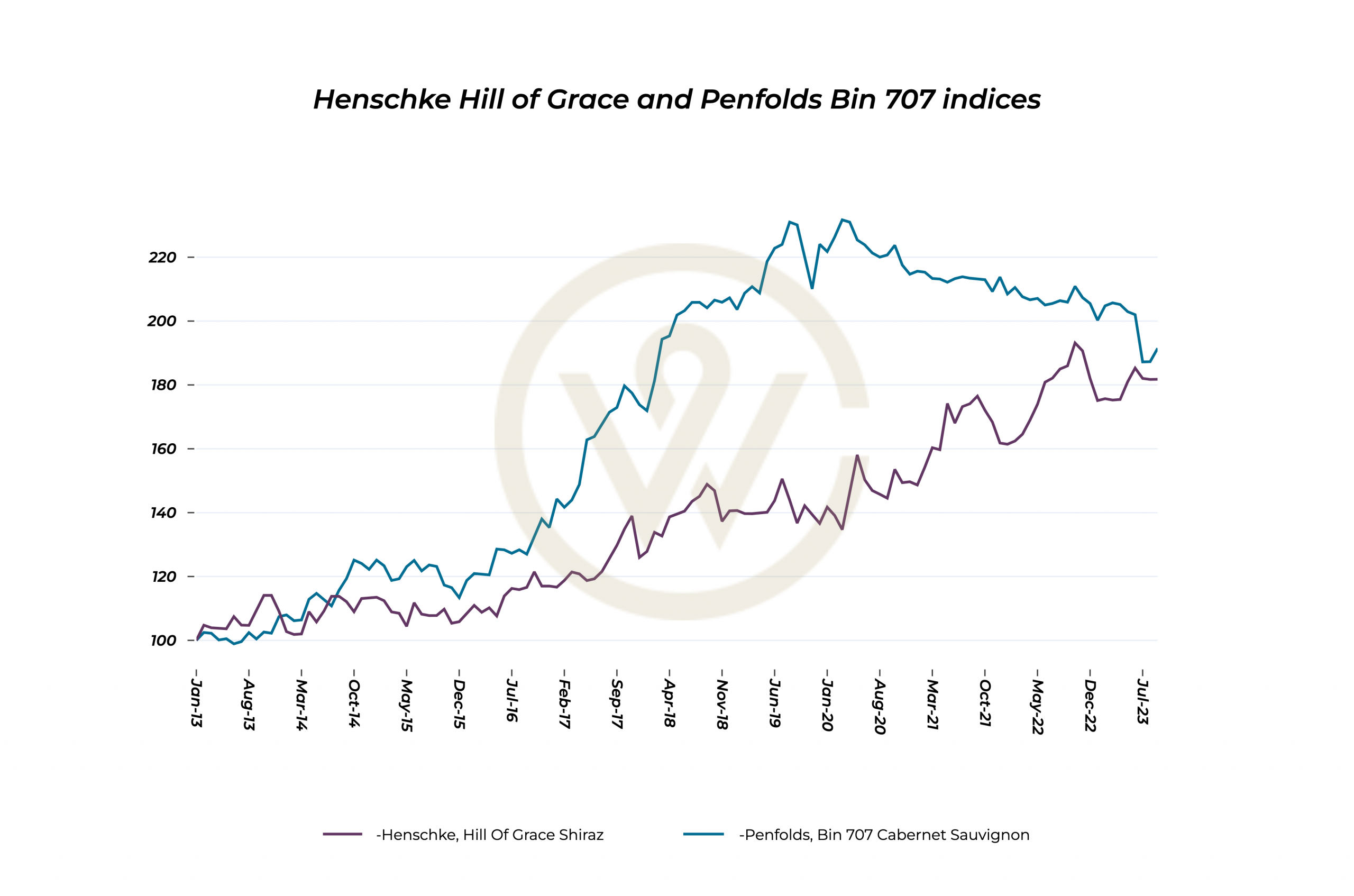
Since the tariff introduction, prices for some of the top wines have dipped, creating pockets of opportunity. For instance, the average price of Henschke Hill of Grace is down 4% in the last year; similarly, Penfolds Bin 707 is down 9%. While their trajectories are different, the long-term growth trend remains, with over 90% rise in the last decade.

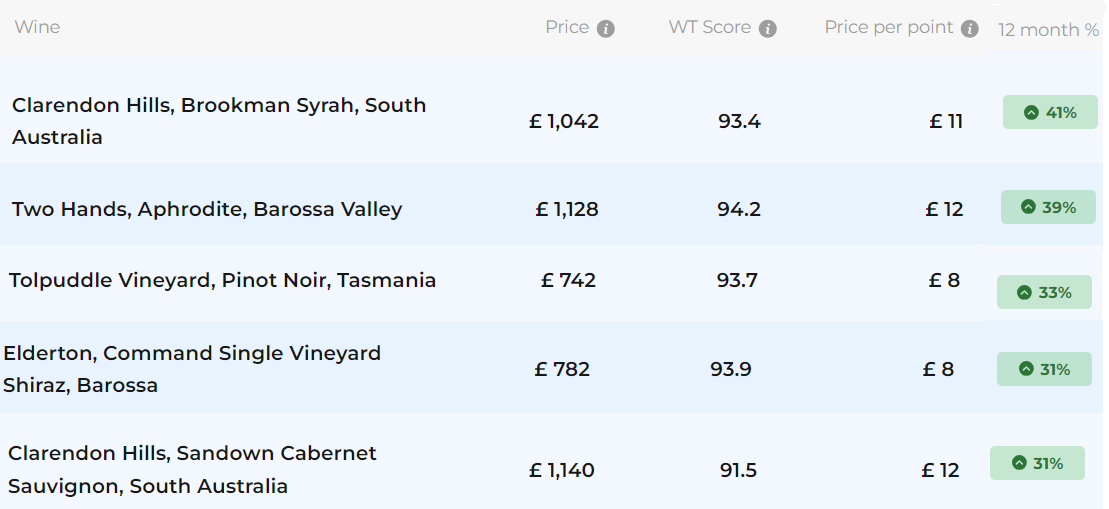
Some Australian brands have seen impressive price performance despite the ongoing trade tension. The table below shows the five best performers on Wine Track in the last year, which have risen between 31% and 41% on average. Clarendon Hills Brookman Syrah leads the rankings, with an average price per case of £1,042. Two Hands Aphrodite has been the second-best performer, up 39%.

The cautious optimism for Australian wine will likely affect its secondary market performance. As demand rises, so will prices. It remains to be seen if a potential tariff suspension will bring back the momentum to a region that has quietened down in the last three years but nonetheless remains an important New World representative.

WineCap’s independent market analysis showcases the value of portfolio diversification and the stability offered by investing in wine. Speak to one of our wine investment experts and start building your portfolio. Schedule your free consultation today.
Categories
News

Penfolds Innovates New French-Australian Blend

The innovative Australian producer Penfolds is pushing winemaking boundaries even further with its soon-to-be-released wine that is a blend of Bordeaux and Australian grapes.

‘Penfolds II Cabernet Shiraz Merlot 2019’ blends Bordeaux-grown Cabernet Sauvignon and Merlot grapes with Shiraz from South Australia. The project was brought to fruition through Penfold’s partnership with Thiénot, a Champagne house that owns Dourthe in Bordeaux.

Peter Gago, Penfolds’ chief winemaker, was delighted at a press conference in London with the imminent release of the new project, but highlighted the logistical problems in shipping a container of French wine to Australia where it was blended with the Shiraz. Both components were from the 2019 vintage, although the Shiraz was six months older due to its grapes having been harvested from vineyards located in the southern hemisphere.

Penfolds’ aim was to make wines sourced from around the world in its ‘house style’. Gago added that the key to making the wines was to have ‘ripe tannins from the start’. 

The wine is being released this month under the label ‘FWT’ (French Winemaking Trial), along with another expression that’s a Bordeaux blend which also forms part of the ‘Collection’. The objective behind this activity is to expand the Penfolds range while keeping its signature character.

Gago commented on this new release, saying: ‘it is done through the Penfolds lens: we are not saying the wine is better, but done in the Penfolds way.’

This is just the beginning of the pioneering Australian brand breaking new ground. One interesting future project would be a blend of Australian Shiraz with Syrah grapes from the Northern Rhône, as the Rhône is the original heartland of Syrah, better known as Shiraz in the New World. Gago confirmed that we might not have too long to wait as a ‘project with the Rhône Valley’ is in the pipeline. 

There’s certainly a lot going on at Penfolds and we’re excited to learn what the next new innovative launch looks like.

Read more about Penfolds’ recent made in China project here.

Categories
News

Penfolds to Produce Special Made-in-China Bottling

Penfolds is Treasury Wine Estates’ most iconic brand. Its most sought-after bottling is undoubtedly ‘Grange’ which is revered by wine lovers and collectors the world over and has received a wealth of 100 point scores, rave reviews and awards since its first official vintage in 1960.

China is an important market for Treasury Wine Estates and its Penfolds wines are in high demand. However, due to the eye-wateringly high tariffs (up to 200%) that were imposed by Beijing in November 2020, its exports to the country are down by 26%. 

In order to supply its wines to China as smoothly as possible in future, Treasury Wine Estates has found a way to bypass the tariffs: by growing grapes and making wines domestically to create ‘Penfolds China’. The international drinks company has been experimenting with viticulture in the western province of Yunnan in the Ningxia and Shangri-la regions and is happy with the results of its ‘primarily Cabernet-based’ wines so far, as Chief Executive Officer Tim Ford commented: ‘China is an emerging fine winemaking region and we’re confident we can produce a premium Chinese Penfolds that maintains the distinctive Penfolds house style and uncompromising quality’.

Penfolds is expected to release this new wine in the second half of 2022 and each bottle will reach between A$30 – A$50, as reported by Bloomberg.

This isn’t the first time that Penfolds has looked to foreign shores in order to push winemaking boundaries. It launched Penfolds California last year, with a series of wines made in Napa from Cabernet Sauvignon and Shiraz. ‘Quantum’, its top cuvée, was released at £545, 10% higher than Grange in the UK. Interestingly, its parent company has also acquired vineyard holdings in Champagne and Bordeaux.

All eyes are sure to be on China, Champagne and Bordeaux over the coming months and years as the fine wine world waits to see which other innovative and ground-breaking wines Penfolds releases from both established and emerging wine regions.