Categories
News

Bordeaux 2025 En Primeur: Quality meets a market at the crossroads

  • Bordeaux 2025 is a low-yield, heat-shaped vintage delivering concentration, freshness, and a clear shift toward precision viticulture.
  • Early reports point to a high-quality vintage with the potential to rival benchmark years like 2010 and 2016.
  • Set against a cooling market, the En Primeur campaign represents a critical opportunity to reset expectations around pricing and value.

From April 20th to 23rd, 2026, Bordeaux welcomed thousands of merchants, critics, and collectors for the En Primeur tastings of the 2025 vintage. Shaped by intense heat and reduced yields, the new vintage reflects a growing emphasis on precision viticulture – an approach that could come to define Bordeaux’s modern identity.

Yet the usual energy surrounding En Primeur unfolds against a more cautious economic backdrop. Bordeaux finds itself in a period of recalibration. As the first in-barrel scores emerge and the campaign gathers momentum, attention turns not only to what sets the 2025 vintage apart, but also to whether this release can offer real value.

A note on Bordeaux En Primeur

Few moments in the fine wine calendar carry the weight of En Primeur week. Orchestrated by the Union des Grands Crus de Bordeaux (UGCB), the event sees chateaux open their doors to professionals eager to sample wines just months after they were harvested.

Unlike the bottled wines, the En Primeur wines are still unfinished, first presented while ageing in oak. Tasting from barrel requires an expert palate to see through the raw tannins and vibrant acidity to glimpse the potential for greatness years down the line. It is a period of masterclasses, technical presentations, and intense market discussion that signals the pricing direction for the entire year ahead.

The 2025 represents a fascinating stylistic shift. Despite the heat, alcohol levels are reportedly low to moderate. The wines have pronounced aromatics, silky tannins and brisk acidity – hallmarks of great ageing potential. 

Bordeaux 2025: What we know so far

Bordeaux weather and crop reports indicate that 2025 was a year of climatic extremes, resulting in high quality but notably low yields. In fact, production statistics show that 2025 is the smallest crop since the frost-bitten 1991, with yields across many top appellations falling 15-30% below the five-year average.

A season of heat and superb ripening

The growing season was defined by a warm spring and a blistering summer. June 2025 was recorded as one of the hottest in French history, second only to the infamous 2003. This heat, combined with a dry August, led to:

  • Smaller berries: The lack of water and high heat restricted grape size, leading to intense concentration and thick skins.
  • Exceptional phenolic ripeness: While the yields are small, the quality of the tannins is reportedly superb.
  • The “rain of relief”: Just as drought stress became critical, rain in late August and early September refreshed the vines, preserving essential acidity and preventing alcohol levels from spiralling out of control.

Regional highlights

  • The Left Bank (Médoc, Pauillac, St-Julien): The deep-rooted old Cabernet Sauvignon vines thrived, producing structured, age-worthy wines reminiscent of 2022 but with a touch more freshness.
  • The Right Bank (St-Émilion, Pomerol): Clay and limestone soils held onto moisture better than gravel, allowing Merlot to reach lush ripeness without excessive heat stress.
  • Dry whites: Harvested early in mid-August, these show vibrant acidity and tropical aromatics.

The Bordeaux market: The recalibration phase

While the 2025 quality is expected to be high once critic scores are released, the market mood is best described as unsettled. For decades, Bordeaux held an unchallenged dominance in the fine wine market. Recent years have seen a cooling of demand, especially for young releases.

The challenges

  • Increased competition: High-quality rivals from Burgundy, Tuscany, Napa Valley, and even emerging regions have eaten into Bordeaux’s traditional market share.
  • Pricing fatigue: Consistent price hikes in recent En Primeur campaigns – often regardless of the broader economic climate – have tested the loyalty of even the most dedicated collectors.
  • Stock overhang: Many merchants are currently carrying significant inventories of recent great years (2018, 2019, 2020), which has created a bottleneck in the secondary market.

The silver lining

Despite these headwinds, the appetite for older, physical vintages remains robust. There is a clear divergence in the market: while younger vintages (2021-2023) struggle for traction, back vintages from the mid-2000s and 2010s continue to see steady price appreciation. This suggests that the brand of Bordeaux is as strong as ever. The issue lies specifically with release pricing.

Buying wine En Primeur: The question of value

For decades, the “golden rule” of Bordeaux was that En Primeur represented the lowest price point for a wine’s entire lifespan. Today, that assumption is being challenged by data.

Looking at prices at release versus now, several recent vintages can be found on the secondary market for the same price or even less. This has shifted the focus from buying everything to selective acquisition based on specific brand value. Tools like Wine Track, which show the historic performance of specific wine brands, can help investors understand long-term trajectories.

Why data matters

In the 2025 campaign, savvy buyers will be looking for relative value. If a 2025 release is priced higher than a physical, high-scoring 2019 or 2020 vintage currently sitting in a merchant’s warehouse, the incentive to buy En Primeur diminishes. However, because the 2025 yields are so low, scarcity may drive demand for the top-tier “blue chip” estates (the First Growths and their Right Bank equivalents).

The 2025 Bordeaux En Primeur verdict

As critics release their first scores over the coming weeks, all eyes will be on the “price-to-quality ratio.” The 2025 vintage has all the hallmarks of a collector’s dream: scarcity, concentration, and classical structure. For the Bordeaux trade, the 2025 En Primeur is an opportunity for a reset. With early reports pointing towards a vintage that could rival the greats of 2010 or 2016, the quality is likely there.

If the châteaux can marry this quality with a pricing strategy that respects the current market reality, 2025 could mark the beginning of a vibrant new chapter for the world’s most famous wine region.

Bordeaux comment: UGCB President, François-Xavier Maroteaux speaks to WineCap

WineCap: The 2025 vintage promises high quality, yet it arrives as the secondary market has just started to recover from a five-year low, and growing geopolitical tensions discourage speculation and might isolate certain market segments. How do you intend to position the 2025 launch so it doesn’t just survive the current market, but actually revitalises the ‘Bordeaux Brand’ globally?

François-Xavier Maroteaux: The 2025 vintage is a genuine opportunity – but only if we use it wisely. First, pricing must be honest: release prices that ignore five years of secondary market correction damage trust more than they protect margins. A well-priced great vintage is far more powerful than an overpriced one. Second, the narrative must move beyond scores – 2025 has a compelling story of terroir and style that needs to reach consumers directly, not just through trade press. Third, our négociants are brand ambassadors, not just a distribution channel: the properties that genuinely invest in informing and equipping their partners will see it reflected in every market. Finally, the retreat of speculative demand is not a threat – it’s a rebalancing. Bordeaux built its reputation on wine people actually wanted to drink. Refocusing on that is not a concession to difficult times. It’s a return to what made the region great. 

WC: Where do you see the biggest interest in buying Bordeaux at release in the coming years?

FXM: The interest in buying Bordeaux at release remains genuinely global. The best proof of this is the En Primeur week itself: every year, wine professionals from more than 80 nationalities make the journey to taste and buy. That breadth of engagement, even in difficult market conditions, is a strong signal that the foundation is there. Beyond geography, there is another compelling reason to buy at release that we shouldn’t underestimate (and we should be communicating much more actively!): formats. En Primeur remains the best – often the only – window to secure large formats. Magnums, double magnums, imperials are allocated at release and rarely available later at any price. The opportunity is to refocus En Primeur on what it does uniquely well: access, formats, and relationship. That’s a proposition that holds regardless of geopolitics.

WC: Is the En Primeur system still going strong, in your personal view? Do you believe it still offers a genuine win-win? Has it become a luxury-only club for the top 50 estates?

FXM: Yes, I do believe the En Primeur system still works – but I think we need to be honest about what it has become. It works very well for a relatively narrow group of estates where brand strength and secondary market liquidity reinforce each other. For the broader Bordeaux pyramid, it is more complicated. That said, I don’t think the answer is to abandon the system. The answer is to make the win-win genuine again. That means pricing with discipline, communicating with transparency, and making sure négociants and merchants actually make money when they support a release. When that alignment exists, En Primeur is a unique and powerful tool. When it doesn’t, it becomes – as you say – a luxury club for the top names. 

FAQ: Everything you need to know about Bordeaux En Primeur

What does “En Primeur” mean?

En Primeur is a method of purchasing wine while it is still maturing in the barrel. This allows collectors and investors to secure highly sought-after wines before bottling and general market release. This typically happens two years after harvest.

When is the Bordeaux 2025 En Primeur week?

The official tasting week for the 2025 vintage takes place from April 20 to April 23, 2026. During this time, international critics and trade professionals sample the wine from barrel to determine early scores and quality ratings.

Is the 2025 Bordeaux vintage good?

Bordeaux 2025 is a high-quality vintage with intense concentration and bold fruit profiles.Yields are lower than average, which often results in wines with significant ageing potential and structural density.

Why are yields low for the 2025 vintage?

The 2025 growing season saw record-breaking heat and extended dry periods. While this led to exceptional grape ripeness and thick skins (tannin), it resulted in smaller berries and less juice. These lower yields often drive up demand due to the limited number of cases available globally.

Is buying En Primeur a good investment?

Buying En Primeur can be a strategic investment, particularly for top-tier estates (First Growths and “Super Seconds”). However, it is essential to use data-driven insights. While release prices were historically the lowest point of entry, current market fluctuations mean buyers should compare release prices against available physical back-vintages to ensure they are getting true value, as older vintages can often present better buying opportunities than En Primeur.

When is the delivery of the 2025 Bordeaux wines?

In the spring or summer of 2028, following their mandatory ageing period in the châteaux cellars.

What are the “big three” factors to watch in the 2025 campaign?

  1. Critic scores: Initial ratings from major publications will dictate immediate global demand.
  2. Release pricing: How châteaux price their wine in relation to the secondary market.
  3. Volume: With lower yields reported, the scarcity of specific labels will likely be a driver of demand.

WineCap’s independent market analysis showcases the value of portfolio diversification and the stability offered by investing in wine. Speak to one of our wine investment experts and start building your portfolio. Schedule your free consultation today.
Categories
Quarterly-reports

Q1 2026 Fine Wine Report

In our first quarterly summary for the year, we look at how global geopolitical instability has affected demand for safe-haven assets and how fine wine is poised to benefit. We also examine the pricing strategy of recent releases through La Place de Bordeaux, and what this tells us about the state of the market and how it sets the tone for the upcoming En Primeur campaign. Beyond the news headlines, we deep dive into this quarter’s top performers – wines that have shown resilience and, in some cases, double-digit returns.  

Key findings: 

  • Geopolitical instability in the Middle East has driven a “flight to safety” among investors. As a tangible hedge against inflation and market volatility, fine wine is keenly poised.
  • New releases from Yquem, Latour, and Bollinger have combined high quality with keen pricing strategies that prioritise market liquidity.
  • Bordeaux accounted for 80% of the quarter’s top performers, led by Sauternes and Barsac.
  • A consistently increasing bid:offer ratio throughout Q1 suggests the secondary market has established a solid floor and is seeing defensive growth entering Q2.  
  • Landmark trade deals in India and Europe are redirecting global liquidity, creating a structural foundation for long-term demand growth in the East.
  • A new record-breaking auction result set by DRC 1945 at $812,500 highlighted the unprecedented value the market continues to place on rare, historic assets.

Executive summary

The first quarter of 2026 was a tale of two halves, beginning with a surge of renewed market optimism that quickly collided with a transformative geopolitical crisis. The year opened with the FTSE 100 hitting historic milestones and a “Goldilocks” cooling of inflation, but the upward trajectory of mainstream markets was abruptly severed by the outbreak of the war in Iran and the subsequent closure of the Strait of Hormuz. The conflict triggered an immediate and aggressive “flight to safety,” sending gold and the U.S. Dollar to premium levels, simultaneously forcing a dramatic repricing of global energy and supply chain risks. 

As markets continue to grapple with a destabilised Middle East and investors look to navigate heightened volatility, assets that offer both tangibility and independence from traditional market shocks like fine wine can be uniquely positioned to benefit.

According to our annual wealth management survey (full results to be released next week), 50% of US and 35% of UK respondents believe that global conflict actually helps fine wine perform during periods of market volatility in the sense that it highlights fine wine’s role as a psychological and financial refuge. Fine wine’s physical nature provides a sense of security that digital or equity-based assets cannot replicate in a climate of uncertainty. 

While fine wine operates on its own internal dynamics, the signs of a market recovery from within have been highly encouraging. The bid:offer ratio has continued to rise throughout the quarter, signalling increased demand and growing liquidity – both of which have underpinned price stability. As our report explores, while broader market indices remain steady, select high-performing labels have already registered double-digit returns this quarter.

Perhaps the most encouraging sign of optimism has been the sensible pricing of new releases. Vintages that offer clear relative value compared to back-catalogue stock are reinvigorating buyer appetite and restoring long-term trust. This disciplined approach to pricing sets a constructive tone for the upcoming Bordeaux En Primeur campaign – the defining event of Q2 – which we anticipate will be a critical barometer for the market’s direction in the months ahead.

What new wine releases tell us about the state of the market?

While the global economy faces external shocks, the fine wine market is providing its own internal “green shoots”. The narrative of the last six months has been one of adjustment and acceptance. We are seeing a concerted effort from major estates to meet the market where it is, rather than where they wish it to be.

This trend arguably began last summer with Taittinger Comtes de Champagne Rosé  2012. Offered at what many consider the low point of the recent market cycle, it was the first major release priced with enough sensitivity to reinvigorate trade. That successful launch set a precedent that we are now seeing echoed across the board in the 2026 Spring releases from giants like Bollinger, Yquem, and Latour.

The “Yquem Factor”: Quality meets stability

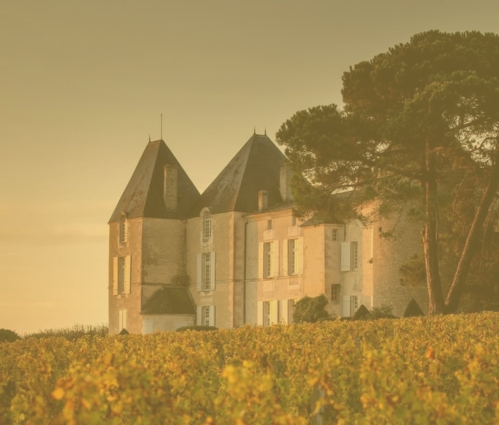
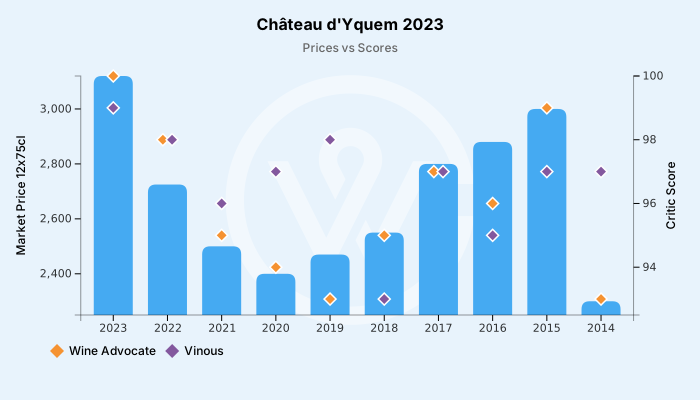
The recent release of Château d’Yquem serves as a primary example of how tangibility and quality are driving the current “flight to safety.” With a rare unanimity of 100-point scores from Wine Advocate, James Suckling, and Vinum, this “epochal” vintage is being compared to the legendary 2001. However, by coming to market at roughly 50% of the price of its 2001 peer, Yquem is offering a clear value proposition in a volatile world. This sensible entry point, combined with the fact that our Wine Track Yquem index has remained remarkably stable since early 2025, highlights the region’s role as a resilient financial refuge.

chateau yquem 2023 wine prices

Latour 2019: The benchmark for “keen” pricing

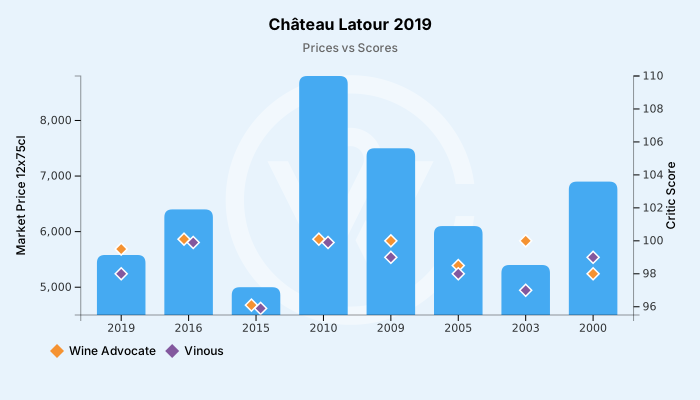
The momentum has reached a crescendo with the release of Château Latour 2019. While critics like William Kelley describe it as a “profound wine in the making,” its true significance lies in its pricing strategy. Released at a more accessible level than any comparable back vintage, it sits 15% lower than the 2016, even as prices for the 2009 and 2010 vintages have begun to climb. By pricing the 2019 to offer immediate relative value, Latour is successfully reinvigorating trade and setting a disciplined, optimistic tone for the upcoming campaign in the region.

chateau latour 2019 wine prices

Bollinger La Grande Année 2018: Value in Champagne

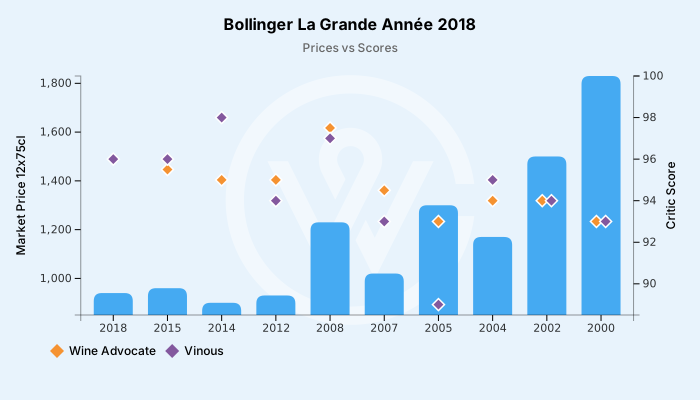
Outside of Bordeaux, Champagne house Bollinger released its 2018 La Grande Année Brut and Rosé this March.  As the first of a trio of exceptional warm vintages – drawing comparisons to the legendary 1988–1990 run – the wine arrives with significant critical weight. Boasting a 96-point score from Antonio Galloni (Vinous), the 2018 notably outperforms the prestigious 2002 and 2012 editions. Crucially, Bollinger has matched this high quality with an aggressive pricing strategy, entering the market at an approximately 15% lower cost than the most recent 2015 release. The competitive price point of the house echoes the strategy seen with Latour and Yquem, proving that producers across the board understand the importance of liquidity and building buyer trust.

bollinger grande annee 2018 champagne

Acceptance of the “new reality”

These releases signal a significant shift in the primary market. By pricing new vintages to offer relative value against existing back-stock, estates are rebuilding trust and liquidity. This discipline is being mirrored in the secondary market, where we are seeing:

  1. Improved trade volumes: A rising bid:offer ratio across the major exchanges.
  2. Sustained stability: A “floor” has been established, allowing for the double-digit returns seen in our top-performing wines this quarter.

This environment of sensible pricing and high critic consensus sets a highly optimistic tone for the upcoming Bordeaux En Primeur campaign. It suggests that the market has not just stabilised, but is actively preparing for its next growth phase.

The best-performing wines of Q1 2026

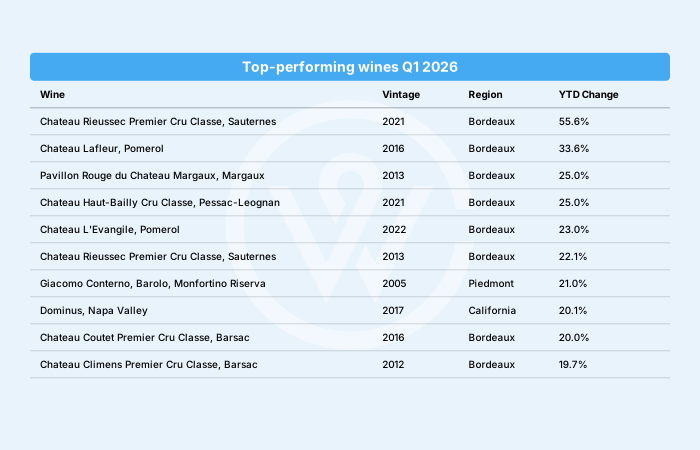
While the broader market has focused on stability, a selection of labels has delivered exceptional year-to-date (YTD) growth. The first quarter was unequivocally dominated by Bordeaux, which accounted for eight of the top ten performers, showcasing the region’s enduring appeal as a primary destination for “flight to safety” capital.

The resurgence of Sauternes and Barsac

The most striking trend of Q1 has been the performance of Bordeaux’s sweet wines. Chateau Rieussec 2021 led the market with a remarkable 55.6% YTD increase, further supported by its 2013 vintage, which grew by 22.1%. This positive momentum can be tied to buyers finding value in back vintages in light of more expensive recent Rieussec releases. This trend extended to Barsac, where Chateau Coutet 2016 and Chateau Climens 2012 both posted gains near 20%. This suggests a significant re-rating of the sector as investors seek out high-quality wines that may have been previously undervalued.

Blue-chip resilience

Beyond the sweet wine categories, Right Bank powerhouses and elite Left Bank estates showed defensive strength:

  • Chateau Lafleur 2016 saw a significant jump of 33.6%, reinforcing its status as a collector favourite with high scarcity value.
  • Pavillon Rouge du Chateau Margaux 2013 and Chateau Haut-Bailly 2021 both delivered a robust 25% return, proving that quality second wines and top-tier Cru Classé estates remain resilient despite the wider geopolitical “re-pricing.”

Diversification beyond Bordeaux

Outside of France, top-tier international labels also found favour. Italy’s Giacomo Conterno, Barolo Monfortino Riserva 2005 rose by 21.0%, while California’s Dominus 2017 represented Napa Valley with a strong 20.1% gain.

top performing wines quarter 1 2026

New wine auction record

Perhaps the most significant wine event in Q1 came from the auction room, which saw a new record broken for the most expensive wine ever sold. In a definitive display of the market’s appetite for rare, tangible history, Acker Merrall & Condit auctioned a single bottle of 1945 Domaine de la Romanée-Conti (DRC) Romanée-Conti for a record-breaking $812,500 (including buyer’s premium).

This sale shattered the previous world record for a standard 75cl bottle, set in 2018. As one of only 600 bottles ever produced from this “unicorn” vintage – harvested at the close of WWII and just before the vineyard’s vines were pulled for replanting – the 1945 DRC represents the pinnacle of provenance and scarcity. The new record is a powerful reminder that even amidst geopolitical uncertainty, the world’s most historic and tangible assets continue to command unprecedented value.

Q1 wine tariffs update

A significant theme this past quarter was the shifting landscape of global wine tariffs, ranging from US policy changes and the landmark India trade deal to the evolving terms for Australian wine imports into Europe.

The US “tariff reset”

The US market began the quarter in a state of regulatory flux. In February, the Supreme Court struck down previous “emergency” tariffs as unconstitutional, only for the executive branch to immediately pivot to Section 122 of the Trade Act. This imposed a new 10% baseline tariff (with threats to rise to 15%) on almost all imported wine.

  • The market impact: While this has created a “wait-and-see” approach among some US collectors, the secondary market has proven remarkably resilient. Unlike previous cycles, the market is no longer solely dependent on a hyper-active US base; instead, it is being bolstered by robust demand from Europe and Asia. Furthermore, US buying activity has shown improvement compared to the same period last year, suggesting that seasoned collectors are looking past the “noise” of temporary duties.
  • The opportunity: These new tariffs are temporary by design, set to expire in late July 2026 unless extended by Congress. This 150-day window has paradoxically increased the appeal of existing “pre-tariff” stock already held in US warehouses, while the broader global market continues to find its floor through diversified international trade.

India: The next great frontier

Perhaps the most significant long-term development for the fine wine market is the newly signed EU-India and UK-India trade deals. For nearly two decades, India’s 150% federal import tariff has stood as the single greatest barrier to entry for the world’s most prestigious estates.

  • The update: Under the new agreements, tariffs on premium EU and UK wines are being slashed from 150% down to 100% immediately, with a glide path to 25% over the next decade for bottles meeting specific price thresholds.
  • The impact: While this policy change is unlikely to transform the market overnight, it represents a massive structural milestone. With India’s middle class projected to comprise 60% of the population by 2047, this tariff reduction provides the necessary foundation for India to eventually rival China as a primary pillar of global fine wine demand. By lowering the cost of entry, these deals open a vital new channel for liquidity and diversification at a time when traditional Western markets are facing increased volatility.

EU removes tariffs on Australian wine imports

Following years of friction, Australia and the EU finalised a Free Trade Agreement (FTA) in late March. This deal effectively removes almost all EU import tariffs on Australian wine – a move expected to save Australian exporters roughly $37 million annually.

  • The trade-Off: In exchange for zero-tariff access, Australia has agreed to protect 1,600 EU Geographical Indications (GIs). Most notably, Australian producers will phase out the use of “Prosecco” on export labels over the next ten years.
  • The benefit: This agreement levels the playing field for Australian “fine wine” exports into Europe, allowing high-end producers from regions like Margaret River and the Barossa to compete more aggressively with European counterparts on price.

Why this matters 

As global trade becomes more fragmented, these shifts are redirecting the flow of fine wine. While US demand is temporarily throttled by domestic policy uncertainty, the “opening up” of India and the streamlined EU-Australia trade route suggest that liquidity is shifting toward the East and the Commonwealth.

Fine wine outlook for Q2 2026

The global macro environment remains defined by heightened uncertainty. With the conflict in the Middle East continuing to disrupt energy corridors, global inflation has seen a resurgence. In this high-inflation environment, the case for fine wine as a proven inflation hedge and a “tangible” store of wealth has rarely been more compelling. Unlike traditional equities, which remain sensitive to fluctuating interest rates and energy-driven volatility, fine wine’s historical low correlation to mainstream markets is expected to remain its greatest strength throughout the spring.

The Bordeaux 2025 En Primeur campaign

The defining event for the wine trade will be the Bordeaux 2025 En Primeur campaign (April–June). Following the “keen” pricing strategies established by Latour and Yquem in Q1, the industry mood is one of cautious optimism. There is a clear expectation that for the 2025 vintage to succeed, estates must continue this trend of market-aligned pricing.

  • The opportunity: If châteaux offer the 2025 vintage at a relative discount to existing physical stock, we can expect a release of sideline capital into the market.
  • The sentiment: Early reports suggest the 2025 vintage is one of exceptional quality, potentially providing the “high-score, high-value” combination required to sustain the market’s current recovery phase.

Industry events and global liquidity

Beyond Bordeaux, the upcoming London Wine Fair and various Asian trade summits in May will serve as critical barometers for global liquidity. We expect these events to highlight the burgeoning demand from the rest of the world, especially in light of recent tariff changes.

Solid market floor

Overall, our outlook for Q2 is one of defensive growth. While the world remains volatile, the “green shoots” identified in Q1 – sensible pricing, rising bid:offer ratios, and record-breaking auction results – suggest that fine wine has established a solid floor. Its relative isolation from traditional markets can also play in its favour, providing investors with a psychological and financial refuge that continues to command value even as mainstream markets fluctuate.

Q&A

Q: How has the war in Iran impacted the fine wine market compared to gold? 

A: While gold remains the traditional “first responder” to geopolitical shocks – surpassing $5,400/oz this quarter – fine wine is also a “safe haven” asset. Its value is driven by different mechanics; while gold reacts to currency fear, fine wine reacts to the search for tangible, depleting assets. This quarter, we saw fine wine indices rise, proving the asset’s role as an effective portfolio “smoother” during times of crisis.

Q: With inflation rising again due to energy costs, is now a good time to buy? 

A: Historically, yes. Fine wine has a proven track record of outpacing inflation, particularly when cost-of-living increases are driven by supply shocks. Because it is a physical asset with a finite supply that decreases as it is consumed, it naturally holds its value better than cash. With prices for many blue-chip wines currently near a five-year floor, Q1 has presented a rare “double opportunity”: low entry prices combined with high inflation protection.

Q: What should I look for in the upcoming Bordeaux En Primeur?

A: The “golden rule” for En Primeur is relative value. We are looking for châteaux that follow the lead of Latour and Yquem by offering “keen” pricing. The 2025 vintage is reported to be of exceptional quality but with lower yields due to the August heatwaves; this scarcity, combined with sensible release prices, could make it a significant investment opportunity.

WineCap’s independent market analysis showcases the value of portfolio diversification and the stability offered by investing in wine. Speak to one of our wine investment experts and start building your portfolio. Schedule your free consultation today.