Categories
Learn

Champagne vs. Prosecco vs. Cava vs. English bubbles: Which sparkling wine should you buy?

  • In the vast world of sparkling wine, Champagne remains the global benchmark for both quality and prestige.
  • The production method creates a divide: Champagne, Cava, and most English sparkling wine use the bottle-fermented “traditional method,” while Prosecco relies on the faster “tank method.”
  • From a financial perspective, Champagne is the only truly investable sparkling wine on the secondary market.

Sparkling wine, fit for any celebration, is more than just a drink for a toast. It is a vast category defined by geography, history, and chemistry. While most people recognise the pop of a cork, the liquid inside that bottle can vary wildly depending on where the grapes have been grown and how it was made.

To understand the difference between Champagne, Prosecco, Cava, and English sparkling wine we have to look at what happens inside the cellar. While they all have bubbles, the way those bubbles are created changes the flavour, the texture, the price tag and the investment reality.

The traditional method: Champagne, Cava and English fizz

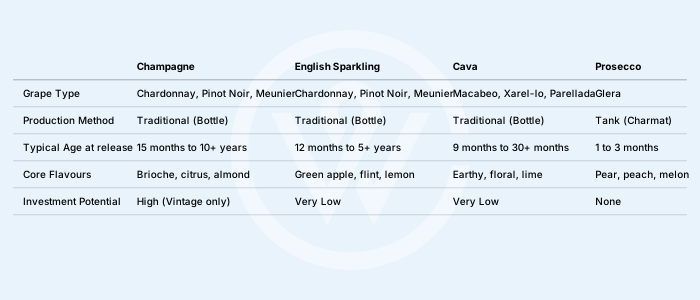
Champagne, Cava, and English sparkling wine are all made using the “traditional method.” This is the most expensive and time-consuming way to make wine.

  • First, the winemaker creates a still dry wine. 
  • Then, they put it into a bottle with a little bit of sugar and yeast and seal it with a crown cap like you’d find on a bottle of beer. 
  • A second fermentation happens inside that specific bottle. Because the carbon dioxide cannot escape, it dissolves into the wine, creating the sparkle.

The final stage has the wine sitting on the lees: the dead yeast cells. Over months or years, these cells break down and give the wine flavours of toasted bread, brioche, and nuts. This is what experts call “autolytic” character. It is the reason why a glass of Champagne often smells like a bakery, while a Prosecco smells like a fruit basket.

Champagne: The undisputed king

Champagne is a specific region in northern France. If a sparkling wine is not from there, it is not Champagne. The region is famous for its white, chalky soil. This soil acts like a sponge, holding water but also reflecting sunlight back up to the vines.

The major grapes here are: 

  • Chardonnay 
  • Pinot Noir
  • Pinot Meunier

Four other varieties are also permitted but rarely used:

  • Pinot Blanc
  • Pinot Gris
  • Arbane
  • Pinot Meslier

This combination creates a wine with incredible structure and high acidity. This acidity is the backbone that allows the wine to age for decades.

Indeed, its ageability, decades long reputation and high quality make Champagne one of the most prominent investment players on the secondary market for fine wine. Still, there is a catch. 

Most non-vintage (NV) bottles, which are the standard blends houses produce every year, do not necessarily increase in value. With very few exceptions, only vintage Champagne is investable. These are wines made from grapes harvested in a single year. They are produced in smaller quantities and are built to last.

Vintage Champagnes are the primary targets for collectors and investors looking for a return.

Looking for more? Read our Champagne Regional Report.

English sparkling wine: The rising star

The story of English sparkling wine is one of geology and changing climates. The same chalk seam that runs through Champagne actually dips under the English Channel and pops up again in the South of England.

Counties like Kent, Sussex, and Hampshire have soil that is nearly identical to the best plots in France. As the climate has warmed, these regions have become perfect for growing the same three grapes used in Champagne.

  • Chardonnay
  • Pinot Noir
  • Pinot Meurnier

The style of English sparkling wine is often very lean and crisp. It has a piercing acidity that makes it incredibly refreshing. While the quality is now world class, the market is still catching up.

Search data on Wine-Searcher shows that the most popular English sparkling wines are currently sitting just inside the top 5000 most searched for wines. Interest is growing, but it is still a long way from the global dominance of the famous French houses.

Cava: Spain’s traditional bubble

Cava is Spain’s answer to Champagne. Most of it comes from the Penedès region in Catalonia. While it uses the same traditional method as Champagne, the flavours are different because the grapes are different.

The traditional Cava blend uses:

  • Macabeo
  • Xarel-lo
  • Parellada

These indigenous Spanish grapes often produce wines that are a bit more earthy or floral. They generally have lower acidity than Champagne or English sparkling wine, which makes them feel softer in the mouth.

Despite its long history, Cava struggles on the secondary market. It is often viewed as a value-for-money option rather than a luxury collectible. This is reflected in its search rankings: even the most famous Cavas usually sit outside the top 3000 most searched for wines globally. For an investor, Cava currently lacks the secondary market activity needed to be a viable asset.

The Charmat method: Prosecco

Prosecco is a completely different beast. It comes from the Veneto and Friuli regions of Italy and is made using the “tank method” (also known as the Charmat method).

Instead of the second fermentation happening in a bottle, it happens in a large stainless steel tank. This is much faster and cheaper. The goal here is not to create bread-like flavours from yeast, but to keep the wine tasting like fresh fruit.

Glera must make up 85% of the blend with the rest consisting of:

  • Verdiso 
  • Bianchetta Trevigiana 
  • Perera 
  • Glera Lunga
  • Chardonnay
  • Pinot Bianco 
  • Pinot Grigio
  • Pinot Noir

The Glera grape used in Prosecco is naturally aromatic. It smells of white peach, pear, and honeydew melon. Because it does not spend long on the yeast, the bubbles are often bigger and frothier.

Prosecco is designed to be drunk fresh. It does not improve with age. Because of this, it has almost no presence in the investment world. Like Cava, the most popular Proseccos are found outside the top 3000 most searched for wines. It is a wine for the moment, not for the cellar.

Investing in sparkling wine: a guide

The difference in investment potential between these regions is striking. While you can find a delicious bottle of sparkling wine from any of these four places, the financial world only really cares about one.

Secondary market activity is the engine that drives wine investment. This involves collectors buying and selling bottles through auction houses or private exchanges. This activity requires three main things:

  • Brand power: A name that people all over the world recognise and want.
  • Scarcity: A limited supply that cannot meet the high demand.
  • Longevity: A wine that will actually taste better (and be worth more) in time.

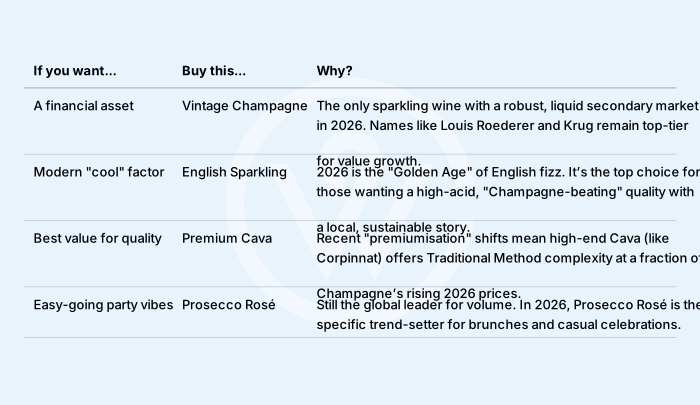
Champagne, specifically Vintage Champagne and “Prestige Cuvées” like Dom Pérignon or Krug, checks all three boxes. English sparkling wine is building the brand power, but it lacks the historical track record and data about its aging potential that investors crave. Cava and Prosecco, meanwhile, are produced in such high volumes that scarcity is rarely an issue, which prevents prices from climbing on the secondary market.Champagne sparkling wine table
Other sparkling wine regions

The world of bubbles does not end with these four. Other regions are also making their mark, though they face similar hurdles regarding investment.

  • Franciacorta: Italy’s premium sparkling wine made in the traditional method. It uses Chardonnay and Pinot Nero, often resulting in a richer, riper style than Champagne.
  • Crémant: These are French sparkling wines made outside of Champagne. Crémant de Bourgogne (Burgundy) and Crémant d’Alsace are excellent value alternatives that use the traditional method.
  • Tasmania: Australia’s cool-climate island is producing some of the most exciting New World bubbles, characterised by high acidity and elegance.
  • California: Areas like the Anderson Valley produce powerful sparkling wines that often show more ripe fruit and oak influence than their European cousins.

While these wines are fantastic for enthusiasts, they currently exist outside the scope of “investment grade” wine. They are brilliant additions to a dinner party, but they are not yet staples of a financial portfolio.

Sparkling wine style: texture and taste

When you are choosing a bottle, the “mousse” or the feel of the bubbles is a great way to tell them apart.

Traditional method wines (Champagne, English, Cava) usually have very fine, tiny bubbles that tingle on the tongue. This is because the carbon dioxide has had a long time to integrate with the liquid during its years in the bottle.

Tank method wines (Prosecco) have larger, more lively bubbles. They feel more “fizzy” and can sometimes be a bit more aggressive. This is why Prosecco is so popular in cocktails like the Aperol Spritz: the bubbles are strong enough to stand up to other ingredients.Champagne styles
Whether you are looking for a bottle to open tonight or one to keep for a decade, the differences between these four regions are significant.

Champagne remains the gold standard and is the only choice for those looking at sparkling wine as an asset.

English sparkling wine is the exciting newcomer, offering a taste of what Champagne used to be before the impact of climate change: high-acid, lean, and intensely fresh. Cava provides a wonderful, earthy alternative for those who love the traditional method but want a different flavour profile. Finally, Prosecco remains the ultimate choice for accessible, fruity fun.

By understanding the production methods and the market data, you can navigate the wine aisle with much more confidence. The world of sparkling wine is diverse, and while only a small slice of it is “investable,” every region offers something unique for the palate.

People Also Ask

What is the main difference between Champagne, Cava, and Prosecco?

The primary difference lies in the production method and region. Champagne (France) and Cava (Spain) use the “traditional method,” where the second fermentation happens in the bottle, creating complex brioche flavors. Prosecco (Italy) uses the “tank method,” which is faster and preserves the fresh, fruity flavors of the Glera grape.

Is English sparkling wine as good as Champagne?

Yes, many critics now consider English sparkling wine to be of world-class quality. Because the South of England shares the same chalky soil seam and a similar (though cooler) climate to Champagne, it produces wines with high acidity and lean, crisp profiles that rival top French houses.

Why is Champagne more expensive than Cava and Prosecco?

Champagne is generally more expensive due to its labor-intensive production, long aging requirements (on the “lees”), and the high cost of land in the Champagne region. Additionally, its global reputation for luxury and high demand on the secondary market keeps prices at a premium compared to high-volume regions.

Which sparkling wines are best for investment?

Currently, Vintage Champagne and Prestige Cuvées (like Dom Pérignon or Krug) are the only sparkling wines with a significant track record for investment. They offer the necessary brand power, scarcity, and longevity to increase in value on the secondary market, whereas Prosecco and Cava are designed for immediate consumption.

Can you age Cava or Prosecco like Champagne?

Generally, no. Prosecco is designed to be drunk fresh to enjoy its floral aromas; it does not improve with age. While some premium Cavas can age, most do not have the same “autolytic” structure or acidity as Vintage Champagne, which is specifically built to evolve over decades.

What does “Traditional Method” mean on a wine label?

The “traditional method” (or Méthode Traditionnelle) indicates that the wine underwent its second fermentation inside the bottle. This process creates finer bubbles and distinct flavors of toast, brioche, and nuts, which are characteristic of Champagne, Cava, and English sparkling wine.

WineCap’s independent market analysis showcases the value of portfolio diversification and the stability offered by investing in wine. Speak to one of our wine investment experts and start building your portfolio. Schedule your free consultation today.

 

Categories
News

Fine wine market starts 2026 on firmer footing

  • The fine wine market has closed 2025 on a positive note, with prices rising for four consecutive months.
  • Despite improving momentum, fine wine prices remain close to five-year lows, creating buying opportunities. 
  • Market broadening is a defining feature of rising markets, and 2026 is likely to mark the early stages of this transition.

After three years defined by correction, caution and recalibration, the fine wine market enters 2026 in a notably stronger position. Prices have stabilised, liquidity has improved, and demand is beginning to broaden – all signs that the market has moved beyond its most challenging phase and is laying the foundations for a sustainable recovery.

While it would be premature to describe the current environment as a full rebound, the early months of 2026 mark the firmest starting point the fine wine market has seen since 2022. For investors with a medium- to long-term horizon, this combination of stabilising prices and still-attractive valuations presents one of the most compelling opportunity windows in several years.

A firmer start to the year than at any point in the past three years

In our final article of 2025, we examined the performance of Bordeaux, Burgundy and Champagne – the three most important fine wine regions for investors – and highlighted pockets of growth across each. Crucially, that momentum has not faded with the turn of the calendar year.

Fine wine prices have now risen for four consecutive months, closing 2025 on a positive note and carrying that strength into early 2026. This sustained improvement matters. Rather than a short-term technical bounce, it signals a market that is beginning to find equilibrium after a prolonged period of repricing.

Key indicators suggest the market is now operating on firmer footing:

  • Prices have stabilised after reaching five-year lows
  • Liquidity has improved across leading regions and producers
  • Buyers are returning with greater confidence and selectivity
  • Multiple regions are now participating in early recovery trends

Taken together, these developments point to a healthier, more balanced fine wine market entering the new year.

Buying opportunities remain as prices hover near five-year lows

Despite improving momentum, fine wine prices remain close to five-year lows across many regions and vintages. Historically, this late-stage downturn phase – when prices stabilise before rising meaningfully – has offered some of the most attractive entry points for long-term investors.

Importantly, recovery does not begin with uniformly rising prices. Instead, it starts with price consolidation, followed by gradual gains concentrated in the most liquid and well-recognised segments of the market. That is precisely the pattern emerging today.

For investors, this creates a rare alignment of conditions:

  • Valuations remain compelling
  • Downside risk has diminished compared to previous years
  • Demand is rising without speculative excess
  • Portfolio construction can prioritise quality and value

Rather than signalling missed opportunity, the current environment suggests that disciplined, data-driven allocation remains well-timed.

Demand is rising and signs of recovery are becoming clearer

Demand has strengthened steadily since the second half of 2025, with improving sentiment evident across both private collectors and wealth managers. While activity remains selective, confidence has clearly returned.

Several regions have already begun to turn:

  • Champagne has benefited from strong global recognition, accessible entry points and consistent liquidity
  • Bordeaux has stabilised, particularly in older vintages and First and Second Growths
  • Burgundy continues to demonstrate resilience driven by scarcity and long-term demand
  • Tuscany and the Rhône have seen renewed interest as investors look beyond the most concentrated names

This multi-regional participation is an important signal. Recoveries that are confined to a single region tend to be fragile; recoveries that broaden tend to endure.

Momentum from late 2025 has been sustained

One of the most encouraging developments is the continuity of momentum. This matters for two reasons. First, it suggests that buyers are responding to fundamentals rather than short-term catalysts. Second, it indicates that confidence is building gradually, allowing the market to recover in a measured, sustainable way.

Sustained momentum also reinforces the importance of patience. Fine wine recoveries rarely follow sharp, V-shaped trajectories. Instead, they evolve through phases of stabilisation, selective appreciation and eventual broadening.

The case for market broadening in 2026

Market broadening is a defining feature of rising markets, and 2026 is likely to mark the early stages of this transition.

During periods of falling or uncertain prices, demand tends to narrow. Investors concentrate on the most established names, mature vintages and highest-liquidity wines. This was a defining theme throughout much of 2024 and 2025 global wine investment trends.

As confidence improves, the opposite dynamic emerges:

  • Buyers begin to search for relative value
  • Secondary regions and vintages re-enter consideration
  • Portfolios become more diversified
  • Opportunity expands beyond a small group of blue-chip wines

In 2026, this process is likely to unfold gradually, with selective broadening, supported by brand strength and the search for value.

Tariffs and the macro backdrop: a potential catalyst

Another factor shaping early 2026 sentiment is the evolving global trade environment. Tariffs remain under review by the US Supreme Court after lower courts deemed them illegal. While outcomes remain uncertain, the broader implications extend well beyond fine wine.

Should tariff pressures ease, the effects could ripple across global markets:

  • Improved trade clarity
  • Increased capital availability
  • Stronger investor confidence
  • Renewed appetite for alternative assets

In periods when liquidity improves and uncertainty recedes, portfolio diversification tends to increase. As a top-performing collectible and passion investment, historically, fine wine has benefited from such shifts. 

Fine wine remains the most in-demand collectible

According to the WineCap 2025 Wealth Reports, fine wine is the most in-demand collectible asset among wealth managers and financial advisers, outperforming art, watches, whisky and luxury handbags.

Several factors continue to underpin this appeal:

  • Proven long-term performance
  • Increasing market transparency
  • Global liquidity and established secondary markets
  • Growing acceptance within diversified portfolios

Fine wine’s evolution from passion asset to mainstream alternative investment has been gradual, but it is now firmly established.

Looking ahead: The 2026 Wealth Report

As the market enters this next phase, attention will increasingly turn to how wealth managers and financial advisers are adapting their allocation strategies. WineCap’s upcoming 2026 Wealth Report will examine these shifts in detail, exploring how fine wine is being integrated into portfolios amid changing economic conditions.

Early indications suggest that fine wine’s role as a diversification tool is strengthening, supported by improved data access, transparency and liquidity.

A healthier starting point for 2026

The fine wine market enters 2026 at a point where prices have stabilised, demand is rising, and opportunity is broadening. For investors, this marks a healthier phase of the cycle. After three challenging years, the market is finally positioned to move forward on firmer footing – and for those willing to act selectively, the early stages of recovery often prove the most rewarding.

WineCap’s independent market analysis showcases the value of portfolio diversification and the stability offered by investing in wine. Speak to one of our wine investment experts and start building your portfolio. Schedule your free consultation today.
Categories
Regional-reports

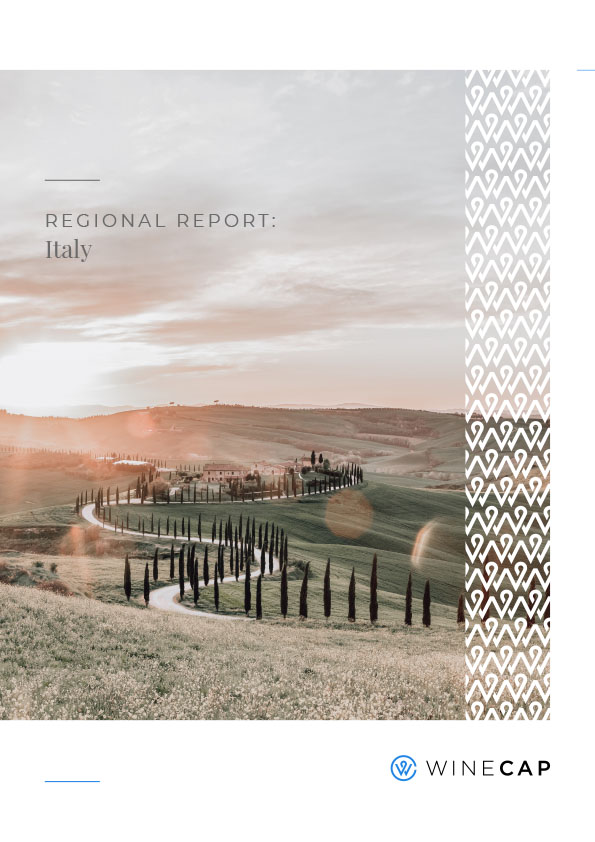
Italy Regional Report

Our Italy Regional Report examines the development of its investment market, historic performance, and key players.

Italy is the world’s largest wine producer, responsible for more than 6.5 billion bottles annually across nearly two million acres of vineyards. While its dominance in the mass wine market is undisputed, Italy’s fine wine sector has undergone a remarkable transformation over the past half century.

The modern era of Italian fine wine began in the 1970s with the emergence of the Super Tuscans – wines such as Sassicaia and Tignanello that challenged traditional classifications and redefined quality expectations. This shift elevated Italy’s global reputation and laid the foundations for a serious fine wine investment market.

Today, Italy stands as one of the most dynamic and resilient regions in the global fine wine landscape. Once overshadowed by Bordeaux and Burgundy, it now accounts for over 15% of secondary fine wine trade by value, with a growing roster of investment-grade wines. The complementary strengths of Tuscany and Piedmont, alongside emerging regions such as Veneto and Sicily, have positioned Italy as a compelling choice for portfolio diversification.

WineCap’s Italy Regional Report examines how this evolution has unfolded – and where the most attractive opportunities now lie.

Key findings from the Italy Regional Report

Italy has become a core fine wine investment region

Over the past two decades, Italy’s presence in the secondary market has grown steadily. In 2010, Italian wines represented less than 2% of global fine wine trade. Today, they account for more than 15%, reflecting rising international demand, increased critical acclaim, and greater investor confidence. This growth has been achieved without the extreme volatility seen in some other regions, reinforcing Italy’s reputation as a stable, long-term investment option.

Consistent performance with lower volatility

Italy’s investment appeal is underpinned by steady performance. The Italy 100 index has risen by over 200% in the past twenty years, outperforming both the Liv-ex 100 and Liv-ex 1000 indices over the last decade. Importantly, Italian wines have shown greater resilience during market downturns, with less pronounced corrections than Burgundy or Champagne.

This combination of growth and stability makes Italy particularly attractive to investors seeking diversification with reduced risk.

Accessibility and affordability set Italy apart

One of Italy’s defining advantages is accessibility. Top Italian wines are generally priced well below their French counterparts, offering a more approachable entry point into fine wine investment. In addition, higher production volumes for flagship wines such as Tignanello, Sassicaia, and Ornellaia enhance liquidity and ease of acquisition, particularly when compared to the extremely limited production of top Burgundy or Californian wines.

This balance of quality, availability, and price makes Italy an effective way to build meaningful exposure within a diversified portfolio.

Tuscany and Piedmont play complementary eoles

Italy’s two leading investment regions serve distinct but complementary functions. Tuscany provides scale, brand recognition, and liquidity through its iconic Super Tuscans and Brunello di Montalcino, delivering consistent returns over time. Piedmont, often compared to Burgundy, offers greater scarcity and potential upside through its Barolo and Barbaresco wines, driven by limited production and strong critical demand.

Together, these regions allow investors to balance stability and growth within a single country allocation.

Emerging regions are gaining traction

Beyond Tuscany and Piedmont, Italy’s regional diversity is increasingly reflected in the investment market. Veneto, Abruzzo, Umbria, Sicily, Campania, and Alto Adige are attracting attention for their quality, value, and growing international recognition. As exposure increases, these regions are expected to play a larger role in Italy’s fine wine trade. This depth and breadth of opportunity is unmatched by any other fine wine-producing country.

Explore the full report

WineCap’s Italy Regional Report provides a comprehensive analysis of Italy’s investment performance, accessibility, regional diversity, and best-performing wines – alongside a clear framework for understanding Tuscany, Piedmont, and the country’s most promising emerging regions.

Download the full Italy Regional Report to explore the data, insights, and opportunities shaping one of the most resilient and accessible fine wine investment markets in the world.


Italy Regional Report
 
Categories
News

Older vintages dominate 2024’s best-performing wines

  • The biggest price risers in 2024 reveal a strong preference for older vintages.
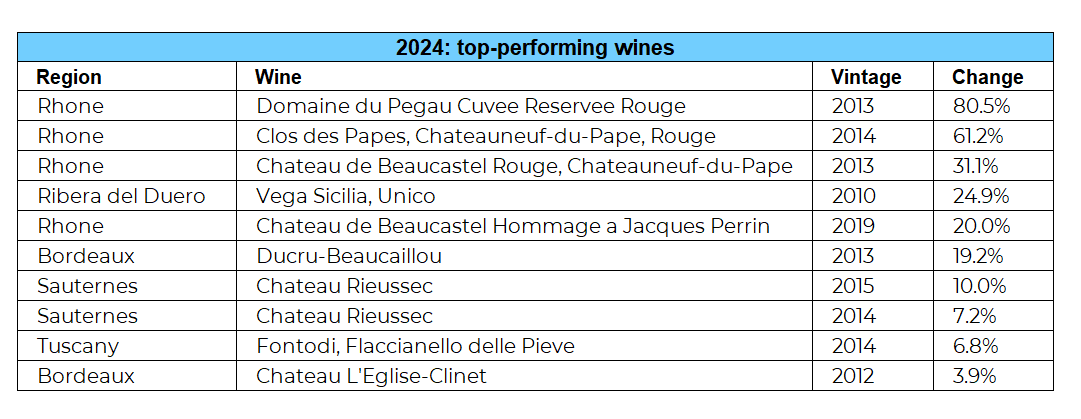
  • The best-performing wine came from the Rhône, having risen 80.5% in value year-to-date.
  • Tuscany, Ribera del Duero, Bordeaux and Sauternes also featured in the rankings.

The biggest price risers in 2024 reveal a strong preference for older vintages, underlining the importance of time in achieving wine investment returns.  

The Rhône leads performance

Although Rhône prices declined 9.9% on average this year, the region gave rise to some of the best-performing wines.

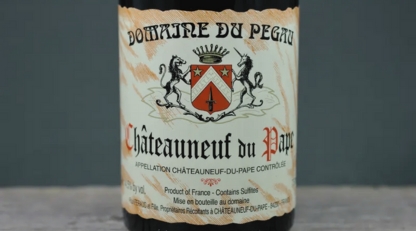
Domaine Pegau Châteauneuf-du-Pape Cuvée Réservée Rouge 2013 led the charge with an impressive 80.5% rise. Other regional standouts, including Clos des Papes Châteauneuf-du-Pape Rouge 2014 (61.2%) and Château de Beaucastel Rouge 2013 (31.1%), highlighted the enduring demand for Châteauneuf-du-Pape from highly rated mature vintages.

Highlights from Spain and Italy

While the Rhône claims several top spots, other regions also showcase the profitability of mature vintages. From Spain, the 2010 Vega Sicilia Unico achieved a notable 24.9% increase. Known for its high quality and limited production, Vega Sicilia continues to represent Spanish winemaking at its finest, cementing its status as a blue-chip investment wine.

Italy made a strong appearance with the 2014 Fontodi Flaccianello delle Pieve, which has risen 6.8% in value. This Tuscan gem, crafted from 100% Sangiovese, reflects the growing international appeal of Italy’s finest wines. Collectors are increasingly drawn to Italy not only for its iconic producers but also for its remarkable balance of accessibility and age-worthiness.


Bordeaux’s resilience

No fine wine discussion is complete without Bordeaux, and 2024 is no exception. While price growth among Bordeaux wines in this dataset may be more modest, the region’s consistency remains its hallmark. The 2013 Ducru-Beaucaillou saw a solid 19.2% increase, while the 2012 Chateau L’Eglise-Clinet also featured among the top performers. 

Two Château Rieussec vintages, the 2015 and 2014, reflected Sauternes’ consistent market performance, although the category is often overlooked.

The allure of maturity

The unifying thread across these top-performing wines is their maturity. Each wine has benefited from time in the bottle, allowing its market value to increase. Mature vintages offer an enticing combination of drinking pleasure and investment potential, a dual appeal that drives demand among collectors and investors alike.

This preference for older wines reflects a broader trend within the fine wine market: a growing appreciation for provenance and readiness to drink. As global markets for fine wine continue to mature, buyers are prioritising wines with a proven track record, both in terms of quality and price appreciation.

What this means for investors

The list of the best-performing wines of 2024 shows the importance of patience and long-term approach when it comes to investing. Additionally, diversification across regions and styles can help mitigate risk and enhance returns.

The performance of these wines provides a clear takeaway: older vintages remain at the forefront of the fine wine market. 

For more read our latest report “Opportunities in uncertainty: the 2024 fine wine market and 2025 outlook”.

WineCap’s independent market analysis showcases the value of portfolio diversification and the stability offered by investing in wine. Speak to one of our wine investment experts and start building your portfolio. Schedule your free consultation today.
Categories
News

James Suckling’s top wines of 2024

  • American critic James Suckling has released his top 100 wines of 2024 list.
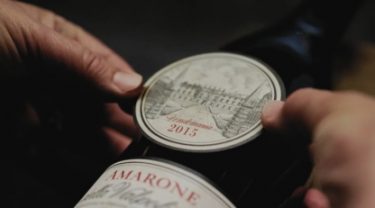
  • His wine of the year is Bertani Amarone della Valpolicella Classico 2015. 
  • Italy dominates the rankings followed by France and the US.

American critic James Suckling has released his top 100 wines of 2024 list, along with his wine of the year. The highest accolade went to Bertani Amarone della Valpolicella Classico 2015, which according to the critic, is a classical wine that embodies ‘the greatness of time and place’.

Regional distribution

Suckling and his team tasted and rated over 40,000 different wines over the past twelve months. The majority were from Italy, which accounted for over 9,100 of the reviewed wines, followed closely by France with 9,000, the US with 6,800, Spain – 3,800, Argentina – 2,300, Germany – 2,000, Australia – 1,700, and Chile nearly 1,550. They also tasted wines from other regions worldwide including Greece, Hungary, Canada and Uruguay.

Italy also dominated the list of their favourites, featuring with 26 wines in the top 100, followed by France (18), the United States (15), Germany (12), Argentina (6), Spain (6), Chile (6), Australia (5), Austria (4), South Africa (1) and China (1).

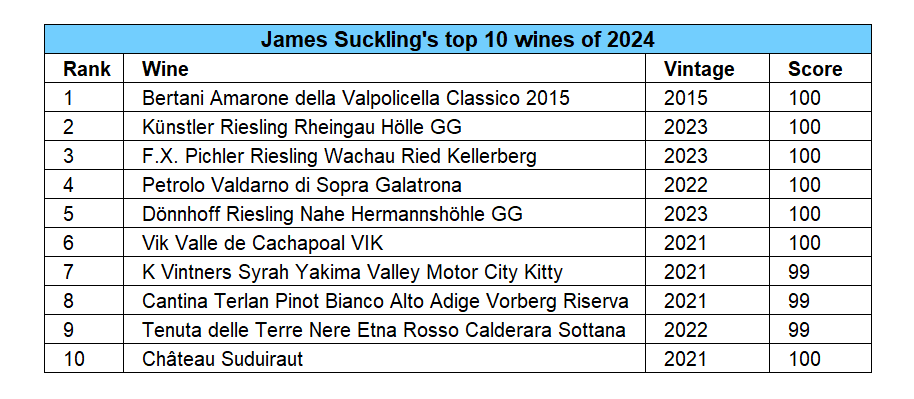
Suckling’s top 10 wines of 2024

James Suckling’s wine of the year is the 2015 Bertani Amarone della Valpolicella Classico, which he described as ‘full-bodied and elegant on the palate due to ripe, filigree tannins with long acidity and a toasty, savory aftertaste’. He called it ‘one of the great Amarones’ and gave it a 100-point score.


The top wines of the year were chosen on the basis of quality, price, and what Suckling calls the “wow factor,” an emotional impact a wine can have on the drinker. Most wines on the list scored between 97 and 100 points, with nine wines priced between $30 and $60 (£23 and £46), emphasising affordability alongside quality. Wines on the list were required to have a minimum production of 5,000 bottles, with a median price below $500 (£385).

Regional standouts

Germany had a standout year in 2023, particularly for its dry Riesling, with the Künstler Riesling Rheingau Hölle GG 2023 ranking second on the list and exemplifying the structured, balanced nature of this vintage.

Austria continued to gain critical recognition, especially for its white wines, with F.X. Pichler Riesling Wachau Ried Kellerberg 2023 taking the third spot. 

China was also present on the list with Ao Yun Shangri-La 2020, a wine from Moët Hennessy’s Yunnan winery, signaling the country’s growing role in the fine wine market.

Accessibility and value

Suckling noted that many of his favourite wines offer high quality at accessible price points. The focus on value addresses current concerns about the market’s downturn. For example, the wine that took the second spot is priced around $65 (£50), while Italian whites such as the Manincor Sauvignon Blanc Alto Adige Tannenberg 2022 are available for approximately $40 (£31).

Emerging trends

Suckling’s report further highlights an increasing interest in German and Austrian wines, especially among younger consumers, due to their quality and value. Events like Suckling’s Great Wines series, held across major cities globally, have drawn over 21,000 attendees this year. With wines from more established to emerging wine regions, Suckling’s 2024 list provides a guide to the critic’s top picks from across the globe.

WineCap’s independent market analysis showcases the value of portfolio diversification and the stability offered by investing in wine. Speak to one of our wine investment experts and start building your portfolio. Schedule your free consultation today.
Categories
Quarterly-reports

Q3 2024 Fine Wine Report

The fine wine market continued its downward trend throughout Q3 2024, but there are reasons for cautious optimism. Our Q3 2024 Fine Wine Report highlights the main themes that shaped the market, from regional performance to specific brand successes, and provides an outlook for the remainder of the year.

Executive summary

  • Since October 2022, fine wine prices have been in consistent decline, with a 4% drop on average in Q3 2024.
  • Bordeaux experienced the steepest fall at 4.4%, while Champagne defied the trend with a modest 0.4% increase last quarter.
  • Steady demand for fine wine continues to suggest a price recovery on the horizon.
  • Certain brands have outperformed the market, including Ruinart, Taittinger, and Château de Beaucastel.
  • Krug Vintage Brut 2004 has been the best-performing wine year-to-date, up 21.6%.
  • This year has already seen several broken auction records, including for high-profile Burgundy, which points to continued interest in fine wine.
  • Nine wines received perfect 100-point scores by Jane Anson in her recent Bordeaux 2009 and 2010 vintage retrospective.
  • France’s 2024 harvest is projected to be down 22% compared to last year, and 15% below the five-year average.
  • Looking ahead to Q4 2024, the market continues to present attractive buying opportunities, especially for investors with a long-term vision.

The trends that shaped the fine wine market

Global market recovery driven by rate cuts

In Q3 2024, global markets showed signs of recovery, bolstered by central banks pivoting towards interest rate cuts as inflation began to ease. Following turbulence in early August, stock markets rebounded, setting new records by the end of the quarter. Central banks, including the US Federal Reserve, the European Central Bank (ECB), and the Bank of England, all shifted their focus from inflation control to stimulating economic growth. The Fed’s September rate cut – the first since 2020 – catalysed a surge in US stocks, and similar moves from other central banks supported this global rebound. Despite lingering concerns about a potential US recession and Japanese market volatility, the overall global outlook improved, with lower rates and better economic conditions presenting growth opportunities.

Fine wine prices fall 4% in Q3

In contrast to the broader economic recovery, the fine wine market remained bearish, with a 4% average drop in prices in Q3. The Liv-ex 100 index saw its steepest fall of the year, down 1.7% in October. Bordeaux led the decline, with a 4.4% drop, although there was a slight uptick in Sauternes prices. Champagne offered a bright spot, rising 0.4% last quarter, with brands like Dom Ruinart Blanc de Blancs and Taittinger posting strong returns (over 30% in the last six months). This mixed performance underscores the complexity of the fine wine market, where price movements can vary widely by region and brand.

New fine wine releases beyond Bordeaux

As always, autumn brought the highly anticipated La Place de Bordeaux campaign, with major New World brands such as Almaviva, Seña, and Penfolds Grange releasing their latest vintages. However, this year’s campaign fell flat, with many new releases priced similarly to last year, despite older vintages showing better value and investment potential due to price corrections. Investors may find more favourable opportunities in back vintages that boast higher critic scores at lower prices.

Regional fine wine performance in Q3

The fine wine market has now returned to its 2021 levels, with prices declining across most regions in Q3 2024, except for Champagne, which recorded a modest 0.4% increase.

Bordeaux experienced the most significant drop, falling 4.4%, driven down primarily by the Second Wine 50 index, which plunged 6.6%, and the Right Bank 50 index, down 4.6%. Many wines from the 2019 vintage, which had previously appreciated in value, have now returned to their original release prices.

Despite this trend, Bordeaux is enjoying steady market demand, taking over a third of the market by value. Moreover, Jane Anson recently revisited the 2009 and 2010 vintages, awarding nine wines 100 points – a move likely to stimulate demand and prices.

When it comes to other regions, Italy and Burgundy also saw a 2% drop in Q3. The Rhône was somewhat more resilient, experiencing a smaller decrease of 0.8%.

The best-performing wines

While the broader market continues to face challenges, certain wines buck the trend, reinforcing the importance of strategic, brand-specific investment decisions.

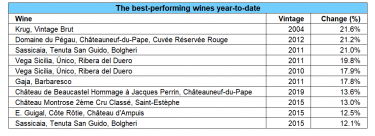
In Q3 2024, some brands have delivered exceptional returns. The table below showcases the best-performing wines year-to-date, with regions like Tuscany and the Rhône dominating the list.

Leading the pack is Krug 2004, which saw an impressive rise of 21.6%, reflecting the continued strength of Champagne in the investment market. Earlier this year, Antonio Galloni (Vinous) rescored the wine, giving it 98 points. He described it as a ‘gorgeous Champagne that is just beginning to enter its first plateau of maturity’.

Close behind is Domaine du Pégau’s Châteauneuf-du-Pape Cuvée Réservée 2012, which appreciated by 21.2%. Sassicaia 2011 follows with a 21% increase, while its 2015 vintage takes the tenth spot, with a 12.1% rise.

Vega Sicilia Único also features twice with its 2010 and 2011 vintages, demonstrating the increased demand for Spanish wines.

Wines from Bordeaux and the Rhône also make the list, showcasing the diversity of the wine investment market.

The most expensive wines in 2024

The world’s most expensive wines in 2024 are overwhelmingly dominated by Burgundy. At the top of the list is Domaine de la Romanée-Conti’s Romanée-Conti Grand Cru, with an average price of £221,233 per case. Following closely is Domaine d’Auvenay Chevalier-Montrachet Grand Cru, priced at £204,328.

Other notable entries include:

  • Domaine d’Auvenay, Criots-Bâtard-Montrachet Grand Cru at £141,979.
  • Liber Pater, from Bordeaux, priced at £140,009, stands out as the only non-Burgundy wine in the list.
  • Domaine Leroy, Richebourg Grand Cru, valued at £120,007, further establishes Burgundy’s dominance as a highly collectible wine region.

Burgundy producers such as Domaine Leroy and Domaine d’Auvenay appear multiple times on the list. The trend reflects how scarcity, reputation, and critical acclaim are key drivers of value, especially as the market for fine wine becomes increasingly selective in uncertain economic times.

Further entries include:

  • Domaine Leroy, Romanée-Saint-Vivant Grand Cru at £103,844.
  • Domaine d’Auvenay, Mazis-Chambertin Grand Cru at £93,818.
  • Domaine de la Romanée-Conti, Montrachet Grand Cru at £89,529.
  • Domaine Leroy, Corton-Charlemagne Grand Cru at £81,827.
  • Domaine d’Auvenay, Meursault Premier Cru, Les Gouttes d’Or at £80,715.

This dominance by Burgundy reflects its unmatched status in the global wine market, where scarcity and consistent quality continue to command premium prices.

For more information, visit Wine Track.

Fine wine news

The autumn La Place de Bordeaux release campaign

The 2024 La Place de Bordeaux campaign saw the latest releases from Masseto, Solaia, Seña, Penfolds Grange and many more. However, many of these new vintages were released at the same or slightly higher price levels as last year, despite a general market decline, making them less attractive from an investment perspective.

For instance, Masseto 2021 received a perfect 100-point score from Antonio Galloni but was priced at the same level as last year, with back vintages such as 2017, 2018 and 2019 offering better value. Meanwhile, the 100-point Solaia 2021 was released at a 15.7% premium on the 2020 vintage.

From Chile, the 2022 Seña and Viñedo Chadwick were offered at last year’s prices, but older, higher-scoring vintages such as Seña 2019 and Viñedo Chadwick 2021 remain more affordable. Penfolds Grange 2020 saw a small price increase, yet back vintages like the 100-point 2013 offer greater investment potential. Overall, back vintages, with comparable or higher critic scores, often provide better value for investors looking to capitalise on the current market dip.

Historically low yields in France

The 2024 French wine harvest is projected to be one of the smallest in recent history, with regions like Burgundy and Bordeaux experiencing significant declines due to adverse weather conditions.

Burgundy’s output is projected to be down by 25% compared to 2023, while Bordeaux is facing a 10% drop, resulting in the region’s lowest production volume since 2017.

Historically, such scarcity in Burgundy has driven secondary market price increases, as collectors rush to secure rare wines. However, the economic downturn may temper this trend, making selectivity key for investors. In Bordeaux, while smaller harvests often support price stability for premium wines, the broader market conditions may limit price recoveries, especially for mid-tier labels.

Q4 2024 market outlook

The consistent decline in fine wine prices leaves many wondering when the market will stabilise. Despite this downward trend, several factors point toward potential recovery and attractive buying opportunities in Q4.

Firstly, strong demand for select wines persists, particularly for brands that continue to outperform the market. This year has already seen several broken auction records, including for high-profile Burgundy, which points to continued interest in fine wine.

While the market as a whole is facing challenges, strategic investment in the right wines can still yield impressive returns. Investors looking to capitalise on market lows should consider brands which have consistently shown growth despite broader regional declines.

The global economic backdrop also provides reasons for optimism. Central banks, led by the US Federal Reserve, have shifted towards interest rate cuts which could stimulate further investment in alternative assets like fine wine.

In terms of regional performance, the ongoing declines in key regions may start to stabilise, as already seen in Champagne. Despite a 4.4% drop in Q3, Bordeaux remains a dominant player with one-third of the market share by value. With critics such as Jane Anson awarding nine perfect 100-point scores to Bordeaux wines from the 2009 and 2010 vintages, we may see renewed interest in classic vintages.

In summary, Q4 2024 offers a unique window of opportunity for long-term investors. With the current decline, strategic investments in high-performing brands and undervalued vintages could offer substantial returns on the road to recovery.

WineCap’s independent market analysis showcases the value of portfolio diversification and the stability offered by investing in wine. Speak to one of our wine investment experts and start building your portfolio. Schedule your free consultation today.
Categories
News

Piedmont on the move: rising stars under £1,000 a case

  • Italy is the best-performing fine wine region year-to-date. 
  • Some Italian brands have recorded positive movement as high as 15% in the last six months.
  • Piedmont’s edge in the fine wine market can be attributed to historical significance, limited production, and an increase in global appreciation. 

Amid economic fluctuations and changing market trends, the wine investment landscape has seen varied performances across regions. However, Italy, and particularly the Piedmont, has stood out for its robustness and resilience, outperforming other regions in maintaining and even enhancing its investment appeal.

Italy’s performance in a bearish market

The Liv-ex Italy 100 sub-index, which tracks the price performance of the top 100 Italian wines, has shown resilience in the current bearish market. While the broader Liv-ex 1000 index, representing a wider range of global wines, has experienced a decline of 5.2% year-to-date, the Italy 100 sub-index has seen a relatively minor decrease of 1.7%. 

This indicates a sustained interest in Italian wines, despite broader market uncertainties. Some Italian brands have even recorded positive movement in the last six months as high as 15%.

The rising stars of Piedmont

A significant contribution to this trend comes from the Piedmont, specifically Barolo and Barbaresco. 

Produttori del Barbaresco, a renowned cooperative known for its high-quality production, has seen impressive gains across a range of its wines. The Rabaja Riserva has risen 15% since the start of the year. The wine has an average case price of £968 per 12×75, and a Wine Track critic score of 94 points. 

From the same producer, the more affordable Ovello Riserva is up 9%, while the Montestefano Riserva is up 8%. 

From Barolo, Cascina Fontana has shown consistent returns. It has appreciated 6% in the last six months and a remarkable 105% over the last decade. The wine’s affordability at £665 average price per case makes it a value-driven choice for investors.

Meanwhile, Elio Grasso’s Barolo Gavarini Chiniera has increased 4% in the past six months and an impressive 110% in the last decade. 

Why Italy, and why now?

The resilience of the Italian wine market, particularly in premium segments like Barolo and Barbaresco, can be attributed to several factors such as historical significance, quality, limited production, and growing global appreciation for the value on offer.

Wines from Piedmont are steeped in history and are globally recognised for their quality and complexity, attracting both connoisseurs and investors.

The limited production and exclusivity of certain labels ensure their demand remains high, even in less favourable economic conditions. While these wines are highly sought-after, the brands above continue to offer value – all being under £1,000 a case despite recent gains.

Finally, Italian wines continue to see growing appreciation in key markets such as the UK, USA and Asia, broadening the investor base.

As we navigate through fluctuating markets, Italy, especially Piedmont, holds firm, demonstrating potential for growth. For investors, Barolo and Barbaresco represent stability, quality, and a legacy that stands resilient against the tides of economic change.

WineCap’s independent market analysis showcases the value of portfolio diversification and the stability offered by investing in wine. Speak to one of our wine investment experts and start building your portfolio. Schedule your free consultation today.
Categories
News

Italian wine enjoys demand amid new releases

  • New releases from Italy have led to increased secondary market activity for the region.
  • Italian fine wine prices rose in February with some wines enjoying double-digit returns.
  • The 100-point Sassicaia 2021 has traded with a premium since its release last month.

Italian wine is currently in the spotlight amid a flurry of new releases, including the high-quality Brunello 2019 vintage and the 2021 vintage of the Super Tuscans Sassicaia and Ornellaia.

Brunello 2019 enters the market

The 2019 Brunello vintage is shaping up to be exceptional, potentially surpassing the subsequent vintages of 2020, 2021, and 2022, which were characterised by significantly higher temperatures. In terms of quality, critics have placed it on par with 2016, 2010 and 2006.

While Brunello may not dominate the fine wine market as prominently as the Super Tuscans, it has potential for attractive investment returns, especially from producers like Biondi Santi, Poggio di Sotto, and Casanova di Neri. These wines often come at more appealing price points compared to their counterparts.

For instance, Biondi Santi Brunello di Montalcino has risen 73% in value over the last five years, outperforming the likes of Sassicaia and Masseto. Poggio di Sotto’s performance has been equally impressive, rising 187% in the last decade, while Casanova di Neri Tenuta Nuova has been up 126%. At the top end, the more expensive and highly sought-after Soldera Casse Basse has returned 237% over the same period.

The historic performance of these brands strengthens the case for buying in vintages where the quality is high, and where the releases offer relative value.

Super Tuscan releases

In the world of fine wine, the most talked about Italian releases have been Sassicaia and Ornellaia 2021.

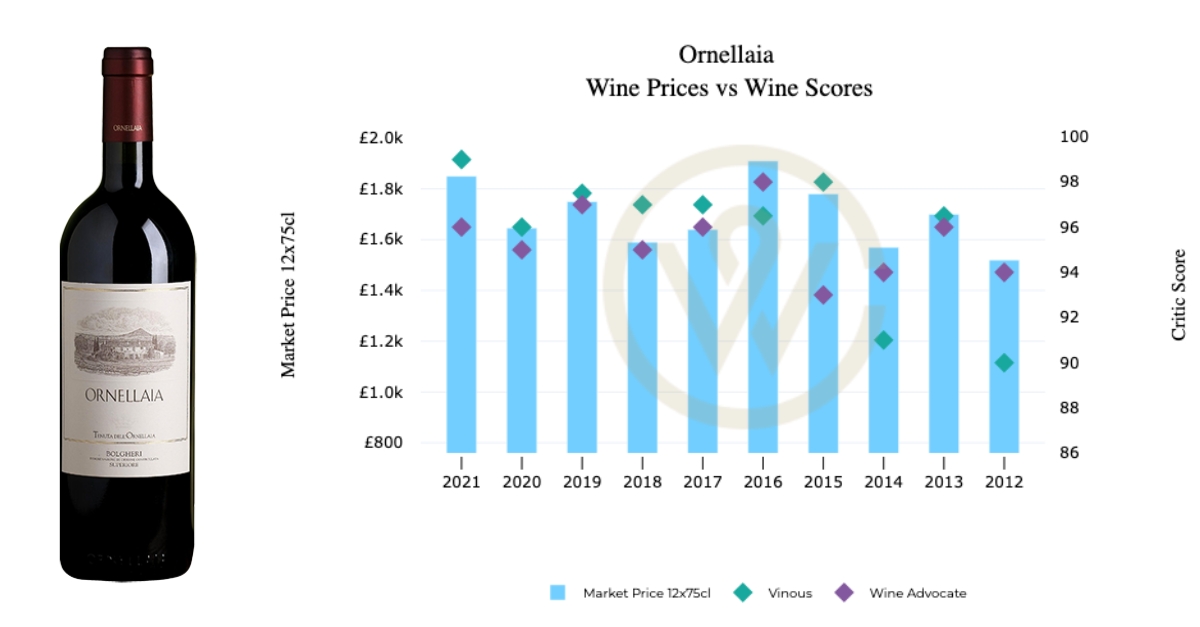
Ornellaia 2021 was released at £1,850 per 12×75, the same price as the 2020 release. At this price, the wine is the most expensive recent vintage on the market since 2016. Antonio Galloni (Vinous) awarded it 99-points and said that it ‘captures all the magic of this sensational vintage on the Tuscan Coast’. Meanwhile, Monica Larner (Wine Advocate) gave it 96-points and described it as ‘a very open-knit and exuberant Tuscan red’.

Ornellaia

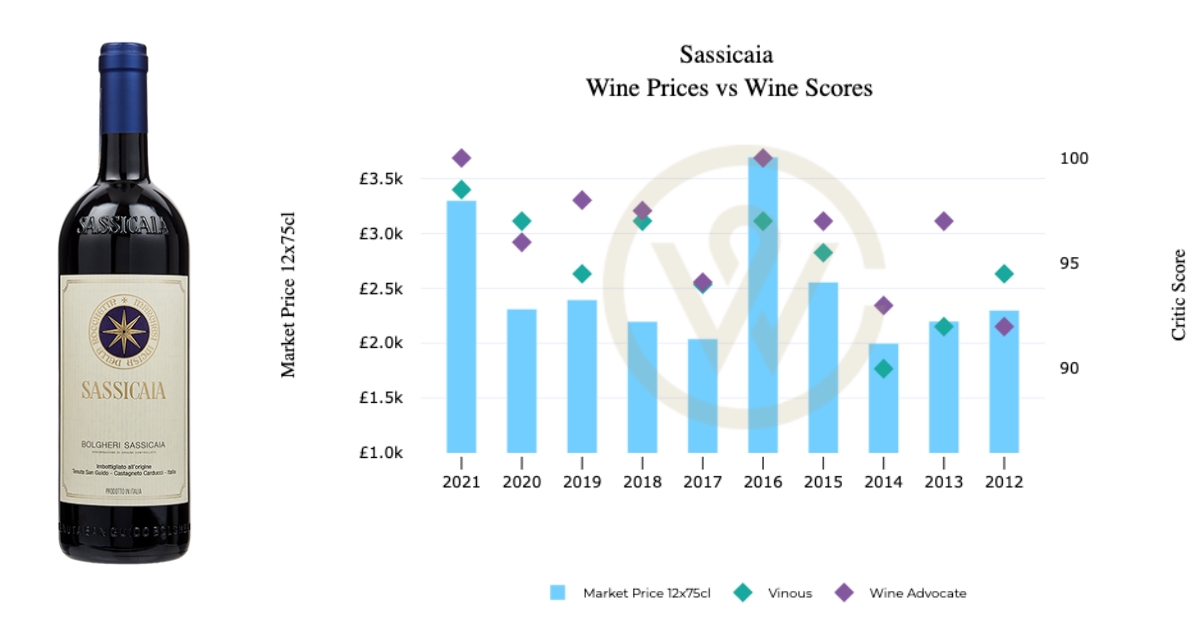
Sassicaia 2021 was released last month at £2,500 per case, up 4.2% on the 2020‘s release price. The wine has since traded at a premium on the secondary market. It received 100-points from Monica Larner who called it ‘a quintessential Sassicaia that represents the excellence of the vintage and also respects the unique taste profile of this distinguished Tuscan blend of Cabernets Sauvignon and Franc’. Galloni gave it 98+ points and noted that it was ‘one of the best young Sassicaias I can remember tasting’. ‘In a word: magnificent’, said the critic.

Sassicaia

Italy gathers momentum

Recent releases have stimulated the secondary market for Italian wine. The region has been the best performing fine wine market segment over the last two years, as well as in the last few months. In February, the Liv-ex Italy 100 index posted a modest rise of 0.1%, but some vintages of Fontodi Flaccianello delle Pieve Colli della Toscana Centrale, Tignanello and Giacomo Conterno Barolo Monfortino Riserva enjoyed double-digit returns.

WineCap’s independent market analysis showcases the value of portfolio diversification and the stability offered by investing in wine. Speak to one of our wine investment experts and start building your portfolio. Schedule your free consultation today.

Categories
News

Wine Spectator ‘Wine of the Year’ and critics’ top picks

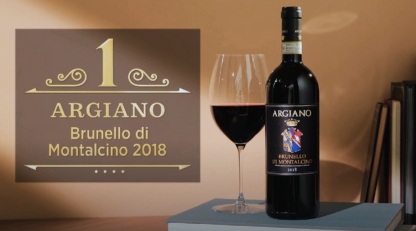
  • Argiano Brunello di Montalcino 2018 ranked at Wine Spectator’s Wine of the Year.
  • Laurent-Perrier Champagne Grand Siècle Iteration N.26 took the first spot in James Suckling’s annual rankings.
  • Poggio di Sotto Brunello di Montalcino 2018 was Wine Enthusiast’s top cellar recommendation.

On Friday, Wine Spectator announced its ‘Wine of the Year’ – Argiano Brunello di Montalcino 2018.

The publication wrote: ‘In the world of wine, a change of ownership or a stylistic paradigm shift can reap huge benefits, but there are always risks. In the case of Argiano, change has paid off in spades, as new owners arrived with a commitment to a return to a more traditional expression of Brunello. Reflecting more than $10 million in investment in the estate over a decade, the stellar quality of Argiano Brunello di Montalcino 2018 earns it Wine of the Year honors from Wine Spectator in 2023.’

The wine has enjoyed increased demand after the announcement and has traded at a 45% premium on its Market Price. This is not a new phenomenon. According to Liv-ex, ‘over the last few years, most of the Wine Spectator’s top wines have enjoyed significant trading activity and an uptick in price’.

For instance, the 2018 Wine Spectator’s wine of the year, Sassicaia 2015, has seen its Market Price double from £1,350 per 12×75 to £2,700 after the announcement. Similarly, the 2019 wine of the year – Château Léoville Barton 2016 – enjoyed an immediate price surge.

This year, other investment-grade wines that ranked in the publication’s top ten list include Château Lynch Bages 2020 (3) and Château Pichon Baron 2020 (8).

James Suckling’s top picks for 2023

James Suckling also released his Top 100 World Wines 2023 and Wine of the Year report, giving Laurent-Perrier Champagne Grand Siècle Iteration N.26 the first spot.

The critic said that ‘it’s not just an incredible bottle of Champagne, it’s the best wine we rated this year out of the almost 39,000 reviewed by myself and my team of seven tasters/editors’. This is the ‘the largest number of wines [they] have ever reviewed in a year, beating last year’s record of about 32,000’.

Suckling’s top ten also included the 100-point Seña 2021 (3) and Château Figeac 2020 (4).

Wine Enthusiast’s top cellar selections

Another Brunello di Montalcino stole the spotlight in Wine Enthusiast’s annual rankings. Poggio di Sotto Brunello di Montalcino 2018 was their top cellar recommendation for 2023.

Their report stated: ‘This list represents what’s next in Wine Enthusiast’s Cellar Selections—wines with consistency and structure that aren’t necessarily the biggest and boldest. The number one wine, for example, is Poggio di Sotto’s 2018 Brunello di Montalcino, not the most legendary in its region of Italy but what a wine!’

Their number two wine was Ribera del Duero Vega Sicilia Unico 2012, which they described as ‘a proven collectible’ and a ‘gem’ which ‘represents Spain as an underappreciated wine country full of discoveries’.

WineCap’s independent market analysis showcases the value of portfolio diversification and the stability offered by investing in wine. Speak to one of our wine investment experts and start building your portfolio. Schedule your free consultation today.
Categories
News

2023 harvest forecasts for France and Italy: a balancing act

  • France’s 2023 wine harvest projects between 44-47 million hectolitres, benefiting from potentially strong yields in Champagne and Burgundy.
  • Italy anticipates up to 14% reduction in its 2023 harvest due to extreme weather, marking it among its smallest harvests.
  • Historical trends showcase climatic vulnerabilities, emphasising the need for sustainable viticulture practices.

As harvest time approaches, we take a look at forecasts for the 2023 vintage in France and Italy. While France appears to be set for a stable year – in line with the five-year average, Italy’s harvest might shrink as a result of extreme weather, as climate change continues to leave its mark.

French wine regions face diverse conditions

According to the French agriculture ministry, France’s wine harvest in 2023 looks promising, with estimates suggesting a national production between 44 million and 47 million hectolitres. This figure nudges slightly ahead of the previous year’s 45.4 million hectolitres. One reason for optimism is the performance in regions like Champagne and Burgundy, which is expected to offset challenges in Bordeaux.

Indeed, Bordeaux has not had it easy. Consecutive thunderstorms, high temperatures, and downy mildew have plagued the region. Notably, Gironde’s chamber of agriculture reported that a whopping 90% of vines have been affected by downy mildew. Languedoc and Roussillon have also been suffering from persistent drought.

Meanwhile, Champagne and Burgundy are set for an above-average harvest. Champagne has successfully averted frost and hail damage and diseases have been contained. Similarly, Burgundy looks poised for grape production higher than the five-year average. The situation in neighbouring Beaujolais is also looking better than last year.

If projections hold, France may place as Europe’s largest wine producer in 2023, especially given the challenging outlook for Italy.

Italy’s climate woes

Italy is staring at a potentially reduced harvest in 2023. From searing heatwaves to devastating floods, the nation’s vintners have confronted multiple challenges. Extreme weather events could result in a harvest that is up to 14% smaller than in 2022. If this forecast proves accurate, 2023 could rank with years like 1948, 2007, and 2017 as one of Italy’s smallest harvests on record.

However, while the national outlook seems daunting, the situation varies by region. The north, including areas like Piedmont, Lombardy, and Veneto, has remained relatively stable despite recent fierce hailstorms. By contrast, southern and central Italy might see significant drops in production, with Sicily in particularly struggling with wildfires, heat, and mildew. Still, the Assovini Sicilia wine association noted that grape quality remains intact for 2023.

Historical context

France and Italy have witnessed harvest highs and lows over the decades. Historically, France’s most significant harvest was in 2004 with a record 58.3 million hectolitres. In contrast, 2017 saw a decline of almost 20% due to weather adversities.

Italy’s bumper harvest year was 1982, with a record production of 65 million hectolitres. The country’s most challenging years have been spaced apart, with significant lows in 1948, 2007, and potentially 2023.

In conclusion, the 2023 harvest projections for France and Italy offer a revealing snapshot into the challenges and opportunities presented by the ever-shifting climate. While France gears up for a potentially favorable yield, owing largely to robust performances in regions like Champagne and Burgundy, Italy grapples with the stark realities of climate change, which threatens to render 2023 one of its leanest harvests. These trends not only highlight the adaptability of the wine industry but also underscore the urgent need for sustainable practices and proactive measures to mitigate the impacts of adverse weather patterns on viticulture. As the historical data indicates, while wine-producing regions have faced fluctuations in the past, the growing unpredictability of climate patterns demands heightened vigilance and innovation in the realm of winemaking.

WineCap’s independent market analysis showcases the value of portfolio diversification and the stability offered by investing in wine. Speak to one of our wine investment experts and start building your portfolio. Schedule your free consultation today.