Categories
Learn

Bubbles & bull markets: Investing in Vintage Champagne

  • Unlike Non-Vintage (NV) bottles, Vintage Champagne is produced only 3-4 times per decade, creating an inherent supply cap that drives long-term price appreciation.
  • Labels such as Dom Pérignon and Louis Roederer (Cristal) act as market benchmarks, offering high liquidity and global brand recognition.
  • Many investors prioritise Champagne magnums due to slower ageing process and higher premiums. 

For the uninitiated, Champagne is the liquid synonym for celebration. However, for the serious collector, it represents one of the most resilient and rewarding asset classes in the alternative investment world. Moving beyond “party bubbles” requires a shift in perspective – from the high-volume non-vintage (NV) bottles found on supermarket shelves to the rare prestige cuvées that dominate the secondary market.

Understanding the liquid gold: Is sparkling wine Champagne?

Before diving into the financials, every novice must master the terminology. A common entry-point question is: is sparkling wine Champagne? The answer is a matter of strict geography and law. Only wine produced in the Champagne region of France, under the stringent rules of the Appellation d’Origine Contrôlée (AOC), can carry the name. While Italian sparkling wine or Spanish sparkling wine like Cava offers excellent drinking, they rarely command the investment-grade premiums of a Grand Cru Champagne.

The scarcity engine: Vintage vs Non-Vintage

The primary driver of value in this market is the distinction between NV and vintage champagne.

  • Non-Vintage (NV): These are the house styles (e.g., standard Moet and Chandon ) blended from multiple years to ensure a consistent brand profile.
  • Vintage Champagne: Produced only in exceptional years, these bottles are a snapshot of a single harvest. Because they are produced in limited quantities and only 3-4 times a decade, they possess the inherent scarcity required for price appreciation.

The titans of the market: Dom Pérignon and Louis Roederer

If you are looking for the “Blue Chips” of the bubbly world, you must look at the prestige cuvées.

  • Dom Pérignon: As a powerhouse brand , the Dom Perignon price is a frequent benchmark for market health. Investors closely watch the Dom Perignon Champagne price for new releases, often holding them for a decade as the supply dwindles.
  • Louis Roederer: Specifically their “Cristal” label, Louis Roederer Champagne is a staple of elite portfolios.
  • Cult favourites: For those looking beyond the famous houses, labels like Jacques Selosse (often referred to simply as Selosse Champagne ) represent the “grower” movement, where limited production meets astronomical demand in the secondary market.

Size and longevity: Why magnums matter

In the world of investment, Champagne bottle sizes are not just about the volume of liquid. The magnum Champagne (1.5L) is the preferred format for investors. Because a magnum has a lower ratio of air-to-liquid than a standard bottle, the wine ages more slowly and gracefully. Rare large formats, such as the Jeroboam bottle or the massive Nebuchadnezzar, often fetch significantly higher premiums at auction due to their sheer rarity.

Storage and spoilage considerations

A common concern for novices is: “Does Champagne go off?” or “Can champagne go bad?” Unlike spirits, wine is a living product. How long does Champagne last? While a standard NV bottle might only stay fresh for a few years, a vintage Champagne can evolve and improve for 20 to 30 years if stored correctly.

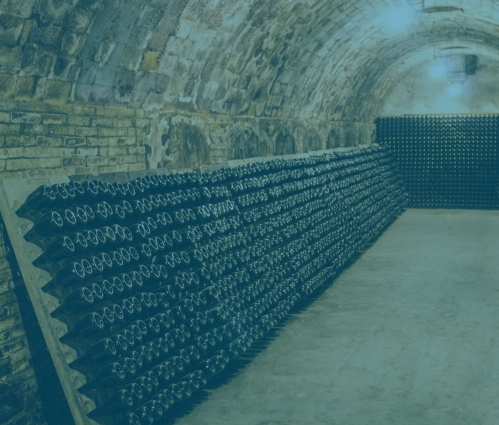
To protect the costly Champagne in your portfolio, professional storage is non-negotiable. Light, vibration, and temperature fluctuations are the enemies of value. An investor must know how to store wine in a temperature-controlled environment to ensure that when it comes time to exit the investment, the provenance is impeccable.

The secondary market: Why the boom?

The most expensive champagne is no longer just for drinking; it is for trading. With the rise of global wealth and a fixed supply of the best vintages, the secondary market for labels like Krug, Salon, and Taittinger (check the Taittinger Champagne price for recent spikes) has seen consistent growth. Champagne often acts as a Veblen good – a luxury item where demand increases as the price rises, further fueling the bull market for the world’s finest bubbles.

Grand Cru and the terroir premium

To truly understand why some bottles command five-figure sums while others languish, the novice investor must look at the soil. Champagne is divided into a strict hierarchy of villages. At the pinnacle are the 17 Grand Cru villages, such as Ambonnay, Bouzy, and Le Mesnil-sur-Oger. These sites represent the absolute best terroir in the region, where the chalky soils and microclimates produce grapes with the highest concentration and acidity – the two vital components for long-term aging.

Below the Grand Crus sit the 44 Premier Cru villages. While still exceptional, the market price for a Grand Cru bottle often grows at a significantly higher rate than its Premier Cru counterparts. For the investor, “buying the label” is often secondary to “buying the land.” When you see a label from a producer like Jacques Selosse, you aren’t just paying for the name; you are paying for access to some of the most coveted Grand Cru plots in the Côte des Blancs. Understanding this hierarchy allows an investor to spot “undervalued” producers who may own vines in the same prestigious villages as the famous houses but have not yet reached their peak market valuation.

How long to hold your Champagne?

One of the most frequent questions from novices is how long to hold their Champagne. To answer this with an investment lens, we must discuss “lees aging.” Unlike most red wines, which age primarily in the bottle, Champagne derives its complexity from sitting on its lees (dead yeast cells) during the second fermentation.

A prestige cuvée like Dom Pérignon or Krug may spend seven to fifteen years in the cellar before it is even released to the public. This “pre-aging” by the house is why the Dom Perignon price is so high upon release; the producer has already absorbed the storage costs for a decade. However, the real “Alpha” for investors happens after release. As bottles are consumed globally, the remaining supply of a specific vintage becomes infinitesimally small. This is the “Scarcity Curve.” A vintage Champagne that was released at £150 may double in value over the next five years simply because 90% of the vintage has been drunk, leaving collectors to scramble for the remaining 10%.

Champagne as a defensive asset

In times of economic uncertainty, wine often acts as a “safe haven” asset. Unlike stocks, which can go to zero, a bottle of Louis Roederer Cristal is a tangible asset with intrinsic value. Historically, the fine wine market – and Champagne in particular – has shown a lower correlation to traditional equity markets.

When inflation rises, luxury goods often see a price surge. Champagne is a classic Veblen good in this regard; as it becomes more expensive, its desirability among the ultra-wealthy increases, creating a self-fulfilling prophecy of price growth. Furthermore, the secondary market for Champagne is more liquid than for many other rare wines. Because brand recognition is so high – everyone knows the names Moet, Bollinger, and Taittinger – it is much easier to find a buyer for a case of Champagne than for an obscure Burgundy.

Navigating the risks

No guide would be complete without a word of caution. As the most expensive Champagne prices continue to climb, the risk of counterfeits rises. Investors must ensure they receive “Original Wooden Cases” (OWC) whenever possible and verify the provenance. A bottle that has been kept at room temperature for five years is functionally worthless as an investment, even if the label is pristine. This is why professional, temperature-controlled storage is the “hidden cost” that ensures your liquid assets don’t turn into expensive vinegar.

FAQ

Is sparkling wine the same as Champagne?

No. While all Champagne is sparkling wine, not all sparkling wine is Champagne. Legally, only wine produced in the Champagne region of France under strict AOC regulations can use the name. 

Does Champagne go off or go bad?

Yes, Champagne is a living product and can spoil if not stored correctly. While a standard Non-Vintage bottle is meant for immediate consumption, a Vintage Champagne can age and improve for 20 to 30 years. However, exposure to heat, light, or vibration can turn a prestige cuvée into “expensive vinegar” and render the investment worthless.

Why is the “Dom Pérignon price” used as a market benchmark?

Dom Pérignon is considered a “Blue Chip” asset due to its massive global brand recognition and consistent quality. Because it is widely traded, its price fluctuations often signal the overall health and sentiment of the Champagne secondary market.

How long should I hold my Champagne investment?

Most experts recommend a holding period of 5 to 10 years after the initial release. This allows the “Scarcity Curve” to take effect; as the majority of the vintage is consumed globally, the remaining bottles become rarer and more valuable to collectors.

What is the best way to store investment-grade Champagne?

Professional, temperature-controlled storage is non-negotiable. To maintain its value and ensure “impeccable provenance” for future buyers, Champagne should be kept at a constant temperature (around 10-12°C) in a dark, vibration-free environment, ideally in its Original Wooden Case (OWC).
Categories
Learn

The importance of wine storage

  • Storage is arguably the most important factor in preserving the quality of a fine wine and is thus fundamentally linked to its value as an investment.
  • A well-documented history of storage and ownership can significantly increase a wine’s value, serving as proof of its authenticity and condition.
  • Storing wine in-bond has multiple benefits, including deferred taxes, easier international trading and guaranteed provenance.

Wine storage has undergone significant transformation over the years, evolving from traditional cellars in private homes to sophisticated, climate-controlled facilities that cater to the needs of serious collectors and investors. The way wine is stored can greatly impact its quality, and by extension, its value as an investment.

Why is wine storage important

A large part of fine wine’s performance as an asset is down to its ability to improve as it ages. If the quality increases in time, so does its value.

Storage is arguably the most important factor in preserving the quality of a wine. If a bottle is stored improperly, the opposite can happen. Fluctuating temperatures, exposure to sunlight, vibrations and humidity can all degrade the quality of the wine and lead it to lose its value.

By storing your assets in professional dedicated wine storage facilities, you can guarantee that when the time comes to sell, it will be in the best possible condition. This will give the final consumer confidence that the wine is of the expected quality, defending its future value.

The evolution of wine storage solutions

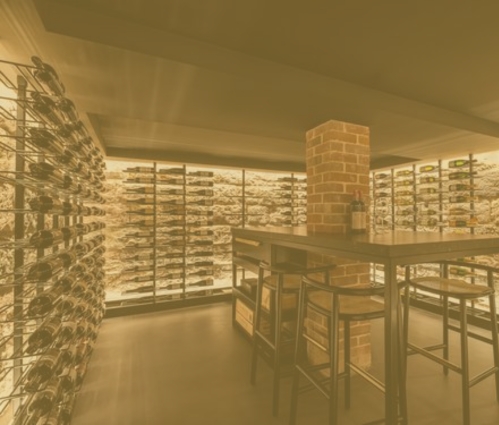
Historically, wine storage was the domain of underground cellars, designed to provide the cool, stable temperatures and humidity levels that wine needs to age gracefully. These cellars, often part of private homes in wine-producing regions, set the standard for ideal wine storage conditions: darkness, consistent temperature around 12-14°C (55-57°F), and relative humidity around 60-70%.

In recent decades, technology has revolutionised wine storage. Climate-controlled wine cabinets and refrigeration units can replicate the conditions of a traditional cellar, making it possible to store wine in any environment. Innovations such as dual-zone temperature controls, UV-protected glass doors, and vibration reduction technology have further enhanced the ability to preserve wine at optimal conditions.

Moreover, professional wine storage facilities offer a level of sophistication and security beyond what most private cellars can provide. These facilities are equipped with state-of-the-art climate control systems, backup power sources to protect against outages, and high-security measures to guard against theft. They also offer inventory management services, ensuring that wines are stored properly and can be easily accessed or audited by their owners.

For investors, the use of such facilities can enhance the value of their collection, as provenance – the history of wine’s ownership and storage – becomes increasingly important in the secondary fine wine market.

The role of provenance in wine investment

Provenance is a critical factor in the wine investment market. A well-documented history of storage and ownership can significantly increase a wine’s value, serving as proof of its authenticity and condition. Professional storage facilities often provide detailed records that can be invaluable in establishing provenance, making wines stored in these conditions more desirable to collectors and investors alike.

In contrast, wines stored in private cellars may lack comprehensive records, potentially diminishing their market value, regardless of their quality or rarity.

In-bond storage

Bonded status is what unlocks the secondary market for fine wine.

Storing wine in-bond means that the wine is kept in a secure warehouse under government supervision without the payment of duty or tax. For wine investors, this presents a significant advantage, as it allows for the storage of wine without the financial burden of taxes until the wine is either sold or removed for personal consumption. Typically, wines can be stored in-bond at their point of entry into a country or transferred to a bonded warehouse specifically designated for wine storage. The wines stored in-bond are trade-ready; they sit within the secondary market ecosystem and can be made immediately available for sale and collection.

Implications for wine investment

The ability to store wine in-bond has several implications for investors.

Deferred taxes: Investors can defer tax payments, improving cash flow and reducing initial investment costs. This is particularly beneficial for wines intended for resale, as the duty and VAT (value-added tax) are only paid if and when the wine enters the domestic market.

International trading: In-bond storage facilitates easier trading of wine on an international scale. Wines can be bought and sold multiple times while still in-bond, without incurring tax liabilities until they are finally withdrawn for consumption. This can significantly enhance the liquidity of wine investments.

Provenance and condition: Bonded warehouses are not only secure but are also designed to provide optimal storage conditions, similar to professional wine storage facilities. The rigorous documentation and oversight in these warehouses ensure the provenance and condition of the wine, crucial factors in maintaining and enhancing its value.

Market value: Wines stored in-bond are often more attractive to buyers, especially in international markets. The assurance of proper storage conditions and the ease of transfer without immediate tax implications make these wines more desirable, potentially increasing their market value.

Storing wine with WineCap

WineCap use London City Bond’s newest storage facility, Drakelow. Three and a half miles of tunnels were blasted out of solid rock, as part of the lavish refurbishment of this former nuclear bunker, which started operating as a dedicated wine storage facility in 2023. Highly secure with entirely natural permanent temperature control supported by the latest dehumidification equipment, Drakelow is the natural choice for maturing reserves.

Every wine in our storage facility gets its own unique identification number (UIDS), thus ensuring that each case has clear ownership.

The practice of storing wine in-bond in bonded warehouses represents a critical aspect of the wine investment landscape. As the wine market continues to mature, the importance of professional storage and provenance documentation is likely to grow, influencing both the strategies of investors and the broader dynamics of wine collecting and investing. Whether opting for a meticulously maintained home cellar or entrusting a collection to a professional storage facility, understanding the impact of storage on wine’s quality and value is essential for any serious wine investor.

Speak to one of our wine investment experts and start building your portfolio. Schedule your free consultation today.

Categories
Learn

Investing in Fine Wine: What do You Need to Consider?

In this article, we outline the key things that you need to consider when investing in fine wine. Fine wine investment experts like the team at WineCap can help you make informed decisions relating to the following factors.

Is investing in fine wine a good idea?

Investing in fine wine is a proven way to strengthen and diversify your portfolio. Fine wine is a stable, low-risk investment thanks to its tangibility and low volatility. As an alternative asset, fine wine has shown very little correlation to mainstream markets. When traditional investments like bonds and equities fall, fine wine tends to hold steady. Moreover, fine wine has been one of the best-performing assets over the last 30 years, delivering consistent returns even in times of uncertainty.

How much should you invest in wine?

Fine wines are a luxury commodity, which means they can sometimes command high prices. Most people tend to start off in the vicinity of £5,000-£10,000 to make their investments worthwhile. However, there are a range of options depending on the region and the producer, how much of the wine is made and the wines’ age. Setting your budget before you start will help you narrow your focus and ensure you have exposure to the wines that suit your investment goals. This figure may change as time goes on, but it’s good to have a starting point.

Which wines should you invest in?

Once you have set your budget and determined your investment goals, you need to decide which wines you want. Factors such as region, producer, grape variety and critical acclaim will affect their final value.

A wine investment expert will help you find the appropriate wines for your investment portfolio. WineCap has formed long-lasting relationships over the past decade with négociants, wholesalers and private collectors. This means that we have access to some of the world’s most prized wines. What’s more, our unique proprietary technology analyses over 400,000 wine prices a day to identify the right, undervalued wines to buy and sell across the global market at the right time and price.

How will you store your wines?

Investment-grade wine should be stored correctly to help protect its value. For long-term storage, this means holding the wine in a cool, dark place with minimal disturbance. Bonded storage (a secure location approved by the HMRC that stores items that haven’t paid VAT or duty tax) will give you the peace of mind that your wine is being kept in the right conditions. World-class care ensures that when you come to sell, your wine’s provenance will quickly secure maximum prices.

Ready to embark on your wine investment journey? Schedule your free consultation with one of WineCap’s investment experts to find out the next steps.

Categories
Learn

How does Wine Investment Work?

Are you considering investing in wine and want to know how wine investment works? Congratulations, you are just one of the growing number of people who know that fine wine is a top performing alternative investment. Inflation hit 7% in April 2022 in the UK according to the Office for National Statistics (ONS). And it says it’s set to increase. Any serious investor should consider fine wine as an investment.

So, how does wine investment work? Here’s our recommendations:

-Buy with a medium to long-term view. Wine investment’s central idea is that it is an improving asset in diminishing supply. As time passes and the wines become rarer, they will be harder to find. This is why it’s always wise to enter the market with the intention of holding wines for a minimum of five years.

-Choose how much you want to invest and then diversify your wine investment portfolio. Select wines from different countries and regions for a balanced portfolio. We’d advise starting with traditional and well-established regions, such as Bordeaux. Many seasoned wine investors add a range of wines from different countries to their portfolios to create a spread.

-Make sure your wines are stored professionally. Perfect provenance of fine wine secures its value and desirability and is absolutely critical when investing or selling. A wine’s authenticity must be documented and assurance of proper storage should be available. WineCap stores all its wines in government bonded warehouses.

-Be in the know about fees. Some brokers charge an annual fee that’s known as a management fee to handle your portfolio. We pride ourselves on not charging one and also having the lowest brokerage rates.

-Prepare your exit strategy. When the time comes to sell your investment, there are a number of avenues you can go down. As your investment broker, we would advise you on the best route to take based on your wine’s position on the market at the time. Options include selling to wholesalers, private sales and auction houses.

Ready to start investing in wine? Find out more by scheduling a free call with on of our experts.