- Dom Perignon is the world’s most recognised prestige cuvee, produced exclusively as a vintage wine.
- A cornerstone of the LVMH portfolio, Dom Perignon possesses massive global brand equity.
- The secondary market for Dom Perignon is highly liquid compared to other wines.
Dom Perignon is more than just Champagne – it is one of the most popular luxury wines in the world. From its origins in the Abbey of Hautvillers to its position today as the flagship prestige cuvee of Moet & Chandon and LVMH, the brand has become synonymous with celebration, craftsmanship, and collectability. Produced exclusively as a vintage wine, Dom Perignon captures the unique identity of each harvest while balancing rarity, longevity, and global appeal. In this guide, we explore ten fascinating facts that explain how Dom Perignon became one of the most influential and investable names in fine wine.
1. The heritage and legend of the Benedictine monk
The history of Dom Perignon is intertwined with the very foundations of the Champagne region. Pierre Perignon was a Benedictine monk who served as cellar master at the Abbey of Hautvillers in the seventeenth century. While legend often credits him with “inventing” sparkling wine (he didn’t), his true contribution was the refinement of viticultural techniques.
He pioneered the practice of blending grapes from different vineyards to achieve a balanced profile. He also introduced the use of corks and stronger glass bottles to prevent explosions in the cellar. These innovations laid the groundwork for the modern production of luxury sparkling wine.
Key historical milestones for the abbey and the brand:
- Pierre Perignon arrived at the Abbey of Hautvillers in 1668.
- Moet & Chandon acquired the Dom Perignon brand in the early twentieth century.
- The first Dom Perignon vintage was 1921, officially released in 1936.
- In the early 2000s, Dom Perignon introduced late-disgorged re-releases under the Oenotheque label, later rebranding as P2 and P3 for even older vintages.
- Under Chef de Cave Vincent Chaperon, the house has moved toward releasing wines from almost every harvest, even in very small quantities, as seen with the limited 2017 vintage.
2. The Moet & Chandon partnership
Dom Perignon is produced by Moet & Chandon, which is the largest Champagne house in the world; however, the brand operates with a significant degree of autonomy. While Moet produces millions of bottles of non-vintage Champagne, Dom Perignon is a vintage product only.
This relationship provides the estate with access to some of the best vineyard sites in the region with the brand utilising grapes from the eight historic Grand Crus and the legendary Premier Cru of Hautvillers. This vast choice of fruit allows the winemaking team to maintain a consistent style despite the variations of individual years.
Technical advantages of the Moet connection:
- Unrivalled access to high-quality Chardonnay and Pinot Noir grapes.
- World-class production facilities and technical expertise.
- Global distribution networks that ensure the wine reaches every major market.
- A massive library of back vintages kept for the Plenitude programme.
- The ability to maintain rigorous selection standards for every release.
3. A star in the LVMH luxury portfolio
Dom Perignon sits as one of the twin Champagne peaks of the LVMH (Louis Vuitton Moet Hennessy) wine and spirits division. Within this group, Dom Perignon acts as the global ambassador for French luxury and elegance.
Other Champagne brands within the LVMH constellation include:
- Moet & Chandon: The largest Champagne house in the world
- Veuve Clicquot: Famous for its “Yellow Label”
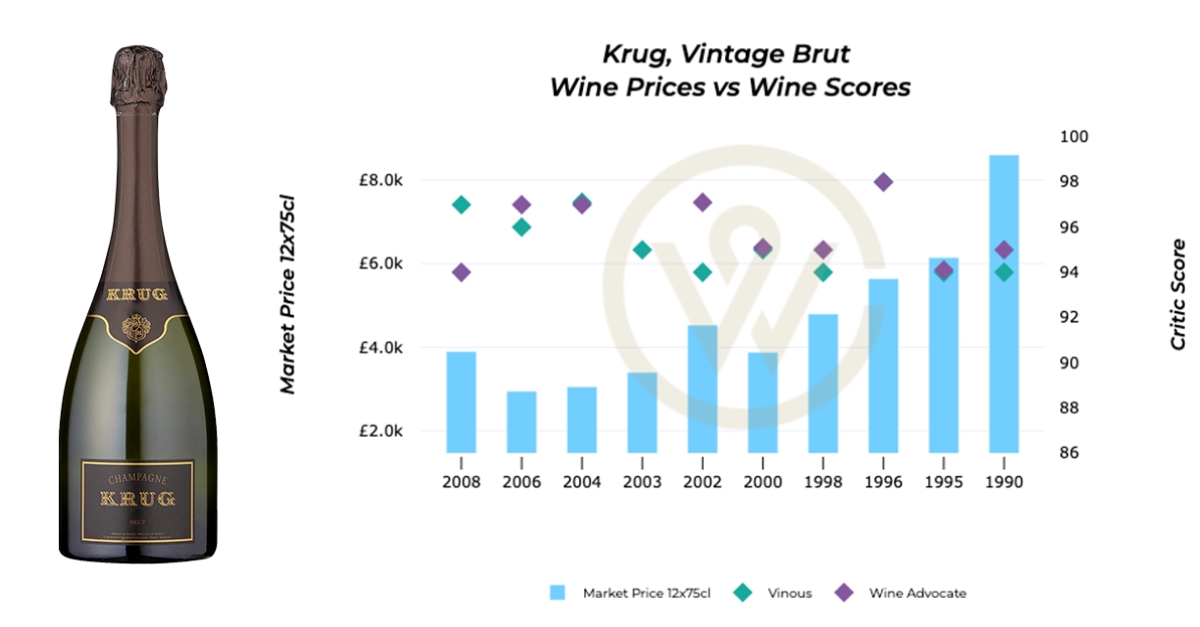
- Krug: LVMH’s other Champagne peak
- Ruinart: The oldest established Champagne house in the world since 1729
- Mercier: Highly popular within France and known for its vast cellar tunnels in Epernay
- Armand de Brignac (Ace of Spades): In 2021, LVMH acquired a 50% stake in this brand from Shawn Carter better known as Jay-Z
LVMH has been instrumental in positioning the brand as a lifestyle icon. By linking the wine to fashion, art, and high-end gastronomy, they have expanded its appeal far beyond traditional wine circles. This strategic marketing ensures that demand remains high regardless of broader economic fluctuations.
The LVMH influence on the brand:
- High-profile marketing campaigns featuring global celebrities.
- Presence in the world’s most exclusive hotels and restaurants.
- Strategic partnerships with luxury retailers.
- A focus on limited edition bottlings and bespoke packaging.
- Synergies with other LVMH brands to create “lifestyle experiences”.
4. Dom Perignon’s commitment to vintage
The most defining characteristic of Dom Perignon is that it is always a vintage wine. Unlike most Champagne houses that rely on a consistent non-vintage blend, Dom Perignon only releases wine from a single harvest. Until very recently if the quality of a year was not sufficient to produce a reasonable quantity of wine, no wine was produced.
This commitment to vintage creates a natural scarcity and ensures that each release is a unique snapshot of a specific time and place. It reflects the weather, the harvest conditions, and the creative vision of the chef de cave and the winemaking team. This variety keeps collectors engaged as they compare different years.
Aspects of the vintage philosophy:
- Each vintage must be able to age for at least twenty years.
- The blend is always a balanced mix of Chardonnay and Pinot Noir.
- The decision to declare a vintage rests solely with the cellar master.
5. The Plenitude concept: Dom Perignon P2 and P3
One of the most innovative aspects of Dom Perignon is the Plenitude programme. The house believes that wine does not age in a linear fashion but is rather a punctuated equilibrium where the wine evolves to specific “plateaus” of maturity and different characteristics come to the fore. These stages are released as P2 (Second Plenitude) and P3 (Third Plenitude).
P2 wines are typically released after fifteen years of age. They offer a surge of energy and a more intense, mineral profile. P3 wines are even rarer, often spending over twenty-five years in the cellar. These bottlings represent the ultimate expression of the wine’s longevity and complexity.
Understanding the Plenitude stages:
- P1: The standard vintage release, typically aged for eight to nine years.
- P2: The “energy” phase, offering greater precision and length.
- P3: The “complexity” phase, showing deep tertiary notes and incredible depth.
These releases can be highly sought after by collectors and investors due to their rarity.
The latest major Dom Perignon Plenitude releases are currently:
- Dom Perignon P2 2008 – Widely considered one of the most important recent Champagne releases, due to the legendary status of the 2008 vintage.
- Dom Perignon P3 1995 – The third Plénitude of the 1995 vintage after nearly three decades on lees.
- Dom Perignon Rosé: A bold expression
The rosé version of Dom Perignon was first created in 1959 and is considered by some the most daring wine in the portfolio. It is not merely a pink version of the standard vintage, but rather a distinct creation that focuses on Pinot Noir. The Dom Perignon rosé is typically released much later than Dom Perignon.
The house uses a significant proportion of red wine in the blend to achieve its characteristic copper hue and structural intensity. For many connoisseurs, the rosé represents the pinnacle of the house’s winemaking skill.
Hallmarks of the rosé include:
- Intense aromas of wild strawberries, smoke, and spices.
- A structured palate with fine tannins and vibrant acidity.
- Strong food-pairing potential due to its weight and depth.
- Limited production levels that drive high secondary market prices.
- A reputation for being one of the longest-lived pink Champagnes.
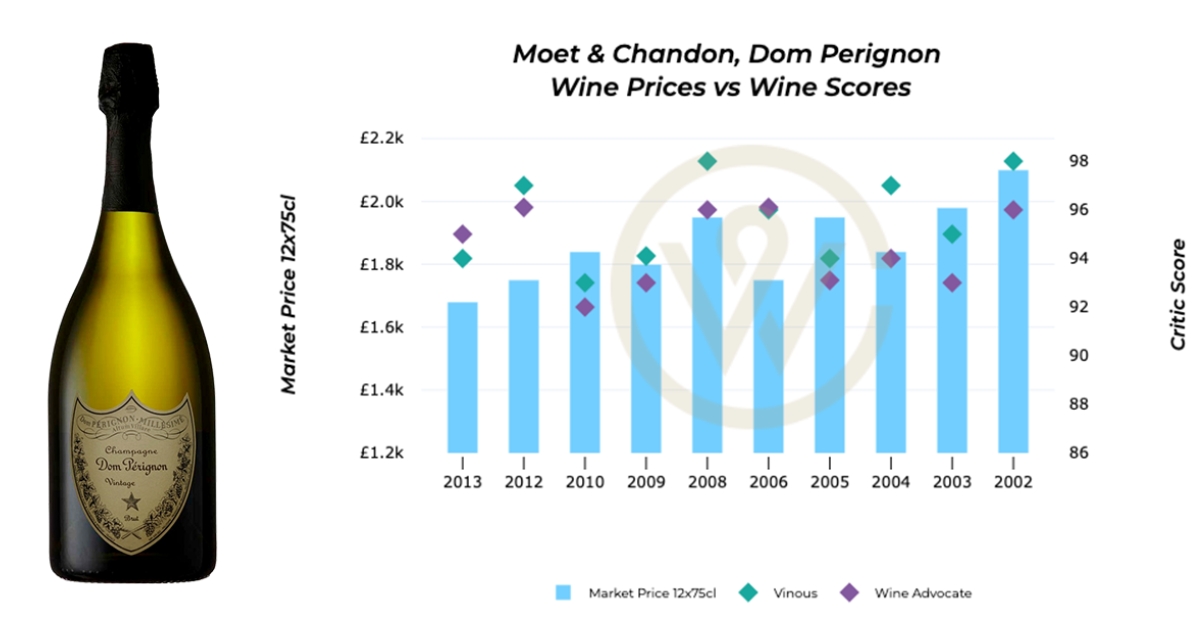
1990, 1996, 2002 and 2008 are generally considered the strongest vintages. 2010 is the most recent release.
7. What does Dom Perignon taste like?
The typical tasting profile of Dom Perignon is defined by balance and tension. It is a wine that manages to be both opulent and precise at the same time. While it has the creamy texture associated with high-quality Champagne, it is always underpinned by a firm mineral backbone.
Common descriptors for young Dom Perignon include citrus, white flowers, and brioche. As the wine ages, it develops more complex notes of toasted nuts, honey, and dried fruits. The finish is famously long, often leaving a salty, mineral sensation that is characteristic of the region’s chalky soils.
Structural elements of the wine:
- A seamless integration of fruit and acidity.
- A silky mousse with very fine bubbles.
- Subtle smoky or reductive notes that add complexity.
- A mid-palate that is rich but never heavy.
- The ability to evolve gracefully for several decades in a professional cellar.
8. Dom Perignon artistic collaborations
Dom Perignon has a long history of collaborating with world-renowned artists and musicians. These partnerships often result in limited edition labels and ornate gift boxes that help to bridge the gap between fine wine and contemporary culture.
From Andy Warhol to Jeff Koons, and more recently Lady Gaga, these projects bring a fresh perspective to the brand. They often explore the themes of creativity and transformation that are central to the winemaking process.
For investors, these limited editions often command a premium over the standard labels; however, their limited edition nature and price premium can limit their liquidity, and only a few have shown themselves to be better investments than the standard bottles.
Notable artistic partnerships:
- Andy Warhol: A colourful series of labels inspired by the artist’s pop art style.
- Karl Lagerfeld: Several iconic advertising campaigns and bespoke bottle designs.
- Iris van Herpen: A sculptural gift box that explored the concept of metamorphosis.
- Lenny Kravitz: A collaboration that included a hammered metal label and a bespoke table.
- Lady Gaga: A series of limited editions that celebrated the power of creative freedom.
9. Legacy vintages and record prices
Certain years have achieved legendary status among collectors. Vintages like the 1961, 1966, and 1990 are frequently cited as the benchmarks for quality. These wines have shown incredible resilience and continue to drink beautifully many decades after their harvest.
In the auction room, rare bottles of Dom Perignon frequently reach record prices. This is particularly true for older vintages in original packaging or rare formats like Magnums and Jeroboams. The 1959 Rose and the 1921 vintage are among the most expensive bottles ever sold, reflecting their historical importance.
Significant vintages for investors:
- 1990: A classic year with incredible richness and balance.
- 1996: Celebrated for its high acidity and long-term potential.
- 2002: A powerful vintage now entering its prime drinking window.
- 2008: One of the most hyped and high-scoring years in recent history.
- 1959 (Rosé): The inaugural rosé vintage.
10. Dom Perignon investment performance
Dom Perignon is one of the most liquid assets in the fine wine market. There is always a buyer for well-stored bottles because of the brand’s global recognisability. It acts as a reliable entry point for those beginning a wine portfolio, while remaining a staple for seasoned investors.
Dom Perignon’s dynamic changed post-Covid with a significant rise in prices. Prior to that, the brand had shown steady capital appreciation over the long term. Its performance is often used as a bellwether for the overall health of the Champagne market.
Key investment takeaways:
- High global demand ensures quick resale on major exchanges.
- Consistent critical scores provide confidence for long-term holding.
- The brand serves as a strong diversifier within a multi-region portfolio.
- Professional storage is essential to maintain the wine’s secondary market value.
FAQ: Dom Perignon
Why is Dom Perignon only made in vintage years?
The house believes in representing the unique character of a single harvest, anchoring its brand to the concept of vintage champagne.
What is the difference between P1, P2, and P3?
These represent different “Plenitudes” or stages of maturity, with P2 and P3 spending significantly more time ageing in bottle on the lees before release.
Is Dom Perignon a good investment for beginners?
Yes, because of its high brand recognition and market liquidity, it is considered one of the most stable entry points for wine investment.
How long can I cellar a bottle of Dom Perignon?
Most vintages are built to last for twenty to forty years, while the P2 and P3 releases can evolve for even longer.
WineCap’s independent market analysis showcases the value of portfolio diversification and the stability offered by investing in wine. Speak to one of our wine investment experts and start building your portfolio. Schedule your free consultation today.