Categories
News

Wine Spectator ‘Wine of the Year’ and critics’ top picks

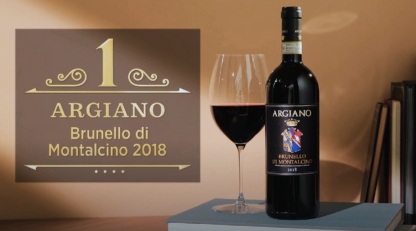
  • Argiano Brunello di Montalcino 2018 ranked at Wine Spectator’s Wine of the Year.
  • Laurent-Perrier Champagne Grand Siècle Iteration N.26 took the first spot in James Suckling’s annual rankings.
  • Poggio di Sotto Brunello di Montalcino 2018 was Wine Enthusiast’s top cellar recommendation.

On Friday, Wine Spectator announced its ‘Wine of the Year’ – Argiano Brunello di Montalcino 2018.

The publication wrote: ‘In the world of wine, a change of ownership or a stylistic paradigm shift can reap huge benefits, but there are always risks. In the case of Argiano, change has paid off in spades, as new owners arrived with a commitment to a return to a more traditional expression of Brunello. Reflecting more than $10 million in investment in the estate over a decade, the stellar quality of Argiano Brunello di Montalcino 2018 earns it Wine of the Year honors from Wine Spectator in 2023.’

The wine has enjoyed increased demand after the announcement and has traded at a 45% premium on its Market Price. This is not a new phenomenon. According to Liv-ex, ‘over the last few years, most of the Wine Spectator’s top wines have enjoyed significant trading activity and an uptick in price’.

For instance, the 2018 Wine Spectator’s wine of the year, Sassicaia 2015, has seen its Market Price double from £1,350 per 12×75 to £2,700 after the announcement. Similarly, the 2019 wine of the year – Château Léoville Barton 2016 – enjoyed an immediate price surge.

This year, other investment-grade wines that ranked in the publication’s top ten list include Château Lynch Bages 2020 (3) and Château Pichon Baron 2020 (8).

James Suckling’s top picks for 2023

James Suckling also released his Top 100 World Wines 2023 and Wine of the Year report, giving Laurent-Perrier Champagne Grand Siècle Iteration N.26 the first spot.

The critic said that ‘it’s not just an incredible bottle of Champagne, it’s the best wine we rated this year out of the almost 39,000 reviewed by myself and my team of seven tasters/editors’. This is the ‘the largest number of wines [they] have ever reviewed in a year, beating last year’s record of about 32,000’.

Suckling’s top ten also included the 100-point Seña 2021 (3) and Château Figeac 2020 (4).

Wine Enthusiast’s top cellar selections

Another Brunello di Montalcino stole the spotlight in Wine Enthusiast’s annual rankings. Poggio di Sotto Brunello di Montalcino 2018 was their top cellar recommendation for 2023.

Their report stated: ‘This list represents what’s next in Wine Enthusiast’s Cellar Selections—wines with consistency and structure that aren’t necessarily the biggest and boldest. The number one wine, for example, is Poggio di Sotto’s 2018 Brunello di Montalcino, not the most legendary in its region of Italy but what a wine!’

Their number two wine was Ribera del Duero Vega Sicilia Unico 2012, which they described as ‘a proven collectible’ and a ‘gem’ which ‘represents Spain as an underappreciated wine country full of discoveries’.

WineCap’s independent market analysis showcases the value of portfolio diversification and the stability offered by investing in wine. Speak to one of our wine investment experts and start building your portfolio. Schedule your free consultation today.

Categories
Learn

The role of wine ratings in fine wine investment

  • Wine ratings play a crucial role in wine investment, with high scores from influential critics impacting demand and market value.
  • To use ratings effectively, investors should consider both the initial score and potential for growth.
  • The Wine Track score provides a broader view of a wine’s quality across multiple vintages and publications, helping investors assess wines at a glance.

For many investors, fine wine offers a fascinating, enjoyable, and potentially profitable venture. However, the wine market is highly nuanced, requiring a keen understanding of various factors influencing wine values. One such factor, critical to successful wine investment, is the wine rating system. This score, given by wine critics to a particular bottle or vintage, can dramatically impact its market value and demand.

Wine ratings, typically on a 100-point scale, offer a quantitative measure of the wine’s quality. The ratings of influential critics such as Robert Parker, Neal Martin and Wine Spectator can have a significant impact on the market value of a wine. This is why savvy investors pay close attention to these scores, as they can quickly identify high potential investments.

The power and influence of ratings

However, it’s not enough to simply buy wines with high ratings. The rating system is far more nuanced, with the potential for dramatic shifts in a wine’s rating over time. A wine may be rated in its youth, then again as it matures. In some cases, a wine’s rating may increase as it develops, making it an excellent investment if purchased early. Conversely, a wine that doesn’t mature as expected can see its rating (and value) drop.

How critics have moved the wine market

Some historical examples illustrate the power that critics wield in the wine investment market:

  • Robert Parker and the 1982 Bordeaux vintage: Parker’s high scores for the 1982 Bordeaux wines went against the grain of other critics, and as the wines matured and proved him right, their market values soared.
  • James Suckling and Super Tuscan wines: Suckling’s high scores and positive reviews in the 1980s and 90s for these non-traditional Italian wines helped elevate their status and market prices.
  • Jancis Robinson and Austrian wines: Robinson’s praise for the quality and complexity of wines from Austria increased their international profile and market value.
  • Robert Parker and Napa Valley: Parker’s positive reviews of Napa Valley Cabernet Sauvignon and Bordeaux blends in the 1990s contributed to increased demand and higher prices for these wines.
  • Wines Spectator’s Wine of the Year: Wine Spectator, one of the most influential wine publications globally, selects its “Wine of the Year” based on quality, value, availability, and an X-factor they call “excitement.” The wine usually becomes a hot commodity in the secondary market, breaking all-time trading record within the day of the announcement, like Marques Murrieta Castillo Ygay Gran Reserva Especial 2010 in 2020.

Knowing the critics and selling wine

To use ratings effectively, investors should consider both the initial score and potential for growth. Some wines, especially those from renowned producers in prestigious regions like Bordeaux or Burgundy, are consistently well-rated and have a history of aging well. However, there are also opportunities to find “sleeper” wines – those with moderate initial ratings that improve significantly over time.

A key part of understanding and using wine ratings is understanding the critics. Each has a different palate and preference, and their ratings reflect these tastes. Robert Parker, for instance, was known for favouring bold, robust wines from Bordeaux, California, and the Rhône. However, since Parker’s retirement, the wine criticism landscape has been undergoing a gradual shift, reflecting changing consumer preferences and a growing appreciation for diversity in wine styles, such as lighter and lower-alcohol wines.

The Wine Track score – ratings at a glance

Now it is also possible to access a brand’s average score thanks to the Wine Track score. The Wine Track score provides a broader view of a wine’s quality across multiple vintages, which can be particularly useful for potential investors seeking a more comprehensive evaluation of a wine’s investment potential.

It aggregates multiple wine vintages of a wine to create a score out of 100. It unifies more than 100 wine critics’ scores from 12 global publications that use different methodologies. By providing a combined score, it helps investors assess wines on the fine wine market at a glance.

In conclusion, while wine ratings are not the sole determinant of a wine’s investment potential, they play an integral part in the wine investment strategy. With careful consideration and a well-rounded understanding of the wine market, investors can utilise these ratings to guide their purchases and optimise their portfolios.

WineCap’s independent market analysis showcases the value of portfolio diversification and the stability offered by investing in wine. Speak to one of our wine investment experts and start building your portfolio. Schedule your free consultation today.