Categories
Learn

Types of Champagne explained

Beyond the glamour of iconic Champagne brands, the category’s power and influence is found in its diversity. Each Champagne style — from cellar-worthy Vintage wines to cult Grower labels — has its own story, profile, and market behaviour. Understanding these distinctions is key for navigating one of the fine wine world’s most resilient segments.

Bullet points

  • Champagne is prestigious wine with global enduring appeal  
  • Four categories of Champagne are Vintage, NV Brut, Rosé, and Grower Champagne
  • Each segment has a unique profile and significance for consumers, investors, and collectors
  • Luxury, strong brands, scarcity, and terroir expression are features wine lovers appreciate about Champagne

Best Champagne styles

Champagne has long held a unique place in the fine wine world. This can be explained by the fact that it is both a symbol of luxury and an extraordinarily resilient wine category. Over the medium and long-term, Champagne weathers market cycles, global uncertainty, and changing consumer tastes while maintaining robust demand.

Behind the prestigious labels and glamour lies:

  • a diverse array of Champagne styles with varying structures
  • “cellarability”
  • market behaviour
  • investment profiles

Developing an understanding of types of Champagne is critical for any wine investment journey. What follows is a breakdown of the four key Champagne categories that are most significant to investors and why. These are: Vintage, Brut (Non-Vintage), Rosé, and Grower Champagne.

We look at what defines these kinds of sparkling wine and why they are important from both a drinking and Champagne investment perspective.

1. Vintage Champagne

 What is Vintage Champagne?

Vintage Champagne is a distinguished wine produced solely in exceptional years. This means that a particular Champagne sub-region’s weather conditions have been ideal, yielding fruit of excellent quality and optimal concentration. This enabled the wine to stand alone, showing the unique characteristics of the harvest. This is opposed to the practice of blending wines from across multiple years, as is typical for Non-Vintage (NV) Champagne.

Vintage Champagne requires a minimum of three years of lees ageing. Some houses age vintage cuvées for longer to enhance complexity.

Style

Since it reflects a single, outstanding year, Vintage Champagne tends to be more concentrated, structured, and complex than its NV counterparts. It displays:

  • rich textures
  • evolved fruit
  • nutty, biscuity, brioche, toasty complexity
  • good mineral definition
  • the capacity to cellar for decades

Champagne houses often regard their vintage wines as emblematic expressions of terroir and brand identity.

Why is Vintage one of the types of Champagne important for investors?

Vintage Champagne is viewed as the most consistent and reliable asset in the sparkling wine investment category. This is for the following reasons:

  • limited production: only made in the best years, and usually in much smaller quantities than NV Champagne
  • exceptional longevity: finest vintages from great champagne brands such as Krug, Dom Pérignon, Bollinger Champagne, Pol Roger Champagne and Roederer evolve over decades, resulting in steady price appreciation
  • historical price performance: Vintage Champagne has displayed some of the most advantageous compound annual growth rates in the fine wine sector, with so-called blue-chip vintages garnering above-average returns  
  •  strong demand globally: Vintage Champagne is consumed widely all around the world, creating pressure on diminishing stocks. This leads to scarcity and increases in  Dom Perignon price, for example

From a Champagne investment perspective, Vintage is the category’s backbone. It offers steady long-term growth and less volatility. These features make it an ideal place for beginner investors to start.

2. Brut Non-Vintage (NV) 

What is Brut NV Champagne?

Brut NV Champagne is the most common and one of the types of Champagne that wine lovers usually experience first (around 90% of Champagne sold is Brut).

Brut Champagne are made through blending what are called “base wines” from several different vintages. Together, they produce a consistent and recognisable “house style”. Prestige NV cuvées are especially sought-after, demonstrating house blending skill, distinct quality, and complexity with the finest fruit from across vintages. 

NV is one of the types of Champagne required to age for at least 15 months prior to release. Many producers go beyond this minimum to enhance a wine’s depth.

Style

A typical Brut NV is:

  • dry, fresh, and crisp
  • bright and citrusy
  • well balanced with delicate brioche or pastry hints
  • built for early enjoyment, but some styles lend themselves to ageing

Because NV wines reflect the house’s philosophy, they serve as an essential introduction to each brand.

Why is NV Champagne important for investors?

Usually, Brut NV Champagne is not a key focus for longer-term investment. However, it plays an important role in the broader evaluation of a house’s reputation and offers insights into wider market conditions. Here’s why:

  • brand identity/consistency: solid NV releases bolster brand confidence, especially important for great Champagne brands like Bollinger, Pol Roger, Roederer, and Charles Heidsieck
  • market demand: Prestige NV cuvées (finest blends) have become collectibles, demonstrating steady performance and rising interest from investors. Examples include Krug Grande Cuvée, Laurent-Perrier Grand Siècle
  • portfolio diversification: Prestige NV offers accessibility and can be ideal for shorter-term investment arcs
  • gateway for collectors: robust NV sales drive interest in a house’s vintage and Prestige Champagne, influencing their long-term value 

Brut NV is not a leading stand-alone Champagne investment category. That said, top prestige NV cuvées demonstrate stability and gradual value appreciation. Investors and collectors are increasingly recognising the value of this segment for building verticals that are brand-oriented.

3. Rosé Champagne

What is Rosé Champagne?

Rosé Champagne emerged as a style in the late 18th century, with Ruinart and Veuve Clicquot the first houses to produce pink sparkling wine. Wine lovers admire it for its fresh, expressive character and delicate red fruit. This Champagne can be produced in two ways:

  • blending small quantities of still Pinot Noir or Meunier into Blanc Champagne
  • the saignée method, where the pink colour comes from brief red grape skin contact

The majority of Rosé Champagnes are NV, made from a blend of multiple base wines from different harvests for a consistent, identifiable house style. Like Brut NV, this is one of the types of Champagne that is required to age for at least 15 months before release. Many houses go beyond this minimum to develop extra depth and elegance.

Style

A Rosé Champagne bottle features:

  • subtle red berry such as strawberry, raspberry, cherry
  • full, rounder mouthfeel
  • appealing hue that promotes a luxurious image
  • food-pairing versatility

For many wine consumers, Rosé Champagne has an indulgent and celebratory profile.

Why is Rosé important for Champagne investment?

Rosé Champagne has seen a rapid rise in popularity around the world, especially among younger, HNW individuals. Its position as one of the industry’s fastest-growing types of Champagne segments is paralleled by its increasing significance in the investment space. This is because of:

  • scarcity: this style requires additional production steps, needs more grape selection, and has smaller production amounts than standard Champagne.
  • luxury appeal: markets in Asia, the UK, and the US, especially, have elevated rosé to a Champagne status symbol
  • strong market performance: prestige rosés like Cristal Rosé, Dom Pérignon Rosé, and Krug Rosé regularly outperform many of their Brut counterparts
  • faster appreciation: Rosé Champagne typically appreciates in value more quickly than Brut
  • ageing capacity: leading rosé cuvées age elegantly, developing highly-valued, savoury umami depth

For investors looking for high-growth and scarcity, prestige rosé Champagnes display strong performance.

4. Grower Champagne

What is Grower Champagne?

This segment (usually labelled “RM” meaning récoltant-manipulant) is one of the region’s most exciting types of Champagne. The term encompasses producers who cultivate their own fruit and make Champagne from such vineyard holdings. These tend towards small, artisanal, often family affairs that cultivate single villages or specific parcels.

They contrast with big houses (NM, or négociant manipulant) that use multiple growers from across the region to source their grapes.

Style

Grower Champagnes are:

  • terroir-driven, expressing a sense of place
  • distinctive and full of character
  • produced in small quantities

Leading examples of Grower Champagne names include Egly-Ouriet, Selosse, Cédric Bouchard, and Ulysse Collin.

Why is Grower Champagne important for investors?

Grower Champagne has a unique profile, which has led to this sparkling wine’s rise in the fine wine world. By extension, this elevation is influencing its status in the Champagne investment world for the following reasons:

  • scarcity: most growers produce minuscule quantities
  • cult status: demand for Champagne with precise terroir identity is on the rise
  • market recognition: top grower producers are achieving impressive secondary market footprints, with steep year-on-year appreciation
  • premiumisation: Grower Champagne resembles Burgundy’s signature approach of single-vineyard, terroir-driven wines

Grower Champagnes brings a boutique, diversifying slant to a portfolio, offering a contrast to the market behaviour of large-volume houses. They’re ideal for investors who appreciate scarcity, craftsmanship, and terroir purity. 

Final thoughts: The enduring appeal of different types of Champagne

A number of factors position Champagne as a compelling wine investment category. These are:

  • reliable global consumption
  • strong brands
  • strict production regulations for quality guarantee
  • ageing capacity
  • growing scarcity of older vintages
  • luxury demand

Whether building a diversified portfolio or focusing on targeted, high-performing cuvées, an understanding of various types of Champagne  is essential for informed investment. This sparkling wine’s styles collectively represent a resilient, robust, and rewarding segment of the fine wine investment space. 

FAQs

How should an investor think about the best Vintage Champagnes?

Vintage Champagne from leading houses forms the cornerstone for long-term investment. This category features historically proven returns, consistent ageing trajectories, global liquidity, and relatively low volatility.

How should an investor approach Prestige Rosé?

This Champagne category is a high-growth luxury segment offering excellent price arcs. It is characterised by robust international demand, small production, and impressive long-term appreciation.

What’s the ideal investment strategy for Grower Champagne?

Grower Champagne is a boutique segment with cult followings and an appeal driven by scarcity and a distinct identity. It is gaining traction because of its very limited amounts and how it offers the opportunity for diversification and early positioning for emerging iconic names.

What’s the best way to approach NV Brut Champagne?

Although typically secondary to Vintage or Rosé Champagne for long-term horizons, Brut NV represents a good gauge of house reputation. Prestige NV cuvées can display solid performance for short to medium-term investment.

The most expensive Champagne brands

The table below shows the most expensive Champagnes, with prices per case, according to Wine Track data. For more information on performance and scores, please visit Wine Track.

Most expensive Champagne brands table

Looking for more? See also WineCap’s Champagne Regional Report.

WineCap’s independent market analysis showcases the value of portfolio diversification and the stability offered by investing in wine. Speak to one of our wine investment experts and start building your portfolio. Schedule your free consultation today

Categories
News

Fine wine market starts 2026 on firmer footing

  • The fine wine market has closed 2025 on a positive note, with prices rising for four consecutive months.
  • Despite improving momentum, fine wine prices remain close to five-year lows, creating buying opportunities. 
  • Market broadening is a defining feature of rising markets, and 2026 is likely to mark the early stages of this transition.

After three years defined by correction, caution and recalibration, the fine wine market enters 2026 in a notably stronger position. Prices have stabilised, liquidity has improved, and demand is beginning to broaden – all signs that the market has moved beyond its most challenging phase and is laying the foundations for a sustainable recovery.

While it would be premature to describe the current environment as a full rebound, the early months of 2026 mark the firmest starting point the fine wine market has seen since 2022. For investors with a medium- to long-term horizon, this combination of stabilising prices and still-attractive valuations presents one of the most compelling opportunity windows in several years.

A firmer start to the year than at any point in the past three years

In our final article of 2025, we examined the performance of Bordeaux, Burgundy and Champagne – the three most important fine wine regions for investors – and highlighted pockets of growth across each. Crucially, that momentum has not faded with the turn of the calendar year.

Fine wine prices have now risen for four consecutive months, closing 2025 on a positive note and carrying that strength into early 2026. This sustained improvement matters. Rather than a short-term technical bounce, it signals a market that is beginning to find equilibrium after a prolonged period of repricing.

Key indicators suggest the market is now operating on firmer footing:

  • Prices have stabilised after reaching five-year lows
  • Liquidity has improved across leading regions and producers
  • Buyers are returning with greater confidence and selectivity
  • Multiple regions are now participating in early recovery trends

Taken together, these developments point to a healthier, more balanced fine wine market entering the new year.

Buying opportunities remain as prices hover near five-year lows

Despite improving momentum, fine wine prices remain close to five-year lows across many regions and vintages. Historically, this late-stage downturn phase – when prices stabilise before rising meaningfully – has offered some of the most attractive entry points for long-term investors.

Importantly, recovery does not begin with uniformly rising prices. Instead, it starts with price consolidation, followed by gradual gains concentrated in the most liquid and well-recognised segments of the market. That is precisely the pattern emerging today.

For investors, this creates a rare alignment of conditions:

  • Valuations remain compelling
  • Downside risk has diminished compared to previous years
  • Demand is rising without speculative excess
  • Portfolio construction can prioritise quality and value

Rather than signalling missed opportunity, the current environment suggests that disciplined, data-driven allocation remains well-timed.

Demand is rising and signs of recovery are becoming clearer

Demand has strengthened steadily since the second half of 2025, with improving sentiment evident across both private collectors and wealth managers. While activity remains selective, confidence has clearly returned.

Several regions have already begun to turn:

  • Champagne has benefited from strong global recognition, accessible entry points and consistent liquidity
  • Bordeaux has stabilised, particularly in older vintages and First and Second Growths
  • Burgundy continues to demonstrate resilience driven by scarcity and long-term demand
  • Tuscany and the Rhône have seen renewed interest as investors look beyond the most concentrated names

This multi-regional participation is an important signal. Recoveries that are confined to a single region tend to be fragile; recoveries that broaden tend to endure.

Momentum from late 2025 has been sustained

One of the most encouraging developments is the continuity of momentum. This matters for two reasons. First, it suggests that buyers are responding to fundamentals rather than short-term catalysts. Second, it indicates that confidence is building gradually, allowing the market to recover in a measured, sustainable way.

Sustained momentum also reinforces the importance of patience. Fine wine recoveries rarely follow sharp, V-shaped trajectories. Instead, they evolve through phases of stabilisation, selective appreciation and eventual broadening.

The case for market broadening in 2026

Market broadening is a defining feature of rising markets, and 2026 is likely to mark the early stages of this transition.

During periods of falling or uncertain prices, demand tends to narrow. Investors concentrate on the most established names, mature vintages and highest-liquidity wines. This was a defining theme throughout much of 2024 and 2025 global wine investment trends.

As confidence improves, the opposite dynamic emerges:

  • Buyers begin to search for relative value
  • Secondary regions and vintages re-enter consideration
  • Portfolios become more diversified
  • Opportunity expands beyond a small group of blue-chip wines

In 2026, this process is likely to unfold gradually, with selective broadening, supported by brand strength and the search for value.

Tariffs and the macro backdrop: a potential catalyst

Another factor shaping early 2026 sentiment is the evolving global trade environment. Tariffs remain under review by the US Supreme Court after lower courts deemed them illegal. While outcomes remain uncertain, the broader implications extend well beyond fine wine.

Should tariff pressures ease, the effects could ripple across global markets:

  • Improved trade clarity
  • Increased capital availability
  • Stronger investor confidence
  • Renewed appetite for alternative assets

In periods when liquidity improves and uncertainty recedes, portfolio diversification tends to increase. As a top-performing collectible and passion investment, historically, fine wine has benefited from such shifts. 

Fine wine remains the most in-demand collectible

According to the WineCap 2025 Wealth Reports, fine wine is the most in-demand collectible asset among wealth managers and financial advisers, outperforming art, watches, whisky and luxury handbags.

Several factors continue to underpin this appeal:

  • Proven long-term performance
  • Increasing market transparency
  • Global liquidity and established secondary markets
  • Growing acceptance within diversified portfolios

Fine wine’s evolution from passion asset to mainstream alternative investment has been gradual, but it is now firmly established.

Looking ahead: The 2026 Wealth Report

As the market enters this next phase, attention will increasingly turn to how wealth managers and financial advisers are adapting their allocation strategies. WineCap’s upcoming 2026 Wealth Report will examine these shifts in detail, exploring how fine wine is being integrated into portfolios amid changing economic conditions.

Early indications suggest that fine wine’s role as a diversification tool is strengthening, supported by improved data access, transparency and liquidity.

A healthier starting point for 2026

The fine wine market enters 2026 at a point where prices have stabilised, demand is rising, and opportunity is broadening. For investors, this marks a healthier phase of the cycle. After three challenging years, the market is finally positioned to move forward on firmer footing – and for those willing to act selectively, the early stages of recovery often prove the most rewarding.

WineCap’s independent market analysis showcases the value of portfolio diversification and the stability offered by investing in wine. Speak to one of our wine investment experts and start building your portfolio. Schedule your free consultation today.

Categories
Quarterly-reports

A year in review: 2025’s top wine investment trends

In our final summary of the year, we look back at 2025’s top wine investment stories, from the impact of US tariffs on regional demand to market stabilisation and improvement in the second half of the year.  

Key themes:

WineCap’s round-up of 2025’s top stories presents a picture of a fine wine market that is showing signs of renewal following three years of downturn. Annual UK and US wealth reports reaffirmed fine wine’s growing position in diversified portfolios, despite tariff threats, restrained En Primeur activity, and uneven regional performance influencing sentiment. Early indicators of stabilisation in key regions and vibrant critic endorsement point to a transitioning market, laying foundations for fresh momentum.

UK and US wealth reports predict third-year rise in wine investing 

For the third year running, the year-start WineCap wealth outlook was positive. Predictions of rising demand for fine wine gradually bore out over an uncertain year. 

A combined 95% of wealth managers in the UK and the US said that fine wine would remain a top-performing collectible despite political uncertainty and shifting interest rates. Across both countries, fine wine was seen as one of the best alternative investments, outperforming other luxury assets such as art, watches, whiskey, and handbags.

In the UK, the trend was driven by investors seeking tax efficiency, stability, and diversification benefits, with wine increasingly appearing in higher-risk portfolios and retirement planning.

Factors increasing demand for fine wine investment table

Meanwhile, in the US, the trajectory was similar, with protection from currency volatility an additional attraction of fine wine investment.

Benefits of fine wine investment pie chart

Wealth managers from both sides of the Atlantic noted that the proportion of younger, data-driven investors entering the market continues to rise, and an overall shift in fine wine evolving into a broader wealth-building strategy rather than a niche passion.

Key points

  • At the start of the year, 95% of UK and US wealth managers felt positive about fine wine investment.
  • Fine wine is appearing in higher-risk portfolios.
  • Fine wine is moving from specialist investment interest to mainstream strategy.

Trump tariffs bring uncertainty to fine wine market 

With Donald Trump’s return to the White House at the beginning of 2025, the new administration posited fresh economic policies, including the threat of 200% tariffs on alcohol from the EU. The announcement sent a chill through the fine wine market: buyers paused, demand slipped, and prices softened as investors temporarily redirected capital toward equities, property, and currency.

Yet alternative assets held firmer than expected. WineCap’s UK and US Wealth Reports showed that 58% and 74% of respondents respectively continued to view assets such as fine wine as attractive stores of value.

Stability returned in July 2025, when the US and EU agreed to a far more measured 15% tariff on European exports. With clarity restored, buyers re-entered the market – particularly in regions initially hit hardest, such as Champagne and Spain, which were among the first to rebound.

Key points

  • Trump’s EU alcohol tariff threat initially dampened market activity.
  • WineCap wealth reports indicate fine wine remains attractive regardless of the political climate.
  • Tariff consolidation in July saw US buying demand return, especially in the most impacted regions like Champagne and Spain.

Subdued Bordeaux 2024 En Primeur campaign

The annual Bordeaux En Primeur 2024 campaign launched towards the end of April against the background of a cautious market, triggering 20-30% price cuts in the leading French wine region in an attempt to increase demand. With Bordeaux’s global market share losing ground and a general correction in fine wine prices, discounting was a key driver of sales, over vintage (regarded as uneven) and brand. This approach increased access to rare-value opportunities in Bordeaux wine, most notably for First Growth estates, Lafite Rothschild and Mouton Rothschild. The 2024 vintage proved a strong year for white wines, with Haut-Brion and Domaine de Chevalier among the standouts.

Chateau Mouton Rothschild wine performance bar graph

Key points

  • Critics noted that Bordeaux 2024 was the perfect vintage for a reset. 
  • En Primeur demand was soft and price cuts were necessary.
  • First Growths Lafite and Mouton Rothschild were among the campaign’s biggest successes.

Early signs of stabilisation in Champagne and Italy

After two years of consistent declines, the fine wine market hinted at an early reversal in the second half of 2025, with Champagne being the first region to indicate a small upturn, in its first month-on-month gain in a year in June. With the majority of leading vintages of Champagne brands like Dom Pérignon, Cristal, Salon, Krug, and Taittinger flatlining for at least six months, a welcome phase of consolidation was indicated. 

Champagne’s strong recognisability, cellaring capacity, and relatively accessible entry points have positioned it well for a return to growth. Indeed, the region showing resilience throughout the second half of 2025. The Rhône also saw stronger demand, while “off” vintages in Bordeaux trended in a region that, alongside wine from Burgundy, showed signs of finding its bottom.

Momentum characterised the Italian fine wine market too, with the Tuscan region gaining traction as investors looked to Brunello and Super Tuscans like Sassicaia, Ornellaia, and Masseto. Performance for key Piedmont wines, however, remained softer. This was due to owing to investor preference for regions with wider international recognition and greater liquidity in the current economic climate. In California, global demand and strong branding fuelled rising interest for labels such as Opus One and Screaming Eagle.

Key points

  • Fine wine reversal indicated after two years of decline.
  • Champagne and Tuscany were the first to turn positive. 
  • Bordeaux “off” vintages stood out, while strong branding drove demand for Champagne and California’s cult wines.

La Place: strong global reach meets soft sentiment

In September, the 2025 La Place campaign continued its steady expansion beyond French Bordeaux wines with more than 130 labels also representing emblematic estates from Tuscany, California, Chile, Argentina, and Australia, released through the prestigious distribution network. This year’s campaign unfolded against a backdrop of economic ambiguity and a softer fine wine market environment. This naturally led to strategic price cuts. Overall, La Place 2025 underperformed, but this signalled a cautious stance in the market rather than decline.

Key points

  • La Place continued to reflect global quality.
  • Strategic price cuts were a key feature of this campaign.
  • Campaign lagged, but the reason was mostly tied to general market mood and macroeconomic factors. 

Record fine wine auctions in 2025

Against a backdrop of renewed regional stability in the fine wine market in the second half of the year, several record auctions hit the headlines. While multimillion-dollar sales from the likes of William I. Koch ($28.8mln) and Jacqueline (de Rothschild) Piatigorsky ($11.16 mln) displayed appetite for provenance and iconic vintages, they did not reflect the core secondary market. However, analytical investors could detect long-term demand for blue-chip wines and micro-trends in these auction results.

More reliable signals came from the 2025 Hospices de Beaune auction, which achieved €18.75 million, the third-highest total in its 166-year history. Robust bidding for top cuvées – notably the Bâtard-Montrachet Grand Cru “Cuvée Dames de Flandres” at €400,000 per barrel and the Pommard Premier Cru Les Rugiens President’s Barrel, also at €400,000 – confirmed the market’s persistent confidence in Burgundy terroir and mature premium whites. These results paralleled broader trends seen throughout the year with a decisive pivot towards established producers and investment-grade appellations.

Nevertheless, headline auctions hint at fine wine market sentiment at the very top end like DRC and Petrus. They do not reflect the reality of the investment market as a whole. Auction headlines offer pointers to appetite for particular fine wine segments, but data-driven portfolios continue to cultivate the potential for sustainable returns.

Key points

  • Several record-setting fine wine auctions took place in 2025, including a landmark Hospices de Beaune sale.
  • Strong results confirmed appetite for established estates and iconic vintages, but did not reflect the broader market dynamics.
  • A diversified investment portfolio goes beyond the headline-grabbing names to good value alternatives with strong growth potential.

First positive gain for the fine wine market in Q3

The fine wine market started to stabilise in Q3 as global economic sentiment improved and the anticipation of steady rate cuts supported alternative assets. Regions that led this early-stage market equilibrium were Champagne, the Rhône, notably with Domaine du Vieux Télégraphe, Tuscany, famous Napa wineries in California, and First Growth Bordeaux.

In the final months of the year, these regions continued to show resilience. Scarcity, selectivity, and estate reputation drove returns. This phase is signalling a market that is bottoming out and poised for gradual recovery, offering attractive entry points for medium- to long-term investors.

Key points

  • Fine wine market stabilised in H2 2025.
  • Champagne, the Rhône, Tuscany, California, and Bordeaux showed resilience.
  • This laid the ground for positive market movement.

Bordeaux 2022 dominates critics’ top wine choices

The year neared its end with the 2025 global critic rankings highlighting the fine wine market’s increased diversity. Top choices spanned with Bordeaux, California, Italy, South Africa, Etna, Central Otago, and Beaujolais. Bordeaux 2022 was the star region and vintage as Château Giscours, Château Beau-Séjour Bécot, and Château d’Issan earned top positions from Wine Spectator, Vinous, and James Suckling. The selection bolstered Bordeaux’s market significance despite the challenges the region has been facing. Alongside Bordeaux’s success, Italy and New World regions shone (particularly Californian cult labels and South African wine brands), pointing to a rise in quality across the wine world.

Key points

  • Annual critic ratings featured fine wine regional diversity.
  • Bordeaux 2022 was a leading choice across rankings.
  • Quality in New World wines indicated by the rising number of listings.

2025’s top-performing wines

The strongest performers of 2025 were concentrated in a few key regions. The Rhône dominated with 50% of the top movers, followed by Burgundy (30%), Tuscany (10%), and Sauternes (10%). Château Rayas led the rankings, with two vintages taking the year’s top spots. Rayas prices have been particularly volatile following the passing of Emmanuel Reynaud in November. A similar market reaction occurred after the sudden death of Jacques Reynaud in 1997, whose tenure from 1978 cemented Rayas’ reputation as one of the Rhône’s modern icons.

Momentum extended across the Rhône more broadly. E. Guigal’s Cote Rotie Chateau d’Ampuis  2019 climbed 40%, while Paul Jaboulet Aîné’s Hermitage La Chapelle Rouge 2014 gained 35%.

In Burgundy, DRC La Tache 2018 emerged as the region’s standout, up nearly 37% over the year. Tuscany’s top performer was Soldera Casse Basse, which rose 36% and continues its long-term outperformance. Over the past decade, Soldera prices have risen an exceptional 224% – well ahead of the Super Tuscans.

Key points

  • The Rhône dominates the list of 2025’s top-performing wines.
  • Château Rayas prices are rising sharply following the death of Emmanuel Reynaud.
  • Soldera Case Basse is Italy’s top performer of 2025 and continues to outperform the Super Tuscans over the long term.

Q4 2025: recovery precedes diversification 

By the final quarter of 2025, the fine wine market had begun to emerge from its most prolonged downturn in over a decade. The recovery remains uneven and cannot yet be described as a full rebound. However, underlying indicators suggest that the foundations for 2026 are firmer than at any point since the correction began.

Prices have stabilised, liquidity has improved, and several leading brands have now posted consistent monthly gains. Importantly, the early recovery has been measured rather than speculative, encouraging renewed participation from both private collectors and wealth managers.

Brand-level movements in late 2025 reinforced this early momentum. Many of the world’s most recognisable estates – across Bordeaux, Champagne, and the Rhône – posted modest but steady price increases, while over half of the most traded wines globally, finished November in the positive territory. A handful of standout performers, including top Bordeaux châteaux, iconic Rhône bottlings, and prestige cuvée Champagnes, delivered some of the strongest month-on-month rises seen all year. Not every segment moved uniformly: a number of cult California and Piedmont labels continued to ease back, underlining that different regions and vintages are still finding their floors at different times. The picture is stabilising, but it remains nuanced.

This complexity will define the transition into 2026. Investors should expect a market composed of multiple micro-cycles, where pricing floors and recovery curves vary by region, style, and vintage. 

Key points

  • Q4 2025 saw stabilising prices and improved liquidity after the longest downturn in over a decade.
  • Over half of the most actively traded wines posted gains in November 2025.
  • Recovery remains uneven, with different regions and vintages finding pricing floors at different times.

Looking ahead to 2026

Looking ahead, diversity is likely to shape the next stage of recovery. As fine wine continued to evolve from into a mainstream portfolio tool, investors will broaden their focus beyond the blue-chips. This shift is supported by the industry’s accelerated modernisation. Expanded global distribution networks, higher transparency, sustainability initiatives, and improved data access are making fine wine more accessible. The sector still faces an image challenge, but meaningful innovation is helping to reshape perceptions.

While a sharp, v-shaped upturn remains unlikely, the groundwork for a slow, sustainable and more widely distributed recovery is now in place. For medium- to long-term investors, 2026 is expected to offer clearer opportunities, improved sentiment, and a more diversified set of growth pathways than the volatile years immediately preceding it.

Key points

  • Broader diversification, stronger branding, and industry modernisation will shape 2026.
  • A steady, sustainable recovery is more likely than a rapid rebound, offering attractive entry points for investors.

FAQs

What were the biggest fine wine investment trends of 2025?
The major themes of 2025 included tariff-driven market volatility, followed by stabilisation in H2. 

Did the fine wine market recover in 2025?
The market began to show early recovery in Q2 and delivered its first positive quarter since 2022 in Q3. Stabilisation strengthened in the second half of the year, although the recovery remains uneven across regions.

Why was 2025 a turning point for the fine wine market?
2025 marked a shift from a three-year downturn to early signs of renewal. Prices stabilised, liquidity improved, younger investors increased their participation, and strong critic support helped reinforce confidence in key regions.

Are US tariffs likely to continue impacting fine wine prices in 2026?
Tariffs remain a key factor to watch, but the market proved resilient in 2025. Wealth managers in both the UK and US still view fine wine as a strong inflation-resistant and diversification asset.

Which wines performed best in 2025?
The Rhône led performance, accounting for around 50% of the year’s top movers, followed by Burgundy, Tuscany and Sauternes. 

Why did Château Rayas prices surge in 2025?
Prices were highly reactive to the passing of Emmanuel Reynaud in November. This echoed the sharp price movements seen after Jacques Reynaud’s sudden death in 1997.

Which regions are expected to lead the 2026 recovery?
Champagne, Tuscany, Napa Valley, the Rhône and top-tier Bordeaux appear to be the clearest candidates for early momentum.

WineCap’s independent market analysis showcases the value of portfolio diversification and the stability offered by investing in wine. Speak to one of our wine investment experts and start building your portfolio. Schedule your free consultation today.
Categories
Learn

Bordeaux vs Burgundy: The two pillars of wine investment

  • Bordeaux and Burgundy are the pillars of fine wine investment portfolios, together offering stability and price performance. 
  • One of the clear contrasts between the two regions lies in their production volumes, which lead to very different market behaviour: Bordeaux is the more liquid market and Burgundy is more volatile.
  • In recent years, Burgundy has increasingly captured Bordeaux’s market share and challenged its dominance as the most important fine wine region.

In the world of fine wine, two regions dominate both conversation and investment portfolios: Bordeaux and Burgundy. While they share France as a homeland, their histories, winemaking philosophies, and market trajectories are strikingly different. For investors, the choice between Bordeaux and Burgundy is not just about taste preferences, but about risk appetite, strategy, and long-term goals.

This article explores the history, styles, secondary market performance, and investment potential of both regions.

A brief history of winemaking

Bordeaux

Bordeaux’s history as a trading hub dates back to the 12th century, when Eleanor of Aquitaine’s marriage to Henry II of England opened English markets to its wines. This commerce played an important role in the region’s development over the following centuries. By the 1855 Classification, Bordeaux had codified its top estates, cementing its position as the epicentre of fine wine commerce. The prestige of First Growths – Lafite, Latour, Margaux, Haut-Brion, and later Mouton Rothschild – has underpinned Bordeaux’s dominance in the secondary market. Their Second Wines, which provide a lower entry point into the best brands, are often among the market’s most reliable performers.

Burgundy

Burgundy’s winemaking dates back even further, with monastic orders (Cistercians and Benedictines) mapping out terroirs as early as the Middle Ages. Unlike Bordeaux, Burgundy did not rely on grand châteaux but on small, family-run domaines. The Napoleonic Code fractured vineyards into tiny parcels, resulting in an extraordinarily complex patchwork of holdings. This fragmentation still defines Burgundy today, where a single vineyard such as Clos Vougeot may have dozens of owners, with each case  commanding a different price.

Wine styles

Bordeaux

Known for blends dominated by Cabernet Sauvignon (Left Bank) or Merlot (Right Bank), Bordeaux produces structured, powerful wines built for ageing. Acclaimed, age-worthy sweet wines like Sauternes produced by esteemed names such as Château d’Yquem add another layer of prestige.

Burgundy

Focused almost exclusively on Pinot Noir for reds and Chardonnay for whites, Burgundy is about terroir expression. Each parcel conveys subtle differences in soil and microclimate, producing wines celebrated for finesse, balance, and aromatic depth.

Production levels and volumes

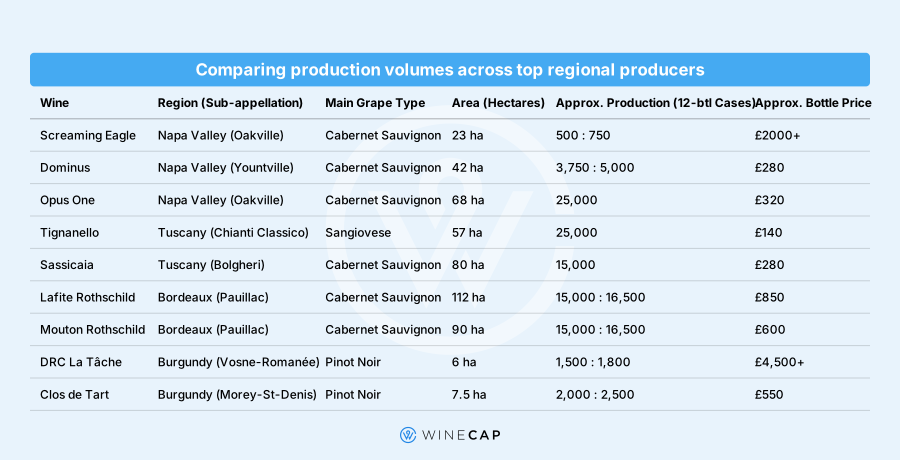
The sheer difference in production scale between Bordeaux and Burgundy is one of the sharpest contrasts between the two regions – and a key factor for investors.

Bordeaux has over 110,000 hectares under vine, producing on average 500–600 million bottles each year. Even its most prestigious estates typically release several thousand cases annually. This volume underpins Bordeaux’s liquidity and accessibility in the secondary market.

Burgundy, by contrast, is far smaller, with around 30,000 hectares of vineyards and total production closer to 150 million bottles annually. At the pinnacle, many grands crus yield only a few hundred cases. This extreme scarcity amplifies price pressure whenever global demand rises, making Burgundy both highly desirable and more volatile.

The wine investment market: A journey from Bordeaux to Burgundy

Bordeaux: The original pillar 

Bordeaux was the foundation of the global secondary wine market. In 2010, Bordeaux accounted for a staggering 96% of trade by value. The En Primeur system, global brand recognition, and high production volumes made it the natural gateway for collectors and investors.

Bordeaux remains:

  • The most liquid market: Wines trade frequently, with transparent pricing.
  • Stable: While not immune to downturns, Bordeaux prices show less volatility.
  • Accessible: Entry-level investment opportunities exist at lower price points than Burgundy, especially among rising stars like Rauzan-Ségla and Beauséjour-Bécot, which have undergone major capital improvements and now outperform peers.

See also: WineCap Bordeaux Regional Report 

Burgundy: The new destination

Following the China-led boom of the late 2000s and early 2010s, Bordeaux’s dominance began to wane. Chinese buyers initially focused almost exclusively on the region’s First Growths, driving rapid price escalation, but as demand cooled, the market corrected sharply. Investors, collectors, and sommeliers then began to look elsewhere, sparking what has since been described as the ‘Burgundy moment’.

Between 2016 and 2018, and again from 2020 to 2022, Burgundy prices climbed dramatically. Burgundy prices surged ahead of broader fine wine benchmarks, reflecting growing international recognition of the region’s scarcity and quality. Burgundy’s appeal was further amplified by global trends toward terroir-driven, artisanal wines, contrasting Bordeaux’s image of large-scale production.

Scarcity remains Burgundy’s greatest market driver. Many grands crus produce fewer than 500 cases annually, which means that even modest increases in demand create significant price pressure. As a result, blue-chip producers such as Domaine de la Romanée-Conti (DRC) and Domaine Leroy now command astronomical valuations, cementing Burgundy’s role as fine wine’s most exclusive frontier.

See also: WineCap Burgundy Regional Report 

Market share shifts

  • In 2012, Bordeaux held 87.5% of market share, while Burgundy represented just 4.2%.
  • By 2025, Bordeaux is down to 36%, while Burgundy has climbed to 24%.

This data underscores Burgundy’s emergence as a true rival to Bordeaux’s dominance. 

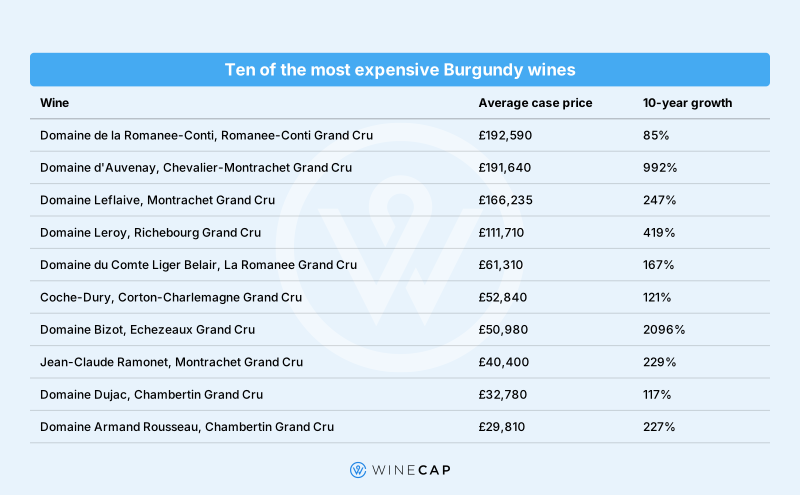
The most expensive Burgundy wines

Most expensive Burgundy wines table

The most expensive Bordeaux wines

The most expensive Bordeaux wines

As the tables above show, Bordeaux’s most prestigious names remain far more affordable than Burgundy’s icons, even as they maintain global popularity.

Also see The most expensive wines in the world (2025 edition).

Investment considerations

Bordeaux

Pros:

  • Deep liquidity and stable pricing
  • Lower entry points for investors
  • Consistent branding and global recognition

Cons:

  • Slower appreciation compared to Burgundy
  • Susceptible to cyclical demand booms (e.g., China-driven surge)

The best Bordeaux vintages

The top Bordeaux vintages are admired for their balance, structure, and cellaring potential, with particular years becoming winemaking benchmarks. Against this background, there are two vintage categories that are relevant for wine investors: “on” years and “off” years.

“On” years are legendary vintages with ideal weather conditions. They include years like 2000, 2005, 2009, 2010, 2015, 2016, 2018, 2019, 2020, and 2022. Such years appear consistently on lists of the best Bordeaux vintages for their fruit purity, elegant tannins, and notable longevity. However, while impressive, they are not necessarily the best years of Bordeaux wines for investment, with lower-priced alternatives (“off” years) potentially offering more favourable opportunities.

So-called “off” years, for example, 2008, 2011, and 2013, don’t always receive the same attention as more critically-acclaimed Bordeaux, but they often present excellent investment opportunities. They can be especially ideal for newcomers seeking good vintages from Bordeaux without the premium prices. Such more accessible releases can perform well over time and, especially when they hail from highly-esteemed châteaux, deliver impressive returns.

Worth noting is that there is no single formula for selecting the right vintage for investing. Producer reputation, terroir expression, critic scores all need to be taken into consideration.

Burgundy

Pros:

  • Exceptional price appreciation potential
  • Extreme scarcity drives prestige and value
  • Global demand from collectors, sommeliers, and investors

Cons:

  • Very high entry points for blue-chip domaines
  • Lower liquidity and fewer trading opportunities
  • Greater price volatility

The best Burgundy vintages

The best Burgundy vintages are sought after for their elegance, purity, and terroir expression, with certain years representative of the region’s ability to produce a pinnacle expression of Pinot Noir and Chardonnay.

Standout “on” years include 1999, 2002, 2005, 2009, 2010, 2015, 2019, 2020 and 2022. These vintages benefited from favourable growing conditions and are, as such, frequently highlighted among the best Burgundy years for their complexity and outstanding ageing potential. However, high quality and price do not always have a direct correlation with long-term investment performance.

So-called “off” years, or vintages that don’t grab the headlines, include 2007, 2011, 2013 and 2017. These years can offer attractive value, especially from well-regarded domaines that are known for consistency regardless of weather challenges. Since Burgundy production is limited and highly appellation-specific, it can be misleading to be guided by broad vintage generalisations, with in-depth domaine-by-domaine analysis often offering a better approach.

Both great Burgundy vintages and overlooked years can be the source of exceptional investment potential, reflecting the diversity and subtlety of the region. In such a granular environment, it is worth aligning investment research and strategy accordingly.

Balancing stability and scarcity

For newcomers to wine investment, Bordeaux remains the most sensible entry point. It is affordable, liquid, and stable, offering opportunities to build a solid foundation in fine wine. Rising stars such as Rauzan-Ségla, Troplong Mondot and Beauséjour-Bécot highlight how estate-level improvements can translate into market outperformance.

For seasoned investors, Burgundy provides the high-risk, high-reward play. While volatile and scarce, the region offers unparalleled potential for price appreciation. The allure of owning rare bottles from DRC or Leroy is both emotional and financial.

Ultimately, a balanced portfolio should include both. Bordeaux provides the security and breadth of a bedrock investment, while Burgundy offers the exclusivity and upside that can truly elevate a collection.

WineCap’s independent market analysis showcases the value of portfolio diversification and the stability offered by investing in wine. Speak to one of our wine investment experts and start building your portfolio. Schedule your free consultation today.