Categories
Learn

What are the Benefits of Investing in Fine Wine?

Fine wine has numerous investment benefits that distinguish it from other assets. More than just a passion investment, fine wine provides stability and substantial financial returns. Below we examine seven of the reasons why fine wine makes a good investment.

High-performing asset

Fine wine has been one of the best-performing assets over the last 30 years, meaning that its value has been increasing over time. The compound annual growth rate since January 1988 has been 12.6%. During the Covid-19 pandemic, leading fine wine indices registered double-digit increases in contrast to the extreme volatility experienced in financial markets. 2021 was a record-breaking year for the fine wine market, which outperformed mainstream equities. In the past year, the broadest measure of fine wine prices, the Liv-ex 1000 index, has risen 24.6% versus 4.2% for the FTSE100, and declines of 2% for the S&P500 and 11.7% for the tech-heavy Nasdaq index.

Tangibility

Wine is a tangible physical asset, which only adds to its allure. While stock markets can crash and share prices can collapse overnight, tangible assets do not cease to exist (unless, in this case, they are drunk and enjoyed). Fine wine can be compared to real estate but without the high maintenance costs and without being reliant on a single economy. It can also be traded internationally.

A stable, low-risk investment

Physical assets are stable sources of value in uncertain times. Fine wine is an effective hedge against inflation and recession. Its performance has proved that it can successfully weather rising prices and economic downturns. As a low-volatile investment, fine wine delivers stability and consistent returns.

Finite supply and rising demand

Investment-grade wines are finite as they are both physical goods and vintage products. Supply is limited due to the strict conditions under which they are produced and as the wines enter their drinking windows and are consumed. This, plus rising demand from a growing global market and new wealth from emerging economies guarantees stable price appreciation over time – a phenomenon relatively unique to fine wine.

Portfolio diversifier

As an alternative asset, fine wine has shown very little correlation to mainstream markets. When traditional markets fall, fine wine tends to hold steady. This makes it a popular alternative to more traditional investments, such as bonds and stocks. As a portfolio diversifier, fine wine reduces the overall risk of an investor’s portfolio, protecting wealth and providing returns.

Tax exemption

Fine wine is a tax efficient investment. As a ‘wasting’ asset – an item with a life span of no more than 50 years – most fine wine is exempt from Capital Gains Tax when it is sold. Although wine can be drinkable some 60 years later, most wine sales would not give rise to a potential tax liability, meaning that investors can enjoy more significant returns.

Passion investment

Last but not least, fine wine is a passion for many investors. There is a growing trend for people who profit from what they might consider their hobby. Buy, sell or drink, fine wine allows you to simultaneously grow your passion and profits.

Ready to get started now you know more about investing in wine? Speak to one of WineCap’s investment experts to discover the next steps on your wine journey.

Categories
Learn

Investing in fine wine or in stocks – which is safer?

If you’re looking for viable investment opportunities then you’ve likely considered a range of potential investments, including stocks and wine. But of these two drastically different investment arenas, which is the safer option during the current economic climate?

In this article, discover the pros and cons of investing in wine and investing in stocks to help you make a more informed decision about which investment direction is best suited to you.

The pros of investing in wine


A lower-risk tangible investment

Fine wine is a physical product with intrinsic value. Unlike stocks – which are intangible and can theoretically fall to zero – fine wine always holds some market value because it is consumable.

Key reasons wine is considered lower-risk:

  • It is insured and professionally stored

  • It cannot suddenly become worthless

  • Supply is finite: once opened and consumed, bottles disappear

  • Historically lower volatility than equities

Fine wine is a physical asset, so it represents a very low-risk investment. When you invest in the market, your wines are stored in optimal conditions within a secure bonded warehouse.

Enjoyable, and globally recognised

Investment wine is both a luxury asset and a globally traded commodity. Its value is supported by long-term demand from:

  • Collectors

  • Restaurants and hospitality buyers

  • Private clients

  • Global auction houses

This creates a large, stable market for well-selected wines.

Strong historical performance

Fine wine has shown remarkably consistent returns over the past two decades. According to S&P Global, wine is one of the few luxury assets to have withstood the harsh impact on assets triggered by the coronavirus pandemic, proving the market relatively resilient. Indeed, wine is widely considered to be a ‘safe haven asset’. Moreover:

  • Fine wine delivered 13.6% annualised returns over 15 years

  • Many top regions have outperformed major stock market indices over the same period

This steady upward trend appeals to investors seeking long-term resilience rather than rapid, high-risk gains.

Attractive tax treatment (UK/Some markets)

In many cases, fine wine is exempt from Capital Gains Tax because it is often classified as a “wasting asset.” This makes returns more efficient compared to traditional taxable assets.

The cons of investing in wine


Portfolio valuation can be tricky

Unlike publicly traded equities:

  • Wine doesn’t have real-time pricing

  • Market activity is slower

  • Valuations depend on recent trades, availability, and provenance

Specialist platforms greatly improve transparency – but it’s still less instant than stock market data.

Choosing the right wines requires expertise

Not every bottle appreciates. Risks include:

  • Overpaying for highly popular but widely available labels

  • Selecting wines with limited long-term demand

  • Buying wines from weaker vintages

This is why many investors rely on professional advisory services.

Selling wine can take a while

Wine is a slower, more deliberate market. Selling may take:

  • Several days, for liquid, in-demand wines

  • Several weeks or months for niche or rare bottles

Investors should treat fine wine as a medium- to long-term asset, not a short-term liquidity tool.

The pros of investing in stocks


The potential for large cash gains

Stocks can appreciate rapidly due to:

  • Strong earnings

  • New product launches

  • Market expansion

  • Industry disruption

This makes equities well-suited for long-term wealth building.

Quick purchases and sales

Stocks can be:

  • Bought instantly

  • Sold instantly

  • Traded globally

  • Accessed 24/7 via digital platforms

This liquidity makes equities ideal for short-term or flexible investing.

Easy diversification

With thousands of companies across dozens of industries, investors can spread risk across:

  • Regions

  • Sectors

  • Growth styles

  • Market caps

They can also spread risk by investing in alternative assets like fine wine.

The cons of investing in stocks


An erratic, volatile marketplace

Stock prices are sensitive to:

  • Inflation and interest rates

  • Political events

  • Global crises

  • Corporate earnings

  • Market sentiment

Sharp daily swings make equities riskier than wine, especially for conservative investors.

Limited transparency

Public companies release information – but not everything is disclosed. Investors may lack visibility into:

  • Internal management issues

  • Supply-chain risks

  • True financial health

This information gap introduces uncertainty when selecting stocks.

Capital Gains Tax

Profits made on equities are typically taxable. Depending on your tax jurisdiction, this can significantly reduce real returns.

Fine wine often avoids this (again, depending on jurisdiction), which is a major reason many high-net-worth investors diversify into alternative assets.

Wine or stocks – which is the safer investment?

While stocks offer higher potential gains, they also carry higher volatility and can suffer significant short-term losses.

Fine wine, on the other hand:

  • Is less volatile

  • Has a strong track record of steady returns

  • Holds intrinsic value

  • Benefits from global luxury demand

  • Offers potential tax advantages

If stability is your priority – or if you are building a long-term, diversified portfolio – fine wine is generally considered the safer investment.

Talk to our wine investment experts

If you’d like personalised guidance or want to explore building a fine wine portfolio, schedule a free 30-minute consultation with one of our experts.

Schedule your free consultation

FAQs About Wine vs. Stock Investing

1. Is wine really a safer investment than stocks?

Wine is typically less volatile and has historically shown steadier growth. Stocks offer higher potential returns but also higher risk.

2. How long should I hold investment wine?

Most investors hold wine for 5–10+ years, allowing rarity, bottle consumption, and collector demand to increase value.

3. Can wine lose value?

Yes. Poor vintage reputation, market oversupply, or weak critic scores can influence prices. Expert guidance reduces this risk.

4. Do I need special storage for investment wine?

Yes – professional bonded storage ensures optimal temperature, humidity, provenance, and insurance.

5. Can wine outperform the stock market?

Historically, fine wine has outperformed several major stock indices over long periods due to steady compounding and low volatility.

6. Is wine a good hedge during recessions?

Often, yes. Fine wine has shown strong resilience during economic downturns and is widely seen as a safe-haven asset.

Categories
Learn

Fine Wine Investment for Beginners

Fine wine investment is increasingly gaining popularity amongst beginners and novices looking to reap the benefits of this alternative asset. Not only is it a proven way to diversify and strengthen an investment portfolio, but also an enjoyable pastime for wine enthusiasts and budding connoisseurs.

Surging prices regularly push fine wine investment into the spotlight, and headlines are filled with stories of investors who bought wine at low prices, then sold it years later for thousands. But how and where do you get started as a beginner? And what are the wine investment returns that you can expect?

The following guide provides an overview of the fine wine investment market and how it works in practice.

How big is the wine investment market?

Investing in wine is no new phenomenon. In fact, it has existed in different forms since antiquity, as wine was circulated and traded throughout the ancient world by Greeks, Egyptians, Phoenicians, and Romans. The writings of Thomas Jefferson provide one of the first pieces of evidence of a premium charged for an older wine. In 1787, he wrote that the 1786 vintage for top Bordeaux wines cost 1800 livres per tonneau compared to 2000 livres for the older 1783. Through the centuries, shrewd wine lovers have been selling part of their collections as a way of subsidising their consumption, leveraging the gains of a uniquely rarifying asset against their own cellars.

Today, the market is transparent and open for beginners as well as experienced investors looking to embark on their wine journey. Investing in fine wine is easier than ever, thanks to specialised wine investment companies, relying on current market data and the latest technology.

The global wine market is forecast to reach US$525 billion by 2025. But while fine wine has emerged as a popular alternative investment, not every wine is investment worthy. For example, the majority of wines produced in renowned regions, such as Burgundy and Bordeaux – perhaps surprisingly – often won’t appreciate in value. In fact, of all the wines made worldwide, only a very small percentage have the potential to improve as they age, and an even smaller percentage of that group has the capacity to see its price rise.

Precisely this scarcity of investible wines is one of the main drivers behind wine investment’s profitability. The limited supply of collectible wine leads to price increases, especially for labels in high demand. This is why it is important to keep abreast of the latest market trends and factors influencing global appetite.

More fine wine investment opportunities than ever before

Historically, Bordeaux’s classified growths have been the leading force on the fine wine investment market. In 2010, Bordeaux took 96% of all trade on the global marketplace for wine. Today, it accounts for less than a third of this market by value.

The main reason behind its declining trade share is that the fine wine investment market is bigger and broader than ever before. Other French regions like Burgundy, Champagne and the Rhône, USA, Italy (led by Tuscany and Piedmont), Germany, Spain and Australia are increasingly seen as reliable sources of considerable wine investment returns.

Investing in fine wine is thus not limited to a small group of wines, contrary to what one might expect. There are more opportunities than ever before that can be suited to your stylistic preferences and budget. The collectors’ market is booming, with record number of investible wines trading right now.

Greater fine wine investment returns

As global demand for fine wine has grown, the investment returns have increased too. Burgundy is a prime example. Thanks to its iconic status and its tiny production levels, early investors in the sector have seen eye-watering growth: upwards of 2000% in 15 years for some wines. The volume, value and breadth of trading has increased significantly, and wine prices have risen dramatically over the last decade; the region’s major index is up almost 200% in the past ten years.

Meanwhile, investors in Champagne have benefitted from supremely consistent returns, although it is not the most expensive or the rarest of fine wines. Its brand strength and distribution network, however, remain unparalleled.

Prices for different regions and wines have risen at a different pace. Region and wine-specific factors thus play a role in the returns that an investor can expect, the cost and length of the investment.

How long do I need to invest in fine wines for?

Fine wine is considered a medium to long-term investment. As a general rule, we advise our clients to hold their wines for three years at the very least.

Many collectible wines have long ageing windows, between ten and 50 years. As the scarcity and quality of fine wine appreciates over time, so does its value. The premise of fine wine investment is to buy wine when it’s young, then sell it once it’s older and more valuable. There are other external factors that may help determine how quickly a wine may deliver the desired returns such as critic scores, supply/demand and significant events related to the region or the producer.

For instance, the price of the Super Tuscan Sassicaia 2015 went up 25% in the day when the American publication Wine Spectator announced its ‘Wine of the Year 2018’. Those buying and re-selling the wine on the day would have made a small profit; however, those holding the wine since release would have seen its value rise over 160% to the present day.

As a long-term low-risk investment, fine wine doesn’t lose its value overnight. Where share prices may increase one day and decrease the next, fine wine provides stable returns year after year. Its low volatility has led many to consider it the best ‘safe-haven’ asset – a great advantage particularly in times of market turmoil.

Unlike mainstream assets, fine wine is fairly insensitive to macro-economic events. When global markets tumbled due to ongoing Covid-19 restrictions and upon Russia’s invasion of Ukraine, fine wine remained resilient. The returns of leading fine wine indices were greater than the FTSE100, S&P500 and even other safe investments such as gold.

How do I start investing in wine?

There are a lot of decisions you need to make when taking on wine investment. Wine investment experts like our team here at WineCap can help you make decisions relating to the following factors:

Set a wine investment strategy

The first step is to set your budget. Consider how long you would like to hold your wines for and your preferred investment strategy. Fine wines command a range of prices depending on the producer, how much of their wine is made and the wines’ age. Make sure to set your budget before embarking on building your portfolio so you can ensure you have exposure to all countries and regions.

Speak to a wine investment expert

There are different routes to accessing the wine investment market, such as through specialised retailers and auction houses. Expert wine investment brokers offer unbiased advice on strategic investment opportunities and can help you build your portfolio, based on your preferred length of investment and budget. While WineCap doesn’t charge any annual fees, most wine investment companies do, so be sure to do your research and be aware of any fees your portfolio might incur.

Select world-class wines for your portfolio

A wine investment expert will help you find the wines best suited for your investment portfolio. WineCap has formed long-lasting relationships over the past decade with négociants, wholesalers and private collectors. This means that we have access to some of the world’s most prized wines. What’s more, our unique proprietary technology analyses over 400,000 wine prices a day to identify the right, undervalued wines to buy and sell across the global market at the right time and price.

Store your wines professionally

Choose to keep your wines in government bonded warehouses as this will ensure they are professionally stored in temperature-controlled conditions best-suited for ageing wines. World-class care ensures that when you come to sell, your wines’ provenance will quickly secure maximum prices.

Fine wine investment can be daunting if you are a beginner, but with a little practice and help you can soon enjoy the benefits of the best-performing luxury asset.

Ready to get started now you know more about how to invest in wine? Speak to one of WineCap’s investment experts to discover the next steps on your wine journey.

Categories
News

Top 10 most expensive wines in the world

Wine has captivated collectors for centuries – not just for its flavour and artistry, but for its ability to increase in quality and value over time. For many enthusiasts, this has made fine wine one of the world’s most compelling collectible assets.

In recent years, the most expensive bottles of fine wine have evolved into global luxury assets in their own right. Record-breaking sales at Sotheby’s and Christie’s, particularly from Burgundy and Bordeaux, have drawn the attention of collectors across Europe, the United States, and Asia. The fine wine market has proven remarkably resilient, often outperforming traditional investment sectors during periods of volatility. As more investors and collectors explore alternative assets, interest in understanding what drives the value of the world’s rarest bottles has grown rapidly.

But what is the most expensive wine on earth? And why are some bottles worth more than luxury cars – or even homes? In this guide, we explore the top 10 most expensive wines in the world, breaking down their prices, regions, rarity, and what makes a single bottle so valuable.

Ten of the world’s most expensive wines

The wines featured below have achieved legendary status in the world of fine wine – not only because of their craftsmanship, but also due to the unique stories and circumstances that have shaped their value. From minuscule production levels to historic vintages and iconic vineyard sites, each bottle reflects centuries of winemaking heritage and a global appetite for rarity.

Domaine Georges & Christophe Roumier, Musigny Grand Cru

Producer: Domaine Georges & Christophe Roumier

Average price: £13,595

Wine type: Red

Grape: Pinot Noir

Region: Burgundy, France

Domaine Roumier is one of Burgundy’s most revered producers, responsible for some of the region’s most expensive wines. Its Musigny Grand Cru – grown on exceptional limestone soils in the Côte de Nuits – offers remarkable finesse and longevity. As a Grand Cru, Burgundy’s highest classification, this wine is treasured for its age-worthiness, rarity, and ability to command high auction prices.

Production levels from Musigny are extremely limited, and the vineyard’s old vines contribute to the wine’s intensity and depth. Collectors value Roumier for its consistency across vintages and its meticulous approach to viticulture, both of which drive sustained demand and premium pricing.

Château Margaux

Producer: Château Margaux

Price: $225,000 (gained by insurance reimbursement in America)

Wine type: Red

Grape: Bordeaux blend

Region: Bordeaux, France

A bottle of this wine, created in 1787, was said to be a part of Thomas Jefferson’s personal collection.

A wine trader called William Sokolin later acquired it and took it to a dinner in Bordeaux, where the waiter knocked it off the table and smashed the bottle. Sokolin was later reimbursed with $225,000 by his insurance company, but the bottle was originally thought to be worth $500,000. Château Margaux is also a consistent producer of top-performing Cabernet Sauvignon-led blends, reinforcing its status as a pillar of fine wine investment.

Classified as a First Growth in the historic 1855 Classification, Château Margaux’s reputation spans centuries. Pre-phylloxera bottles such as the 1787 are exceptionally rare, making them prized artefacts of wine history. Provenance plays a major role in the value of such wines, and Jefferson-linked bottles remain some of the most sought-after in the world.

Domaine Leroy, Musigny Grand Cru

Producer: Domaine Leroy

Average price: £31,691

Wine type: Red

Grape: Pinot Noir

Region: Burgundy, France

Founded in 1868 by wine merchant François Leroy, the Domaine (vineyard) is now owned by Lalou Bize-Leroy, who also owns Domaine d’Auvenay.

This dry red wine is produced from Pinot Noir grapes and is farmed biodynamically. This ethical approach to farming provides nutrients to the plants by using their own composting measures, as opposed to using chemical fertilisers. Although more labour-intensive, this approach produces high-quality fruit and is better for the environment.

Domaine Leroy’s wines are often considered on par with, or even superior to, those of Domaine de la Romanée-Conti, both making wines from prestigious communes such as Vosne-Romanée. Micro-production levels mean only a few barrels are produced each year, resulting in extremely limited global availability. This scarcity, combined with critical acclaim, contributes significantly to its exceptionally high market value.

Krug Vintage Brut Champagne

Producer: Krug

Price: Sold for £14,800

Wine type: Sparking wine

Grape: Champagne

Region: Champagne, France

Krug is one of Champagne’s most renowned houses, producing some of the region’s most sought-after and expensive wines.

At a Hong Kong wine auction in 2009, the 1928 Krug Vintage Brut set a record as the most expensive Champagne ever sold at the time. Its combination of rarity, craftsmanship, and historical prestige make it a pinnacle of sparkling wine collecting.

Older Champagne vintages like 1928 are incredibly rare because sparkling wine is typically consumed young. Bottles that survive nearly a century in pristine condition gain immense value. Krug’s long ageing process on lees, combined with its dedication to complexity and structure, makes its older vintages particularly collectible.

Screaming Eagle Sauvignon Blanc

Producer: Screaming Eagle

Average price: £4,610

Wine type: White

Grape: Sauvignon Blanc

Region: Oakville, USA

Although not the most expensive wine on the list, this is one of the most expensive white wines from the North Coast of the United States.

As one of Napa Valley’s original “cult wines,” Screaming Eagle produces extremely limited quantities, often fewer than 1,000 cases per year. While known primarily for its Cabernet Sauvignon, its Sauvignon Blanc has become one of the most expensive white wines in the world, driven by rarity and intense demand.

Screaming Eagle’s allocation list is famously difficult to join, with waiting lists spanning years. This exclusivity fuels secondary-market prices, as collectors compete for the winery’s rarest bottles. Napa Valley’s rise as a luxury wine region has further elevated Screaming Eagle’s iconic status.

Domaine Leflaive, Montrachet Grand Cru

Producer: Domaine Leflaive

Average price: £12,430

Wine type: White

Grape: Chardonnay

Region: Burgundy, France

Montrachet is considered the best white wine vineyard in the world, with bottles often dominating top 10 most expensive wine lists. Domaine Leflaive’s Grand Cru Chardonnay – barrel-fermented and known for citrus, hazelnut, and buttery richness – remains a benchmark of Burgundy craftsmanship.

Leflaive’s plots in Montrachet sit on prime limestone-rich soils, offering exceptional drainage and mineral expression. With only a very small portion of the already tiny Montrachet vineyard under its control, Leflaive produces minuscule quantities of this wine each year, contributing significantly to its rarity.

Liber Pater

Producer: Liber Pater

Average price: The 2015 variety had an average price of £27,500

Wine type: Red

Grape: Bordeaux blend

Region: Bordeaux, France

Liber Pater produces some of the most expensive wines in the world. This vintage wine was created in 2015, and due to its very low production numbers and the use of grapes from ungrafted vines, it has become a true collector’s item.

Liber Pater aims to recreate the taste of pre-phylloxera Bordeaux by using nearly extinct grape varieties and traditional winemaking techniques. The estate produced just 550 bottles in 2015, making it one of the lowest-production wines in Europe. Its experimental approach attracts collectors seeking something truly singular.

Château d’Yquem

Producer: Château d’Yquem

Price: Sold for £75,000

Wine type: Dessert

Grape: Semillon & Sauvignon Blanc

Region: Sauternes, France

As the only Premier Cru Supérieur in the 1855 Classification, Château d’Yquem has no rivals in the world of sweet wine. The 1811 vintage – one of its most celebrated – sold for £75,000 and was recognised by Guinness World Records as the most expensive standard bottle of white wine ever sold at auction. The wine bottle is said to be on display in Mr Vanneque’s restaurant in Bali, protected by bulletproof glass.

Château d’Yquem benefits from a unique microclimate that encourages the development of noble rot, allowing the estate to produce extraordinarily concentrated and long-lived wines. Many vintages of Yquem can age for over a century, which further enhances its allure among collectors.

Domaine Leroy, d’Auvenay Chevalier-Montrachet Grand Cru

Producer: Domaine d’Auvenay (part of Domaine Leroy)

Average Price: £23,439

Wine Type: White

Grape: Chardonnay

Region: Burgundy, France

Another masterpiece from Lalou Bize-Leroy, this ultra-rare Grand Cru comes from a tiny four-acre estate. Minuscule yields and perfect craftsmanship make it one of the top 10 most expensive wines in the world.

In certain vintages, only one or two barrels of this wine are produced, placing it among the most limited-production white wines in existence. The combination of terroir precision, strict biodynamic principles, and extremely low output fuels exceptionally high prices.

Egon Müller, Scharzhofberger Riesling Trockenbeerenauslese

Producer: Egon Müller

Average Price: £12,147

Wine Type: Dessert

Grape: Riesling

Region: Mosel, Germany

Egon Müller is synonymous with world-class Riesling. Their Trockenbeerenauslese – made from individually selected botrytised berries – is among the most expensive dessert wines globally, often achieving record prices at international wine auctions.

TBAs are among the rarest and most labour-intensive wines to produce, requiring hand-picking berry by berry. Egon Müller consistently commands the highest Riesling prices in the world, with some vintages selling for tens of thousands of pounds on release.

What makes wine so expensive?

When examining the world’s most expensive wines, several factors consistently influence rarity and price:

1. Reputation and provenance

Producers like Domaine de la Romanée-Conti, Lafite Rothschild, and Krug have global reputations for exceptional quality. Strong brand prestige pushes demand upward – especially when paired with historical significance.

2. Critical acclaim

Fine wine critics such as Robert Parker and major publications like Wine Spectator influence global pricing. High scores often trigger strong interest at wine auctions, driving prices even higher.

3. Ageing potential

Investment-grade wines improve dramatically with age. A wine built for long-term cellaring – such as Bordeaux blends or Grand Cru Burgundy – will usually appreciate in value.

4. Scarcity

Rarity is the backbone of luxury pricing. Limited-production wines, low-yield vineyards, or single-parcel bottlings make wines more exclusive. When only a single bottle or a few hundred bottles exist, demand can skyrocket.

5. Historical or cultural importance

Bottles owned by notable figures (e.g., Thomas Jefferson) or from legendary vintages often become priceless artifacts.

Valuation is also influenced by condition and storage history. Wines stored in professional, temperature-controlled cellars command higher prices, while bottles with damaged labels, signs of leakage, or poor provenance may lose significant value. Auction houses play a major role in establishing price benchmarks, and the presence of original wooden cases, wax seals, or château documentation can increase a bottle’s desirability.

Why invest in fine wine?

Fine wine is a powerful alternative investment because:

  • it has low correlation with global stock markets

  • values tend to rise steadily over time

  • supply naturally decreases as bottles are consumed

  • the category has historically remained more stable than gold or real estate

  • prestige wines retain global demand regardless of economic cycles

Fine wine is also considered tax-efficient in several regions, further increasing its appeal for investors seeking long-term growth without excessive tax burdens. Its global nature – traded actively in London, New York, Hong Kong, and Singapore –provides a diverse base of demand. Historically, fine wine has demonstrated resilience during economic downturns, making it an attractive hedge against inflation and uncertainty.

For collectors, investing also provides the joy of building a cellar filled with some of the most extraordinary wines ever created.

Your wine investment journey starts here

WineCap gives you access to some of the world’s most investible wine allocations. Once your preferences are understood, you gain access to a broad portfolio of investment-grade wines, stored in secure government-bonded facilities.

We don’t charge a management fee and our brokerage charges are very low, so you have access to rare wines at a fair price.

Whether you are looking to begin your portfolio with classic investment wines like First Growth Bordeaux or are exploring ultra-rare bottles such as Domaine Leroy, WineCap provides expert guidance at every stage. Our team can help ensure proper storage, verify provenance, and identify the strongest long-term performers in the market, giving you confidence as you build your wine investment portfolio.

To start your wine investment journey, schedule a consultation with one of our experts.
Categories
Special-reports

Fine Wine Investment | Guide

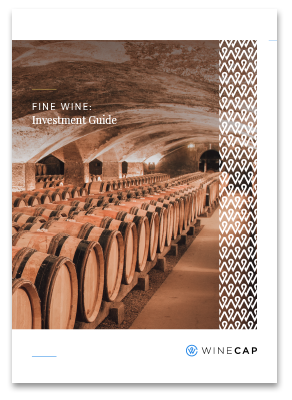
A renaissance in the market over the last two decades has let the secret of fine wine out, and the mainstream investment community has responded in kind. The word on fine wine is that it’s not just for the privileged few: it is an ideal choice for everyday investors looking to diversify their portfolios.

By choosing fine wine, you benefit from a proven market that is stable, relatively detached from the mainstream, and consistent in its double-digit returns. What’s more, fine wine offers you a great hedge against inflation.

Discover in our Fine Wine Investment Guide:

  • How to invest successfully in fine wine
  • What WineCap will do for you
  • The beauty of fine wine as an investment
  • The long-term returns of fine wine
  • The influence of wine critics
  • How to create the perfect portfolio

Click the button below to download our Fine Wine Investment Guide and learn more about our proven strategy for investment success.

Do not hesitate to get in touch and speak to one of our wine investment advisors for further information and to reserve your allocations.

Download your complimentary copy of Fine Wine Investment  and discover how fine wine can enhance your investment.


Fine Wine Investment


Categories
Regional-reports

En Primeur Report – Bordeaux 2022: Unfulfilled Potential

Bordeaux 2022 is a great vintage that, despite its high quality, failed to reverse the waning sentiment for En Primeur. The excitement of the new was counteracted by the value on offer.

Although there was a significant increase in the number of visitors at the En Primeur tastings this spring, the campaign did not succeed in capitalising on this positive momentum.

Our latest report, Bordeaux 2022: Unfulfilled Potential, delves into the reasons why the campaign didn’t quite deliver on hopes and the event’s place within the industry in coming years.

Key findings:

  • Bordeaux 2022 is a high-quality vintage that has surpassed expectations, given the challenges of the growing season.
  • Neal Martin’s average 2022 in-barrel score was below 2020, 2019, and 2016, with most critics noting that it is a vintage to be selective.
  • The En Primeur tastings saw a significant increase in the number of visitors this spring, indicating continued interest in the region.
  • Some wines managed to offer value and were met with high demand upon release, including Château Cheval Blanc, Château Beychevelle, and Château Lafleur.
  • Average price increases between 15% and 25%, and as high as 55%, did not resonate well with the soft Bordeaux market.
  • Bordeaux 2022 vintage failed to reverse the declining sentiment for En Primeur due to high release prices in the context of older vintages offering better value.
  • Producers should evaluate the market dynamics to navigate the evolving fine wine market, and the role of En Primeur within it.

Download your complimentary copy of the en Primeur Report – Bordeaux 2022 and discover how fine wine can enhance your investment portfolio.


Bordeaux Regional Report