Categories
News

‘Dragon’ wines for Chinese New Year

  • The Chinese zodiac has historically impacted fine wine demand in Asia.
  • 2024 is the year of the Wood Dragon, with previous vintages under the same sign being 2012, 2000, 1988 and 1976.
  • We examine the best wines from these ‘Dragon’ years and other associated labels.

As the Lunar New Year draws near, that of the Wood Dragon, the fine wine market is feeling the influence of the Chinese zodiac. Historically, the zodiac has had an impact on buying, particularly in Asia, with increased demand for wines from previous vintages carrying the same zodiac sign or those symbolically linked to it. Which will be the trending ‘Dragon’ wines this year?

Past ‘Dragon’ vintages

The last four ‘Dragon’ vintages were 2012, 2000, 1988 and 1976.

2012

In terms of growing season, the most recent 2012 ‘Dragon’ year was challenging in many fine wine producing regions, including Bordeaux and Burgundy, which led to mixed quality. However, it is widely considered as one of the greatest Champagne vintages this century, with Tuscany and the Rhône also excelling in some areas. Famous 100-point (Wine Advocate) wines include M. Chapoutier Ermitage l’Ermite from the Rhône (rated by Jeb Dunnuck), L’Eglise-Clinet from Bordeaux (William Kelley), Pingus (Luis Gutiérrez) from Spain and Screaming Eagle (Robert Parker) from California.

2000

The 2000 vintage was brilliant in Bordeaux with many of the wines now reaching maturity. This classic vintage saw Parker award Pavie, La Mission Haut-Brion and Pétrus 100-point scores, with Lafleur receiving the same perfect score from Neal Martin, and Cheval Blanc from Antonio Galloni. The 2000 was also another legendary year for Champagne, with highly rated wines including Krug Clos du Mesnil, Louis Roederer Cristal and Dom Pérignon P2. In Burgundy, the vintage was largely seen as one for early consumption due to low acidity, but many of the wines are now drinking perfectly. The appellations that shone were Nuits-Saint-Georges, Chambolle-Musigny and Morey-Saint-Denis.

1988

A great year for the sweet wines of Bordeaux, 1988 Sauternes and Barsac have stood the test of time. Initially considered a Right Bank vintage, Lisa Perrotti-Brown MW (The Wine Independent) recently wrote that wines ‘from Saint-Émilion, Pomerol, and Pessac-Léognan […] should be drunk soon’. 1988 is another vintage to drink soon in Burgundy that produced classic, long-lived wines with good depth of fruit. The year was much more abundant in Chardonnay than in Pinot Noir, and hence better for reds than for whites.

1976

Going back close to 50 years, the 1976 vintage was a mixed bag for much of the wine world. In France, Champagne and Alsace fared better than Bordeaux and Burgundy, and Germany enjoyed a fantastic year. The most significant event was the Judgement of Paris tasting, which put California on the fine wine map. In terms of 100-point wines, Robert Parker’s 1976 favourites were Penfolds Grange and Guigal Côte-Rôtie La Mouline.

Beychevelle – the most famous ‘Dragon’ wine

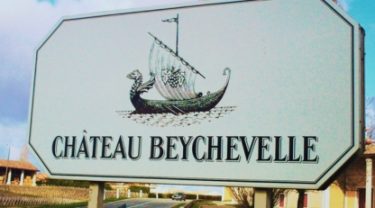
When it comes to associations, Château Beychevelle is an apt choice for the ‘Dragon’ year as its Chinese name means ‘dragon boat’. The wine’s label also depicts a ship with the head of a griffin. Its 2012 vintage is ‘one of the stars of St. Julien’, according to Parker, who described it as ‘elegant and powerful, rich and intense, but light on its feet’. He recommended drinking it between 2019 and 2051.

WineCap’s independent market analysis showcases the value of portfolio diversification and the stability offered by investing in wine. Speak to one of our wine investment experts and start building your portfolio. Schedule your free consultation today.
Categories
News

Burgundy 2022: a promising vintage in a challenging market

  • The 2022 vintage boasts high quality and quantity – ‘the largest crop in 23 years’.
  • It is being launched in a downward market, following ten months of consistent price declines.
  • As demand has tempered and stock has (re-)entered the market, the success of the upcoming releases will largely depend on pricing.

Burgundy’s 2022 vintage is being launched in a downward market, following ten months of consistent price declines. The success of the upcoming releases will largely depend on pricing, but will its quality and quantity have the potential to turn the tables?

Critical opinions on Burgundy 2022

Critic reports thus far have been overwhelmingly positive, applauding both the quality and the quantity of the vintage. 2022 marks the largest crop in 23 years, with some producers seeing double the yields of the previous year. According to Matthew Hayes (JancisRobinson.com), ‘across the whole of Burgundy, 2022 offered a whopping 75.4% more wine (red, white and crémant) compared with 2021’.

Contrary to expectations, the vintage produced wines with typicity, purity, and freshness despite the extreme weather. Hayes commented that ‘2022 was the second-hottest year that the Côte d’Or has endured this century and should logically have followed in the footsteps of the equally stifling solaire years of 2019 and 2020, producing wines with rich, deep fruit profiles and vibrant acidities to ensure long life but […] the wines show a generally impeccable balance of tidy, ripe fruit, discreet acidity and equally (and mostly) refined tannins’.

Hayes revealed that ‘the best-sited and best-rooted vines appeared to have coped well with the heat and in the Côte d’Or the excellence of the top premiers and grands crus shines clearly’.

The prevailing opinion is that 2022 is an excellent year for white wines, reminiscent of 2017 and 2020. Meanwhile, tasting notes from the Côte de Beaune and Côte de Nuits highlighted dense red wines with well-integrated tannins, simultaneously offering elegance and concentration. The wines are expected to be approachable in youth but with significant ageing potential.

However, the market onto which they are released is just as important as the releases themselves.

The current market for Burgundy

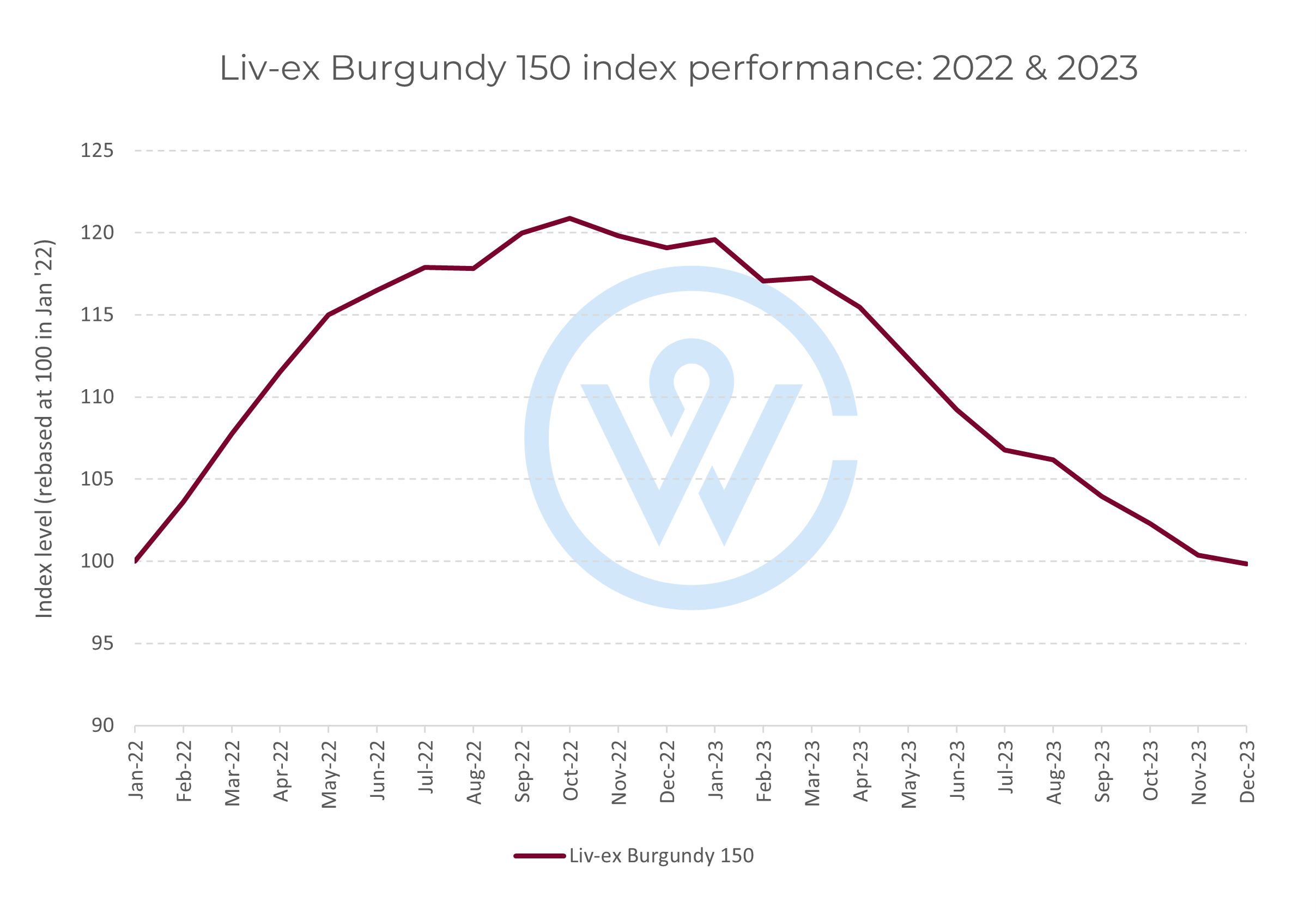
In October 2022, the Liv-ex Burgundy 150 index reached an unprecedented peak, marking a staggering 809.4% increase since its inception in December 2003. Twenty years later, Burgundy remains the best-performing fine wine region.

However, since its peak, prices have tumbled 17.4%. This decline has been attributed to various macroeconomic factors that led to a shift in investor sentiment. As the economic landscape became more uncertain, fine wine buyers have grown increasingly risk-averse, causing a contraction in demand for more volatile investments.

This trend was particularly pronounced in Burgundy, which had soared too high across the whole spectrum. At these stratospheric prices, the market saw more sellers than buyers, with investors keen to liquidate their stock. Top-tier Burgundy (re-)entered the market as sellers were looking to make gains.

This perception of increased risk and a preference for stability among investors led to a decrease in Burgundy’s trade share by value. The falling prices further exacerbated this trend.

The market conditions present a challenging backdrop for the high-quality high-quantity Burgundy 2022 En Primeur campaign. Will the excitement of the new be enough to stimulate demand?

WineCap’s independent market analysis showcases the value of portfolio diversification and the stability offered by investing in wine. Speak to one of our wine investment experts and start building your portfolio. Schedule your free consultation today.
Categories
News

The impact of Mouton Rothschild’s artist labels on market value

  • This Friday will see the artist label announcement of Château Mouton Rothschild’s 2021 vintage.
  • Over the last ten vintages, the average price increase in the month following the announcement has been 5%, signalling a potential investment opportunity.
  • The 2000 vintage illustrates the power of the special label, perfectly weathering market downturns.

Every year, Château Mouton Rothschild commissions a different artist to produce the label for their Grand Vin. The tradition began in 1945 when Baron Philippe de Rothschild decided to celebrate the end of World War II by creating a special label featuring a ‘V’ for victory, designed by Philippe Jullian. Since then, the list of alumni has included the likes of Salvador Dalí, Pablo Picasso, Joan Miró, Andy Warhol, David Hockney, Jeff Koons, Anish Kapoor, Lucien Freud, and Wassily Kandinsky. This Friday will see the label reveal of the 2021 vintage.

How has the label announcement impacted prices?

Over the years, this innovative approach has turned the Mouton Rothschild labels into a fusion of fine art and fine wine, making each bottle a highly desirable collector’s item. What’s more, prices for Mouton Rothschild have consistently increased in the month following the announcement.

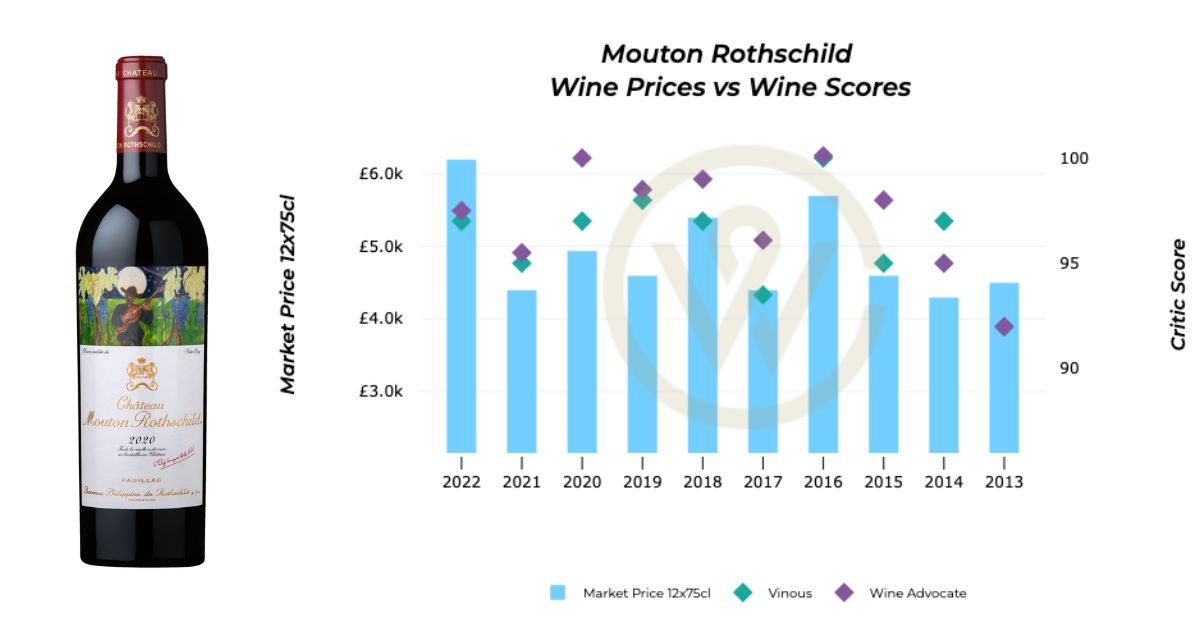
The increase averages just under 5% over the last ten vintages. The 2012 vintage, with a label by Miquel Barcelo, rose the most, up 14.9%, followed by the Xu Bing’s 2018, up 12.6%. Last year’s label reveal of the 2020 vintage drove prices 8.6% higher in a month. There has been only one exception to this pattern with the 2015 vintage, down 4.3%. However, the wine is still up 11% since release.

In the last decade, prices for the brand, represented by our Mouton Rothschild index, have risen 44% on average.

Which are the best value labels today?

While there is a strong investment case for the Grand Vin, which vintages offer the best value today? The 2020 boasts 100-points from The Wine Advocate and is 13% cheaper than the other 100-point 2016 vintage. Its price rose 8.6% after the label announcement, which was designed by Peter Doig.

The 2021 is the most affordable recent release with a current Market Price of £4,400 per 12×75. However, given the trend of price rises post-announcement, one can expect potential changes.

Otherwise, buyers might wish to look back at the 2019 vintage, which received 100-points from Lisa Perrotti-Brown MW (The Wine Independent) and 97 points from Neal Martin (Vinous). The wine’s label, ‘The solar iris of Mouton’, was created by Olafur Eliasson.

The case of the 2000 vintage

If there is one special bottle that illustrates the power of art driving prices, it is that of the 2000 vintage. The bottle itself features an intricate gold engraving of the famous ram (Mouton) of the Rothschild coat of arms and stands out for its elegance and symbolic significance.

Mouton Rothschild 2000 weathered the Bordeaux market downturn of 2011-2014, when prices for the other First Growths fell sharply. The label continued to enjoy heightened demand in the Asian market, which only increased in 2015 – the year of the sheep, according to the Chinese zodiac. The wine has risen close to 750% in value since its release – an investment case that speaks for itself.

The innovative tradition of artist-designed labels by Château Mouton Rothschild not only merges the worlds of fine art and winemaking but also significantly elevates the market value, making them coveted treasures for collectors and investors alike.

WineCap’s independent market analysis showcases the value of portfolio diversification and the stability offered by investing in wine. Speak to one of our wine investment experts and start building your portfolio. Schedule your free consultation today.

Categories
News

Wine Spectator ‘Wine of the Year’ and critics’ top picks

  • Argiano Brunello di Montalcino 2018 ranked at Wine Spectator’s Wine of the Year.
  • Laurent-Perrier Champagne Grand Siècle Iteration N.26 took the first spot in James Suckling’s annual rankings.
  • Poggio di Sotto Brunello di Montalcino 2018 was Wine Enthusiast’s top cellar recommendation.

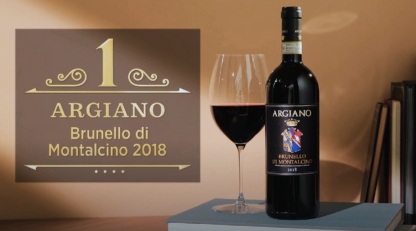
On Friday, Wine Spectator announced its ‘Wine of the Year’ – Argiano Brunello di Montalcino 2018.

The publication wrote: ‘In the world of wine, a change of ownership or a stylistic paradigm shift can reap huge benefits, but there are always risks. In the case of Argiano, change has paid off in spades, as new owners arrived with a commitment to a return to a more traditional expression of Brunello. Reflecting more than $10 million in investment in the estate over a decade, the stellar quality of Argiano Brunello di Montalcino 2018 earns it Wine of the Year honors from Wine Spectator in 2023.’

The wine has enjoyed increased demand after the announcement and has traded at a 45% premium on its Market Price. This is not a new phenomenon. According to Liv-ex, ‘over the last few years, most of the Wine Spectator’s top wines have enjoyed significant trading activity and an uptick in price’.

For instance, the 2018 Wine Spectator’s wine of the year, Sassicaia 2015, has seen its Market Price double from £1,350 per 12×75 to £2,700 after the announcement. Similarly, the 2019 wine of the year – Château Léoville Barton 2016 – enjoyed an immediate price surge.

This year, other investment-grade wines that ranked in the publication’s top ten list include Château Lynch Bages 2020 (3) and Château Pichon Baron 2020 (8).

James Suckling’s top picks for 2023

James Suckling also released his Top 100 World Wines 2023 and Wine of the Year report, giving Laurent-Perrier Champagne Grand Siècle Iteration N.26 the first spot.

The critic said that ‘it’s not just an incredible bottle of Champagne, it’s the best wine we rated this year out of the almost 39,000 reviewed by myself and my team of seven tasters/editors’. This is the ‘the largest number of wines [they] have ever reviewed in a year, beating last year’s record of about 32,000’.

Suckling’s top ten also included the 100-point Seña 2021 (3) and Château Figeac 2020 (4).

Wine Enthusiast’s top cellar selections

Another Brunello di Montalcino stole the spotlight in Wine Enthusiast’s annual rankings. Poggio di Sotto Brunello di Montalcino 2018 was their top cellar recommendation for 2023.

Their report stated: ‘This list represents what’s next in Wine Enthusiast’s Cellar Selections—wines with consistency and structure that aren’t necessarily the biggest and boldest. The number one wine, for example, is Poggio di Sotto’s 2018 Brunello di Montalcino, not the most legendary in its region of Italy but what a wine!’

Their number two wine was Ribera del Duero Vega Sicilia Unico 2012, which they described as ‘a proven collectible’ and a ‘gem’ which ‘represents Spain as an underappreciated wine country full of discoveries’.

WineCap’s independent market analysis showcases the value of portfolio diversification and the stability offered by investing in wine. Speak to one of our wine investment experts and start building your portfolio. Schedule your free consultation today.
Categories
News

Jeb Dunnuck’s top-scoring Southern Rhône releases

  • Jeb Dunnuck recently reviewed two vintages from Southern Rhône – the 2021 in bottle and 2022 in barrel.
  • He described 2022 as a ‘clear step up over 2021’.
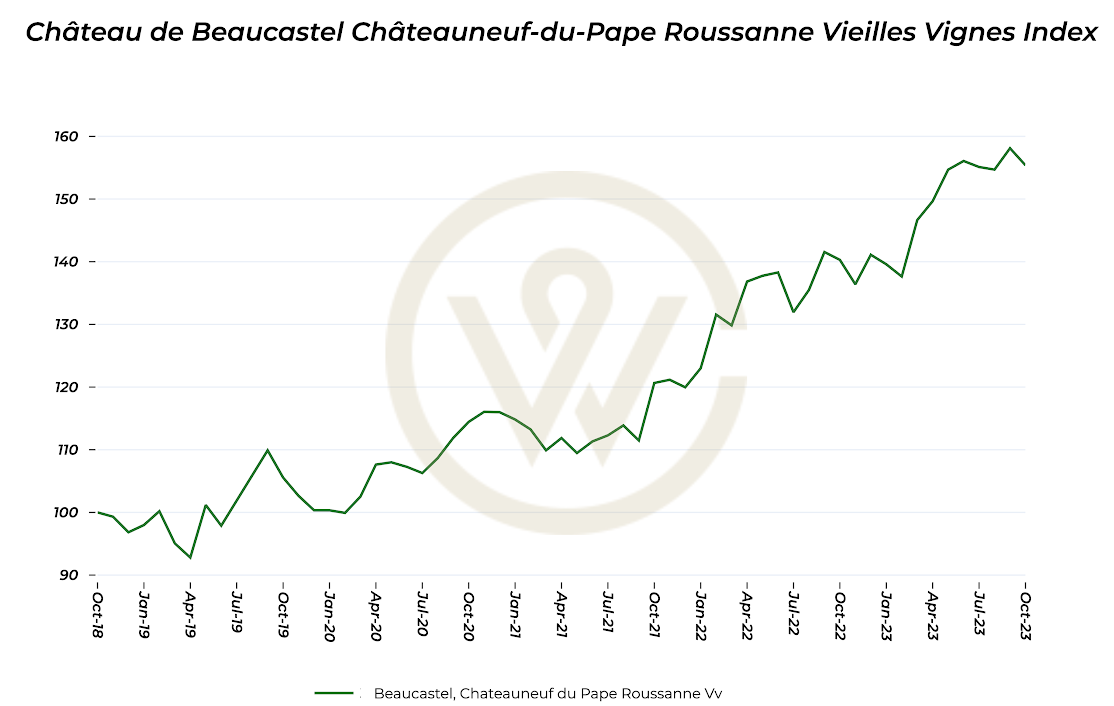
  • Château de Beaucastel’s Châteauneuf-du-Pape Roussanne Vieilles Vignes 2022 received 100 points from the critic, and prices for the label have risen 60% in the last five years.

Last week, Jeb Dunnuck released his latest Southern Rhône report, reviewing the 2021 vintage from bottle and the 2022 mostly from barrel.

The critic observed that ‘the time of truly bad vintages is mostly over’ given ‘the advances in viticulture and winemaking’. This is especially true for ‘a region like the southern Rhône, which has so much flexibility with grape varieties and different terroirs’.

2021 – drinking rather than collecting

The 2021 Southern Rhône vintage was marked by devastating springtime frosts, which dramatically reduced yields. A cool, rainy year led to ‘forward and charming [wines], with mid-weight, linear, fresher profiles,’ according to Dunnuck.

Dunnuck said that ‘2021 is not a great vintage’ when tasted next to a top 2019, 2016 or 2010. While he commended the accessibility and finesse of the wines, which would be ‘loved by sommeliers’, the critic noted that ‘it’s not a vintage to seek out or buy in massive quantities for the cellar’.

2022 – checks in ‘behind the greats’

Dunnuck described the 2022s as ‘a clear step up over 2021s’. He noted that the vintage bears some similarities ‘to 2020 and 2011, if not a more linear, mid-weight version of 2009’. For him, ‘2022 looks to check in behind the greats of 2019, 2016, 2010, and 2007’.

However, the critic concluded that ‘the divergent styles throughout the region make 2022 a difficult vintage to describe in broad statements, so it’s a vintage that readers will need to approach on an estate-by-estate basis’.

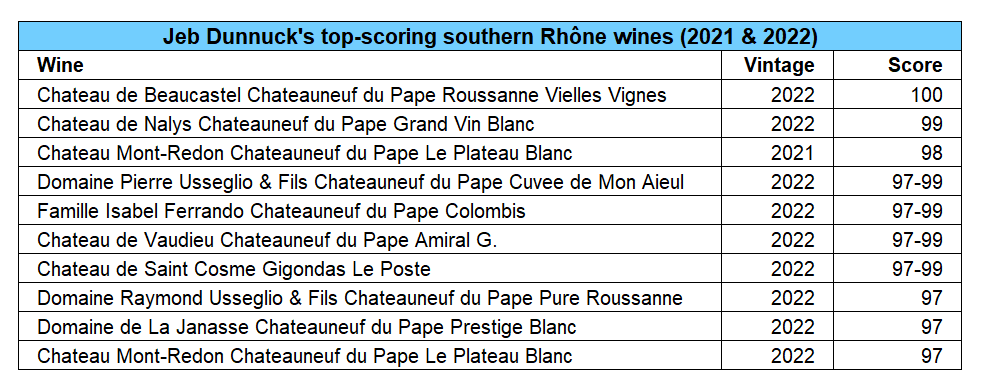
Dunnuck’s top-scoring wines across both years can be seen in the table below.

Across both years, Jeb Dunnuck found perfection in one wine – Château de Beaucastel’s Châteauneuf-du-Pape Roussanne Vieilles Vignes 2022. Awarding it 100 points, he called it ‘pure Beaucastel magic’. Average prices for the label have risen 101% over the last decade, and 60% in the last five years.

The Rhône’s investment performance in 2023

Prices for the top Rhône labels have been falling this year. Across the Liv-ex 1000 regional sub-indices, the Rhône 100 has experienced the biggest decline, down 18.1%.

However, young vintages like 2019 and 2020 have been in demand. Moreover, some wines from Southern Rhône such as Château de Beaucastel Châteauneuf-du-Pape Blanc have been on an upward trend, rising 32.8% on average.

WineCap’s independent market analysis showcases the value of portfolio diversification and the stability offered by investing in wine. Speak to one of our wine investment experts and start building your portfolio. Schedule your free consultation today.
 

Categories
News

Cautious optimism for Australian wine amid tariff review

  • Australia and China have agreed to a suspension of their ongoing dispute over the steep tariffs imposed on Australian wine since November 2020.
  • The tariffs had a profound impact on demand and price performance of Australian wine.
  • Australia’s best price performers have risen over 40% in value in the last year.

Australian wine tariffs under review

In a significant shift that could redefine trade relations between Australia and China, the two nations have agreed to a suspension of their ongoing dispute over the steep tariffs imposed on Australian wine since November 2020. This development comes ahead of Australian Prime Minister Anthony Albanese’s forthcoming trip to Beijing, marking a potential thaw in the trade tensions that have severely impacted Australia’s wine industry.

While the Chinese government has consented to an expedited five-month review of the punitive duties, which have plummeted Australia’s wine exports from over $1 billion to a mere $12 million, there remains a cautious optimism. Despite this progress, industry experts predict that even if the tariffs are promptly revoked, the Australian wine sector, which has undergone substantial restructuring in response to the lost Chinese market, would still require approximately two years to recuperate and effectively redistribute its current surplus.

Impact on Australia’s wine investment market

The Chinese tariffs, ranging from 180% to 200% on Australian wine imports, had a profound impact on Australia’s budding secondary market. The country has historically been the second most important fine wine player from the New World after the U.S., enjoying greater demand than South Africa, Chile or Argentina.

After a record-breaking year of trade in 2020, Australia’s investment market shrank in 2021. The number of different Australian wines traded on Liv-ex declined 32.2% year-on-year, as demand decreased.

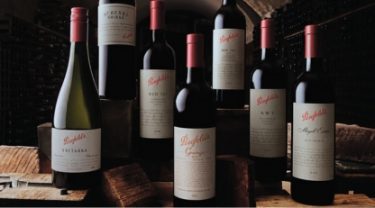
Fewer wines from Australia made it into the rankings of the most powerful brands in the world. Australia’s leading label, Penfolds Grange, dropped in the 2021 Power 100 rankings, from fifth in 2020 to 45th place in 2021. In last year’s edition of the rankings, the wine fell further – from 45th to 55th place, while Henschke exited altogether. Part of the reason is that Penfolds has historically been heavily reliant on the Chinese market. In an attempt to rebuilt tariff-hit business, earlier this year Treasury Wine Estates, owner of Penfolds, announced the introduction of its first China-sourced premium wine.

Australian wine price performance

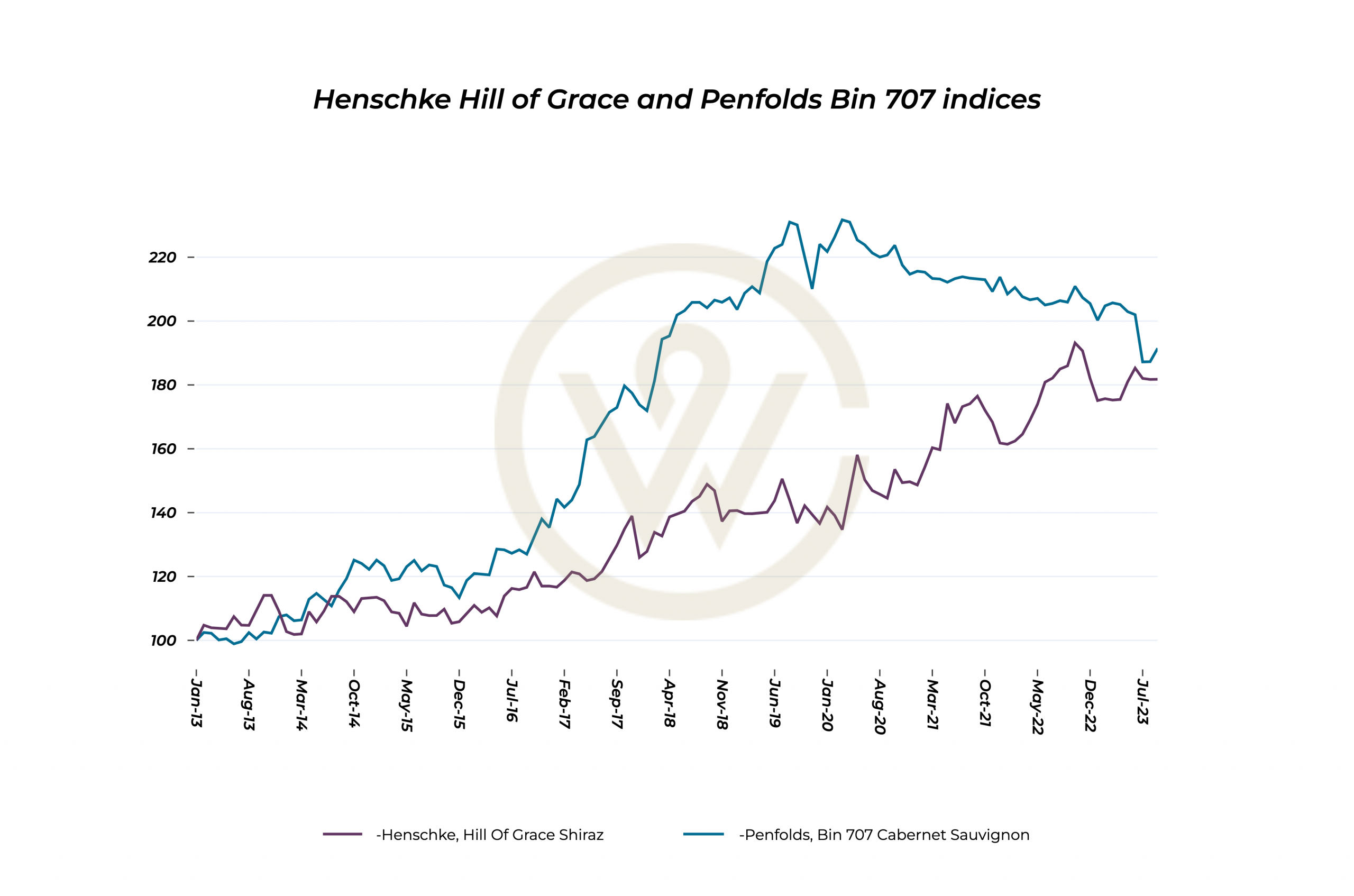
Since the tariff introduction, prices for some of the top wines have dipped, creating pockets of opportunity. For instance, the average price of Henschke Hill of Grace is down 4% in the last year; similarly, Penfolds Bin 707 is down 9%. While their trajectories are different, the long-term growth trend remains, with over 90% rise in the last decade.

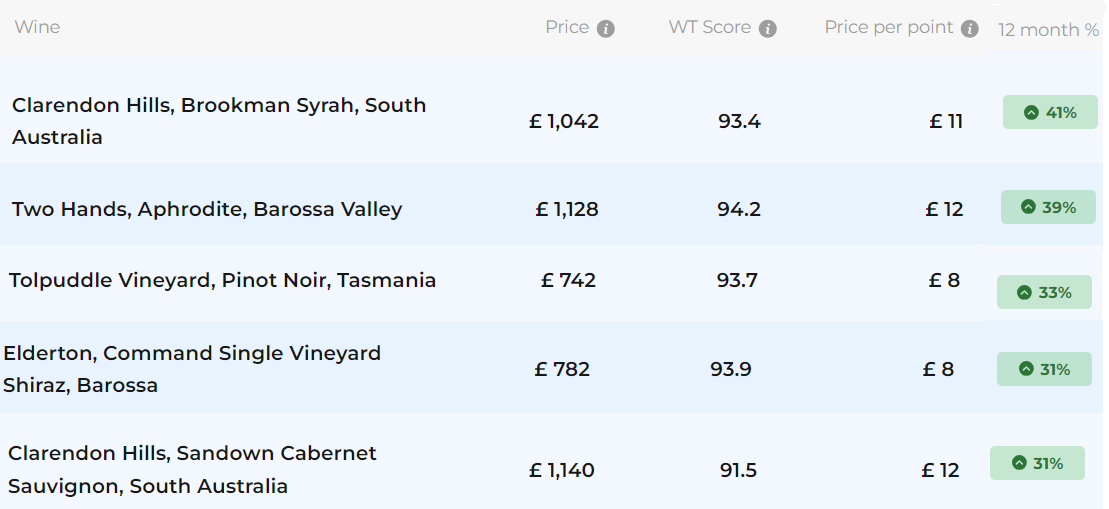
Some Australian brands have seen impressive price performance despite the ongoing trade tension. The table below shows the five best performers on Wine Track in the last year, which have risen between 31% and 41% on average. Clarendon Hills Brookman Syrah leads the rankings, with an average price per case of £1,042. Two Hands Aphrodite has been the second-best performer, up 39%.

The cautious optimism for Australian wine will likely affect its secondary market performance. As demand rises, so will prices. It remains to be seen if a potential tariff suspension will bring back the momentum to a region that has quietened down in the last three years but nonetheless remains an important New World representative.

WineCap’s independent market analysis showcases the value of portfolio diversification and the stability offered by investing in wine. Speak to one of our wine investment experts and start building your portfolio. Schedule your free consultation today.

Categories
News

Examining the investment potential of Salon 2013 amid heightened demand

  • Salon Le Mesnil Blanc de Blancs 2013 has enjoyed heightened demand shortly after release.
  • The 2013 offers good value compared to similarly scored back vintages, which come at a significant price premium.
  • Salon has delivered higher returns (71%) than the Champagne 50 index (62.8%) over the last five years.

The latest release from Champagne house Salon has already been met with heightened demand. Salon Le Mesnil Blanc de Blancs 2013 came to the market at the end of September, and featured among the most traded wines on Liv-ex shortly after. Below we examine the reasons behind this increased interest and the wine’s investment potential.

The ‘magnificent’ 2013 Salon release

The 2013 was the first vintage release following two unusual releases: the 2012 which the Champagne house initially said they would not offer, and the 2008 of which only 8,000 magnum bottles were released (about 1/3 of their normal production).

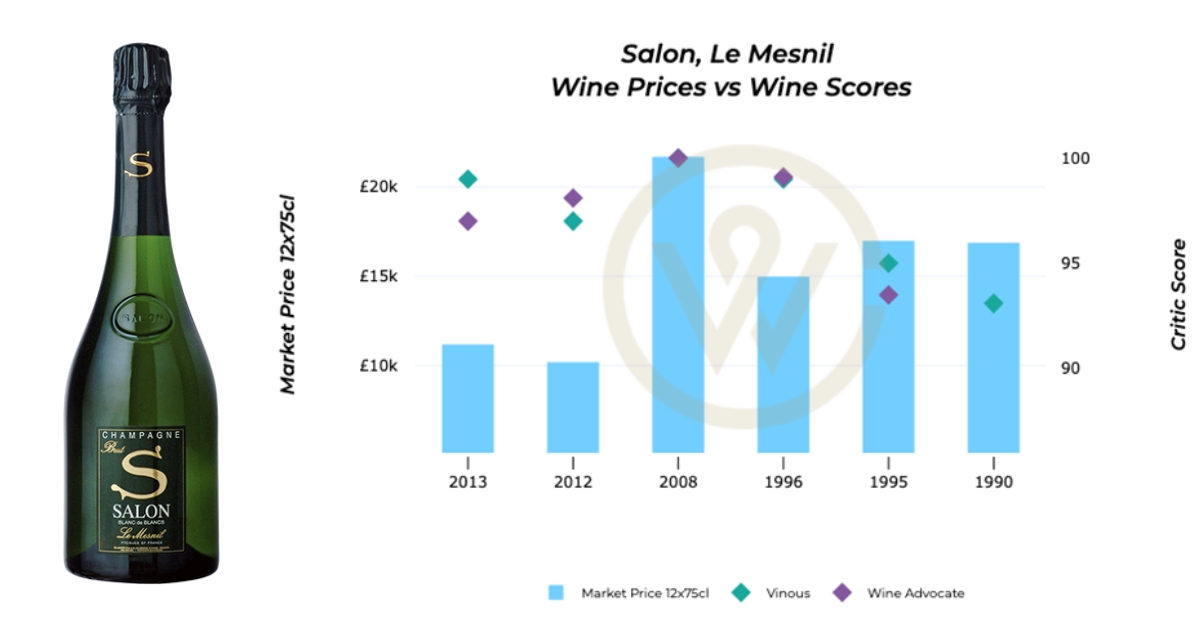
The wine received 99-points from Antonio Galloni (Vinous), who declared it ‘the most powerful, dense young Salon I have ever tasted’. The critic further noted: ‘Champagne of mind-bending complexity, the 2013 possesses tremendous mid-palate intensity and power from the very first taste’.

Meanwhile, the Wine Advocate’s Yohan Castaing awarded the wine 97-points, saying that 2013 is ‘more complex and incisive than the 2002 and exhibits similar power to the 2012 at this early stage’.

In terms of value, the 2013 stands out among other Salon vintages available in the market today. The only higher-scoring scoring wine is the 2008 at nearly twice the price. Other similarly scored back vintages such as the 1996, 1995, and 1990 also come at a significant premium to the 2013.

Salon brand performance

Perhaps the most coveted of all Champagne brands, Salon is certainly one of the rarest. Only around 50,000-60,000 bottles are made in most years, and fewer than 50 vintages in the last 100 years.

Salon is a wine defined by its singularity, representing a single vintage expression from one grape and one village. The wine was originally conceived as a private label for the consumption of its founder Eugène-Aimé Salon at a time when the making of Champagne was characterised by blending.

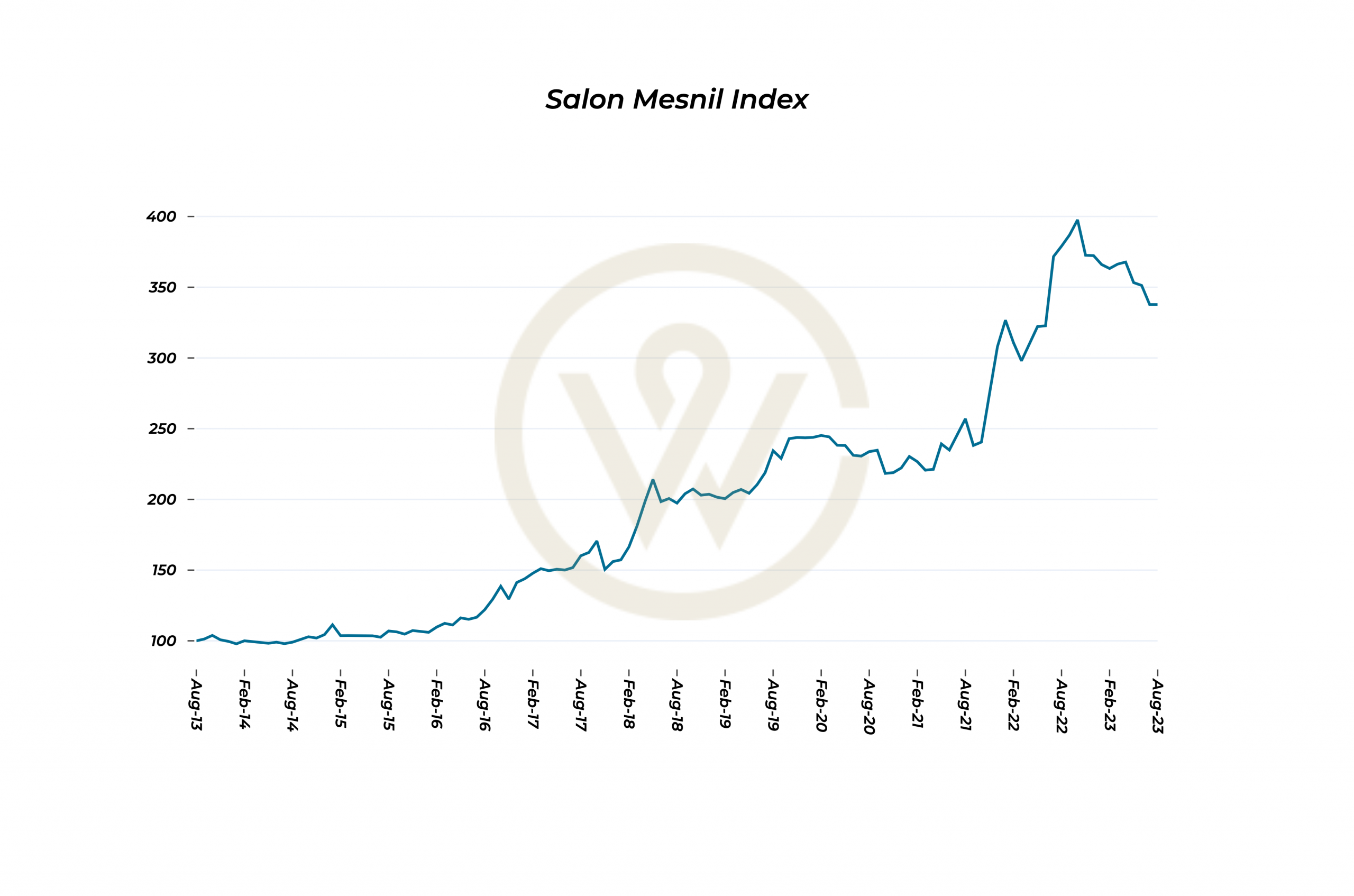
Salon’s exclusivity has been reflected in its investment performance. The wine has delivered higher returns (71%) than the Champagne 50 index (62.8%) over the last five years.

Even in the current climate that has seen prices fall across the board, Salon has fared better than average, down 7% compared to a 12.9% decrease for the broader index, which includes the likes of Krug and Cristal.

The long-term prospects for a wine as rare and highly regarded as Salon are more than promising. There is significant space for Champagne prices to rise in the medium term, and a wine like Salon is especially well placed to benefit.

WineCap’s independent market analysis showcases the value of portfolio diversification and the stability offered by investing in wine. Speak to one of our wine investment experts and start building your portfolio. Schedule your free consultation today.
Categories
News

Investment opportunities in LVMH Champagnes

  • Recent LVMH Champagne releases offer a combination of high quality and relative value for money.
  • Dom Pérignon 2013 has been the most in-demand wine so far this year.
  • The current market environment has created plenty of Champagne buying opportunities, among which Krug 2006 stands out.

A name synonymous with luxury and quality, Louis Vuitton Moët Hennessy’s (LVMH) wines have become mainstays of any serious wine investment portfolio. Owners of iconic brands like Krug, Dom Pérignon, Ruinart, Veuve Clicquot and Ace of Spades, LVMH has set unparalleled standards in Champagne production.

Not only have their wines delivered quality, as affirmed by critic scores, but they have brought greater liquidity to the Champagne market. A common theme uniting some of their recent releases is the outstanding value they offer compared to back vintages.

Dom Pérignon 2013 – the most wanted wine this year

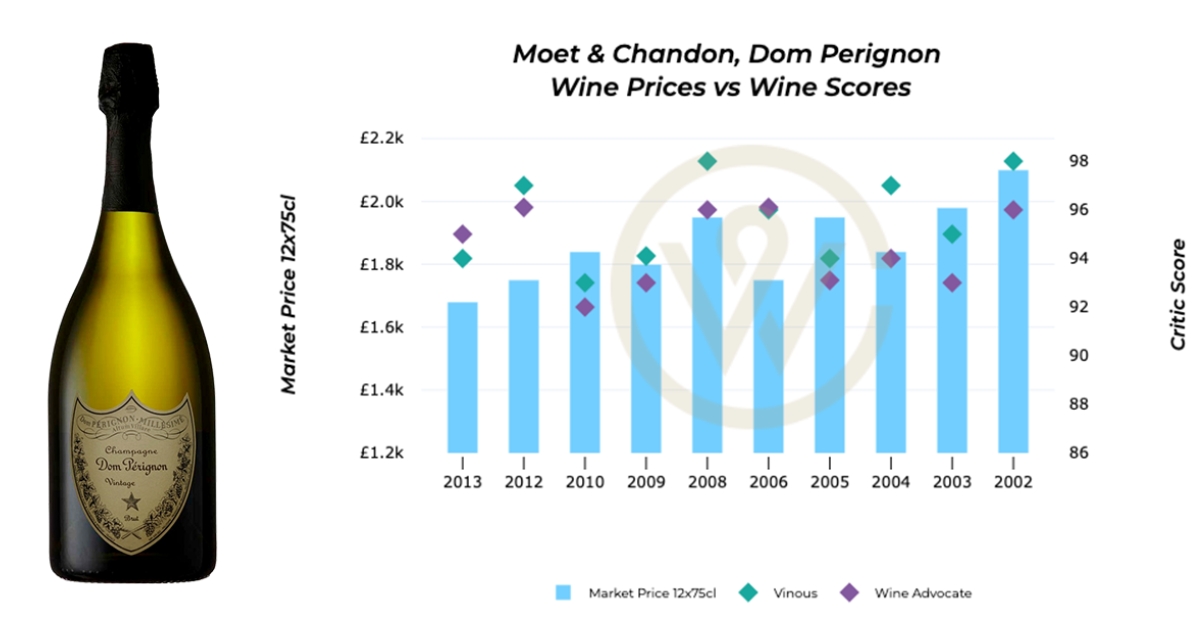
Dom Pérignon 2013 is the latest release from the most in-demand Champagne brand. The wine boasts 95+ points from the Wine Advocate’s William Kelley, who called it ‘a lovely wine, defined by the long, cool growing season’.

The remarkable value it offers – as the most affordable Dom Pérignon vintage in the market today – has led it to become the most traded wine by both value and volume this year. The wine’s price has fallen slightly since release (-7.1%), in line with the recent reconciliation in Champagne prices. The Champagne 50 index has dipped 13.1% year-to-date.

However, the brand’s overall trajectory is upwards, with Dom Pérignon prices rising 64% on average in the last five years, and 133% over the last decade, making it an opportune time to buy.

Latest Krug Grande Cuvée editions

The crowning jewel of LVMH, Champagne house Krug, also introduced its latest Grande Cuvée earlier this year. The 171st edition, blended meticulously from 30 different vintages dating back to 2000, represents the lowest-priced Krug GC.

Magnums of the 168th edition are also new to the market, with the hallowed 2012 as the base vintage. Older releases of such magnums are hard to find and command a hefty premium, once again underlining the value to be had here.

Opportunities in Krug 

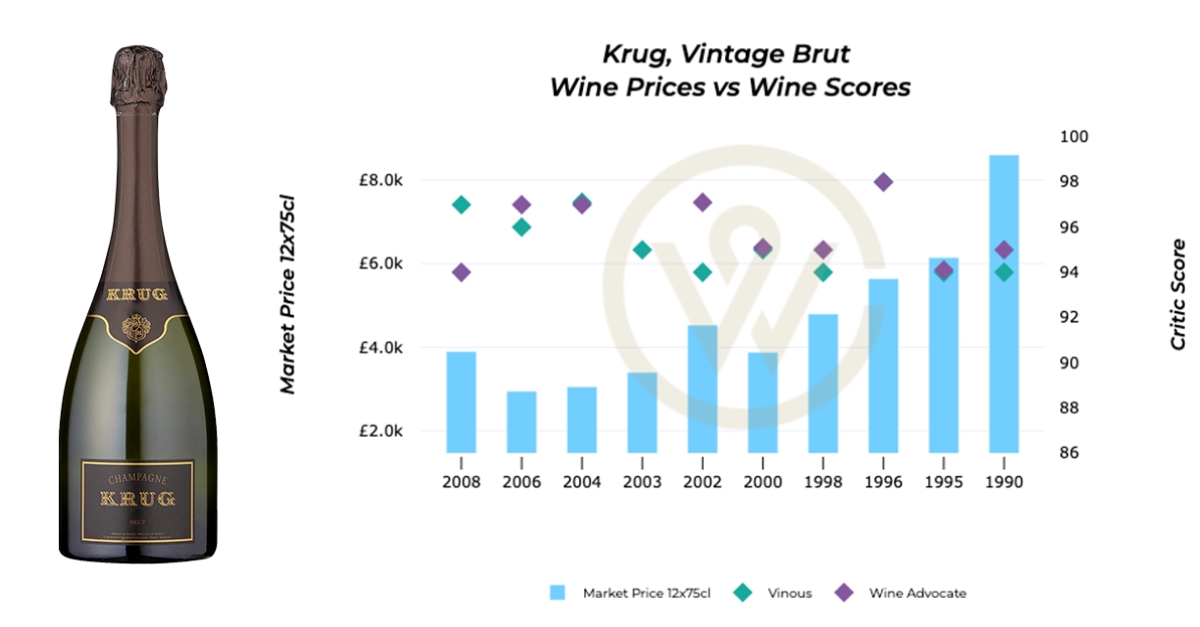
The recent decline in Champagne prices has created buying opportunities for some of the top names. The latest Krug vintage, the 2008, has become more affordable after dipping 29.0% year-to-date. The wine received 97-points from Antonio Galloni (Vinous) who described it as a ‘nervy, electrifying Champagne, the likes of which has not emerged from Krug’s cellars since the magical 1996’.

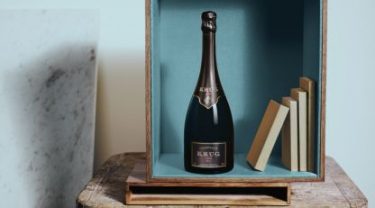
However, the 2006 presents an even better investment opportunity. While it is the lowest-priced Krug vintage, its scores align with pricier alternatives such as 2002. The 2006 boasts 96-points from Neal Martin, 97-points from Galloni and 98-points from Kelley, making its value proposition even more evident.

Krug prices have risen 71% on average in the last five years (see more on Wine Track).

Buyers can find plenty of opportunities in LVMH’s Champagnes. Despite the recent dip in the Champagne market, the long-term trajectory of these illustrious brands indicates a steady and impressive rise. The value on offer in some of the most recent offerings makes them an even more lucrative acquisition.

WineCap’s independent market analysis showcases the value of portfolio diversification and the stability offered by investing in wine. Speak to one of our wine investment experts and start building your portfolio. Schedule your free consultation today.


Categories
News

La Place 2023: Critics’ verdict and top-scoring wines

  • Major critics have released their ‘Beyond Bordeaux’ reports, accessing the quality and value of this year’s La Place releases.
  • Tom Parker MW stated that there were ‘not as many hits as usual’.
  • Jane Anson awarded three wines 100-points.

As the La Place de Bordeaux campaign takes centre stage in September, major critics have shared their views on this year’s releases, including Jane Anson (Inside Bordeaux) and Tom Parker MW (JancisRobinson.com).

Both have commented on the quality of the wines but also on their pricing strategies and the value to be found. As discussed last week, a recurring theme in the campaign has been the price increases for the new releases, compared to previous vintages. This has done little to invigorate the market for buying at release for investment.

Tom Parker on the campaign’s ‘ambitious pricing’

In his ‘beyond Bordeaux’ assessment, Tom Parker MW expressed his wary view on the campaign’s strategy and pricing. He wrote that ‘the styles and regions are diverse, and the stories risk being lost in such a compressed release timetable’.

He added that ‘given the ambitious pricing for many of these wines, it is hard to see how they can all be sold through successfully’. Indeed, the campaign’s reception so far has been mediocre.

In terms of overall quality, Parker stated that ‘there were some excellent efforts though perhaps not as many hits as usual’.

Regional observations

Delving into individual regions, Parker noted the Californian producers’ split strategy, with ‘some releasing wines from the complicated 2020 vintage, with others choosing instead to offer museum releases and a few choosing to do both’. One such instance was Opus One, which opted for library release of its 2018 and 2019 vintages.

In terms of the Rhône releases, he observed that ‘Hommage à Jacques Perrin was good rather than great, and newly added and renamed Domaine de la Chapelle (formerly Jaboulet’s Hermitage La Chapelle) left a little to be desired in the tricky 2021 vintage’.

For him, ‘Argentina produced two of the most exciting wines’. He awared 18 out of 20 points to Zuccardi’s Finca Canal Uco and 17+/20 for Adrianna Vineyard from Catena Zapata.

Parker also complimented Australian wines which were ‘technically immaculate’ and named Wynn’s John Riddoch ‘a personal favourite’.

His top Italian pick was Masseto (18/20), which he described as ‘almost a guilty pleasure in 2020’ though ‘only for those with the deepest pockets’. Although the wine was released at a 10% premium on last year, the new release still offered value in the context of back vintages.

Jane Anson awards three wines 100-points

Among the releases so far, Jane Anson awarded three wines 100 points – Bibi Graetz Colore 2021, Yjar 2019, and Giaconda Chardonnay 2021. The La Place newcomer Chappellet, Pritchard Hill Cabernet Sauvignon 2019 received a near-perfect score of 99-points from the critic.

Anson drew attention to Sicily as a region that offers both quality and value, saying that ‘Sicilian reds, as ever, offer some of the best value wines not just of the September Releases, but of the wine industry in general’.

She also acknowledged that ‘there’s no doubt that the wider economic stresses globally are both helping and hurting the September Releases’.

Once again, this highlights the importance of correct pricing in a broadening fine wine market.

WineCap’s independent market analysis showcases the value of portfolio diversification and the stability offered by investing in wine. Speak to one of our wine investment experts and start building your portfolio. Schedule your free consultation today.
 

Categories
News

New World releases from the autumn La Place de Bordeaux campaign

  • The La Place de Bordeaux campaign is in full swing, with releases from Chile, Italy, USA, France and more.
  • A recurring theme in the campaign has been the price increases for the new releases, compared to their previous vintages.
  • While La Place remains an exciting global marketplace for New and Old World wines, the ultimate value of the releases should be judged in a broader context.

The La Place de Bordeaux autumn campaign has gathered momentum over the past two weeks, with releases from Chile, Italy, USA, France and more.

The campaign kicked off with Paul Jaboulet Aîné’s Hermitage La Chapelle 2021, along with the re-release of some of its library vintages, namely 2013, 2011 and 2006. Napa Valley’s Opus One also re-released its 2018 and 2019 vintages, which led to heightened demand for the brand. Below we take a look at some of the recent New World releases from the campaign so far, examining their pricing and investment potential.

Seña 2021

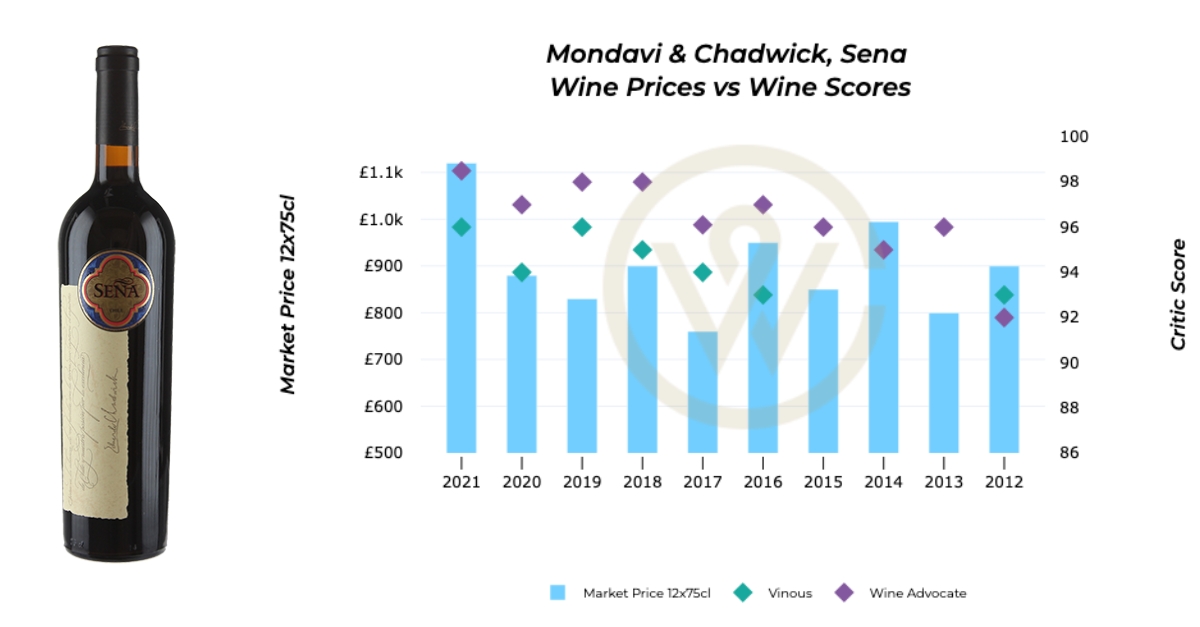
The newly released 2021 vintage of Mondavi & Chadwick’s Seña is the highest priced wine across recent vintages from the brand.

Seña 2021 was released at €90 per bottle ex-négociant, up 5.9% on the 2020. The wine came with a recommended retail price of £1,344 per 12×75, representing a 30.6% increase on last year.

The 2021 Seña received 98+ points from The Wine Advocate’s Luis Gutiérrez, who described it as ‘one of the finest vintages’. Meanwhile, Joaquín Hidalgo (Vinous) gave it 96-points and said that ‘it will grow in the bottle’.

Other more attractively priced but similarly scored vintages include 2019 and 2018. Over the last ten years, Seña prices have increased 90% on average.

Almaviva 2021

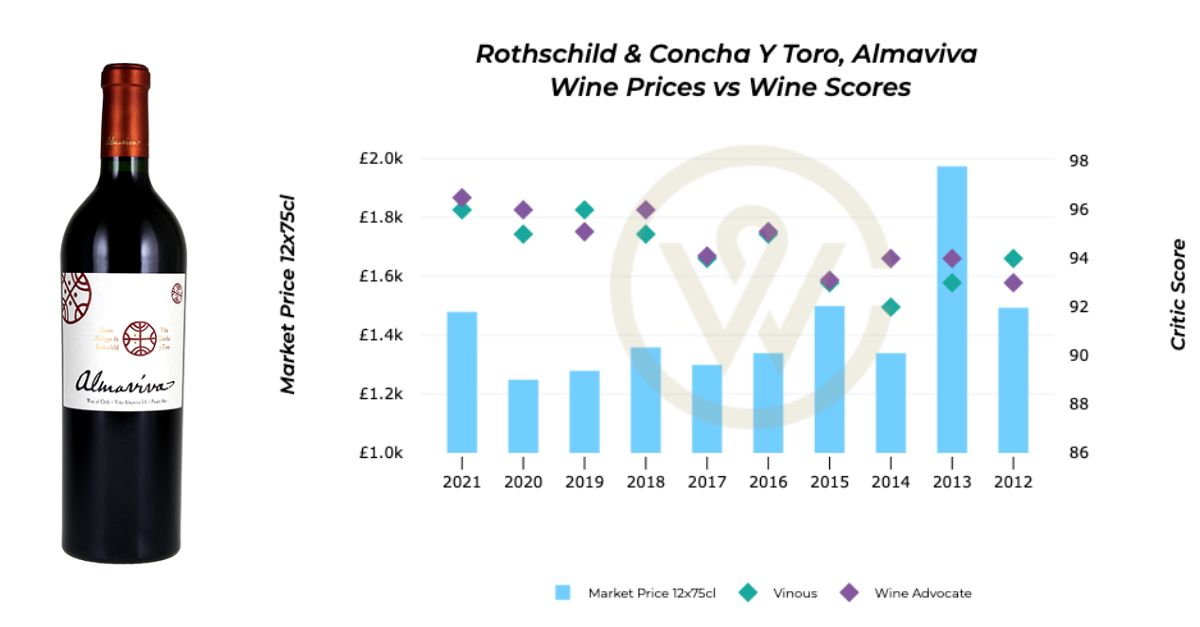
Another release from Chile, Almaviva 2021, was offered via La Place at €122 per bottle ex-négociant, up 5.2% on the 2020. The wine was released internationally for £1,448 per 12×75. It received 96+ points from Luis Gutiérrez, and another 96-points from Joaquín Hidalgo, who praised its ‘enticing nose’ and ‘velvet texture’.

However, some back vintages such as the 2020, 2019 and 2018 offer better value. Our Almaviva index has recorded positive performance both in the short and the long term. Over five years, prices have risen 41%, and over ten – 147%.

Nicolás Catena Zapata 2020

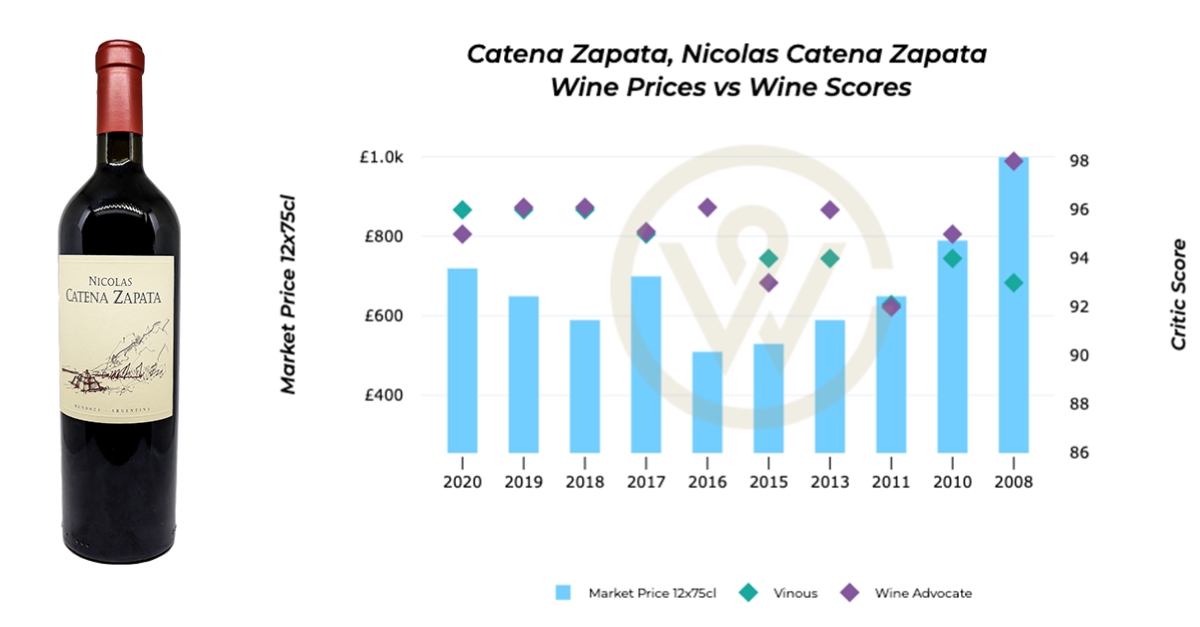
The Argentinian wine Nicolás Catena Zapata 2020 was released at €53.30 per bottle ex-négociant, up 1.5% on the 2019. It has been offered internationally at £720 per 12×75, down 1.6% on the 2019’s opening price.

It received 95-points from Gutiérrez and 96-points from Hidalgo, who observed that this ‘meticulously crafted red achieves perfect balance in a warm vintage’. However, there are plenty of good value buying opportunities in back vintages, notably 2019, 2018 and 2016.

Nicolás Catena Zapata has enjoyed a positive performance over the last five (33%) and ten years (104%).

A recurring theme in the campaign has been the price increases for the new releases, compared to their previous vintages. Similar to the spring Bordeaux 2022 campaign, often back vintages available at a discount hold better investment potential. While La Place continues to showcase the diversity of fine wine, and remains an exciting global marketplace for New and Old World wines, the ultimate value of the releases should be judged in a broader context.

WineCap’s independent market analysis showcases the value of portfolio diversification and the stability offered by investing in wine. Speak to one of our wine investment experts and start building your portfolio. Schedule your free consultation today.