Categories
News

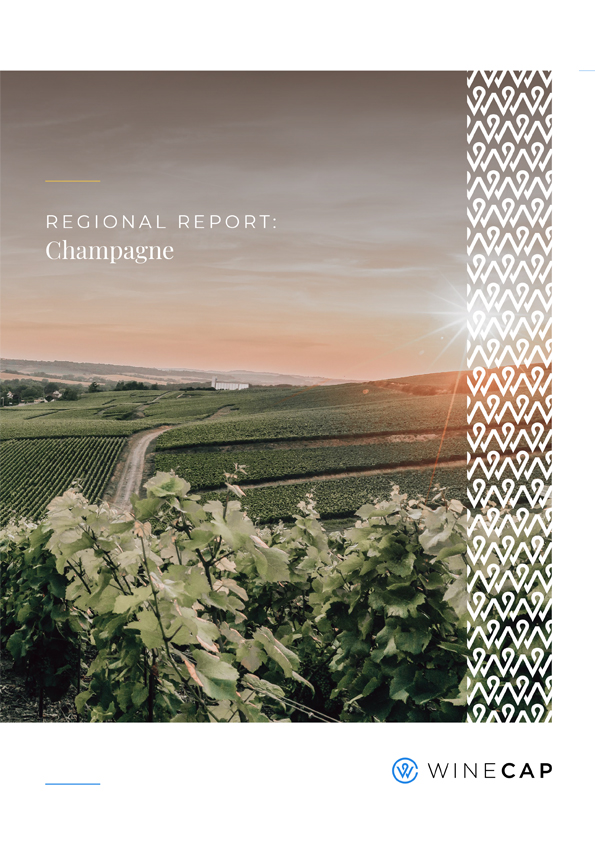
Dom Pérignon Reveals the 2004 Plénitude 2

Dom Pérignon is launching its new 2004 Vintage Plénitude 2 (P2) Champagne this month in Hong Kong where the prestigious Champagne house has also announced its brand new member of the Hong Kong Dom Pérignon Society.

The Plénitude 2 wines represent the Champagne being ‘elevated to its second life’. With ‘close to 15 years of slow transformation in the cellars’, the wines take on a new ‘vitality’ with this extra maturation.

This launch focuses on the 2004 vintage, a year which the maison commented on as being ‘a year of renaissance and calm’. While August was cooler than normal, the weeks that superseded it brought a dry heat that allowed the vines to grow the ripest and fullest fruit.

The house has now released its tasting notes for the new 2004 expression which has some 18 years of age. On the nose, expect ‘citrusy notes of pink grapefruit and blood orange, which gently cede to figs’. There’s also plenty of brioche and roasted nuts on the palate with this new release ending with an elegant finish.

William Kelley at Wine Advocate awarded this new 2004 vintage 95 points and proclaimed that it is ‘drinking beautifully on release’.

The Dom Pérignon Society is a global network of top chefs and proponents whose main focus is on Plénitude 2. The newest member of this elite group, which comprises 64 global chefs and restaurants, is Chef Julien Tongourian who works at Hong Kong’s L’Atelier de Joël Robuchon.

Tongourian will now join his two fellow Hong Kong counterparts: Chef Maxime Gilbert of two Michelin-starred Écriture and Chef Richard Ekkebus at Amber at Landmark Mandarin Oriental which also has two Michelin stars.

To launch the 2004 Dom Pérignon P2, each of the three Dom Pérignon Society Members in Hong Kong have created a special menu to accompany this new Champagne release. Each menu will represent an interpretation of a key moment in each of the Chefs’ careers. The menus are available now at the above three Hong Kong restaurants for a limited time.

Read more news from the Champagne world in this recent article about Champagne Henriot’s merger.

Categories
News

Champagne Sells for Record $2.5 Million at Auction

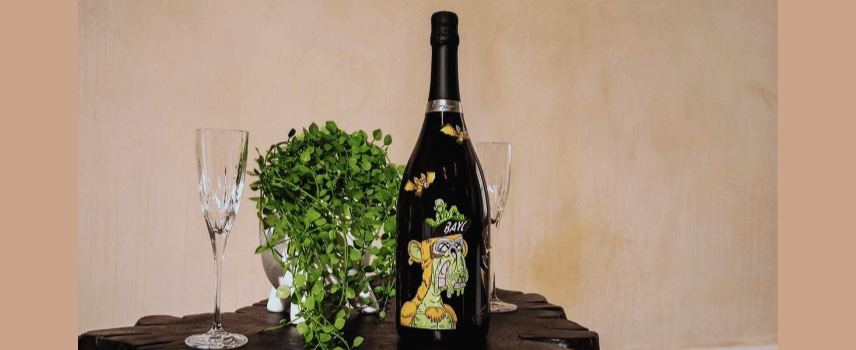
A magnum of Château Avenue Foch 2017 has sold for a record-breaking US$2.5 million at auction, making it the world’s most expensive Champagne and perhaps the world’s most expensive wine. Interestingly, the magnum wasn’t the sole item in the auction lot. The Champagne also came accompanied by an NFT – a non-fungible token – a digital image that trades on the blockchain. The NFT is of a ‘Bored Ape Mutant’ whose face features on the bottle and that was designed in collaboration with the artist Mig. It also includes the digital image’s intellectual property rights.

The British entrepreneur Shammi Shinh was responsible for commissioning and selling the bottle and whose aim was to boost NFTs’ profile through associating it with the luxury fizz. ‘I’m hoping for more awareness — I want people to understand NFTs now’, he commented. Shinh also hinted that this may be the first in a series of limited edition bottlings. 

The successful buyers at auction were brothers Giovanni and Piero Buono. They are Italian investors in cryptocurrencies, as well as in fashion and technology markets. However, while they are involved with cryptocurrencies, the purchase was reportedly made in dollars – as first reported by the Wall Street Journal. Giovanni confirmed to the paper that they have no plans to open the bottle.

Château Avenue Foch is a new Champagne brand that’s made from Premier Cru grapes grown at the family-owned estate of Allouchery in Chamery.

Want to discover the ten most expensive wines in the world? From Burgundy to Bordeaux, we’ve put together a list of the world’s most expensive bottles, and their intriguing stories, in our article here.

Categories
News

Champagne Lanson to sell on La Place de Bordeaux

Le Clos Lanson is set to become the second Champagne ever to be sold on La Place de Bordeaux, one of the world’s oldest marketplaces. The single vineyard expression – and Champagne Lanson’s top cuvée – follows Champagne Philipponnat’s Clos des Goisses onto the historic marketplace.

La Place de Bordeaux is over 800 years old and is a distribution system that consists of around 300 négociants (distributors) and courtiers (middlemen) who buy and sell wines from Bordeaux châteaux. Historically, La Place only sold wines that were made in Bordeaux. However, in 1998 the marketplace opened its doors to its first non-Bordeaux bottling: Viña Almaviva’s 1996 vintage, a joint venture between Château Mouton-Rothschild and Chile’s Concha y Toro. In subsequent years, more and more non-Bordeaux wine producers have been invited to sell on La Place. Think Napa’s Opus One, Australia’s Penfolds Grange and Argentina’s Catena Zapata.

The advantage of selling wines on La Place is its access to global markets and experience selling into Asia, especially China. Négociants have salespeople around the world primed to sell high-end wines. Lanson’s president, François Van Aal, commented on this new approach:

‘This distribution method will enable our icon cuvée to reach a larger amount of wine lovers and collectors around the world, while strengthening the awareness of our Champagne house which is already present over 80 countries’.

Le Clos Lanson 2009 will be the first expression sold on the platform. This top cuvée is produced from 100% Chardonnay grapes harvested from a one-hectare, walled vineyard in the heart of Reims. Only just over 7,000 bottles, along with some magnums, were produced of the 2009 vintage.

Categories
News

The Champagne Brands Driving Price Growth

Champagne looks set to capitalise on its excellent 2021 performance. Last year was fantastic for Champagne brands as sales figures for the category rocketed beyond pre-pandemic levels. Over 350 million bottles were exported worldwide last year and the appetite for French bubbles – synonymous with luxury, indulgence and good times – gained the most ground in the US which has now surpassed the UK (37.4%) as the largest export market by volume (39.1%). 

This price growth can be attributed to two things: restaurants, nightclubs and bars reopening worldwide, as well as ultra high net worth collectors focusing their attention on the category. With less supply available, prices surged.

The sky was the limit for Champagne in 2021 as it ended the year up 40% and at a record high level. 2022 looks incredibly promising for the category too as it’s up 9.6% so far this year. 

Louis Roederer Cristal Rosé

Prestige Champagne brands were the key price drivers in 2021 and the headline acts with the top performance were highly sought-after names including Louis Roederer Cristal (with high demand across the 2008, 2012, 2013 and 2014 vintages). Interestingly, the most traded wine by value was the 99 point scoring Louis Roederer Cristal Rosé 2012 as the market for rosé Champagne expands. Other Grande Marques with top billing were the ultra-premium Salon (2007, 2006 and 2002 vintages), as well as Taittinger’s Comtes de Champagne 2006 and Dom Pérignon’s Rosé 2005.

Non-Vintage Champagne

However, it wasn’t just vintage Champagne that sparkled. The trade of non-vintage (NV) Champagne also broke new ground and made up the most-traded part of the category. The market has also broadened with NV Champagne’s trade share up from 5.1% in 2018 to 17.6% in 2021.

With such impressive performance in 2021 as well as in Q1 this year, there’s no doubt that Champagne has now cemented its place in the secondary market for fine wine. What’s more, there is no other region where the top wines are still this affordable. Savvy investors who hold top Champagne know just how approachable this category is, when compared to the most prestigious Burgundies, top Napa wines and the very best of Bordeaux.

Want to find out more about investing in Champagne? Read WineCap’s in-depth analysis in our Champagne Report.

Categories
Insight

Invest in Champagne

Considering investing in Champagne?

It’s not necessarily the most costly, nor the rarest of fine wine. However, Champagne is supremely consistent, making it arguably one of the strongest and most appealing sectors of the fine wine market.

Its steadfast presence can be attributed to its brand strength, liquidity and an aura of exclusivity it maintains despite being well-known in the main. 200-plus years of expert marketing by the best producers is what arguably makes Champagne the most broadly understood luxury good in the world.

As with all fine wine, as Champagne ages, its quality improves. As it is consumed, its supply decreases. This virtuous circle drives prices over time. This luxurious bubbly tends to be released later than other investable wines and as consumption begins in earnest immediately, we can see the impact of this cycle faster.

Top Champagne Brands to look out for

For those considering investing in Champagne, the most important brands to keep in mind are Dom Pérignon, Cristal, Krug, Taittinger and Salon. Volumes produced vary considerably from producer to producer. Dom Pérignon is widely believed to make around 4,000,000 bottles a year across all their wines. In contrast, in 2020 Salon released just 8,000 bottles of their 2008.

The Best Champagne Vintages

The strongest vintages include 1996, 2002 and 2008. Unlike in Bordeaux or Burgundy, producers tend not to release vintage wines every year, emphasising the exclusivity. This means there are vanishingly few ‘bad’ Champagne vintages. Although of course, some are superior to others, it is no more necessary to focus on only exceptional vintages in Champagne than it is in other regions.

Over the past five years Krug’s value is up 75% and Dom Pérignon up by 65%. These numbers demonstrate that Champagne is a smart addition to any diversified investment portfolio and should no longer be considered just a celebratory indulgence.

Want to find out more about investing in Champagne? Read our in-depth report here.

Categories
Learn

Fine Wine Investment for Beginners

Fine wine investment is increasingly gaining popularity amongst beginners and novices looking to reap the benefits of this alternative asset. Not only is it a proven way to diversify and strengthen an investment portfolio, but also an enjoyable pastime for wine enthusiasts and budding connoisseurs.

Surging prices regularly push fine wine investment into the spotlight, and headlines are filled with stories of investors who bought wine at low prices, then sold it years later for thousands. But how and where do you get started as a beginner? And what are the wine investment returns that you can expect?

The following guide provides an overview of the fine wine investment market and how it works in practice.

How big is the wine investment market?

Investing in wine is no new phenomenon. In fact, it has existed in different forms since antiquity, as wine was circulated and traded throughout the ancient world by Greeks, Egyptians, Phoenicians, and Romans. The writings of Thomas Jefferson provide one of the first pieces of evidence of a premium charged for an older wine. In 1787, he wrote that the 1786 vintage for top Bordeaux wines cost 1800 livres per tonneau compared to 2000 livres for the older 1783. Through the centuries, shrewd wine lovers have been selling part of their collections as a way of subsidising their consumption, leveraging the gains of a uniquely rarifying asset against their own cellars.

Today, the market is transparent and open for beginners as well as experienced investors looking to embark on their wine journey. Investing in fine wine is easier than ever, thanks to specialised wine investment companies, relying on current market data and the latest technology.

The global wine market is forecast to reach US$525 billion by 2025. But while fine wine has emerged as a popular alternative investment, not every wine is investment worthy. For example, the majority of wines produced in renowned regions, such as Burgundy and Bordeaux – perhaps surprisingly – often won’t appreciate in value. In fact, of all the wines made worldwide, only a very small percentage have the potential to improve as they age, and an even smaller percentage of that group has the capacity to see its price rise.

Precisely this scarcity of investible wines is one of the main drivers behind wine investment’s profitability. The limited supply of collectible wine leads to price increases, especially for labels in high demand. This is why it is important to keep abreast of the latest market trends and factors influencing global appetite.

More fine wine investment opportunities than ever before

Historically, Bordeaux’s classified growths have been the leading force on the fine wine investment market. In 2010, Bordeaux took 96% of all trade on the global marketplace for wine. Today, it accounts for less than a third of this market by value.

The main reason behind its declining trade share is that the fine wine investment market is bigger and broader than ever before. Other French regions like Burgundy, Champagne and the Rhône, USA, Italy (led by Tuscany and Piedmont), Germany, Spain and Australia are increasingly seen as reliable sources of considerable wine investment returns.

Investing in fine wine is thus not limited to a small group of wines, contrary to what one might expect. There are more opportunities than ever before that can be suited to your stylistic preferences and budget. The collectors’ market is booming, with record number of investible wines trading right now.

Greater fine wine investment returns

As global demand for fine wine has grown, the investment returns have increased too. Burgundy is a prime example. Thanks to its iconic status and its tiny production levels, early investors in the sector have seen eye-watering growth: upwards of 2000% in 15 years for some wines. The volume, value and breadth of trading has increased significantly, and wine prices have risen dramatically over the last decade; the region’s major index is up almost 200% in the past ten years.

Meanwhile, investors in Champagne have benefitted from supremely consistent returns, although it is not the most expensive or the rarest of fine wines. Its brand strength and distribution network, however, remain unparalleled.

Prices for different regions and wines have risen at a different pace. Region and wine-specific factors thus play a role in the returns that an investor can expect, the cost and length of the investment.

How long do I need to invest in fine wines for?

Fine wine is considered a medium to long-term investment. As a general rule, we advise our clients to hold their wines for three years at the very least.

Many collectible wines have long ageing windows, between ten and 50 years. As the scarcity and quality of fine wine appreciates over time, so does its value. The premise of fine wine investment is to buy wine when it’s young, then sell it once it’s older and more valuable. There are other external factors that may help determine how quickly a wine may deliver the desired returns such as critic scores, supply/demand and significant events related to the region or the producer.

For instance, the price of the Super Tuscan Sassicaia 2015 went up 25% in the day when the American publication Wine Spectator announced its ‘Wine of the Year 2018’. Those buying and re-selling the wine on the day would have made a small profit; however, those holding the wine since release would have seen its value rise over 160% to the present day.

As a long-term low-risk investment, fine wine doesn’t lose its value overnight. Where share prices may increase one day and decrease the next, fine wine provides stable returns year after year. Its low volatility has led many to consider it the best ‘safe-haven’ asset – a great advantage particularly in times of market turmoil.

Unlike mainstream assets, fine wine is fairly insensitive to macro-economic events. When global markets tumbled due to ongoing Covid-19 restrictions and upon Russia’s invasion of Ukraine, fine wine remained resilient. The returns of leading fine wine indices were greater than the FTSE100, S&P500 and even other safe investments such as gold.

How do I start investing in wine?

There are a lot of decisions you need to make when taking on wine investment. Wine investment experts like our team here at WineCap can help you make decisions relating to the following factors:

Set a wine investment strategy

The first step is to set your budget. Consider how long you would like to hold your wines for and your preferred investment strategy. Fine wines command a range of prices depending on the producer, how much of their wine is made and the wines’ age. Make sure to set your budget before embarking on building your portfolio so you can ensure you have exposure to all countries and regions.

Speak to a wine investment expert

There are different routes to accessing the wine investment market, such as through specialised retailers and auction houses. Expert wine investment brokers offer unbiased advice on strategic investment opportunities and can help you build your portfolio, based on your preferred length of investment and budget. While WineCap doesn’t charge any annual fees, most wine investment companies do, so be sure to do your research and be aware of any fees your portfolio might incur.

Select world-class wines for your portfolio

A wine investment expert will help you find the wines best suited for your investment portfolio. WineCap has formed long-lasting relationships over the past decade with négociants, wholesalers and private collectors. This means that we have access to some of the world’s most prized wines. What’s more, our unique proprietary technology analyses over 400,000 wine prices a day to identify the right, undervalued wines to buy and sell across the global market at the right time and price.

Store your wines professionally

Choose to keep your wines in government bonded warehouses as this will ensure they are professionally stored in temperature-controlled conditions best-suited for ageing wines. World-class care ensures that when you come to sell, your wines’ provenance will quickly secure maximum prices.

Fine wine investment can be daunting if you are a beginner, but with a little practice and help you can soon enjoy the benefits of the best-performing luxury asset.

Ready to get started now you know more about how to invest in wine? Speak to one of WineCap’s investment experts to discover the next steps on your wine journey.
Categories
Regional-reports

Champagne Regional Report

Our Champagne Regional Report examines the development of an investment market and the key Champagne producers in a successful portfolio.

Champagne needs little introduction, even to those not typically involved with fine wine. It is everywhere – from restaurants and clubs to airport lounges and private cellars. Fit for almost every occasion, Champagne has evolved from a celebratory indulgence into one of the most recognisable and investable luxury assets in the fine wine market.

A key driver of Champagne’s investment appeal is its unparalleled brand recognition. More approachable than other fine wines, Champagne benefits from broad global consumption, strong distribution networks, and deep secondary-market liquidity — all highly attractive characteristics for investors.

A decade ago, Champagne represented less than 3% of the fine wine investment market. Today, its share sits comfortably at 15%, making it a close contender to Burgundy as the second-most traded fine wine region after Bordeaux.

WineCap’s Champagne Regional Report explores how this transformation has taken place, how pricing dynamics have evolved, and why Champagne has become a core allocation within diversified fine wine portfolios.

Key findings from the Champagne Regional Report

Champagne is one of the best-performing fine wine regions

Once considered a modest price performer and one of the most affordable entry points into wine investment, Champagne has risen to new heights over the past two decades. The Champagne 50 index has delivered exceptional long-term growth, positioning Champagne as the second-best-performing fine wine region after Burgundy. Its performance has been driven by a combination of vintage quality, global brand power, and sustained international demand.

Champagne’s global reach

Champagne is one of the most liquid regions in the fine wine market. Its widespread consumption – across hospitality, entertainment, and private collectors – creates a unique dynamic: as Champagne is consumed, supply diminishes, while quality improves with age.

This inverse supply curve, combined with strong brand recognition, underpins consistent secondary-market activity and makes Champagne particularly attractive to investors seeking flexibility and exit opportunities.

Champagne market expansion has driven new opportunities

As Champagne’s investment market has grown, participation has expanded beyond a narrow group of prestige cuvées. While leading houses remain central, the market now encompasses a broader range of vintage, rosé, and grower Champagnes.

This expansion has increased both depth and diversity, allowing investors to access Champagne across different price points and risk profiles.

Champagne’s entry levels

Following a strong bull run between 2020 and 2022, Champagne prices have corrected by around 34% on average over the past three years. Importantly, prices stabilised throughout 2025, creating attractive entry points without undermining Champagne’s long-term investment case.

Historically, periods of consolidation in Champagne have preceded renewed growth as supply tightens and demand continues to build.

Rosé and Grower Champagne are gaining momentum

Two of the fastest-growing segments highlighted in the report are rosé Champagne and grower Champagne. Produced in smaller quantities and often commanding higher release prices, rosé Champagnes have shown strong relative performance. Meanwhile, leading grower estates have transitioned from niche favourites to serious investment candidates, driven by scarcity, critical acclaim, and growing global recognition.

While liquidity can be thinner in these segments, selective allocation can enhance diversification and long-term returns.

Leading Champagne houses still anchor the market

Despite the market’s expansion, the most powerful Champagne brands remain central to investment portfolios. Houses such as Dom Pérignon, Louis Roederer (Cristal), Krug, Bollinger, Salon, and Ruinart continue to dominate secondary-market trade, combining brand strength, consistency, and global demand.

Explore the full report

WineCap’s Champagne Regional Report provides a comprehensive analysis of Champagne’s investment performance, supply and demand dynamics, the rise of rosé and grower Champagne, and the key houses and brands shaping the market today.

Download the full Champagne Regional Report to explore the data, insights, and opportunities behind one of the world’s most liquid and resilient fine wine investment regions.


Champagne Regional Report

Download