Categories
News

The 2022 Burgundy Wines’ Real Potential

The Burgundy Wine Board (BIVB) announced that the wines from the 2022 Burgundy harvest have real ‘potential’. This vintage will be dedicated to Louis Fabrice Latour, the former president of the trade association, who passed away earlier this month.

Commenting on the recent harvest, the BIVB said that it had been ‘a pleasant surprise’ and that it was ‘a vintage of the kind we were all hoping for.’ Despite cold temperatures and frosts, the board is happy with both the quantity of grapes that will go into this year’s wines as well as their quality.

The 2022 Burgundy Vintage

The growing season began at the start of April having experienced a milder winter with less rain than usual. Temperatures dropped mid-April and two snaps of frost followed. Fortunately, budburst hadn’t taken place completely and buds were not fully exposed to the frosts, although some areas did experience small amounts of damage. 

Spring arrived and brought excellent conditions with it. Flowering took place two weeks earlier than usual which led to many commentators suggesting that the 2022 vintage could be one of the earliest ever. Thunderstorms in late June refreshed the vines but also brought some hailstorms which caused ‘significant damage’ in some areas.

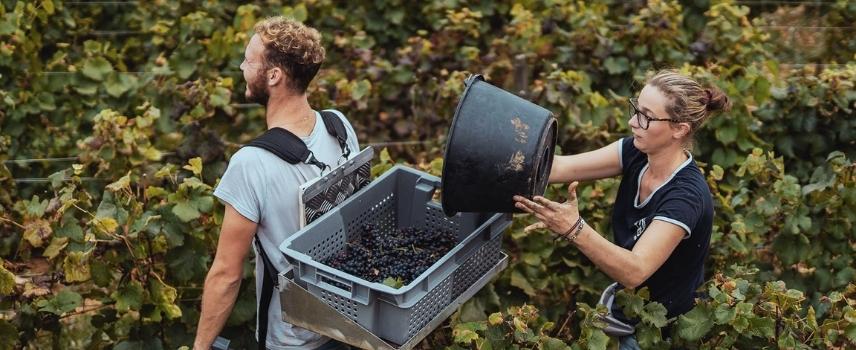
Contrary to the belief that the harvest would start earlier than normal, pickers started harvesting Chardonnay on the 20th of August which is in line with previous years. It was a prolonged harvest due to the good weather which helped produce optimally-ripe grapes. 

The board agreed that this year’s grapes are ‘balanced with controlled degrees of alcohol and good acidity.’ It found that the compounds in the red grapes were ‘excellent’ which are needed for long-term ageing. The BIVB also commented that the musts of the whites and reds were ‘highly aromatic’ which is another positive sign. 

This year’s harvest is what the Burgundians had hoped for, as the 2021 vintage suffered very low yields and in turn triggered higher prices. However, 2022’s yields were still down on average.

Find out more about our initial thoughts on the Burgundy 2022 vintage in this article.

Categories
News

Why the 2022 Burgundy Vintage is Looking Promising

Frosts descended on some of France’s key fine wine regions in April for the second year in a row. Producers in Burgundy, Bordeaux and Champagne braced themselves for the coldest temperatures the country had experienced since April 1947. Burgundian winemakers were perhaps the most hypervigilant out of all the country’s producers who were taking measures in the vineyard to prevent the frost from settling. Burgundy’s vignerons were poised to battle the elements each night in the hope of escaping the same losses that impacted the 2021 vintage.       

Fortunately, the Bureau Interprofessionnel des Vins de Bourgogne (BIVB) – Burgundy’s wine board – has just announced that this year’s frost damage isn’t as bad as first thought. While ‘everyone had feared the worst’, due to a mild winter and two snaps of frost in April, it commented that ‘this event is different’ to last year’s. ‘The vines are less advanced in the growth cycle and in general terms, the frost was shorter and less intense.’ The areas which came under the most pressure from frost were ‘certain sectors in the northern part of the region.’

The BIVB’s technicians found in their analysis of vineyard plots that early May’s warmth and rainfall had helped accelerate the growing season and that flowering had begun mid May.  

While the climatic challenges experienced this year hadn’t resulted in as much damage in Burgundy’s vineyards as previously feared, the BIVB warned last month that there are still potential difficulties that lie ahead. This stems from a combination of increased global demand from consumers and reduced yields in 2021. Another factor the wine board highlighted was the financial pressure winemakers were under, having had to pay for additional vineyard equipment, such as candles, to ward off the frost. 

With frosts becoming more and more of a yearly occurrence and with producers’ margins becoming even tighter, could we see already high Burgundy prices rise even more? WineCap will be keeping a close eye on the 2022 Burgundy vintage and its progress. 

October 2022 update: Now that the harvest is in, discover the BIVB’s initial thoughts on the quality of the vintage and yields in our article.

Want to learn more about Burgundy, its producers and appellations? Download our Region Report to find out more.

Categories
Regional-reports

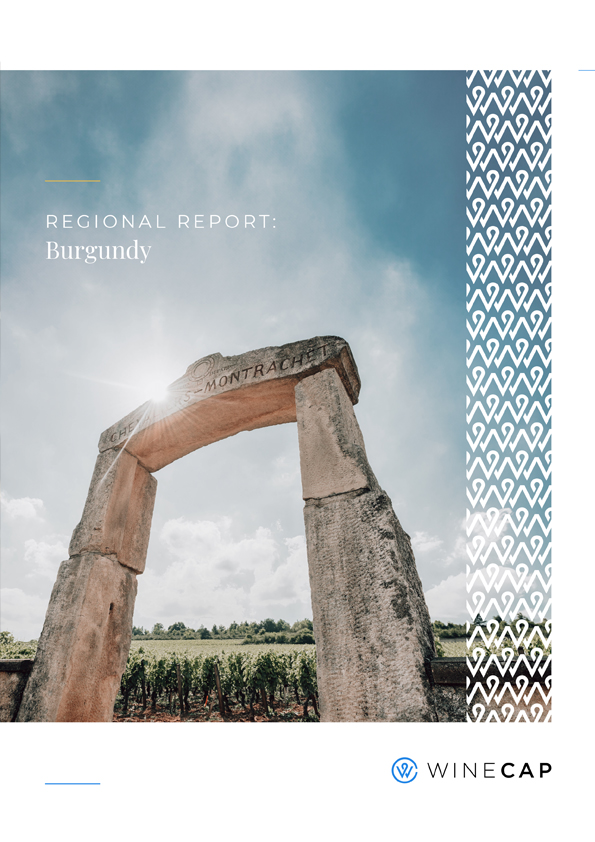
Burgundy | Regional Report

There is a maxim in the wine trade: no matter where a wine lover starts, they end up in Burgundy.

A key part of the attraction is in its contradictions: it is the most romantic wine region but also the most expensive; quality tends to be high but quantities are low; intuition is key but it is also one of the most researched regions.

With only two primary grape varieties and three classification ranks, Burgundy may appear simple, but with dozens of controlled places of origin (AOCs), hundreds of producers and thousands of wine labels, it can be incredibly complicated.

Our Burgundy Report delves into the fundamentals of this fascinating region, including the development of its investment market, historic performance, recent expansion and key players.

Discover more about:

  • Burgundy’s price performance
  • The expansion of Burgundy’s investment market
  • History of the Burgundy wine region
  • Burgundy’s structure and fragmentation
  • Key Burgundy producers
  • How we choose Burgundy for investment

Do not hesitate to get in touch and speak to one of our wine investment advisors for further information and to reserve your allocations.

Download your complimentary copy of Burgundy’s Regional Report and discover how fine wine can enhance your investment portfolio.


Burgundy Report Cover


Burgundy’s Regional Report


Categories
News

Rare Burgundy Auction at Christie’s

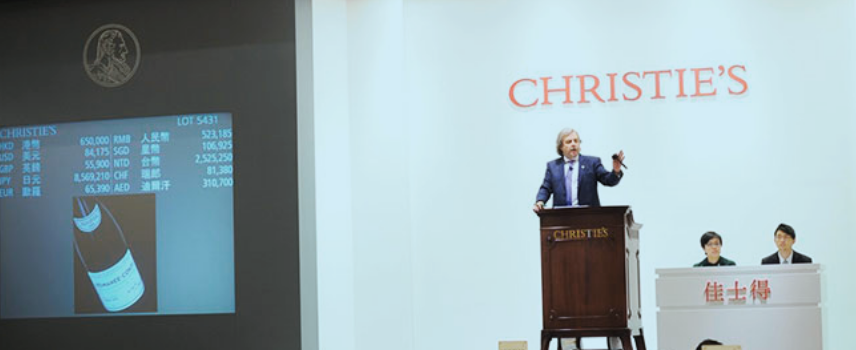
Rare Burgundy wines are set to feature in Christie’s upcoming ‘Luxury Week’ in May and also in its Finest and Rarest Wines and Spirits sale in June. Spring heralds warmer weather, new growth and for one of the world’s most famous auction houses, a series of auctions that include some of the finest wines, watches, jewellery and handbags ever produced.

Christie’s Auction House 

Last year’s sales of luxury items at Christie’s was incredibly successful, topping just over $980m and the highest since 2015. Interestingly, 35% of buyers across all categories were new to the business and 32% of them were millennials, according to Christie’s CEO Guillaume Cerutti. It’s these new buyers that are driving the current buoyancy at the top end of the luxury auction market and that continue to push prices up on rare, collectible wines. What’s more, Christie’s has heavily invested in technology, a move brought about by the pandemic, in order to livestream auctions.  

All eyes will no doubt be focused on the upcoming rare Burgundy auction in June. It’s sure to be a real highlight as all of the 45 lots have been brought above ground from the deep, vaulted cellars of King’s College Cambridge. King’s College is said to have one of the most well respected cellars out of all of the university colleges and a real heritage when it comes to wine as its University Wine Society was founded in 1792. The college bought all of the wines on release from UK importer Richards-Walford and the cases were then moved to the university’s cellars, where they have remained since then. Only four wine stewards have been appointed in the past two centuries and their enviable role is to act as the cellar’s guardians and curate its collection.

A Wine Investor’s Dream

The 45 lots are set to feature rare Burgundies from such highly sought-after producers as Henri Jayer and his nephew Emmanuel Rouget, who is now the proprietor of some of Jayer’s most famous vineyards. Wines from these producers are expected to hail from such revered appellations as Echézeaux and Vosne-Romanée Cros Parantoux. Bids are sure to reach eye-wateringly high amounts for stand-out wines from a region that has tiny production levels.

Speaking about the upcoming auction, Adam Bilbey, Christie’s Global Head of the Wine and Spirits Department commented: “The hallowed cellars of King’s College, Cambridge are steeped in such history and tradition that this sale will garner the imagination and attention of wine lovers around the world. This small glimpse into the King’s College cellar will most certainly be a highlight of Christie’s wine sales this season”.

Want to find out more about rare Burgundy wine? Download our Burgundy report and discover why the region and its producers’ wines command some of the world’s highest prices.

Categories
Learn

Fine Wine Investment for Beginners

Fine wine investment is increasingly gaining popularity amongst beginners and novices looking to reap the benefits of this alternative asset. Not only is it a proven way to diversify and strengthen an investment portfolio, but also an enjoyable pastime for wine enthusiasts and budding connoisseurs.

Surging prices regularly push fine wine investment into the spotlight, and headlines are filled with stories of investors who bought wine at low prices, then sold it years later for thousands. But how and where do you get started as a beginner? And what are the wine investment returns that you can expect?

The following guide provides an overview of the fine wine investment market and how it works in practice.

How big is the wine investment market?

Investing in wine is no new phenomenon. In fact, it has existed in different forms since antiquity, as wine was circulated and traded throughout the ancient world by Greeks, Egyptians, Phoenicians, and Romans. The writings of Thomas Jefferson provide one of the first pieces of evidence of a premium charged for an older wine. In 1787, he wrote that the 1786 vintage for top Bordeaux wines cost 1800 livres per tonneau compared to 2000 livres for the older 1783. Through the centuries, shrewd wine lovers have been selling part of their collections as a way of subsidising their consumption, leveraging the gains of a uniquely rarifying asset against their own cellars.

Today, the market is transparent and open for beginners as well as experienced investors looking to embark on their wine journey. Investing in fine wine is easier than ever, thanks to specialised wine investment companies, relying on current market data and the latest technology.

The global wine market is forecast to reach US$525 billion by 2025. But while fine wine has emerged as a popular alternative investment, not every wine is investment worthy. For example, the majority of wines produced in renowned regions, such as Burgundy and Bordeaux – perhaps surprisingly – often won’t appreciate in value. In fact, of all the wines made worldwide, only a very small percentage have the potential to improve as they age, and an even smaller percentage of that group has the capacity to see its price rise.

Precisely this scarcity of investible wines is one of the main drivers behind wine investment’s profitability. The limited supply of collectible wine leads to price increases, especially for labels in high demand. This is why it is important to keep abreast of the latest market trends and factors influencing global appetite.

More fine wine investment opportunities than ever before

Historically, Bordeaux’s classified growths have been the leading force on the fine wine investment market. In 2010, Bordeaux took 96% of all trade on the global marketplace for wine. Today, it accounts for less than a third of this market by value.

The main reason behind its declining trade share is that the fine wine investment market is bigger and broader than ever before. Other French regions like Burgundy, Champagne and the Rhône, USA, Italy (led by Tuscany and Piedmont), Germany, Spain and Australia are increasingly seen as reliable sources of considerable wine investment returns.

Investing in fine wine is thus not limited to a small group of wines, contrary to what one might expect. There are more opportunities than ever before that can be suited to your stylistic preferences and budget. The collectors’ market is booming, with record number of investible wines trading right now.

Greater fine wine investment returns

As global demand for fine wine has grown, the investment returns have increased too. Burgundy is a prime example. Thanks to its iconic status and its tiny production levels, early investors in the sector have seen eye-watering growth: upwards of 2000% in 15 years for some wines. The volume, value and breadth of trading has increased significantly, and wine prices have risen dramatically over the last decade; the region’s major index is up almost 200% in the past ten years.

Meanwhile, investors in Champagne have benefitted from supremely consistent returns, although it is not the most expensive or the rarest of fine wines. Its brand strength and distribution network, however, remain unparalleled.

Prices for different regions and wines have risen at a different pace. Region and wine-specific factors thus play a role in the returns that an investor can expect, the cost and length of the investment.

How long do I need to invest in fine wines for?

Fine wine is considered a medium to long-term investment. As a general rule, we advise our clients to hold their wines for three years at the very least.

Many collectible wines have long ageing windows, between ten and 50 years. As the scarcity and quality of fine wine appreciates over time, so does its value. The premise of fine wine investment is to buy wine when it’s young, then sell it once it’s older and more valuable. There are other external factors that may help determine how quickly a wine may deliver the desired returns such as critic scores, supply/demand and significant events related to the region or the producer.

For instance, the price of the Super Tuscan Sassicaia 2015 went up 25% in the day when the American publication Wine Spectator announced its ‘Wine of the Year 2018’. Those buying and re-selling the wine on the day would have made a small profit; however, those holding the wine since release would have seen its value rise over 160% to the present day.

As a long-term low-risk investment, fine wine doesn’t lose its value overnight. Where share prices may increase one day and decrease the next, fine wine provides stable returns year after year. Its low volatility has led many to consider it the best ‘safe-haven’ asset – a great advantage particularly in times of market turmoil.

Unlike mainstream assets, fine wine is fairly insensitive to macro-economic events. When global markets tumbled due to ongoing Covid-19 restrictions and upon Russia’s invasion of Ukraine, fine wine remained resilient. The returns of leading fine wine indices were greater than the FTSE100, S&P500 and even other safe investments such as gold.

How do I start investing in wine?

There are a lot of decisions you need to make when taking on wine investment. Wine investment experts like our team here at WineCap can help you make decisions relating to the following factors:

Set a wine investment strategy

The first step is to set your budget. Consider how long you would like to hold your wines for and your preferred investment strategy. Fine wines command a range of prices depending on the producer, how much of their wine is made and the wines’ age. Make sure to set your budget before embarking on building your portfolio so you can ensure you have exposure to all countries and regions.

Speak to a wine investment expert

There are different routes to accessing the wine investment market, such as through specialised retailers and auction houses. Expert wine investment brokers offer unbiased advice on strategic investment opportunities and can help you build your portfolio, based on your preferred length of investment and budget. While WineCap doesn’t charge any annual fees, most wine investment companies do, so be sure to do your research and be aware of any fees your portfolio might incur.

Select world-class wines for your portfolio

A wine investment expert will help you find the wines best suited for your investment portfolio. WineCap has formed long-lasting relationships over the past decade with négociants, wholesalers and private collectors. This means that we have access to some of the world’s most prized wines. What’s more, our unique proprietary technology analyses over 400,000 wine prices a day to identify the right, undervalued wines to buy and sell across the global market at the right time and price.

Store your wines professionally

Choose to keep your wines in government bonded warehouses as this will ensure they are professionally stored in temperature-controlled conditions best-suited for ageing wines. World-class care ensures that when you come to sell, your wines’ provenance will quickly secure maximum prices.

Fine wine investment can be daunting if you are a beginner, but with a little practice and help you can soon enjoy the benefits of the best-performing luxury asset.

Ready to get started now you know more about how to invest in wine? Speak to one of WineCap’s investment experts to discover the next steps on your wine journey.