Categories
News

Jancis Robinson MW releases Bordeaux 2022 scores

  • Jancis Robinson MW and James Lawther MW reviewed the 2022 Bordeaux vintage.
  • Both critics found the reds to be extremely impressive, with surprising freshness.
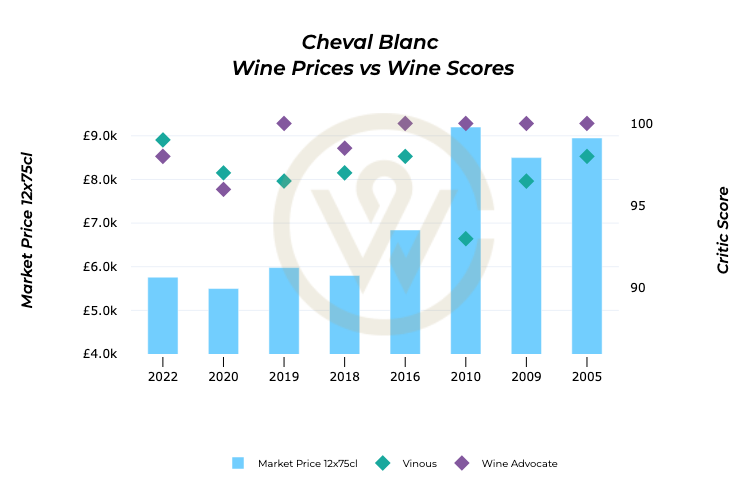
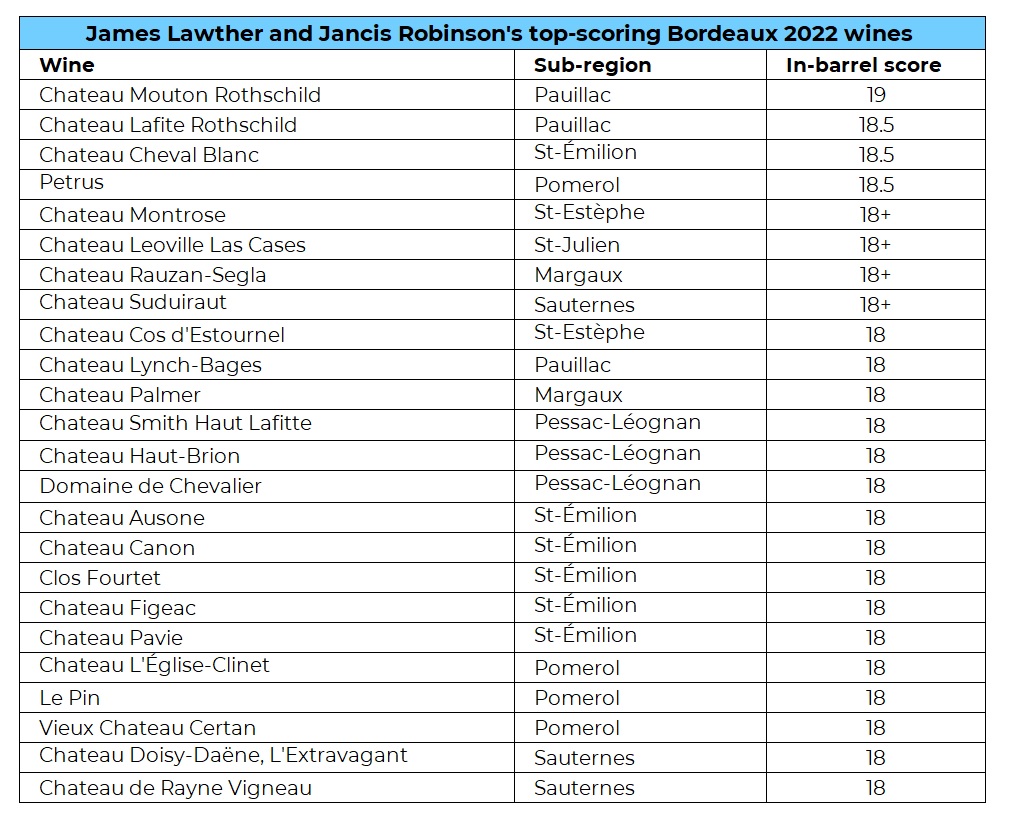
  • Mouton Rothschild, Lafite Rothschild, Cheval Blanc and Pétrus received the highest scores.

Jancis Robinson MW and James Lawther MW reviewed the 2022 Bordeaux vintage and released a series of articles, covering the whites, red-bank and left-bank reds.

Both critics found the wines to be ‘extremely impressive’, with ‘amazing freshness’ given the hot and dry growing season.

In terms of the En Primeur tastings, Jancis remarked on the ‘record number of visitors’, with ‘Americans and Asians back in force’. According to her, the numbers at the UGC tastings were ‘even higher than in spring 2019, when the 2018 vintage was presented almost a year before pandemic lockdowns’.

This gives greater confidence in the success of the En Primeur campaign, which commenced last week.

Left-bank reds

According to the report, the 2022 harvest was the earliest on record, with most of the Cabernet Sauvignon and Merlot on the left bank picked before the end of September. Despite the early harvest, the grapes’ maturity reached optimal levels. The sugar levels were similar to those found in recent years, while the phenolic ripeness was comparable to or even higher than previous vintages.

Alcohol levels on the left bank were on the high side, with 14% to 14.5% being a regular occurrence. However, the wines were often balanced with freshness.

Lawther wrote that he ‘found the characteristics of most of the appellations respected’, with Margaux being more varied.

Right-bank reds

According to Robinson, Merlot did exceptionally well in 2022, with high sugar levels, deep color and ‘no shortage of tannins for a long life lurking below the alluring surface’.

Lawther also proclaimed the grape variety to be ‘the star of the vintage’. He added that ‘Cabernet Franc was also successful on the right bank in 2022 adding colour, floral fragrance, freshness and length’. The critic claimed that ‘combined with Merlot it has produced some stunning wines, even away from the limestone plateau – witness Cheval Blanc, one of the wines of the vintage’.

White wines

The hot and dry growing season led to lower acidity levels in the whites, which translated to lack of freshness in some. Robinson further revealed that Sauvignon Blanc and Sémillon were picked earlier than ever before since Bordeaux University records began. Domaine de Chevalier Blanc stood out among the dry whites, while Château Suduiraut received the highest score of 18+ points among the Sauternes.

Top-scoring wines

The First Growth Château Mouton Rothschild topped the list of the highest-scoring wines from the 2022 vintage. Lawther described the palate as ‘truly amazing’ and questioned if this isn’t ‘a modern 1986’.

Château Lafite Rothschild, Château Cheval Blanc and Pétrus followed with 18.5-points.

So far, Lafite and Cheval Blanc have been two of the favourite wines of major critics, also boasting potential 100-points from Jeff Leve, Jean-Marc Quarin, and James Suckling.

WineCap’s independent market analysis showcases the value of portfolio diversification and the stability offered by investing in wine. Speak to one of our wine investment experts and start building your portfolio. Schedule your free consultation today.

Categories
Learn

Five low-risk assets to hedge against inflation

As purchasing power slowly drains, investors with low-risk tolerances are feeling the sting. At the time of writing (May 2023), UK inflation sits at an uneasy 10.1%. With the average savings account interest at a flimsy 0.23%, cash is going backwards. Meanwhile, high inflation munches away the future value of bonds and debt like a deranged Pac-Man. This represents a real problem for wealth managers. In a constantly shifting sea of interest hikes, inflation, and market shocks, how can they maintain and strengthen lower-risk portfolios without going too overweight on equity? How can they keep the cautious risk profile intact without endangering returns?

This article examines five overlooked assets for cautious investors, which have a history of punching back against inflation.

Gold

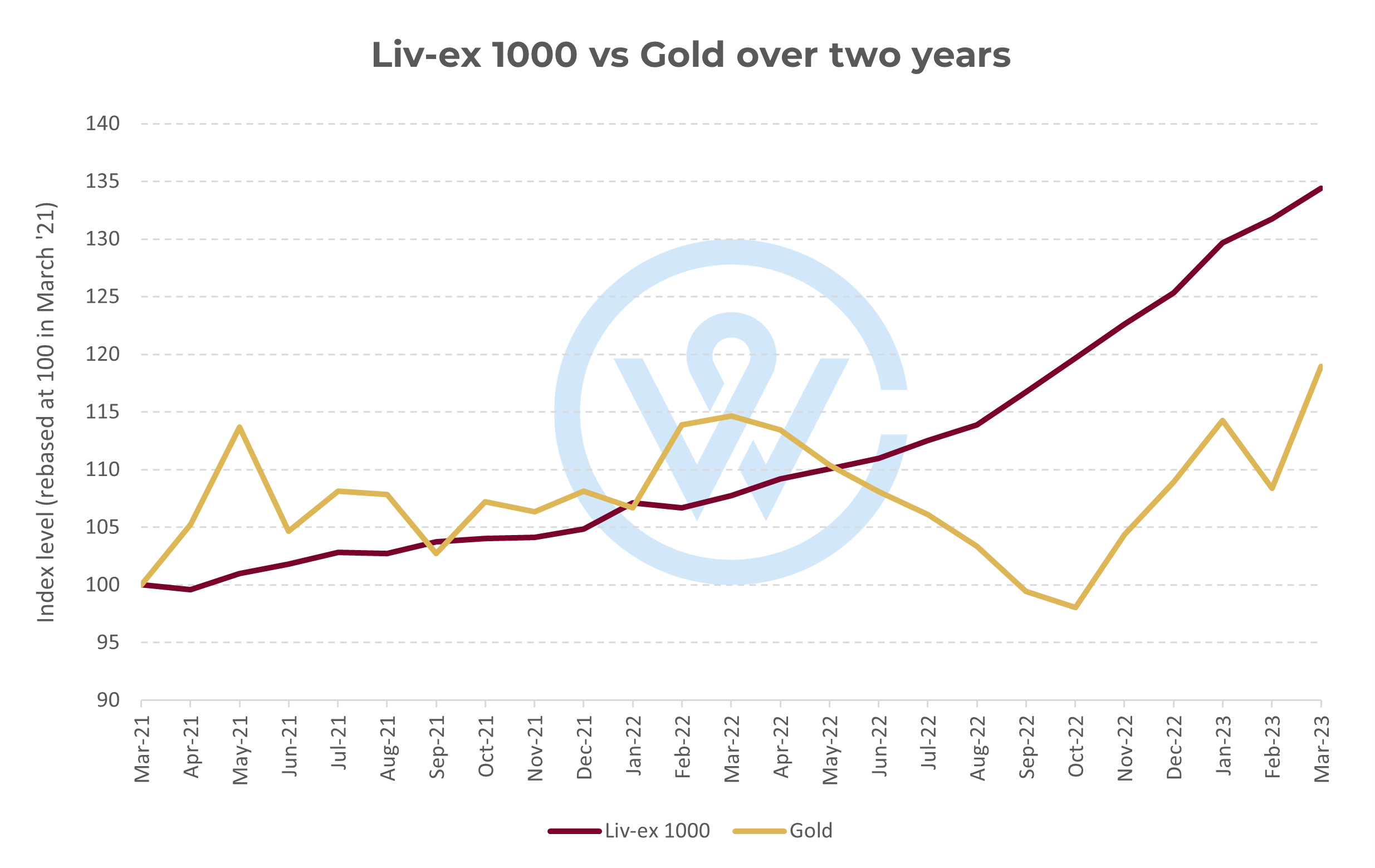
In the fight against inflation, physical gold is surely Mohammad Ali. Gold tends to increase in value as inflation rises. According to World Gold Council data from the past 50 years, when inflation is above 3%, the gold prices jump by 14%.

This asset class has the added benefit of being universally accepted. Unlike interest-generating assets or fine wine, precious metals can be included in Shariah portfolios.

Not only is gold inflation-resistant, but it is also classed as a low-risk asset, which must be a welcome relief for low-risk investors. Arguably, gold is even less risky than cash, as its value is intrinsic.

However, that doesn’t mean that there aren’t bubbles and market corrections. Over the past years gold’s performance has shown more volatility alongside the public markets.
Fine wine

There are several reasons why fine wine kicks back against inflation. It’s a physical asset. The market is global and wealthy, often relatively unaffected by market shocks. Plus, buyers are usually passionate, so they are unlikely to panic-sell. Perhaps most importantly, bottles are unique, and they deplete over time.

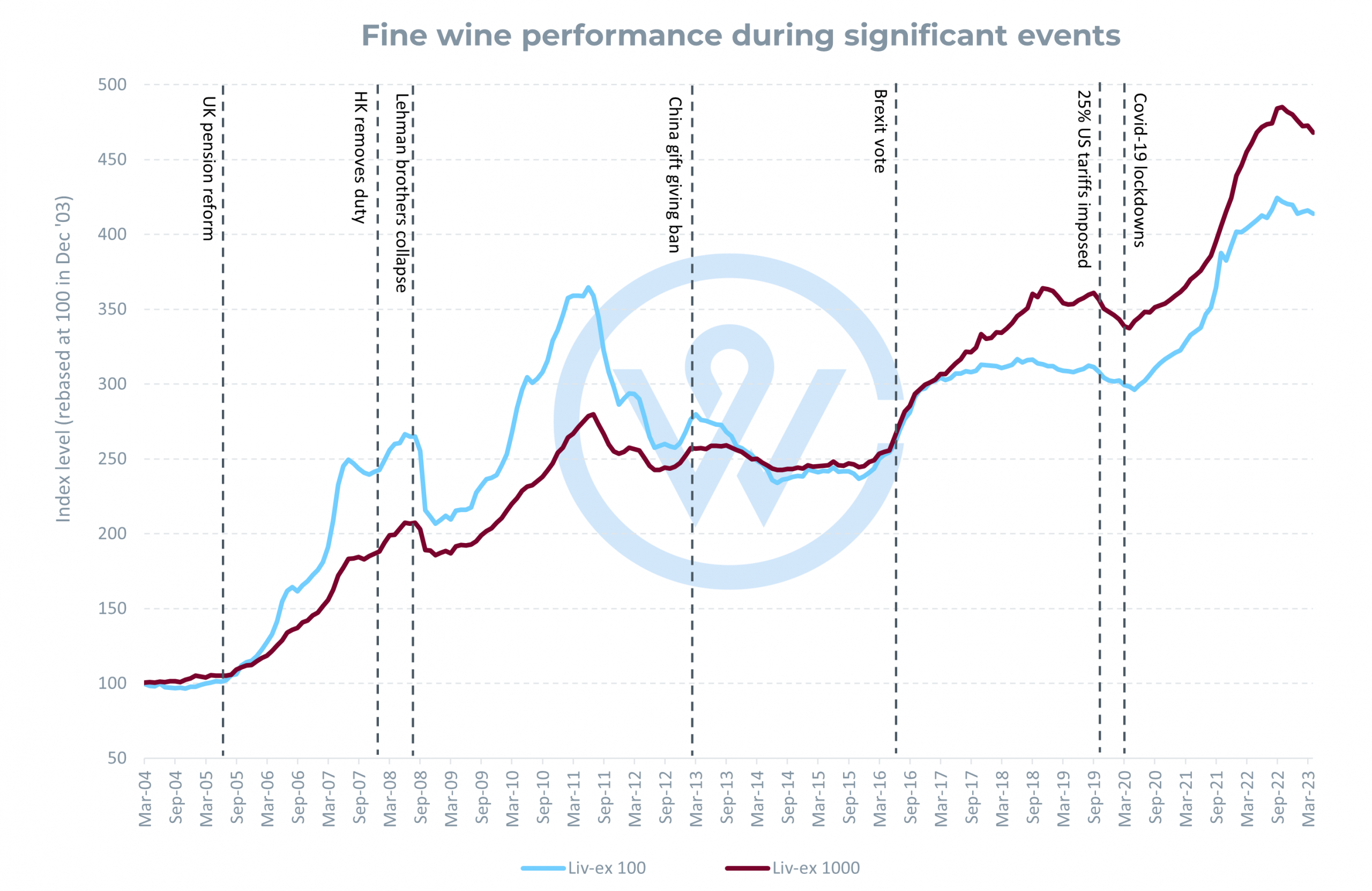
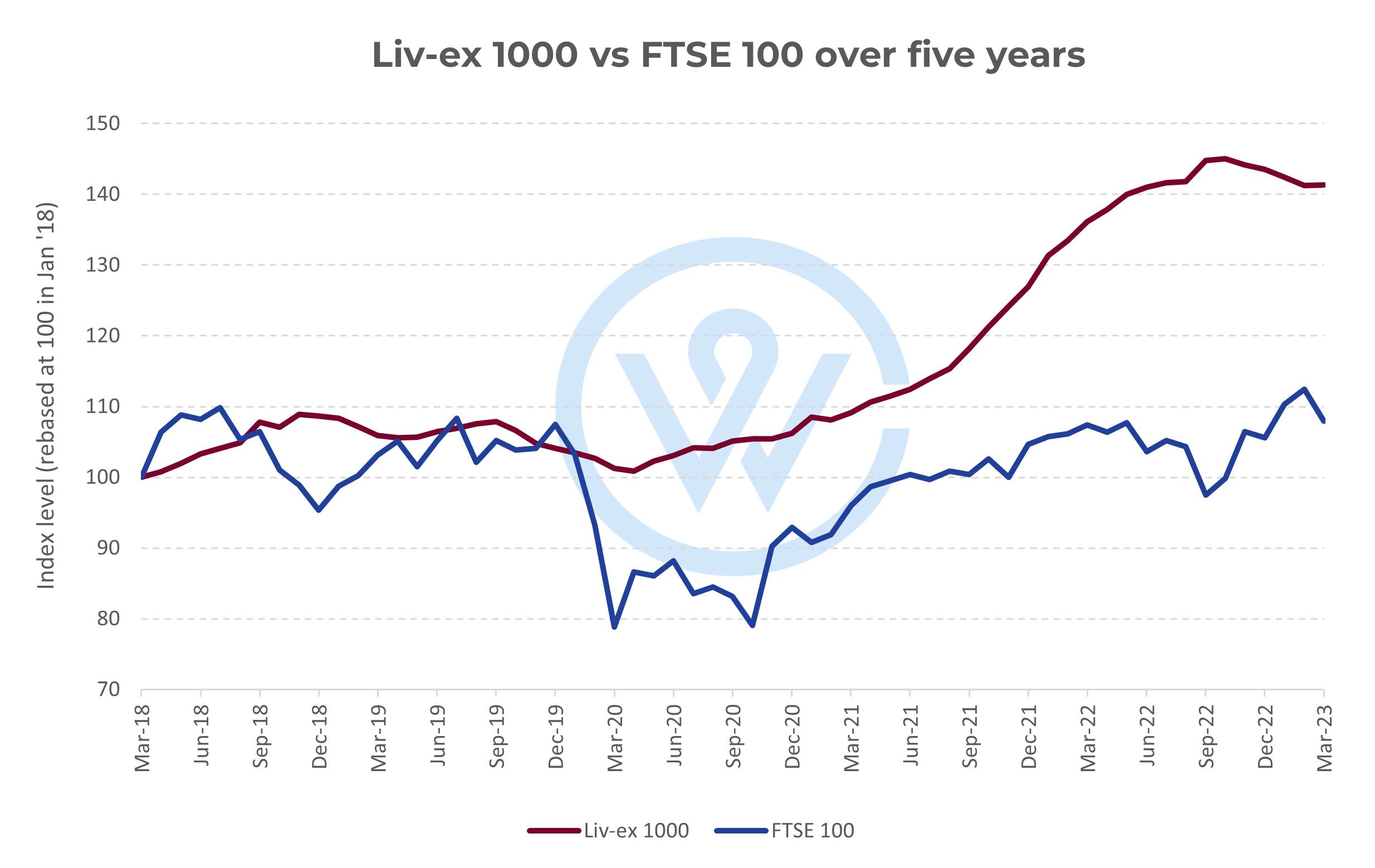
The steady returns can help to smooth overall portfolio volatility and reassure clients. According to an index that tracks the performance of 1,000 fine wines from different regions (Liv-ex 1000), investors have benefited from average returns of 40.3% over the past five years. By contrast, the FTSE 100 delivered just 4.8%. You can see the performance of your preferred wines here.
However, there are downsides. Although wine shields against inflation, it can be difficult to sell quickly. For clients who need to urgently access funds, this asset might not be ideal. What’s more, clients only realise returns after they sell. Unlike with bonds and shares, investors cannot enjoy gains and stay invested.

One solution for wealth managers could be to offer a mix of assets with different liquidity. For example, by combining fine wine, gold and inflation-linked bonds in one portfolio.

Sustainable energy

As the prices of raw materials tend to be the first to rise, commodities are often used to predict and hedge against inflation.

Traditionally this asset class includes oil and non-renewable energy sources. But with the rising regulations and scientific warnings, this may not be a wise or future-proof investment anymore. The EU, for example, is in the process of amending the Energy Efficiency Directive so that 45% of all European energy will be renewable by 2030. The Green Deal also imposes carbon taxes on dirty providers. Already, around 29% of the world’s energy comes from clean sources, and that figure is likely to increase over the long term.

While green energy can be higher risk, it’s not as precarious as non-renewables. In the same way that whale oil plummeted in 1860, investors left holding fossil fuel stocks in twenty years’ time could find themselves with stranded assets.

Inflation-linked bonds

Unlike other debt instruments, inflation-linked bonds are pegged to the recorded inflation levels. So, even in high-inflationary environments, they should retain their value.

A huge advantage of inflation-linked bonds is that they can usually be traded quickly. This could be helpful for wealth managers looking to balance out the illiquidity of fine wine or property.

However, the success of these assets hinges on the accuracy of the indices. Sometimes the consumer goods selected and measured can lead to artificial results. For example, the UK index contains DVD players and MP3 players. These are probably cheaper than they would have been a decade ago, but it is not because inflation is lower.

Affordable property

Property is a classic inflation-resistant investment. But what kind should today’s cautious investors go for? Property addressing the UK’s housing crisis could be fruitful. Despite strong demand, there is currently a shortage of over 4 million homes.

Another interesting area for low-risk investors to consider could be affordable student accommodation. Applications to universities tend to rise during recessions. After 2008, they increased 31% in the UK. And since 2020, they have reached record-levels. KPMG anticipate a 16% increase in the number of undergraduates searching for rooms by 2030.

The risk is relatively low, as in many cases, the accommodation will be handled and managed by the university itself. Yields for investors average at around 5% for London-based lets and 4% for accommodation outside the capital.

But a word of caution, the buy-to-let market is becoming less lucrative every day, with high interest rates and increasing regulations. In the current climate, some are wondering if the money would be better placed elsewhere.

Chartering a new course

Record-levels of inflation are transforming the investment landscape. What made sense yesterday no longer adds up today.

This article aims to help spark ideas for wealth managers. It presents five potential lower-risk investments, that also have famous inflation-shielding qualities.

As wealth managers re-balance portfolios and seek new assets, they can also make the world a better place. Now is the ideal time to incorporate social and environmental factors into the investment strategy. After all, to truly future-proof portfolios, we need a healthy planet.

Discover five ways fine wine investments are good for the environment.

WineCap’s independent market analysis showcases the value of portfolio diversification and the stability offered by investing in wine. Speak to one of our wine investment experts and start building your portfolio. Schedule your free consultation today.

Categories
News

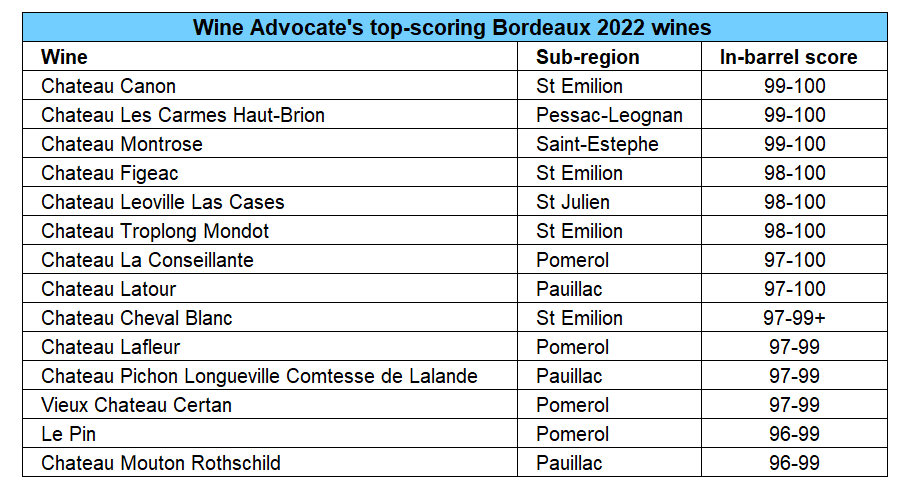
Wine Advocate’s top-scoring Bordeaux 2022 wines

  • Bordeaux 2022 is a vintage of ‘potential greatness’ but also ‘heterogeneity’, according to the Wine Advocate’s En Primeur report.
  • The reviewers, William Kelley and Yohan Castaing, found potential for perfection in eight wines, and included a list of En Primeur recommendations.
  • Kelley noted that the second wines ‘merit more serious consideration than usual this year’.

Potential greatness and heterogeneity

During the En Primeur trade tastings last week, and following James Suckling’s report, another major publication released its assessment of the 2022 Bordeaux vintage – Robert Parker’s Wine Advocate. William Kelley and Yohan Castaing reviewed 459 wines ‘after several weeks of intensive tasting and hundreds of visits to wineries’.

The critics found ‘potential greatness’ in this vintage that has surprised many, but also ‘heterogeneity’.

Kelley explained that ‘Bordeaux has produced some monumental wines in 2022, but unlike many of the great vintages of the 20th century, the year was not a rising tide that raised all boats’.

He added that ‘at its best, this is a vintage of remarkable concentration, energy and harmony’. According to him, ‘the accumulated experience of 2015, 2018, 2019 and 2020 meant that intelligent winemakers were ready to harvest at the right time, a choice of decisive importance’. However, he noted that ‘the less-successful wines are jammy, astringent and rustic’.

The vintage heterogeneity means that buyers will have to be selective; 2022 ‘is not a year to buy blind,’ the critic argued.

Top-scoring wines

The critics found potential for perfection in eight wines, with Canon, Les Carmes Haut-Brion and Montrose coming on top (99-100 points).

Among the three, Les Carmes Haut-Brion has been the best performing investment wine over the last five years, up 56%, while also having the lowest average case price. Castaing singled it out as ‘a strong candidate for the title of wine of the vintage’.

One First Growth, Château Latour, was also among contenders for perfection, although the wine is not released En Primeur. Meanwhile, Château Mouton Rothschild, received 96-99 points. Kelley called it ‘a brilliant wine that likely sits somewhere between the 2019 and 2020 in quality’.

Kelley also noted that second wines ‘merit more serious consideration than usual this year’. In 2022, they ‘often exhibit similar structure and texture to their grand vin counterparts’.

Apart from their top-scoring wines, the critics made a list of En Primeur recommendations to buy, which included Branaire-Ducru and Langoa Barton.

En Primeur pricing

A great vintage usually translates to expensive releases.

However, Kelley suggested that there were grounds ‘for optimism with regard to pricing this year,’ if the chateaux take into account the global economic uncertainty and the state of the secondary market.

He remarked that ‘it is not always necessary to purchase great Bordeaux as futures,’ as sometimes older vintages might represent better value today.

To spot the best value opportunities and explore the historic performance of any fine wine brand, visit Wine Track. Our tool provides a clear overview of a fine wine’s track record, including critic scores, average price and investment returns.


WineCap’s independent market analysis showcases the value of portfolio diversification and the stability offered by investing in wine. Speak to one of our wine investment experts and start building your portfolio. Schedule your free consultation today.

Categories
News

Bordeaux 2022 – what to expect?

The first Bordeaux 2022 En Primeur releases are expected early next month. Ahead of the campaign, we examine the key factors that shaped the 2022 vintage and the current market for Bordeaux.

Vintage overview

Bordeaux 2022 is full of promise. Early critical reports suggest that the winemakers have overcome the challenges of the growing season, characterised by extreme heat and drought, and have achieved quality on par with the recent trilogy of great vintages, namely the 2018, 2019 and 2020.

Rainfall levels in 2022 were similar to one of Bordeaux’s greatest vintages, the 2010, although temperatures were higher last year. According to Bordeaux expert, Jane Anson, this led to ‘small grapes, thick skins, and clear concentration’.

While one might expect to find ripeness and boldness in the wines, the first En Primeur tasting report, published by James Suckling last week, suggested that the winemakers have prioritised freshness and lower alcohol, and that the resultant wines have fine structured tannins. Moreover, the critic noted consistent excellence from bottom to top.

However, the apocalyptic hailstorms in June devastated the crop at some estates but provided needed respite from the heat for others. As such, there will be variation in yields between the chateaux.

In terms of overall volumes, the 2022 vintage sits about 15% below the ten-year average but is up 9% on last year. It is also higher than the low-yielding 2013 and 2017 vintages.

Bordeaux – back in vogue

The 2022 vintage arrives in a market that is experiencing somewhat of a Bordeaux renaissance.

While on the surface Bordeaux might be losing market share to other regions, secondary market reports suggest that trade for the region has continued to increase in absolute terms: close to 50% since 2010.

Bordeaux has come to represent good value for money, in the context of Burgundy’s, and most recently, Champagne’s relentless price rise.

Moreover, as the bedrock of an investment portfolio, Bordeaux continues to offer the best liquidity in the fine wine market. There is consistent demand for the classed growths, across the full spectrum of vintages, both young and mature. As our Q1 report highlighted, some Bordeaux 2011s have broken pricing records since the beginning of the year, spurred by purchasing of ‘rabbit’ vintages for Chinese New Year. Bordeaux proves its relevance again and again.

En Primeur is only one of the ways in which the region cements its place in the world of fine wine. The annual campaign generates considerable attention from trade and critics, the volume and value of wine released is unmatched anywhere in the world, and the best releases offer excellent returns on investment – often at the lowest possible point of entry into a top brand.

WineCap’s independent market analysis showcases the value of portfolio diversification and the stability offered by investing in wine. Speak to one of our wine investment experts and start building your portfolio. Schedule your free consultation today.


Categories
Quarterly-reports

Q1 2023 Fine Wine Report

Our Q1 2023 report has now been released. The report examines how the global financial turmoil of the first quarter impacted the fine wine market, the factors affecting demand, and the best performing wines and regions. Download your free copy today.

Key findings include:

  • Mainstream markets had a rollercoaster quarter, but fine wine remained relatively unaffected.
  • Fine wine prices have risen for two consecutive months after a slow start to the year.
  • Several Bordeaux 2011s enjoyed heightened demand and rising prices in light of Chinese New Year.
  • The Burgundy 2021 campaign was met with mixed sentiment from the trade due to low allocations and high prices.
  • Axel Heinz has left Ornellaia to join Château Lascombes and bring fresh life into the estate, which has been underperforming the Super Tuscan in recent years.
  • The spotlight is now on Bordeaux, with the En Primeur release of the 2022 vintage, which has been described as ‘very promising’.

Click below to download your free copy of our quarterly investment report.


Fine Wine Report

Categories
News

James Suckling releases Bordeaux 2022 report

‘A new benchmark’

James Suckling has released his report on the Bordeaux 2022 vintage ahead of the upcoming En Primeur campaign. The critic claimed that in the 40 years he has tasted Bordeaux in-barrel, he had ‘never come across anything like the 2022 vintage’.

2022 will stay in memory as one of the hottest years on record, featuring severe droughts and heatwaves. Despite the challenges, Suckling suggested that 2022 ‘gives us hope that both man and nature can adapt to these circumstance and produce outstanding wines, both red and white’.

He further observed that dryness and heat no longer mean bold ripeness in the resultant wines. Most winemakers have prioritised freshness and lower alcohol, ‘picking their grapes at optimal ripeness, with this “al dente” fruit giving a crunchy and clean character to the wines, with fine yet structured tannins’.

Suckling found the young wines to be ‘dynamic and fascinating’ and noted that ‘there was high quality from top to bottom’ – a sign of a great vintage.

Top-scoring wines

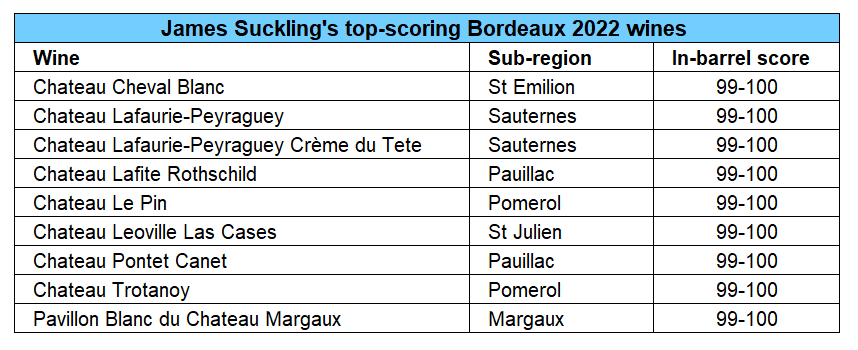
Suckling found nine candidates for perfection in Bordeaux 2022, awarding them a barrel range of 99-100 points.

Cheval Blanc stood out as his potential ‘wine of the vintage’, which ‘soars to new heights with its brightness and weightlessness’.

The critic was also full of praise for two Sauternes from Château Lafaurie-Peyraguey, calling the Crème du Tête ‘magical. The new 1929?’

Only one First Growth made the list, Château Lafite Rothschild, which Suckling described as ‘a classical Lafite that reminds me of something like the 1986 […] but it’s so today with its purity and precision’.

A white wine also featured among the top-scoring – Pavillon Blanc du Château Margaux. According to him, this ‘feels like a great Montrachet’ and is ‘one for the cellar’.

The question of pricing

Suckling’s verdict on the 2022 vintage is that the quality of the wines is ‘exceptional’ but ultimately ‘the market will decide’ the success of the new releases. ‘High interest rates, volatile stock prices and recent bank failures’ are some of the factors that will influence purchasing of young Bordeaux.

While the excitement of the new is guaranteed, high release prices might make older vintages look more attractive – especially if they offer value, and faster returns on investment.

WineCap’s independent market analysis showcases the value of portfolio diversification and the stability offered by investing in wine. Speak to one of our wine investment experts and start building your portfolio. Schedule your free consultation today.

Categories
News

Ornellaia’s Axel Heinz to breathe new life into Château Lascombes

Axel Heinz joins Château Lascombes

Longtime director and winemaker at Ornellaia, Axel Heinz, is leaving Tuscany to join the Second Growth Château Lascombes as CEO and bring the estate ‘to its full potential,’ reported The drinks business. After 18 years in Italy, Heinz will join Lascombes in time for the 2023 harvest.

Carlton McCoy, managing partner at Lawrence Family Wine, who own the Margaux property, said that the work Heinz ‘has done while overseeing Ornellaia and Masseto have taken this already heralded estate to new heights’.

Indeed, Ornellaia and Masseto have become established as two of the most prominent Super Tuscans, enjoying continuous demand and steady price appreciation. In 2020, they placed among the top ten most powerful wine brands in the world.

Investment performance of Ornellaia and Lascombes

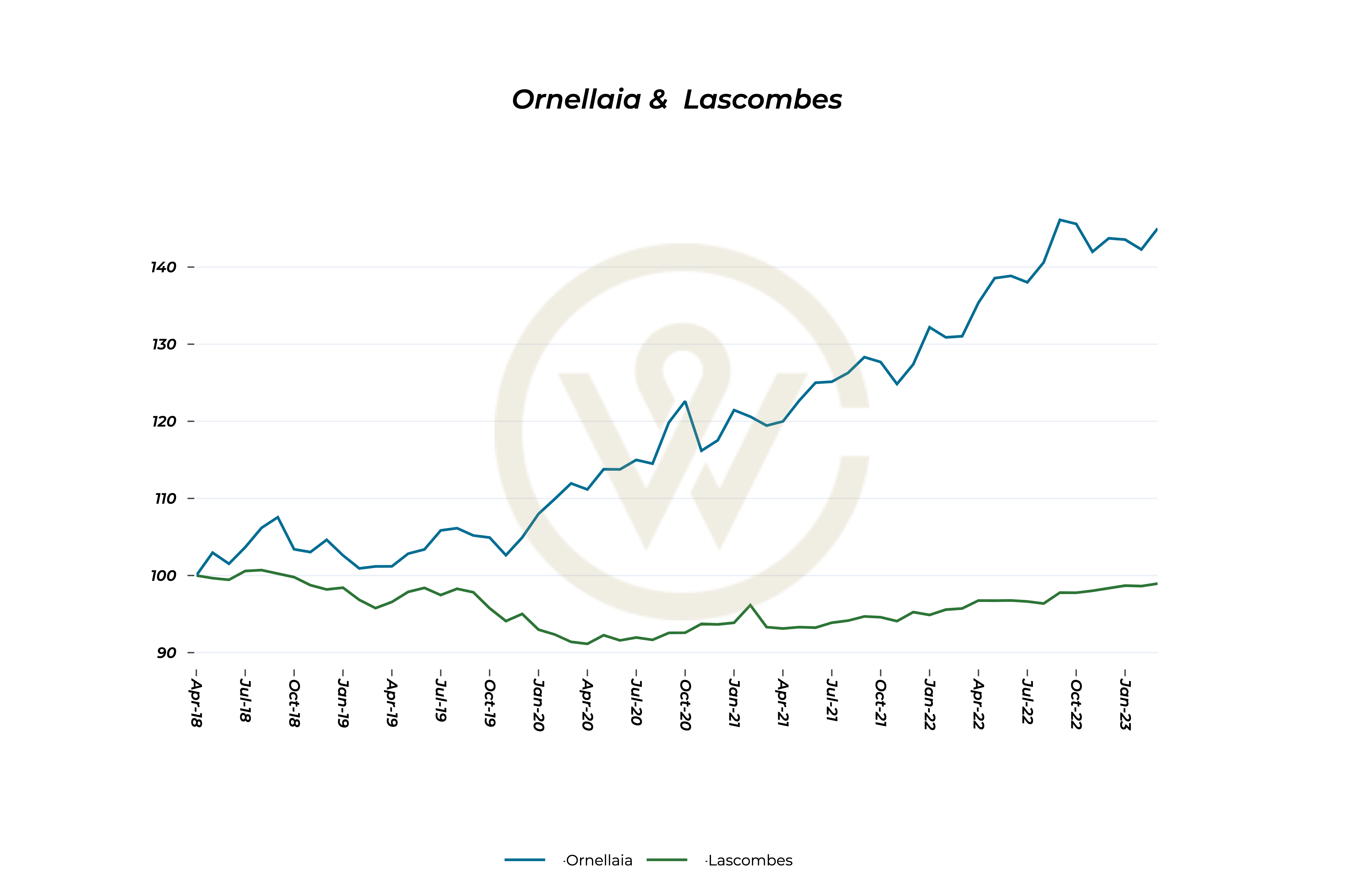
The appointment of Heinz is intended to breathe new life into Lascombes, which has seen much slower growth than the Super Tuscan. Over the past five years, Lascombes prices have risen just 2.5%, compared to a move of 45% for Ornellaia.

Ornellaia and Lascombes

At present, the 2012 is Lascombes’ highest-scoring vintage, with 94-points from Robert Parker (Wine Advocate). It is also one of the best offerings on the market, together with the less expensive 2011 (RP 93).

With Heinz soon to be at its helm, Lascombes will be an estate to watch; one likely to generate more critical attention, and rising prices.

You can explore the price performance of both estates on Wine Track – our tool, which enables you to identify investment grade wines, spot trends and wine investment opportunities.

Stay tuned – this analysis and more is part of our Q1 2023 report, published next week.

Categories
Quarterly-reports

Q4 2022 | Report

Our Q4 report, analysing the trends that shaped the fine wine market over the past three months, is now available to download. The report also provides a summary of the year in fine wine and a look ahead to 2023, accounting for the macroeconomic environment and core factors such as inflation, currency moves, new releases, supply, and levels of demand.

Fine wine shows remarkable resilience in 2022

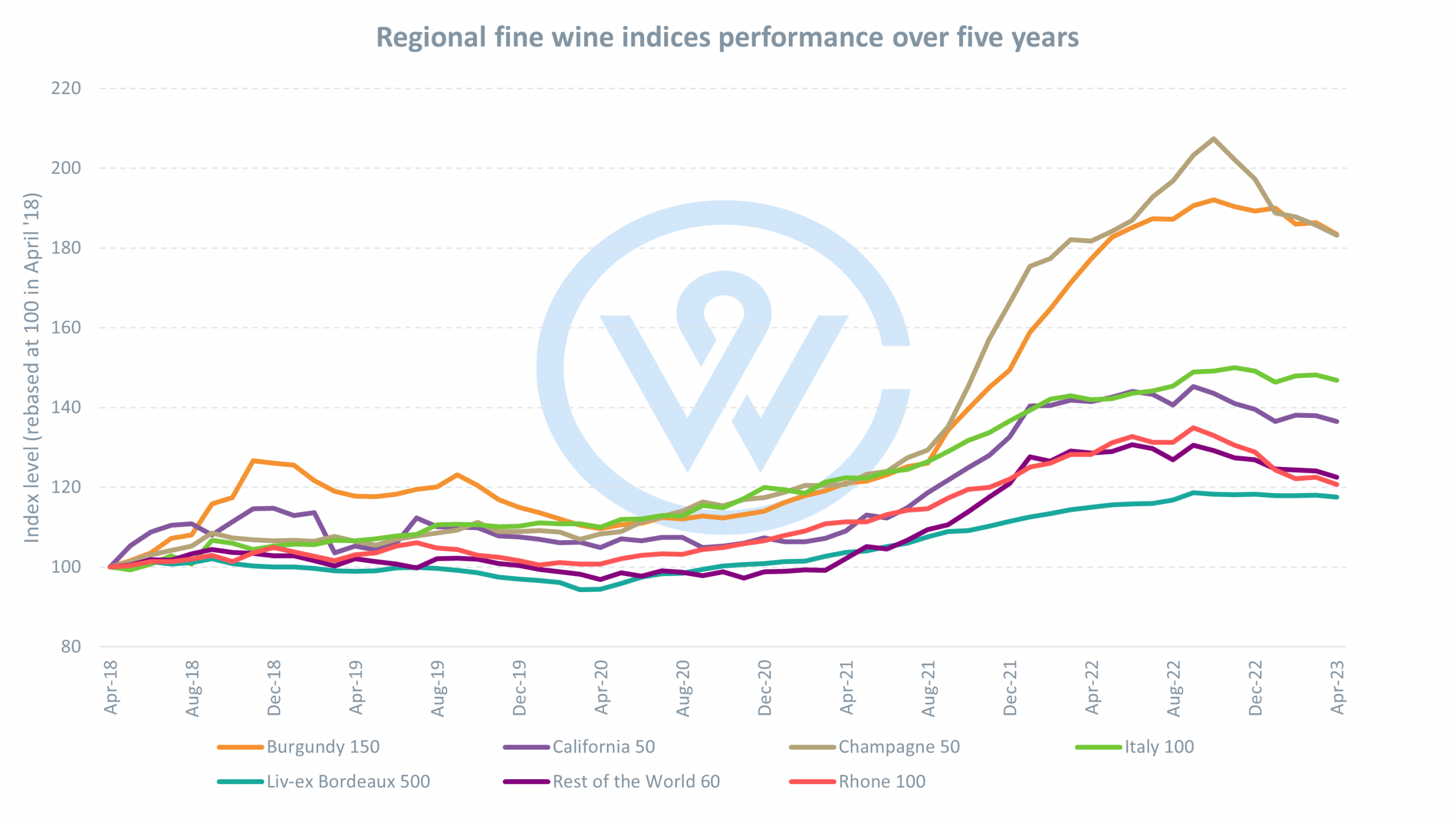
The fine wine market remained bullish in the face of severe headwinds, which only started to impact its performance in the final quarter. 2022 brought a perfect storm of pandemic, war, inflation, climate change and unsteady politics, which led currencies, bonds and equities spiralling downwards. But fine wine did not experience any of the volatility that affected mainstream markets. Instead, all major fine wine indices finished the year with increases. Rare Burgundy and vintage Champagne enjoyed soaring demand and peaking prices.

What to expect in 2023

If 2022 was all about Burgundy and Champagne, 2023 is likely to see the return of more subdued market players, which offer value and quality. Stability will be a key theme in the new year as the economic outlook remains uncertain.

Although fine wine might experience a temporary drift following its bull run, many wines continue to set trading records. Among them in Q4 were some of the critics’ ‘wines of the year’ such as Talbot 2019 and Lynch Bages 2014. Bordeaux remains the market’s driving force, with heightened demand across both ‘on’ and ‘off’ vintages. But demand is also getting broader, with more wines considered investment-worthy than at any other point in history, be it grower Champagne, the Rhône, Italy, California or further afield.

WineCap’s independent market analysis showcases the value of portfolio diversification and the stability offered by fine wine. Download our brand new report below for your summary of the past quarter in fine wine.


Fine Wine Report


Categories
Learn

6 Questions to Ask Yourself Before Investing in Fine Wine

Investments in fine wine have proved exceptionally popular over the recent years, bringing in new buyers and record trades[1]. And it’s easy to see why! There are many advantages to investing in fine wine, especially in the current high-inflation environment. However, before diving in, it’s important to take a step back and consider how fine wine could fit into your overall investment strategy.

Here are six questions to ask yourself before investing:

1. What is your investment goal?

Investment goals are unique to the investor. Some people dream of going on a lavish round-the-world trip, while others are simply looking to afford a comfortable retirement. Whatever your personal goal (or goals), take a moment to write it down.

Calculate how much your goal will cost and how much time you’ve got to get there. This forms the backbone of your investment strategy.

For example, if you’re hoping to put down a £150,000 deposit on a property in a decade, and you can afford to put aside £1,000 a month towards it, you will need to find the additional £30,000. This means your investment goal is to generate £30,000 over the next ten years. The way that you approach it depends on your unique time horizon and risk tolerance.

2. What is your time horizon?

The general rule is the more time you have, the more risk you can afford to take. Of course, there is always a chance with investing that you may get back less than you put in, but over longer periods this risk is mitigated.

Experts mostly agree that if you will need your money in less than five years – say one or two – it’s normally better to put it in a high-interest savings account. If you need it within the next five to ten years, a lower-risk and highly diversified portfolio could be the best option. Blue chip stocks, AAA graded bonds and market index funds could make up the bulk of your portfolio. If you have more than ten years to invest, you can probably afford to take more risk.

Pension fund managers normally follow this rule. Generally, young employees – who have multiple decades of work ahead – will be invested in high-risk illiquid assets. By contrast, those closer to retirement will be transitioned to low-risk, liquid investments.

Time is an important factor to consider as you begin to explore fine wines and consider how they could complement your strategy. As you research bottles, check that the maturity date matches your strategic timeline. Luckily, there are many different fine wines out there to suit different investors. You can effortlessly stay updated on the latest trends fine wine with Wine Track.

3. How much tolerance do you have for risk?

Your investment risk tolerance is nothing to do with your normal risk appetite. It’s about how you feel when the markets are volatile. It’s about whether the idea of your investments soaring and plunging in value makes you excited or nauseous. You could be a sky-diving, base-jumping crocodile physiologist and still feel queasy at thought of market downturns.

Figuring out the level of risk you’re prepared to take with your wealth is a crucial part of designing your investment strategy. After all, you don’t want to lose sleep over your investments, they are there to help you dream – not give you nightmares!

Different asset classes can be broadly grouped into different risk levels. On the lower-risk side, there’s investments like gold, property, or fine wine. These tend to provide stable and steady returns over time. On the higher risk-side are assets like crypto assets, high yield bonds, derivatives, or equity in start-ups. These are more volatile in nature, often soaring and plummeting quickly.

In the current environment, investors looking to mitigate their risk might be interested in inflation-shielding assets. These are usually physical and tangible investments like property, art, gold, collectibles, and of course, fine wine.

4. How much liquidity do you need?

If things take a turn for the worse, how much money will you quickly need to access from your investment portfolio? Or in other words – how much liquidity do you need?

Ideally, investors should not liquidate their portfolio before the right time. Doing so could unbundle the entire investment strategy and mean missed opportunities later down the line. For this reason, experts recommend keeping three to six months’ worth of living costs aside in a high-interest savings account. And many will also advocate to have a healthy surplus in a current account too.

However, sometimes life happens, and investors have no choice but to liquidate. Think carefully about how much of your portfolio you would need to sell in an emergency and how quickly you’d need the cash. This is an important part of planning your strategy.

Some assets can be quickly converted into cash. For example, many of the blue-chip shares and funds – such as those on the FTSE100 or S&P500 could usually sell within 24 hours. However other assets – especially those on the private market – can take several weeks, months or even years.

Generally, for fine wine it can take between weeks and months to sell bottles. But it depends on the time of year, type of bottle and asset maturity. With Wine Track, you can keep a close on the demand and prices of fine wine, so that you’re always up-to-date.

5. How diversified are you?

Nobel-prize laureate Harry Markovitz famously revealed, “Diversification is the only free lunch in investing”. As you build your investment portfolio, it’s important to diversify your revenue streams. This can help to shield your overall wealth from market shocks and prevent one downturn from slashing the value across your entire investments.

Alternative investments – such as art, antiques, commodities, and fine wine – are often used to boost diversification and provide different sources of returns (hence the name).

Because assets like fine wine derive their value intrinsically, they are less affected by the market turbulence outside. They are also traded away from the stock market. This provides a different source of revenue and helps to diversify portfolios.

As you build your overall portfolio, experts recommend aiming for a blend of different asset classes, sectors, and geographical locations. Reaching as far and wide as possible is one of the most effective ways to mitigate exposure to market shocks.

6. What’s your impact on the world?

One of the most profound questions for investors to ask themselves is what effect they’re having on the world around them. How their money is invested can make a dramatic difference on the planet.

Fortunately, many vineyards and fine wine investors care deeply about the environment. The quality of grapes is closely linked to the climate, and many wineries are working hard to adapt and mitigate the effects of the crisis. As an investment that thrives on the prosperity of vines, there’s a strong case to be made that fine wine is an ESG investment.

As you build your portfolio, consider carefully what your wealth is being used for and whether you agree with it. Your choice of investment gives you power and influence, use it wisely.

Discover more about how fine wine reacts in a recession.


[1] Source: Liv-ex

Categories
News

Sotheby’s Wine & Spirits Auction Sales Top Record $150 Million in ’22

Fine wine and spirits sales at Sotheby’s hit a record-beating $150 million last year, an increase of 14% compared to the year before. 

69 wine and spirits auctions were held by the top auction house during 2022, which represents 30% more than in 2021. This new record for fine wine and spirits sold at auction doesn’t include private sales and retail sales.

The main revenue source was fine wine: delivering a total of $121 million last year. Spirits also contributed double-digit growth of 15% year-on-year with a total of $29 million, underlining the rising interest in investment-grade whiskies and fine spirits. 

One particular highlight included a unique assortment case of 12 bottles from the 1990 vintage of Domaine de la Romanée-Conti which sold for an estimate-breaking $118,750.

The Macallan The Reach 81 Years Old single malt, an incredibly rare special edition, went on auction in September at Sotheby’s in London. It was the oldest whisky ever to be entered into an auction and sold for £300,000 (or $325,740).

In the US, spirits sales doubled: up from $5 million to $12 million. The key driver can be attributed to a stronger demand for luxury bottles.

Asia remains a key focus for Sotheby’s, with the auction house’s 2023 continued expansion plans in the region. Sales in Asia contribute the most to the house’s total revenue from auctions: $54 million. What’s more, the auction house reported that Asian buyers represented 41% of sales by value in 2022.

Commenting on total sales, Yves de Launay, Head of Auction Sales, said: ‘Overall 2022 saw a very strong performance in a very challenging market.’ ‘Bordeaux and Burgundy clearly led the way with an increasing demand for vintage Champagne and rare wines for other regions such as Tuscany or Rhône. Demand should remain strong for the finest and rarest wines in 2023.’

Read about Christie’s December 2022 London auction that reached over £2.12 million in sales.