Categories
Learn

White wine types: Grapes, styles and investment-worthy bottles

  • Most white wines are made for freshness and early drinking, limiting long-term investment appeal.
  • A small number of categories – notably white Burgundy and German Riesling – are major exceptions with proven ageing and collector demand.
  • Sweet white wines like Sauternes and Barsac also offer historical prestige and investment potential in top names and vintages.

White wine represents some of the most diverse and widely consumed styles in the world that have been rising in popularity over the last decade. From crisp Sauvignon Blanc to rich Chardonnay, from bone-dry Riesling to the world’s greatest sweet wines, the category spans an extraordinary range of flavours, regions, and winemaking traditions.

Yet despite this breadth and growing consumer interest, white wine remains a smaller part of the fine wine investment market than red wine. While collectors have historically focused on Bordeaux First Growths, Burgundy Grand Crus, and top Italian reds, only a handful of white wine categories consistently attract long-term secondary market demand.

So which white wines are simply made to drink, and which are genuinely investment-worthy?

In this WineCap guide, we explore the major white wine types, the most important white wine grapes, the difference between dry and sweet white wine, and the specific categories where white wine becomes collectible.

What are the main types of white wine?

There are several often overlapping white wine categories:

  • Wines defined by grape variety (Chardonnay, Riesling, Sauvignon Blanc)
  • Wines defined by sweetness (dry white wine vs sweet white wine)
  • Wines defined by region (White Burgundy, Mosel Riesling, Bordeaux Blanc)
  • Wines defined by ageing potential (fresh vs cellar-worthy)

Unlike red wines, where tannin and structure often imply longevity, white wines vary dramatically: from light and aromatic to intensely age-worthy.

For most consumers, white wine is associated with refreshment and immediacy. For collectors, however, the question looks different: which whites have the structure to age and the scarcity and demand required to increase in value?

White wine grapes: the most important varieties

Chardonnay

Chardonnay is the world’s most famous white grape – and the backbone of the most collectible dry white wines.

It is uniquely versatile, capable of producing:

  • Lean, mineral wines (Chablis)
  • Rich, oak-aged wines (Meursault)
  • The world’s greatest dry whites (Montrachet)
  • Sparkling base wines (Champagne Blanc de Blancs)

Investment relevance: Extremely high at the top end of Burgundy.

Sauvignon Blanc

Sauvignon Blanc is defined by freshness, citrus aromatics, and bright acidity.

Key regions include:

  • Loire Valley (Sancerre, Pouilly-Fumé)
  • Bordeaux Blanc blends
  • New Zealand

Most Sauvignon Blanc is produced for early drinking, limiting its collectability.

Investment relevance: Limited, except for rare classified Bordeaux white blends.

Riesling

Riesling is arguably the most age-worthy white grape in the world.

It can produce wines ranging from bone-dry to intensely sweet, with acidity that allows the finest examples to age for decades, sometimes a century.

Key regions:

  • Mosel
  • Rheingau
  • Nahe
  • Alsace

Investment relevance: Very high in top German Riesling.

Pinot Gris / Pinot Grigio

Typically light, approachable, and widely consumed young.

Investment relevance: Minimal.

Chenin Blanc

Chenin Blanc is highly versatile, producing dry, sparkling, and sweet wines.

Key region: Loire Valley (Vouvray, Savennieres).

Investment relevance: Niche, but growing among collectors.

Semillon

Semillon is essential in Bordeaux sweet wines such as Sauternes, and often blended with Sauvignon Blanc in dry Bordeaux whites.

Investment relevance: High in Sauternes’ top names.

Dry white wine vs sweet white wine

Dry white wines

Most global white wines are dry, including:

  • Chardonnay
  • Sauvignon Blanc
  • Dry Riesling
  • White Burgundy
  • Dry Bordeaux Blanc

These dominate restaurant consumption and everyday drinking.

Sweet white wines

Sweet whites include:

  • Sauternes
  • Barsac
  • German Auslese and Trockenbeerenauslese Rieslings
  • Tokaji Aszú

Sweet wines often have extraordinary ageing potential but investment demand is more niche.

Why white wine is a smaller investment market than red wine

White wine makes up a significant share of global production and consumption, but a much smaller share of investment-grade trading.

There are several reasons.

1. Most white wines are made for early drinking

Freshness is often the selling point, not longevity.

2. Lower tannin structure

Tannin helps preserve red wines for decades. Many whites rely on acidity instead, narrowing the range of cellar-worthy examples.

3. Fewer secondary market benchmarks

The fine wine market depends on benchmark regions. For whites, those benchmarks are concentrated in only a few areas.

4. Collector psychology still favours reds

Historically, prestige collecting has been dominated by Bordeaux and Burgundy reds, shaping demand patterns.

The reality is that white wine investment is not a broad market but a selective one. Where scarcity, longevity, and global demand align, white wine becomes truly collectible. Where they do not, it remains primarily a drinking category.

The investment exceptions: white wines that truly matter

Despite these constraints, several categories of white wine are undeniably blue-chip.

1. White Burgundy: the benchmark investment white wine

If there is one region that defines investment-grade white wine, it is Burgundy.

While red Burgundy dominates headlines, the region’s greatest whites – made almost entirely from Chardonnay – represent some of the most sought-after and scarce wines in the world. In many cases, demand for top white Burgundy now rivals (and sometimes exceeds) demand for equivalent reds.

White Burgundy’s investment relevance is concentrated in the Côte de Beaune, where the finest vineyard sites produce wines that combine richness, minerality, and longevity.

Key white Burgundy appellations collectors focus on

Chablis

Located in northern Burgundy, Chablis produces some of the world’s most mineral-driven Chardonnay.

  • Grand Cru vineyards like Les Clos and Vaudésir represent the collectible tier.

Meursault

Perhaps the most famous village for rich, textured white Burgundy.

  • Premier Crus such as Perrières and Genevrières are highly sought-after.

Puligny-Montrachet

Often considered the spiritual heart of Burgundy’s greatest whites.

  • Home to Montrachet and Chevalier-Montrachet.

Chassagne-Montrachet

Puligny’s neighbour, producing whites that can be broader and more opulent, with enormous collector demand.

Corton-Charlemagne Grand Cru

One of Burgundy’s most important Grand Cru whites, prized for structure and long ageing horizons.

The pinnacle: Grand Cru Chardonnay

At the very top sits Montrachet, widely regarded as the greatest dry white wine vineyard on earth.

Key investment producers include:

  • Domaine Leflaive
  • Coche-Dury
  • Domaine Ramonet
  • Domaine Roulot
  • Domaine de la Romanée-Conti (Montrachet)

WineCap view: White Burgundy is the clearest example of white wine functioning as a true blue-chip asset class.

2. German Riesling: the most age-worthy white grape

If Burgundy is the luxury benchmark for Chardonnay, then Germany is the benchmark for Riesling.

German Riesling occupies a unique position: it is intellectually revered among collectors, yet still underappreciated by mainstream consumers, creating an interesting investment dynamic.

What makes Riesling compelling is its combination of:

  • piercing acidity
  • low alcohol
  • extraordinary longevity
  • transparent terroir expression

Key German Riesling regions

Mosel

The most famous Riesling region, defined by steep slate vineyards.

Top producer: JJ Prüm

Rheingau

Historically prestigious, producing structured dry Rieslings.

Top producer: Robert Weil

Nahe

A rising star with increasing collector focus.

Top producer: Dönnhoff

Pfalz

Known for richer, powerful dry Rieslings.

Top producer: Keller

WineCap view: German Riesling is one of the few white wine categories with both heritage and genuine investment upside.

3. Bordeaux white wines: dry blends with prestige

Bordeaux is synonymous with red wine, but its greatest whites are quietly compelling and increasingly collectible.

Dry Bordeaux whites are typically blends of:

  • Sauvignon Blanc
  • Semillon

Key subregions for Bordeaux white wine

Pessac-Léognan

The epicentre of serious dry Bordeaux whites.

Top wines include:

Graves

Historically important for structured dry whites.

Entre-Deux-Mers

Produces lighter early-drinking whites, not typically investment relevant.

WineCap view: Bordeaux whites are niche collectibles, best approached through the top estates.

4. Sweet white wines: Sauternes and Barsac

Sweet wines occupy a fascinating position.

Historically, they were among Europe’s most prestigious wines. Yet modern demand has narrowed, leaving the category highly selective.

The benchmark sweet whites come from Sauternes and Barsac, where noble rot concentrates sugars and flavours into wines of extraordinary richness and longevity.

Key sweet wine appellations

Sauternes

Home to Château d’Yquem – the only Premier Cru Supérieur in 1855.

Barsac

Often producing fresher, more lifted wines.

Key estate: Château Climens

WineCap view: Sauternes is heritage collectible rather than a broad growth market, with Yquem as the clear standout.

White wine ageing ability: what lasts?

Whites that age exceptionally well:

Whites that are usually early-drinking:

  • Pinot Grigio
  • Most Sauvignon Blanc
  • Entry-level Chardonnay
  • Commercial aromatic whites

Ageing ability is one of the strongest dividers between wine to drink and wine to collect.

WineCap view: white wine is selective, not broad

White wine is essential to the global wine conversation but the investment market remains highly concentrated.

Most white wines are:

  • produced for freshness
  • consumed young
  • not traded actively
  • difficult to benchmark

However, at the top tier, white wine becomes truly blue-chip. WineCap considers these categories the most investment-relevant:

FAQ: White wine types 

What are the main types of white wine?

Chardonnay, Sauvignon Blanc, Riesling, Pinot Grigio, Chenin Blanc, and Semillon-based wines.

Is white wine sweet?

Some whites are sweet, but most are dry.

What is the best dry white wine?

White Burgundy and top dry Riesling are among the greatest from a collectors’ perspective.

Can white wine be investment-worthy?

Yes, but only selectively – particularly white Burgundy, German Riesling, and rare Bordeaux whites.

Do white wines age well?

Some do. High-acid, structured whites can age for decades.

Categories
Learn

Orange wine explained: Trends, history and investment reality

  • Orange wine is trending globally, but remains a niche category in the fine wine market.
  • Demand is driven by drinkers, not collectors, limiting investment relevance.
  • Ancient in origin, modern in branding, orange wine sits outside blue-chip benchmarks.

Orange wine has become one of the most visible wine trends of the past decade – a style that dominates progressive restaurant lists, natural wine shelves, and social media feeds. Its amber hue and unconventional structure make it instantly distinctive.

However, from an investment standpoint, orange wine occupies a very different space from the blue-chip categories that define the fine wine market. While Champagne, Burgundy and top Bordeaux continue to attract global collector demand and measurable secondary-market liquidity, orange wine remains largely consumption-driven – fascinating to drink, but rarely traded, benchmarked, or treated as an asset.

That is not because orange wine lacks history. In fact, the techniques behind it may be among the oldest in the world. Instead, it reflects a category where cultural momentum has not translated into investment fundamentals.

Below, we explore what orange wine is, where it comes from, why it has risen in popularity and why it remains, for now, a wine trend rather than a collectible market.

We clarify why its investment potential is limited, highlighting how it compares to portfolio-grade wine segments.

What is orange wine?

Orange wine is best understood as white wine made using red wine production methods.

Instead of pressing white grapes immediately and fermenting only the juice, orange wine is fermented with the grape skins – and sometimes stems – for an extended period. This process, known as skin contact, extracts colour, tannins, texture, and phenolic complexity, producing wines that range from golden amber to deep orange in appearance.

Despite the name, orange wine has nothing to do with oranges or citrus fruit. The colour comes entirely from the grape skins.

Orange wine is also commonly referred to as:

  • Skin-contact white wine
  • Amber wine (particularly in Georgian traditions)

This simple shift in technique creates a style that sits between categories: structurally closer to red wine, yet aromatically rooted in white grapes.

How is orange wine made?

The defining feature of orange wine is maceration: the extended contact between grape juice and skins.

Most conventional white wines are pressed off skins quickly to preserve freshness and minimise tannin. Orange wine does the opposite: it embraces skin contact to build depth and structure.

Key variables include:

Length of skin contact

This can range from a few days to several months. Longer maceration generally increases tannin, grip, and savoury complexity.

Fermentation vessels

Orange wines can be made in:

  • Stainless steel (cleaner, fruit-driven styles)
  • Oak barrels (more oxidative, structured examples)
  • Amphora or clay vessels (traditional, earthy styles)
  • Georgian qvevri (buried clay pots used for millennia)

Winemaking philosophy

Orange wine overlaps heavily with the natural wine movement, though not all orange wines are “natural.” The technique is separate from the ideology. The result is one of the wine world’s most diverse categories – exciting, but also highly variable.

Where did orange wine originate?

Orange wine may feel modern, but its origins are ancient.

The most frequently cited historical anchor is Georgia, where winemakers have produced skin-contact wines for thousands of years using traditional clay vessels called qvevri. This method is so culturally significant that UNESCO has recognised the ancient Georgian qvevri winemaking tradition as part of humanity’s intangible heritage.

What is new is not the practice, but the label. The term “orange wine” itself was coined in 2004 by British importer David A. Harvey as a way to describe this hard-to-classify style in accessible language. The name stuck, helping transform an old technique into a modern global category.

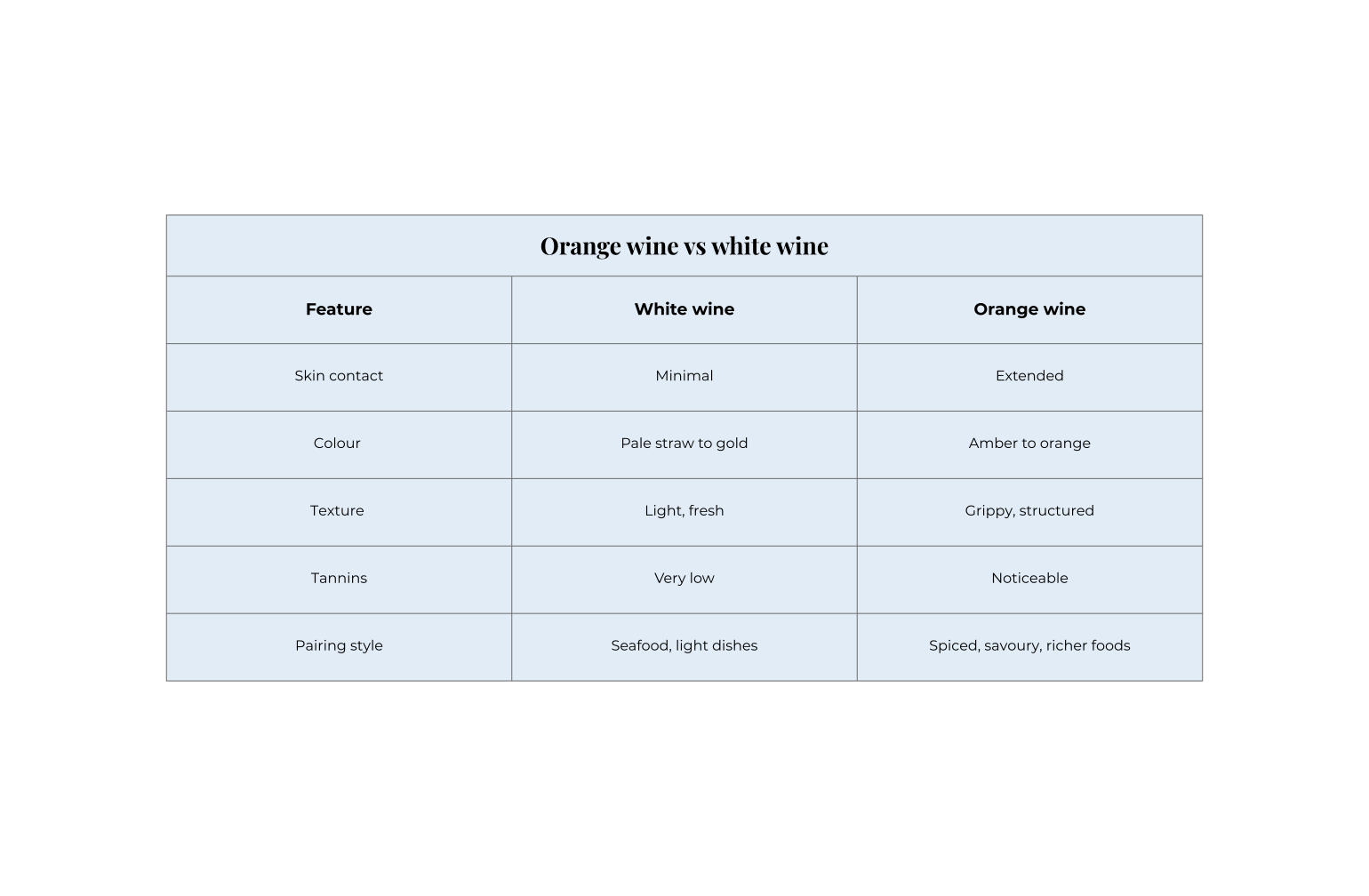
Orange wine vs white wine: what’s the difference?

One of the most common questions is how orange wine differs from traditional white wine. 

White wine vs orange wine

Orange wine occupies a middle ground: it can drink like a white, but behave like a red at the table.

Why has orange wine become so popular?

Orange wine’s rise is best understood as the overlap of three powerful trends.

1. The natural wine movement

Orange wine fits neatly into the minimal-intervention narrative: ancient techniques, lower additives, small producers, authenticity. It became a signature style within the broader natural wine boom.

2. On-trade influence

Sommeliers embraced orange wine because it fills a useful gap. It pairs widely, offers guests something new, and provides a “third lane” between red and white.

3. Social media visibility

Orange wine is visually distinctive. Its colour, story, and identity are easy to communicate in a single image or short video, making it one of the most shareable wine categories of the last decade.

Like many trends, however, enthusiasm can be cyclical. Some markets have already seen drinkers shift toward adjacent styles, such as chilled reds, after peak orange wine experimentation.

Orange wine: Flavour profile

Orange wine reveals a spectrum of flavours. Common tasting characteristics include:

  • Dried apricot and orange peel
  • Herbal tea and chamomile
  • Nuts, spice, and savoury tones
  • Oxidative notes in some traditional styles
  • A firm, tannic grip uncommon in white wine

For adventurous drinkers, this is precisely the appeal. But for investors, it highlights the category’s stylistic inconsistency.

Best orange wine regions to know

Orange wine is now global, but several regions remain reference points:

  • Georgia – the historic home of qvevri wines
  • Friuli-Venezia Giulia (Italy) – a modern epicentre for serious skin-contact whites
  • Slovenia (Brda/Goriška) – cult producers and structured examples
  • Austria and Alsace – aromatic varieties well suited to maceration

These regions help reinforce orange wine’s credibility; however, this growing reputation for quality does not always translate into collectability.

Why orange wine is interesting for drinking

If your goal is pleasure per pound (rather than return per annum), orange wine can be genuinely compelling:

It’s food-friendly in a way most whites aren’t

Tannin and savoury texture means orange wine can handle:

  • Spice and aromatics (think Middle Eastern, North African, Thai-inspired dishes)
  • Umami-heavy plates
  • Rich vegetables and fermented flavours

It offers a “third lane” between white and red

For drinkers interested in exploring styles beyond the obvious categories, orange wine is a legitimate alternative, especially when served slightly cool, like a light red.

It rewards curiosity

Because methods differ wildly, orange wine invites exploration: maceration length, vessel choice, grape variety, oxidative handling, and winemaker intent all show up clearly.

Why isn’t orange wine “investment-grade” in most cases?

Popularity doesn’t automatically create an investment market. Fine wine investment tends to concentrate where the market has deep liquidity, transparent pricing, repeatable demand, and established benchmarks.

1. Liquidity: there isn’t a thick secondary market

Most orange wine is produced in small volumes by small producers and bought to drink, not trade. That typically means:

  • Fewer repeat transactions
  • Wider bid:offer spreads
  • Less reliable exit options

2. Benchmarking: pricing is fragmented

Investment-grade wine categories like Bordeaux, Burgundy, and Champagne benefit from comparable “reference labels” across vintages and formats. Orange wine is too stylistically diverse – and too producer-fragmented – to form a stable, broadly recognised benchmark set in the way Bordeaux’s Growths or top Burgundy domains do.

3. Consistency and quality control can be uneven

Orange wine overlaps heavily with minimal-intervention winemaking. When it’s great, it’s distinctive; when it’s flawed, it’s obvious. Some on-trade commentary has highlighted consumer fatigue with more extreme or inconsistent examples in certain markets. From an investment lens, variability increases risk and reduces broad-based demand on resale.

4. Cultural prestige hasn’t translated into “blue-chip” status

While range wine has history (Georgia) and cult producers (Friuli/Slovenia), the category lacks the long-established global collector infrastructure that underpins investment-grade segments – the kind of ecosystem visible in widely tracked fine wine indices and luxury-asset reporting. 

Can any orange wines be collectible?

Some orange wines may show collectible traits if they combine:

  • Producer cult status and long-term critical attention
  • Provenance-friendly packaging and consistent release patterns
  • Demonstrated longevity (some serious skin-contact whites can age)
  • Repeat demand from a niche but wealthy collector base

Even then, “collectible” is not the same as “investment-grade”.Without a robust resale venue and repeated market clearing prices, the potential remains very low at present.

WineCap view: orange wine is a trend, not an allocation

Orange wine is one of the most interesting modern wine stories because it flips expectations: it looks new, but its roots are ancient; it is fashionable, yet rarely traded; and it is driven more by experience than asset behaviour.

For most collectors, orange wine is best treated as:

  • A consumption-led category (buy to drink, not to flip)
  • A cultural trend worth understanding

Orange wine and blue chip investment summary

For investors seeking long-term appreciation, the market continues to favour regions with established liquidity and repeatable demand, including:

  • Top Champagne (Dom Pérignon, Krug, Salon)
  • Burgundy domaines with constrained supply
  • Classified Bordeaux with global recognition
  • Italian blue chips (Sassicaia, Giacomo Conterno)

Orange wine may be one of the most exciting categories to explore as a drinker but investment-grade wine remains defined by structure, scarcity, and market depth.

FAQ: Orange wine

What is orange wine?

Orange wine is white wine fermented with grape skins, creating an amber colour and tannic structure.

Why is orange wine orange?

Because extended skin contact extracts colour and phenolics from white grape skins.

How is orange wine different from white wine?

Orange wine has more tannin, texture, and savoury complexity due to skin fermentation.

Is orange wine natural wine?

Not necessarily. Orange wine refers to technique, while natural wine refers to philosophy.

Does orange wine age well?

Some structured examples can age, but the category is too broad to generalise.

Is orange wine a good investment?

In most cases, no. Orange wine lacks the liquidity, benchmarking, and collector infrastructure required for investment-grade status.