Categories
Quarterly-reports

Q2 2026 Fine Wine Report

The second quarter of 2026 marked a turning point for investors. While global markets were driven by AI optimism and higher interest rates, the fine wine market increasingly rewarded disciplined buying. This report analyses the quarter’s defining events, the investment lessons from Bordeaux 2025 En Primeur, the strongest-performing wines of H1, and the industry developments shaping the outlook for the remainder of the year.

Key findings

  • Global equities reached new highs as the SpaceX IPO and continued AI optimism fuelled a retail-led rally before a quarter-end correction.
  • Gold posted its worst quarter in over a decade as surging global stock markets and a strengthening US dollar pulled capital away from traditional safe-haven assets.
  • Easing trade and geopolitical tensions reopened key demand corridors across Asia and the Gulf, supporting the long-term outlook for luxury assets, including fine wine.
  • Bordeaux 2025 delivered outstanding quality at the lowest release prices among recent prime vintages, but buyers consistently favoured 2019 where new releases failed to offer a meaningful pricing advantage.
  • Back-vintage Bordeaux dominated H1 returns, accounting for nine of the ten best-performing wines, reinforcing the market’s growing preference for proven quality and relative value.

Executive summary

The second quarter of 2026 was defined by a tension between market exuberance and the quiet tightening of financial conditions beneath it. Despite renewed geopolitical tensions, persistent inflation concerns and expectations of further interest rate rises, global equities continued to push higher, driven by investor enthusiasm for artificial intelligence and one of the largest public listings in history. SpaceX’s market debut became the key financial event of the quarter, fuelling a retail-led rally before a sharp correction reminded investors that even the strongest narratives remain subject to valuation discipline.

Meanwhile, gold posted its worst quarter in over a decade. After reaching record highs earlier this year, the precious metal experienced a sharp correction, as higher Treasury yields and a stronger US dollar introduced fresh headwinds. While gold remains one of the world’s most established stores of value, its price swings highlighted an important trend among wealth managers and investors: a growing willingness to look beyond conventional safe-havens and towards alternative assets that can offer diversification benefits.

Against this backdrop, the fine wine market continued to move on its own fundamentals. Demand remained concentrated in wines where quality, scarcity and pricing aligned, reinforcing fine wine’s position as a long-term tangible asset largely independent of public market sentiment.

As anticipated, the Bordeaux 2025 En Primeur campaign stole the spotlight in Q2. While the vintage received widespread critical acclaim and entered the market at the lowest average release price among recent prime vintages, the campaign also confirmed a fundamental shift in buying behaviour. Investors prioritised estates that offered compelling value relative to the back vintages, while releases priced too close to higher-scoring vintages such as 2019 struggled to gain traction. 

That same discipline was reflected across the secondary market. Nine of the ten best-performing wines in the first half of the year were Bordeaux, led by strong gains in mature vintages from Barsac, Sauternes and the exceptional 2016 vintage. Rather than chasing momentum, buyers increasingly allocated capital towards established brands where prices had yet to fully reflect quality and reputation.

Looking ahead to the second half of 2026, attention will shift to the autumn La Place campaign, where the industry’s willingness to apply the pricing lessons of Bordeaux En Primeur will face its next test. After the traditional summer lull, we expect the fine wine market to continue exhibiting the characteristics that have emerged throughout the first half of the year: disciplined buyers, selective demand and broadly stable prices. In a world where capital increasingly moves at the pace of headlines, that consistency is becoming an investment strength in its own right.

Bordeaux En Primeur 2025: Q2’s defining event

The Bordeaux 2025 En Primeur campaign – the defining event of the second quarter – arrived with both an exceptional vintage and heightened expectations around pricing. After several years of declining trade participation and increasing competition from the secondary market, the campaign became a test of whether Bordeaux could realign new-release pricing with buyer expectations. The outcome was clear: where estates offered compelling relative value, demand followed. Where they did not, buyers looked to back vintages instead.

Where does the 2025 vintage stand among Bordeaux’s greatest?

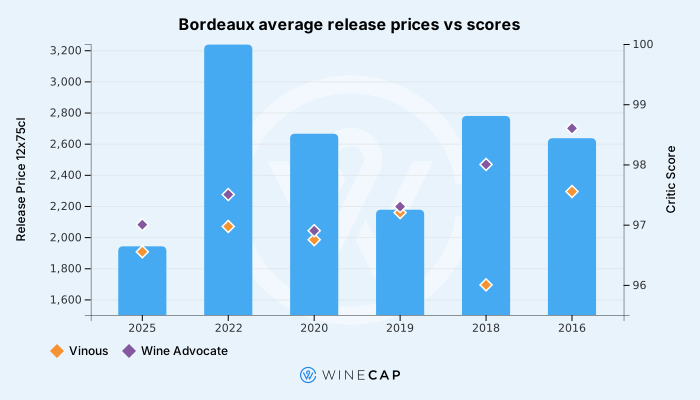
Our analysis of average release prices against critic scores across six leading Bordeaux vintages from the past decade reveals a striking conclusion.

The quality gap between these vintages is remarkably narrow. The highest-ranked vintage, 2016, achieved an average critic score of 98.08 points, while 2025 averaged 96.8 – a difference of just 1.3 points. The intervening vintages – 2019, 2022, 2018 and 2020 – all fall within this point range. By any measure, these are exceptional wines, suggesting that collectors need not focus exclusively on the highest-scoring years to access world-class quality.
20-top-bordeaux-2016-2025-wine-prices

Where the vintages diverge is on price. The 2022 campaign – fuelled by speculative excitement and post-lockdown demand – produced the highest release prices of the group, well above vintages of comparable or superior quality. The 2025, by contrast, entered the market as the most attractively priced vintage of the six, despite yielding wines of outstanding quality. For an investor comparing price-to-score efficiency across these campaigns, the 2025 presents one of the strongest entry points of the decade.

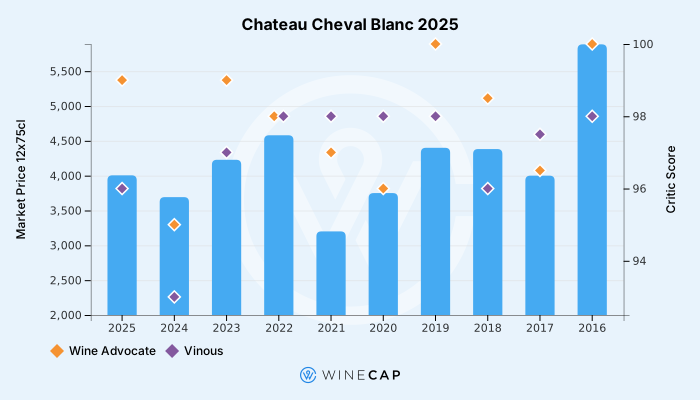
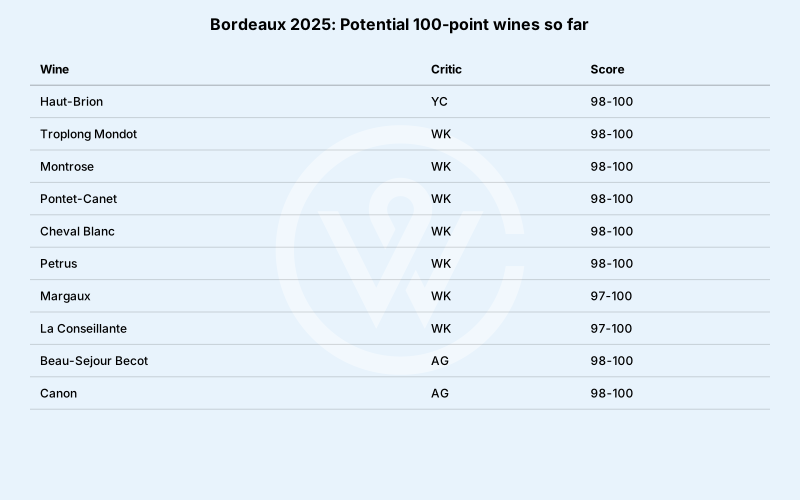
The vintage ranking also provides a clear investment framework. With quality ordered 2016, 2019, 2022, 2018, 2020, and 2025, the lattersits at the foot of the score table – outstanding in absolute terms, but the least compelling on quality grounds relative to its peers. That has a direct implication for pricing: any 2025 release priced above its 2019 equivalent struggles to make the investment case. The 2019 scores higher, is already bottled, and available for immediate delivery. Unless a 2025 release offers a meaningful discount to the 2019, or a scarcity argument that stands independently – as Cheval Blanc’s 15hl/ha yield does – the back catalogue remains the more rational allocation.

The investment takeaway

The 2025 En Primeur campaign will be remembered not for any individual headline release but for what it confirmed about today’s fine wine buyer. Demand has not disappeared – but it has become more considered, more analytical, and less susceptible to prestige alone. 

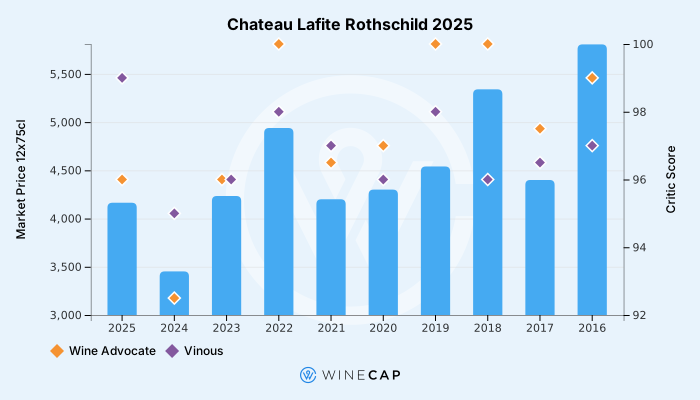
For the market, this represents a positive development. Greater pricing discipline encourages participation, strengthens confidence and supports long-term liquidity. Estates that recognised this dynamic – notably Cheval Blanc, alongside Lafite Rothschild and Mouton Rothschild – were rewarded with stronger buyer engagement, demonstrating that trust remains one of Bordeaux’s most valuable assets.

The 2025 vintage also reinforces that selective En Primeur buying continues to make investment sense. While it entered the market at the most attractive average release prices of recent prime vintages, buyers consistently favoured established back vintages whenever the pricing advantage narrowed. The lesson from this campaign is therefore not simply that lower prices drive demand, but that relative value has become the defining principle of today’s fine wine market.

The best-performing wines of H1 2026

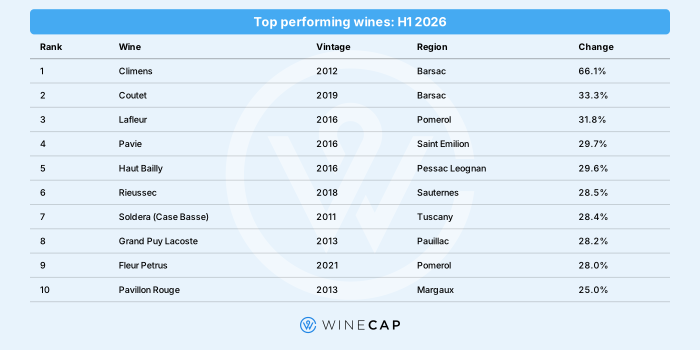
The first half of 2026 delivered a clear message from the fine wine market: back-vintage Bordeaux is where capital found the strongest returns. Nine of the ten best-performing wines came from Bordeaux, spanning five appellations and six vintages. Rather than a single producer or region outperforming, the results point to a broader reassessment of the secondary market, where buyers are increasingly rewarding established wines offering compelling relative value. While the En Primeur campaign dominated headlines, it was the back vintages that delivered the strongest performance.
The best-performing wines of H1 2026

Barsac leads the field again

For the second consecutive quarter, Barsac produced the market’s strongest performer. Château Climens 2012 rose 66.1% during the first half of the year, extending the momentum established in Q1. Château Coutet 2019 followed with a 33.3% gain, while neighbouring Château Rieussec 2018 ranked sixth, up 28.5%.

The consistency of this performance suggests more than a short-term trading opportunity. Buyers are increasingly recognising the value offered by top sweet wines, a category that has long traded below its critical standing and ageing potential. Climens 2012 also benefits from exceptional scarcity: with no Grand Vin produced between 2013 and 2017, it represents the estate’s final widely available vintage before a six-year production gap. That combination of rarity, quality and relative value has made it one of the defining performers of the current market cycle.

The 2016 vintage comes into focus

Three of the ten strongest performers came from the 2016 vintage: Lafleur (+31.8%), Pavie (+29.7%) and Haut Bailly (+29.6%). As shown in our vintage analysis, 2016 remains the highest-scoring Bordeaux vintage across the major critics we track.

The market is increasingly reflecting that quality. For investors, 2016 continues to offer a compelling combination of exceptional critical pedigree, mature secondary market pricing and significant ageing potential. 

Lafleur’s performance is particularly noteworthy. One of Pomerol’s smallest and most sought-after estates, its 31.8% gain demonstrates that even the market’s most established blue-chip wines continue to offer meaningful upside when pricing remains attractive relative to intrinsic quality.

Back-vintage opportunities extend beyond the great years

Two of the top ten performers came from the often-overlooked 2013 vintage: Grand Puy Lacoste (+28.2%) and Pavillon Rouge du Chateau Margaux (+25.0%). Their performance reflects another emerging characteristic of today’s market: buyers are looking beyond vintage reputation in search of relative value.

Although 2013 received a mixed reception at release, the best estates produced wines that have aged more successfully than early perceptions suggested. Investors willing to reassess these wines on their individual merits, rather than the reputation of the vintage as a whole, have begun to see that conviction reflected in prices.

Beyond Bordeaux

The only non-Bordeaux wine to feature in the top ten was Soldera Case Basse 2011, which gained 28.4%. With tiny production, no second wine and one of Italy’s strongest collector followings, Soldera exemplifies the type of rare fine wine asset that continues to attract capital during periods of market uncertainty.

What H1 performance tells us

The first half of 2026 highlights a fine wine market becoming increasingly disciplined. The strongest returns were generated by established wines whose prices had yet to fully reflect their long-term quality, scarcity and investment credentials.

Just as revealing is what failed to appear among the top performers: recently released vintages, momentum-driven trades and wines supported primarily by reputation rather than value. The same discipline that shaped the Bordeaux 2025 En Primeur campaign is evident across the secondary market, where buyers continue to prioritise relative value over novelty. As the second half unfolds, the key question is not whether demand will remain, but whether this increasingly selective approach will continue to define where capital is allocated.

Fine wine news round-up: Q2 2026

Record heat returns to Europe’s vineyards

As the second quarter drew to a close, Europe’s leading wine regions once again found themselves confronting extreme heat. A late-June heatwave pushed temperatures above 40°C across large parts of France, with Bordeaux exceeding 42°C and the country recording its hottest day since records began. Similar conditions affected Spain, Italy and other major wine-producing regions, prompting widespread heat alerts across Western Europe.

Following an unusually warm spring that accelerated vine development, many vineyards entered flowering and early fruit set ahead of the long-term average. Extreme heat during these stages can influence yields, berry development and ultimately wine style, although the full impact will not become clear until later in the growing season. After the 2025 Bordeaux vintage was shaped by one of the hottest Junes on record, the opening months of the 2026 season suggest that climate volatility is becoming an increasingly consistent feature of European viticulture rather than an exceptional event.

For producers, adaptation is becoming as important as terroir. Investment in canopy management, precision irrigation where permitted, drought-resistant rootstocks and higher-altitude vineyard sites is increasingly shaping long-term resilience. For investors, this has important implications. Climate risk is no longer simply a question of vintage variation – it is becoming a structural factor influencing production volumes, wine styles and the long-term competitiveness of individual estates. 

France’s appellation system turns 90

April marked the 90th anniversary of France’s Appellation d’Origine Controlee (AOC) system, prompting renewed debate over whether the framework that has governed French wine production since the 1930s remains fit for purpose. In a column for Decanter, wine writer Andrew Jefford argued that the system, originally created to combat fraud and protect regional identity, now requires meaningful reform to better reflect the realities of modern viticulture and a changing climate.

Jefford proposed devolving greater regulatory control to individual appellations, allowing growers more flexibility over grape varieties and vineyard practices while also calling for reform of France’s Loi Evin advertising legislation. His argument reflects a broader discussion within the French wine industry as producers increasingly seek greater freedom to adapt to environmental and commercial pressures.

The debate gained additional relevance during the Bordeaux 2025 En Primeur campaign when Chateau Lafleur presented its 2025 vintage as Vin de France rather than under the Pomerol appellation. The Guinaudeau family cited the flexibility to adapt grape varieties and vineyard practices without the constraints of appellation regulations. When one of Bordeaux’s most respected estates chooses to forgo one of the world’s most prestigious appellation names, it inevitably raises broader questions about the future role of France’s classification system.

Rare wine at auction

Two major auctions during Q2 reinforced an important theme in today’s fine wine market: exceptional provenance and genuine rarity continue to command intense demand, largely independent of broader market conditions.

In April, Sotheby’s “Immortal Bordeaux” sale realised more than $2 million, setting ten world auction records. The standout lot was a magnum of Chateau Lafite Rothschild 1870 from the historic cellars of Glamis Castle in Scotland, which sold for $200,000 – four times its pre-sale high estimate. 

The strength of demand continued in May, when Christie’s auctioned the personal cellar of composer Andrew Lloyd Webber. The sale realised £517,910 and achieved a 100% sell-through rate. Highlights included Chateau Margaux 1900, which sold for £35,000 – five times its pre-sale high estimate – alongside strong results for Domaine de la Romanee-Conti, including three bottles of Romanee-Conti 2005 (£56,250) and six bottles of La Tache 2005 (£50,000).

While buyers have become increasingly selective in the wider fine wine market, competition for bottles combining exceptional provenance, historical significance and extreme scarcity remains as strong as ever, as seen in these auction results. At the highest end of the market, rarity continues to command a premium that extends well beyond the intrinsic quality of the wine itself.

Q3 2026 fine wine outlook

The themes established during the first half of 2026 – selective demand and pricing discipline – are likely to continue through the third quarter. Following the traditional summer slowdown, attention will shift to whether the market’s recent stabilisation develops into broader buying activity as the autumn trading season begins.

When it comes to the macroeconomic backdrop, elevated interest rates and the prospect of further Federal Reserve tightening are likely to continue weighing on risk assets, while easing trade tensions between the US and China and improving diplomatic relations in the Middle East have reduced some of the uncertainty surrounding luxury goods demand. Although geopolitical risks remain, improving access to Asian and Gulf markets could provide further support for fine wine demand during the second half of the year.

The La Place hors Bordeaux autumn campaign will provide the first major test of buyer sentiment following Bordeaux En Primeur 2025. The lessons from the spring campaign are unlikely to be forgotten. Producers offering a compelling value proposition relative to comparable physical vintages should continue to attract demand, while ambitious pricing will face increasing resistance.

WineCap’s independent market analysis helps investors build diversified fine wine portfolios with full ownership and transparent pricing. Speak to one of our wine investment experts and start building your portfolio. Schedule your free consultation today.

Categories
Learn

10 fascinating facts about Domaine de la Romanee-Conti

  • Domaine de la Romanee-Conti (DRC) farms just 31 hectares of Grand Cru vineyards in Burgundy, yet accounts for a disproportionate share of secondary market activity.
  • The estate produces ten wines across some of the region’s most sought-after sites, creating multiple entry points for collectors and investors.
  • Several of DRC’s “lesser” Grand Cru wines have delivered stronger percentage price growth than the flagship Romanee-Conti itself.

Few producers exert as much influence on the fine wine market as Domaine de la Romanee-Conti. Despite its small size, the estate has become the benchmark for Burgundy investment, combining exceptional scarcity, global demand, and consistent secondary market liquidity.

DRC’s wines occupy a unique position within the market. The estate’s production is limited, allocation-driven, and closely followed by collectors worldwide. As a result, its bottles frequently rank among the most traded and highest-valued wines on the secondary market.

From its vineyard holdings and wine hierarchy to its pricing structure and market performance, the estate operates according to dynamics that set it apart from almost every other producer in fine wine. This guide explores ten key facts every investor should know about Domaine de la Romanee-Conti.

  1. The estate’s origins date back to 1232

Understanding DRC begins with understanding its history. The parcel that became Romanee-Conti has documented records dating to 1232, when it was cultivated by Cistercian monks from the Abbey of Saint-Vivant, a few kilometres to the north. The Church held the vineyard for centuries until the French Revolution triggered the forced sale of ecclesiastical property. After several transfers, the Duvault-Blochet family acquired the domaine in 1869. Under their ownership, the estate assembled something close to its modern portfolio of grand cru holdings. The Duvault-Blochet name endures today in the domaine’s youngest vines, which are declassified to Premier Cru (one level below Grand Cru) and released under that label in years when the quality merits it. Eight hundred years of continuous cultivation on the same parcels is not just a heritage claim; it is a record that informs every viticultural decision the domaine makes.

  1. A prince gave the vineyard its name and kept all the wine for himself

In 1760, Louis-Francois de Bourbon, Prince de Conti, purchased the La Romanee parcel from the monks and appended his title to the vineyard’s name. Having acquired it, he withdrew all of its production from the market and reserved it entirely for his personal consumption. This set a precedent of scarcity that remains embedded in DRC’s identity to this day. The Prince lost the estate during the Revolution, but the name survived. For investors, that lineage matters and makes part of DRC’s mystique.

  1. The vineyards are among the most valuable land on earth

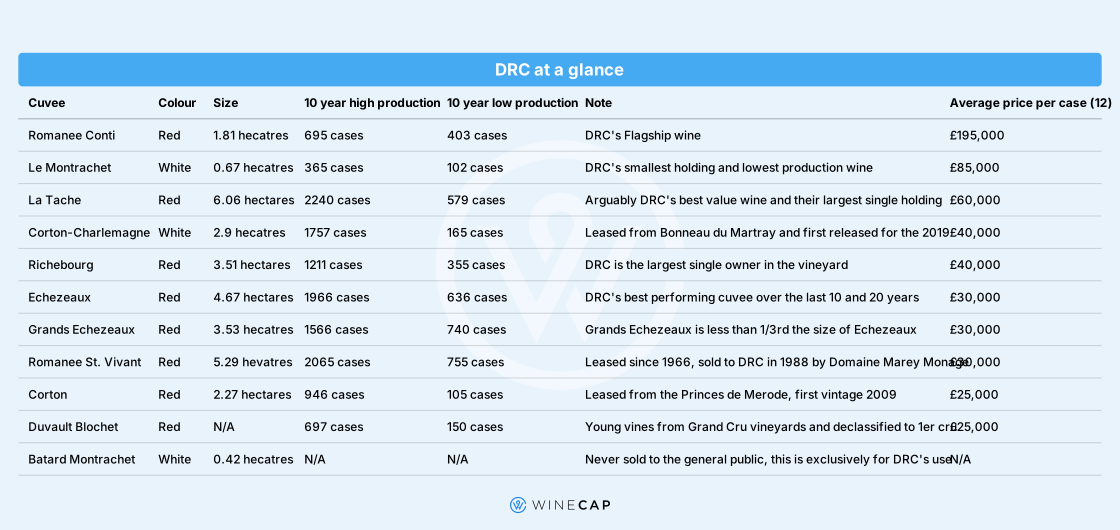
Scarcity drives DRC’s investment case more directly than any other single factor. The Romanee-Conti monopole (a vineyard owned in its entirety by one producer) measures 1.81 hectares, roughly the size of three football pitches. Estimates of its value per hectare place it among the most expensive agricultural land anywhere in the world. 

DRC’s total managed holdings amount to 31 hectares. Compare that to Lafite Rothschild, whose vineyards cover roughly three times that area, or to the broader Haut-Medoc, which exceeds 4,000 hectares. DRC’s smallest parcel, Batard-Montrachet, covers less than half the area of an Olympic athletics infield. That extreme restriction of supply with no capacity to expand forms the structural basis for DRC prices that no single difficult or bountiful vintage can permanently reverse.

  1. A blackmail plot targeted the Romanee-Conti vines

In 2010, anonymous letters arrived at DRC making an extortion demand: pay a reported sum of €1 million, or the vines of the Romanee-Conti vineyard would be poisoned. DRC notified the police, who established an undercover operation in an attempt to identify and apprehend the perpetrator before damage was done. 

Before an arrest could be made, vines in the Romanee-Conti plot were found to have had holes drilled into their roots and herbicide injected into the wood. The estate discovered the attack in time; affected plants were treated and ultimately survived. A suspect was subsequently identified and prosecuted. The episode became widely known in 2011 after coverage in publications including Vanity Fair

  1. DRC has a longstanding familial relationship with Domaine Leroy/Domaine d’Auvenay

Lalou Bize-Leroy served as co-manager of DRC from 1974 until her removal by the other shareholders in 1992 following a commercial dispute. Her tenure shaped the domaine’s approach to biodynamic viticulture and the modern shape of the Domaine. 

The removal did not sever her connection to DRC: she retains a significant ownership stake in the estate to this day. Her own labels, Domaine Leroy and Domaine d’Auvenay, produce Burgundy wines that in some cases command prices exceeding DRC itself, making her simultaneously a minority owner of and the only realistic pricing competitor to the domaine she once helped to run. 

For investors, this is worth understanding: DRC’s shareholder base includes one of the most influential voices in Burgundy’s secondary market, whose own releases provide a constant reference point against which DRC pricing is measured.

  1. The ten cuvees 

DRC produces ten wines spanning Grand Cru Burgundy in red and white, plus one Premier Cru. Each occupies a different position in the secondary market.

Facts about Domaine de la Romanee-Conti Burgundy

  1. Distribution is controlled territory by territory

DRC does not sell direct to individuals. Distribution operates through an official importer or distributor in each territory, who decides which clients receive an allocation and in what quantities. In most markets, access is restricted to the most established, highest-spending accounts. Even a well-resourced buyer may spend years building the relationship required to secure an annual allocation and will often have to spend hundreds of thousands of pounds on other wines to do so. 

One exception stands out. In Sweden, all wine retail operates through the state monopoly Systembolaget. DRC allocations to Sweden are distributed via a public lottery open to any Systembolaget customer. In principle, any Swedish resident can enter and win the right to purchase a bottle of Romanee-Conti. 

  1. Mixed cases defined how DRC reached collectors for decades

For much of DRC’s modern commercial history, the wines were sold only in mixed cases. Buyers had no option to purchase single labels; they took a fixed assortment in broadly set proportions. A representative case might include one bottle of Romanee-Conti, three of La Tache, two of Richebourg, three of Romanee-Saint-Vivant, one of Grands-Echezeaux, two of Echezeaux, and, for buyers with particularly strong importer relationships, a bottle of Le Montrachet. The model served DRC by ensuring the full range sold, and also meant that access to Romanee-Conti required taking the entire portfolio. 

That system has been changing. Increasingly DRC distributes in smaller unmixed cases of one to three bottles, reflecting both collector preference, the deepening of global demand for individual cuvees at the top of the range, and the rising prices which push even the most affordable releases into very rarified air.

  1. DRC holds the largest Grand Cru portfolio in Burgundy

DRC is widely understood to be a tiny producer, which in absolute terms it is. Yet it holds the distinction of being the largest domaine in Burgundy by the size of its Grand Cru holdings. That is a significant position in a region where Grand Cru vineyards account for only around 1.5% of total plantings. Until the Duvault-Blochet label was launched in 1999, every DRC release was a Grand Cru. 

Today the estate owns parcels outright in Romanee-Conti, La Tache, Richebourg, Romanee-Saint-Vivant, Grands-Echezeaux, Echezeaux, and Le Montrachet, while leasing additional Grand Cru land at Corton, Corton-Charlemagne, and Batard-Montrachet. 

The concentration of Burgundy’s most restricted and most valued appellations into the hands of a single domaine represents a position that no competitor could replicate today: available Grand Cru land changes hands infrequently, and when it does, the prices ensure that only the most capitalised buyers compete.

  1. The secondary market rewards investors in the accessible cuvees

DRC’s investment credentials are supported by the data. Echezeaux and Grands-Echezeaux delivered approximately 250% returns over the last decade, outpacing every other DRC cuvee across the same period. La Tache and Le Montrachet returned just over 150%. Romanee-Conti itself returned around 70%, reflecting a wine already priced to near-perfection at the point of purchase. The pattern is consistent: DRC’s less expensive cuvees have offered stronger total returns because their entry prices leave more room for appreciation. 

At the auction level, the estate’s liquidity is exceptional. DRC accounts for nearly 20% of all wine sold by Sotheby’s. The five Bordeaux First Growths combined only just exceed that figure. For investors, that depth of secondary market activity means a DRC holding can be liquidated with confidence across vintages, formats, and geographies.

Why DRC remains the benchmark for fine wine investment

DRC’s investment case rests on three things: 

  • Irreplaceable land
  • A cuvee hierarchy that gives investors genuine choice across price points
  • A secondary market deep enough to absorb significant holdings at any time 

The estate’s history adds context but not return; what drives performance is the combination of finite supply, credible pricing, and a global collector base that has deepened with every passing decade. 

For new investors, the performance data offers a clear steer: the flagship is not always the best entry point. For those already holding DRC, the liquidity figures confirm what experienced auction buyers have long understood. This is not a wine that stays in cellars indefinitely. It moves, it trades, and it rewards those who understand its mechanics.

FAQ: Investing in DRC

Is Romanee-Conti the best DRC wine to buy as an investment?

Not necessarily. Romanee-Conti is the most famous and the most expensive, but its price already reflects that status. Over the last decade, Echezeaux and Grands-Echezeaux have returned approximately 250% against Romanee-Conti’s 70%. For investors focused on total return rather than trophy ownership, other cuvees have historically offered a stronger case.

How do collectors access DRC at release?

DRC is allocated through official distributors in each territory, and access in most markets is restricted to established, high-spending accounts. This means that the secondary market is the most reliable route to acquire stock.

Does DRC hold its value in difficult vintages?

No wine is entirely insulated from vintage variation, but DRC’s secondary market depth provides meaningful downside protection. The estate’s position means there is consistent global demand for its bottles regardless of vintage, limiting the price adjustments seen elsewhere in poorer vintages.

What is the minimum entry point for a DRC investment?

Corton, Echezeaux and Grands-Echezeaux represent the most accessible entry points among DRC’s mainline cuvees and have delivered the strongest returns over the last decade. Duvault-Blochet, the estate’s Premier Cru, offers an even lower entry price and carries the DRC provenance, though it is not released every year and trades with less secondary market depth than the Grands Crus.

How liquid is DRC compared to Bordeaux?

DRC accounts for nearly 20% of wine sold at Sotheby’s; only the combined five Bordeaux First Growths exceed it, and only marginally. Unlike Bordeaux, where liquidity is spread across many producers, DRC’s liquidity is concentrated in a single domaine.

WineCap’s independent market analysis helps investors build diversified fine wine portfolios with full ownership and transparent pricing. Speak to one of our wine investment experts and start building your portfolio. Schedule your free consultation today.
Categories
News

Fine wine vs whisky investment: What wealth managers prefer in 2026

  • Fine wine remains the leading collectable asset among wealth managers, with 97% of UK and US respondents expecting demand to rise in 2026.
  • Whisky is gaining ground, with demand expectations reaching 91% in the UK and 83% in the US.
  • Despite growing interest in both assets, fine wine continues to benefit from stronger and more consistent confidence among wealth managers.

Alternative assets have become an increasingly important part of investment portfolios in recent years. From art and classic cars to watches, whisky and fine wine, investors are looking beyond traditional markets in search of diversification, resilience and long-term value.

Among these collectibles, fine wine and whisky are often grouped together. Both are tangible assets with finite supply, a passionate global following, and the potential for capital appreciation. Yet despite their similarities, they offer different investment propositions.

WineCap’s Wealth Report research shows that wealth managers remain highly optimistic about both assets in 2026, despite a period marked by inflation concerns, geopolitical uncertainty, and shifting investor priorities. While demand expectations have strengthened, confidence in fine wine has remained consistently high since the first year of our research in 2023. Sentiment towards whisky, by contrast, has been more variable, perhaps reflecting the different levels of market maturity, liquidity and infrastructure underpinning the two asset classes.

So, when comparing fine wine and whisky as investments in 2026, where do wealth managers see the greatest opportunities? And what factors continue to drive stronger demand expectations for fine wine?

In this article, we examine how wealth managers’ attitudes towards fine wine and whisky have evolved between 2023 and 2026 before exploring the key differences in market structure, liquidity, risk and long-term investment potential.

How wealth managers’ attitudes to wine and whisky have changed since 2023

WineCap’s Wealth Reports from 2023 to 2026 measured how many wealth managers and financial advisors in both the UK and US expected client demand for fine wine and whisky investments to increase over the following 12 months. The results reveal growing confidence in both asset classes, but they also highlight some important differences in how the markets have developed.

Fine wine continues to lead demand expectations among UK wealth managers

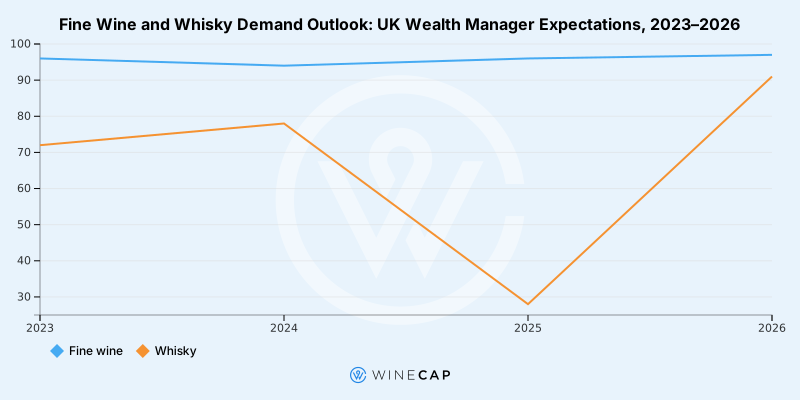
Among UK wealth managers, expectations for increased demand for fine wine have remained exceptionally strong throughout the period. In every survey year, more than 94% of respondents expected client demand to rise, climbing from 96% in 2023 to 97% in 2026. This consistency reflects fine wine’s established position within the UK’s alternative investment landscape, where it is increasingly viewed as a mature and professionally managed asset class.

Fine wine vs Whisky UK

Whisky has followed a less predictable path. While demand expectations rose from 72% in 2023 to 78% in 2024, sentiment weakened in 2025 before rebounding sharply to 91% in 2026. Despite these fluctuations, the latest figures suggest growing confidence in whisky’s long-term appeal as investors continue to explore tangible assets beyond traditional markets.

Whisky investment gathers momentum in the US

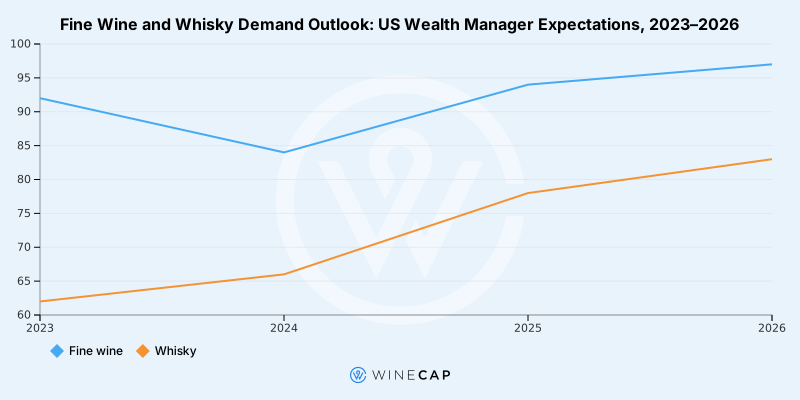
Similarly, in the US, wealth managers reported consistently strong expectations for rising client demand for fine wine throughout the period. Although confidence dipped from 92% in 2023 to 84% in 2024, sentiment recovered quickly, reaching 94% in 2025 and 97% in 2026. By the end of the period, US wealth managers were just as optimistic about fine wine demand as their UK counterparts. 

fine wine vs whisky us

Whisky followed an equally positive trajectory in the US. Expectations for increased client demand rose steadily from 62% in 2023 to 83% in 2026, without the fluctuations seen in the UK market. This suggests a growing awareness of whisky as an alternative investment among US investors, supported by increasing media coverage, auction activity and interest in collectable assets more broadly.

Despite these differences, several themes emerge across both markets. First, confidence in fine wine remains exceptionally high. In every year surveyed, fine wine outperformed whisky in terms of expected client demand, reinforcing its position as the most established collectable asset among wealth managers.

Second, the gap between the two asset classes is narrowing. While fine wine remains the preferred option, enthusiasm for whisky has strengthened considerably since 2023, particularly in the United States. By 2026, more than four-fifths of wealth managers in both countries expected demand for whisky investments to increase.

Taken together, the data points to a broader trend: investors are becoming increasingly comfortable allocating capital to tangible alternative assets. Yet while whisky continues to gain traction, the fine wine market’s maturity, liquidity and pricing transparency appear to be helping it retain its position as the most established collectable asset among wealth managers in both the UK and US.

Why investors compare fine wine and whisky

As investors look beyond traditional asset classes, fine wine and whisky are increasingly competing for the same pool of capital.

The comparison is a natural one. Both are tangible assets with finite supply, global collector markets and strong luxury brand associations. Unlike shares or bonds, fine wine and whisky derive value not only from financial considerations but also from rarity, provenance and cultural significance.

Both asset classes also benefit from scarcity. Every bottle of wine and whisky opened reduces the remaining supply and permanently shrinks the market. In the case of cask whisky, the maturation process itself can add another layer of scarcity and value creation over time.

For many investors, fine wine and whisky offer an attractive alternative to traditional financial markets. They are often viewed as portfolio diversifiers, with inner performance drivers that differ from those affecting equities and bonds. During periods of inflation, market volatility or economic uncertainty, tangible assets can become particularly appealing.

Yet while wine and whisky share many of the characteristics associated with successful collectibles, they differ in terms of market structure, liquidity and investment accessibility. These differences go some way in explaining why wealth managers continue to show stronger confidence in fine wine despite growing enthusiasm for whisky.

Fine wine vs whisky: key differences for investors

Although both assets sit within the broader category of luxury collectibles, the experience of investing in fine wine can be very different from investing in whisky.

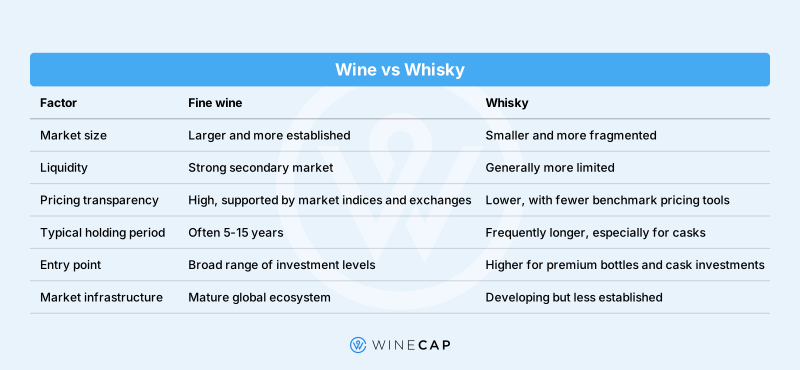
wine vs whisky

One of the most significant differences lies in market maturity. Fine wine has benefited from decades of development as an investment asset, supported by merchants, brokers, exchanges and independent pricing platforms. Investors can access historical performance data, monitor market trends, and track valuations with a level of transparency rarely seen in other collectible markets.

Liquidity is another important distinction. Investment-grade wines from leading regions such as Bordeaux, Burgundy, Champagne, and Tuscany are traded globally through established channels. While whisky has developed an increasingly active secondary market, trading volumes remain smaller, and liquidity can vary significantly depending on the distillery, release or cask.

Diversification also tends to be easier in fine wine. Investors can spread risk across multiple regions, producers, vintages and styles, creating portfolios with broad exposure to different market drivers. Whisky investors often face a more concentrated universe of investment-grade opportunities.

These advantages do not necessarily make fine wine a superior investment in every circumstance. However, they help explain why wealth managers often view wine as the more mature and accessible option within the collectible asset universe.

Why wine appears to be winning wealth manager attention

The Wealth Report data suggests that demand expectations for fine wine remain consistently stronger than those for whisky among both UK and US wealth managers. Several factors may help explain this trend.

The first is transparency. Fine wine benefits from a more sophisticated pricing ecosystem, with platforms such as Liv-ex providing real-time market data, historical performance information and widely recognised benchmark indices. 

Market depth is equally important. Fine wine is supported by a global network of merchants, brokers, exchanges, storage providers and collectors. This infrastructure creates liquidity and confidence, making it easier for investors to enter and exit positions compared with many other collectable assets.

Portfolio construction is another advantage. Fine wine offers exposure across multiple regions, producers, vintages and price points, enabling investors to build diversified portfolios tailored to different risk profiles and investment objectives.

Recent market conditions may also be playing a role. Following a broader correction across the fine wine market since 2022, many investment-grade wines are trading below previous highs. For long-term investors, this has created opportunities to acquire sought-after wines at more attractive valuations, a theme highlighted throughout WineCap’s recent market analysis.

Finally, fine wine’s long history as a traded asset may appeal to wealth managers seeking predictability and professionalism. While whisky has generated considerable excitement in recent years, particularly around cask investments, fine wine’s established market structure may be better aligned with the requirements of advisers responsible for managing client portfolios over the long term.

Whisky’s investment strengths

Despite fine wine’s advantages in market maturity and liquidity, whisky possesses several characteristics that continue to attract investors and explain its growing popularity.

One of whisky’s greatest strengths is its accessibility as a concept. Many consumers are already familiar with iconic brands such as Macallan, Springbank and Yamazaki, and auction headlines featuring record-breaking bottle sales frequently generate mainstream media attention. This visibility can make whisky easier for new investors to understand and engage with.

Scarcity is another powerful driver. Distilleries cannot rapidly increase production of aged stocks, meaning supply constraints can become particularly pronounced for highly sought-after releases. As global demand rises, especially in Asia and North America, these scarcity dynamics can support long-term value appreciation.

Cask ownership has also introduced a unique investment proposition that has no direct equivalent in the wine market. Because whisky continues to mature while stored in cask, investors are effectively holding an asset that changes over time. This creates opportunities for value growth through both ageing and scarcity, although it also introduces additional complexity and risk.

Whisky may also appeal to investors seeking higher growth potential. While this can come with greater volatility, some investors are attracted by the possibility of significant gains from rare bottles, limited releases or sought-after casks. For those with a higher risk tolerance, whisky’s relatively young investment market can present opportunities that are less common in more established asset classes.

Ultimately, whisky’s appeal lies in its combination of scarcity, storytelling, and growth potential. While it may not yet offer the same level of transparency or liquidity as fine wine, its increasing popularity suggests it will remain an important part of the alternative investment landscape.

Fine wine vs whisky: the outlook for 2026 and beyond

The Wealth Report data makes one thing clear: demand expectations for both fine wine and whisky are strengthening. Wealth managers in the UK and US increasingly expect clients to allocate capital towards tangible assets, reflecting broader interest in collectibles, luxury assets and alternative investments.

Yet despite whisky’s growing popularity, fine wine continues to benefit from deeper market infrastructure, greater transparency and stronger liquidity. These advantages help explain why wealth managers continue to express greater confidence in fine wine’s long-term investment prospects.

As interest in collectable assets grows, both markets are likely to expand. For now, however, fine wine remains the benchmark against which other luxury investment assets are measured.

FAQ: Fine wine vs whisky

Is wine or whisky a better investment?

There is no definitive answer, as the right choice depends on an investor’s objectives, risk tolerance and investment horizon. Fine wine generally offers greater market transparency, liquidity and diversification opportunities, making it attractive to wealth managers and long-term investors. Whisky can offer higher growth potential in some areas of the market, but it is often associated with greater volatility and a less mature trading ecosystem.

Are fine wine and whisky casks wasting assets?

In the UK, both fine wine and whisky casks are generally regarded as wasting assets because they have a finite lifespan. As a result, gains on investment-grade wine and whisky casks are typically exempt from Capital Gains Tax (CGT). However, tax treatment can vary depending on the asset and an investor’s individual circumstances, so professional advice should always be sought.

Should I invest in whisky casks or fine wine?

Whisky casks and fine wine are very different investments. Fine wine benefits from established pricing data, active secondary markets and a broad range of investment-grade opportunities. Whisky casks can offer unique value appreciation through the maturation process, but they typically require specialist knowledge and may involve additional costs, regulatory considerations and liquidity challenges.

What are the best alternative investments besides stocks?

Popular alternative investments include fine wine, whisky, art, classic cars, watches, private equity, real estate and precious metals. Each asset class has different risk and return characteristics. 

Is whisky still a good investment in 2026?

Many wealth managers believe demand for whisky investments will continue to grow in 2026. WineCap’s Wealth Report found that 91% of UK wealth managers and 83% of US wealth managers expect client demand for whisky investments to increase over the next 12 months. While the market remains attractive, investors should be aware that whisky can be less liquid and more volatile than fine wine.

How liquid is whisky compared with wine?

Fine wine is generally considered the more liquid asset. Investment-grade wines are traded globally through merchants, brokers and exchanges, supported by transparent pricing and established market infrastructure. Whisky’s secondary market has expanded significantly in recent years, but liquidity can vary considerably depending on the bottle, distillery or cask.

What do wealth managers think about wine investments?

WineCap’s Wealth Report data suggests wealth managers remain optimistic about fine wine. In 2026, 97% of wealth managers surveyed in both the UK and US expected client demand for fine wine investments to increase over the following 12 months. 

WineCap’s independent market analysis helps investors build diversified fine wine portfolios with full ownership and transparent pricing. Speak to one of our wine investment experts and start building your portfolio. Schedule your free consultation today.

 

Categories
News

Gold’s correction and the changing definition of a safe-haven asset

  • Gold’s rapid rise and subsequent fall to a six-month low have challenged assumptions about the stability of traditional safe-haven assets.
  • Fine wine operates under fundamentally different market dynamics, with values driven by scarcity, provenance and global demand.
  • Recent survey findings reveal that wealth managers increasingly recognise fine wine’s safe haven benefits and expect demand to increase.

Recent volatility in gold markets has reignited debate around what constitutes a true safe-haven asset. After reaching record highs earlier this year amid geopolitical tensions and economic uncertainty, the precious metal has experienced a sharp correction, reminding investors that even traditional defensive assets can be vulnerable to changing market sentiment.

While gold remains one of the world’s most established stores of value, its recent price swings have highlighted an important trend among wealth managers and investors: a growing willingness to look beyond conventional safe-havens and towards alternative assets that can offer diversification benefits.

Findings from the 2026 WineCap Wealth Reports suggest that fine wine is increasingly occupying this role within modern portfolios.

Gold’s rally and reversal

Gold entered 2026 with remarkable momentum. Against a backdrop of geopolitical tensions, inflation concerns and continued central bank buying, the metal surged to a record high of around $5,500 per ounce in late January. At its peak, the rally had pushed gold more than 65% higher than a year earlier, reinforcing its reputation as one of the market’s preferred defensive assets.

This momentum, however, proved difficult to sustain. Persistent inflation and rising oil prices have increased expectations that interest rates could remain higher for longer, boosting Treasury yields and reducing the appeal of non-yielding assets such as gold. At the same time, stronger risk appetite in other areas of the market encouraged investors to rotate capital elsewhere. Analysts have also pointed to profit-taking after an exceptionally strong rally, with gold having become heavily crowded as a safe-haven trade earlier in the year.

Gold subsequently fell more than 20% from its peak, recently touching a six-month low of $4,022 per ounce. This has put the metal on course for its weakest quarterly performance in almost a decade. 

The correction does not diminish gold’s long-term role in diversified portfolios. However, it shows that even traditional safe-haven assets can be vulnerable to shifts in market sentiment, investor positioning and macroeconomic expectations. It also raises a broader question for investors: what characteristics should a modern safe-haven asset possess? Increasingly, attention is turning towards alternative stores of value whose underlying drivers differ from those of financial markets, including investment-grade fine wine.

Gold vs investment-grade wine: market dynamics

Gold’s recent correction highlights a fundamental difference between traditional safe-haven assets and alternative stores of value such as fine wine.

While gold prices are more heavily influenced by macroeconomic developments, fine wine is driven by a different internal set of factors. Scarcity, vintage quality, producer reputation and global collector demand all play a more vital role in determining value.

Market structure is also important. Gold is traded across vast physical and derivative markets, where activity from hedge funds, futures traders and institutional investors can amplify short-term price movements. Fine wine, by contrast, remains a predominantly physical asset market, with pricing driven by transactions between collectors, merchants and investors.

This does not make fine wine immune to market cycles. The sector has undergone a correction of its own since 2022 following the exceptional growth seen during the pandemic period. However, the adjustment has been gradual, reflecting changing buyer sentiment and price recalibration rather than the sharp swings often seen in more liquid financial markets.

The importance of scarcity

Another key distinction between gold and fine wine lies in their supply dynamics.

Every ounce of gold ever mined remains part of the global stockpile, whether held in central bank vaults, investment funds or private ownership. Fine wine operates differently. Once a vintage is released, supply can only move in one direction. Bottles are consumed or permanently removed from circulation, gradually reducing availability over time.

For sought-after wines from leading producers, this declining supply creates a scarcity profile that few asset classes can replicate. Combined with global demand, it has historically supported long-term value across many of the world’s most prestigious wine regions.

The correction seen across the fine wine market since 2022 has also created more attractive entry points for investors. Following a period of price adjustment, many regions and producers are now trading at levels that offer improved value compared with recent peaks.

At the same time, market activity has shown signs of stabilisation, supported by more realistic release pricing (including during this year’s Bordeaux En Primeur campaign), improved buyer confidence and growing engagement from international collectors.

Looking ahead

The 2026 WineCap Wealth Reports found that 97% of wealth managers and financial advisers expect demand for fine wine to increase over the coming year, representing the highest level of positive sentiment recorded since the study began four years ago.

Whether this translates into stronger market performance remains to be seen. However, the data suggests that fine wine is being recognised for qualities that investors have traditionally associated with safe-haven assets: scarcity, tangibility, global demand and low correlation to mainstream financial markets.

Gold’s recent volatility does not diminish its place within defensive portfolios. However, it serves as a reminder that even the most established safe-haven assets are subject to changing market conditions.

Today’s investors are recognising that resilience comes not from relying on a single asset class, but from combining assets with different return drivers and risk profiles. As demand for diversification continues to grow, fine wine is becoming an increasingly important part of that conversation.

FAQ: Gold’s correction and safe-haven assets

What is a safe-haven asset?

A safe-haven asset is an investment expected to retain or increase its value during periods of economic uncertainty or market volatility. Traditional safe-haven assets include gold, government bonds and cash, while alternative assets such as fine wine are increasingly being considered for their diversification benefits and low correlation to financial markets.

How does fine wine differ from gold as an investment?

Gold prices are heavily influenced by macroeconomic factors such as interest rates, inflation expectations and investor sentiment. Fine wine, by contrast, derives its value from scarcity, vintage quality, producer reputation and global collector demand. As a physical asset, it is also less exposed to speculative trading activity than many financial markets.

Is fine wine considered a safe-haven asset?

Fine wine is increasingly viewed as a complementary safe-haven asset due to its physical nature, limited supply and historically low correlation with traditional financial markets. While no investment is risk-free, many investors use fine wine as part of a diversified portfolio designed to preserve wealth over the long term.

Why are investors allocating to alternative assets such as fine wine?

Investors are increasingly seeking diversification beyond stocks and bonds. Alternative assets such as fine wine offer exposure to different market drivers, helping reduce portfolio concentration risk while providing access to tangible assets with global demand and limited supply.

WineCap’s independent market analysis helps investors build diversified fine wine portfolios with full ownership and transparent pricing. Speak to one of our wine investment experts and start building your portfolio. Schedule your free consultation today.
Categories
News

Bordeaux 2025 En Primeur enters the final stretch

  • The Bordeaux 2025 En Primeur campaign is approaching its conclusion, bringing the market’s verdict into sharper focus.
  • Quality has largely exceeded expectations, with many leading estates earning scores comparable to some of the strongest recent vintages.
  • In a more selective market, buyers are increasingly comparing new releases against physical back-vintages, making value the defining theme of the campaign.

After several weeks of closely watched releases, Bordeaux 2025 En Primeur is entering its final phase.

With many of the region’s leading estates now having revealed their prices and the remaining headline releases arriving in quick succession, attention is beginning to shift from individual wines to the broader success of the campaign. As the dust starts to settle, a clearer picture is emerging – not only of the quality of the vintage, but also of what today’s collectors and investors are willing to pay for it.

A vintage that exceeded expectations

The 2025 growing season presented challenges, yet critics have generally responded positively to the wines. Across the region, many chateaux have produced wines that combine freshness, precision and structure, with several estates earning scores that place them comfortably among the strongest releases of the last decade.

The quality narrative has therefore been relatively straightforward. The more interesting story has been the market’s reaction. In the current climate, price, availability and relative value have become just as important as critic scores. 

Value remains the defining theme

The defining characteristic of the Bordeaux 2025 campaign has been the focus on value.

Many estates responded to softer market conditions by reducing release prices compared to recent vintages. In several cases, these reductions have been significant enough to attract renewed interest from merchants and collectors alike. Yet lower pricing alone has not guaranteed success.

Today’s buyers are armed with more information than ever before. Rather than simply purchasing the newest release, they are comparing it against mature vintages with established track records, critic scores and known market performance.

As a result, the most successful releases have generally been those able to demonstrate a compelling value proposition relative to comparable back-vintages.

Latest Bordeaux 2025 En Primeur releases

Mouton Rothschild

Among the campaign’s most anticipated releases, First Growth Chateau Mouton Rothschild 2025 arrived with considerable excitement.

For the first time in the estate’s history, the Grand Vin is composed of 98% Cabernet Sauvignon and just 2% Merlot, making it one of the purest expressions of Cabernet Sauvignon ever produced at the estate. In many ways, the 2025 is a wine that reflects the warm conditions of the growing season, delivering the structure and concentration that Cabernet Sauvignon lovers seek.

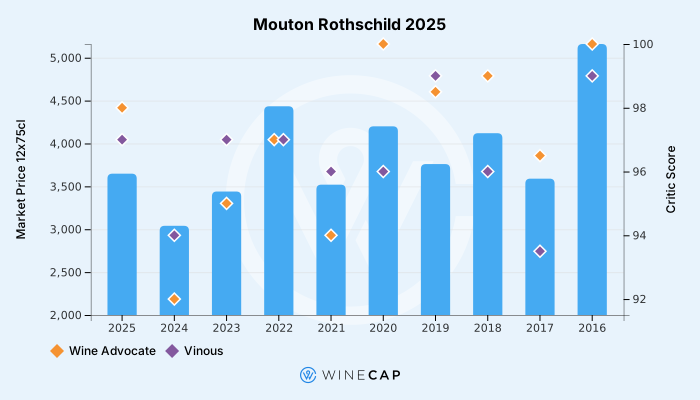
Critics have responded enthusiastically. Neal Martin awarded the wine 96-98 points, describing it as a “quintessential Mouton Rothschild” that should age exceptionally well in bottle. William Kelley scored the wine 97-99 points, highlighting its remarkable intensity and concentration.

chateau mouton rothschild premier cru classe pauillac 2016 2025 wine prices

For collectors seeking a landmark expression of Cabernet Sauvignon from one of Bordeaux’s most celebrated estates, the 2025 release presents a compelling proposition.

However, the release also illustrates one of the key themes of the wider campaign.

Analysis of current market pricing shows that the highly-rated 2019 vintage remains available at only a marginal premium to the newly released 2025. While the 2025 offers rarity, provenance and long-term ageing potential, the 2019 is an already bottled wine, carrying even more impressive critical credentials at just 1.3% premium.

La Mission Haut-Brion

chateau la mission haut brion 2016-2025 wine prices

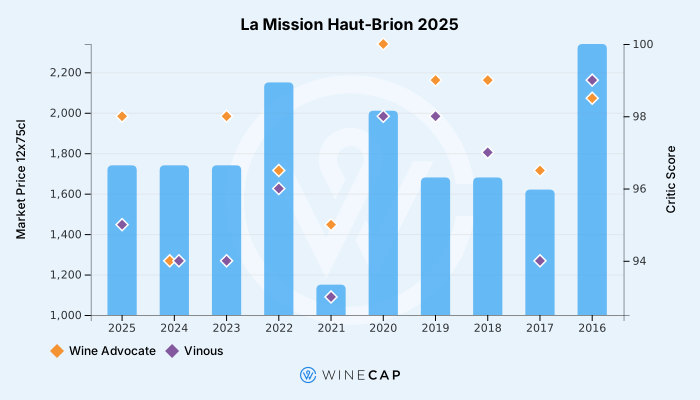
Chateau La Mission Haut-Brion 2025 was released at a level that compares favourably with both the 2023 and 2024 vintages, making it one of the more attractively positioned wines among the leading Left Bank estates.

Critical reception was positive. Neal Martin awarded the wine 94-96 points, noting that it “has to play second fiddle to Haut-Brion this year, but it is still a great La Mission.” Antonio Galloni was even more enthusiastic, scoring it 97-99 points and describing it as “magnificent”. He called it “one of my early favourites in this vintage”.

Viewed in isolation, the release makes a strong case for itself. Yet it also demonstrates the challenge facing many of this year’s En Primeur wines.

When compared with physical back vintages, the value proposition becomes less clear. Both the 2018 and 2019 remain available at comparable market levels, while offering proven track records, established critical acclaim and immediate availability. The 2025 may represent better value than the estate’s most recent releases, but buyers looking purely through a value lens are likely to find themselves drawn towards the higher-scored 2019 in particular.

Beychevelle

chateau beychevelle 4eme cru classe saint julien 2016-2025 wine prices

Beychevelle 2025 attracted considerable praise from critics and was among the better-received classified growth releases of the campaign.

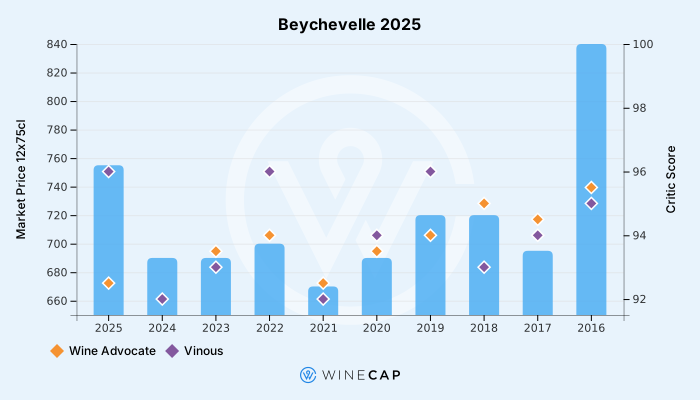
Neal Martin awarded 95-97 points, declaring: “I don’t think Philippe Blanc has overseen a Beychevelle as good as this.” Antonio Galloni echoed that sentiment, calling it an “exceptional Beychevelle, one of the finest in recent memory”, while also giving 95-97 points.

At first glance, the release price appears attractive, particularly when compared with some of the estate’s most celebrated vintages such as 2016, 2010, 2009 and 2005.

However, the picture changes once more recent vintages enter the equation.

The 2018, 2019 and 2022 are all available in the market at levels that compare favourably with the new release while carrying similarly impressive critical credentials. As a result, Beychevelle 2025 highlights a recurring theme of this campaign: a wine can be attractively priced relative to its historic peak vintages and still struggle to offer the strongest value proposition available to buyers today.

The market’s verdict

As Bordeaux 2025 approaches the finish line, the campaign appears likely to be remembered less for any single release and more for what it revealed about today’s fine wine buyer.

The willingness to engage when quality is high remains strong. Demand has not disappeared. But collectors are no longer buying simply because a wine is new or because it carries a prestigious label. Instead, they are demanding a clear value proposition.

For Bordeaux, that may ultimately be one of the most important lessons of the 2025 campaign.

The quality of the wines has rarely been in doubt. The challenge has been convincing buyers that En Primeur remains the most attractive place to allocate capital. As the final releases land, the market’s response suggests that when pricing, quality and scarcity align, demand remains alive.

FAQ: Bordeaux En Primeur 2025

What is Bordeaux En Primeur?

Bordeaux En Primeur is the system through which wines are sold while still ageing in barrel, typically around two years before they are bottled and released to the market. Buyers purchase wines based on early critic assessments, with the expectation that prices may rise once the wines become physically available.

How has the Bordeaux 2025 En Primeur campaign been received?
The Bordeaux 2025 campaign has generally been well received by critics, with many wines earning scores comparable to some of the strongest recent vintages. However, buyer enthusiasm has been driven as much by value as by quality, with collectors carefully comparing release prices against available back-vintages.

Is Bordeaux 2025 considered a good vintage?
While the growing season presented several challenges, critics have responded positively to many of the wines. The vintage has been praised for producing wines with freshness, structure and precision, with several leading estates receiving scores that compare favourably with highly regarded recent vintages.

Why are buyers comparing Bordeaux 2025 with older vintages?
In today’s market, collectors are increasingly focused on value. Rather than purchasing a wine simply because it is newly released, buyers are comparing critic scores, pricing, drinking windows and long-term potential against mature vintages that are already bottled and available for delivery.

What makes Mouton Rothschild 2025 unique?
Chateau Mouton Rothschild 2025 is notable for containing 98% Cabernet Sauvignon and just 2% Merlot, making it the most Cabernet-dominant Grand Vin in the estate’s history. 

Should collectors buy Bordeaux 2025 or back-vintages?
The answer depends on individual objectives. Bordeaux 2025 offers provenance, long-term ageing potential and access to highly rated wines at release. However, several back-vintages currently offer comparable or stronger critic scores at similar price levels, making value analysis an important part of any buying decision.
WineCap’s independent market analysis helps investors build diversified fine wine portfolios with full ownership and transparent pricing. Speak to one of our wine investment experts and start building your portfolio. Schedule your free consultation today.
Categories
News

Burgundy’s most expensive wines and the record vineyard prices driving them

  • Burgundy vineyard prices reached new records in 2025, even as vineyard values across France fell by 6.8% on average.
  • Premier Cru white vineyards in the Cote-d’Or now average £2.3 million per hectare, while Premier Cru red vineyards have climbed to almost £1 million per hectare.
  • Domaine de la Romanee-Conti, Leroy and Leflaive dominate Burgundy’s luxury wine market, producing some of the region’s most valuable and sought-after bottles.

Burgundy has long occupied a unique position in the fine wine world, but new data suggests the region has moved beyond traditional measures of agricultural value altogether. According to newly released figures from France’s rural land agency, Safer, vineyard prices in Burgundy once again broke records in 2025, reinforcing the region’s status as one of the world’s most sought-after luxury assets.

A hectare of Premier Cru white wine vineyard land in the Cote-d’Or rose 6% over the past year to an average of £2.3million, while Premier Cru red wine vineyards increased by 11% to almost  £1million per hectare. At these levels, Burgundy’s finest vineyard sites are increasingly being compared not to farmland, but to luxury real estate and other collectible assets prized by ultra-high-net-worth buyers.

For collectors and investors, the implications extend beyond the vineyard. The value of Burgundy’s most coveted land underpins the scarcity and prestige of the wines themselves, helping explain why the region continues to dominate the upper echelons of the fine wine market.

Burgundy’s bubble in a challenging market

What makes Burgundy’s performance particularly remarkable is the backdrop against which it is occurring.

Across France, vineyard values have come under pressure. Excluding Champagne, average vineyard prices fell by 6.8% over the past year as changing consumption habits, weaker demand for red wine and economic uncertainty weighed on the sector.

Bordeaux has been among the hardest-hit regions. Falling global demand for red wine has contributed to significant corrections in vineyard values, with average prices reportedly declining by 24%. Even some of the region’s most prestigious appellations have not escaped the downturn, with Pauillac and Margaux seeing substantial declines.

Yet Burgundy continues to move in the opposite direction.

The reason lies in a combination of extreme scarcity and global demand. Unlike many wine regions that expand their borders, Burgundy’s greatest vineyards are finite, immutable and impossible to replicate. Moreover, Grand Cru and Premier Cru sites are often fragmented into tiny holdings and fully planted. Ownership opportunities are exceptionally rare, while demand increasingly comes from a global pool of wealthy collectors, investors and luxury buyers. A stake in a Burgundy vineyard has come to represent ownership of one of the world’s most prestigious luxury goods at its source.

When land prices drive bottle prices

The relationship between vineyard values and bottle prices is not always straightforward, but in Burgundy the connection seems unusually strong. As vineyard land becomes more valuable, the scarcity narrative surrounding the wines intensifies. Tiny production volumes, growing international demand and the reputation of Burgundy’s most prized terroirs create a powerful feedback loop that supports both land and wine prices.

This has helped Burgundy’s leading wines maintain extraordinary valuations even during a period when the broader fine wine market has experienced a correction. While many regions have seen prices soften – including Burgundy as a whole – its most iconic names continue to command some of the highest prices in the secondary market despite momentary dips.

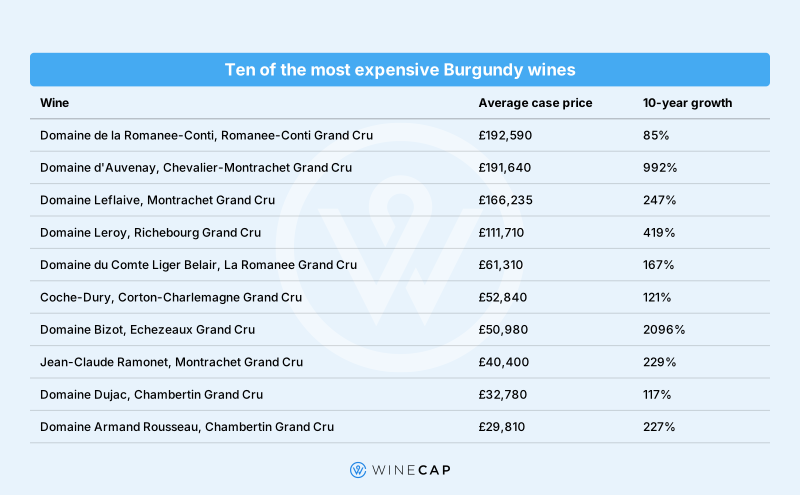
Deep dive: Ten of the most expensive Burgundy wines

Based on average case prices, Burgundy’s most costly wines reveal the extraordinary premium attached to the region’s greatest terroirs.Ten of the most expensive Burgundy wines

Several themes emerge from the rankings.

First is the dominance of Grand Cru terroir. Every wine on the list originates from Burgundy’s highest classification level, highlighting the premium investors place on the region’s top vineyard sites.

Second is the growing prominence of white Burgundy. Four of the ten wines are Chardonnay-based, namely Domaine d’Auvenay Chevalier-Montrachet, Domaine Leflaive Montrachet, Coche-Dury Corton-Charlemagne and Jean-Claude Ramonet Montrachet. This reflects both the surging global demand for white Burgundy and the scarcity of these wines.

Perhaps most striking is the scale of appreciation achieved by certain producers. Domaine Bizot’s Echezeaux Grand Cru leads the field with remarkable ten-year growth of 2,096%, while Domaine d’Auvenay’s Chevalier-Montrachet has gained 992% over the same period. These figures highlight the extent to which scarcity and cult status can drive long-term performance.

It is also worth noting some notable absentees. Wines such as Leroy Musigny would undoubtedly rank among Burgundy’s most expensive bottles, but limited trading volumes mean there is insufficient market data to establish reliable pricing. The same applies to the wines of Henri Jayer. While they remain among the most coveted and expensive wines in the world, the legendary winemaker’s death in 2006 and the tiny quantities currently in circulation mean transactions are too infrequent to provide robust market benchmarks.

A league of its own

The latest vineyard pricing data reinforces a reality that fine wine collectors have understood for years: Burgundy increasingly operates according to its own supply-and-demand dynamics.

While shifting consumer preferences, economic uncertainty and broader market corrections continue to affect many wine regions, Burgundy’s greatest vineyards are among the world’s most coveted luxury assets. Their scarcity is absolute, their prestige unrivalled and their appeal increasingly global.

Whether measured by the value of the land itself or by the prices achieved by the wines it produces, Burgundy continues to occupy a category almost entirely of its own. In a market searching for certainty, the region remains the closest thing fine wine has to a true blue-chip asset.

FAQ: Burgundy wine and vineyard prices

Why are Burgundy vineyard prices so high?

Burgundy’s finest vineyards are among the scarcest agricultural assets in the world. Grand Cru and Premier Cru sites are finite, fully planted and protected by strict appellation boundaries, meaning supply cannot expand to meet growing global demand.

How much is a hectare of Burgundy vineyard worth?

According to Safer’s 2025 data, a hectare of Premier Cru white vineyard land in the Cote-d’Or averages £2.3 million, while Premier Cru red vineyard land approaches £1 million per hectare. The region’s most prestigious Grand Cru sites would command substantially higher prices if they came to market.

Why is Burgundy outperforming other wine regions?

Unlike many wine regions facing declining consumption and oversupply concerns, Burgundy benefits from extremely limited production, strong global demand and a collector base willing to pay significant premiums for the region’s most prestigious wines and vineyard holdings.

What is the most expensive Burgundy wine?

Domaine de la Romanee-Conti’s Romanee-Conti Grand Cru is currently the most expensive Burgundy wine by average case price, valued at approximately just under £200k per case.

Are Burgundy wines still a good investment?

Past performance does not guarantee future returns, but Burgundy continues to demonstrate many characteristics associated with blue-chip investment assets: finite supply, global demand, strong brand equity and a long history of value appreciation among its most prestigious producers and vineyard sites.

How are vineyard prices linked to wine prices?

Higher vineyard values reinforce the scarcity and prestige of the wines produced from those sites. In Burgundy, where production volumes are often extremely limited, rising land values and rising bottle prices frequently support one another through a self-reinforcing cycle of demand and scarcity.

WineCap’s independent market analysis helps investors build diversified fine wine portfolios with full ownership and transparent pricing. Speak to one of our wine investment experts and start building your portfolio. Schedule your free consultation today.
Categories
News

How risk-averse are wine investors?

  • According to wealth managers, UK investors that allocate to fine wine are more risk-averse in their strategies than US clients.
  • Risk appetite is one of the clearest indicators of investor sentiment. 
  • The overwhelming majority of wine investors across both markets are “somewhat cautious” in their approach.

Risk appetite is one of the clearest indicators of investor sentiment. In periods of economic optimism, investors tend to pursue growth more aggressively, increasing exposure to volatile or emerging assets. During uncertain periods, however, capital preservation becomes the dominant theme.

The fine wine market occupies a unique position within this spectrum. While fine wine is increasingly recognised as a legitimate alternative asset class, it has historically attracted investors seeking stability, diversification, and long-term wealth preservation rather than speculative returns – a theme explored earlier this month.

Data from the last three editions of the WineCap Wealth Report provides a revealing snapshot of how investor attitudes towards risk have evolved across the UK and US between 2024 and 2026. The findings show that while investors in both markets remain broadly cautious, there are notable differences in risk tolerance between the two countries. Those differences may reveal broader trends shaping the global investment landscape.

The UK: cautious by nature

UK investors have consistently demonstrated a conservative approach to risk over the past three years.

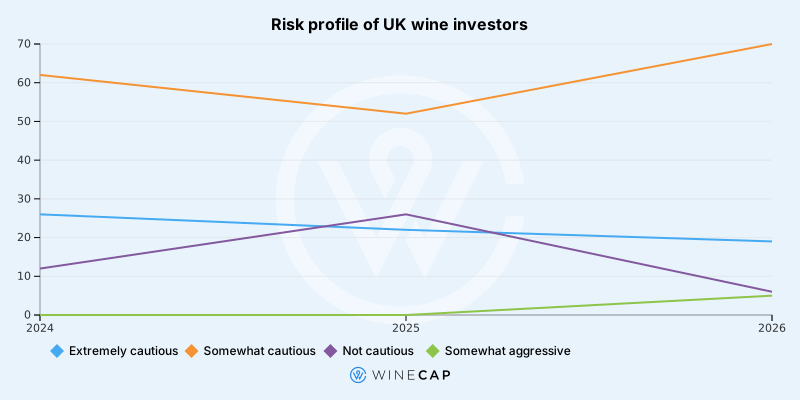
In 2024, 26% of UK respondents described themselves as “extremely cautious,” while a further 62% identified as “somewhat cautious.” Just 12% considered themselves “not cautious,” and no respondents described themselves as aggressive.

By 2025, attitudes appeared to shift slightly. The percentage of extremely cautious investors fell from 26% to 22%, while the share of investors who were “not cautious” more than doubled to 26%. This suggested a temporary improvement in confidence as markets adjusted to higher interest rates and inflationary pressures.

However, the 2026 data points to a more nuanced picture. While the proportion of extremely cautious investors fell again to 19%, the share of somewhat cautious investors surged to 70% – the highest level recorded over the three-year period. At the same time, only 6% described themselves as “not cautious,” while 5% identified as “somewhat aggressive.”

Risk Profile of UK investors

Rather than signalling rising confidence, the 2026 figures suggest UK investors are consolidating around a middle ground: cautious, but not entirely defensive.

This reflects the broader macroeconomic environment. Over the past three years, UK investors have faced persistent uncertainty, including inflationary pressure, elevated borrowing costs, geopolitical instability, and slowing economic growth. Even as headline inflation has moderated, concerns around recession risks and global trade disruption continue to weigh on investor sentiment.

Against this backdrop, fine wine’s defensive characteristics have become increasingly attractive. Wine has historically demonstrated lower volatility than equities and cryptocurrencies, while also benefiting from tangible asset backing and finite supply dynamics.

For many UK investors, therefore, fine wine is less about aggressive growth and more about portfolio resilience.

The US: greater appetite for risk

Compared to their UK counterparts, US investors consistently display a higher tolerance for risk.

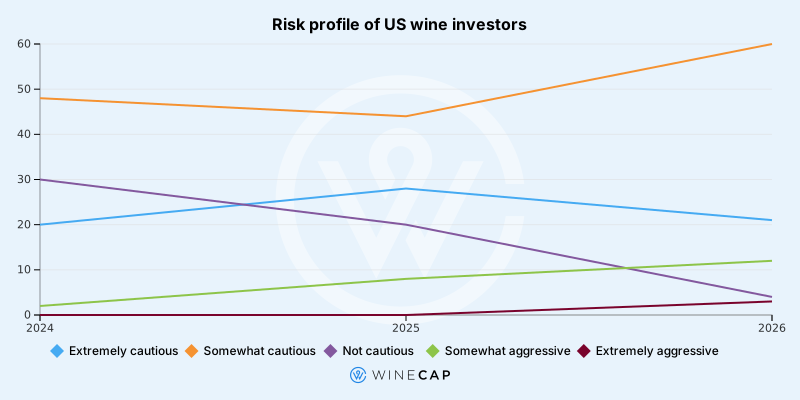
In 2024, only 20% of US respondents identified as extremely cautious, significantly lower than the UK figure of 26%. Meanwhile, 30% described themselves as “not cautious,” compared to just 12% in the UK. The US was also the only market where respondents identified as “somewhat aggressive,” even if only marginally at 2%.

The divergence became more pronounced in 2025. While the proportion of extremely cautious US investors rose to 28%, 8% of respondents identified as “somewhat aggressive”, compared to none in the UK.

By 2026, US investor sentiment shifted again. Extremely cautious respondents fell back to 21%, while 12% described themselves as somewhat aggressive and 3% as extremely aggressive. Even though 60% of respondents still considered themselves “somewhat cautious”, the US remained materially more growth-oriented than the UK.

Risk profile of US investors

Several structural factors may explain this difference.

Firstly, the US investment culture has historically been more comfortable with risk-taking. American investors tend to have greater exposure to equities, technology stocks, venture capital, and speculative growth assets than investors in the UK or Europe.

Secondly, the prolonged bull market environment that followed the pandemic recovery reinforced a stronger appetite for higher-return opportunities. Despite periods of volatility, US equity markets have continued to outperform many global peers, encouraging investors to maintain a more aggressive mindset.

Thirdly, fine wine itself may be perceived differently in the US market. While UK investors often approach wine as a preservation asset comparable to gold or art, American investors increasingly view fine wine as part of a broader alternative investment strategy that includes collectibles, private equity, and luxury assets. This difference in perception naturally affects risk appetite.

What the data tells us about investor psychology

Perhaps the most interesting takeaway from the WineCap Wealth Report data is that neither market has become decisively more aggressive over time. Instead, the findings suggest investors are adapting to a “new normal” defined by uncertainty.

Across both the UK and the US, the dominant category throughout all three years remains “somewhat cautious.” This is important because it reflects neither panic nor exuberance. Investors are not retreating entirely from markets. Nor are they displaying the speculative behaviour often associated with periods of excessive optimism.

Rather, they appear increasingly selective. This aligns closely with broader trends across the fine wine market itself. Following the post-pandemic boom of 2021/2022, the fine wine market experienced a broad correction. Burgundy prices softened sharply, Bordeaux trading slowed, and buyers became more value-conscious.

Meanwhile, falling prices created buying opportunities and lower entry points for new investors, entering the market with a more strategic mindset. Rather than chasing rapid appreciation, wine investors are focusing on long-term fundamentals, diversification, scarcity, and producer quality.

This shift may explain why caution remains elevated even as interest in alternative assets continues to grow.

Fine wine’s role in a cautious investment environment

The findings also reinforce fine wine’s evolving role within diversified portfolios.

In highly speculative environments, alternative assets are often pursued for their high returns. But in periods of volatility and macroeconomic uncertainty, investors increasingly prioritise assets with defensive qualities. This is where fine wine stands apart from many other alternatives.

Unlike cryptocurrencies or highly speculative growth assets, fine wine benefits from intrinsic scarcity, global demand, and a long-established secondary market. Consumption gradually reduces supply over time, while the world’s leading producers maintain enduring brand equity.

Even among investors who describe themselves as cautious, 97% of the surveyed wealth managers in 2026 expect interest in fine wine to grow because the asset offers a balance between preservation and appreciation potential.

Looking ahead

The contrast between UK and US investors ultimately reflects two different approaches to alternative investing.

UK investors continue to prioritise stability, wealth preservation, and measured portfolio diversification. US investors, while still cautious overall, demonstrate a greater willingness to pursue higher-risk opportunities and more aggressive growth strategies.

Yet despite these differences, both markets are converging around a similar idea: resilience matters, and fine wine provides just that.

The last three years have reshaped investor expectations. Inflation shocks, geopolitical tensions, rising interest rates, and heightened market volatility have reinforced the importance of diversification and downside protection. In this environment, fine wine’s appeal becomes increasingly clear. Occupying a middle ground, fine wine is neither purely speculative nor entirely defensive. Fine wine is an asset class best suited to those seeking long-term wealth preservation alongside measured growth.

The WineCap Wealth Report data suggests that while investors may remain cautious, confidence in fine wine as a strategic asset continues to grow. And in uncertain markets, cautious confidence may ultimately prove more sustainable than aggressive optimism.

WineCap’s independent market analysis helps investors build diversified fine wine portfolios with full ownership and transparent pricing. Speak to one of our wine investment experts and start building your portfolio. Schedule your free consultation today.
Categories
News

Bordeaux 2025 En Primeur: Pricing discipline and rarity define early standouts

  • The Bordeaux 2025 En Primeur campaign is gaining momentum as estates aim to align pricing with current market realities.
  • Chateau Cheval Blanc and Chateau Lafite Rothschild have emerged as standout releases, combining critical acclaim, rarity, and pricing discipline.
  • The 2025 vintage is defined by a rare balance of concentration and freshness, with low yields and freshness creating wines built for long-term ageing.

The Bordeaux 2025 En Primeur campaign is now well underway, with approximately a quarter of the major 150 estates having released their wines to the global market. Following several years of growing tension and significant backlash from the trade regarding chateaux’ ambitious pricing strategies, the early phases are being watched with a level of scrutiny.

In a market environment where buyers are increasingly selective and there is value to be found in older, physical vintages, the successful wines so far combine pricing discipline, critical acclaim, lower volumes, and structural transparency. Today’s update highlights two major recent releases – Chateau Lafite Rothschild and Chateau Cheval Blanc – that have offered a blueprint for good practice, while analysing how the unique, paradoxical style of the 2025 vintage is influencing buying decisions.

Cheval Blanc: A masterclass in pricing discipline

One of the most powerful brands on the Right Bank hit the market last week, cementing its reputation not just as a winemaking icon, but as a lesson in consistent pricing strategy. The release of Chateau Cheval Blanc typically acts as a crucial barometer for overall market sentiment due to the estate’s pricing strategy, which has been remarkably attuned to market realities.

Last year, for instance, Cheval Blanc made headlines for dropping its release price by a staggering 28% compared to the 2023 vintage. This move injected a much-needed wave of positivity into the global distribution network.

Cheval Blanc strategic trajectory:

  • 2023 Vintage: -18% on 2022
  • 2024 Vintage: -28% on 2023 (reignited campaign liquidity).
  • 2025 Vintage: Maintained strict discipline despite historically low yields.

The 2025 Cheval Blanc is being discussed as one of the defining wines of the decade. Checking in at a refreshing 12.7% alcohol, it displays an intensity and structural precision that William Kelley (The Wine Advocate) suggests positions it alongside the estate’s absolute greatest modern legends. Neal Martin described the wine as “uncompromising,” while Antonio Galloni (Vinous) noted it is a wine of “mystery and seduction” that “dazzles”.

What makes the 2025 Cheval Blanc an exceptionally compelling proposition, however, is its built-in rarity. Yields at the estate were just 15hl/ha, the lowest since 1961, and the entire production has been released En Primeur.

By combining restricted supply with a market-sensitive price point, Cheval Blanc has delivered a release where structural scarcity is backed by immediate value – making it, by all accounts, one of the most compelling Bordeaux 2025 offers so far. 

Lafite Rothschild: Seduction, structure, and market value

Following the trail blazed by Cheval Blanc’s market pragmatism, yesterday saw the first major First Growth release from the Bordeaux 2025 campaign: the highly anticipated Chateau Lafite Rothschild.

Lafite entered the campaign at a highly attractive price point compared to physical back-vintages like the legendary 2016 and 2018, all while carrying a critical quality profile that closely rivals both. Crucially for buyers looking for immediate equity relative to the secondary market, the 2025 comes at an approximate 9.5% discount to the current market price of the 2019 vintage, aligning itself with the pricing of the lower-scored (Vinous) 2021 vintage.

Major critics have praised this year’s release. Neal Martin was effusive, awarding it potential 98-100 points – his highest barrel range for Lafite since the iconic 2009 vintage. “I can remember few that I found so seductive, so profound at this stage,” Martin observed. This near-perfection was echoed by Lisa Perrotti-Brown MW (The Wine Palate), who also gave the wine 98-100 points, and The Drinks Business’s Colin Hay, who went a step further, awarding a straight 100 points and calling it “a wine that breaks my scoring system!”

What makes the 2025 Bordeaux vintage unique?

While pricing discipline is the engine driving the success of this campaign, purchasing decisions are often influenced by more than just spreadsheets. To understand the long-term cellaring and appreciation potential of these wines, one must look closely at the profile of the 2025 growing season. No two vintages are the same, so style should also be accounted for when committing capital.

Critics and technical directors are hailing 2025 as a season of complete extremes and ultimate balance. The weather patterns throughout the year threw everything at the vineyards: periods of intense, prolonged rainfall followed by sustained, searing summer heatwaves and extended drought conditions.

In a lesser vintage, such extreme weather would result in disjointed, overly alcoholic, or structurally flabby wines. Instead, 2025 surprised the region with a fascinating viticultural paradox. Thanks to a combination of terroir, low yields, and meticulous vineyard management, the grapes retained astonishing acidity alongside deeply concentrated, ripe phenolics. The result is a vintage characterised by an unexpected fusion of power and freshness, showcasing a classical restraint that critics heavily favour. 

The investment takeaway

The 2025 En Primeur campaign is proving that when producers respect the delicate equilibrium of the market, the global trade is eager to respond. By implementing pricing discipline that acknowledges past campaigns and accounts for the value available in older physical stock, estates like Cheval Blanc and Lafite Rothschild have successfully generated momentum. With a vintage style that offers both immediate pleasure and the structural bones required for decades of cellaring, the 2025 campaign is shaping up to be a highly selective, yet incredibly rewarding, hunting ground for fine wine buyers.

FAQ: Bordeaux En Primeur & the 2025 vintage

What is Bordeaux En Primeur?

Bordeaux En Primeur is the annual system where wines are sold while still ageing in barrel, usually around 18–24 months before bottling and release.

Why do collectors buy En Primeur wines?

Collectors buy En Primeur for early access to highly sought-after wines, potential price advantages versus future physical vintages, and guaranteed provenance direct from the château.

Is the 2025 Bordeaux vintage considered good?

Yes. Early critic reports suggest 2025 could become one of the most exciting Bordeaux vintages of the decade thanks to its balance of freshness, concentration, and ageing potential.

What makes the Bordeaux 2025 vintage unique?

The 2025 growing season experienced extreme weather conditions, including heavy rainfall and intense summer heat, yet producers achieved wines with remarkable freshness, precision, and structure.

Which Bordeaux 2025 wines are attracting the most attention?

Early standout releases include Cheval Blanc, Pontet Canet and Lafite Rothschild, praised for quality, rarity, and sensible pricing strategies.

Are Bordeaux 2025 En Primeur prices lower than previous years?

Many leading estates have adopted more disciplined pricing compared to recent campaigns.

Is Bordeaux En Primeur a good investment?

Historically, the best En Primeur campaigns combine strong critic scores, limited production, and fair release pricing — factors that can support long-term value appreciation.

When will Bordeaux 2025 wines be delivered?

Most Bordeaux 2025 En Primeur wines are expected to be bottled and physically delivered between 2027 and 2028.

Categories
News

How investor motivations in fine wine have evolved

  • Stability has overtaken sustainability as a key motivation why investors choose fine wine. 
  • Strong returns have never been a dominant factor for wine investors.
  • Passion is less important than fine wine’s low correlation to mainstream markets.

The past four years have fundamentally reshaped investor attitudes towards risk, diversification and wealth preservation. Since 2023, mainstream markets have experienced persistent inflation, rising interest rates, geopolitical instability, recession fears and elevated volatility across both equities and fixed income markets.

Against that backdrop, WineCap Wealth Reports’ global data from surveys conducted between 2023 and 2026 shows a notable shift in how investors think about fine wine, and why they choose to include it in their portfolios. Our findings reveal that fine wine is increasingly being viewed as a strategic, portfolio-oriented asset rather than a mere passion collectible.

Stability overtakes sustainability as key wine investment driver

Four years ago, sustainability was cited by 55% of surveyed wealth managers as the primary reason why investors were allocating to fine wine. By 2026, however, stability had emerged as the dominant investment driver.

Over the past four years, the proportion of respondents citing stability as a key reason to invest in wine has risen from 54% to 70%, overtaking sustainability.

Stability overtakes sustainability fine wine

This shift reflects changing investment priorities rather than varying attitudes towards fine wine itself. In an increasingly uncertain macroeconomic environment, investors appear to be placing greater emphasis on resilience, predictability and capital preservation.

While sustainability remains important – particularly within premium wine production where environmental practices have become increasingly embedded – it no longer dominates investor thinking in the same way it did earlier. Instead, the data suggests that wine investors are becoming more pragmatic and portfolio-focused.

The timing of this shift is difficult to ignore. Since 2023, investors have navigated persistent inflation, aggressive monetary tightening, banking sector instability, geopolitical tensions and ongoing volatility. Traditional diversification strategies have also faced challenges, particularly during periods where bonds and equities moved lower simultaneously. This is why assets perceived as more stable and less reactive to short-term market movements have become increasingly attractive.

Indeed, fine wine’s appeal lies partly in its slower-moving nature. Unlike publicly traded financial assets, pricing in the secondary wine market tends to evolve gradually, supported by finite supply, long holding periods and a global collector base. That lower volatility profile increasingly appears to resonate with investors seeking resilience over aggressive growth.

Stability matters more than strong returns

The data also reveals something particularly telling about the profile of fine wine investors themselves.

Across every year surveyed, respondents consistently ranked stability above strong returns as a reason to invest in fine wine. Even as markets cycled through periods of speculative enthusiasm, wine investors remained notably defensive in their priorities.

This suggests that fine wine investors are behaving differently from more momentum-driven participants elsewhere in financial markets.

Stability is more important than returns

Rather than chasing short-term gains, investors increasingly appear to value predictability, wealth preservation and long-term portfolio balance. The appeal of fine wine is not necessarily that it delivers the highest returns, but that it may provide differentiated behaviour relative to traditional markets.

That aligns with broader trends across wealth management and alternative investing. In recent years, first-time investors in particular have been turning to tangible assets and alternative stores of value amid concerns around inflation, market concentration and elevated valuations in traditional financial markets. 

Fine wine fits naturally within that conversation. It is a physical asset with finite supply, global demand and a market structure that historically behaves differently from mainstream financial assets. Increasingly, those characteristics appear to matter more than headline performance alone.

Fine wine is moving beyond passion

Perhaps the clearest evidence of fine wine’s evolution as an investment asset can be seen in changing attitudes towards passion and diversification.

Historically, wine investment was closely associated with collectors and enthusiasts. Emotional connection, provenance and personal enjoyment were central to participation in the market.

However, by 2025 and 2026, respondents were more likely to cite fine wine’s low correlation to mainstream assets as a motivation for investing than passion itself.

Fine wine is moving beyond passion.

That does not suggest passion is disappearing from the category. Rather, it points to the investor base becoming broader and more financially sophisticated.

The modern wine investor increasingly resembles a diversified allocator rather than a traditional collector alone. Wealth managers, financially engaged high-net-worth individuals and portfolio-focused investors are paying closer attention to fine wine’s role within a broader investment strategy.

This reflects the continued maturation of the fine wine market itself.

Over the past decade, the market has become significantly more transparent and data-driven. Greater access to pricing data, portfolio analytics, market indices and global trading platforms has made wine more accessible as an investment proposition. Investors are increasingly able to analyse fine wine through a financial lens rather than purely through a collecting lens.

As a result, fine wine is gradually transitioning from being viewed primarily as a passion asset towards being recognised as a legitimate component of diversified portfolios.

A more mature investment landscape

Taken together, the findings from the 2023–2026 WineCap Wealth Reports point towards an increasingly mature investor mindset within the fine wine market.

Investors are becoming more measured, more strategic and more focused on resilience. Stability, diversification and portfolio construction are becoming more important drivers than emotion or speculation.

Importantly, this does not mean fine wine is losing the qualities that made it attractive in the first place. Passion, heritage and collectibility remain fundamental to the category’s identity and long-term value.

But the data suggests investors are also recognising that fine wine’s financial characteristics may be just as compelling as its cultural and emotional appeal.

In an era defined by uncertainty, that evolution may prove increasingly important.

Read our latest Wealth Reports here.

FAQ: Fine wine investment motivations

Why do investors invest in fine wine?

WineCap Wealth Report data shows investors are increasingly attracted to fine wine for its stability and diversification benefits. Other key motivations include sustainability, liquidity, tangibility, inflation protection and fine wine’s historically low correlation to mainstream financial markets.

Why is stability important in fine wine investment?

Between 2023 and 2026, stability became the leading reason investors allocated to fine wine. In periods of market volatility, inflation and economic uncertainty, investors increasingly prioritised assets perceived as resilient and less reactive to short-term market movements.

Is fine wine considered a good diversification asset?

Many investors view fine wine as a useful diversification tool because it has historically behaved differently from traditional assets such as equities and bonds. WineCap survey data shows that fine wine’s low correlation to mainstream markets has become increasingly important to investors in recent years.

Do investors buy fine wine mainly for returns?

The data suggests that strong returns are not the primary motivation for most fine wine investors. Across all survey years, stability consistently ranked above returns, indicating that investors are often more focused on capital preservation and portfolio balance than short-term performance.

Is fine wine still a passion investment?

Passion remains an important part of fine wine investment, particularly among collectors and enthusiasts. However, WineCap Wealth Report data suggests investors are increasingly viewing fine wine through a financial and portfolio-oriented lens rather than purely as a collectible asset.

Why is fine wine considered a tangible asset?

Unlike stocks or bonds, fine wine is a physical asset with finite supply and global demand. Many investors value tangible assets during periods of economic uncertainty because they can offer diversification and may behave differently from traditional financial markets.

Is fine wine used as an inflation hedge?

Some investors view fine wine as a potential inflation hedge due to its scarcity, long-term demand and tangible nature. WineCap survey data shows inflation protection remains one of the motivations behind fine wine investment allocations.

WineCap’s independent market analysis helps investors build diversified fine wine portfolios with full ownership and transparent pricing. Speak to one of our wine investment experts and start building your portfolio. Schedule your free consultation today

Categories
News

Top-scoring Bordeaux 2025 En Primeur wines so far

  • Major critics describe Bordeaux 2025 as a “miracle vintage” due to its exceptional balance and moderate alcohol levels in a hot and dry year.
  • The first 100-point in-barrel scores have emerged. 
  • Critics argue that quality alone will not turn this campaign into a success; the economic climate must be acknowledged.

The 2025 En Primeur campaign has begun, with the first wave of releases and critic reports now emerging. After a growing season that pointed toward blockbuster wines on paper, the reality in the glass tells a more nuanced story. The consensus among leading critics following April’s barrel tastings is that the 2025s are something of a paradox – wines that combine the concentration of a hot, dry year with the balance, freshness and structural poise of a more classical era.

In this article, we look into the first major En Primeur reports from Antonio Galloni (Vinous), William Kelley (Wine Advocate), James Lawther MW (JancisRobinson.com) and Georgie Hindle (Decanter), exploring where their views converge, where they diverge, and highlighting some of their top-scoring Bordeaux 2025 wines. We also focus on key themes, regional standouts, and early signals for what is shaping up to be one of the most intriguing and selective En Primeur campaigns in recent years.

What makes Bordeaux 2025 a “miracle” vintage?

According to major wine critics, the short answer lies in the balance and the moderate alcohol levels of the wines in a year defined by record-breaking heat. In a region where 14.5% or 15% ABV has become the “new normal” for hot vintages, the 2025s have pivoted.

  • Antonio Galloni describes this as a “minor miracle,” noting that while heat and drought usually yield massive tannins and high sugars, 2025 saw sugar ripening slow down while physiological ripeness continued. 
  • William Kelley, who mentions an alcohol range of 12.5% to 13.5%, calls the best wines “thrilling” for their ability to remain classically proportioned despite their density.
  • Georgie Hindle also notes the “paradoxical” nature, stating that the wines don’t “carry the wounds of the vintage.” She observes that alcohol levels are often one to two degrees lower than the 2022s, which have become a point of comparison.
  • James Lawther MW agrees that the “low alcohols and dense, silky tannins” provide a unique originality, particularly in Cabernet-dominant blends.

The growing season: Rainfall as the great arbitrator

Critics agree that the late-August rains were the turning point for the 2025 Bordeaux vintage. Without this 60-90mm of precipitation, many believe the vintage would have been a disaster of desiccation.

  • James Lawther points out that the Médoc received the most significant rainfall (up to 70mm), which “relaunched” ripening in vines that had essentially shut down due to hydric stress.
  • In her report, Georgie Hindle cites a winemaker from Chateau Quintus who noted that “without the rains, we would have made syrup.” This rainfall allowed the three types of ripeness – technological, phenolic, and aromatic – to finally converge.
  • Antonio Galloni adds that the April rains were equally vital, providing the water tables with enough reserves to help the vines survive the initial heat spikes in June.

Low yields: The smallest crop since 1991

The 2025 vintage is also defined by scarcity, with Bordeaux recording its smallest harvest in over three decades – a factor that will inevitably shape the dynamics of the release campaign. While critics broadly agree on the scale of the shortfall, their interpretations of its causes and implications vary.

Galloni attributes the low yields to a combination of poor conditions during the 2024 flowering cycle – when cluster formation for 2025 was already compromised – and the intense heat and drought of the 2025 growing season, which led to significant berry dehydration. In some cases, Merlot berries weighed as little as 0.8g, well below the typical 1.2g.

Kelley similarly links these reduced yields to the resulting wine style, arguing that the vintage’s “authoritative density” is a direct consequence of this concentration. 

Lawther, meanwhile, sees the small crop as a “positive factor” for quality, as the reduced charge on the vine made it easier for the remaining fruit to reach full maturity despite challenging weather conditions.

Left or Right Bank vintage?

While the quality of the vintage is widely praised, critics have identified a clear hierarchy of consistency, with a notable consensus on which communes struggled.

  • The Pomerol paradox: All four critics flag Pomerol as the most inconsistent appellation. Lawther notes that it suffered most from drought, leading to “bitterness” in some wines due to lack of juice. Galloni and Kelley agree that while the top estates on the clay plateau (like Petrus and La Conseillante) are “elegant,” the appellation, as a whole, is uneven.
  • Margaux and Pauillac: Antonio Galloni crowns Margaux as the “star of the vintage,” noting its consistent brilliance. James Lawther and William Kelley lean toward Pauillac as the most “impressive” or “compelling” sector, with Kelley citing its ability to deliver wines of “real concentration.”
  • Saint-Emilion: The clay-limestone soils here proved their worth. Lawther and Galloni both praise the plateau’s ability to manage water stress, with Lawther highlighting Cheval Blanc’s “stunning” results despite an extremely low 15 hl/ha yield.

Winemaking decisions

With tiny berries and thick skins due to heat and drought, most winemakers opted for gentler extraction techniques when handling the 2025 vintage.

  • Kelley explains that the unusually high solids-to-juice ratio meant structure was “taken for granted,” leading many estates to lower fermentation temperatures and reduce pumping over.
  • Hindle notes that some estates, like Montrose and Phelan Segur, performed their shortest macerations on record to avoid harsh tannins.
  • Lawther warns that hard finishes are an occasional fault in the vintage where winemakers were too heavy-handed with overworked tannins.

Potential 100-point wines so far

While more scores will be released in the coming days from critics including Neal Martin, James Suckling, and Lisa Perrotti-Brown MW, the table below highlights the wines that have already achieved barrel ranges touching 100 points. These early indicators suggest which wines may ultimately reach perfection once bottled and re-tasted in two years’ time.
Bordeaux 2025: 100 point wines

*YC = Yohan Castaing (Wine Advocate), WK = William Kelley (Wine Advocate), AG = Antonio Galloni (Vinous)

It is important to note that En Primeur scores are typically expressed as ranges rather than fixed numbers. This reflects the fact that the wines are still in barrel and continue to evolve. Critics therefore allow for a margin of potential – both upward and downward – based on how the wines are expected to develop before bottling. A range such as 98-100 points signals not only exceptional quality, but also the realistic possibility of a perfect score at maturity.

Among the early reports, William Kelley is the most bullish, identifying seven wines with 100-point potential. Antonio Galloni follows with two, while Yohan Castaing has highlighted one wine in this top tier.

The list itself is telling. First Growths Chateau Haut-Brion and Chateau Margaux both feature, underlining the strength of the Left Bank at the very top level. They are joined by Right Bank icons Petrus and Cheval Blanc, alongside standout performers such as Troplong Mondot, Montrose and Pontet-Canet. 

Bordeaux 2025 market reality

While the wines themselves are widely praised, all critics have raised concerns about the market in their reports.

Kelley describes the En Primeur context as “structurally fragile,” questioning whether consumers still see value in buying futures. Galloni also states that Bordeaux “badly needs a win,” but warns that success depends entirely on pricing discipline. He argues that even modest increases could undermine demand, given the availability of competitively priced back vintages on the secondary market.

Hindle offers a more measured view, noting early signs of pricing restraint in the first releases and a stabilising fine wine market, but still emphasising the need for alignment between producers, merchants and consumers. 

The key to En Primeur success

Taken together, these early critic assessments position 2025 as a highly successful but nuanced Bordeaux vintage. At its best, it delivers a rare combination of concentration, freshness and terroir transparency – wines of both immediate appeal and long-term potential. However, it is not a uniform success. Variability is a defining feature, and careful selection will be essential. 

Perhaps most importantly, 2025 highlights a broader shift in Bordeaux. Through improved viticulture and winemaking, producers are increasingly able to navigate climatic extremes and make balanced wines in challenging conditions. 

But quality alone will not drive demand. The message from the critics is clear: the success of the campaign rests on the chateaux’s willingness to acknowledge the economic climate.

FAQ: Bordeaux 2025 En Primeur

Is Bordeaux 2025 a good vintage?
Yes – critics widely agree that 2025 is a high-quality vintage. Despite extreme heat and drought, the best wines show exceptional balance, freshness and moderate alcohol levels, leading some critics to describe it as a “miracle” or “paradoxical” vintage.

Why is Bordeaux 2025 described as a “miracle vintage”?
Because the wines defy expectations. In a hot, dry year that should have produced heavy, high-alcohol wines, 2025 instead delivered freshness, structure and restraint, thanks largely to cooler nights and crucial late-August rainfall.

What are the alcohol levels in Bordeaux 2025 wines?
Most wines fall between 12.5% and 13.5% ABV, significantly lower than recent hot vintages like 2022, where alcohol levels often exceeded 14.5%.

How important was rainfall in the 2025 vintage?
Late-August rainfall was critical. It rehydrated vines after prolonged drought, slowed sugar accumulation, and allowed full phenolic ripeness, ultimately shaping the balance and style of the wines.

Are Bordeaux 2025 yields low?
Yes. 2025 is the smallest Bordeaux harvest since 1991. 

Which Bordeaux regions performed best in 2025?
Margaux and Pauillac are widely seen as standout performers on the Left Bank, while Saint-Émilion excelled on the Right Bank, particularly on clay-limestone soils. 

Are there any 100-point Bordeaux 2025 wines yet?
Several wines have already received barrel score ranges of 98-100 points, indicating potential for a perfect score once bottled. Top names include Haut-Brion, Margaux, Petrus and Cheval Blanc.

What do En Primeur score ranges (e.g. 98–100) mean?
Barrel scores are given as ranges because the wines are still ageing. A 98-100 score suggests the wine is already exceptional but could improve further before bottling and reach a perfect score.

Will Bordeaux 2025 En Primeur be a successful campaign?
That remains uncertain. While wine quality is high, critics warn that success will depend on pricing. Buyers are increasingly cautious, and competition from back vintages may limit demand.

Should you buy Bordeaux 2025 En Primeur?
Critics emphasise that 2025 is not a uniform vintage. The best wines are outstanding, but variability is high, meaning careful selection will be essential rather than broad, “buy everything” strategies.

WineCap’s independent market analysis helps investors build diversified fine wine portfolios with full ownership and transparent pricing. Speak to one of our wine investment experts and start building your portfolio. Schedule your free consultation today.