- Modern technology is helping producers make higher-quality wines through more precise vineyard management and winemaking techniques.
- Advances in logistics, storage and authentication are strengthening provenance, an important driver of value in the fine wine market.
- While blockchain has attracted attention, artificial intelligence is likely to have the greatest long-term impact on how wine is produced, traded and collected.
Technology has become an increasingly important part of the fine wine industry, influencing everything from vineyard management and winemaking to storage, provenance and market transparency. While many of the most significant innovations of the past were focused on improving vineyard survival and production consistency, today’s technologies are increasingly geared towards enhancing quality, sustainability and precision.
From drones monitoring vine health to sensors tracking storage and transport conditions, data now plays a role throughout the lifecycle of a bottle. These developments not only help producers make better wines but also provide collectors and investors with greater confidence in provenance, authenticity and long-term value.
As fine wine continues to evolve as both a collectible and an alternative asset, technology is helping bridge the gap between centuries-old traditions and the demands of a modern global market.
Foundational technology in wine: 1860-1960
Before the digital age, some of the most important technological advances in wine were biological and mechanical. Between the late nineteenth and mid-twentieth centuries, innovation was often driven by necessity as producers responded to disease, changing consumer demand and the increasing commercialisation of wine.
Perhaps the most significant challenge was phylloxera, a vine pest that devastated European vineyards during the late 1800s. The solution was to graft European Vitis vinifera vines onto resistant American rootstocks – a practice that remains the foundation of modern viticulture today.
During the same period, the work of French scientist Louis Pasteur transformed winemaking. His research into fermentation helped producers better understand the role of yeast and bacteria, reducing spoilage and improving consistency.
Advances in glass production, bottling technology and mechanised farming further reshaped the industry. Estate bottling became increasingly common, while tractors and modern transport networks improved efficiency throughout the supply chain. Together, these innovations laid the foundations for the global fine wine market we know today.
Technology in the vineyard: The precision revolution
Modern vineyards have become increasingly data-driven environments. Rather than treating an entire vineyard as a single unit, growers can now analyse and manage individual plots according to their specific characteristics.
- Drones have become essential tools allowing chateaux to identify areas of stress before they are visible to the naked eye. By responding to granular data chemical treatments can be applied only where they are needed.
- Remote sensors and local weather stations monitor soil moisture at the root level and track local humidity and temperature shifts allowing more informed choices regarding irrigation and harvest timing.
- Robots can now perform labour-intensive tasks like weeding with a level of precision that human crews struggle to match. In extremely high value vineyards they may also have a security function.
- Breeding technology has shifted its focus from increasing yields to increasing environmental resilience. As the climate changes, the development of drought-resistant varieties and rootstocks has become a priority.
- Subterranean mapping: The rise of geophysics tools allow winemakers to visualise exactly where water is stored and where root systems might struggle. Understanding this helps in matching specific clones to the correct plots, increasing the quality of investment grade wines.
- In-field analytics: Handheld spectrometers brought laboratory-grade analysis directly into the vineyard in the early 2000s measuring sugar levels or phenolic ripeness in situ. Data now allows producers to pinpoint the exact moment a specific parcel reaches the required ripeness.
Technology in the winery
Inside the winery, technology allows producers to make more precise decisions throughout the winemaking process. The objective is rarely to replace the winemaker’s judgement, but rather to provide better information and greater control.
The process begins before fermentation.
- Optical sorting machines use cameras and sensors to analyse individual grapes, automatically removing fruit that is underripe, damaged or diseased. This ensures that only the best fruit reaches the tank.
- Densimetric sorting submerges grapes in water so riper berries, which have higher sugar concentrations and greater density, sink to the bottom. Underripe or diluted grapes float to the surface and are discarded. Like optical sorters this guarantees uniformity and ensures that fermentation begins with fruit of a consistent ripeness level.
These technologies are particularly valuable in challenging vintages, helping ensure that only the highest-quality fruit enters the fermentation tanks.
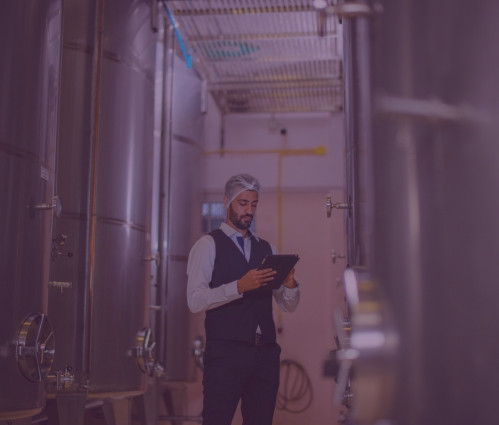
Once fermentation begins, smart tanks equipped with integrated sensors can continuously monitor temperature, sugar levels and extraction. Automated systems allow winemakers to respond quickly to changing conditions, helping preserve fruit character and maintain balance throughout fermentation.
The growing use of smaller fermentation vessels has also enabled more detailed plot-level vinification. Fruit from individual parcels can be fermented separately, allowing producers to capture subtle differences in terroir before constructing the final blend.
Advances in microbiology continue to expand the winemaker’s toolkit. Specific yeast strains can be selected to encourage particular fermentation outcomes, reduce unwanted aromas or help manage alcohol levels in increasingly warm growing conditions.
Technology is also influencing winery design. Many modern wineries incorporate gravity-flow systems, allowing grapes and wine to move naturally through the production process with minimal pumping. By reducing mechanical intervention, producers aim to preserve fruit quality and minimise oxidation.
Architectural innovation is increasingly aligned with sustainability goals as well. Underground cellars and energy-efficient winery designs can help maintain stable temperatures while reducing energy consumption.
Technology in logistics and provenance
The role of technology does not end once the wine is in the bottle. Preserving provenance and ensuring optimal storage conditions are essential factors in maintaining both quality and value.
Fine wine businesses like WineCap and their storage partners increasingly make use of:
- Smart pallet sensors: Integrated devices now track temperature and vibration levels in real time during transport. This ensures that fine wine is not compromised by thermal shock or physical agitation while moving from the cellar to the warehouse.
- Secondary market security: Detailed environmental data allows investors to verify that a bottle has never been exposed to heat damage. This objective proof of perfect storage adds significant value and confidence to the global secondary market.
- RFID tracking: Radio Frequency Identification (RFID) tags allow for rapid, automated inventory management. Bottles can be tracked with pinpoint accuracy through every stage of the supply chain, reducing the risk of loss or logistical error.
Innovative packaging and the development of new closures also can reduce the cost of logistics and lower the risk of opening a spoiled bottle.
- DIAM closures: This technology uses carbon dioxide to strip the chemicals causing cork taint from natural cork. This provides a traditional aesthetic with a technical guarantee of zero spoilage for up to three decades.
- The Margaux experiments: Leading estates like Chateau Margaux have conducted decades of research into alternative closures from screwcaps to glass stoppers to find the ultimate balance between historical tradition and technical performance.
- Sustainability and logistics: The industry is exploring low-weight bottles and stackable glass formats. By reducing weight and improving spatial efficiency (inspired by high-density logistics models like those used by IKEA), wineries can significantly lower the carbon footprint of transport.
Technology and the secondary market
Technology has also transformed how collectors interact with fine wine. Authentication tools such as security tags, micro-etching and digital verification systems help combat counterfeiting and provide greater confidence in provenance. In many cases, collectors can verify authenticity directly using a smartphone.
Digital platforms have also improved access to information. Interactive QR codes increasingly provide consumers with detailed information about a wine’s production, history and provenance.
Meanwhile, online databases and community-driven platforms have democratised wine criticism. Rather than relying exclusively on a small number of professional critics, collectors can now access hundreds or even thousands of tasting notes and reviews from wine enthusiasts around the world.
Perhaps most significantly, digital portfolio management tools provide greater transparency around pricing and market performance. Collectors can track the value of their holdings in real time, monitor market trends and manage their cellars more effectively.
The digital frontier: Blockchain, AI and the future of fine wine
Emerging technologies such as blockchain, NFTs and artificial intelligence have generated considerable interest within the wine industry. However, their practical impact varies considerably.
Blockchain-based ownership records have been promoted as a solution for provenance and authenticity. While these systems may offer benefits in some circumstances, many of the challenges they aim to address are already managed through bonded storage networks, established merchants and detailed provenance records.
Artificial intelligence may prove more transformative. AI is already being used to analyse vineyard data, predict disease pressure and support decision-making throughout the production process.
Beyond the vineyard, AI-powered tools are beginning to assist collectors with portfolio management, market analysis and cellar organisation. As these technologies continue to develop, their influence across the wine industry is likely to grow.
FAQ: Technology in wine
Does technology in the winery make all wine taste the same?
No. When used correctly, technology actually helps winemakers highlight the unique characteristics of their land. It removes the “noise” of spoilage or faulty fermentation, allowing the true terroir to shine.
Is machine harvesting and sorting inferior to hand picking?
Historically, yes. However, modern optical sorters on harvesters can now be programmed to reject underripe or damaged berries. In some cases, modern machines can be more selective than a tired human crew.
What is the most important piece of tech for a wine investor?
Beyond a reliable thermometer/hygrometer in the cellar, a subscription to a data platform like Cellartracker or Wine-Searcher is likely to be very useful to any serious collector or investor.
Will robots eventually replace vineyard workers?
Robots will likely handle the most repetitive and physically demanding tasks. However, the high-level decision-making required for tasks like winter pruning or determining the exact day of harvest will always require human expertise.
How does technology help protect wine provenance?
Technologies such as RFID tracking, environmental monitoring systems and digital authentication tools help create a documented record of a wine’s storage and movement throughout the supply chain. This can provide greater confidence in authenticity, condition and provenance, all of which can influence a wine’s value in the secondary market.
How is artificial intelligence being used in wine production?
Artificial intelligence is increasingly being used to analyse vineyard data, predict disease outbreaks and identify optimal harvest dates. While AI can support decision-making, it is typically used alongside human expertise rather than as a replacement for it.
Can technology help producers adapt to climate change?
Yes. Precision agriculture tools allow growers to monitor water availability, vine stress and weather conditions more accurately. Advances in grape breeding and rootstock development are also helping vineyards adapt to warmer temperatures and changing growing conditions.
How do wineries monitor fermentation today?
Many modern wineries use tanks equipped with sensors that continuously track temperature, sugar levels and other key fermentation metrics. This allows winemakers to respond quickly to changing conditions and maintain greater control over the process.
What is precision viticulture?
Precision viticulture is the use of data and technology to manage vineyards at a more detailed level. Rather than treating an entire vineyard as a single unit, growers can make decisions based on the specific needs of individual plots or even individual rows of vines.
How does technology affect the value of investment-grade wine?
Technology can support value by improving provenance, authenticity and storage records. Greater transparency around a wine’s history and condition can increase buyer confidence, particularly in the secondary market.
What technology is likely to have the biggest impact on wine in the future?
Artificial intelligence is widely seen as one of the most significant emerging technologies. Potential applications range from vineyard management and climate adaptation to market analysis, portfolio management and consumer education.
Hey, like this? Why not share it with a buddy?
« The ultimate guide to Opus One: Napa Valley’s top cult wineBurgundy’s most expensive wines and the record vineyard prices driving them »