- Frontier viticulture refers to wine production in extreme, unconventional, and emerging regions once considered unsuitable for growing quality grapes.
- The world’s most surprising wine-producing regions now include Poland, Sweden, Mongolia, Tahiti, Tanzania, and even vineyards near the Arctic Circle and Gobi Desert.
- Climate change, hybrid grape varieties, and advances in vineyard technology are expanding global winemaking far beyond traditional regions.
Winemaking is no longer confined to the traditional vineyards of France, Italy, or California. Frontier viticulture – the cultivation of grapes in extreme, unconventional, and emerging wine regions – is rapidly expanding the global wine map into places once considered impossible for quality wine production.
Driven by climate change, technological innovation, and ambitious experimentation, vines are now being cultivated everywhere from Szczecin on the Baltic coast and the Nordic vineyards of Sweden to the valleys of Mongolia and the edge of the Gobi Desert. These unexpected wine-producing regions are redefining what is possible in modern viticulture.
It is important to manage expectations before diving into these fascinating terroirs. These are not investment-grade wines. Bottles from Tahiti or Tanzania currently do not trade on global exchanges or appear at major auctions, which means they are not investment-grade.
However, these wines are local curiosities, experimental projects, and cultural treasures that reveal how adaptable the vine can be under pressure. From tropical atolls to sub-arctic vineyards, frontier viticulture offers a glimpse into the future of global winemaking.
Poland: the Baltic renaissance
Poland has seen one of the most rapid expansions of viticulture in Northern Europe. What was once a landscape dominated by vodka and beer is now home to hundreds of commercial vineyards. The industry has benefitted from a string of warmer summers and a national desire to rediscover a forgotten historical winemaking tradition.
With its continental climate, production is largely focused on hardy hybrid varieties that can withstand the bitter Polish winters and late spring frosts. Grapes like Solaris and Hibernal for whites, or Rondo and Regent for reds, are the backbone of the industry. These varieties ripen early and possess high resistance to fungal diseases, making them a perfect match for the Polish terroir.
Key facts about Polish wine:
- Most vineyards are located in the Lubuskie and Lower Silesia regions.
- The city of Zielona Góra hosts one of the oldest wine festivals in Europe.
- Polish sparkling wines like those from the United Kingdom are gaining particular acclaim for their bracing acidity.
- The focus remains on the domestic market and high-end restaurants in Warsaw.
Luxembourg: The Moselle’s quiet neighbour
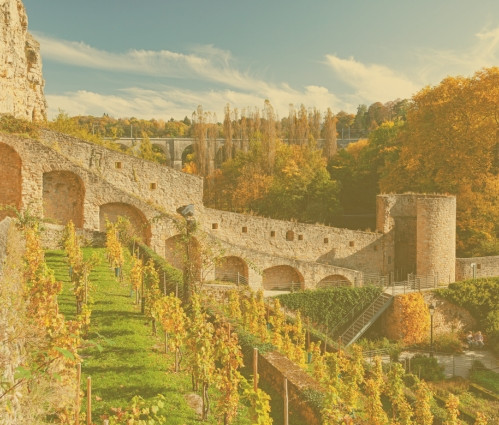
Seeing that one of the most famous wine rivers in the world, the Moselle, passes directly through it, Luxembourg is perhaps the least surprising entry on this list. While the German and French sections of this river get the most global attention, the Luxembourg side produces exceptional white wines.
The vineyards are concentrated on a narrow strip along the river, where steep shell-limestone slopes provide excellent drainage. The region specialises in fresh, aromatic whites. Riesling, Pinot Gris, and Auxerrois are the dominant varieties here.
Key facts about Luxembourg wine:
- Luxembourg is famous for its Cremant de Luxembourg, a high-quality sparkling wine.
- The wines are known for their purity and lean, mineral character.
- Most of the production is consumed within the Grand Duchy or exported to nearby Belgium.
- The quality standards are governed by a strict Marque Nationale system.
Sweden: Scandinavia’s cool-climate frontier
Sweden is currently at the frontier of northerly cool-climate winemaking. While the industry remains small, it is growing steadily as warmer temperatures and more growing degree days make viticulture increasingly viable in the country’s south. Most vineyards are located in Skåne, where maritime influences from the Baltic Sea help extend the growing season.
Swedish winemakers rely heavily on hardy hybrid grapes such as Solaris, producing wines known for their bright acidity, lean fruit profile, and mineral freshness. Sparkling wine has become a major focus, with many producers drawing comparisons to England’s cool-climate success story. Despite tiny production volumes, Swedish wines are gaining attention among sommeliers and Nordic restaurants as well as finding listings at Systembolaget, the state alcohol monopoly.
Key facts about Swedish wine:
- Most Swedish vineyards are concentrated in the Skåne region
- Solaris is the dominant grape variety in Swedish viticulture
- Swedish wines are increasingly focused on premium sparkling production
Nuclear powered wines from Finland
Finland occupies a unique place in frontier fermentation, not because of grape vineyards, but because of its long tradition of producing wines from Arctic berries and fruits. The country’s harsh sub-arctic climate makes large-scale grape viticulture extremely difficult, so Finnish producers have instead mastered the use of indigenous ingredients such as cloudberries, lingonberries, bilberries, and sea buckthorn.
Finland is also home to a growing wave of experimental Nordic urban wineries. Producers like Noita Winery import organic grapes from Austria before fermenting them in Finland, pushing the boundaries of what modern Nordic winemaking can look like.
However, one of Finland’s most remarkable vineyard projects is located near the Olkiluoto nuclear power plant, where waste heat helps warm the surrounding soil and protect grapevines from freezing temperatures. These Finnish growers, like their Swedish counterparts, rely on cold-resistant hybrid grapes such as Zilga to survive the harsh climate. Production volumes are microscopic, with the wines consumed by staff and guests at the power plant.
Key facts about Finnish wine:
- Finland has some of the world’s most northerly experimental vineyards
- Vineyards near the Olkiluoto nuclear plant benefit from waste heat
- Finnish wines are typically light-bodied with intense acidity and herbal notes
Mongolia “steppes” up to the plate
Mongolia is perhaps the most extreme environment currently attempting to produce wine. The country is known for its vast plains and dramatic temperature swings; however, a small number of experimental vineyards have been planted in the more sheltered valleys of the south.
The challenges are immense. Winters can see temperatures drop to minus forty degrees Celsius, necessitating the burying of vines to protect them from the frost. This labor-intensive process is common in parts of China and is now being trialled in Mongolia.
Key facts about Mongolian wine:
- Most Mongolian wine is still produced from imported fruit or concentrate.
- True estate-grown Mongolian wine is one of the rarest liquids on the planet.
- The goal is to produce a local product for the growing hospitality industry in Ulaanbaatar.
Mexico: the historic heart of North America
Mexico is home to the oldest winery in the Americas, Casa Madero, founded in 1597. While it was overshadowed by California for much of the 20th century, the Mexican wine industry is currently enjoying a major revival which has its heart in the alluvial gravels of Baja’s Valle de Guadalupe.
The climate here is Mediterranean, with hot days and cool nights influenced by the California current in the Pacific ocean. Mexican winemakers are known for their experimental spirit. They often blend varieties that are rarely seen together in Europe, such as Nebbiolo and Cabernet Sauvignon.
Key facts about Mexican wine:
- Mexico produces powerful, high-alcohol reds with a distinct saline finish.
- The region is a major destination for luxury tourism and increasingly wine tourism.
- Mexican wine is increasingly finding its way onto the wine lists of top US restaurants.
Mauritius: volcanic grapes in the Indian Ocean
Mauritius is a new frontier for tropical winemaking. While the island has long produced a spirit from lychees and other fruits, true viticulture is a recent development. The volcanic soils of the island provide a unique mineral base for the vines.
The challenges of the tropics include high humidity and the perpetual vegetative cycle which creates the lack of a winter dormancy period for the vines. There is currently no wine produced on a commercial scale. However, vineyards have been planted, and the results of the first experimental harvests are being closely watched.
Key facts about Mauritian wine:
- The focus is on white varieties that can maintain acidity in the heat.
- Vineyard management must be extremely precise to prevent fungal rot.
- Mauritius represents the growing interest in “island wine” across the globe.
Tanzania: the Dodoma Highlands
Tanzania is the second-largest wine producer in sub-Saharan Africa after South Africa. The industry is centred around the semi-arid plateau of the Dodoma region, where the high altitude and low humidity provide a viable environment for viticulture.
The “Makutupora” grape, a local variety, is a mainstay of the industry. While most of the wine is consumed locally or used for sacramental purposes, there is a growing interest in improving quality for the export market.
Key facts about Tanzanian wine:
- The Tanzanian government has actively supported the expansion of the wine sector.
- Most wineries are located at an altitude of over 1,000 metres.
- Tanzania is a rare example of a successful tropical wine industry on the African continent.
Tahiti: wine from the atoll
The most unlikely vineyard in the world might be found in French Polynesia. On the atoll of Rangiroa, the “Vin de Tahiti” project has defied the odds. The vines are planted just metres from the lagoon, growing in soil composed of crushed coral and sand.
Like Mauritius and Tanzania the climate allows for two harvests a year, one in May and another in October, and necessitates a completely different approach to vineyard management. The vines never truly go dormant, requiring the winemaker to trick the plant into resting.
Key facts about “Vin de Tahiti”:
- The project focuses on Carignan and Muscat Hamburg.
- Freshwater for irrigation is sourced from wells that tap into the lens of fresh water beneath the atoll.
- Polynesia proves that wine can be made in even the most remote and challenging environments.
The global expansion of viticulture into unexpected territories is a vital, forward-looking development in the wine market. As climate change reshapes traditional boundaries and pioneering viticulturists leverage new technology, these terroirs are increasingly showing their ability to yield wines of character, structure, and balance.
For the wine collector, the development of these emerging regions underscores the importance of staying adaptable. While the historic European powerhouses of France and Italy are likely to remain the bedrock of any portfolio, keeping a close eye on these rising frontiers may offer a way to capture early-stage growth. Diversification has always been a primary shield against market volatility, and tomorrow’s blue-chip assets may very well emerge from the most unexpected corners of the map.
FAQ: Unexpected countries making wine in 2026
Can these wines be aged like Bordeaux?
Maybe. Most wines from these emerging regions are designed for early consumption and will probably not benefit from extended aging, as they lack the tannic structure and acidity required for multi-decade cellaring. However, don’t be shocked if the best wines from some of these regions respond well to cellaring.
Why are these wines not considered investment-grade?
Investment-grade wine requires a deep secondary market and a history of price appreciation. These regions are still in the early stages of establishing their brand identity and quality benchmarks.
Are hybrid grapes inferior to Vitis vinifera?
Not necessarily. While Vitis vinifera is the standard for fine wine, hybrids are essential for survival in extreme climates. Modern hybrids are producing wines of increasing quality and character.
Is climate change making these regions more viable?
Yes. Rising temperatures are opening up new northern latitudes to viticulture. However, it also brings challenges like unpredictable frost and extreme weather events that can destroy a harvest.
Where can I buy these wines?
These wines are best sought out in their home countries or through specialist importers who focus on “off-the-beaten-track” regions. While some do appear on supermarket shelves, most will not.
WineCap’s independent market analysis helps investors build diversified fine wine portfolios with full ownership and transparent pricing. Speak to one of our wine investment experts and start building your portfolio. Schedule your free consultation today
Hey, like this? Why not share it with a buddy?
« Bordeaux 2025 En Primeur: Pricing discipline and rarity define early standoutsHow risk-averse are wine investors? »