- Champagne combines strong global brand recognition with an established secondary market, making it one of the most investable fine wine categories.
- Investment activity is concentrated among prestige cuvees from leading houses such as Dom Perignon, Krug, Cristal and Salon.
- Vintage quality, provenance and professional storage are key factors when building a Champagne investment portfolio.
Champagne occupies a unique position within the fine wine market. Combining global brand recognition, strong secondary market liquidity and a long history of collectability, it has become an important component of many wine investment portfolios.
While the region produces hundreds of millions of bottles annually, investment activity is concentrated among a relatively small number of prestige cuvees and sought-after producers. Understanding the differences between these wines is essential for anyone considering Champagne as part of a diversified portfolio.
Understanding the Champagne investment landscape
The Champagne market can broadly be divided into two categories: the Grandes Marques and grower producers.
The Grandes Marques are the large Champagne houses that dominate global sales. Many produce millions of bottles annually and have established international distribution networks. Within these portfolios, investment interest is typically focused on prestige cuvees – the flagship wines made from the house’s best fruit and released in limited quantities.
Alongside the major houses sits a growing number of smaller grower producers. These estates grow their own grapes and produce wines that emphasise individual vineyard sites and terroir expression. While most remain collector-focused rather than investment-focused, a handful have become increasingly sought after on the secondary market.
The leading Champagne brands for investment
Dom Perignon
Dom Pérignon remains one of the most recognisable names in fine wine and is often considered the benchmark investment Champagne.
Produced exclusively as a vintage wine, each release reflects the conditions of a single growing season. Despite larger production volumes than many competing prestige cuvées, strong global demand has helped maintain liquidity, making Dom Pérignon one of the most actively traded Champagnes on the secondary market.
Krug
Krug occupies a distinctive position within Champagne. Known for its complex, oak-influenced style and long ageing potential, the house has developed a loyal following among collectors.
Alongside the flagship Grande Cuvee, investors closely follow Krug Vintage, Clos du Mesnil and Clos d’Ambonnay, all of which are produced in limited quantities and command strong secondary market demand.
Louis Roederer Cristal
Originally created for Tsar Alexander II of Russia, Cristal has become one of Champagne’s most recognised prestige cuvées.
Produced primarily from estate-owned vineyards, Cristal combines strong brand recognition with a reputation for longevity. It is consistently among the most sought-after wines in Champagne and regularly features in diversified fine wine portfolios.
Salon
Salon is one of the rarest and most collectible wines produced in Champagne.
Made exclusively from Chardonnay grown in Le Mesnil-sur-Oger, Salon is only released in exceptional vintages. Production volumes are extremely limited, contributing to its reputation among collectors and its strong presence on the secondary market.
Pol Roger
Pol Roger remains family-owned and is best known in investment circles for its prestige cuvee, Sir Winston Churchill.
Produced in relatively limited quantities and backed by a long-standing reputation for quality, the wine has developed a strong collector following and offers an alternative to some of the larger luxury brands.
Taittinger Comtes de Champagne
Comtes de Champagne Blanc de Blancs is widely regarded as one of the leading Chardonnay-based wines in the region.
Combining strong critical acclaim with a history of ageing well, it has become a popular choice among collectors seeking exposure to prestige Champagne at a lower entry point than some of the region’s most expensive labels.
Other notable Champagne houses
While investment activity is concentrated among a relatively small number of wines, several other Champagne houses play an important role in the market.
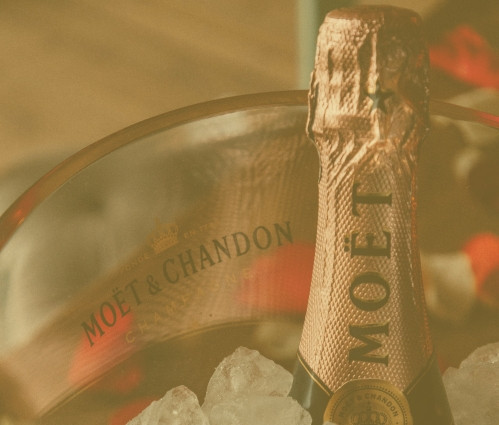
- Moet & Chandon: Moet & Chandon is the undisputed king of Champagne volume. Founded in 1743, it produces an estimated 30 million bottles a year. Its “Imperial” Non-Vintage is the most recognised wine label in the world.
- Veuve Clicquot: Ranking second in volume, Veuve Clicquot is another pillar of the LVMH portfolio. Famous for its bold “Yellow Label,” the brand has a massive cultural footprint. Unlike Moet, it does make a prestige cuvee, “La Grande Dame”, which is a respected investment-grade wine.
- Mumm: Known for its “Grand Cordon” signature and its historic association with the French royal courts, Mumm is a high-volume powerhouse that champions the structured power of Pinot Noir.
- Delamotte: Sister house to the legendary Salon, Delamotte is prized by insiders as an elegant, Chardonnay-focused insider’s choice that offers exceptional value from the Grand Cru soils of Le Mesnil-sur-Oger.
- Ruinart: Founded in 1729 and sold to Moet & Chandon in 1963, Ruinart is defined by its mastery of Chardonnay, resulting in a crystalline, aromatic style housed in its iconic, historic crayeres (chalk cellars).
- Philipponnat: This family-led house is celebrated for its intense, Pinot Noir-dominant style and for producing the legendary Clos des Goisses, a single-vineyard wine from one of the steepest vineyards in Champagne.
- Billecart-Salmon: Renowned for its meticulous “cold fermentation” process and legendary Rose, this medium-sized, family-owned house is a favourite among sommeliers for its finesse and purity of fruit.
- Charles Heidsieck: This house was founded by the legendary Charles-Camille Heidsieck, whose mid-19th-century travels to America earned him the nickname and birthed the enduring phrase “Champagne Charlie.”
- Pommery: Under the leadership of the visionary Madame Pommery, the house revolutionised the industry by launching the first commercially successful “Brut” Champagne (Pommery Brut Nature 1874) in an era of sugary wines.
- Gosset: Established in 1584, Gosset is the oldest wine house in the Champagne region and maintains a signature “gastronomic” style by avoiding malolactic fermentation to preserve natural, bracing acidity.
- Piper-Heidsieck: The house recently signalled its commitment to ultra-prestige by spinning off its top cuvee, “Rare,” into its own independent brand to compete at the very highest tier of the market.
- Perrier-Jouet: Celebrated for its striking packaging, its global reputation centres on its prestige cuvee, Belle Epoque, which features the iconic anemone design created by artist Emile Galle in 1902. While it possesses immense shelf appeal, the house delivers quality and reliable price appreciation.
- Bollinger: Founded in 1829 and one of the few remaining independent, family-controlled houses, Bollinger is famously associated with both the British Royal Family and James Bond. Collectors prize its late-release cuvee, R.D. (Recently Disgorged), and the ultra-rare Vieilles Vignes Francaises.
The rise of grower Champagne
Over the past two decades, grower Champagne has become an increasingly important part of the collector market.
Unlike the major houses, grower producers focus on wines made exclusively from their own vineyards. The result is often a stronger emphasis on terroir and site expression.
Although liquidity remains lower than that of the leading Grandes Marques, several producers have achieved cult status among collectors.
Notable brands include:
- Jacques Selosse: The undisputed godfather of the grower movement, Anselme Selosse fundamentally changed Champagne by applying Burgundian principles of terroir and oxidative, solera-style ageing to the region’s chalky soils.
- Cedric Bouchard: Under the “Roses de Jeanne” label, Bouchard produces revolutionary, single-vineyard, single-variety wines with low-pressure bubbles that emphasise the vinous intensity of a still wine over traditional effervescence.
- Ulysse Collin: A disciple of Selosse, Olivier Collin crafts cult-status, parcel-specific Champagnes from the Petit Morin that are celebrated for their long barrel-ageing and profound, savoury depth.
- Pierre Peters: A benchmark for Blanc de Blancs in the Grand Cru of Le Mesnil-sur-Oger, this family estate crafts chiselled, mineral-driven Chardonnays, most notably the legendary and ageworthy “Les Chetillons.”
- Henri Giraud: Operating out of Ay, Henri Giraud produces opulent, Pinot Noir-dominant wines that are fermented in oak from the local Argonne forest, creating a rich and distinctively luxurious profile.
- Vilmart & Cie: Often described as a boutique alternative to Krug, Vilmart excels in barrel-fermented blends from Rilly-la-Montagne that strike a perfect balance between electric acidity and a creamy, oak-influenced texture.
- Jacquesson: While technically a Maison, the Chiquet brothers operate with a radical grower ethos, replacing the standard consistent Non-Vintage with their “700-series” that celebrates the specific identity and vintage characteristics of each base year.
Champagne’s position in the secondary market
Champagne has become one of the most important categories within the fine wine investment market.
Historically, prices have exhibited lower volatility than some other regions, supported by strong global demand and the strength of established luxury brands. The category experienced significant growth during the market rally of 2020-2022 before correcting alongside the wider fine wine market.
More recently, Champagne has shown signs of stabilisation and recovery, reinforcing its position as a core component of many fine wine portfolios.
Key considerations for Champagne investors
Producer reputation
The strongest demand tends to be concentrated among established brands with a proven track record on the secondary market.
Vintage quality
Certain vintages attract greater collector demand due to growing conditions and long-term ageing potential. Examples frequently cited by collectors include 2002, 2008, 2012 and 2014.
Provenance and storage
As with all fine wine investments, provenance is critical. Professional bonded storage helps preserve condition, authenticity and resale value.
Bottle format
Larger formats, particularly magnums, can command premiums due to their relative rarity and favourable ageing characteristics.
FAQ: Best Champagne brands for investments
Why is Champagne considered a good investment?
Champagne benefits from strong global demand, recognised luxury brands and an established secondary market, making it one of the most actively traded categories in fine wine.
Should I invest in non-vintage Champagne?
Most investment activity focuses on vintage wines and prestige cuvées. However, certain non-vintage releases, such as Krug Grande Cuvée, have developed collector demand.
What is a prestige cuvee?
A prestige cuvée is the flagship wine produced by a Champagne house, typically made from its best vineyard sites and aged longer before release.
Are grower Champagnes good investments?
Some grower producers have developed strong collector followings, although liquidity generally remains lower than that of the leading Grandes Marques.
WineCap’s independent market analysis helps investors build diversified fine wine portfolios with full ownership and transparent pricing. Speak to one of our wine investment experts and start building your portfolio. Schedule your free consultation today.
Hey, like this? Why not share it with a buddy?
« Fine wine vs whisky investment: What wealth managers prefer in 202610 fascinating facts about Domaine de la Romanee-Conti »